“We Slipped and Learned to Read”

5d25a2da4a0c0310961470f064550418

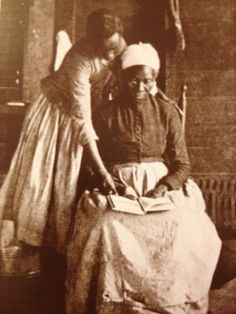
It is common knowledge that slaves were lawfully restricted from learning to read and write. One less commonly stated fact however, was that slaves were not completely ignorant. They could not read and write English but this did not mean they could not read and write period. As strangers in a foreign land, many African American’s had no knowledge of English or even America itself and thus had to be re-educated. Something they were restricted from as slaves.

It was obvious that slave owners understood that their control over the slave had to supersede the physical. To keep a slave in bondage, not just physically but spiritually and mentally, slave owners knew they had to invent a much stronger rope than one that wrapped itself around the Magnolia. To do this, they realized that knowledge is power and this realization became the beginning of slave codes throughout the United States that put restrictions on slaves learning to read and write. This included, most especially, reading the bible.

However, ironically, it was the reading of the bible and listening to the speech of their slave masters (who often spoke openly around blacks they assumed ignorant) that helped coach slaves into the reading process. The law was specific, reading or even teaching reading both had death penalties. Still, persistent as they were, slaves still found a way to by pass the law, slipped, and learned how to read. For many slaves reading and writing meant, if not physical freedom, mental and spiritual freedom. They could use it as a tool to escape slavery physically or write of the horrors of the institution as did many in the famous slave narratives. The following is an excerpt from a writing done by Janet Cornelius and published by Clark Atlanta University on slaves and literacy:

“Despite the dangers and difficulties, thousands of slaves learned to read and write in the antebellum south. Few left traces of their accomplishments, but 272 ex-slaves who told how they learned to read and write during slavery provide insight into the literacy process within the slave community. For slaves, literacy was a two-edged sword: owners offered literacy to increase their control, but resourceful slaves seized the opportunity to expand their own powers. Slaves who learned to read and write gained privacy, leisure time, and mobility. A few wrote their own passes and escaped from slavery. Literate slaves also taught others and served as conduits for information within the slave communication network. Some were able to capitalize on their skills and literacy as a starting point for literacy careers after slavery ended. Historians of education have drawn a distinction between bible literacy, whose prime motive was the conservation of piety and liberating literacy (slaves used the bible to learn to read), which facilitates diversity and mobility.”

– by Janet Cornelius, Phylon (1960-)

Vol. 44, No. 3 (3rd Qtr., 1983), pp. 171-186
Paper Published by: Clark Atlanta University

Race and Rights

Malcolm-X-about-men

When did race and rights become separate entities? Since when has the black problem in America not have to do with both race and rights? Dare you to walk the streets of the 1920s and 40s and 50s with your prophet scented blood and expect to transgress the law of separatist signage. That “Whites Only” sign ain’t there by mistake. The one that says Negroes like you must order from the back door. Yo money may be colored like your skin but green has always been worth more than brown. I don’t like to have to go back to slavery. After all, it ain’t like I lived it and yet I can never forget what it feels like. But since we on the subject of feeling, I’m feeling like the same blood pulsing underneath my ancestor’s skin now pulses through mine so what they felt I feel it too. Perhaps I too was a slave long ago and its just taken me this long to find my voice. So, therefore, let me tell you something about what it means to be a slave. A slave is never granted the same rights as a free man, not a physical slave or a psychological one. An inferior race is never granted the same rights as a superior one. Thus anything that’s got to do with rights has also got to do with race. For the Black problem in America has always been centered around identity and always will be. Rights would have never been a problem if the problem wasn’t race. If the hierarchy of the superior and the less superior didn’t exist. If black people never walked around with bywords and proverbs tattooed on their skins there wouldn’t have been a need for them to watch movies in the Nigger Heaven1 of southern movie theaters. Would have been no need of me taking my seat alongside Miss Parks or Miss Morgan all them years ago. A Black Man’s rights and his race are always connected here, like the careful structure of his bones before he emerges from his mother’s womb. It’s the yearning for freedom written in his DNA. Black America’s rights have always and always will be centered around their identity because their problem is not physical it is spiritual. And because a spiritual problem has been long fought with physical weapons the condition of black people in America continues. And so their fight has always been and always will be centered around their freedom.

1. Nigger heaven, n. a designated place, usually the balcony, where blacks were forced to sit, for example, in an integrated movie theater or church as part of Jim Crow Laws.

Harriet Ann Jacobs – Our Self-Published Ancestor

jacobs-1

By now many people are familiar with Harriet Jacobs, the African American writer who escaped slavery in 1842 after hiding in an attic above her grandmothers home for seven years. Harriet’s testimony was one of the many inspirations for the first book in my Stella Trilogy. Stella, like Harriet, was born a slave but did not know it as a young girl–not until after her mother died. But that’s not all Harriet and Stella have in common. Harriet’s biography “Incidents in the Life of a Slave Girl” was also a Self-Published book back in 1861, under the pseudonym Linda Brent.

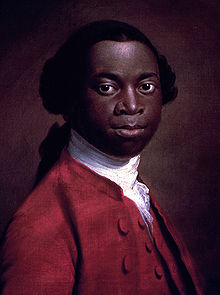
Olaudah Equiano

220px-EquianoExeterpainting

At the age of forty-four Olaudah Equiano wrote and published his autobiography, The Interesting Narrative of the Life of Olaudah Equiano, Or Gustavus Vassa. Written by himself, he registered this writing at Stationer’s Hall, London, in 1789. More than two centuries later, his work was recognized not only as one of the first works written in English by a former slave, but in his narrative, Equiano recalls his childhood in Essaka (an Igbo village formerly in northeast Nigeria), where they practiced Israelite customs and traditions before both he and his sister were kidnapped and sold into slavery.

The Oscars: Our Fight

635889667266550353-smith

OK, so what’s my thoughts on this? Well, there’s the good, the bad, the ugly and everything in-between. There’s the surface and then there’s what is beneath the surface but I’m not going to get into all of that. There’s some dark clouds in Hollywood but there’s some sunshine too. As far as the Oscar Boycott is concerned, I don’t have much to comment. On this cool, yet beautiful Saturday, my day of rest, my Sabbath, and my calm. On this day, where I usually do not post, I needed to write this and I choose to keep it beautiful.

From the positive end of the spectrum, there’s a glint of light attempting to bud and to shine and to erupt into something beautiful. Something is trying to break through the hard shell, pierce the darkness, and replenish the damaged soil in Hollywood. Who knows what will come of it. Will blacks gather as a cohesive unit to achieve something of their own? It is not really just about the Oscars. It’s about a jolt of consciousness that is needed, and perhaps now being conceived, to move this powerful people. Come forward Gideon. Come forward David. Come forward Samson. Come forward and tell your story the way that it needs to be told.

You Have the Right to Write

Attention: You Have the Right to Write or anything you don’t say will drive you crazy by intense desire. Creative ideas will overheat until they melt themselves into fragmented descriptions of confused thought and drip like perspiration from your brow. Words will escape your mouth in an explosion of writer’s language. Soon, you’ll start bringing up the names of books to four year olds and correcting sentences fresh out your neighbors mouth, “..not a eraser, an eraser..” you’ll blurt out uncontrollably. Your lips are so bone dry they have wrinkles, and you trip over your tongue as if it does not belong in your mouth. You can’t even blame Writer’s Block for the frustration since you keep missing your periods at the end of sentences. Poor words, left to run on in a string of thought; breathlessly pulsating through veins hoping to make it to the end of your never ending consciousness. The least you can do is appoint a capital letter to keep everyone in check, a comma won’t hurt you either. If you find yourself in this condition, you have the WRITE to consult inspiration before speaking anything into existence, and to have a pen and pad ready for any glint of light amidst the darkness, now or in the future.

His crime? Not Writing!

Throwback Thursday Jam- “Golden”, Jill Scott

Where all my Neo Soul people at??? Anthony Hamilton, Leela James, Jill Scott, come on now!

Live yo life like its Golden. Jill gone tell them about it, they don’t know ….lol