Book Reviews Needed For The Stella Trilogy

Hey guys!

I am gearing up to release the last book in The Stella Trilogy, The Road to Freedom. After this book drops the series will be complete. Whoo hoo!

But what’s that saying? The real work begins after you release the book? Yea, that.

I don’t know who said it first, but there are no lies told here.

As book three is on its way out, I would like to draw more attention to books one and two by getting some book reviews in. As you guys know, these books were originally published in 2015-2016 but due to major editorial and formatting issues, I have had to take them down and relaunch them. One major risk of taking them down was losing the little reviews the books had. That was a risk I was willing to take if it meant a better reading experience. There are over three thousand followers of this blog. I am hoping I can get a few of you to help.

I just thought I’d ask. What’s that other saying? “Closed mouths don’t get fed.”

  • If you have read any of these books, it would mean everything if you could review them on amazon. Review book one here. Review book two here.


  • If you have never read these books and would like to receive an ARC copy, it would delight me to send it to you.

Comment below, contact me through the contact form or email me directly at yecheilyah@yecheilyahysrayl.com.


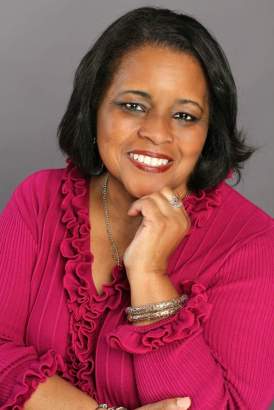
Ya’ll like my new yellow dress? Cute right?

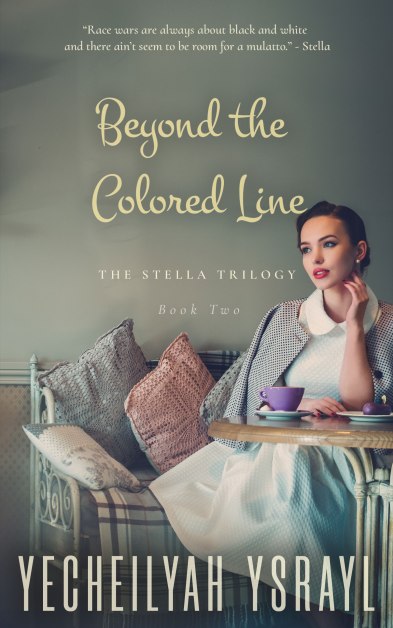
Stella: Beyond the Colored Line is Live (The Stella Trilogy Book 2)

Beyond the Colored Line is LIVE

“This story retells the history of many African-American families alive today. It is a heritage rich with strife and suffering but also filled with a hope and a desire to finally grasp the freedom that has been so elusive and out of reach for so many. At times, I was forced to accept some uncomfortable truths about our American past. There is nothing wrong with that. This story makes you think about freedom and what it really means to you as a person, and as an American. I loved this story because it is through the learning of other’s journeys that we begin to learn much about ourselves. Their pain becomes our pain and we begin to see through their eyes. Stella will touch your soul with such a sweet simplicity you won’t even know it.”

– Colleen Chesebro, on Stella: Beyond the Colored Line, First Edition

About.

In book two, we dig deeper into the McNair family’s legacy. Named after her great-grandmother, Stella has a very light complexion which causes her to be the tease of her classmates. Unable to find solace among her African American contemporaries, Stella finds it challenging to adjust to a world where she is too light to be “black.” After The Great Depression of the 1930s forces Stella’s family to move to Chicago, a conversation with Aunt Sara provokes Stella to do something that will dramatically affect not just her life but the life of her children and grandchildren.


Excerpt.

1928

Daddy runs off to no one knows where on account of his life. Some racist whites had seen him and Mama together and threatened to lynch him if found, so he runs off. The community gossip is that his brothers know, but they won’t say. We weren’t alone, though, Mama and me. It seems like Mama filled the hole where Papa should have been with our whole family. The house always stayed filled with guests, my people, and peoples of my people. My granddaddy was a colored man and owned this land. My namesake, his Mama Stella, was a slave and was given this house by her owner. As the story goes, after Grandma died, I was born. Since Mama was the closest, she named me after her.

My aunts would gather around the table with my mama, and they laugh and cry most of the night about their girlhood. They would talk about what it was like being four mixed girls in Illinois. I don’t have uncles on my mother’s side, but Daddy got six brothers.

Due to the controversy around my parent’s relationship, Daddy being a Negro, and Mama being half-white, they only visit on special occasions. Uncle Roy, Daddy’s younger brother, says Mama acts differently around her sisters and that we too uppity, especially Aunt Sara. She’s the youngest of my aunties and the most spoiled. She’s the one who convinced Mama to send me to a white school in the first place, and boy was my uncles hot! They said we were breaking the law–that a Negro had no business in a white school. But Aunt Sara said I had all the right in the world since I was half white. For her, not only could I do this, I had a right to do it.

“But does the school know she a Negro?” Uncle Roy would ask.

“That’s none of the school’s business, now is it?” Aunt Sara would say, and they’d go back and forth until Mama break it up.

Not all talks were good talks. I used to sit until my eyes were red with fatigue to hear Mama and my uncles talk about all the killings that were taking place around the country, and especially in the South. I felt like I lived in two worlds, one black and one white, but none mixed. And what did that mean, mixed?

My aunties wanted to talk about education, family, career, and navigating the world as a mixed-race person, whereas Daddy’s side liked to talk about the black condition, what was going on in the black community, and what it meant to be black in America. They talked less about blacks navigating a world that they felt didn’t include them, and more about blacks redefining themselves and creating their own worlds. The conversations were intriguing and fascinating on both sides, but it left me feeling like my very body was a contradiction. Was I white? Was I black? Race wars always involved these two groups of people, and there ain’t seemed to be room for a mulatto.

“That’s what I say,” said the voice of Uncle Keith, Daddy’s second oldest brother.

“Up there in Minnesota.”

“That close?” Mama gasped.

“Yeah, that close. What woman, you living under a rock? They just had one over in DeKalb last month,” said Uncle Roy.

“It’s a crying-out-loud shame,” continued Keith. “Say they dragged the boys from the cell and a whole mob of ‘em lynched ‘em. Say it was ‘bout a thousand of ‘em.”

“My my,” said Aunt Rebecca.

There were times even I witnessed evidence of the events rocking the country. One day, Mama and I went to visit Cousin Mary in Texas and drove the truck up to a general store. We walked in, and I picked up a postcard from a rack. It was of a man hanging on a tree that supported an iron chain that lifted him above a fire. The man didn’t seem to have much of a body left. They cut his fingers off, his ears and his body was burned to a crisp. On the back of the postcard read: “This is the barbecue we had last night. My picture is to the left with a cross over it. Your son, Dan.”

I learned later the picture was of a seventeen-year-old mentally ill boy named, Johnny, who had agreed to have raped a white woman. And everybody at home still talked of the Cairo Circus of 1909, the public lynching that took place here in Illinois. I couldn’t understand why Mama was so upset about a circus until I found out what kind of spectacle it was. My aunts didn’t want anything to do with the land or the house because of events like these. They say it’s too close to slavery. No one wanted to inherit the home or the property, but Mama, and this is how I spent several years of my life living in the same house where my great-grandmother had been a slave. Mama kept the house full of guests by renting out rooms to help with her washerwoman salary.

We weren’t much of a churchgoing family, party going is more like it, unless Mama wanted to show off a new dress or hat when somebody died or needed saving and on holidays and such. Folk would come from all over southern Illinois to hang out with “Cousin Judy.” Sundays sure were fun, my second favorite day of the week. Saturdays were my favorite day of the week. It was the day for shopping, and that only meant one thing, Chicago.

First, Mama would wake me to the smell of biscuits or pancakes. This massive breakfast was to keep me full enough throughout the day, so she didn’t have to worry any about food buying. Then, she commanded me to bathe real good, paint my arms and legs with coconut oil, untie my curls, and we’d both put on our Sunday’s best and be two of the most beautiful women you’d ever seen. I was a young lady now, and shopping was the best thing for a young lady, next to boys, but you couldn’t like them in public.

You could like shopping, though, and I loved going from store to store in search of the finest. I skipped along while Mama scanned the insides of magazines for stuff she heard about from the white women whose laundry she cleaned. We would squeeze our way through crowds of people, just bumping into each other. Everyone dressed in their weekend wear and bought ice cream for their children. Some went to see the picture show, and so did Mama and me. We could buy candy or jewelry, or perhaps a new hat or two. We could drink from water fountains without a label and spend money without prejudice.

We had a good time on Saturdays because on Saturday, no one knew we were colored.

Click here for a signed paperback
of Beyond the Colored Line

*Click Here to get it on Kindle

Haven’t read book one? Get it for 99cents on Kindle here or in paperback here.
*Paperbacks ordered today will ship next week.

Yecheilyah’s Book Reviews – The One Discovered (Chronicles of the Diasodz Book 1) by Yvette M Calleiro

Title: The One Discovered (Chronicles of the Diasodz Book 1)

Author: Yvette M Calleiro

Print Length: 310 pages

Publisher: Yvette M. Calleiro

Publication Date: January 25, 2014


Sophia’s life is normal for a seventeen-year-old. She is finishing her last year of High School and dating her best friend even though the relationship lacks passion. What’s full of passion is Sophia’s dreams, where she meets a sexy young man named Ar’ch (R-rick). When he shows up at the restaurant Sophia waitresses at though, she is taken aback. How is it possible that the man in her dreams can show up in real life? The truth is Ar’ch is not a man, but a Diasodz. The Diasdoz are creatures created by the Goddess to protect and heal humans. According to the story, when God created humans, the Goddess created the Diasodz (Die-ah-sodz).

I enjoyed this book, and I am looking forward to reading book two. The story maintains a good pace, and the author keeps us in suspense just long enough to reveal snippets of the truth about Sophia and her true identity. Sophia is also a Diasodz and Ar’ch and his brother Angel has returned to take her back so she can fulfill the prophecy that foretold of a girl born on Earth who would save their kind.

I like to read poetry, historical fiction, memoirs, and self-help but I have a secret love affair for Sci-Fi-, Fantasy, and Thriller books too (my first published novel was a Sci-Fi thriller), but they have to be good for me to deviate from my usual and this one was a nice diversion.

I like that the author doesn’t pour revelations out at one time but revealed when necessary as the story progressed (like through dialogue). I noticed some minor errors, and the book is a bit lengthier than I think it needs to be but it didn’t distract me from the story.

The author is creative in distinguishing the Diasodz from humans which makes this a fun read as we learn about their powers, the difference in time between their world and Earth and see their powers manifested through Ar’ch and Angel. The Diasodz reminds me of the Watcher angels spoken about in some biblical books such as The Book of Enoch who was charged with the duty of watching over mankind.

This is a fiction novel but I actually do believe there is a parallel universe we cannot see, a spiritual world, alongside our physical one. I believe there are things that happen on the physical but also the spirtual except we can’t physically see the spiritual so I loved the part when Ar’ch and Angel were fighting the deminions (lower-level demons) but to Sophia it looked like they were staring at the fountain.

I look forward to learning more about the Diasodz, the Goddess, and more about Valorie and Nolan and what the other world is like. I want to know what Damiana and Drake are really up to and if Mel had a greater role than being Sophia’s best friend. What was she doing at the Main Street Fountain, anyway? And I don’t believe what she said to Sophia about that phone conversation either. I wonder if she was talking to someone else. Her constant proclamations about how she’s there for Sophia just seems kinda fake, so I wonder if there’s something else going on. And what’s with Sophia’s mom Liana staying behind? Something smells kinda fishy and I’m excited to find out.

I wanted to read a later book in the series but I’m glad I started at the beginning!

Plot Movement / Strength: 4/5

Entertainment Factor: 4/5

Characterization: 5/5

Authenticity / Believable: 5/5

Thought Provoking: 5/5

Overall: 5/5

The One Discovered is book one in a five part series and the first two books are free!


Disclaimer: My book review registry is still closed. These are reviews of books I have read on my own. To learn more about my registry be sure to visit the Blog Book Review Policy page here.

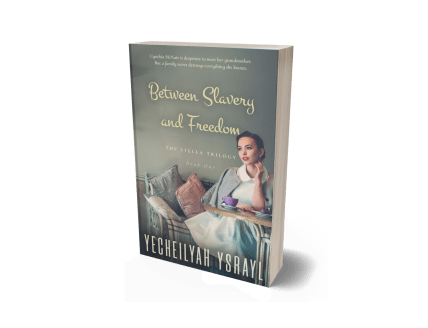
Stella: Between Slavery and Freedom (Book One)

Book one in The Stella Trilogy is officially back on Amazon and my website and book two is on its way!

Stella is a work of Historical Fiction and is distinctive in its focus on one woman’s road to self-discovery, against the backdrop of the African American fight for justice, racial equality, and freedom. The three-part novella series focuses on the history of one family in their struggle for racial identity. We discover in this trilogy how three individuals living in separate periods strive to overcome the same struggle, carefully knit together by one blood.

In book one, Cynthia McNair and her boyfriend, Alex, express some racists’ feelings toward blacks. They visit Cynthia’s Grandmother Sidney McNair, who recounts the story of her ancestor, a slave named Stella Mae. Cynthia has no idea of her African ancestry or how deep this rabbit hole goes.

“Yecheilyah Ysrayl takes us on a colorful and thought-provoking journey through the eyes of a mulatto slave woman Stella. Generations later, Stella’s descendant Cynthia McNair has no idea of Stella’s life as a slave, nor the true identity of their bloodline. Since Cynthia is a racist she is in for a rude awakening. Stella is reminiscent of a wonderfully written slave narrative, a story of history and pain, it is a brilliant opener of the Stella series.” 

– Kathryn Reed

Order the Kindle Ebook for 99cents

Order a Signed Paperback from my Website 

Mark as Want to Read on Goodreads

(Already read Stella? Mark as read and leave a review)

Why I Write Black Historical Fiction

Historical Fiction (specifically Black Historical Fiction) is my favorite genre to read and to write. I have to specify “Black” because I am not a fan of all Historical Fiction. My interest lies specifically in fiction stories that explore black history in some way.

Historical Fiction is the past recreated around the stories of people who seem real to us, including actual historical figures at times.

As we witness how fictional characters we care about interact with our ancestors and navigate a world now gone from us, it allows us to experience the past vicariously. Through the stories of the characters we can “visit” history and get a feel for what it was like to live in that time. But why is this important? I think a quote from the Toni Morrison Documentary “The Pieces of Me” (Hulu) sums it up:

“You imagine the past because the past has been ruptured. The record of the past of your people has been degraded. It’s been burned up, it’s been taken away.”

Tbt. The Historic Lorraine Motel, Memphis, TN

Not only has the black past been degraded but also entirely and tragically whitewashed. Dr. Martin Luther King Jr. is a good example of someone whose humanness has been reduced to the one “Negro” who bridged the gap between blacks and whites. A Civil Rights hero who succeeded in making blacks docile enough to accept that merging with white people was the best version of themselves possible. That, if we integrated, we were better people than if we had our own communities and businesses, and could determine the direction of our own destinies. Not that segregation was wrong, but that integration was better. That blacks were better when mixed with something else; that we could not be the midwives of our own selves. 

Although King was known as a civil rights leader and Malcolm X as a “black radical” both men were advocates of oppressed people. King told black people their blackness was beautiful, believed in economic freedom and establishing black businesses, preached on black power, and even owned a gun. King was just as “radical” as he was patient…but this isn’t the version of King we are given.

White America adopted Dr. King and used him as the black friend that is used by some to say, “Hey, I can’t possibly be racist because I have a black friend.” King is that friend. Sadly, we have someone whose name is widely known, but who, as a person, is not very well understood.

Forget about the Civil Rights icon, who was Dr. King as a man? Who was Malcolm X as a man? What could we imagine their persona’s to be like? Those of us born after they lived do not know but we can imagine.

What I do as a writer is to take the part of history not taught in schools, and use it as a tool to invent people who could have lived in a world that did exist. To then take these people and let them show us the truth about that time and place. To give these people real feelings and a voice that is authentic to what they could have said or what they could have done. I love to go back to a time before I was born and, through research and creativity, imagine what it would have been like to live in that era.


Stella Returns!

Book One Re-releases on March 24, 2020

About Book One:

Cynthia McNair and her boyfriend, Alex, express some racist feelings toward blacks. The visit Cynthia’s grandmother Sidney McNair, who recounts the story of her ancestor, an enslaved woman named Stella Mae. Cynthia has no idea of her African ancestry or how deep this rabbit hole goes. Will she accept the truth about herself?


There are only TWO days left of the $200 Amazon Giveaway! You can enter as many times as you like! Go, go, go! Link below:

$200 Reader Giveaway

Yecheilyah’s Book Reviews: Birth Days by Carol Massey

Title: Birth Days: Stories of Women Who Turned Difficult Beginnings into Glorious Lives
Author: Carol Massey
Print Length: 157 pages
Publisher: Pure Heart Publishing
Publication Date: November 2019
Language: English


Birth Days is exactly what its subtitle implies; it tells the tales of women who overcame adversity to lead illustrious lives. The author presents us to a number of fictional ladies who go through agonizing birth and parenting problems. Dr. Francine Young gave her child up for adoption, Lulu discovered she was expecting only two months before giving birth, Margaret had an affair with Jackson Jones (who was not her husband), and in 2027 Lulu’s grandson was elected president of Howard University.

These women’s struggles, the men they loved, and the people who supported them on their journeys are all things we have witnessed. (Like Aunt Sis, who served as Mary and Connie’s midwife and caregiver). As each lady faces her beast, readers will be interested to see what happens next. Because so many of the stories take place in the 1930s and 1940s, we can consider them historical. I particularly liked the historical tidbits that discussed how African Americans’ lives differed in the North and South.

The first story, “Two Sisters,” with Connie and Mary, Aunt Sis, and Aunt Ailene, is my favorite. I could see the mother’s sorrow over her difficult pregnancy, the family’s terror following the loss of a previous child, and their worry over Mary’s prognosis. I could understand the father’s agony as he constructed the baby’s coffin out of concern that she would pass away like the others. The home had a Color Purple vibe to it when the father returned home with Clara after renovating it later in the story.

This is not a long book, and the stories of the women and their struggles with maternity fit well within today’s society, where women, their efforts, and their lives are at the forefront. I could easily see upgrading this book to five stars with some adjustments to a few errors that impede the reading flow.

Ratings:

Plot Movement / Strength: 3/5
Entertainment Factor: 3/5
Characterization: 3/5
Authenticity / Believable: 4/5
Thought Provoking: 4/5
Overall: 3.5/5

Birth Days is available here.


About the Author:

After retiring from a 30+ year career in health and educational administration, Carol Massey had time to reflect on the people, places and events that influenced and inspired her. She wanted to pay homage to  some of the women who guided, nurtured and supported her journey from childhood through college, career and life as a single mother of an African American male child.  Carol, a California native, now lives in suburban Atlanta with her rescue pup, Ms. Frances.

Facebook: https://www.facebook.com/carolmasseyauthor

Black History Fun Fact Friday: What Hollywood Left out the Harriet Movie

I did not intend on writing about this today but then…

I saw the Harriet movie.

Yep. I went to see it.

I know many are protesting the film, but I don’t jump on bandwagons. I wanted to see it for myself to develop my own opinion. I also knew I wanted to write about it.

There are some truths, such as her being referred to as Moses. Unfortunately, there are also a lot of inaccuracies. The movie is Hollywoodish and leaves a lot out. In an interview, I heard the script was written twenty years ago, so that may have something to do with it. In any case, if you are planning to see it, here are some things you may want to know.

  • Harriet Tubman never had a friend named Marie Buchanon.
  • There was never a Black Bounty Hunter named Bigger Long after Harriet Tubman. The same is true of the Brodesses son. They did have a son (Jonathan) but little is known about him. His role in the movie is made up.

While “Bigger Long” is a fictional character, it shouldn’t be overlooked that Black trackers existed and were active during slavery. I think it is vital that as we are striving for historical accuracy, we are not so “Pro-Black” that we forget that a lot of our own people sold us out, and continue to sell us out. While Bigger Long may not have been a real person in Harriet’s life, there were black slave catchers. The movie, it seemed to me, had a lot of ‘women vs. men’ undertones. Not only was Bigger Long the sole antagonist against Harriet (even more so than the Brodesses, son), he was also the one responsible for the death of one of the Black women in the most diabolical, sinister, and brutal way.

The William Still character is based on a real historical figure. Still was a black abolitionist based in Philadelphia, Pennsylvania, businessman, writer, and conductor on the Underground Railroad. In the movie, he was over-the-top with his reactions to Harriet’s return from the missions. Holding his hand to his chest, spinning Harriet around, and at one point, he even falls out of a chair. Some people laughed, but I didn’t find it funny. To me, it made him look like a bufoon.

The Black men in this movie seemed weak to me. I worry this was intentional. Hollywood has a habit of showing black men as less capable when contrasted against the black woman’s strength. Rarely is there a balance to showing black couples as equally competent. The imaginative Marie shows Harriet how to shoot a gun and helps her in her cause. Harriet was a warrior but I am certain the surrounding men weren’t that simple-minded and faithless.

  • Tubman didn’t change her name when she reached freedom. She changed it before then, around the time of her marriage, possibly to honor her mother.
  • Three of Tubman’s sisters were sold, not just one.
  • Two of Tubman’s brothers, Ben and Harry, accompanied her (1) they went with her initially, at the onset of her escape not later as depicted in the film (2) after a notice was published in the Cambridge Democrat offering a reward for her return, Harry and Ben had second thoughts and returned to the plantation so she made the voyage alone.
  • Tubman had spells, dream-states, and visions (I believe she was deeply spiritual, her spells were my inspiration for Nora’s spells in Renaissance), but she also endured seizures, severe headaches, and narcoleptic episodes for the rest of her life from the hit to the head.

This next point wasn’t in the movie but since we are talking about Harriet Tubman I think it’s important to mention.

The Fake Quote:

It’s a good quote and a powerful one. I wish I could say it belonged to Harriet but with every source I checked there’s no documented, historical proof that Harriet Tubman ever said:

“I freed a thousand slaves. I could have freed a thousand more if only they knew they were slaves.”

According to Africacheck.org, The Maxwell Perspective, and Snopes, there are a few possible origins of the quote’s attribution to Harriet:

  • The confusion began when feminist writer Robin Morgan updated her 1970 essay “Goodbye to All That” during the 2008 US Democratic Party’s primary presidential candidate race between Hillary Clinton and Barack Obama. Morgan supported Clinton, and in the essay challenged other women who did not. She wrote: “Let a statement by the magnificent Harriet Tubman stand as reply. When asked how she managed to save hundreds of enslaved African Americans via the Underground Railroad during the Civil War, she replied bitterly, ‘I could have saved thousands – if only I’d been able to convince them they were slaves.’” The implication was that women who didn’t support Clinton were similarly enslaved, and didn’t know it.
  • One expert was Milton Sernett, professor emeritus of history and African American studies at Maxwell School“My impression is that this is a late 20th century quote from a fictionalised account of Tubman’s life,” Sernett told history blogger Ralph Luker, who first queried the quote.
  • More than this, at meetings in 1858 and 1859 Tubman repeatedly said she had personally rescued 50 to 60 people from slavery. So she would never have said she “freed a thousand slaves”.

A quote that has historical proof, and that has been proven to come from her that you can use:

“I was the conductor of the Underground Railroad for eight years, and I can say what most conductors can’t say — I never ran my train off the track and I never lost a passenger.” 

– Harriet Tubman at a suffrage convention, NY, 1896.

“During public and private meetings between 1858 and 1859, Tubman repeatedly told people that she had rescued 50 to 60 people in 8 or 9 trips (this was before her very last mission, in December 1860, when she brought away seven people.) Sarah Bradford exaggerated the numbers in her 1868 biography. Bradford never said that Tubman gave her those numbers; instead, Bradford estimated that it was the number. Other friends who were close to Tubman contradicted those numbers. Tubman also instructed another 70 or so freedom seekers who found their way to freedom on their own”

http://www.harriettubmanbiography.com/harriet-tubman-myths-and-facts.html

Is it possible Tubman freed far more than what is documented even if only through instruction? Absolutely, but we have no proof she said she freed a thousand and could have freed a thousand more.

“My impression is that this is a late 20th-century quote from a fictionalized account of Tubman’s life. “Whoever wishes to use the dubious quote as a political zinger ought to cite a reliable source.”  – Milton Sernett, Harriet Tubman: Myth, Memory, and History

A few more things not addressed in the movie:

  • Tubman’s time as a Union spy (touched on a little at the end of the film), nurse, and cook.
  • Her 1869 marriage to Nelson Davis—a soldier, some 20 years her junior—and the couple’s 1874 adoption of a baby girl named Gertie
  • Her work as a suffragist,
  • Neurosurgery undertaken to address her decades-old brain injury.
  • Her financial hardship later in life.
  • The opening of the Harriet Tubman Home for the Elderly in 1908.

Now, the movie wasn’t a total fail for me. There are some things I liked that are worth mentioning.

I loved the show of Harriet’s spirituality, which I do not equate to anything Christian. Her reliance on her faith, praying, and praising during difficult times. I loved the show of her hands raised and open, historically how we (Israelites/Blacks/AFAM) prayed. Harriet’s spiritual intuition was a beautiful show of faith and her belief that the Almighty was central in guiding her in her journey.

Should you see the film? That is up to you. I will caution that if you plan to bring your children, print this post out (or another fact sheet you’ve vetted), and use it as a reference so they can properly discern the facts in the movie from the fiction.


Check out more Black History Fun Facts here.