Black History Fun Fact Friday – Esther Georgia Irving Cooper

Welcome to another Black History Fun Fact Friday. Today, we meet a woman you may not have heard about but who has done tremendous community work for the betterment of education for African Americans.

Esther Georgia Irving Cooper was born on November 28, 1881, in Cleveland, Ohio. While she’s the daughter of former slaves, her mother’s side of the family gained their freedom sometime before the Civil War and came to Ohio from North Carolina in the 1850s. Esther worked for Harry Clay Smith, a black man of the Ohio legislature and editor of the Cleveland Gazette. Esther later moved to Washington D.C. in 1913 as a stenographer in the Forrest Service of the U.S. Department of Agriculture. It was here that she met her husband, George Posea Cooper, a Tennessee native and veteran of the Philippine Insurrection then serving as a technical sergeant in the Quartermaster Corps at Fort Myer in Alexandria County (after 1920 Arlington County). The couple married on September 10, 1913, and had three daughters. The Cooper‘s valued education and Esther worked part-time as a teacher of English, shorthand, and typing at the National Training School for Women and Girls. She also managed business classes in the adult program of the Arlington County Public Schools as part of the Federal Education Rehabilitation Act.

Esther is best known for her Civil Rights Activism in Arlington County. She became an advocate for the improvement of African American education after deciding not to send her children to Arlington’s black schools because of the poor upkeep. She also took part in many community improvement organizations, lobbied on behalf of the Citizens Committee for School Improvement, and helped organize the Jennie Dean Community Center Association, a women’s group that raised money to purchase land for a recreation center open to African Americans.

Esther also served as president of the Kemper School Parent-Teacher Association, fought to establish an accredited junior high school, and organized and led the Arlington County branch of the NAACP. Under her leadership, the Arlington NAACP launched a court case challenging inequalities in the county’s high school facilities. The group’s efforts culminated in Carter v. School Board of Arlington County (1950), in which the Fourth Circuit Court of Appeals ruled that the county’s separate high schools constituted unlawful racial discrimination.

I love shedding light on the Esther’s of the world because they are not the same ten black leaders we’ve heard about and we hear about repeatedly. These unfamiliar faces help us understand just how powerful our contributions have been to the world as there are so many who are unknown and unrecognized, their names left out of the history books, school curricula, and Google searches. The best way to honor those who have put in great work on behalf of bettering our communities is to act. To pick up the mantle and do what we can from our corners of the world. To use whatever skill, whatever talent, whatever gifts we’ve been given to do our part. The best way to honor anyone we feel has contributed anything significant to this world is to do the work needed to move forward and to take the time to appreciate and to honor those individuals who are still alive and who are working. Let’s not wait until their deaths to support fully. Let us do that now, today, while they live, and let us help them in their endeavors in whatever way we can according to the gifts we have been given. Let us give people their flowers now who deserve them. The next day is not promised. Let us not wait.

Esther did the work. May we do the same, in whatever capacity to which we are able.

Black History Fun Fact Friday – Benjamin Montgomery and a Word of Caution about Black History Memes


Welcome back to another Black History Fun Fact Friday.

Today, we are talking about how important it is for us not to let the dreams of our ancestors die. We are talking about picking up the mantel, reversing generational curses, and rededicating ourselves to our forefathers and fore-mother’s legacy. We are also talking about being careful with internet research and sharing disinformation, and we are doing it by looking at the life of one man, Benjamin Montgomery and his son Isaiah.

Benjamin Montgomery was born a slave in London Country VA in 1819 and was sold to a Mississippi planter named Joseph Davis. Davis was the older brother of Jefferson Davis who later served as President of the Confederate States of America. Montgomery was taught to read and write by Davis children and was tasked with running Joseph’s general store on Davis Bend plantation. Montgomery did so well that he was promoted to overseeing Joseph’s entire purchasing and shipping operations. Benjamin learned land surveying, techniques for flood control and the drafting of architectural plans. Montgomery was also a mechanic and an inventor but as an enslaved man, his inventions were denied patents. And even though Jefferson Davis made it a law to allow slaves to file patents, Montgomery’s inventions were still denied. But Montgomery’s inventions was not his only passions. Benjamin also had dreams of owning his own land.

After the end of the Civil War, Joseph Davis sold his plantation to Montgomery and his son Isaiah. Benjamin and Isaiah set out to fulfill Benjamin’s dream by using the land to establish a community of freed slaves but natural disasters ruined their crops and they were unable to pay off the loan to Davis. As a result, the land went back to Joseph and Montgomery died the following year.

Even though this is sad, it gets better. Isaiah (Montgomery’s son), did not let his father’s dream die. He purchased 840 acres of land along with a number of former slaves and founded the town Mound Bayou in Mississippi in 1887. You remember Mound Bayou right? It‘s the first all-black town of Mississippi I talked about it here back in 2016. Isaiah was named the town first mayor.

Be Careful with Black History Memes:

Before I leave you, I must share a word of caution. Since it’s “cool” to be “woke” now, I’ve been seeing a lot of disinformation about black history circulating on memes on social media. Sadly, a lot of these memes are not historically accurate. Hurricanes do not come from the spirits of “enslaved black women.” That’s not true, and that’s not where Hurricanes come from. There is one about Charles S.L. Baker that says that he invented heat. This is also not true. Charles S.L. Baker improved on the Friction Heater and was one of many who received a patent for it. He did not invent heat. Heat had already existed for thousands of years before S.L. was born. Additionally, the meme says the man next to him is his assistant. This is also not true. Some sources say this man is Charles’ brother but no one really knows who the other man is.

There is another meme out about this story that says Montgomery bought the land he was enslaved on. This is false. Montgomery did not buy the land as you have just read. The land was given to him on a loan and then it was taken back. The victory in this story is his son’s determination to pick up where his father left off and to establish a community for freed blacks. That is what this story is about. Isaiah paid attention to his father’s vision, and he dedicated himself to his father’s memory.

Our history is far too rich and deep to have to make stuff up. Please make sure you are fact-checking before spreading information and Wikipedia is not a credible source for research. Only use it when the information presented can be verified by another, credible, source.


The Road to Freedom is being revised and I am looking for readers to give me feedback on it before having it re-edited. Below is what the book is about, and a link to the book on Amazon. I have reduced the price to 99cents for those of you who would like to help me out! (I just changed it so if it’s not showing up yet as 99cents, please check back later.) Simply read the short book and get back to me with feedback and if you are willing, I’d also appreciate an honest review. Thanks so much!

About

Deeply concerned about the state of Black America, a fight with his brother compels a young Joseph to leave his mother’s house and join his friends for a trip to Atlanta for SNCC’s (Student Non-Violent Coordinating Committee) second conference. Excited to live life on their own, Jo and his friends have left school and the lives they were living for a chance to become part of the movement. With no money and essentially no plan the seven friends, three black and four white, set out for the road when they are stopped by a racist cop who makes them exit the car. The teens are unaware that a mob of Klansmen also await them at the New Orleans bus terminal. Find out in the 3rd installment of the Stella Trilogy how Joseph and his friends discover the truth about themselves in the Jim Crow south on The Road to Freedom.


“Wow this was a Great Read!! The road to Freedom:Joseph’s story, may be set In the time frame of the early 60’s but its content is very relevant to today’s current events. The writer takes you on a journey through the eyes of a young man named Joseph. He and his friends begin down a road with only the hope of wanting to somehow help the fight for equality of “African Americans” and to stop the mistreatment they suffered under segregation and Jim Crow laws. They realize that this task would be harder than they imagined.” – Amazon Customer Review

Thank You


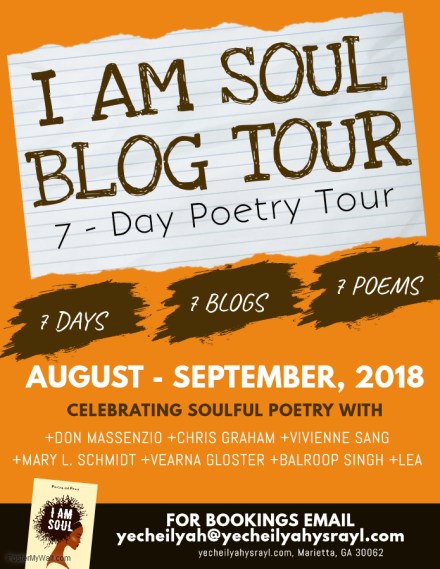
I want to thank everyone who volunteered to host me on their blog for a poetry tour and for those of you who shared the post. I am booked through August and September. If you would still like to have me on your blog (I am writing one new poem per blog visit so this isn’t the same content over and over again) let me know and I will add you to my schedule. If you choose to comment please also email me so that I can send you the required information you will need.

I will publish the dates and times of the tour later this week with links to all the blogs I’ll be visiting. I’d like to wait for a few more confirmations but be sure you are following this blog and my social media for notice. For now be sure to check out the ORIGINAL post HERE to learn more. Also be sure you are following:

Chris Graham

Don Massenzio

Mary Schmidt

Vearna Gloster

Balroop Singh

Lea


Thanks again.

Chat Soon,
EC

You’re Invited

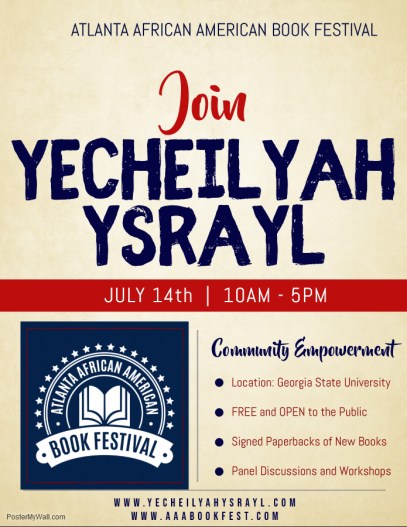
The inaugural  Atlanta African American Book Festival is FREE and OPEN to the PUBLIC and will take place on Saturday, July 14, 2018, at Georgia State University. Over 70 authors will convene in Atlanta to present their work to the Atlanta community. Author categories include fiction, non-fiction, romance, YA fiction, middle-grade fiction, and children’s picture books. Journalists, editors, publishers, literary critics, and scholars from various fields will be present. Panel discussions and workshops will engage festival attendees in topics concerning literary industry tips, civil disobedience, activism, emotional and spiritual well-being, restorative justice, and health and wealth. Children’s activities include a story corner and festival dance floor.

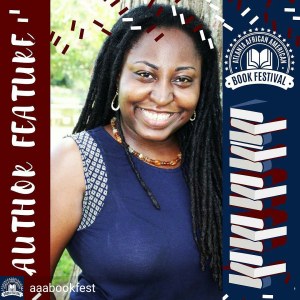
I will be one of many authors in attendance and I would be honored to have your support at my table. Since I did not have a launch signing or gathering for Revolution, I’d like to use this as an opportunity for a post-launch celebration. You will have the chance to purchase signed paperback copies of my two most recent books (and not just mine but other authors too), take pictures, take part in workshops, and meet industry professionals. Again, attendance at the festival is FREE so you’ll just need to make it here (food is not allowed inside the venue but there will be food trucks on the outside). This is not just an entertainment event but we also seek to implement community programming that promotes black literary arts and family sustainability within our community. To check out my AAA blog feature, click here.

Black History Fun Fact Friday – Black Wall Street and the Power of Community

On June 1, 1921, the systematic destruction of years of building was made manifest in less than 24 hours. Also known as “Little Africa,” the black business district of north Tulsa, Oklahoma lay fuming—a model community destroyed, mansions melted down to the ground, hope stretching its mournful arms forward in a desperate attempt to hold on to its dear Greenwood.

It began the same way it always has, with a black man accused of accosting a white woman. On May 31, 1921, “the Tulsa Tribune reported that a black man, Dick Rowland, attempted to rape a white woman, Sarah Page. Whites in the area refused to wait for the investigative process to play out, sparking two days of unprecedented racial violence. Thirty-five city blocks went up in flames, 300 people died, and 800 were injured.” (Fain, Kimberly, 2017)

This was the beginning of what culminated in the destruction of the Greenwood community.

Greenwood is a neighborhood in Tulsa, Oklahoma. It was one of the most successful and wealthiest black communities in the United States during the early 20th Century. It was popularly known as America’s “Black Wall Street” because its financial success mirrored Wall Street. During the oil boom of the 1910s, which gained the town such titles as “Oil Capital of the World,” the area of northeast Oklahoma around Tulsa flourished, including the Greenwood neighborhood. Home to several prominent Black business people, the community held many multimillionaires.

Greenwood boasted a variety of thriving businesses that were very successful up until the Tulsa Race Massacre. Not only did blacks want to contribute to the success of their own shops, but also the racial segregation laws prevented us from shopping anywhere other than Greenwood, forcing us to be in support of our own people and thus contribute to the success of our own people.

300px-Cdm15020.contentdm.oclc.org

Greenwood became the mecca of opportunity to build up what Black people had been denied access to. Instead of complaining, we were not included in the all-white Newspaper we created our own (two). Blacks were discouraged from using the new Carnegie Library downtown for whites, so they built their own smaller all Black branch libraries. Not stressing over being left out of restaurants, grocery stores, and public schools, they made their own on the backs of a drive toward honest entrepreneurship.

Clothes bought at Elliot & Hooker’s clothing at 124 N. Greenwood could be fitted across the street at H.L. Byars tailor shop at 105 N Greenwood, and then cleaned around the corner at Hope Watson’s cleaners at 322 E. Archer. The dollar in this community rotated 36-100 times, taking as long as a year before it left the community (today, the dollar leaves the black community in less than 15mins).

These were not people who started wealthy; they were neither businessmen nor businesswomen, but being locked out the whole of society (stripped from employment in the oil industry and from most of Tulsa’s manufacturing facilities), these men and women toiled at troublesome, often dirty, jobs. They worked long hours under trying conditions, but their paychecks built Greenwood, and their hard work helped build Tulsa.

Following the massacre, the area was rebuilt and continued to thrive until the 1960s, when integration allowed blacks to shop in once restricted areas.

“By the 1940s, the Greenwood District was rebuilt, but due to integration during the Civil Rights era, never regained as much prominence.” – Kimberly Fain, 2017

This community is one example of the power of support, not just for black businesses but for entrepreneurship in general. While liking social media posts is beautiful, it is financial support, dedication, and consistency that ultimately helps small businesses grow into larger companies, support and hire their own, thrive, and empower a community.


Check out more black history fun facts here!

Send Me Your Posts (If you like)

Hey Lovelies,

I am finally settled and have some much needed catching up to do. I don’t even want to look at my TBR pile but reviews will start trickling in here again pretty soon.

Instead of having to search all your wonderful blog posts, I thought I’d open the opportunity for you to share them with me. Help me to catch up with you by sending me your post links. Just comment on this post with a link to your most recent post or the one you’d like me to see. Now, I know Halloween just passed but I don’t do Holidays. I think I should put that on out there. I am not particularly interested in that but anything else you’ve been up to is cool. If you have a new book out, send me the link to that too so I can tweet you out. Just as long as you’re patient, I should be able to touch base with most of you (depending on how many links there are.) Let’s have some fun.

I look forward to seeing what you all have been up to in this crazy world we live in. Chat soon.


Peace

-EC


Yecheilyah (e-see-lee-yah) is an Author, Blogger, and Poet of nine published works including her soon-to-be released short inspirational guide “Keep Yourself Full.” Learn more by exploring Yecheilyah’s writing on this blog and her website at yecheilyahysrayl.com. Renaissance: The Nora White Story (Book One) is her latest novel and is available now on Amazon.com.