Thank You

When I first started this blog I always celebrated the small growth. I have learned to appreciate my journey without comparing it to anyone else’s, to clap for myself without feeling the need to explain it, and to double check that everything I do is in humility and not to feed the ego.

I have learned the importance of owning my stuff.

Owning your stuff means to own your decisions and accomplishments even if others do not deem it important.

Owning your stuff means to be proud of yourself without prefacing it with that insecure, “I know this not as better as some,” stuff.

If you can’t be proud of you, who will?

Stop lessening your value. You don’t have to be like everyone else or do what everyone else is doing. A perfect example is how everyone is going LIVE now. That is great and I love how people are being creative amid this pandemic, but you don’t have to go LIVE if it’s not you. There is no one way to be successful online.

Do what feels right with your soul first because as COVID has reminded us, life is not all about numbers, followers, likes, and it is not all about money. That is not why I acknowledge these mini milestones as I have done since I started this blog.

…but I am getting sidetracked…

Thank you for following this blog, for supporting my writing, and for being a part of this journey.

Thank you.

To learn how the blog subscription works click here.

*I post frequently but you can adjust your settings to determine how often you want to get emails. 

To learn more about me click the about page here.
To visit my author website, click here.

*Note: This is based on the number under the subscription button, not the number that shows up in the reader. 

Enjoy your weekend and please, be safe!

Throwback Thursday Jams: Rick James and Teena Marie – Fire and Desire

This my song ya’ll. Rick and Teena’s voice together is electric…Even though I can’t look at Rick James without laughing thanks to Dave Chapelle.  He flyer than me in those red thigh-high boots 😂🤣

For Those Who Are Sad

Photo by Ye Fung Tchen on Unsplash

Can I cradle you in the nook of my arms? If you were here, would you let me? Hold you I mean? I don’t just want a hug. I want to hold you so we cry together. Kiss the top of your forehead like a mother would. On the shoulder of comfort, let your tears drench my shirt and I will love you like an infant. Can these words hold your head up? I do not want the soft spot of your pain to blemish the fragile newness of the warrior you are becoming. Your critics will look at what you are, but I see what you can become. But you’ve got to let me do my job. Let me hold you. Cradle you in my arms with these words. Cradle you in my arms with this pen. This is not a blog. Not today. Today this is air. This is breath. This is permission to breathe. These are words wooing lullabies for the exhausted spirits of the broken.

Black History Fun Fact Friday: Guest Writers Wanted

Updated: 4/27/2020

On January 17, 2015, I started a new Blog Series in honor of Black History Month called Black History Fun Fact Friday. I planned for the series to run from January 2015 through the end of February 2015, but two badges and 70 weeks later we are still going strong.

Black History Fun Fact Friday is not just a Black History Month segment anymore. It has carved out its own space on this blog. I want to get back to publishing Black History articles every Friday and would love to have some help.

I am reaching out for help from individuals who are interested in helping to contribute to this series.

Requirements:


  • Must be at least 18+ to write for The PBS Blog.


  • Must be original work. Do not copy and paste the article from other blogs unless that blog is your own. If you have a Black History article to share that you published to your site, I welcome you to submit it for Black History Fun Facts. I have no problem with that as long as it is your work. You can also link back to it so readers can follow your blog.


  • Because of the nature of this series, interested writers must be Black/African American.


  • Topics must be relatable to the history of Blacks/African Americans, African diaspora, e.g.


  • Articles must be emailed to me for approval at least one week before publishing. If you email your article on 4/28 for example, I will publish it on 5/1 if there are no needed changes.


  • Please send articles as an attachment in a Word Document, 12p Font, Times New Roman text.


  • Please do your best to self-edit your work for basic typos/spelling/grammatical errors before submission. Grammarly and ProWritingAid are good free self-edit software programs to use.


  • Please include at least one image with the post. Canva is a good program to use to make your own images.


  • This is Black History Fun Fact Friday not Black History Opinions so do your best to submit articles covering accurate historical information. I will vet the submissions to make sure they do. If you have links to sources, please include them. If you quote someone else, please cite your source. Articles that plagiarize will not be featured on this blog. (Note: Writers, as a heads up, if you are quoting people in your Social Media graphics without giving proper credit, this is plagiarism. Putting quotation marks around the quote does not make it yours. Don’t leave off the name of the person who said it first!)


  • Please include a photo of yourself, social media handles, website, or links to books you’ve written on the topic. This will be added to the end of the post.

Benefits of Guest Blogging:


  • Increase traffic to your own website/blog
  • Build Relationships/Online Influence
  • Build Domain and Search Engine Authority
  • Capture Wider Audience (go hand-in-hand with the 1st point)
  • Develop Your Authority on a topic
  • Improve Your Writing
  • Opens the doors for paid business opportunities

Email articles to yecheilyah@yecheilyahysrayl.com.

Black History Fun Fact Friday – The Short Family

This is a real-life case of living beyond the colored line. It starts when a black man named O’Day Short and his family moved to a racist area of Fontana, California, in 1945. Here’s a bit of history behind Fontana:

  • The Ku Klux Klan established its headquarters in Fontana.
  • KKK Grand Wizard George Pepper and White Aryan Resistance (WAR) leader Tom Metzger claimed Fontana and the Inland Empire as their California Eastern Territory for White Supremacy.
  • Hells Angels Biker Gang originated in Fontana
  • Hells Angels and Nazi Low Riders (NLR), flourished in the city of Fontana, with no consequences from the Fontana P.D.
  • Many incidents of discrimination and hate crimes were unsolved and poorly investigated

Fontana has a long history of racism and discriminatory policies, so it is no surprise that blacks were not allowed south of the area. The saying went: “Base Line is the Race Line.” Southern Fontana can be best described as a “Sun-down town,” towns blacks were not allowed after dark. When the sun went down, any black person found in a “Sundown Town,” risked lynching. Read more about Sundown Towns in an older post here.

Carol Ann and Barry Short, along with their parents Helen and O’Day Short, died in a suspicious fire on Dec. 16, 1945, after crossing the color line in Fontana. | Inland Valley Daily Bulletin

When O’Day Short, his wife, and two children moved onto land in an all-white area, neighbors threatened them to leave that neighborhood and occupy one of the ghetto neighborhoods where the town allowed blacks to live.

One interesting thing about the Short family is that they were fair-skinned and many believe this is how they got to purchase the property in the first place. O’Day moved his family into the half-finished home. It is said the man who sold him the land where the house was being built did not know he was black.

When people complained, O’Day got a visit from the sheriff to leave the property. The Sheriff offered to buy the house back, but O’Day refused. The sheriff warned that the “vigilante committee,” will not be pleased. They recorded the visit by the Sheriff in the Sheriff’s office in San Bernardino. According to the report, Short described the threats to the Federal Bureau of Investigation (F.B.I). On December 6, 1945, Short also reported the threats to the Los Angeles Sentinel, an African American Newspaper.

On, December 16, 1945, not even a full month after the Short’s moved in and ten days after the reports, the Short home exploded in fire, the family inside.

Helen Short, 35, and her daughters Barry, 9, and Carol Ann, 7 died.

O’Day, 40, lived long enough to be taken to the hospital. A month later, on January 22, 1946, he also died.

They have linked the cause of the fire to an oil lamp O’Day was lighting when the tragedy occurred. The interesting thing about these reports is they didn’t mention that the Shorts were black, not in 1946 or later when the story resurfaced.

The NAACP hired an arson investigator later to investigate the story. The investigator reported that the kerosene lamp was found and almost intact, determining the fire was set, from the exterior.

I decided the Short Family would be the subject of this week’s fun fact because of the limited information that can be found on them. It was many years later before the NAACP launched their investigation and people even knew their story.


Read more Black History Fun Facts here.

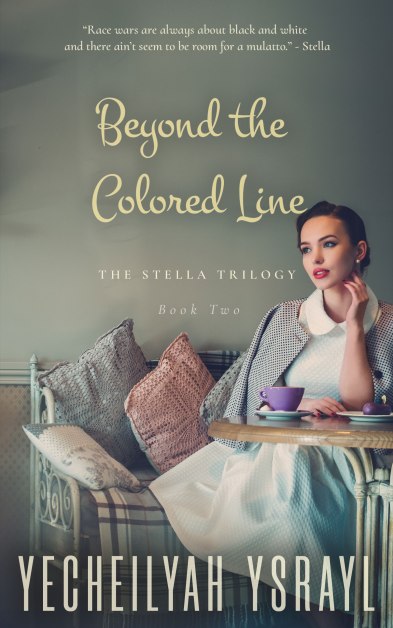
Read  Stella: Beyond the Colored Line, my historical fiction account of what life was like for blacks beyond the colored line here.

Stella: Beyond the Colored Line is Live (The Stella Trilogy Book 2)

Beyond the Colored Line is LIVE
“This story retells the history of many African-American families alive today. It is a heritage rich with strife and suffering but also filled with a hope and a desire to finally grasp the freedom that has been so elusive and out of reach for so many. At times, I was forced to accept some uncomfortable truths about our American past. There is nothing wrong with that. This story makes you think about freedom and what it really means to you as a person, and as an American. I loved this story because it is through the learning of other’s journeys that we begin to learn much about ourselves. Their pain becomes our pain and we begin to see through their eyes. Stella will touch your soul with such a sweet simplicity you won’t even know it.”

– Colleen Chesebro, on Stella: Beyond the Colored Line, First Edition

About.

In book two, we dig deeper into the McNair family’s legacy. Named after her great-grandmother, Stella has a very light complexion which causes her to be the tease of her classmates. Unable to find solace among her African American contemporaries, Stella finds it challenging to adjust to a world where she is too light to be “black.” After The Great Depression of the 1930s forces Stella’s family to move to Chicago, a conversation with Aunt Sara provokes Stella to do something that will dramatically affect not just her life but the life of her children and grandchildren.


Excerpt.

1928

Daddy runs off to no one knows where on account of his life. Some racist whites had seen him and Mama together and threatened to lynch him if found, so he runs off. The community gossip is that his brothers know, but they won’t say. We weren’t alone, though, Mama and me. It seems like Mama filled the hole where Papa should have been with our whole family. The house always stayed filled with guests, my people, and peoples of my people. My granddaddy was a colored man and owned this land. My namesake, his Mama Stella, was a slave and was given this house by her owner. As the story goes, after Grandma died, I was born. Since Mama was the closest, she named me after her.

My aunts would gather around the table with my mama, and they laugh and cry most of the night about their girlhood. They would talk about what it was like being four mixed girls in Illinois. I don’t have uncles on my mother’s side, but Daddy got six brothers.

Due to the controversy around my parent’s relationship, Daddy being a Negro, and Mama being half-white, they only visit on special occasions. Uncle Roy, Daddy’s younger brother, says Mama acts differently around her sisters and that we too uppity, especially Aunt Sara. She’s the youngest of my aunties and the most spoiled. She’s the one who convinced Mama to send me to a white school in the first place, and boy was my uncles hot! They said we were breaking the law–that a Negro had no business in a white school. But Aunt Sara said I had all the right in the world since I was half white. For her, not only could I do this, I had a right to do it.

“But does the school know she a Negro?” Uncle Roy would ask.

“That’s none of the school’s business, now is it?” Aunt Sara would say, and they’d go back and forth until Mama break it up.

Not all talks were good talks. I used to sit until my eyes were red with fatigue to hear Mama and my uncles talk about all the killings that were taking place around the country, and especially in the South. I felt like I lived in two worlds, one black and one white, but none mixed. And what did that mean, mixed?

My aunties wanted to talk about education, family, career, and navigating the world as a mixed-race person, whereas Daddy’s side liked to talk about the black condition, what was going on in the black community, and what it meant to be black in America. They talked less about blacks navigating a world that they felt didn’t include them, and more about blacks redefining themselves and creating their own worlds. The conversations were intriguing and fascinating on both sides, but it left me feeling like my very body was a contradiction. Was I white? Was I black? Race wars always involved these two groups of people, and there ain’t seemed to be room for a mulatto.

“That’s what I say,” said the voice of Uncle Keith, Daddy’s second oldest brother.

“Up there in Minnesota.”

“That close?” Mama gasped.

“Yeah, that close. What woman, you living under a rock? They just had one over in DeKalb last month,” said Uncle Roy.

“It’s a crying-out-loud shame,” continued Keith. “Say they dragged the boys from the cell and a whole mob of ‘em lynched ‘em. Say it was ‘bout a thousand of ‘em.”

“My my,” said Aunt Rebecca.

There were times even I witnessed evidence of the events rocking the country. One day, Mama and I went to visit Cousin Mary in Texas and drove the truck up to a general store. We walked in, and I picked up a postcard from a rack. It was of a man hanging on a tree that supported an iron chain that lifted him above a fire. The man didn’t seem to have much of a body left. They cut his fingers off, his ears and his body was burned to a crisp. On the back of the postcard read: “This is the barbecue we had last night. My picture is to the left with a cross over it. Your son, Dan.”

I learned later the picture was of a seventeen-year-old mentally ill boy named, Johnny, who had agreed to have raped a white woman. And everybody at home still talked of the Cairo Circus of 1909, the public lynching that took place here in Illinois. I couldn’t understand why Mama was so upset about a circus until I found out what kind of spectacle it was. My aunts didn’t want anything to do with the land or the house because of events like these. They say it’s too close to slavery. No one wanted to inherit the home or the property, but Mama, and this is how I spent several years of my life living in the same house where my great-grandmother had been a slave. Mama kept the house full of guests by renting out rooms to help with her washerwoman salary.

We weren’t much of a churchgoing family, party going is more like it, unless Mama wanted to show off a new dress or hat when somebody died or needed saving and on holidays and such. Folk would come from all over southern Illinois to hang out with “Cousin Judy.” Sundays sure were fun, my second favorite day of the week. Saturdays were my favorite day of the week. It was the day for shopping, and that only meant one thing, Chicago.

First, Mama would wake me to the smell of biscuits or pancakes. This massive breakfast was to keep me full enough throughout the day, so she didn’t have to worry any about food buying. Then, she commanded me to bathe real good, paint my arms and legs with coconut oil, untie my curls, and we’d both put on our Sunday’s best and be two of the most beautiful women you’d ever seen. I was a young lady now, and shopping was the best thing for a young lady, next to boys, but you couldn’t like them in public.

You could like shopping, though, and I loved going from store to store in search of the finest. I skipped along while Mama scanned the insides of magazines for stuff she heard about from the white women whose laundry she cleaned. We would squeeze our way through crowds of people, just bumping into each other. Everyone dressed in their weekend wear and bought ice cream for their children. Some went to see the picture show, and so did Mama and me. We could buy candy or jewelry, or perhaps a new hat or two. We could drink from water fountains without a label and spend money without prejudice.

We had a good time on Saturdays because on Saturday, no one knew we were colored.
Click here for a signed paperback
of Beyond the Colored Line

*Click Here to get it on Kindle

Haven’t read book one? Get it for 99cents on Kindle here or in paperback here.
*Paperbacks ordered today will ship next week.

Yecheilyah’s Book Reviews – The One Discovered (Chronicles of the Diasodz Book 1) by Yvette M Calleiro

Title: The One Discovered (Chronicles of the Diasodz Book 1)

Author: Yvette M Calleiro

Print Length: 310 pages

Publisher: Yvette M. Calleiro

Publication Date: January 25, 2014


Sophia’s life is normal for a seventeen-year-old. She is finishing her last year of High School and dating her best friend even though the relationship lacks passion. What’s full of passion is Sophia’s dreams, where she meets a sexy young man named Ar’ch (R-rick). When he shows up at the restaurant Sophia waitresses at though, she is taken aback. How is it possible that the man in her dreams can show up in real life? The truth is Ar’ch is not a man, but a Diasodz. The Diasdoz are creatures created by the Goddess to protect and heal humans. According to the story, when God created humans, the Goddess created the Diasodz (Die-ah-sodz).

I enjoyed this book, and I am looking forward to reading book two. The story maintains a good pace, and the author keeps us in suspense just long enough to reveal snippets of the truth about Sophia and her true identity. Sophia is also a Diasodz and Ar’ch and his brother Angel has returned to take her back so she can fulfill the prophecy that foretold of a girl born on Earth who would save their kind.

I like to read poetry, historical fiction, memoirs, and self-help but I have a secret love affair for Sci-Fi-, Fantasy, and Thriller books too (my first published novel was a Sci-Fi thriller), but they have to be good for me to deviate from my usual and this one was a nice diversion.

I like that the author doesn’t pour revelations out at one time but revealed when necessary as the story progressed (like through dialogue). I noticed some minor errors, and the book is a bit lengthier than I think it needs to be but it didn’t distract me from the story.

The author is creative in distinguishing the Diasodz from humans which makes this a fun read as we learn about their powers, the difference in time between their world and Earth and see their powers manifested through Ar’ch and Angel. The Diasodz reminds me of the Watcher angels spoken about in some biblical books such as The Book of Enoch who was charged with the duty of watching over mankind.

This is a fiction novel but I actually do believe there is a parallel universe we cannot see, a spiritual world, alongside our physical one. I believe there are things that happen on the physical but also the spirtual except we can’t physically see the spiritual so I loved the part when Ar’ch and Angel were fighting the deminions (lower-level demons) but to Sophia it looked like they were staring at the fountain.

I look forward to learning more about the Diasodz, the Goddess, and more about Valorie and Nolan and what the other world is like. I want to know what Damiana and Drake are really up to and if Mel had a greater role than being Sophia’s best friend. What was she doing at the Main Street Fountain, anyway? And I don’t believe what she said to Sophia about that phone conversation either. I wonder if she was talking to someone else. Her constant proclamations about how she’s there for Sophia just seems kinda fake, so I wonder if there’s something else going on. And what’s with Sophia’s mom Liana staying behind? Something smells kinda fishy and I’m excited to find out.

I wanted to read a later book in the series but I’m glad I started at the beginning!

Plot Movement / Strength: 4/5

Entertainment Factor: 4/5

Characterization: 5/5

Authenticity / Believable: 5/5

Thought Provoking: 5/5

Overall: 5/5

The One Discovered is book one in a five part series and the first two books are free!


Disclaimer: My book review registry is still closed. These are reviews of books I have read on my own. To learn more about my registry be sure to visit the Blog Book Review Policy page here.