
Tag: authors
Self-Publishing: Do Your Research!
When a writer sits down to write, he does not fully understand the capacity of that in which he seeks to embark. When he runs his fingers across the keyboard, or scribbles his heart into ink, he does not fully realize the power of his actions. Who would have thought a single chapter could change the world? The life of a Self-Publisher does not fully evolve until after the book is done. He does not see the many hats that must be worn in order  that the world may feel his voice, or sniff out his vision. What Self-Publishers are doing today is very powerful. Just by writing one book we are becoming professionals in fields that people have gone years studying in schools. People have invested in years of schooling in that they may understand how to properly market, promote, and format documents and here you understand this thing just by publishing a book alone. If that is not power, I do not know what is.
 The first book I published was a collection of essays that none of you would probably read. It started as an assignment from my English Professor in College “Does Racism in America Still Exist?” I wrote so much I could not stop writing. I wrote and read, and wrote and read, until the paper became a book, a 3 part book to be exact. Then I had a brilliant idea: “I’m going to publish it!” When this thought entered my mental space it wasn’t occupied with much else. I didn’t even see it as Self-Publishing in particular. I did not say to myself, “Self, we’re going to Self-Publish a book.” For me it was simply, “I’m going to publish these papers.” And that was the extent of my brilliant idea. I had no intention of sharing it and no other ambition beyond that. In the end, I gave copies to some family members and college buddies but that was it. I was not interested at the time in Self-Publishing nor did I even know what it was. I always wanted to be a published author, but Self-Publishing in particular was not part of the plan. It would be years later before I actually took the concept seriously and before I understood what it was in it’s full capacity.
 When I first started out, The Self-Publishing Industry was not like it is today. In fact, it wasn’t really an industry at all. Of course, in 2007 Self-Publishing existed, but there was not the same amount of information available to Self-Publishers that there is now. We are in the age of information and in just a few short years Self-Publishing ballooned into a plethora of opportunity for authors. Self-Publishing blogs are going viral and men and women alike are making thousands, some millions, of dollars from the expertise they are able to provide on the topic. Regular, ordinary people are making something of themselves by being a part of what they were told only those with Master Degrees and PhD’s could do. But, to aspiring writers who wish to Self-Publish, I beg of you, please, do your research!
 I know we do not live in a fair world, but nothing is more unfair to me than a teenager who decides he or she will write a book and publish it and yet have no idea what is necessary to do this. There is nothing more aggravating than for me to hear a young person say that they are publishing a book, and when I ask them what POD company they are going to choose, or if they are going to purchase their own ISBN number, or their marketing plan, they have no idea what I am asking of them. All of this work, and someone’s kid is just going to write a book because its fun. How can you write a book and not understand the basics of print book formatting? Do you even know what that is? Do you even know what POD stands for? Most importantly, do you know there are tons of resources available to help you to find the answers to these questions? I am not talking about places that require hundreds of dollars of investment; I am talking about places that require only pennies. And if you do not have the penny, there are tons of free resources as well. In fact, you need to make sure that Self-Publishing is even a route you want to take. Self-Publishing is hated enough as is because big publishing houses are not making as much money. People are not forced to Self-Publish, people are choosing to Self-Publish. The problem however, is that people are not researching this industry and making sure they understand what it means to be a part of it. Mediocrity in Self-Published books is not just because of poor editing, book cover design, etc. No, mediocrity is rooted in writers who do not research their field. This is how poor cover design and poor editing is even born.
 But times are changing and the industry is not like it was in 2007. No longer can Self-Publishing be stigmatized as a field of nonprofessionals. With the amount of information out today, a nonprofessional product can only be the fault of the author and the author alone, not the industry in general. Being a Self-Publisher alone does not automatically degrade the quality of work, but the lazy work of the Self-Publisher can. I am not saying I have it all together but please research what you want to be apart of. Today, there is a host of information available to help us to get started or to sharpen our skills. So to those who are currently writing books and are seeking to be a part of the Self-Publishing field for the first time, stay encouraged. And please, I cannot stress this enough, do your research. You’ll be thankful for it in the end. You can start off with something as simple as a Google Search. And because blogs are doing so well these days, a lot of the information you’re looking for can be found right here in the blogosphere. One blogger who is always on her game with research for Self-Publishing is my good friend Colleen Chesebro. Colleen is writing her first book and is always on point with her research. She is a great example of what to do as you are writing. You don’t wait until you are about to publish a book to find out how to do it. Ttake some time out of your day and walk around the neighborhood. You’ll be amazed at what you’ll find.
Book Review Shipments: April 30th – May 4th

Good Evening Everyone,
This blog is usually inactive on the weekend, but this is a special notice for Book Review Recipients:
In a couple of weeks my husband and I will be doing some traveling. As a result, this blog will be inactive, closed, for the following dates:
Thursday, April 30th – Monday, May 4th
Part 3 of the Stella series will be the last post published on Thursday morning (12am) April 30th for that weekend.
If you have undergone the questionnaire for Book Reviews and are planning to ship your book between these dates, please note:
The time frame for books sent in for Book Reviews that arrive right before or during my travels does not officially begin until after May 4, 2015, when I come home and have received your book in the mail. Please email me for any questions, comments, or concerns during or before this time per Book Reviews, current or new inquires. I am always locked into my email so I will still be able to address your concerns. Thank you for your patience.
– EC
email: ahouseofpoetry@gmail.com
Self-Publishing – DIY Promo Tools
 With the ever growing sea of Self-Published books, it is easy to throw up one’s hands under the pressure. One of the most challenging aspects of the process is finances. Many Self-Publishers do not have the money to invest. However, with Self-Publishing being the desired avenue for most authors, it has become an industry of itself and as such, there are tons of avenues out there we can follow to ensure a professional product. There’s Fiverr for example, where one can purchase a book cover design for as low as 5-$10. There is low cost editing options and even people willing to do free book reviews. Below are 15 DIY tools to help Self-Publishers to promote their books for next to nothing by Tony Levelle. I don’t believe you’ll have to use them all or that they will all work for you, but I think this is a good start for anyone looking to Self-Publish: I intend on using some of these bullet points myself and so I just thought I’d share them:
****************************
No matter what kind of book you’ve written (or plan to write) there are many ways to reach your audience. Each of the DIY tools listed here is low or no-cost, and each of them works in its own way. One or more may be perfect for you.
1. Start Early
The most powerful and essential steps you can take toward promoting your book begin long before the actual writing of the book. Three years before the book is published–if you can–start building a network of supporters and reviewers. Keep track of everyone you meet as you research and write the book. Pay special attention to, and make notes about, those who demonstrate a genuine enthusiasm for you and your project.
As the project evolves, keep in touch with these people. You might send them an occasional email or keep in touch via a social networking site like LinkedIn or Facebook.
For significant milestones–the signing of your book contract, the completion of the manuscript, the arrival of the galley proofs, and the arrival of the finished books–you might bring key people together for a house party. At the house party, you could read short excerpts from your book and answer questions about the project.
2. Contribute to Web Forums
Every field has at least one or two forums that people interested in your subject know and read. Find and join these forums.
Contribute to them freely. Give advice and reach out. Offer to help others. Put a link to your blog or website in your signature line. When you have a book contract and/or a book title, add the title to your signature line.
3. Start a Blog
Early in the process of researching and thinking about your book, start a blog. Add 120-130 words each day of helpful, inspirational information on issues in your field, which are related to the subjects in your book. Aim to create a genuinely useful body of knowledge over the following 12 months.
4. Write a Remarkable Book
Set out to write a remarkable book. If your book is not remarkable, keep working on it until it is. Give the manuscript to ten friends and ask for honest feedback. Find a brilliant editor (you can find such an editor at EFA) and pay him or her to edit your manuscript. Revise. Repeat. Don’t stop until your reviewers start saying things like: “I loved it! This book is amazing!”
A remarkable book will generate word-of-mouth publicity. One person will read it, and recommend it to his or her friends. They will recommend it to their friends. This is the best publicity you can get.
5. Cultivate a Positive Attitude about Book Promotion
Think of book promotion as storytelling. The story you are telling is why you wrote your book, how it can help others, and how the world will benefit from your book. If you can develop a positive attitude about book promotion, people will pick up on it, and tune in immediately. Some writers resent the chore of marketing. Their attitude seems to be, “I’m a writer. Marketing is the publisher’s job. Promoting my own book shouldn’t be my responsibility.”
Unfortunately–unless you are Stephen King or Malcolm Gladwell–the publisher probably won’t have the budget to market your book. If you don’t promote your book, no one else will.
6. Create a Media Kit
Your media kit should include:
* Professionally printed business cards with the book cover on one side and your contact information on the other side. Do not try to print them on your home printer. This is a time to invest in your product and yourself, not save money.
* A headshot by a professional photographer or a talented amateur. It should be well lit, with a neutral background. Your eyes should sparkle.
* A 100 – 150-word biography. The main purpose of the biography is to tell a reader why you are uniquely qualified to have written this particular book.
* A ‘one-sheet’ for the book: a single piece of paper with a glossy print of the book cover on one side and a one-page description of the book on the other side. Be sure to include a few short blurbs and recommendations from colleagues and friends in the description.
7. Create a Book Pitch
Consider writing at least three sales pitches for your book: 10 seconds, 30 seconds, and 60 seconds. When someone asks what the book is about, give them the 10-second pitch. If the person responds with interest, have a longer pitch ready! Practice your pitches on friends until they tell you the pitches work.
8. Build a Website
As publication day approaches, build a full website. The website should include:
* A book blog, in which you write updates, corrections, errata and respond to reader comments and suggestions. This book blog may become the basis for the second edition of your book.
* Sample chapters from your book
* A link to the Amazon page for your book, so people can buy the book online
* Your media kit (see step 5)
* Book reviews and blurbs.
* Your schedule of appearances, including bookstores, speaking engagements, and conferences
* Contact information.
9. Get Book Reviews from Individuals
Six months (nine if possible) before the book is due to appear in bookstores, start asking people for reviews and blurbs. Send reviewers a printed galley proof of your book. If you don’t yet have printed galley proofs, send a PDF containing the first two chapters, a table of contents and your bio.
Don’t be afraid to approach the ‘biggest names’ in your field. (This is important.) Ask for both reviews and blurbs. Busy people may only have time to write a few sentences. A word about PDFs: check with your publisher about their policies on review copies. Many publishers will NOT allow you to send out a PDF copy of the entire book. They are afraid the book will be stolen.
10. Write Articles
Every field has eZines, websites, and magazines that advocate or deal with the subject of your book. Find them. Once you know where they are, look through them and figure out which ones talk to the audience for your book. Contact those sites or publications and pitch articles that will be of interest to their readers. Schedule articles to appear around the time your book will appear in bookstores and on Amazon. For example, if your book is going to appear in bookstores and on Amazon in mid-June, schedule your articles to appear in July, August, and September. Remember to pitch articles early, because many magazines and eZines have a 3-6 month lead time. Mention your book title somewhere in the article. In online articles, link the book title to its Amazon page so readers can click over and buy the book.
11. Get Book Reviews from eZines and Magazines
Ask websites, eZines and magazines in your field to review your book. Some websites or eZines may offer to trade, to review your book if you write an article for them. For example, earlier this year I contacted Writers Store and offered to write an article about what I learned while promoting my most recent books: Producing With Passion and Digital Video Secrets. This article is the result of that contact.
12. Get 20 Amazon Reviews
Amazon reviews are amazingly effective. Everyone from book buyers to publishers reads them. Your goal is to get at least 20 reviews. Contact everyone you know and ask each of them if they would give your book an honest review. Let them know it can be brief. If they agree, send them either a galley proof, a promotional copy of the book, or a PDF containing a table of contents, two sample chapters, and your bio. Amazon’s Top Customer Reviewers are another source of high-value reviews. Find the reviewers who deal with books in your area. Write to them. Tell them you have written a book they might be interested in, and that you’d appreciate a review. If they respond, send them a galley proof or a promotional copy of your book.
13. Get Mentioned in email Blasts
Look for organizations in your field that send large-volume emails. Try to get your book reviewed in their email or newsletter. When the number of people receiving the emails is 100,000 or more it’s sometimes referred to as an email blast.
14. Speak at Conferences
As a published author, you have the qualifications necessary to speak at conferences. Contact conference organizers at least 6 months in advance. At first, you may have to register and pay a fee to speak. Later, when you become better known, conferences may seek you out, and may even pay you to speak.
You should be prepared to give a 45-minute presentation. A useful way to structure a 45-minute presentation is to speak for 30 minutes, and take questions from the floor for the last 15 minutes. Plan to take a few minutes after your speech to circulate with the audience. Have a table in the back of the room where you or someone on your team sells books.
15. Make and Post Online Videos
Make a few 5 minute videos (or a series of videos) of yourself talking about key issues in your field. Put the book title and URL on the bottom of the video screen and in the credits.
Post your videos on several of the many video sharing sites including sites like blip.tv, jump cut, our media, Vimeo, vSocial and YouTube. Embed the video clips on your website.
Plan on following your promotion plan–perhaps an hour a day–for at least a year. Resolve to do something every day on promotion. Remember – follow-up and persistence are the keys to success.
*****************************
I hope this list has been of help to you. In addition, if you’re a Self-Publisher and you are interested in letting me read a copy of your book in exchange for an honest review, please send me an email and I will give you the details. I will read your book for free and offer my opinion. Why am I doing this? Because as a Self-Publisher I know how tight finances can be and that every little bit helps. I have some time to read and would love to see what you have to offer.
Email: ahouseofpoetry@gmail.com
Writer’s Quote Wednesday – Appreciation
Welcome back to another episode of Writer’s Quote Wednesday, hosted by Silver Threading. Today’s Quote is from Epicurus:

“Do not spoil what you have by desiring what you have not…”
There is nothing more arrogant than not accepting or appreciating what we have in the moment in which we have it. In a world of instant gratification we are always looking for the next big thing. Even the small things. Did you pay your rent or mortgage this month? Good, enjoy your home. Why worry about next month when that moment has not yet arrived? And who said you will live to see it? At one point you could only dream of owning a home or renting one this beautiful, don’t ruin it by desiring something that is not yet in your reach, or in your time to possess.
People and situations, no matter how exciting or distraught, come into our lives for a reason. Everyone you meet and everything you encounter has something to teach you. Sometimes we forget to take things as they are. An ugly situation must be accepted for what it is before we can properly act on it, and to navigate that situation. An ugly person even has to be accepted for who they are, for in the twisted way of things, even they have something to teach us.
About the Author:
 Today’s quote is a new one for me because I don’t really get into the whole philosophy thing. But Epicurus was an ancient Greek philosopher as well as the founder of the school of philosophy called Epicureanism. Only a few fragments and letters of Epicurus’s 300 written works remain. I chose this quote not for its author but for the quote itself. I don’t know much about Epicurus nor am I a fan of his but that fact became, unintentionally, symbolic in and of itself. For example: According to Wikipedia:
Epicurus is a key figure in the development of science and scientific methodology because of his insistence that nothing should be believed, except that which was tested through direct observation and logical deduction.”
While I absolutely disagree, I was still able to learn something from the quote itself and apply it to my personal walk in a way that is relevant to me without sacrificing my understanding or being redirected.

Thanks for joining us for another episode of Writer’s Quote Wednesday! Be sure to run on over to Silver Threading to see what the fun is all about.
http://silverthreading.com/2015/03/18/writers-quote-wednesdayoscar-wilde/
Writer’s Quote Wednesday – Happiness
When I saw this quote on the Book Rags Facebook Page, I knew I wanted to use it for Writer’s Quote Wednesday:

I had to read this a few times before ascribing to understanding its meaning. Then, I had to read it again because of its beauty. Here are my thoughts on its meaning:
Happiness is such a nourishing feeling that it does not resolve to be stagnant. Happy people are continuously striving to be happy. They are smiling people, complimenting people, grateful people, and they have something good to say about each day. Even in the midst of trial, happiness will always seek that excitement. While it may have settled to drink of its own glory, its wings will still move toward the direction of that which is good.
“Happiness is excitement that has found a settling down place, but there is always a little corner that keeps flapping.” – E.L. Konigsburg
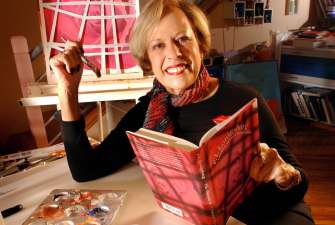
I am not familiar with Konigsburg, but interestingly enough I was not surprised to find that she was a writer and illustrator of children’s books and young adult fiction. To me her quote became so much clearer, since there is something fresh about young people that is always exciting, especially small children.
She is one of six writers to win two Newbery Medals, the venerable American Library Association award for the year’s “most distinguished contribution to American children’s literature.”

Be Sure to Check out:
Writer’s Quote Wednesday, every Wednesday on Silver Threading.
If We Are Not Ourselves
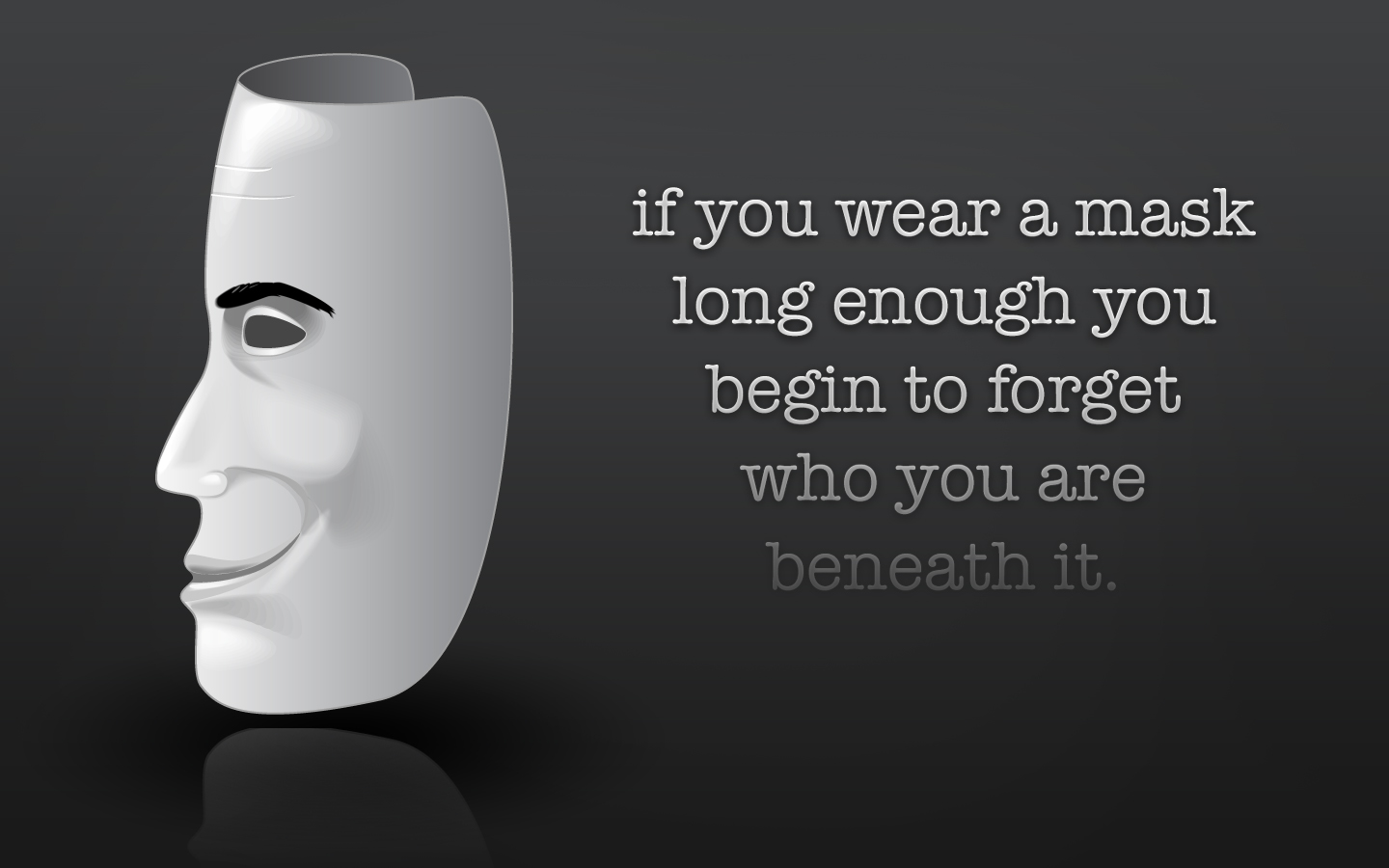
“As long as we are not ourselves, we will try to be what other people are.”
-Malidoma Patrice Somé, West African Writer (Of Water and the Spirit)
 The PBS Blog