Stella is a work of Historical Fiction and is distinctive in its focus on one woman’s road to self-discovery, against the backdrop of the African American fight for justice, racial equality, and freedom. The 3-Part series focuses on the history of one family in their struggle for racial identity. We discover in this Trilogy how three individuals living in separate periods strive to overcome the same battle, carefully knit together by one blood.
These books were first released in 2015 and helped elevate my writing to another level. These were not the first books I had ever written. Still, they were the first books to appeal to people outside of my circle and were my first Historical Fiction books.
I took the risk of removing them to get them re-edited, re-formatted, and the covers recreated.
I am happy with my decision and even prouder of this work. I get to relaunch these books and reach more readers of African American Historical Fiction. I am hoping to at least sell 50 copies of book one to start (at least 25 ebooks, 25, print books), and I hope you can help me with that!
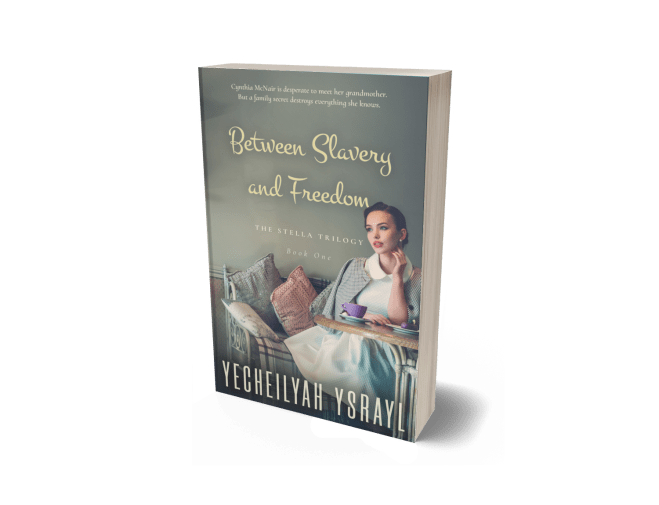
Stella: Between Slavery and Freedom
In book one, Cynthia McNair and her boyfriend, Alex, express some racists’ feelings toward blacks. They visit Cynthia’s Grandmother Sidney McNair, who recounts the story of her ancestor, a slave named Stella Mae. Cynthia has no idea of her African ancestry or how deep this rabbit hole goes.
Book one is available now for preorder in digital and print. Release day is March 24th.
The preorder price is 99cents but will go up after release, so you want to take advantage of this.
Preorders are also available in paperback through my website. Paperback books are signed and will ship the first week of April.
*If you already read this series, you should know book one has an alternate ending! The story is the same, but the books are better polished, and each book flows smoothly into the next book. This time, while the books can be read alone, they are much more in a series format. You will want to read all three books to get the full picture. Well worth re-reading!
This song is deep. If you can’t see the video, look it up in your country. It’s called “Brenda’s Got a Baby” by Tupac. The song is based on a true story. In March of 1991, The New York Times published an article about a baby who was saved by maintenance men from a trash compactor (umbilical cord still attached) where his 12-year-old mother put him. The maintenance men heard the baby’s cries and called the police—the baby was ultimately placed in Foster Care.
The girl got pregnant as a result of being raped by her cousin. The inspiration for the song came when Tupac read the story in the NYT when he was filming the movie Juice. They filmed the music video in January 1992.
This isn’t the first time Pac’s done this either. He dedicated lyrics to Robert “Yummy” Sandifer, the 11-year-old who died in Chicago and garnered National Attention (the catalyst for the tearing down of the Chicago Projects, read more about him in my post here.) And the killing of Latasha Harlins, a 15-year-old Black girl killed by a Korean store owner in 1992, where he dedicated the song “Keep Ya Head Up”, saying in his sophomore album, “because a bottle of juice is not something to die for.” Latasha’s death, along with the beating of Rodney King that same year, became detonators of the 1992 Los Angeles riots.
Like I said on this blog before, black music and television are also part of black history. I put the most powerful lyrics (in my opinion of course) of the song in bold below.
“Now Brenda’s belly is gettin’ bigger
But no one seems to notice any change in her figure
She’s 12 years old, and she’s having a baby
In love with the molester, who’s sexing her crazy
…he left her, and she had the baby solo
She had it on the bathroom floor and didn’t know so She didn’t know what to throw away and what to keep
She wrapped the baby up and threw him in the trash heap…”
I hope you are all doing well amidst this Coronavirus mess and that you are safe. I had an emergency to take care of this morning that did not allow me to access my computer and my phone died, but for those of you wondering, yes! LitMag 2020 still releases today!
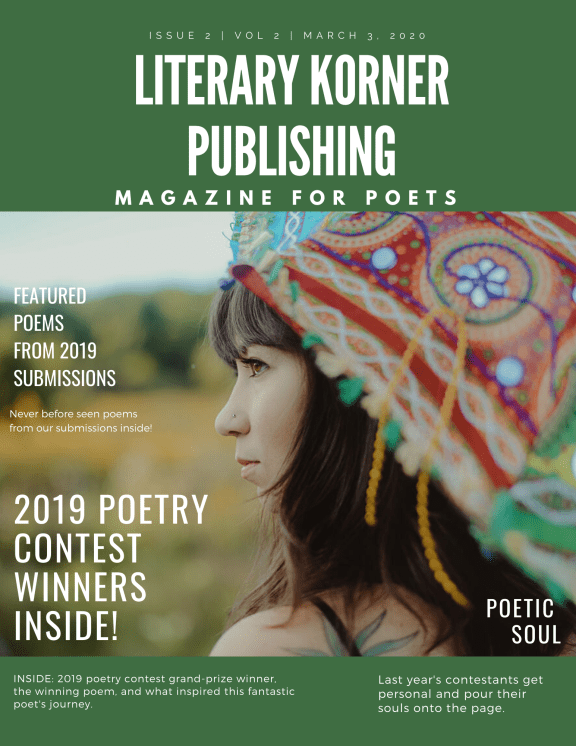
LitMag is the Literary Magazine for poets I established to feature, promote, and highlight the winners and contributors of “Yecheilyah’s Annual Poetry Contests.” It grew out of a desire to give the poets another platform to use to showcase their work outside of this blog and social media. The mag is still in its early stages of development but who knows what it can become.
LitMag 2020 is Volume 2, it is out in digital and print and available on the site (link below). This year we are featuring winners and contributors from our 2019 contest. Inside: Poems from Chanelle Barnes (she’s on the cover!) BuddahDesmond, Dondi Springer, Kiyana Blount, Jahkazia Richardson, Zerahyah Ysrayl, Karen Abah SoFloetic Jones, Ivy Mae Tolentino, and Michelle Stevens. Special thanks to Lisa W. Tetting and Tehilayah Ysrayl for their assistance with last year’s contest.
I am always thinking about why Stella is so set-apart. Why are these books so effortless for me? The first time I released the series, things went smoothly, and the same is happening now. I can sit down, open Stella, and flow (or as I told a room of students, I sit down and bleed, to quote Hemingway).
A good fiction book, to me, has great character development. The characters are realistic in dialogue, how they talk to each other, what their lives are like, the decisions they make, and so on. When I am writing novels, I typically write Historical Fiction, so setting and dialogue are paramount. The setting is a significant element because the environment affects the plot and the characters. A story set in the 1800s must have language authentic to that time, and the characters must speak and interact like they are in the 1800s, not 2020.
My books tend to include a wide selection of people, some minor characters, some major characters. This is risky, but I’ve been told it’s one of my strengths. Somehow, I am capable of keeping up with everyone and letting them interact authentically.
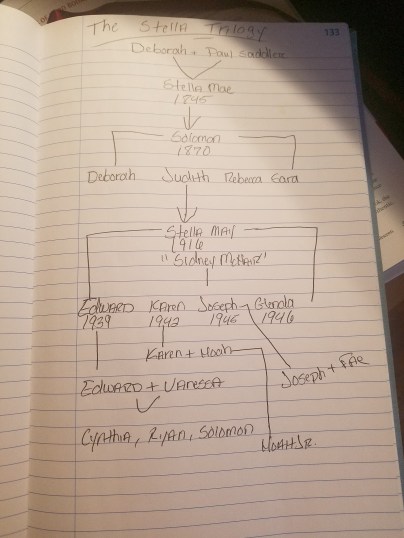
Family Tree
I’ve never fleshed out a family tree with any other series as I have with Stella, and I think it has helped with the writing. It doesn’t mean everyone in the tree are part of the central cast of characters or that I should include every detail, but it does make it easier for me when I am writing to remember who belongs to who. Stella is a short series (each book only about 100-115 pages). As Nathaniel, Hawthorne says, “Easy reading is damn hard writing.” Some may think a short book is quick and easy to write, but this is not so. It’s an easy read but requires just as much work as a full-length novel.
Let’s meet the family!
Paul Saddler and Deborah – Saddler is the owner of slaves on The Paul Saddler Plantation, including a young woman named Deborah. In 1845, Paul and Deborah had a little girl named Stella.
Stella and Solomon – Stella later gives birth to a little boy named Solomon. He is very light-skinned with jet black hair and green eyes like his father, John. Stella met John through her sister Clara, but you’d have to read book one to learn more about this awkward relationship.
Solomon– Solomon marries a white woman, and together, they have four girls: Deborah (named after Stella’s mother), Rebecca, Judith, and Sara.
Judith– It is in book two, we see that Sidney’s mother is Judith. Judith dates a black man and gives birth to a little girl she names Stella, in honor of her grandmother. But this Stella changes her name later in life (you have to read the book to find out why) to Sidney. Sidney marries a white man named Clarence McNair. Sidney and Clarence have four children: Edward, Karen, Joseph, and Glenda.
Edward– Edward marries a white woman named Vanessa, and together they have three children, Cynthia, Ryan, and Solomon. Ryan and Solomon aren’t major characters, but Cynthia is.
Karen– Karen dates a Black Panther in the 60s named Noah, and together they have a son, Noah Jr.
Joseph– Joseph marries a black woman, Fae, and together they have a boy and girl, Tanya and Micheal. It is in book three we learn what happened to Joseph after he left his mother’s house after the fight with Edward in book two, how he met Fae, and how he got mixed up in The Freedom Rides and Civil Rights Movement. His children are minor characters but add to the family tree and help to establish the depth of Jo and Fae’s relationship.
Glenda– Glenda is a single mom raising triplets, all boys.
In book one, we meet everyone here, including additional characters like Paul’s wife Elizabeth and their daughter Clara, Stella # 1’s friend Lola, Aunt Cecily, and others on the plantation.
What does writing out a family lineage as this do?
It helps me to create vivid characters. Everyone didn’t come to me at once. I started with the first Stella and her mother, Deborah. The first time we go back to Stella’s time in book one, that first chapter is what started the series, with Stella and her mom at the store and Stella trying to tell mom she has to use the bathroom. I then went back to write what became the first chapter, with Cynthia and Alex later.
Even though the book is called The Stella Trilogy, I wanted to focus in on Cynthia in book one to explore how not passing down history can affect our children. In book two, Cynthia is two years old, and the year is 1979. In book one, we opened in 1996, and Cynthia is a young woman. The decision her dad made in ’79 causes her to grow up and not know who she is. We recount Stella’s story in book one because it is the glue that ties everything together. We then go backwards with books two and three to see just how things unfolded.
Why does Cynthia express racists thoughts toward blacks even though she has black blood? Why did Edward leave his daughter in the dark about the true nature of her race? What happened in 1979? What is Mama Sidney’s big secret? How did the history of this family get so lost? Will Stella’s legacy bring her family back together again?
One inspiration for this family tree was Roots. I love the “six degrees of separation” this groundbreaking series has to it. To learn more about the motivation of Alex Haley’s Roots, click here.
Coming March 24, 2020
About Book One:
Cynthia McNair and her boyfriend, Alex, express some racist feelings toward blacks. The visit Cynthia’s grandmother Sidney McNair, who recounts the story of her ancestor, an enslaved woman named Stella Mae. Cynthia has no idea of her African ancestry or how deep this rabbit hole goes. Will she accept the truth about herself?
When you think of the civil rights movement, what cities come to mind? Mobile? Birmingham? Atlanta? some place, Mississippi? How about Jacksonville, Florida? Probably not, but this southern city and its leaders were just as influential as Selma.
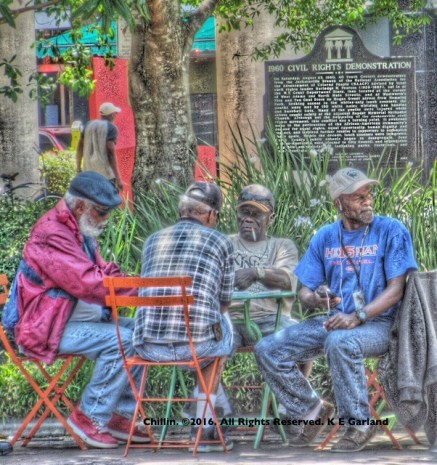
I found this out four years ago, when I posted this photo to my blog.
A fellow blogger noticed the background and sent it to her friend, Rodney L. Hurst Sr. Mr. Hurst contacted me about purchasing a copy and explained the meaning of the sign behind the gentlemen’s heads.
I was excited to hear about this little-known Black history fact and asked Mr. Hurst to a breakfast interview to understand more.
KG: Can you describe a little bit about what Ax Handle Saturday was and what happened?
RH: I was president of the Youth Council NAACP and I led the sit-ins at the ripe old age of sixteen. My mentor was a guy named Rutledge Pearson.
KG: A school is named after him?
RH: Yes. One school is named after him. In fact, he and Earl Johnson were inducted into the Civil Rights Hall of Fame earlier this month (2016) in Tallahassee. He taught me eighth-grade American history. When I went to his class, he told me about the textbook and had other class members to talk about the textbook and then he said leave it home.
Mr. Pearson would not teach American history from the slanted and racist viewpoint of white textbook authors and historians. Our study of American history did not revolve around a book that only had the names of Booker T. Washington and George Washington Carver. We studied John Hope Franklin, Althea Gibson, and Thurgood Marshall.
The first book report I did was on a guy named Toussaint Louverture, who fast became one of my favorites. He led the only successful slave revolt in this hemisphere, eventually became the Father of Haiti, and because of what he was able to do in Central America in fighting Napoleon, and controlling the shipping routes, Napoleon had to sell Louisiana territory to this country. You will never read his name in an American history book and he is inextricably bound to the history of this country.
In Mr. Pearson’s history class, it was Black history every day in his class. He also said, freedom is not free; if you’re not part of the solution, you are a part of the problem. He encouraged us to join the Youth Council of NAACP. American history teacher in an eighth-grade class encouraging his students to join the Youth Council NAACP?
KG: You would get fired today doing that.
RH: Sure. And I joined when I was age 11, became president when I was 15, and led the sit-ins when I was 16. The sit-ins in Jacksonville were led by high-school students, which is one of the reasons we did it during the summer, as opposed to college students who were able to do it year-round.
We sat in Woolworth’s, where the federal courthouse is now. We sat in at the lunch counters: Kress, Woolworths, Grants, and McCory’s, which were downtown stores. And every downtown department store had a white lunch counter. Some had colored lunch counters, like Woolworths, which was at the back of the store. Others didn’t have colored lunch counters, but you would go to the end of the white lunch counter to order.
KG: But you couldn’t sit down?
RH: You couldn’t sit down. If the waitresses would come and take your order, then okay. So, we said, “No!” During my senior year we sat in. We sat in for two weeks. Woolworths closed the lunch counter. There were whites who stood behind us yelling, jungle bunny, nigger, go back to Africa ‘cause they couldn’t get their fresh lunches.
Two weeks later on August 27th, we were sitting in at Grants, which was on the corner of Adams and Main Street. And there were other incidents leading up to that. We had a white student, Parker, who joined us from Florida State (University) and the whites who were behind us thought he was the leader. Some white construction workers were standing behind him with big construction tools and these guys picked him up and formed a circle around him and walked him out to safety. All this time there were no police in downtown Jacksonville.
One guy had whittled off the end of his walking cane and would walk behind each of us and stuck all of us in the back with his walking cane. Again, no police. When we were attacked, we were attacked by 200 white men with ax handles and baseball bats. Black downtown was attacked. If you were white and tried to protect those Blacks downtown, you were attacked, too. When the word finally got out, then police came from everywhere.
Mr. Hurst described what happened to Parker, the white FSU student who supported the sit-ins and also Leander Shaw, Florida Supreme Court judge’s role in enacting justice. The details are outlined in his historical memoir It Was Never about a Hot Dog and a Coke!
But I want to stop here and emphasize a few points about meeting and talking with Mr. Hurst.
Understanding Black history in your city is important. I’m not from Jacksonville, but I’ve lived here for approximately 20 years. Prior to our happenstance meeting, I’d never heard of Rodney L. Hurst Sr. Subsequently, before our conversation, I was ignorant to the role Jacksonville played in the Movement. I’d heard of Rutledge Pearson Elementary School, but I didn’t know the significance of the person for whom it was named. I wonder if the 95% Black student population knows the rich history to which they’re connected?
Living history is important. Ax Handle Saturday occurred August 27, 1960. That’s 60 years ago. Mr. Hurst is old enough to be my father, not my grandfather or great-grandfather, my father. Sometimes, grainy documentaries make racial oppression seem as if it was eons ago. My conversation with Mr. Hurst reminded me that it was not. Luckily for the K-12 and college students he speaks to, he’s able to authenticate a perspective of a time period that is linked to our country’s history.
Teacher autonomy is important. As a former high-school English teacher, I have to highlight the autonomy teachers had in the 60s. Mr. Hurst’s history teacher was able to make an informed decision about his students and what resources they needed in order to be successful, in not only understanding history in America, but also in transforming their communities. Mr. Hurst was directly influenced by Rutledge’s off-script lessons and push to join an organization specifically with their best interests at heart. Hurst possibly would have never been a part of Ax Handle Saturday had Rutledge stuck to a scripted curriculum.
The takeaways from our interview are endless. But if nothing else, I hope these words inspire you to learn more about the influential Black people in your area because, after all, Black history is American history.
Dr. KE Garland
Katherin is a First Place Royal Palms Literary Award winning writer for Creative Nonfiction. Her work has been featured in the South Florida Times, Talking Soup and For Harriet. She typically writes in order to inspire social change. Other examples of her work can be found on her personalblog.
Historical Fiction (specifically Black Historical Fiction) is my favorite genre to read and to write. I have to specify “Black” because I am not a fan of all Historical Fiction. My interest lies specifically in fiction stories that explore black history in some way.
Historical Fiction is the past recreated around the stories of people who seem real to us, including actual historical figures at times.
As we witness how fictional characters we care about interact with our ancestors and navigate a world now gone from us, it allows us to experience the past vicariously. Through the stories of the characters we can “visit” history and get a feel for what it was like to live in that time. But why is this important? I think a quote from the Toni Morrison Documentary “The Pieces of Me” (Hulu) sums it up:
“You imagine the past because the past has been ruptured. The record of the past of your people has been degraded. It’s been burned up, it’s been taken away.”
Tbt. The Historic Lorraine Motel, Memphis, TN
Not only has the black past been degraded but also entirely and tragically whitewashed. Dr. Martin Luther King Jr. is a good example of someone whose humanness has been reduced to the one “Negro” who bridged the gap between blacks and whites. A Civil Rights hero who succeeded in making blacks docile enough to accept that merging with white people was the best version of themselves possible. That, if we integrated, we were better people than if we had our own communities and businesses, and could determine the direction of our own destinies. Not that segregation was wrong, but that integration was better. That blacks were better when mixed with something else; that we could not be the midwives of our own selves.
Although King was known as a civil rights leader and Malcolm X as a “black radical” both men were advocates of oppressed people. King told black people their blackness was beautiful, believed in economic freedom and establishing black businesses, preached on black power, and even owned a gun. King was just as “radical” as he was patient…but this isn’t the version of King we are given.
White America adopted Dr. King and used him as the black friend that is used by some to say, “Hey, I can’t possibly be racist because I have a black friend.” King is that friend. Sadly, we have someone whose name is widely known, but who, as a person, is not very well understood.
Forget about the Civil Rights icon, who was Dr. King as a man? Who was Malcolm X as a man? What could we imagine their persona’s to be like? Those of us born after they lived do not know but we can imagine.
What I do as a writer is to take the part of history not taught in schools, and use it as a tool to invent people who could have lived in a world that did exist. To then take these people and let them show us the truth about that time and place. To give these people real feelings and a voice that is authentic to what they could have said or what they could have done. I love to go back to a time before I was born and, through research and creativity, imagine what it would have been like to live in that era.
Stella Returns!
Book One Re-releases on March 24, 2020
About Book One:
Cynthia McNair and her boyfriend, Alex, express some racist feelings toward blacks. The visit Cynthia’s grandmother Sidney McNair, who recounts the story of her ancestor, an enslaved woman named Stella Mae. Cynthia has no idea of her African ancestry or how deep this rabbit hole goes. Will she accept the truth about herself?
There are only TWO days left of the $200 Amazon Giveaway! You can enter as many times as you like! Go, go, go! Link below:
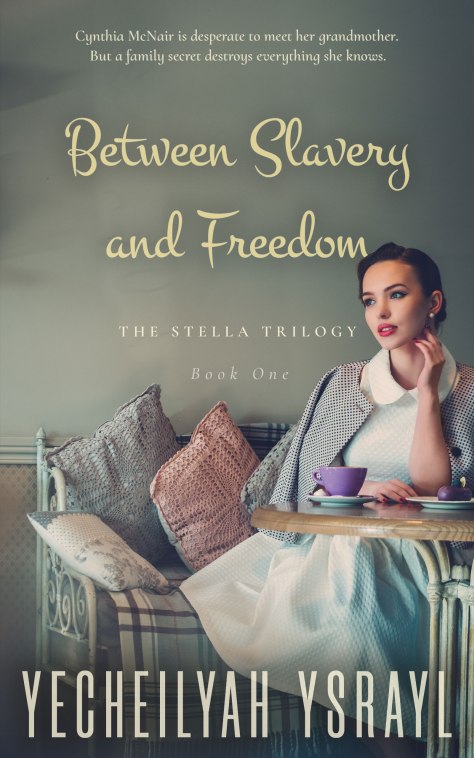
Tomorrow will mark five years since I released the first book in The Stella Trilogy. Wowzers! I am celebrating by introducing the new cover to book one and two. If you haven’t heard, I removed the books from amazon for some much needed polish and am re-publishing them. To learn why check out the blog post “Quality Over Quantity: Why I Pulled My Trilogy from Amazon.”
While I changed the cover to I am Soul after its release and got a new cover to The Aftermath, my first novel (2012), I’ve never wholly revised my backlist before. The Stella Trilogy is getting an entirely new makeover, which includes editing, covers, formatting, and ISBNs. Why go through all the work for an old book?
Books do not expire. Every book is new to people who have never read it which is why it benefits Indie Authors to go back and update “older” works every now and again. Here are some things I saw needed work on Stella:
Editing – It wasn’t enough to slap a new cover on the books. I knew these books had to be revamped altogether. Like most newbie Indie Authors, I had a friend to edit the first version of these books because I didn’t have the money to pay someone. This time around, I am getting the books professionally edited.
Song Lyrics – The first book had song lyrics in it—rookie mistake. You need permission to include the words to a song in your books. I promptly removed those lyrics. I can’t afford to get sued.
DIY Covers – I like the cover to book one, but it was a DIY premade from Derek Murphy’s website, offered freely to authors. I added the image of the black woman, but the rest was unoriginal. I cringed every time I saw it on his site. Book two was more original as I purchased the winter lady image, but it was still poorly applied to the cover. I did everything in Microsoft Word, and since I didn’t know that super-thin books don’t need a spine (if there aren’t enough pages to warrant one) when the books printed the spine folded over to the front. Yuck. For this reason, new covers were something I knew I needed to get done.
Free ISBN – I am done with the free ISBN game. Listen, if you don’t include the cost of the ISBN in your book budget, you are still a beginner. Have I always purchased my own ISBN? No. ISBNs are expensive, but having your own is worth it. They (ISBNs) are also cheaper if you buy them in bulk. 10 ISBNs can cover ten different books. Applying your own ISBN number to the book ensures that your imprint name will be applied to the book. In other words, you are the publisher, not KDP, and not Lulu. This time around, all books in The Stella Trilogy will have its own ISBN so I can register the books to me.
BONUS: Alternate Ending – I am excited about adding an alternate ending to excite Stella fans who have already read the books. The conclusion to book one is not the ending of the original book one. Why the change? It is to tighten the link between all the stories for a smooth transition from one book to the next.
Lessons I learned so far:
Work with what you have until you can do better.
You don’t have to know everything to start. I didn’t. Work with what you have until you can do better. (If a free ISBN is all you have to work with right now, use it until you are able to move up. I did.) I do not regret putting Stella or my first books out there, even though they weren’t properly edited, and the covers were DIY. These books gave me my start, and the courage and the freedom to step out on my own. These books gave me my beginning, and I am forever thankful to Yah for them.
Then, when you can do better, please do it.
The other part of this, though, is doing better once I knew better. If I produce mediocrity, I will only get mediocre results. Once you’ve stepped out there, it is okay to go back and change what you see needs work. We may not be perfect, but this doesn’t mean we cannot strive to maintain a level of excellence in all we do, even if the best we can do still falls short. We don’t have to stay at the same levels in the latter part of the journey as the first. We can tweak and correct and improve with time. We have that freedom, to sharpen, and to elevate.
About The Stella Trilogy
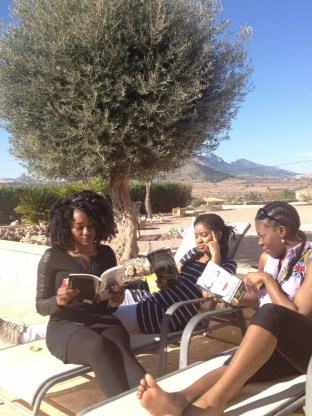
Readers reading Stella. Circa, 2015.
Stella is a work of Historical Fiction and is distinctive in its focus on one woman’s road to self-discovery, against the backdrop of the African American fight for justice, racial equality, and freedom. We discover how three individuals living in separate periods strive to overcome the same struggle, carefully knit together by one blood. The three-part series features elements of enslavement, Jim Crow, Passing, and the Civil Rights Movement.





 The PBS Blog