We have already talked about one cool strategy for busy bloggers. I want to extend that conversation by making it easier for those new to blogging to discern if what you are posting is valuable and high quality.
For the record, I am not one of those who think you have to post every day, not on social media and not to the blog. Wasted time is like wasted money, so I will not post or recommend posting just for the sake of posting.
We are not doing all of that.
What we are doing is posting consistently enough to be present enough to serve our audience.
Whenever we post, we want to add value, and adding value only means educating, inspiring, or entertaining your people.
Educational
Inspirational/Uplifting
Entertaining
A fourth category could be Edutainment – Educating through entertainment. Thank me later.
To do this would mean that you must be deliberate about the content you publish.
What does this mean for blogging?
To be deliberate means to have an intentional and purposeful focus. It is the opposite of being fake and posting just to post. It means posting what is important to you and what is helpful, inspiring, or educational to others while somehow making sure it ties into your brand.
I published I am Soul on December 20, 2017. This was intentional, as December 20 is my late mother’s birthday. She was alive then, and I wanted the book to be a dedication because she had been through a lot that year.
I know value is a big buzzword these days, and sometimes it can sound so complicated, but it’s really not all that deep. Posting content of value means you are posting what will uplift, educate, or entertain. Some examples include:
Creative writing (poetry, short stories)
Promotion for Indie Authors
Posting a think piece on a hot topic
Sharing some life lessons and experiences (as it is relatable to your brand)
Posting a review of a book you read
Posting something funny
Blogging doesn’t have to be a waste of time, especially if you are not getting paid to be here. Suppose you are making money from your blog or using it as an author platform to connect with readers. In that case, you definitely don’t want to waste your time publishing ten posts a week that doesn’t add value to your life or the life of others.
Choose a few days a week you want to post and make sure you are entertaining, educating, or inspiring us.
On this day in 2016, I posted about a former slave plantation in Natchitoches, Louisiana I visited that weekend. I shared my experience on this blog, but I never made it a Black History Fun Fact. As the memory popped up in my Facebook archives, I decided to add it to the collection. Below is the original post for those of you who were not following me in 2016 and never saw this.
Originally Published on 11/28/2016
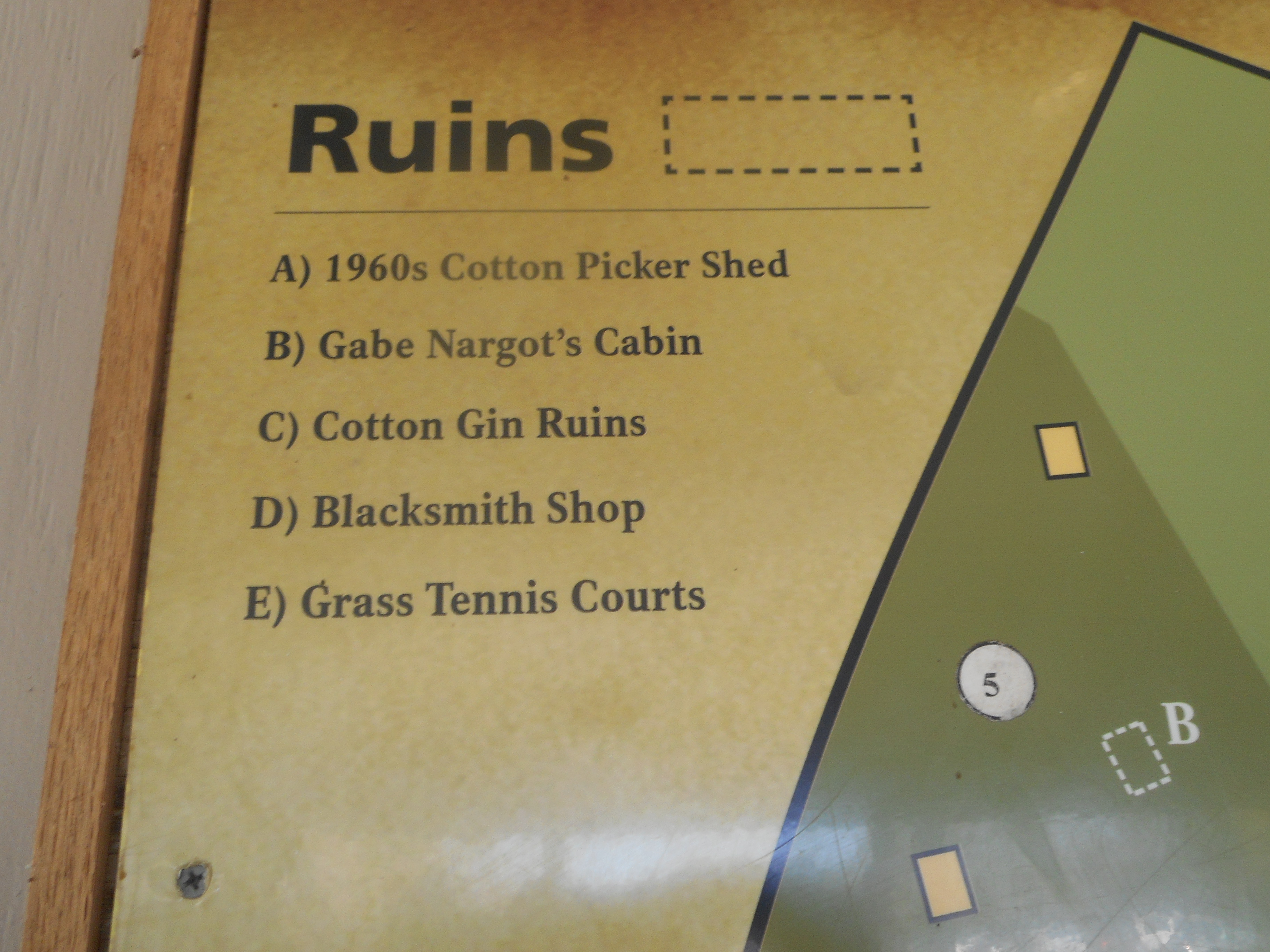
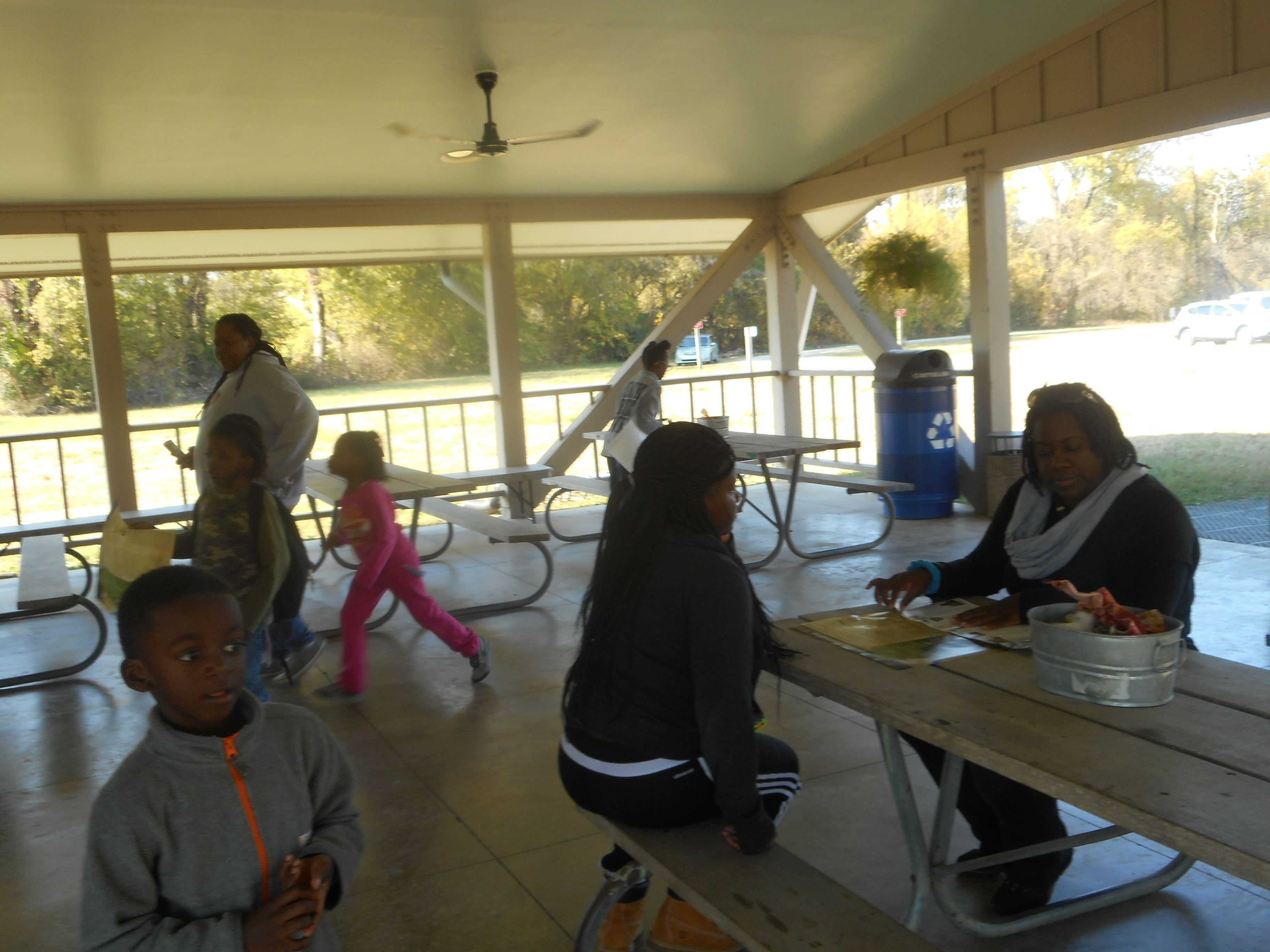
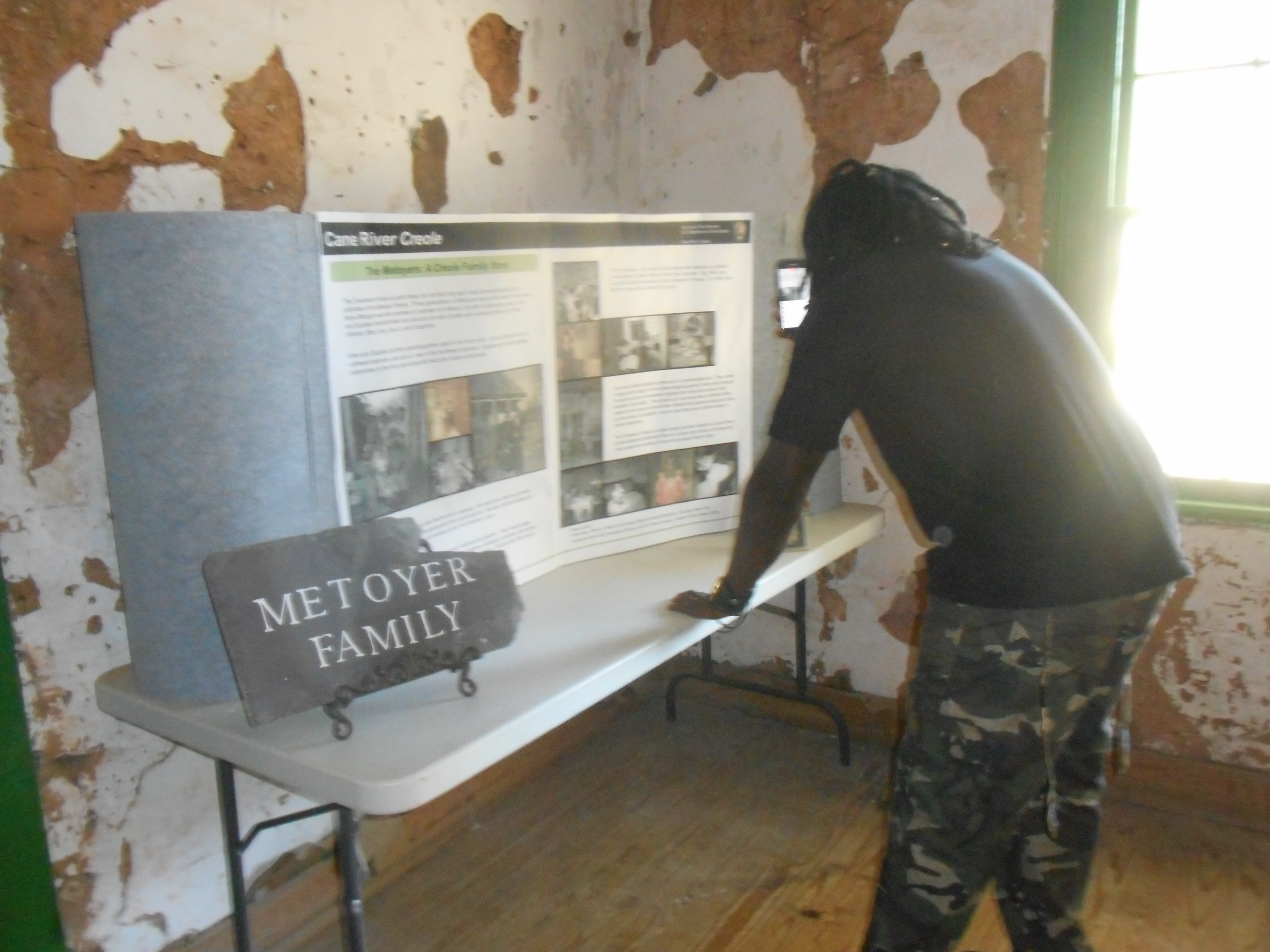
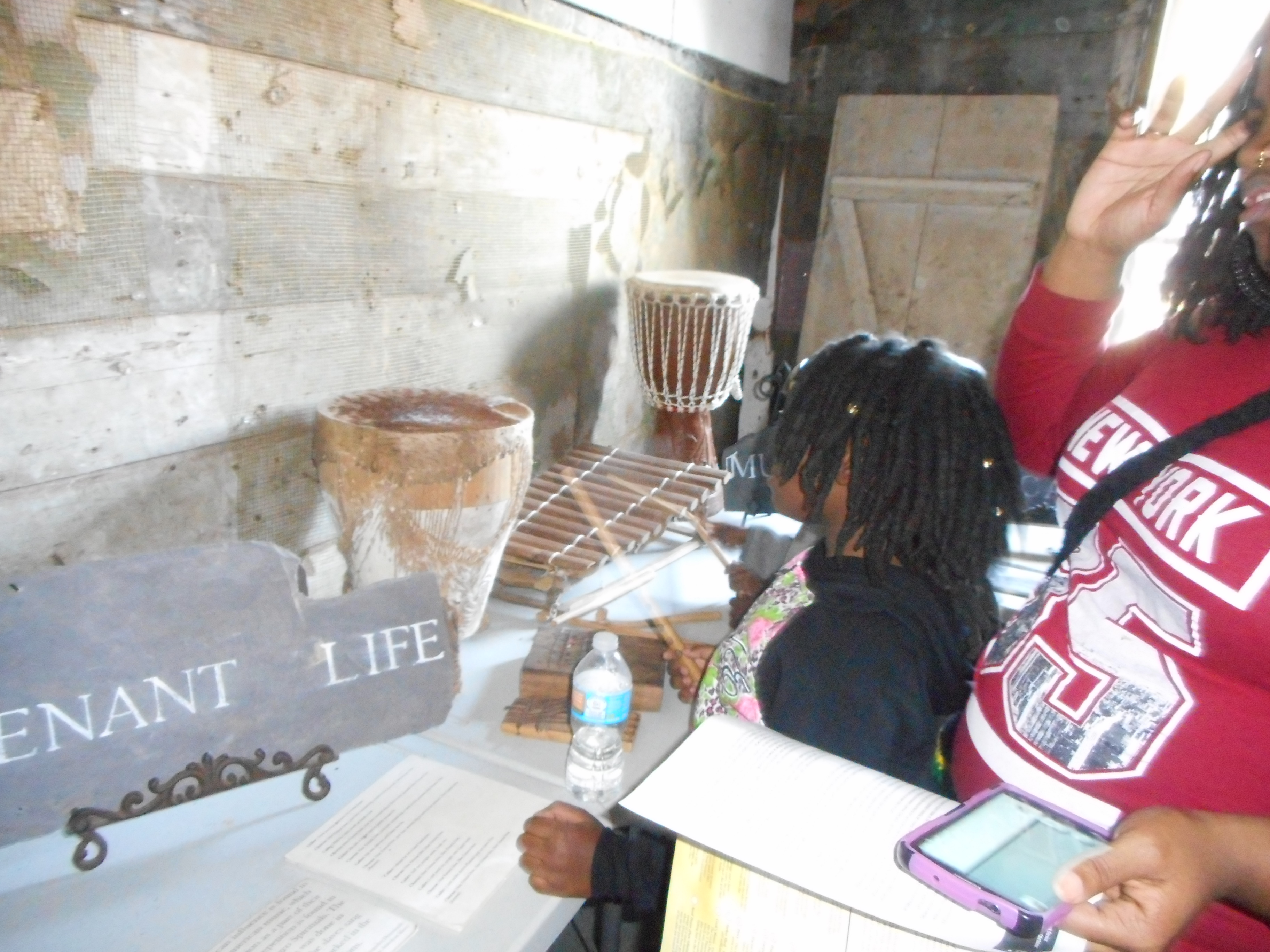
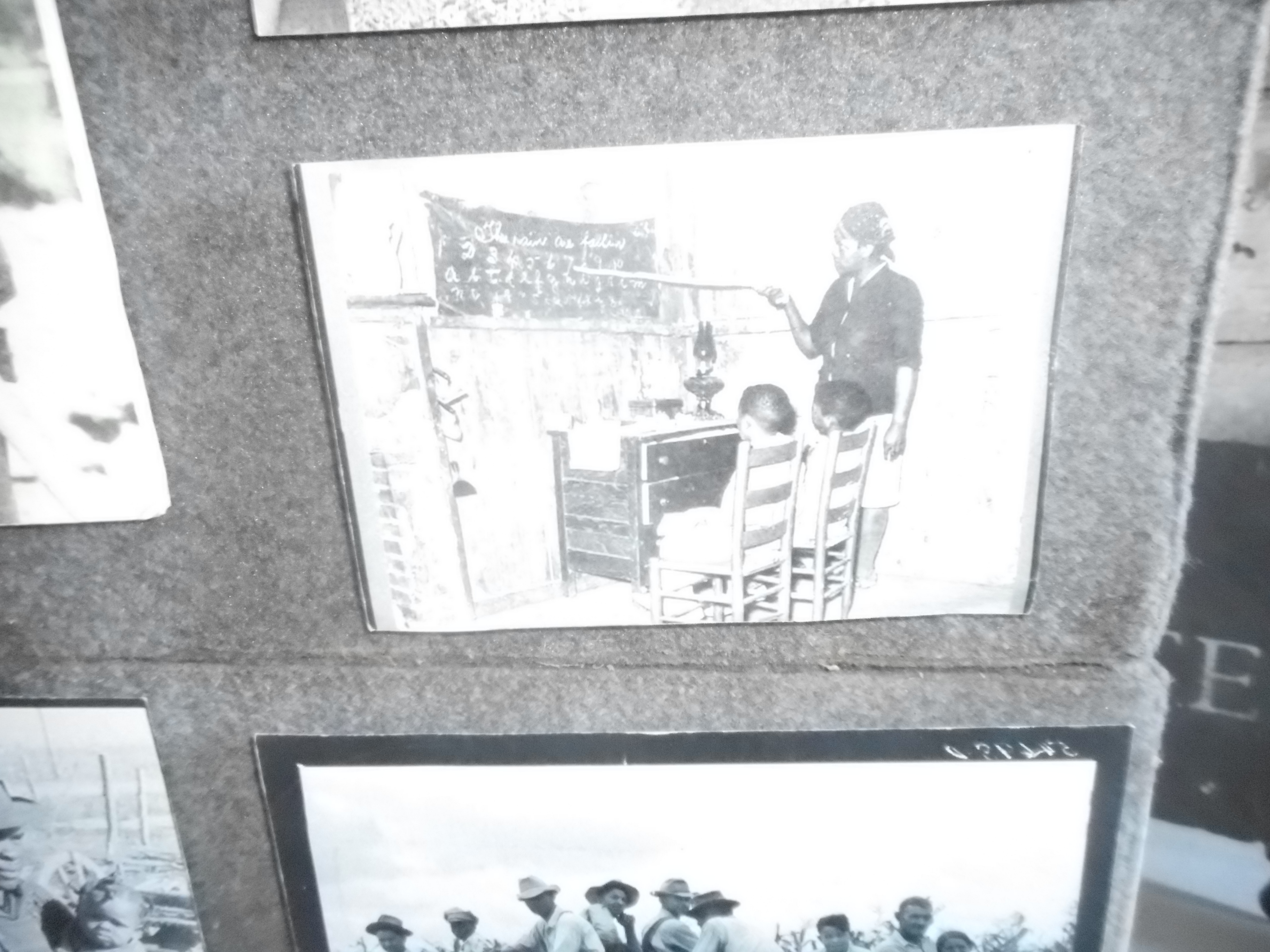
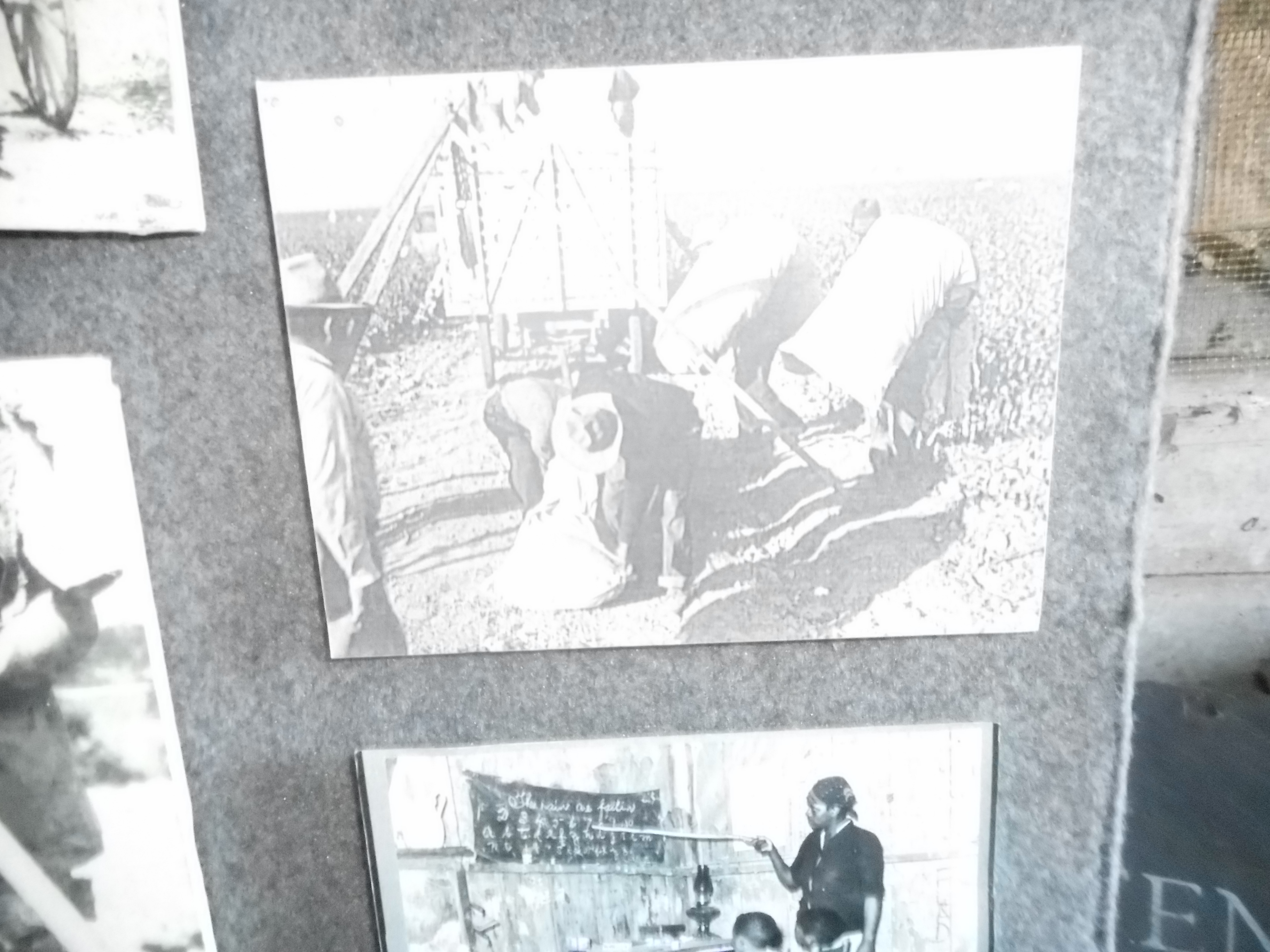
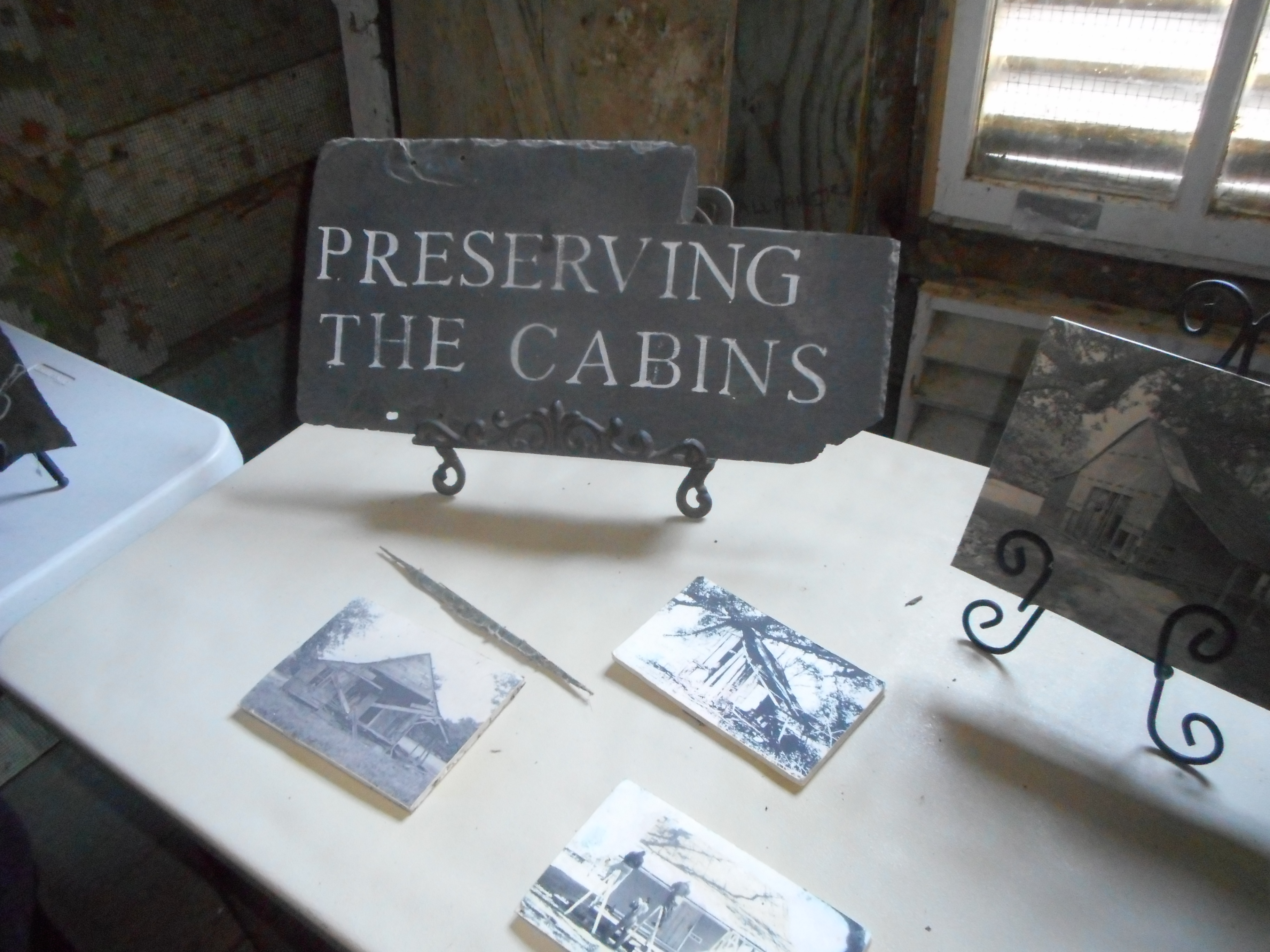
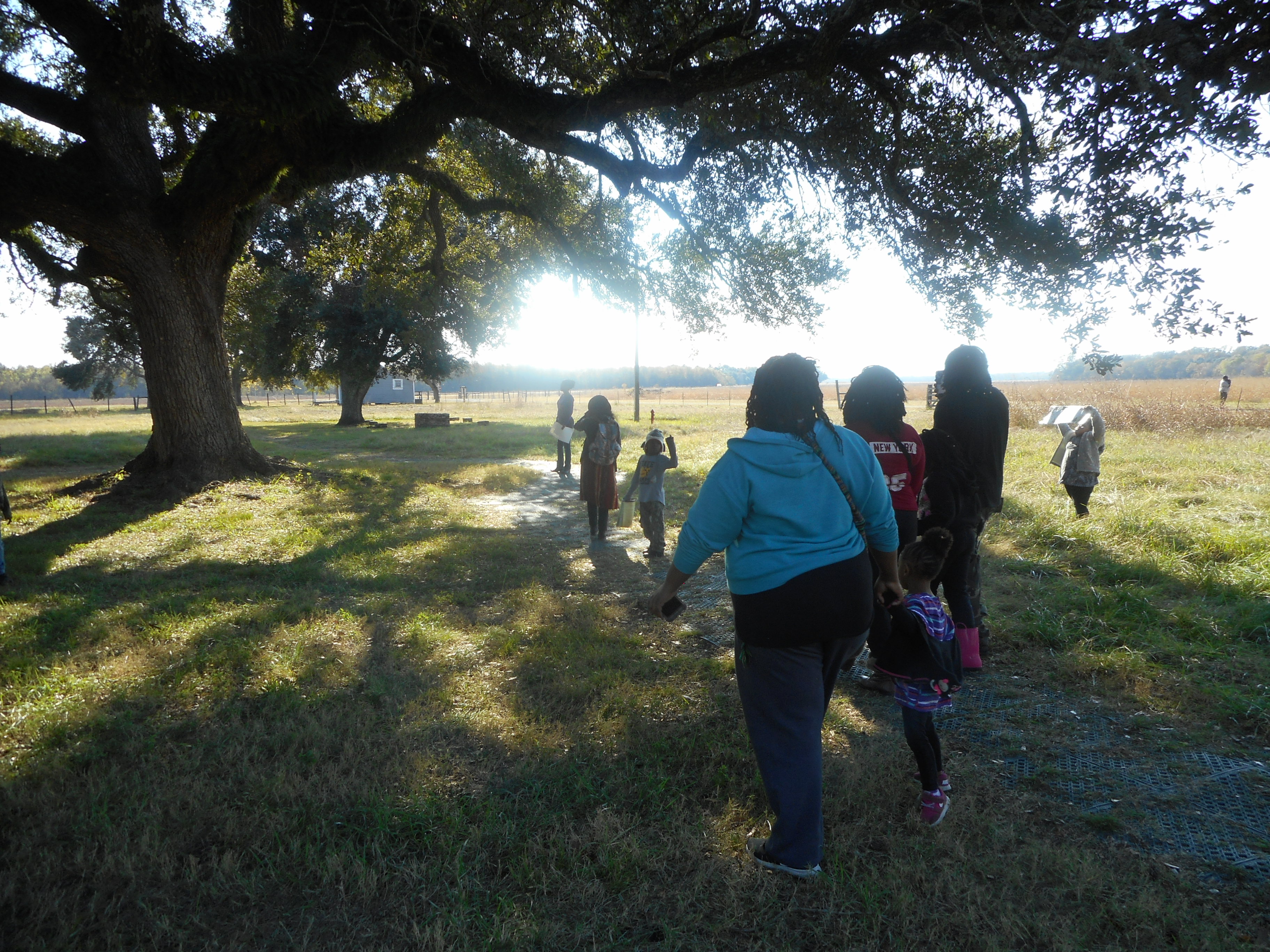
I took a week off to unplug and to spend time with my family. In addition to camping, we visited the Cane River Creole National Historical Park in Natchitoches, Louisiana.
Reading and watching movies about slavery is one thing, but touring a former slave plantation is an entirely different experience. I didn’t get very emotional, but I will say for now that gratitude is my best way of describing it—appreciation for all the comforts I enjoy in my life that my ancestors paid for with their blood. As the sun lowered and we prepared to leave, I thought about what they would be doing at this time of the day. I thought about how they’d just be coming in from the fields to prepare for their nightly routines or, perhaps, still working.
Originally called Bermuda, the founder of Oakland was Jean Pierre Emmanuel Prud’homme, who began farming the land in 1785 and received a Spanish land grant in 1789. The land’s first cash crops were tobacco, indigo, and cotton.
The Prud’hommes were the first family west of the Mississippi River to farm cotton on a large scale.
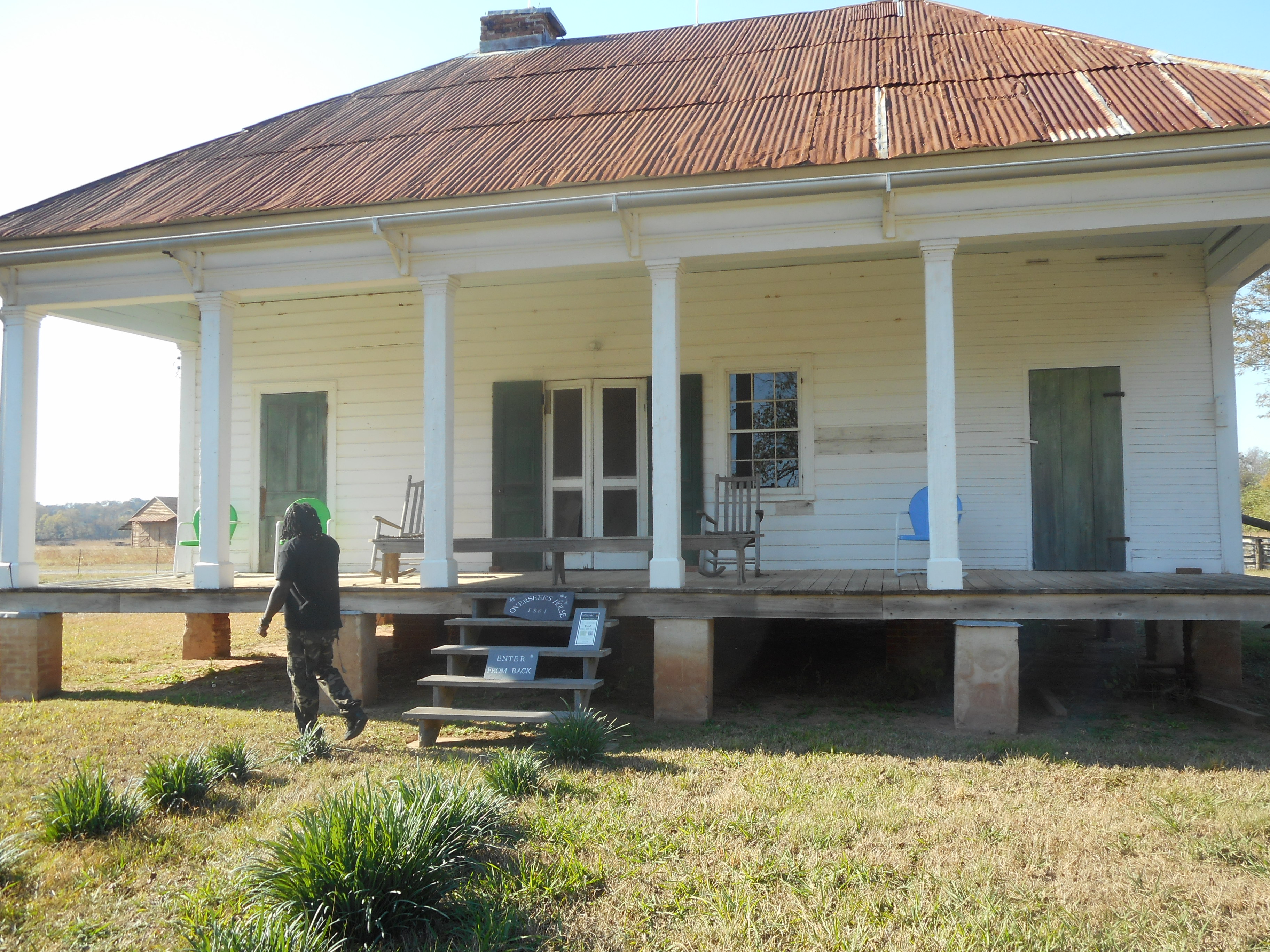
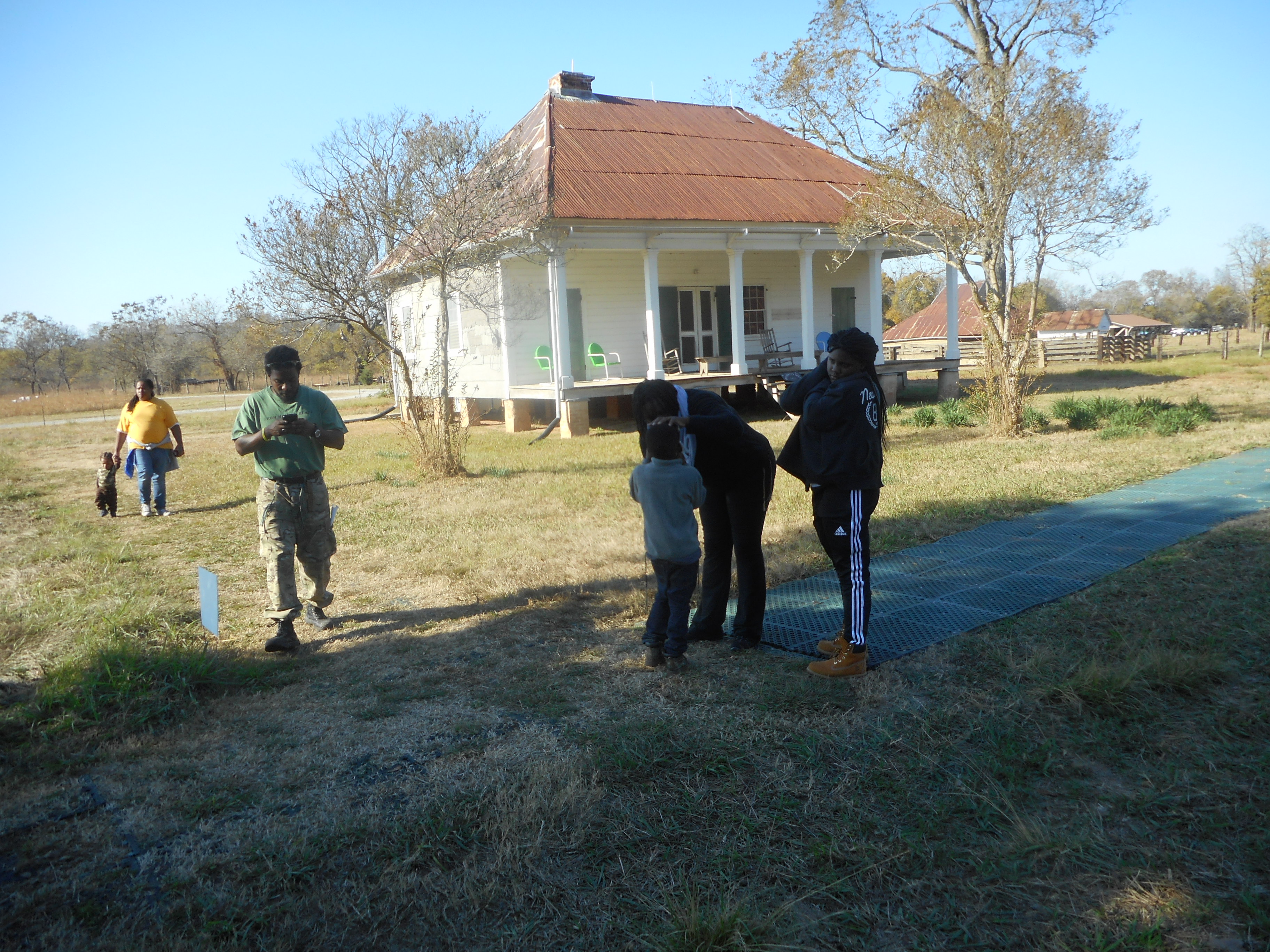
The Overseer’s House
Overseers were the middlemen of the Antebellum South’s plantation hierarchy. Sometimes they were white men working for the slave owner, and other times they were enslaved men hired to rule over their brothers. The “masters” expected overseers to maintain a workforce of slaves to produce a crop. The enslaved were the overseer’s responsibility. He was to keep them working by any means necessary. In return, he got to occupy his own cabin or possibly get a bit more food. The perception was that because his job was “better,” he himself was better off, but he was still an enslaved person.
Close Up: Check Out this Old School Stove!
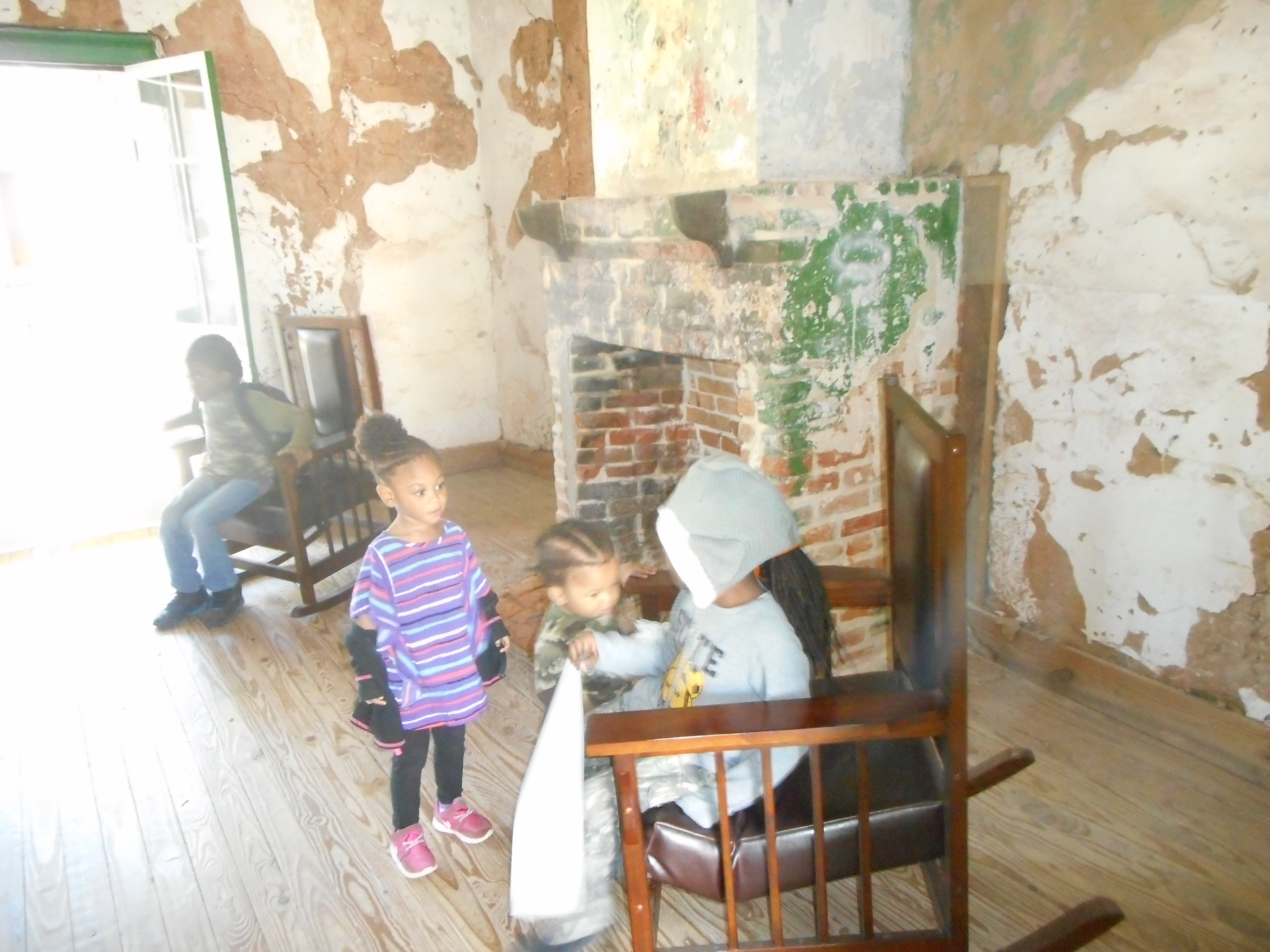
I also noticed the mud and straw still preserved from the original building of the house.
Slave Quarters turned Home of Sharecroppers
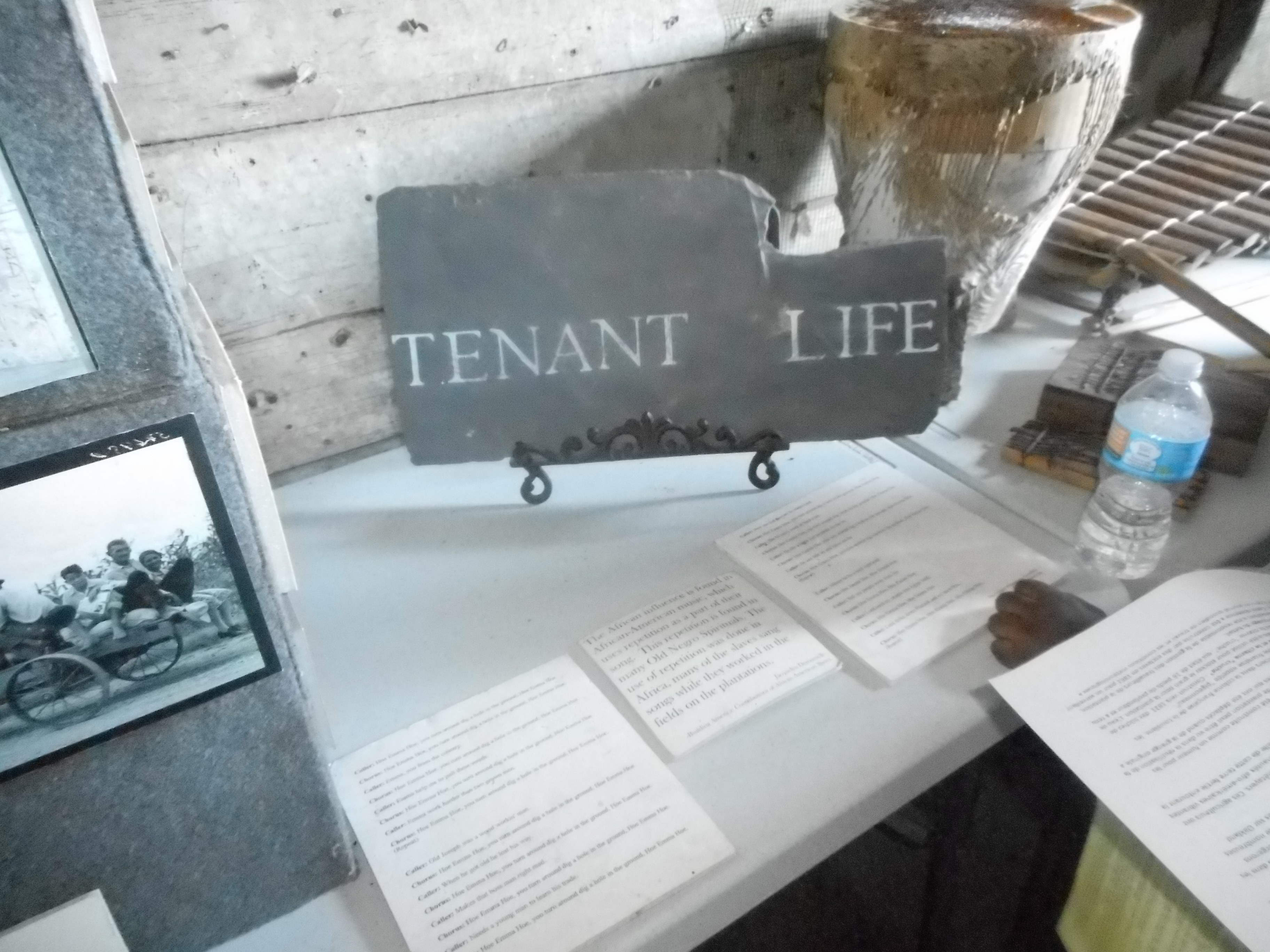
After the Civil War, sharecropper and tenant farmers continued to live on the land up until the 1970s. They worked twelve hours a day, six days a week.
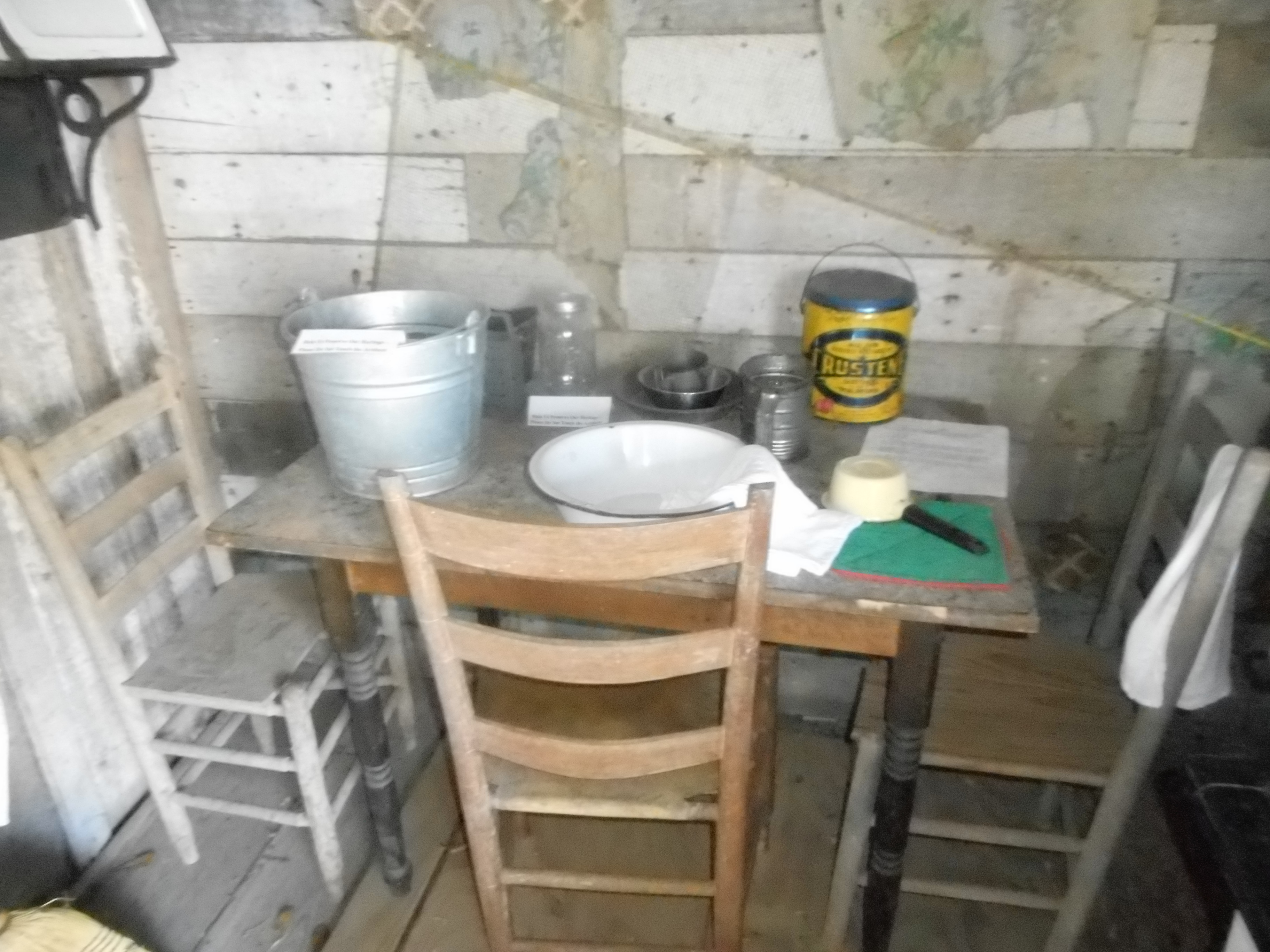
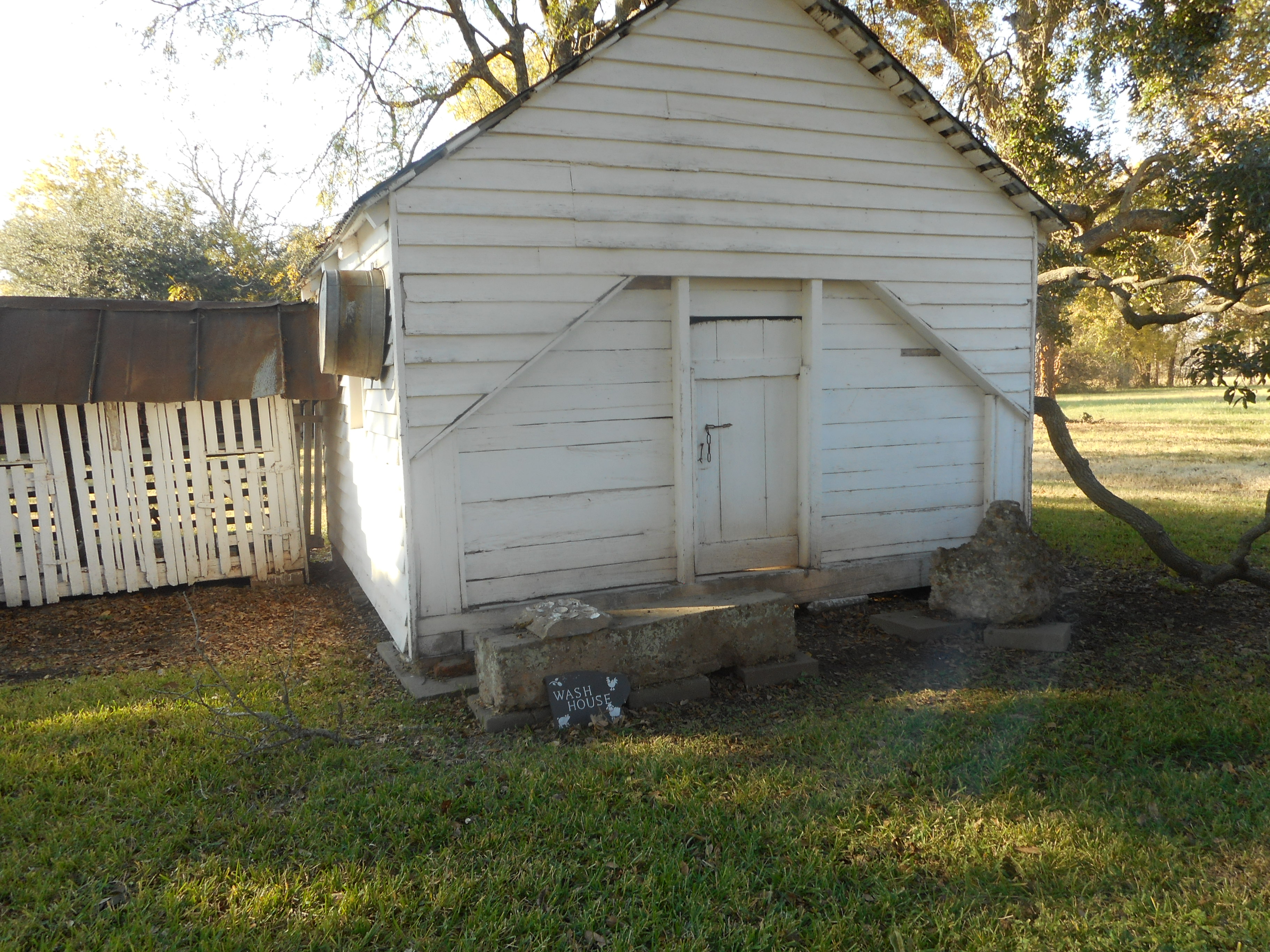
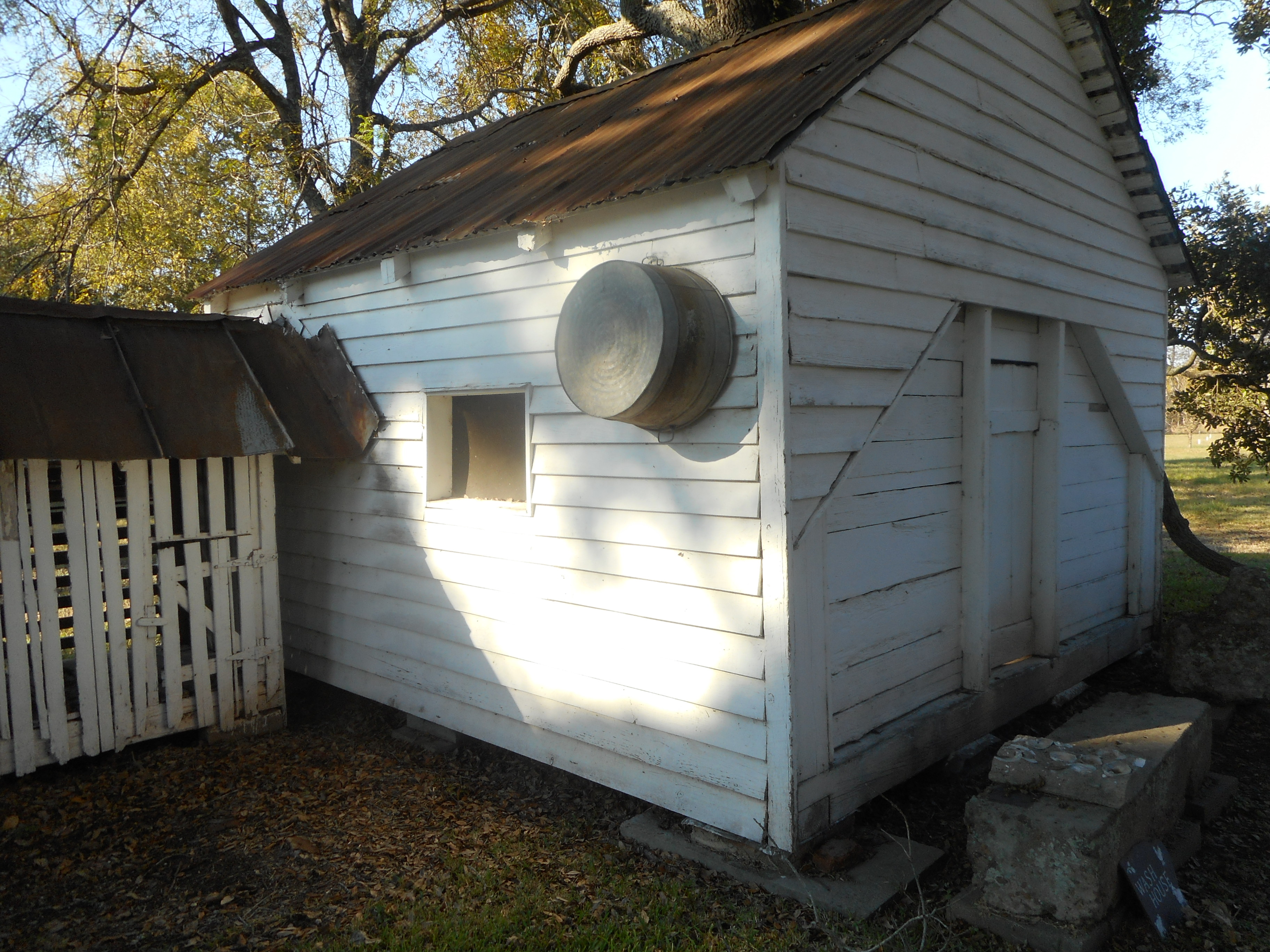
Wash House
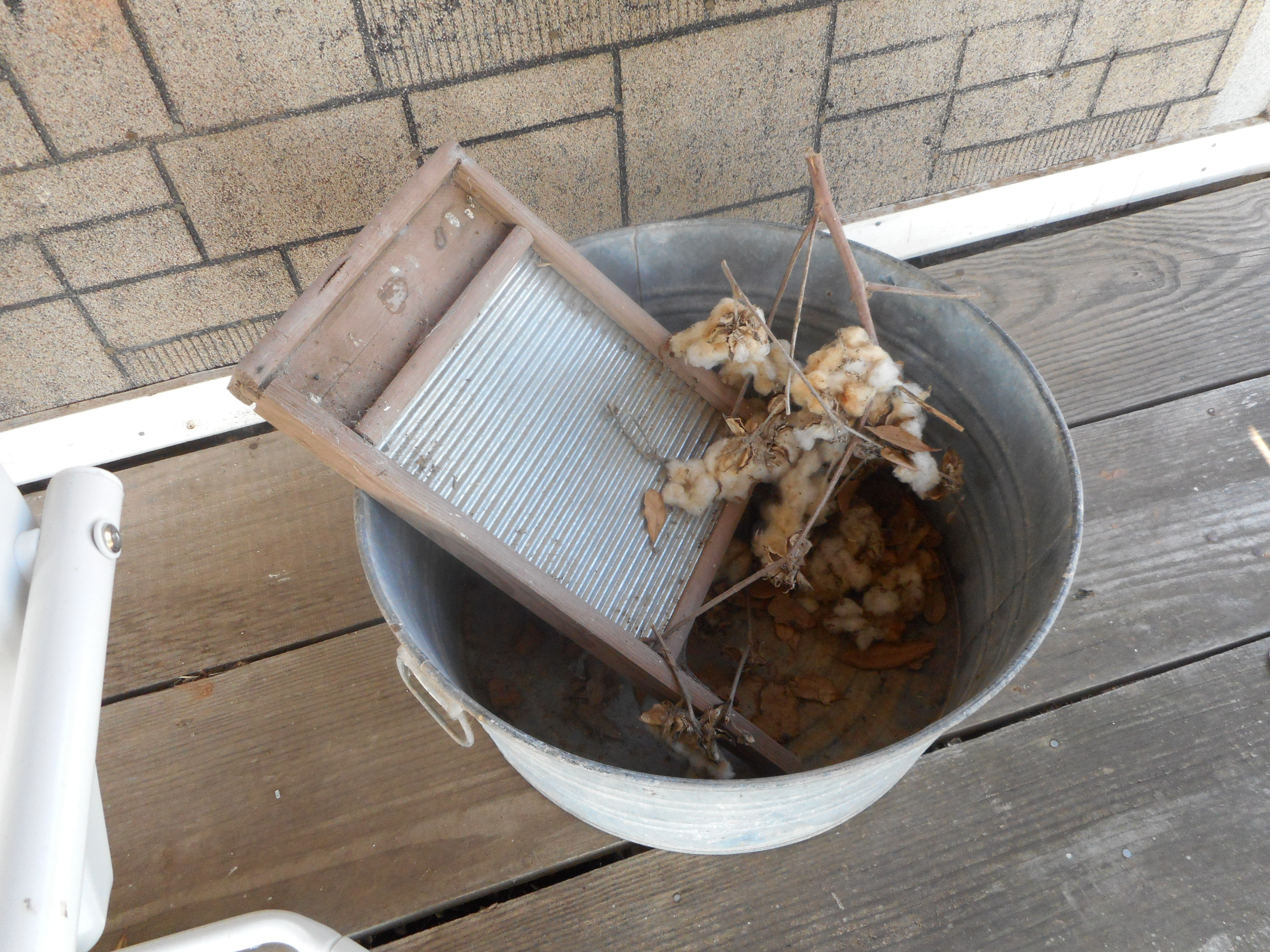
Martha Ann, an enslaved Laundress, worked in this wash house in the 1850s. In the 1940s, her descendant, Martha Helaire, earned $4 an hour working here as a Laundress. All we have to do is walk a few steps to the washer and dryer.
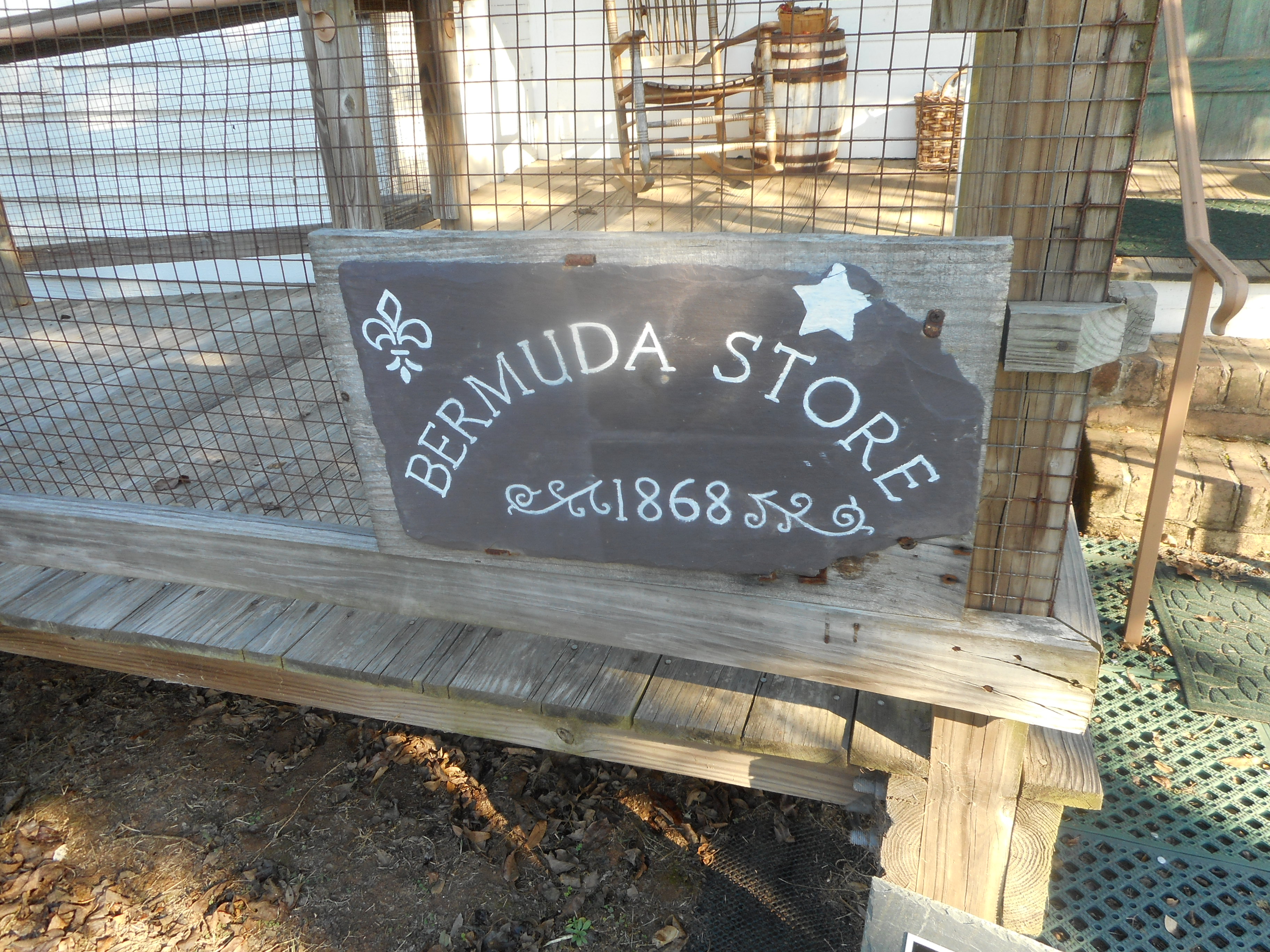
Bemuda Store
Opened after The Civil War, sharecroppers and tenant farmers continued buying their supplies from family and farming from this store until 1983.
1983?!
The Prud’homme family owned and operated the store. They also ran the Post Office located inside.
Carpenter Shop
Slaves built and repaired plantation structures from this workplace.
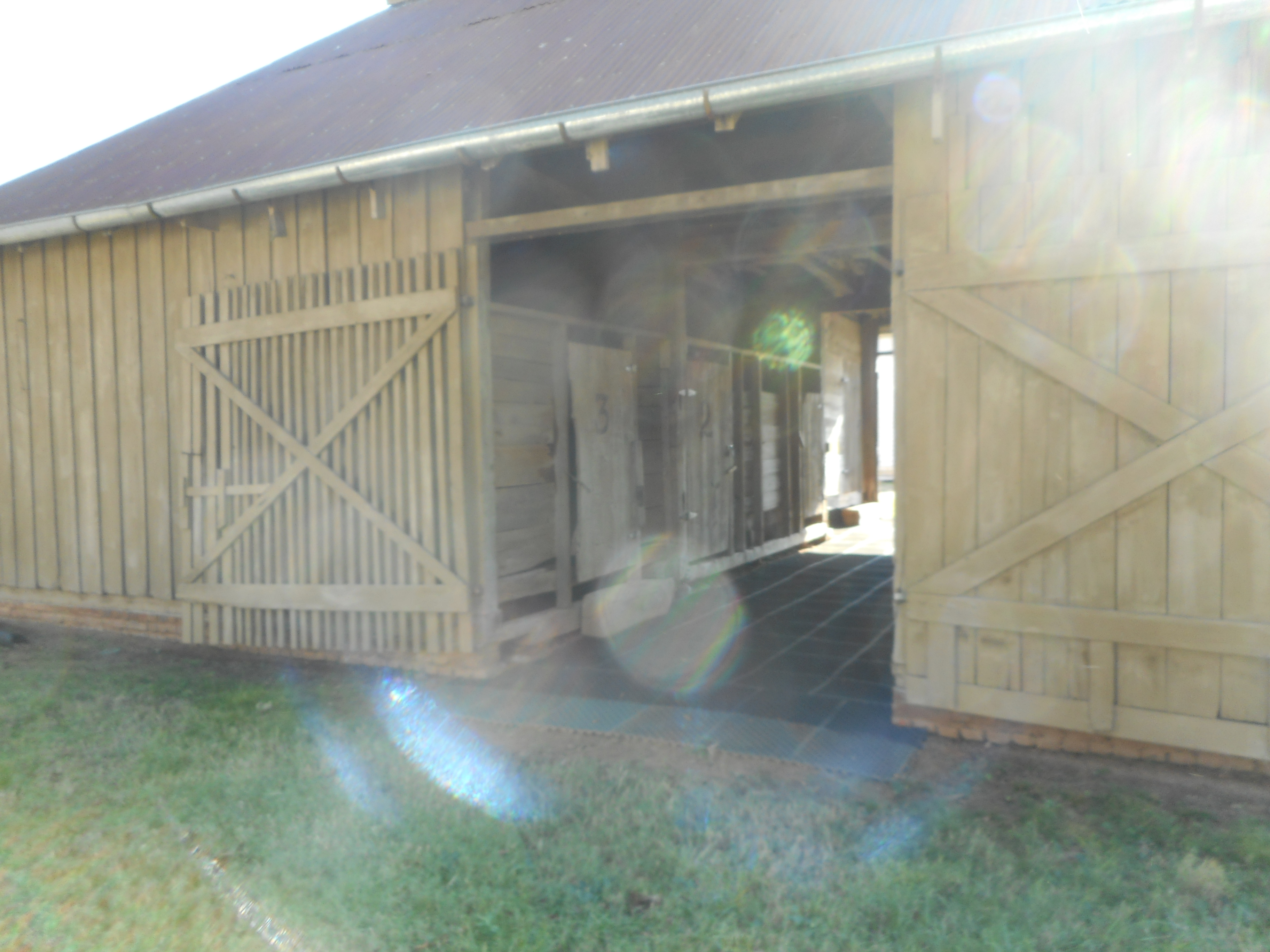
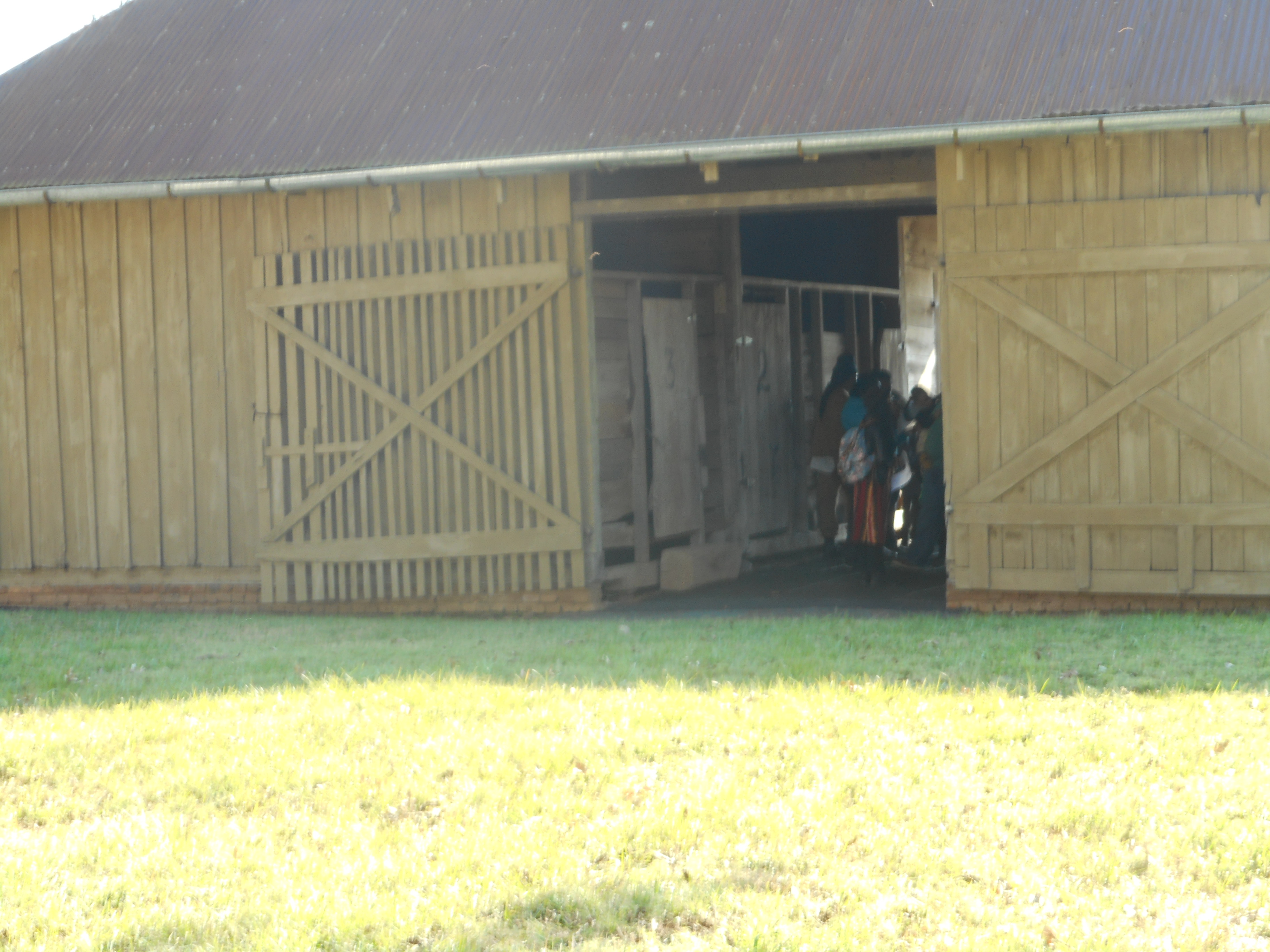
Mule Barn
Smokehouse turned mule barn. Built by the enslaved, the plantation reused the smokehouse to accommodate the mules when the original mule barn burned down.
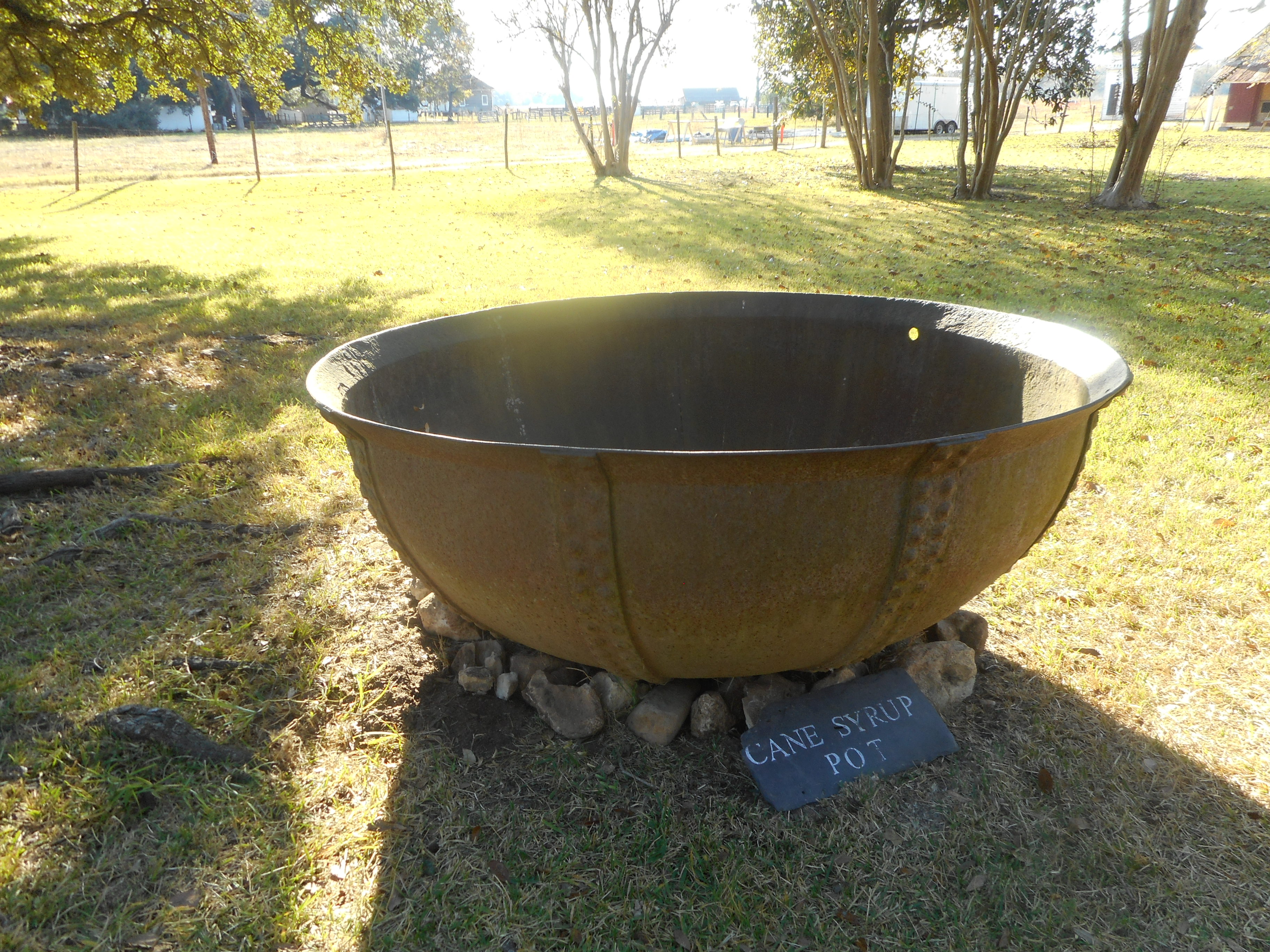
Cane Syrup Pot
Used to make cane syrup.
On some plantations, they used these pots to punish the enslaved and to boil them alive (as depicted in the movie “Mandingo.” CLICK HERE to see the clip.)
The Big House
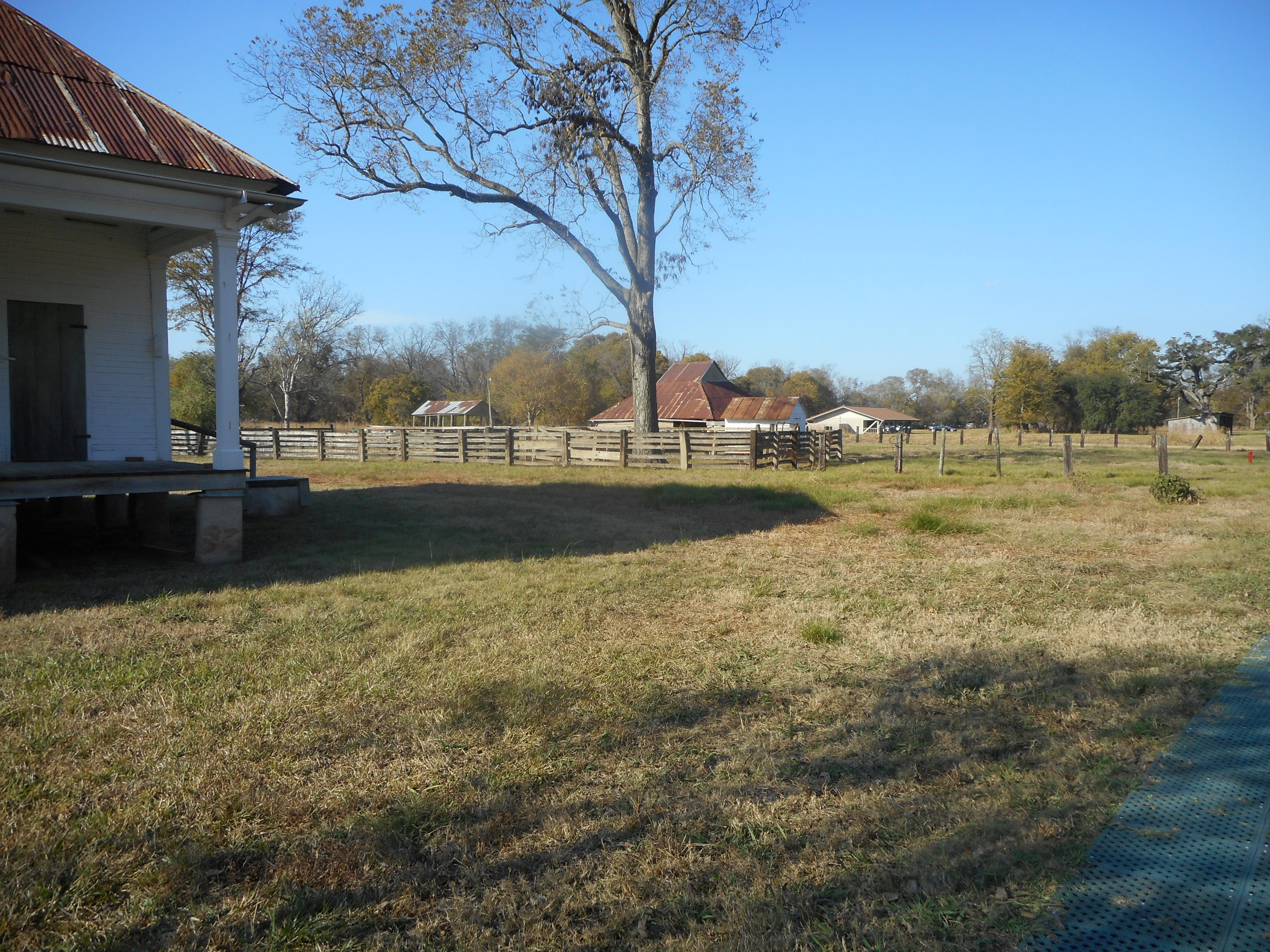
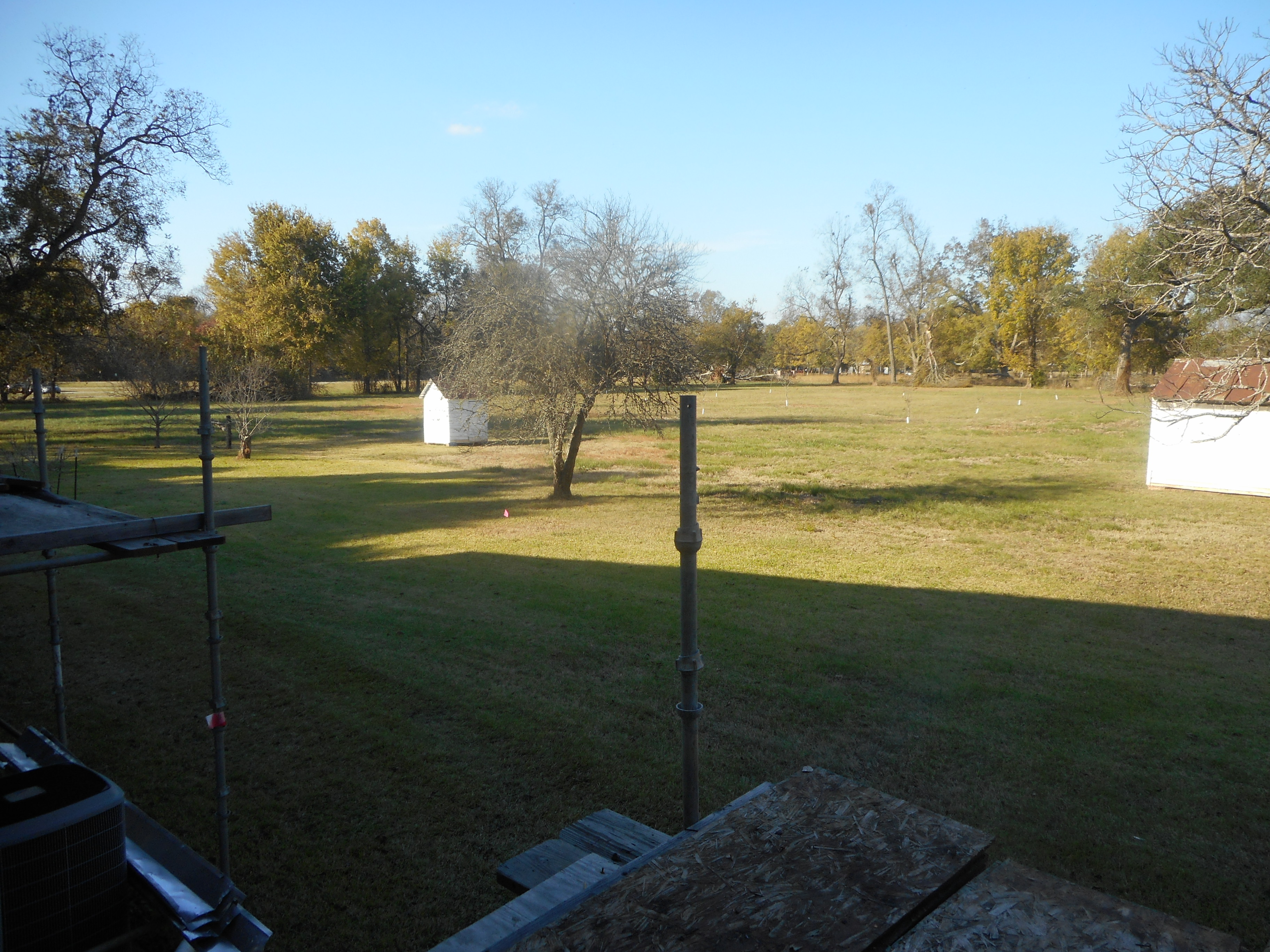
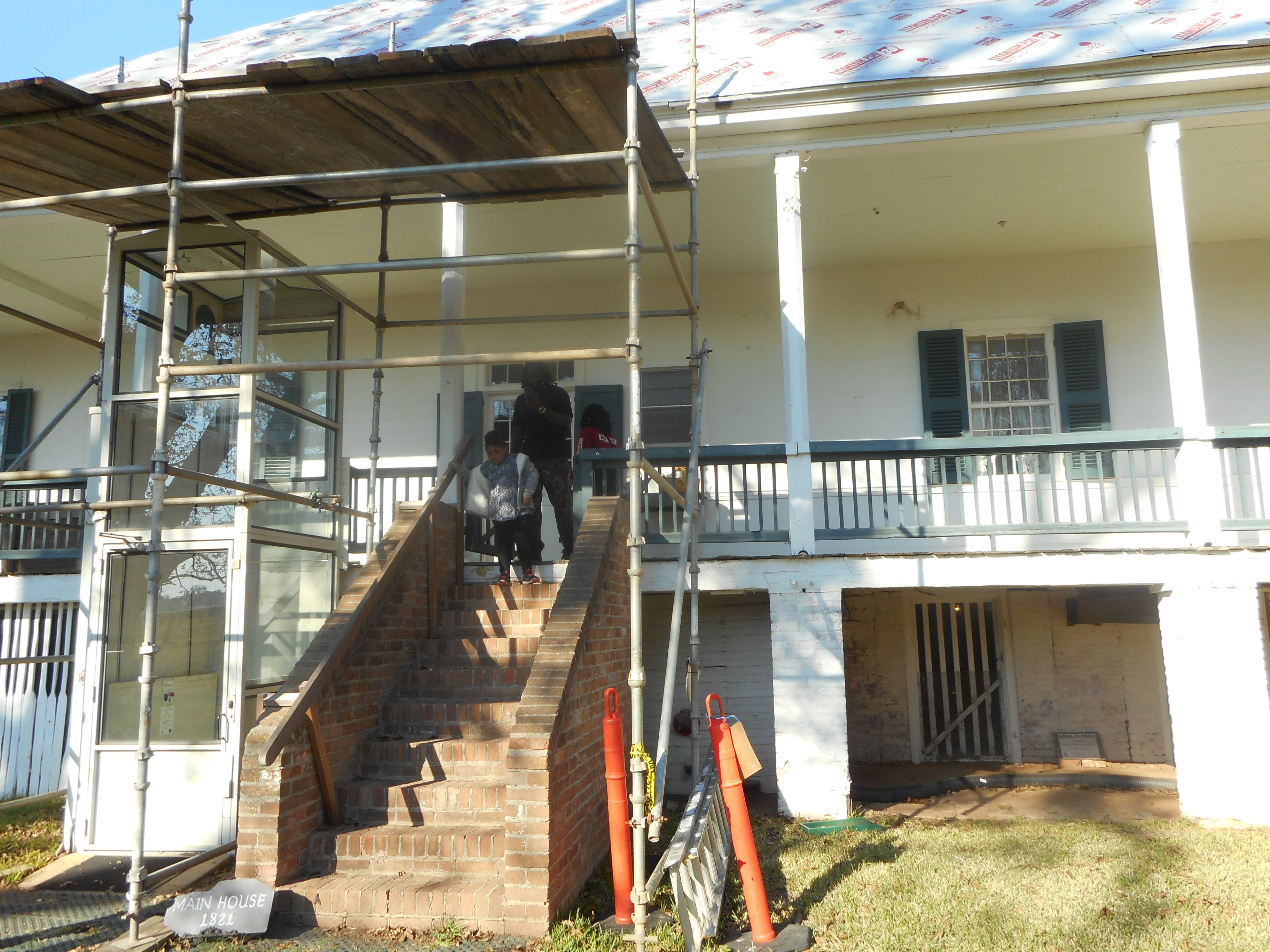
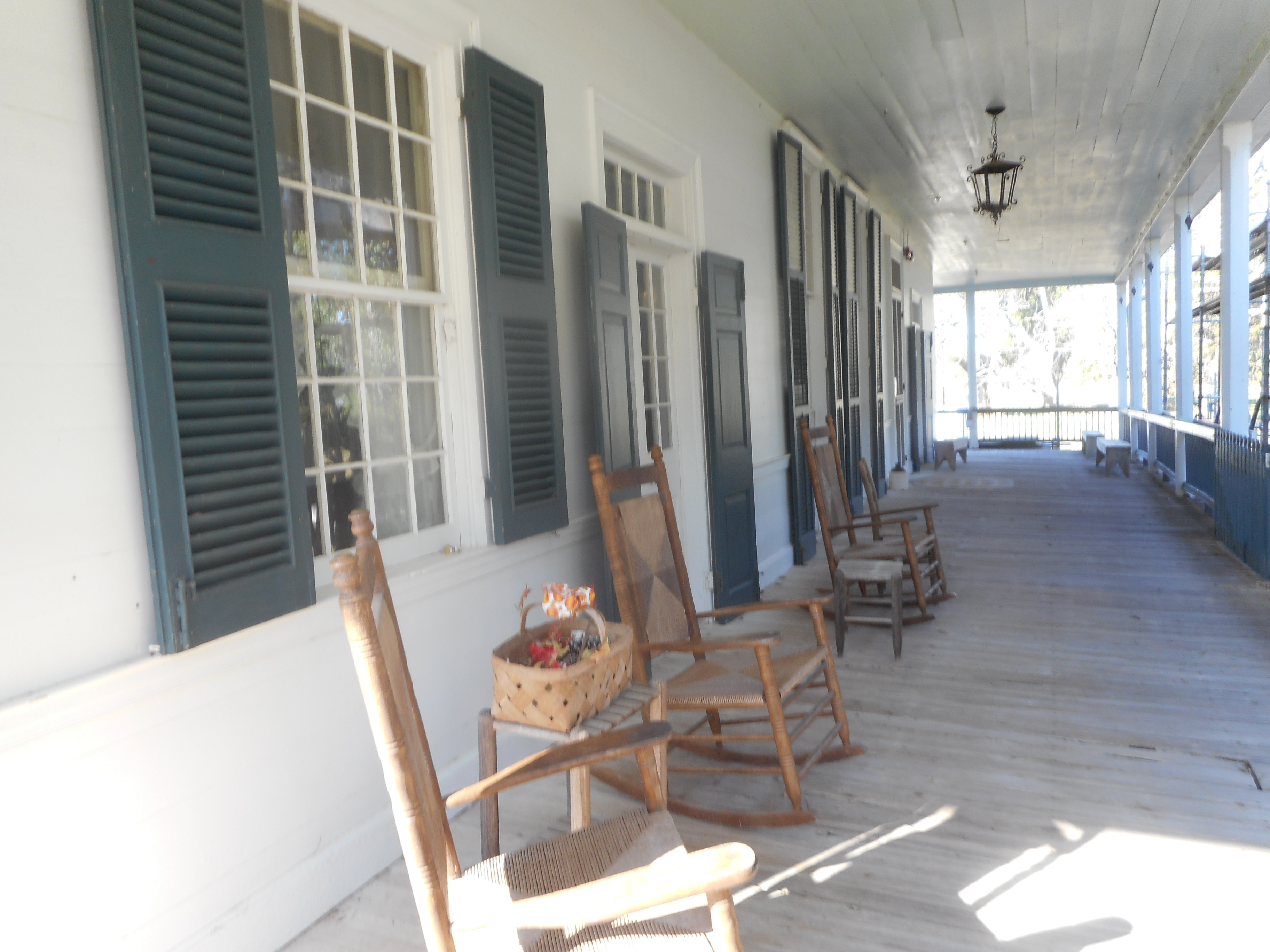
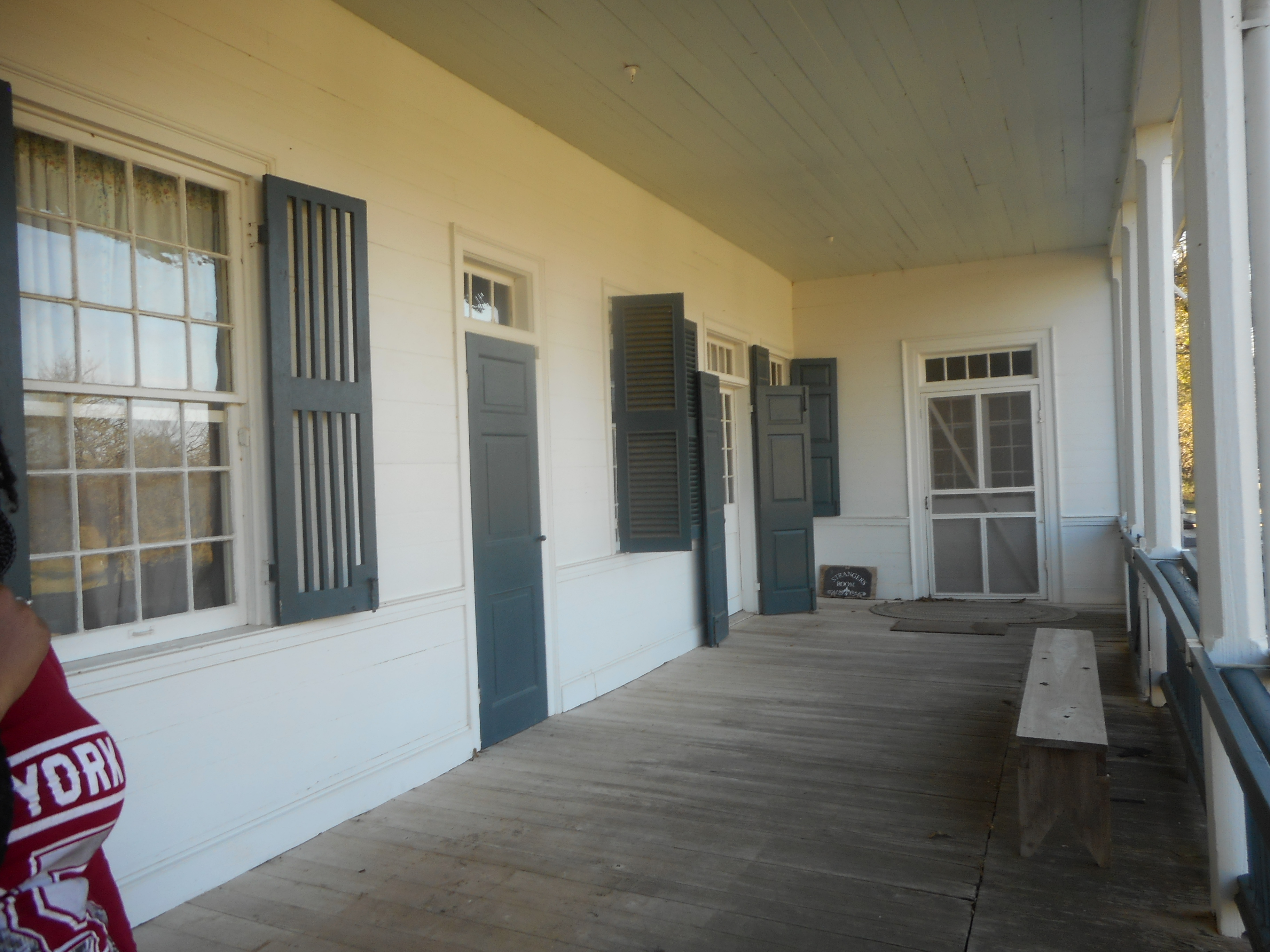
This is the porch and perimeter of “The Big House.” We could tour everywhere except for this house. We were not allowed inside, and they did not give us a reason why.
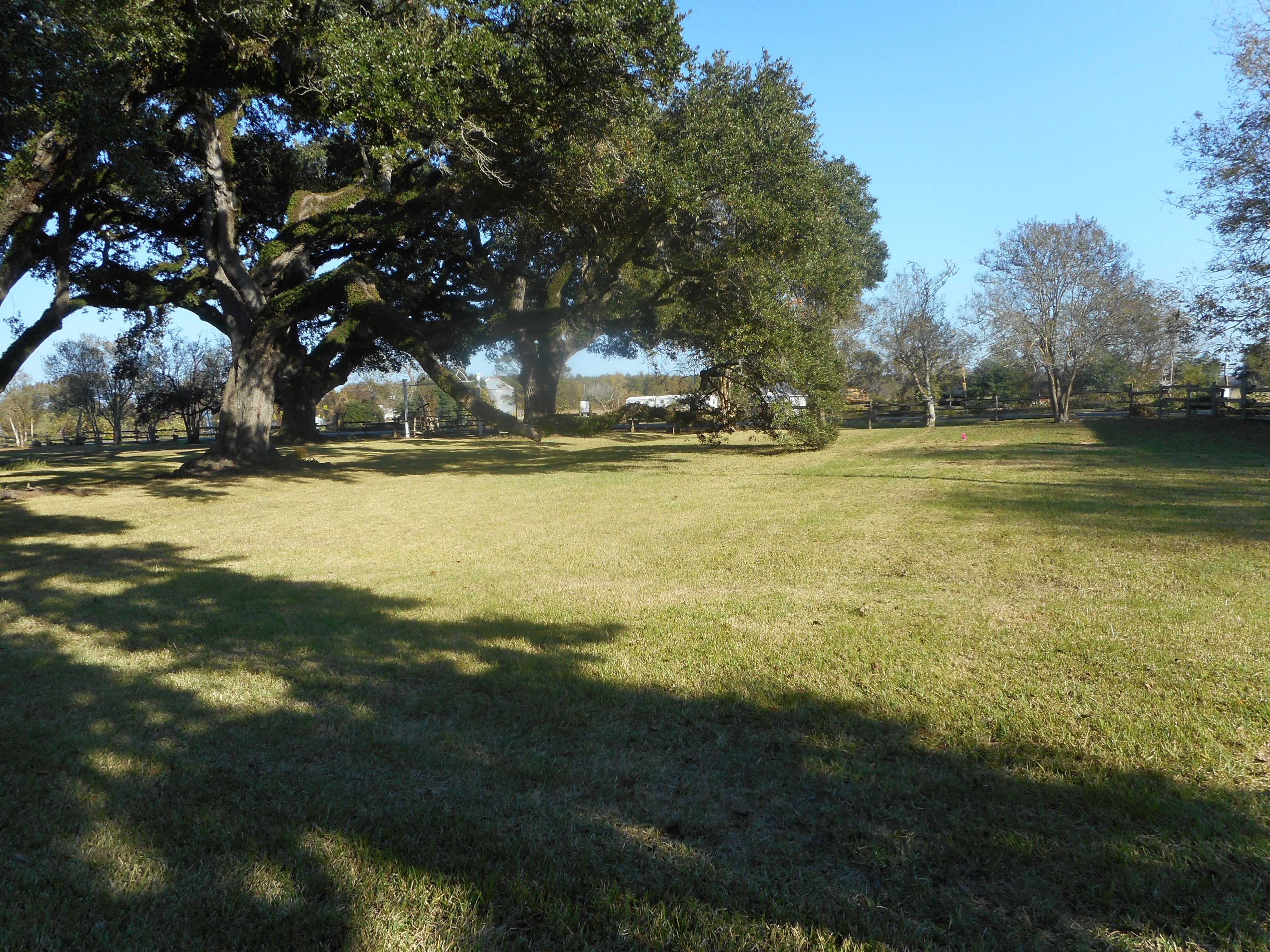
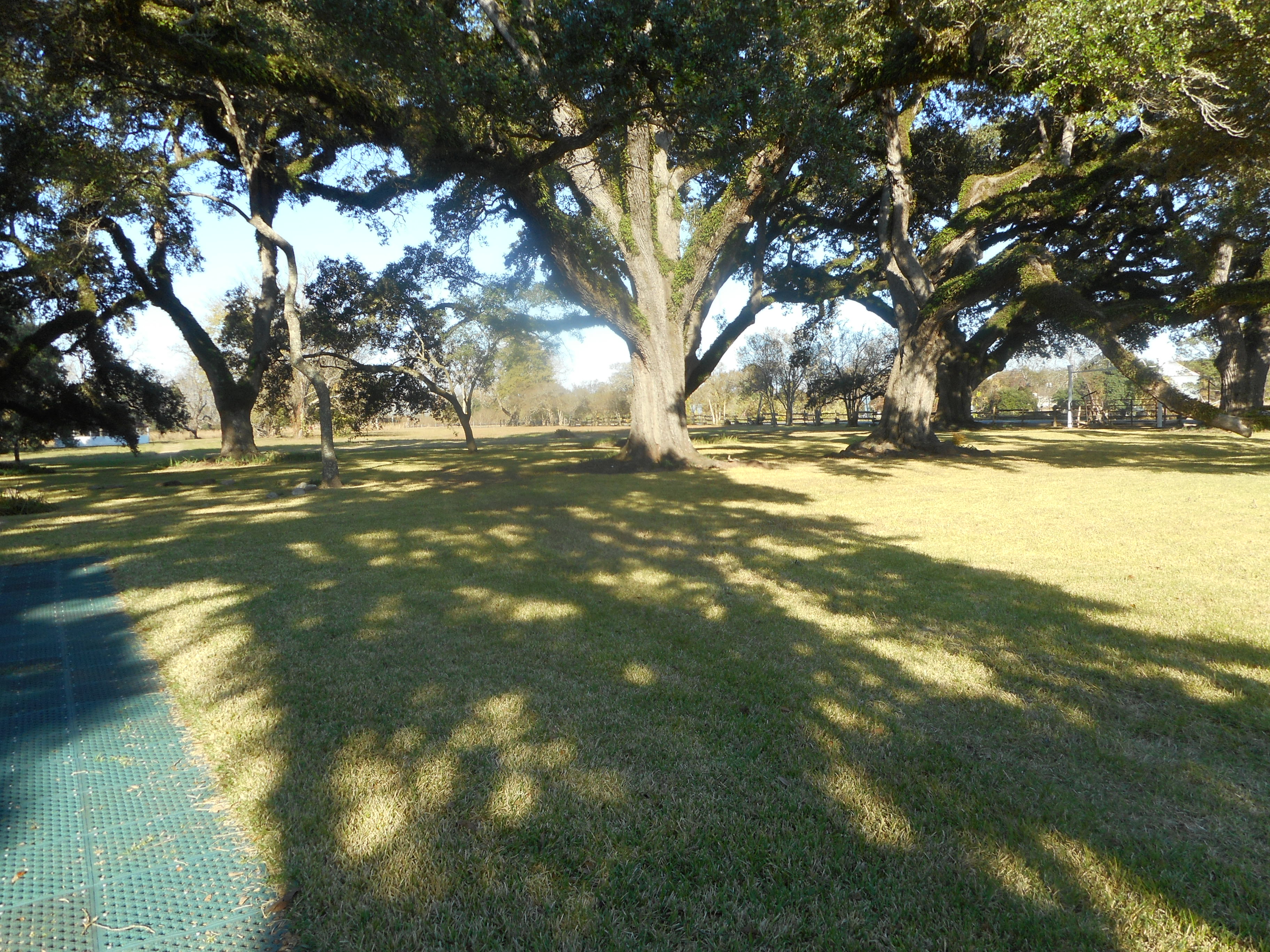
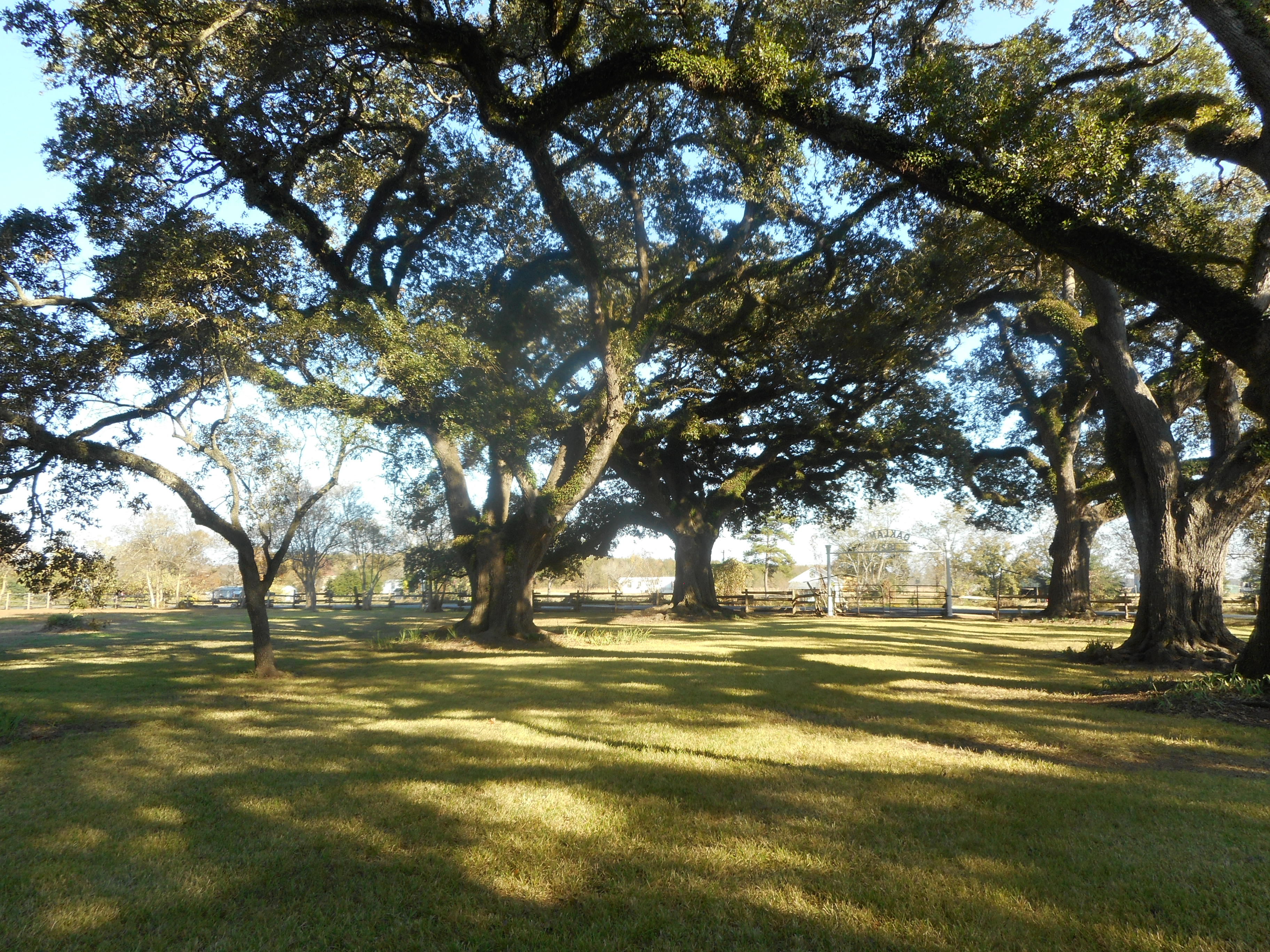
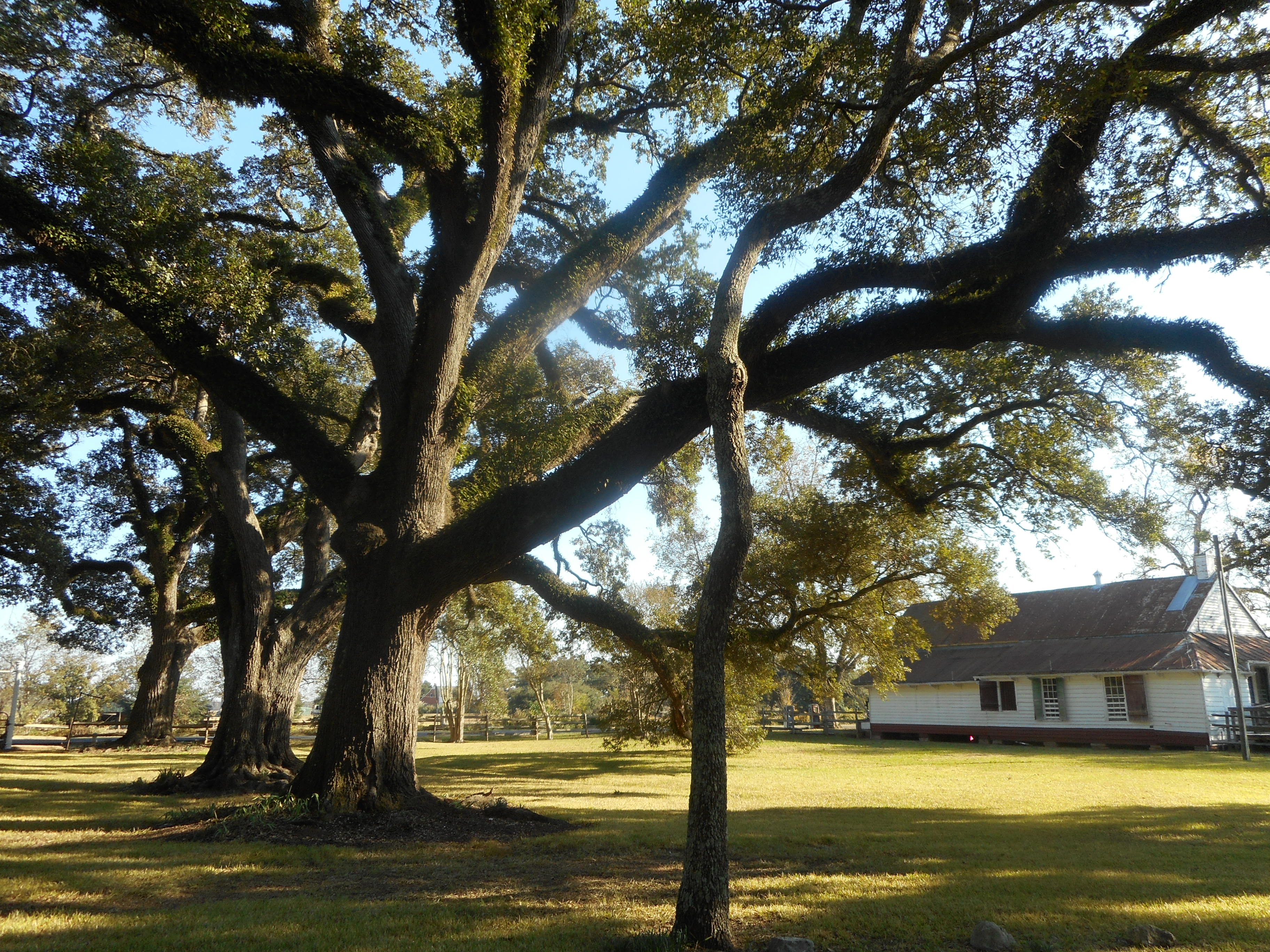
It was overwhelming to look at the trees whose thick branches bowed low. Shading the big house, cooling it from the Louisiana sun, and sheltering it from the River breeze, these trees lined the walkway to the entrance of the gate and were planted in 1825.
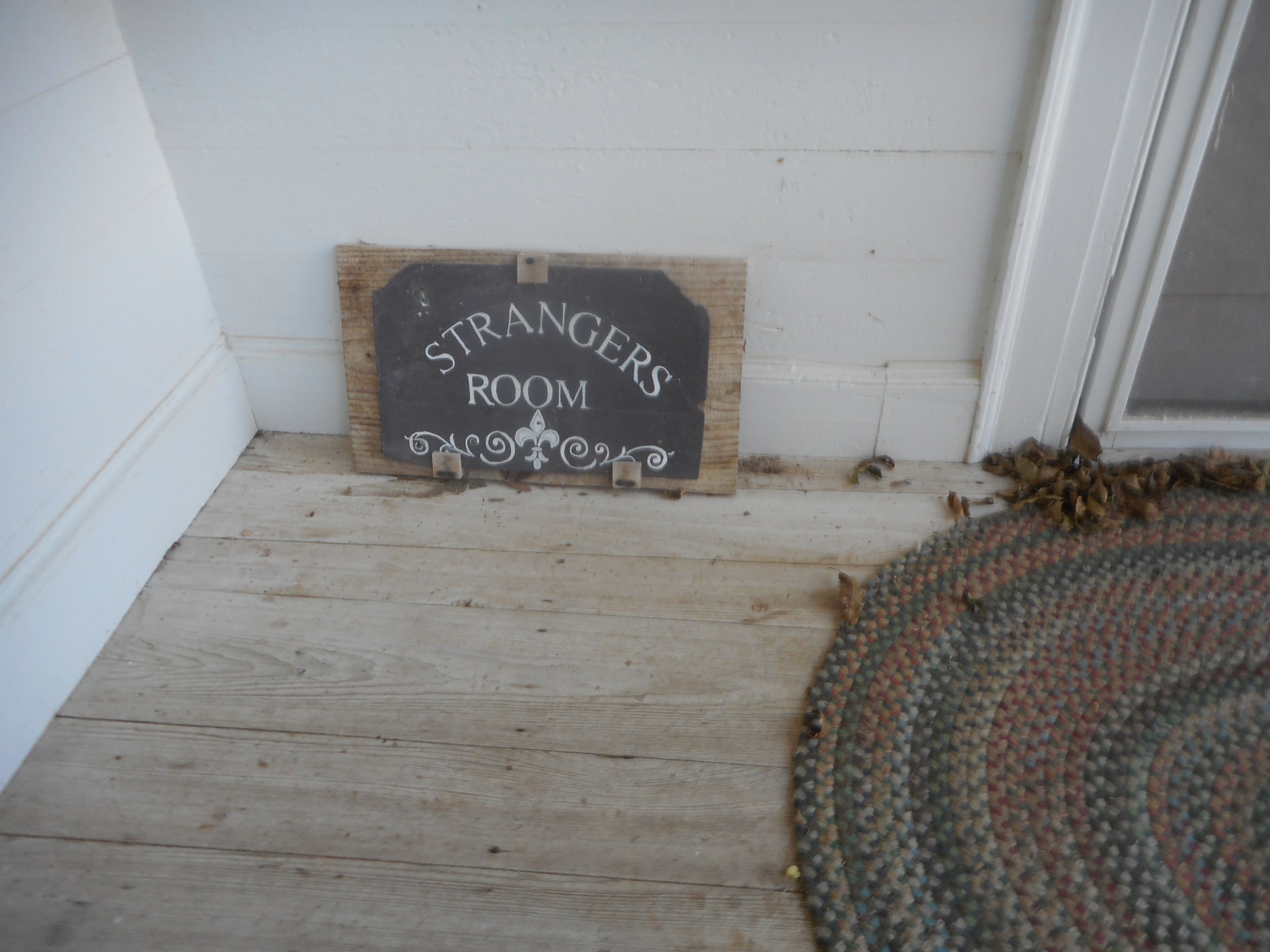
Strangers Room
I don’t know what a stranger’s room is (guest room?), but it’s a room in the big house. I tried to take pics of the inside from the window. It looks like the original furniture is still preserved.
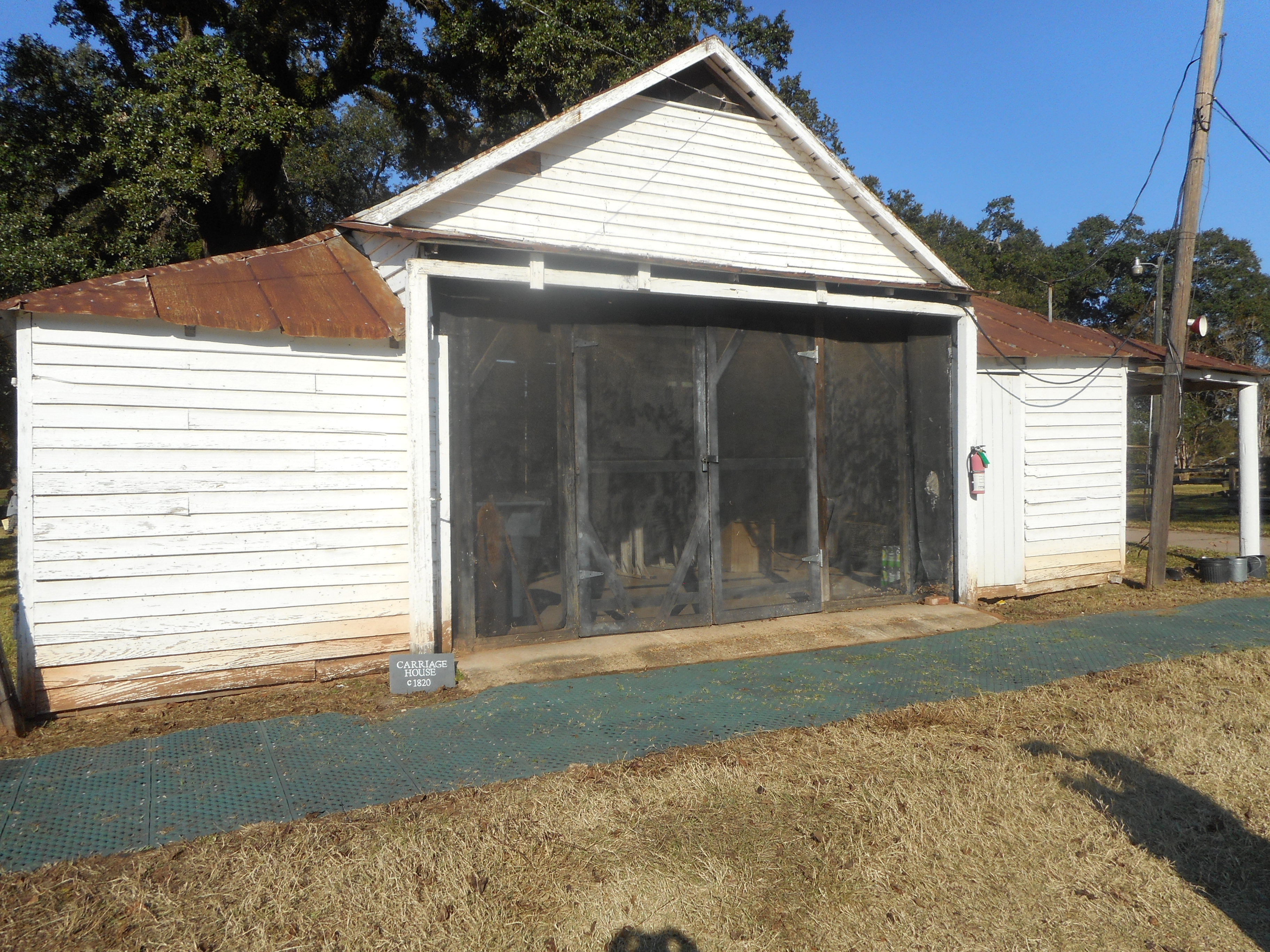
Carriage House
The carriage house dates to 1820. In its earlier years, the east bay was used as a horse stall. The overseer had the horse saddled each day and tied to the chain so that it was available for riding and checking the fields.
Square Corn Crib and Cistern
The Corn Crib was built around 1821 of hand-hewn cypress logs and was used to store grain for the plantation. Rainwater was channeled from the crib roof into the cistern, which was 16 ft deep and held 4804 Gallons of water used for watering stock.
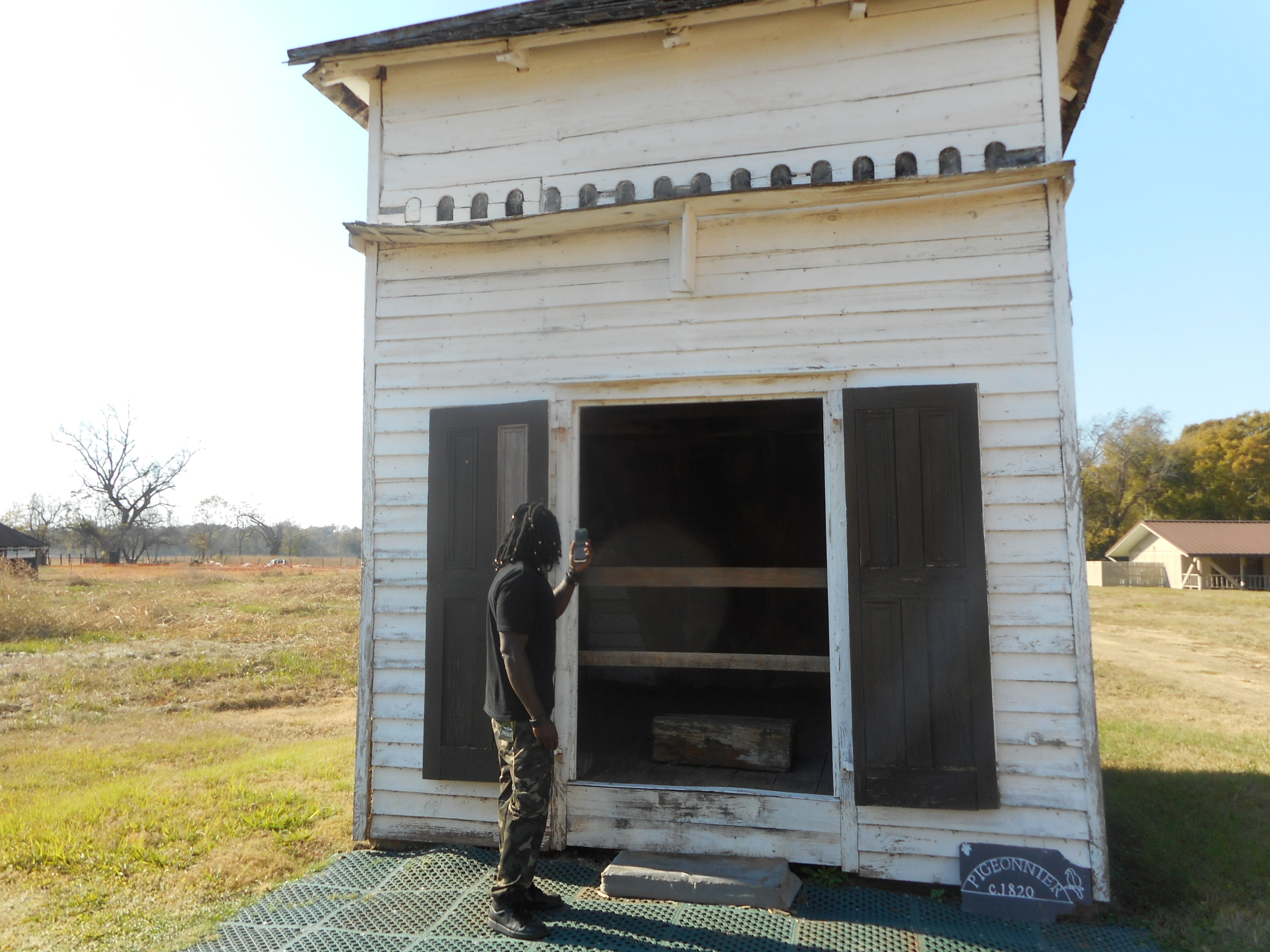
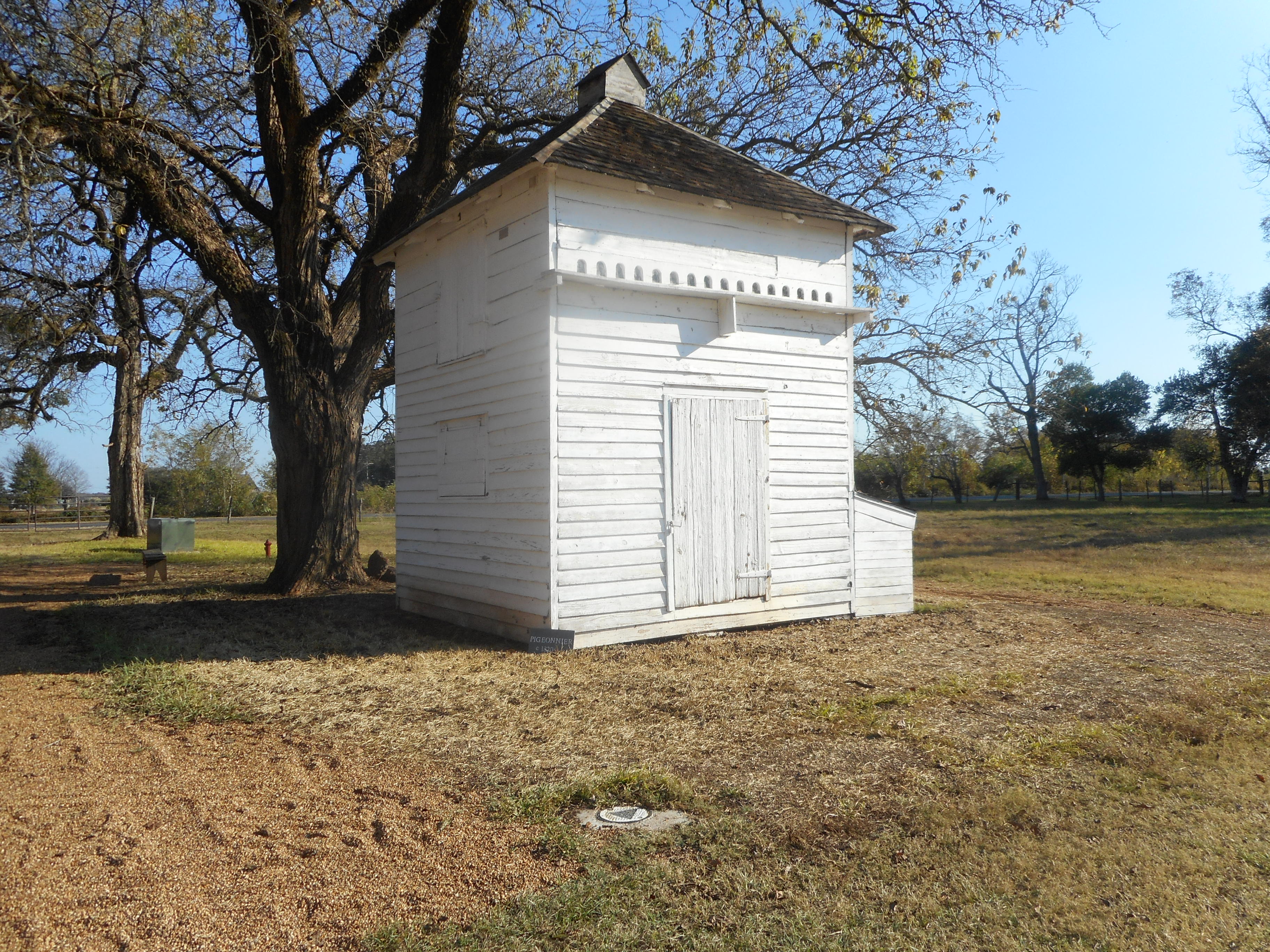
Pigeoneer
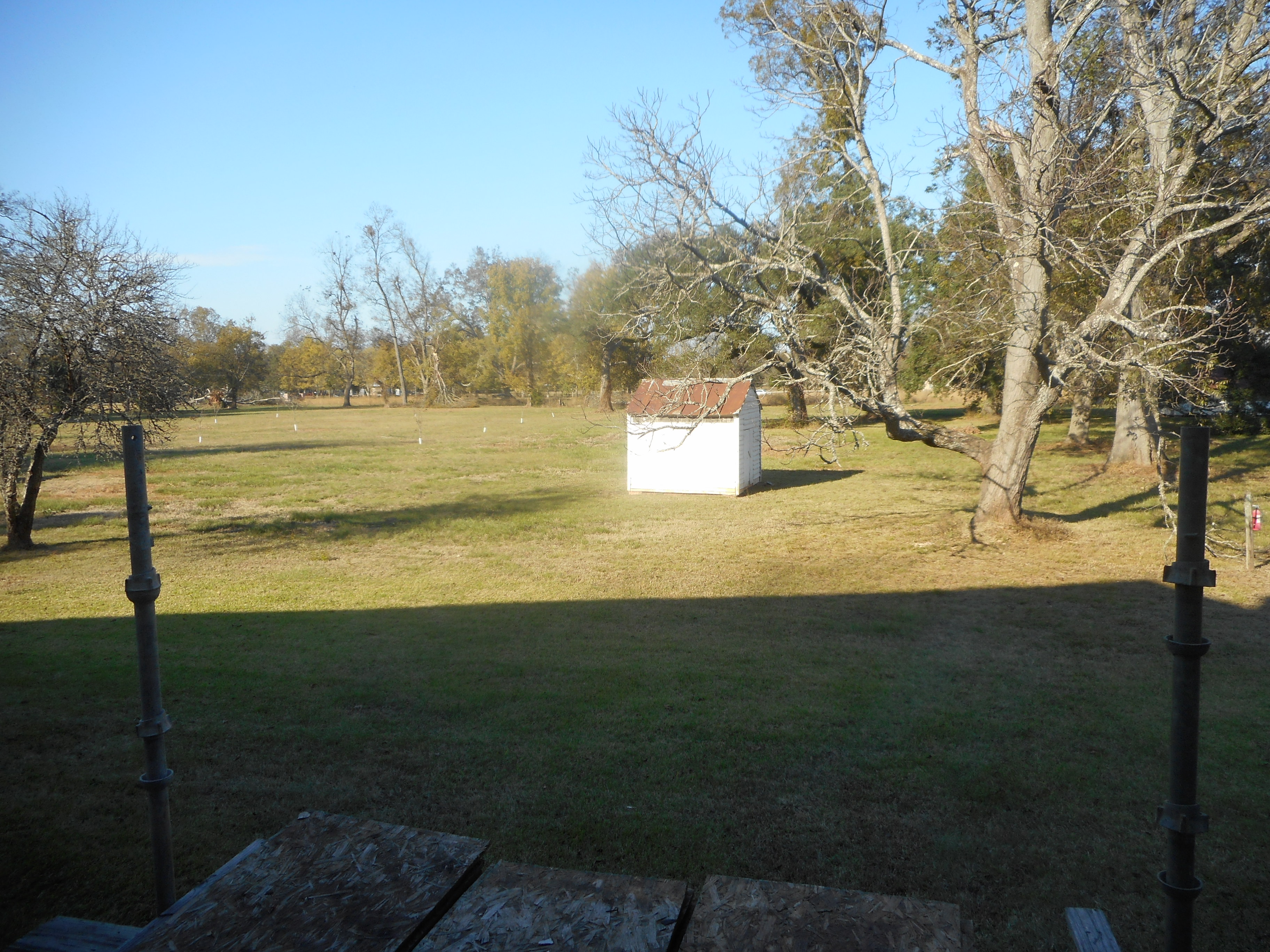
There are several Pigeonnier’s on the land. The Prud’ Hommes harvested young pigeons for a delicacy called “Squab.”
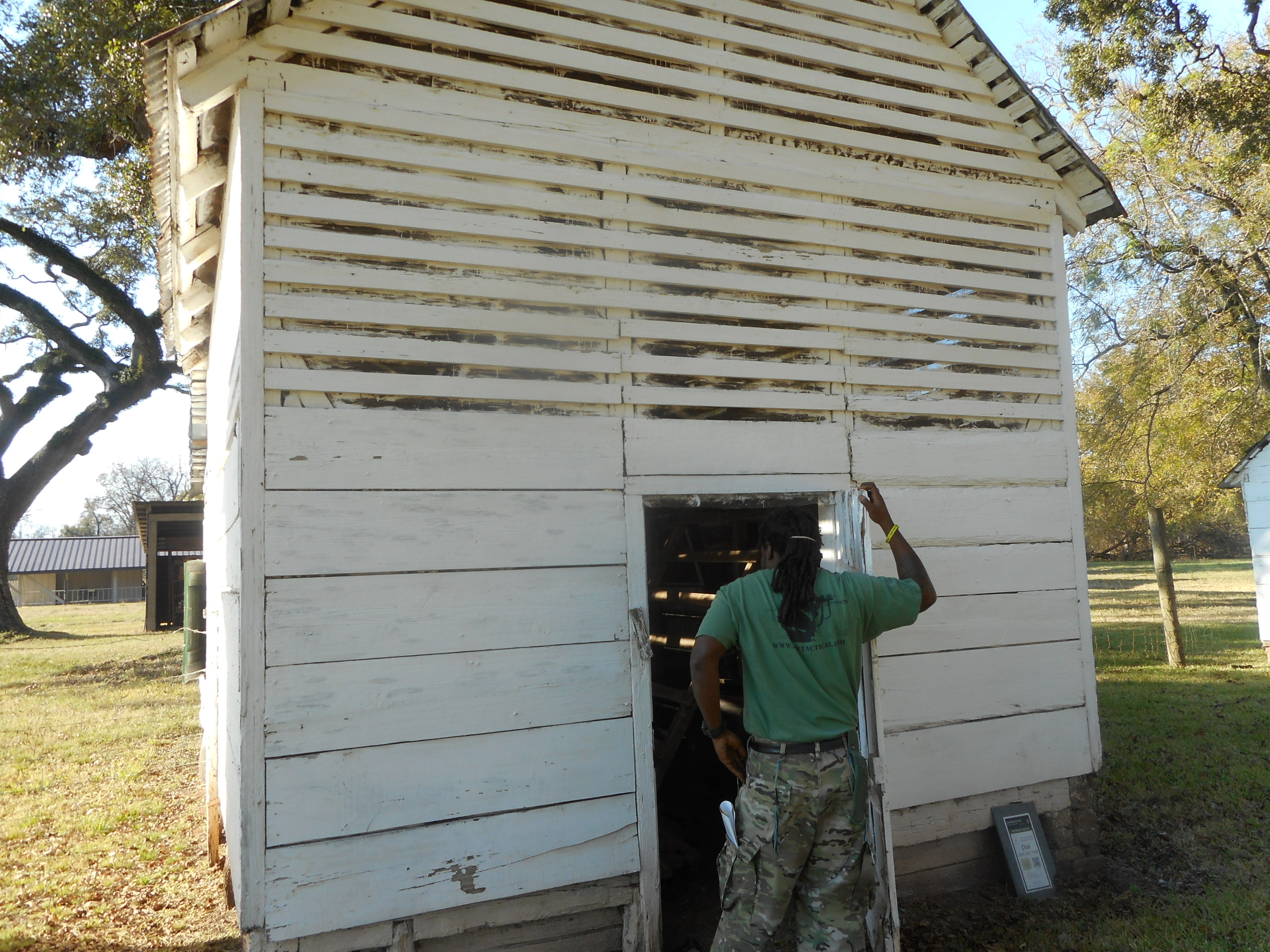
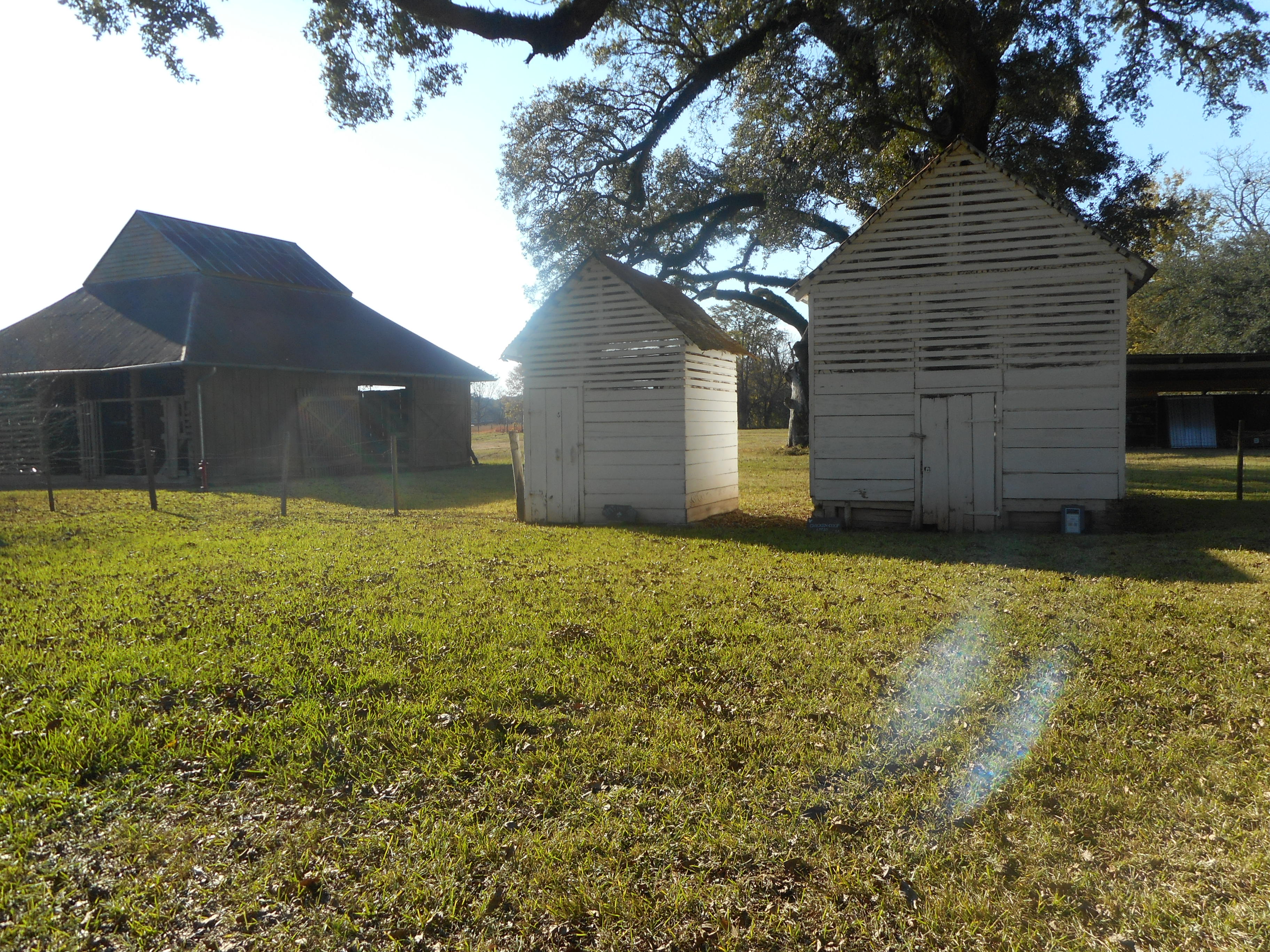
Chicken Coop
Husband checking out the Chicken Coop.
Fattening Pen
Chickens were bred, hatched and fattened in this area. Turkeys were also raised on the land.
Randoms
What I carried home with me was an even deeper appreciation for those little things we take for granted every day. I was headed back to the campsite to sleep in a tent, but I knew that eventually, I’d be going home to a hot shower, a full meal, and a warm bed. As we packed up to leave the plantation, I considered what it would be like to be forced to stay. What is it like not to have a home to go back to and nothing more to look forward to tomorrow than the same back-breaking work?
My revelations were not just in relation to dark history (I am aware black history is not just about slavery). As I looked around the land, I saw how the enslaved built almost everything on the property. It reminded me of how skillful and resourceful we are as a people. From shelters to clothing, food, and shoes, I thought how empowering it would be to get back to building our own.
Often deemed ignorant and illiterate, the truth is that Israelites, so-called Blacks, were not as naive as we are taught. It occurred to me that many blacks were only lost when it came to adapting and assimilating into American culture. Otherwise, we were expert farmers, inventors, midwives, carpenters, and chefs. Thus, I left not just in appreciation for the tangible things in my life, but for everything my people have endured and the knowledge they’ve passed down to me through the generations.
Being that I drafted this post when we got home so it can be ready for you today, I’m going to crawl into this bed and get ready to catch up. I’ll be scrolling your blogs to see what I missed. The grind continues.
Title: Daisy
Author: Pat Backley
Print Length: 190 Pages
Publisher: Pat Backley
Publication Date: October 8, 2020
I have not read a book I could not wait to get back to in a while. Daisy is one of those books.
Daisy is a historical fiction novel set between 1887 and 1974. Despite being brief, the prologue skillfully unites the entire narrative. In a flower field, a white hand is on top of a tiny black hand. Daisy chains are being made by the woman and the young child.
“Mum, why am I called Daisy?”
The author transports us back in time to that field of, Daisy’s with the same query from the little Black girl, starting in 1887 and finishing in 1974. It is set in Alabama, Harlem, and London. We will soon understand why she is named Daisy and why the hand on top is white.
The author’s strength here is her character development. Although there were many sudden tragedies, the author did such an excellent job with their backgrounds and personalities that the reader is genuinely interested in them and grieves their loss.
This is a family story, and I loved how the author tied everyone together with the historical backdrop. There are descendants of the enslaved whose lives weave with descendants of slaveowners and poor white Londoners the author interweaves with poor Black Americans’ lives. Witnessing the tension and wondering when everyone would meet was exciting. It was like reading about a generation of people all connected in a six-degrees of separation kind of way – that all people on average are six or fewer, social connections away from each other.
An example is when Samuel, Winifred, and Jeremey Davis, the Black family from Harlem, moved to London in 1952. Leading up to this, we have already met the white family in London (because the author starts in 1887 and moves time forward). Thus, the anticipation is already there as to which of Polly’s descendants will meet one of the Davis. Little Jeremy is five years old in 1952, but by the time he is an adult, he meets one of the great-great-great granddaughters of the London family, and they marry, giving birth to the little girl from the prologue.
It’s juicy ya’ll!
The reader is constantly reminded of the family’s history and how everyone is connected since the author recounts it throughout the story. The book’s main takeaway seems to be that whether you are rich, poor, free, slave, Black, or white, everyone is a member of the human family, which would function much more harmoniously if prejudices like racism, sexism, and classism were nonexistent.
“Being born poor was a scar that never faded.”
“She had never experienced racial hatred first hand, so had no real idea of how it could erode a person’s whole life.”
Plot Movement / Strength: 5/5
Entertainment Factor: 4/5
Characterization: 5/5
Authenticity / Believable: 5/5
Thought Provoking: 5/5
There is a humility that is sacred and far more valuable than any tangible thing. Then there is a humility rooted in fear. This humility is not real. It is the mask we wear when we are afraid to step outside of our comfort zones. It is the fear of being “too much.” It is the fear of being perceived as arrogant and proud. There is a pride that leads to destruction. It operates under the belief that we cannot teach it. It is that nasty arrogance they always warn us to stay away from, and for a good reason. But there is another way in which to be proud. It is the pride that gives us the courage to be who we are. It is the pride that acknowledges all the struggles we’ve endured to be where we are. It is the fulfillment that gives us the intestinal fortitude to hold our heads up and believe that we are capable despite all obstacles and impossibilities. There is a nasty and egotistic pride, and then there is a pride that is self-respect. There is sincere humility that will take us places money and status never will. Then, there is a humility that keeps us stuck because it is not humility; it is fear.
Writing Journals for Poets and Writers Are Now Available for preorder!!
Every journal includes a high-quality stainless steel diamond pen.
This article is part of Antiguan and Barbudan author Joanne C. Hillhouse’s Blogger on Books book review series on her blog http://jhohadli.wordpress.com.
Today, she provides insight into the book, To Shoot Hard Labour: The Life and Times of Samuel Smith, an Antiguan Workingman 1877-1982.
A Long Preamble
The full title of To Shoot Hard Labour, which I was first introduced to as a secondary school student and have referenced in the years since, is To Shoot Hard Labour: The Life and Times of Samuel Smith, an Antiguan Workingman 1877-1982 (first printing 1986).
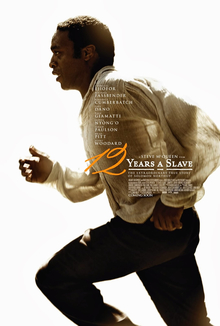
You may immediately pick up that the title structure is reminiscent of the true-to-life literary genre known as the slave narrative. Famous examples of which include Twelve Years a Slave, Narrative of Solomon Northup, a citizen of New York, kidnapped in Washington City in 1841 and rescued in 1853 from a Cotton Plantation near the Red River in Louisiana (published 1859). Additionally, Narrative of the Life of Frederick Douglass, an American Slave, written by himself (published 1845 by the anti-slavery office in Boston); and The History of Mary Prince, a West Indian Slave, related by Herself (published in England in 1831).
The subject and author of the last of these spent some of her time in enslavement in Antigua, where I live, the locale of the post-slavery narrative told by Samuel Smith to his grandchildren, co-authors Keithlyn and Fernando Smith.
The slave narrative emerged in the colonial era as a genre and a tool of the anti-slavery movement concerned with dismantling chattel slavery in the Americas – other references will say North America, but I am being very specific.
It shouldn’t need to be said in 2020 with all the material (e.g., slave narratives) at our disposal, but chattel slavery – the brutal multi-generational-generational-generational form of human trafficking and enslavement of Africans fed by the trans-Atlantic slave trade and the need (read: greed) for labour for the mass production of sugar and cotton that built the European and North American (meaning the USA) economies – happened across the hemisphere known as the Americas. The Americas includes North and South America and the Caribbean. Historically, this is the so-called ‘New World’ over which European powers fought and which they colonized over hundreds of years – beginning with Columbus’ wrong turn at Hispaniola, modern-day Haiti (French), and the Dominican Republic (Spanish) in 1492.
The first enslaved Africans arrived in the New World in the 1500s. To Shoot Hard Labour, in its sweeping introduction, spoke of Las Casas, the Catholic priest known as the protector of the ‘Indians’, the Kalinago (called Caribs by the Europeans who in the history books I read as a child were described as ‘fierce’ and ‘warlike’) and other indigenous groups being exterminated for European profit, who proposed that the colonizers look instead to Africa for labour. In this introduction, it said the first enslaved Africans landed in the New (to the colonizers) World in 1502.
The Old World powers of England, Spain, France, Portugal, the Netherlands (Dutch) divvied up and dominated Africa (which they mined of her natural and human resources) and the colonies they claimed in the New World, often through violence. England emerged as a superpower – an empire upon which the sun never set, into the 20th century, until its former colony, America, which had greatly expanded its fortunes and influence since declaring its Independence in 1776, rose to take that spot. Forgive me for being hand wave-y on the details of globalization; I intend this as a discussion of the book To Shoot Hard Labour, not a New World history.
However, I am writing this in the summer of 2020, a summer in which the newly announced Vice Presidential hopeful on the US Democratic party ticket, Kamala Harris, is US (i.e., North American) born to a father from Jamaica and a mother from India. The fact that these are both former colonies of England and that Jamaica was, like the entire Caribbean, a chattel slavery colony is not the point, but it is not irrelevant. Harris’ Blackness, and her connection to the struggles of Black people who have fought their way from slavery to freedom and beyond, have been called in to question with sentiments like “She’s not Black. She’s Jamaican.”
If you know the New World history, you know that Blackness and Jamaica are not mutually exclusive. The English speaking Caribbean, including Jamaica, and other non-English speaking former colonies, are majority Black and have been for centuries at the forefront of anti-slavery, labour rights, and independence movements, and for decades at the forefront of the reparations movement specific to the injustices of chattel slavery.
It is a movement that has been centered in American discourse this election cycle – and we love to see it – because it’s all about reparative justice. This is something that should unite, not separate us. We are diasporically – through our ties to a common motherland, Africa, and the inheritance of a common brutal experience here in the New World – family. But here we are, and it needs to be said – some of the most brutal forms of chattel slavery existed in the Caribbean, and the post-slavery narrative To Shoot Hard Labour is one man’s testimony.
The genre known as the slavery narrative grew out of the lived experience of enslaved (and formerly enslaved) people, some 6000 of them across North America and the Caribbean through the 18th and 19th centuries. They were autobiographical and, given their use as an anti-abolitionist tool, emphasized the struggle, with religion and progress being recurring motifs. As with many slave narratives, To Shoot Hard Labour is an ‘as told to’ and Papa Sammy ends by telling his grandsons, “I hope that you will write down exactly what I am telling you. If you do, the people will see how far down in the mud arwe come from.” (p. 162)
To Shoot Hard Labour veers from your traditional slave narrative in that it begins in 1834 – the year slavery legally ended in the English speaking Caribbean, with the four year apprenticeship – Antigua, which opted for full emancipation in 1834, was an exception. I, therefore, describe it as a post-slavery narrative. Its central theme, beginning with Papa Sammy’s ancestor Rachael’s long walk across Antigua to re-connect with the daughter (Minty) sold off years before, is the quest for freedom, life, humanity in a world determined to keep Black people underfoot. “Only when they find Minty they really believe that slavery was all over for sure.” (p. 32) But not without scars, “Minty had a brand on she hand.” (p. 32)
The book is a stark reminder that the legal end of slavery did not mean its end in practice. In some ways, even in a country, politically independent since 1981, with Black leaders and a majority Black population, the struggle for true self-actualization continues. The ways in which the struggle continues and in which they have been brought in to sharp focus in 2020, the year of the COVID-19 global pandemic and the globally resonant Black Lives Matter uprising sparked in North America/the US, and the economic and social quakes sparked by both, is more heavy lifting than this piece can do.
But let’s talk about this book though.
I covered a lot of ground in the 13th installment of my CREATIVE SPACE column of 2020 (SAY THEIR NAME: IN MEMORIAM) in which I wrote about To Shoot Hard Labour by telling the stories of some of the people beaten, raped, and killed, casualties of anti-Blackness post-slavery in Antigua, as well as some of the unsung freedom fighters (labour rights activists). There is likely to be some overlap, but I’ll try to tread ground not covered there, here. I urge you to read that article as a companion to this one.
As the nation was reminded during a month-long on-air book club discussion of it in which I participated, this book covers a lot in its 100 plus years, and even if you’ve read it before, you’re likely to learn something. And even if you’re not from Antigua, what you learn will be educational and impactful as you consider the arc of human history in general and Black people’s experiences in the New World specifically. The particularity of it makes it more potent, not less.
“Just a little away from the market on Church Street in an open space under a big mahogany tree was the old slave market where the bakkra use to sell our generations. That mahogany tree had hoods and spikes in it. After slavery end, Delos Martin, a Scotchman built a business place just west of it, and that would block the view of the courthouse at the corner of Scotch Row and Church Street…the little hill at the head of the city – the one in a straight line with High and St. Mary’s Streets – was called Gibbet’s Hill. It was the place where the open gallow was built – close to what is now called the Botanical Gardens – but the slaves use to call it Dribbet House.
The open gallows were like the frame of a house. Them gallows would have three or four planks overhead. The slaves used to be tied with rope at the neck or shoulders, around the waist, or any part of the body for that matter. They were then pulled up and tie to the overhead planks, and they would be left there to swing. A portion of food would be left in front of them, but that food was to let the slaves see it and not reach it. They were made to swing there till they dead. Nowadays, when you want to show how harsh you want to deal with somebody, you say ‘Me go kill you’. Back then we use to say ‘Me go gibbet you.’” (p. 95)
A long quote, yes, but hopefully you see what I mean, that you don’t have to know those places to see and hear, in Papa Sammy’s own voice, with the vivid descriptiveness of lived and/or handed down memory, the history being revealed.
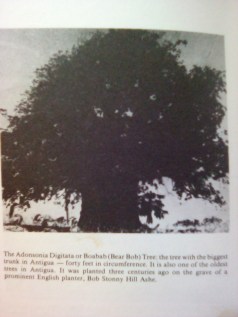
For me, the reading comes with a sense of loss and reclaiming, as, though I grew up here and knew the named streets, these places, as described, weren’t known to me. There are stories of numerous places for us to re-discover–from the baobob (or as Papa Sammy called it bear bob) tree (the one on the Freemansville main road), which has the distinction of being near a former market where enslaved people were sold, Stony Hill Gully where enslaved people plotted freedom, in 1736 (enduring public torture and death as a consequence), to the lawlessness and licentiousness of bakkra spaces like Guiana Island and Willoughby Bay.
It’s worth noting that though the book, in the spirit of narratives, is autobiographic and, as a result, largely anecdotal, it is not so easily dismissed as a history. For one, it fills the gaps left by the original history of dates and more official sources, i.e., the colonizer’s perspective. For another, it makes a valiant effort to fact check itself.
Derelict Gunthorpes Sugar Factory Antigua High Resolution Stock Photography and Images – Alamy
When Papa Sammy gives 1904 as the year the Gunthropes sugar factory became operational, there’s a footnote that references “Sir Francis Watts, who played a leading role in the establishment of the first central sugar factory” (p. 115) as saying that it was planned in 1903 and reaped its first crop in 1905. The centralization of at least some part of the sugar production process, by the way, began opening up the world of people who had known only plantation life – a very narrow world indeed.
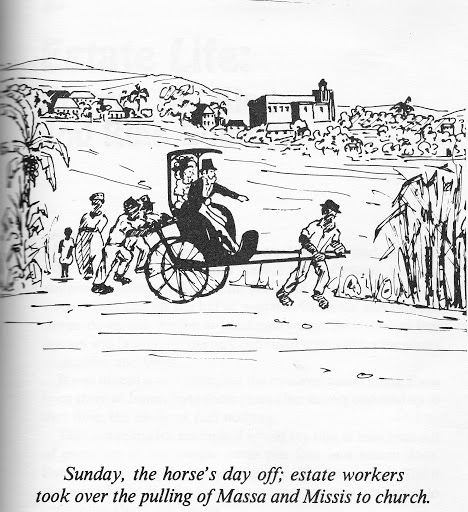
Sugar was king during much of slavery, plantation days, in the Caribbean, and this changed only ever so slowly post-slavery. Massa (also called bakkra – literally “back raw” according to one source* much like “cracker” a pejorative for white in the US* is, according to some sources I’ve seen, a reference to the sound of the whip hitting Black flesh) was still Lord, Master, and the magistrate. The formerly enslaved was still, for all intents and purposes, enslaved. As Papa Sammy said, “in those days, nega if them right, them still wrong” (p. 118)
Sunset from Jolly Beach (scotbon, Feb 2008) Antigua and Barbuda
While the story doesn’t scrimp on the sorrow, it doesn’t wallow in victimhood. It speaks concurrently of the rise of free villages like Freemansville, the harnessing of skills and resources (female-centered work in medicine – a fair amount of folk remedies included), the lingering effects of enslavement (children still carrying the so-called Massa’s name and harsh corporal punishment of children and adults continuing the pattern from the plantation), and the rise of the workers’ rights movements with sometimes fatal consequences (as during the 1918 ‘riots’).
Additionally, the governorship and business and ownership or lack thereof and the transformation of the country, the push for voting rights and ways the community worked together (“the swap, throwing the box and working the lift was the main things that prevent us from eating each other” – p. 116). And there was a beauty. I can verify that as Papa Sammy said, there is no better vantage point for sunset viewing than Clark’s Hill, which is a rising in the middle of the island.
Chattel slavery was not indentured servitude, no matter what some meme said, and the fact that we seem to be forgetting that makes books like To Shoot Hard Labour even more valuable. Consider that post-slavery movement was restricted – you couldn’t just switch employers, and you would be punished physically or locked up for not going to work. You still effectively lived in slave quarters (called the ‘nega-house’ where there was no privacy); you did not police yourself in any way – in fact, “whenever there was a fight or quarrel among nega-house people, it would be massa that would decide who was to get punish and how the punishment would be” (p.38) and who in fact still had and exercised the power of life and death with impunity over the people he once owned.
Consider that post-slavery, you did not own the land you worked nor what it produced unless bakkra said so, that prison labour (literally a jail cart which moved where the work was) was effectively another form of slave labour. Consider all this and more through the lens of current conversations re Blackness, reparations, etc. Consider all this and more, over the 100 years Papa Sammy lived, dying the year after Antigua arrived at political Independence.
Who else to tell this story even if in the telling he disrupts some established narratives–e.g., bringing nuance to the story of modern Antigua, dinging the mythology, speaking to the jealousies and infighting, and the missed opportunities and broken promises even with Black leadership?
You can hear the heartbreak in his words as he reflects on the mahogany tree that once marked the slave market in town. “It was our government and black people that pluck up that tree.” (p. 161). It is we, now in charge, he insists who have forgotten and that’s the heartbreak of this book, but that’s also the hope. These stories are hard to read but they need to be told because – there is much that was done that we can learn from, there is much that was done to us that we must never forget.
Why read this book, beyond it being riveting history? To quote Papa Sammy, “I want the young generations to remember” (p. 161), and this is important because, to quote him further, “I hope that the day will never come again when our people have to suffer indignity like my generation and others have to.” (p. 162) Indignity, when you read this book, and books like it, you will see that that’s putting it mildly.
RIP to the co-author of To Shoot Hard Labour, Antiguan and Barbudan historian, and trade unionist Sir Keithlyn Smith who died July 31st, 2020, and buried in an official funeral on September 15th, 2020.
Etymology: “back raw,” “oppressor” (which he bestowed with a whip.)
The bakra or bakra master refers to a slave master and or slave driver. It is often used in reference to performing unpleasant / involuntary tasks for a demanding person (often in jest).
*Cracker: “Cracker” was used to refer to poor whites, particularly those inhabiting Maryland, Virginia, and Georgia’s frontier regions. It is suspected that it was a shortened version of “whip-cracker” since the manual labor they did involved driving livestock with a whip. Over time this came to include slave-drivers who used Blacks as livestock during chattel slavery, often literally “cracking the whip” to make them walk faster when human bodies replaced cattle or as a warning to enslaved people who were not “working” hard enough. ‘Ev’ry time I hear the crack of a whip, my blood runs cold. I remember on the slave ship, how they brutalised our very souls.’ – Bob Marley, Slave Driver, from Catch a Fire | Source: “Remembering the Crack of the Whip: African-Caribbean Artists in the UK Visualise Slavery.”
Joanne C. Hillhouse is the author of two books of children’s fiction, Lost! A Caribbean Sea Adventure and With Grace, two books for the teen/young adult market The Boy from Willow Bend and Musical Youth, and two adult contemporary books Oh Gad! and Dancing Nude in the Moonlight. Her writing has appeared in several international magazines, literary journals, and anthologies, including, respectively, Essence, The Columbia Review, and New Daughters of Africa.




















































 The PBS Blog