You are a rarity.
A gemstone that is not only precious but scarce.
You’ve been disgraced and beatdown so long
I doubt you know the difference.
Something is only precious when it is preferred.
But when a gemstone is rare
people search for it, and when they find it, they rejoice
for a rare gem is not easily available
for it, one must look.
There is no creation like you.
There is no body like yours.
No mind can conceive of the things you’ve seen
Even the ground is confused in the way that you walk
When you wake, the earth
quakes and shudders and the sun smiles
No instruction can map out the contents of your mind
You precious one.
You rarity.
You delicate rock.
You silk mountain.
Do not become small for those who refuse to climb.
Let the ordinary ones stay on the ground.
Let those who cannot swim stay on land.
Understand, you are a fist full of moon.
And those who cannot appreciate your light
must stay in the darkness.
There is no place for shadows
in the land of the living.
You are life.
You are womb.
Without you, the man was incomplete,
and without help.
You are not only golden
You are gold.
You are historic.
You are not only precious
You are rare.
I am reposting this because I needed the reminder, and I thought since I needed the reminder, I am sure others may need to hear it. If you are new to this blog, you are also new to this post. Enjoy!
Oct. 2020, Memphis, TN
I started thinking about the many layers of myself and how I notice that people pick the parts of me they like.
Some people love the silly me. They like when I post funny memes and do silly things.
Some people like intellectual me. They love when I talk about black history and little-known facts.
Some people love the lover in me. They like to see my husband and me together, loving one another and having a good time.
Some people want the spiritual me. They like to hear me quote scriptures and talk about the bible. They like prophetic me.
Some people like fiction me. They enjoy my novels and short stories.
Others like the poet me.
I’ve learned from life that you’ll meet so many people throughout a lifetime, and they will pick the parts of you they like best.
But you know, as I know, every part of you helps to build you into the person you are.
What I realized today was the importance of accepting your whole self, even if others reject parts of you.
“I have learned not to let rejection move me.” – Cicely Tyson
People may pick the parts of me they like, but it is my responsibility to pick my whole self. I am all of the things people love (and don’t love) rolled up into one. I am not a scattered puzzle. I am a body, and each of my body parts helps me be the full and whole person I am.
While it may be optional for others to pick and choose, it is not optional for me to choose. It is my responsibility to accept myself fully, the good, bad, and the ugly.
When we start to favor one part of ourselves over another because we see it is what people like most, we lose the other parts of ourselves. And since we need every part to make up a full body, in a sense, we lose ourselves.
People who do not vibe with the whole, the full person you are, are not your people.
Remember that there are layers of you, and though people will choose the layer they like best, it is your job to choose your whole self.
It’s Throwback Thursday! If you are new to this blog, welcome! I hope your week has been great so far.
So, on Thursdays, we throw it back with an old school jam or a 90s jam or a song I love from anytime before today lol.
Today we are reposting this Maxwell hit. This is my jam.
I love the words to this song. He starts off real heavy, “I was reborn when I was broken.” Groove on into your morning/afternoon/evening with this jam.
I am deep in revisions for my first fantasy novel, The Women with Blue Eyes: Rise of the Fallen. I am on the clock because I want my editor to start work on it next month. As I go over my work, I realize how horrified I would have been not going back over this. As usual, I want to share what I am learning with you. In this new Indie Author Basics series, I am sharing some signs I have noticed that indicate that you are probably not ready to Self-Publish that book.
You Skip the Revision Process
Step one in the process of Self-Publishing is to write the book. It is unnecessary to self-edit during this stage because it would be challenging to finish the book if you are editing as you are writing. Step one is like a brain dump where you are getting everything down on paper. It is the most exciting part of the journey as you let your ideas and creativity flow. Step one is creating the rough draft of your story, the version of your manuscript that is complete but not polished.
I know a writer is not ready to Self-Publish when they skip the revision process.
Revisions are rewrites of the manuscript before sending it to a professional editor.
It is AFTER the book is finished because you don’t want to edit as you write (you’ll never finish) but BEFORE the professional edit.
The rewrite is more challenging than the rough draft because you are not only putting your ideas on paper, but now you are organizing those ideas, cutting out what doesn’t work, and working with what does work. The revision stage (rewrites) strengthens your work into something worthy of publication.
If you skip this stage, you are publishing your rough draft. If you send the rough draft to an editor, you will still ultimately publish your manuscript’s rough draft version. While the editor can clean it up some, it is not the editor’s job to write the book for you. If you are looking for someone to write the book for you, you need a Ghostwriter. If you want to write your own book, it is essential not to skip the revision process when you are Self-Publishing.
The rough draft is not the final draft and will not be the best representation of your writing.
How to Know if You Have Skipped Revisions:
You just finished writing the book. You have made it to the end, and you are done. You take this book , create a PDF, and upload it to Amazon. You have not gone back to rewrite or make corrections, and you have not had it properly edited. If I have described you, you have skipped the revision process.
Technology has been your godsend. You have finished recording your book using speech-to-text technology that has translated your words to the page. You finish the book, but you don’t rewrite what you spoke into the document for comprehension. Everything is kind of all over the place. If I have described you, you have skipped the revision process.
You just finished writing the book. You have made it to the end, and you are done. Then, you take this version (the rough draft) and send it to an editor. If I have described you, you have also skipped the revision process. And unfortunately, for your editor they have the job of rewriting your book. If they are a quality editor, they will send the MS back to you and request a rewrite.
If you have not gone back over your rough draft to make changes, this is a sign you are not ready to Self-Publish.
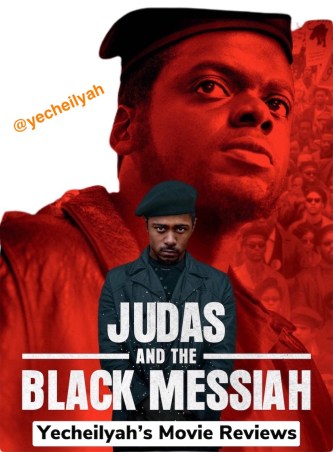
We were knee-deep in a new pandemic when I noticed this film in August 2020. Immediately upon seeing the trailer, I was hooked. I could not wait to see the movie. Well, it is 2021, and the film is finally here, and you better believe I saw it. Here are my thoughts.
If you are familiar with biopics, you know they are based on a true story, so you already know how this ends. Still, I must tell you this review contains spoilers if you have not seen the movie.
Judas and the Black Messiah
First, let’s talk about this title.
Judas was one of the original twelve emissaries chosen by the Messiah, but he was a traitor. So, when the Scribes and Pharisees were looking for a way to kill Yahoshua, the Biblical Messiah, they found what they were looking for in Judas. He spoke with the chief priests and captains, who agreed to pay him for his services. (Luke 22:3-6) He is called “the son of destruction” in John chapter seventeen verse twelve because he set out to destroy the savior. After selling out Yahoshua, Judas ended his own life by committing suicide. (Matt. 27:5)
William O’Neal was only seventeen-years-old when the FBI recruited him to infiltrate The Black Panthers after stealing a car and speeding across state lines. Like the biblical Judas was chosen by Yahoshua, O’Neal was selected and promoted to head of security by Chairman Fred. Just as Judas met with high priests and captains of his day, O’Neal met with FBI agents like Roy Mitchell.
Judas was paid thirty pieces of silver, and O’Neal was paid $300 after the raid of December 4, 1969. Judas sold out Yahoshua with a kiss, and O’Neal sold out Fred with a floor plan.
Both committed suicide.
The title of the film is fitting.
Historical Accuracy
Like most movies based on a true story, I expected Judas and the Black Messiah to take some creative liberties. It is not possible, for instance, for us to know exactly what the conversations was like, especially between William and Roy.
However, I found the film to be mostly accurate with only minor exceptions.
Hampton and O’Neal’s Perceived Age
While in the movie, the actors look 30-ish, it’s important for viewers to know they were young in real life. Fred’s activism started when he was just a teen organizing a way for black kids to go swimming in Maywood, a suburb of Chicago. The white kids swam at the pool at a private Veteran Industrial Park, but black kids weren’t allowed. Even though he couldn’t swim, Fred and his friends carpooled black kids from Maywood to a Chicago Park District in Lyons several miles away.
Fred’s outspokenness caught the attention of Don Williams, head of the West Suburban Chapter of the NAACP. In 1964, at just sixteen years old, Fred was head of the NAACP Youth Branch.
William O’Neal was also young, only seventeen, as stated, when he was recruited for the FBI. According to O’Neal’s 1990 testimony in the documentary Eyes on the Prize, he (Williams) was looking for an opportunity to work off his case, which made it easier for Roy Mitchell to recruit him.
I want us to think about this for a moment.
A young man stealing cars and joyriding is not a hard thing to imagine. Young people do stupid stuff as we also did stupid stuff when we were young. This is not to excuse O’Neal’s actions. But, the men’s youthfulness, in my opinion, adds depth when you realize the FBI took extraordinary measures to destroy a movement led by teenagers. The FBI started their investigation into Fred Hampton in 1967, a year before they recruited O’Neal. Fred was nineteen years old.
These were kids and America feared them.
O’Neal’s Repentant Heart
They may have been kids in the beginning but O’Neal grew up working for the FBI and it shows.
In the movie, the fictional O’Neal seemed more repentant than the real O’Neal. Based on his interview in part two of Eyes on the Prize (and in part one as well), I couldn’t help but feel an uneasiness watching him. His eyes shifted a lot, and he had a hard time looking directly at the camera. I could tell recounting the story was bothering him. He seemed kind of cold.
Nick Pope describes what I mean:
“Watching his infamous ‘tell-all’ interview with the 1990 docuseries Eyes on the Prize II, you’d be hard pressed to find a semblance of guilt or shame about his role in the Chicagoan group’s violent downfall. Equally, he refused to accept any blame for the murder of Black Panther chairman Fred Hampton at the hands of the Chicago Police Department in 1969.
“Do I feel like I betrayed someone? Absolutely not. I had no allegiance to the Panthers,” O’Neal told the interviewer, in a section that ultimately didn’t air. He simply thought of himself as a man who “had the courage to get out there and put it on the line”; a man who had been made a “better person” through his work with the FBI. By the end of the conversation, he seemed sanguine about his legacy. “I think I’ll let history speak for me.”
I don’t know how much we can trust that came out of O’Neal’s mouth that day, so it makes sense that filmmakers took it with a grain of salt.
“In an interview, the writers told Decider that the biggest assumptions they made involved Hoover’s knowledge of the raid that took Hampton’s life (which was recently confirmed) and O’Neal’s relationship with Mitchell. For the latter, they had to fill in some gaps, as O’Neal’s information – available via the docu-series Eyes On The Prize featured at the end of Black Messiah – is understandably unreliable.” (Gabriel Ponniah)
“Nine months after conducting the explosive interview, in the early morning of 15 January, 1990, the 40-year-old committed suicide by running out onto the westbound lanes of Chicago’s Eisenhower Expressway.”
Although O’Neal does not appear repentant, that’s not for any of us to decide. “In an article from the Chicago Reader titled “The Last Hours of William O’Neal,” O’Neal’s uncle Ben Heard details his nephew’s fear, saying, “He said they had someone tied up and they were pouring hot water over his head. They were trying to get him to do something.” perhaps referencing informant George Sams. Heard went on to suggest O’Neal was plagued by guilt for the rest of his life after Hampton’s murder: “I think he was sorry he did what he did. He thought the FBI was only going to raid the house.” O’Neal’s suicide attempts would back this up – and in the end, one of those attempts succeeded.”
Stanfield did a great job in his role as the Judas that was O’Neal, although it was so stressful for Stanfield that he mentioned needing to go to therapy afterward.
50/50: Did O’Neal Personally Lace Hampton’s Drink?
I had to look into O’Neal personally poisoning Hampton and delivering the drink. I am still skeptical about if he did it personally, but I did discover multiple sources that confirm this part of the story is true.
It’s still 50/50 for me though.
First, why am I skeptical?
When discussing whether he was personally responsible, in one instance he doesn’t outright reject the accusation but in another he also seems to reject it, saying:
“I don’t buy it. There’s just no way. Fred was the type of person that you didn’t have to drug anyway. Fred was always tired. He could get in a car, and we couldn’t ride two blocks without him dozing off. I mean, he, he just, he was a high-energy person that ran on very little fuel, and wherever he’d sit down, he was well-rested. I have never, I have never believed that, I mean…”
Sooo…what happened?
In everything O’Neal spoke about, he never seemed comfortable admitting to poisoning Hampton. This isn’t to say Fred wasn’t drugged because they found it in his system, but perhaps O’Neal was conflicted within himself.
“Per a 2021 report (via Esquire), O’Neal once admitted “while high” that he did indeed drug Hampton. Specifically, the former FBI informant used “a substantial dose” of secobarbital (a barbiturate) in a glass of Kool-Aid, at least according to a “criminal associate” who testified in court.”
O’Neal says Hampton never consumed marijuana or any drugs and that most party members didn’t even drink alcohol so the Kool-Aid thing makes sense. Additionally, In The Assassination of Fred Hampton: How the FBI and the Chicago Police Murdered a Black Panther, Hass talks about the report from Cook County chemist Eleanor Berman who ran two separate tests that presented evidence of barbiturates in Hampton’s blood, though he was not known to take drugs.
The FBI did not find such evidence in their own tests, but then, of course they didn’t.
Did William O’Neal personally poison Hampton or did they pin this on him?
What I Know is Real
Outside of these exceptions, I found a lot about the movie to be accurate. Thanks in large part to Fred Hampton Jr., and Akua Njeri, formerly Deborah Johnson, who Dominique Fishback plays in the film.
Hampton’s arrest on the charge of stealing the ice cream happened, the shootout with the officers and the building set on fire and the community helping to restore the building is all true.
The bit about Fred’s mom babysitting Emmett Till is also true.
The Emmett-Till Home in Chicago is becoming a Great Migration Museum
Mamie Till and Emmett were neighbors to the Hamptons. Mamie Till had come to Chicago from Mississippi a few years earlier, and Emmett’s father found a job at the Corn Products Company in Argo (a suburb on the southwest side of Chicago) just as Fred’s father had. Fred’s mother, Iberia, became friends with a woman named Fannie Wesley, Emmett Till’s regular babysitter. Because Iberia stayed home with her children (until Fred was eight), she sometimes babysat Emmett too, who she described as “a handful” (haha). Fred was only six years old when Emmett was brutally murdered in 1955.
In the movie, the FBI wrote a letter to one gang pretending it was from the Panthers to cause disunity in the community.
This is accurate.
The Panthers persuaded members of the Black Stone Rangers and Chicago’s Puerto Rican gangs to call a truce and be of service to the community. From my perspective, Hampton saw their grit and no non-sense demeanor not as a weakness but as something that could be a strength and add value to the movement.
“We all were living in shoddy housing. We all were not receiving education. We all were getting our asses kicked by the police,” says Felipe Luciano. “Why shouldn’t we get together?”
But following FBI director J. Edgar Hoover’s orders, O’Neal and others* undid much of Hampton’s work to foster peace in the community.
FBI agents wrote a letter to Jeff Fort, the Black P Stones leader, saying the Panthers were putting a hit on him. This kind of disinformation happened all the time. Today there is disinformation through Social Media and email. Back then, it was through handwritten letters and phone wiretaps.
The FBI tried to make The Black Panther Party out to be a hate group. Hampton destroyed this idea every time he preached “All Power to All People,” including white power to white people, yellow power to yellow people, red power to red people, and black power to black people. Hampton worked with white-dominated groups like Students for a Democratic Society and the Weather Underground. He called the multiracial groups he collaborated with his “Rainbow Coalition.”
“People learn by example. Huey P. Newton said people learn by observation and participation,’ so we understand by observing that we need to do more acting than writing. We didn’t talk about a breakfast for children program; we got one.”
Photo: History.com
The Black Panther Party’s Free Breakfast Program did so well that the FBI claimed the program indoctrinated and disrupted children. They then vowed to do away with this “nefarious activity” of feeding children.
These are just some examples of the “imaginative and hard-hitting counterintelligence measures aimed at crippling The Black Panther Party.”
This is the extent the government went to discredit, disarm, and do away with the panthers to prevent what they referred to as “the rise of a Black Messiah.”
You know you gotta be doing outstanding work to be considered “the greatest threat to the internal security of the United States.”
*O’Neal was not the only agent. Mitchell had as many as nine informants within the Black Panthers leading up to Fred’s murder. O’Neal went into a Federal Witness Protection Program in 1973, four years after Hampton’s death.
The Quotes
Can we talk about Daniel Kaluuya’s Fred Hampton accent? He nailed it!
Now, look past the fact that Kaluuya looks nothing like Hampton (Tee Hee)
But his accent and acting is on point.
Fred Hampton was an intelligent young man who studied pre-law at Triton College and already had experience working with the NAACP. He spoke quickly and with authority. If you are not careful, you will miss some of what Fred says because he spoke fast. The Hampton quotes recited by Daniel in the movie were spot on, and I enjoyed the creative direction in its delivery.
“We are an organization that understands politics, and we understand that politics is nothing but war without bloodshed, and war is nothing but politics with bloodshed.” – Fred Hampton
The real Fred said this to reporters while standing outside of a Panther office in Chicago during an interview with ABC News. In the movie, they showed him teaching this to members in a classroom setting. I liked this direction because it showcased the teaching role of the Panthers’ activism. In a 1989 interview O’Neal says:
WILLIAM O’NEAL: “We would go through political orientation. We would read certain paragraphs and then Fred Hampton and Rush would explain to us, the new membership, basically what it meant, and what was happening, and they drew parallels to what was going on in the past revolutions in the various countries, like, for instance China or Russia, and they was drawing parallels to what was going on in the current political scene within the United States. So they were drawing associations between the revolutions in, in, in the Communist countries, as I understood it, as to what was happening in the United States. And, and so I understood them to be a little bit more sophisticated than a gang. I expected that there would be weapons, and we would be out there doing turf battles with the, the local gangs, but they, they weren’t about that at all. They were into the political scene: the war in Vietnam, Richard Nixon, and specifically freeing Huey. That was their thing.”
Speaking of politics, my favorite part by Dominique Fishback as Deborah was when she walked up to Fred and told him he was a poet. It reminded me of a speech Amanda Gorman did when she said that Poetry is Political. Their romance scenes were cute.
Even the negative quotes in the movie were pretty much word for word.
“He’s barely alive. He’ll barely make it.”
“He’s good and dead now.”
We heard this in the movie but according to the testimony of Akua Njeri (Deborah Johnson), the police also said this when they killed Fred in real life.
The reason he was barely alive was because of the amount of fentanyl they laced in his drink. Hampton’s autopsy revealed he had enough in his system to knock out a horse.
A horse??
Sadly, even if Hampton had not been shot, it is a good chance he would still have died of the poisoning.
Preventing the Rise of Black Saviors
Yahoshua, the Biblical messiah’s purpose was to save his people from their sins, but there were many messiah’s throughout history that saved the children of Israel like Moses.
The Panthers and other organizations like them’ engaged in activities and programs that could save, redeem, and restore the black community in the same way these messiah’s rescued the children of Israel from their oppressors back then. This strikes much fear into the heart of America.
There has always been a separation between righteous revolution and pseudo-revolution. Do not be thrown off by that word revolution. It only means change, and those who set out to positively change the conditions of black people have always been attacked by those who wish for things to remain as they are.
Controversy Over Who Shot First
This is the scene at the Black Panthers headquarters in Chicago after a shootout in which two Panthers were killed in a police raid on Dec. 4, 1969. (AP Photo/Edward Kitch)
The movie gave additional details about what happened in the aftermath through text at the end but did not detail the controversy of the trial.
It would have been a bonus to show how the Black Panther Party took people in the community through the apartment to show what they had done to Fred, Mark Clark, and the others after the raid.
Cook County State Attorney Edward Hanrahan went on TV to say that the Panthers attacked the officers first. The Panthers conducted their own investigation by hosting visuals of the apartment to members of the community. They could do this because although the raid/murders happened on Dec 4th, the apartment wasn’t sealed until Dec 17th, so the Panthers used that time to get evidence that proved it was, in fact, the officers who shot first. Evidence included pictures of bullet holes that were not bullet holes but nail heads.
“Our goal was to really make a movie that captured 1968. But so little has changed between 1968 and 2021, that we don’t really have to draw parallels to the present.” – Shaka King
Sources
“Judas and the Black Messiah” (Film, 2021) Prime Video
The Assassination of Fred Hampton: How the FBI Murdered a Black Panther by Jeffrey Haas (Chapters 1-3)
More Movie Reviews Coming! You can find them under the Movie Night Friday page of this blog. From this point, forward movie reviews will be titled like book reviews using the words: “Yecheilyah’s Movie Reviews,” or “Yecheilyah’s Book Reviews.”
When I was a teenager, my cousins joked that I had discovered the cure for AIDS. It was their way of saying I was smart because I read a lot.
I even overheard my mother telling my aunt I was special. I got offended because I thought she meant special as in slow.
That’s because when I was a kid, I thought I was stupid.
In grammar school, I was a terrible student. I got straight Fs in the early years. And when we had to take the IOWA Test, I started to get held back. I can remember going to summer school as early as third grade, and I failed sixth grade twice. I failed seventh grade too, but someone had mercy on me enough to add my name to the eighth-grade roster, and that is how I entered the eighth grade.
I honestly cannot tell you what happened. I never learned the details. As far as I was concerned, it was a miracle.
Once in the eighth grade, they routinely removed me from class to go with the Special Ed teacher. My specific area of difficulty was math.
Whenever that teacher came to the door, all five of us would get up and walk out, and everyone knew what for. It was embarrassing, and I felt ashamed.
If I was so terrible at school, how did I graduate with honors with an armful of Creative Writing awards? And how did I end up in ILCA?
ILCA is short for International Language Career Academy. It was a program at my high school where students had to take four years of language instead of two, and all their courses were advanced except for the electives.
By my junior year of High School, I was not only enrolled in all honors classes, but I was also taking courses at Robert Morris College in downtown Chicago.
I would go to school during the day and then hop on the Green Line and go to college at night.
At the time, I was a member of the UMOJA Spoken Word Poetry club, trying out for track, and the only member of the yearbook team.
My schedule was crazy.
I was also on the drama team, where we wrote and performed plays at school assemblies.
At one of these plays, I recited my poem, “Black Beauty.” It was the first time I had ever shared my poetry with the public.
But let me back up just a bit.
I never explained how I went from Special Ed for math to taking advanced math classes…and passing.
Writing.
My eighth-grade teacher discovered I knew how to write, so they built my assignments around writing.
I excelled.
I excelled so much that I passed math, graduated with honors, and was placed in an advanced High School Program.
There’s an old saying, usually attributed to Einstein, that goes something like:
I was this fish. I used to think I was stupid.
Something in my brain just did not click. I didn’t even learn to ride a bike until I was nine years old.
At the time, The Robert Taylor Projects were considered the poorest urban community in the United States, second only to Cabrini Green. We did not ride bikes. We made tents out of dirty bedsheets, seesaws out of bed railings, and rollercoasters out of shopping carts.
Ain’t nobody have money for bikes.
And even though I’m a full adult now, I still get anxious about math and count slower than most.
People think I’m book smart, but the truth is it wasn’t until I focused on what I was good at (my purpose) that I started to do well.
It was never about being smart, but I was also not stupid. I just needed to find what worked for me, even if that meant I had to work harder than others.
The Point
Passion is connected to purpose. Those things you love to do (with or without payment), has a lot to do with what you are called to do.
Some of you are struggling with something, and it’s not because you are stupid or slow or incapable.
It could just be because you are a fish, trying to climb trees because that’s what everyone else is doing.
Find you some water.
I am Soul is 99cents through February. If you have read this book, be sure to leave an honest review on Amazon!
Title: Immersed in West Africa: My Solo Journey Across Senegal, Mauritania, The Gambia, Guinea and Guinea Bissau
Author: Terry Lister
Print Length: 159 Pages
Publisher: Book Power Publishing
Publication Date: August 29, 2019
Immersed in West Africa details the thrilling trip of one man’s travels through Senegal, Mauritania, Gambia, Guinea, and Guinea-Bissau. I love to travel, as anyone who knows me or has read this blog for any length of time will attest. We were unable to travel because of the pandemic, so it was enjoyable to learn about some less-traveled regions of West Africa from the author’s viewpoint.
We learn about Goree, the infamous island in Senegal with roots in the history of the slave trade. The island had twenty-eight slave houses and transported nearly two million people. We learn that the Maison des Esclaves (The House of Slaves) and its Door of No Return are museums and memorial to the Atlantic slave trade on the Gorée Island that they renovated in 1990.
I appreciated how honest the author was about his experiences as he traveled from one location to another. His accounts were complete, truthful, and thought-provoking in my opinion. Lister is honest about the aspects of his tour that did not go well for him, such as the native community on Lake Retba in Senegal’s Pink Lake (where the residents were pleading with him for money) and the difficulties he encountered entering Nouakchott, the capital of Mauritania. The abuse Terry experienced from the police is a story that black men and law enforcement hear all too often. It was unnecessary to make him wait, force him to the station, and inquire about his finances.
I learned from this that it is an excellent idea to guard against those who see you as a new face and try to take advantage of you. I commend the author’s courage because I would not want to travel from country to country alone, precisely because of situations like this.
Also, about the Pink Lake, the author explains it is pink because of its high salinity, second only to the Dead Sea.
We discover few people visit Mauritania because of its strict policy against alcohol and how Mauritanians love mint tea. I loved reading about making it as performed by a woman in Chinguetti. We learn desert homes use propane gas units that they carry from room to room. In Mauritania, we also discover that they use the sun to power their street lights and have installed solar panels to light up the streets.
If you are already intrigued, you will love this book as I have only scratched the surface of the author’s adventures. There is a lot to learn from someone’s personal experience that adds a seasoning that far outweighs looking it up on Google.
I love learning about how things are different in other countries, like the communal way of eating meals, sitting around a table or on the floor in a circle, and eating with your right hand, no utensils. I also did not know polygamy was legal in Senegal.
I cannot wait until it is safe again, and we can do some international travel. I might consider some places this author visited. I would love to taste the cold water he got to drink from The Terjit Oasis, where the water fell from the rocks!
To have your book reviewed on this blog apply here. The registry is open for a limited time!
Yecheilyah’s Book Reviews is a reputable review service that features writers from all over the world, both traditionally and independently published. We are listed on Kindlepreneur as a top-tier book review blog and Reedsy as one of their vetted active book blogs that provide insightful, excellent book reviews.








 The PBS Blog