
To write subliminally is to operate below the threshold of consciousness. Writing subliminally means to produce a work that gives a message strong enough to influence mental processes or the behavior of an individual in a subtle and non-obvious way. Subliminal writing works well for religious, spiritual, or political writers who want to give important information in a way that is not preachy.
What is Writing Symbolism?
Writing Symbolism is when a message is given to a person’s subconscious or spiritual self to influence positive change in their physical self. Not to be confused with metaphysical psychology, this skill allows the writer to open the eyes of the reader in a way that is easier to understand or to digest. It makes readers think and tends to stay with us past the entertainment factor.
The symbolical writer’s goal is to tap into that spiritual consciousness that exists in all of mankind, but that has been lost or hidden in the world we live in. To create a stepping stone to the consumption of greater spiritual awareness.
This kind of writing, again, is most effective for writers who wish to incorporate spiritual or political concepts in their writing without being preachy.
I caution that writing subliminally is not easy and does not always mean that the messages are positive. If done wrong one can easily confuse readers or influence negative behavior or thoughts.
Let’s look at an example of a movie that incorporates a considerable amount of subliminal messages, some positive and some negative, The Secret Life of Bees.
Warning: This post includes spoilers of the movie. If you have not seen the movie and you don’t want to be told the ending, I recommend bookmarking this post, watching the movie, and then coming back and reading beyond this point.
Sue Monk Kidd
The Secret Life of Bees


The major theme of this novel is expressed in its title, which comes from a statement made by August:
“Most people don’t have any idea about all the complicated life going on inside a hive. Bees have a secret life we don’t know anything about (148).
In the movie, the viewer learns how most people are not what they seem to be on the surface. People’s lives are usually much more complex and complicated than they appear. The bees represent a community of people working together in a society that is represented by the hive and is symbolic of the Boatwright sisters and their community.
Mothers
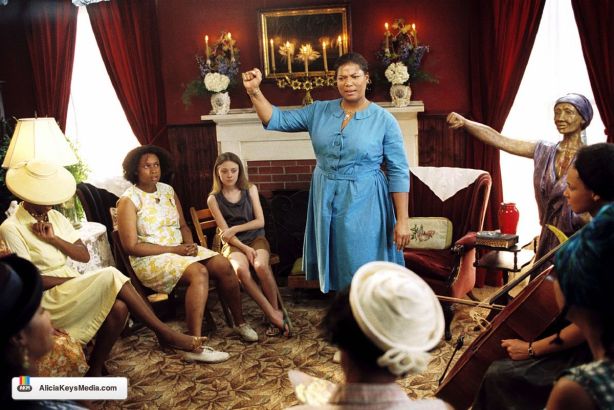
- Lily is driven by her need to know about her mother so that she may learn more about herself. In seeking her mother, Lily finds mother substitutes. Rosaline, August, and the other women step into Lily’s life and provide the mothering that she needs so desperately.
- The Black Madonna / Virgin Mary demonstrates each woman’s need to be mothered. The women’s devotion to the Mother shows the power and importance of a mother in the life of a woman.
- On another level, the Black Madonna / Virgin Mary is also symbolic of The Sacred Dark Feminine, which is highly promoted by the movie. The women do not just rely on the idol for mothering, but they worship her. Queen Latifah, who plays August, also symbolizes The Black Madonna / Sacred Feminine. Latifah is symbolically the physical manifestation of the Sacred Feminine idol.
This is the perfect example of subliminal writing. The author doesn’t say this outright, but it can be inferred by Latifah’s leadership and her sisters’ admiration of her. The women depend on her (August), for guidance and motherhood. In one scene, she raises her arm in a tight fist and mimics the statue of the Black Madonna.
The Three Holy Women

The days of the week and the months of the year are named after Gods and Goddesses. (Thursday = Thors Day). The intention of giving the Boatwright sisters names that are months of the year is because the three holy women are symbolic of three Goddesses. There is also a trinity overtone here.
- The Childlike May
- The Sensuous and Artistic June
- The Wise and Kind August
The fourth sister (May’s twin who died and doesn’t appear in the film) was named April.
Rosaleen

Rosaleen (Hudson) represents three symbols I could identify, but possibly more. While Jennifer Hudson seems the newbie on set– Dreamgirls (2006) being her first movie–within her role comprise several images. She is a mother figure, big sister figure, and more but first she is “The Mammy Crone.”
“The Mammy Crone” is a caricature of the black woman that grew out of slavery. Enslaved black women saw their children sold or traded but they were required to raise white children. Enslaved black women fed white babies from their breast (called “Wet Nurses”) and treated them as if they had come from their loins. These black women were not the mothers of these children but they cared for them as if they were so they became known as “Mammies” instead of Mothers. This term, “Mammy,” was not an endearing one, though. This term was a derogatory one, a stereotype:
From slavery through the Jim Crow era, the mammy image served the political, social, and economic interests of mainstream white America. During slavery, the mammy caricature was posited as proof that blacks — in this case, black women — were contented, even happy, as slaves. Her wide grin, hearty laughter, and loyal servitude were offered as evidence of the supposed humanity of the institution of slavery.
This was the mammy caricature, and, like all caricatures, it contained a little truth surrounded by a larger lie. The caricature portrayed an obese, coarse, maternal figure. She had great love for her white “family,” but often treated her own family with disdain. Although she had children, sometimes many, she was completely desexualized. She “belonged” to the white family, though it was rarely stated.

The Mammy was a stereotype of the enslaved black girl grown old. She is elderly, fat, cheerful, and devoted to raising “Massa’s” children. She is often depicted as a heavy-set dark-skinned girl wearing a head-wrap that looks like a rag and caring for white youth.
But what is a Crone?
“In folklore, a ‘crone is an old woman who may be disagreeable, malicious, or sinister in manner, often with magical or supernatural associations that can make her either helpful or obstructing. The Crone is also an archetypal figure, a Wise Woman. As a character type, the crone shares characteristics with the hag.”
– Wikipedia
A Mammy Crone is a stereotypical enslaved black woman who cares for the affairs of white youth using her wisdom and supernatural instincts and abilities. She is like a fairy godmother but in a derogatory kind of way.
A powerful symbol in this movie is Rosaleen’s elevation from Mammy Crone in the beginning to Goddess at the end. This is seen by the changing of her name from Rosaleen to July. She has become like one of them.
Race

Of course, we cannot forget the antagonistic issue of race in the 1960’s south that is interwoven into the everyday relations between individuals in this movie. The plot demonstrates two encounters between whites and blacks in which the black person is treated unjustly. Rosaleen, for example, is sent to jail for defending herself and Zach goes to jail for not admitting which of his friends broke a bottle on a white man’s nose.
On another level, Lily must personally navigate the delicacy of the racial difference between herself and the African-Americans she comes to love in Tiburon. White people criticize Lily for living with the black women, who treat her better than anyone ever has. Lily develops romantic feelings for Zach, who tells her that he could get killed for even looking at a white girl. Finally, for the first time, Lily experiences what it is like to be judged based solely on her skin color when June complains to August that she does not want Lily in the house because she is white. I love how Kidd did this, showing the intimacy of Lily’s education on race by literally immersing her into the shoes of the black women she comes to love.
Death Gives Way to Life
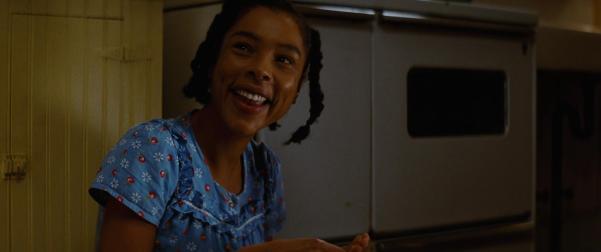
Throughout the movie, there is the theme of death giving way to life. It is sometimes good, but it is also sometimes bad. In the very beginning of the movie Lily tells us:
“People who think dying is the worst thing don’t know a thing about life.”
Here, we see how Lily’s life has been profoundly affected by her mother’s death. This statement suggests that living with someone else’s death can be more painful than dying. In this case, Deborah’s death has given way to Lily’s miserable life.
However, death can also be a positive force in the lives of the living that remain. Following May’s death August tells Lily:
“Putting black cloths on the hives is for us. I do it to remind us that life gives way into death, and then death turns around and gives way into life.”
The promotion of death as giving way to life is seen twice (or maybe more) in this movie as a positive force. The first instance is the way that May’s death propels June to marry Neil, thus establishing their new life together. The second time is when Lily finally reconciles with her mother’s death and is set free to truly begin her own life. But on a deeper level, the movie promotes the idea that life can also kill.
May kills herself because life is too much for her to bear. When Deborah learns she is pregnant with Lily she decides to marry T.Ray. Lily’s life leads to Deborah’s symbolic death on the peach farm, where she has a nervous breakdown because she cannot bear to live there. This new life (Lily) also leads to Deborah’s literal death when Lily accidentally drops the gun and Deborah is hit with a bullet.
Symbolic Writing is a challenge, but if done right is a powerful way to reach readers with a message. One thing to remember is that everything, like any good book, must connect. The Secret Life of Bees was well written with symbolism because not only did almost everything represent something deeper the author wanted you to see but it all connected and made sense. From the beginning of the movie to its end “The Secret Life of Bees,” is personified.
Even May’s death is representative of the secret life of bees. She is kind, smiling, and joyful. She cooks for everyone and is there for you. Only those who truly know her know how depressed she is. Only they can see her secret life with the letters and the wailing wall and upon her death, understand that everything is not always as it seems.
In her place is Rosaleen, the missing piece. Where there was once May, June, and August. There is now June, July, and August and yet again, death gives way to life in perfect order.


 3 Self-Publishing Lessons I’ve Learned this Year






 This is a guest post by Mary Kleim, who works in the digital sphere. She is also a guest blogger who shares her online marketing experience on sites dedicated to creativity, self-development, writing, and digital marketing.
  When you are about to release your writing into the world, you want to attract as big an audience as you can. But how can one prepare for an eBook launch and turn it into a success? One idea is to combine both a real-world event and an online one by inviting people to a venue such as a library or a bookshop on the day of the launch.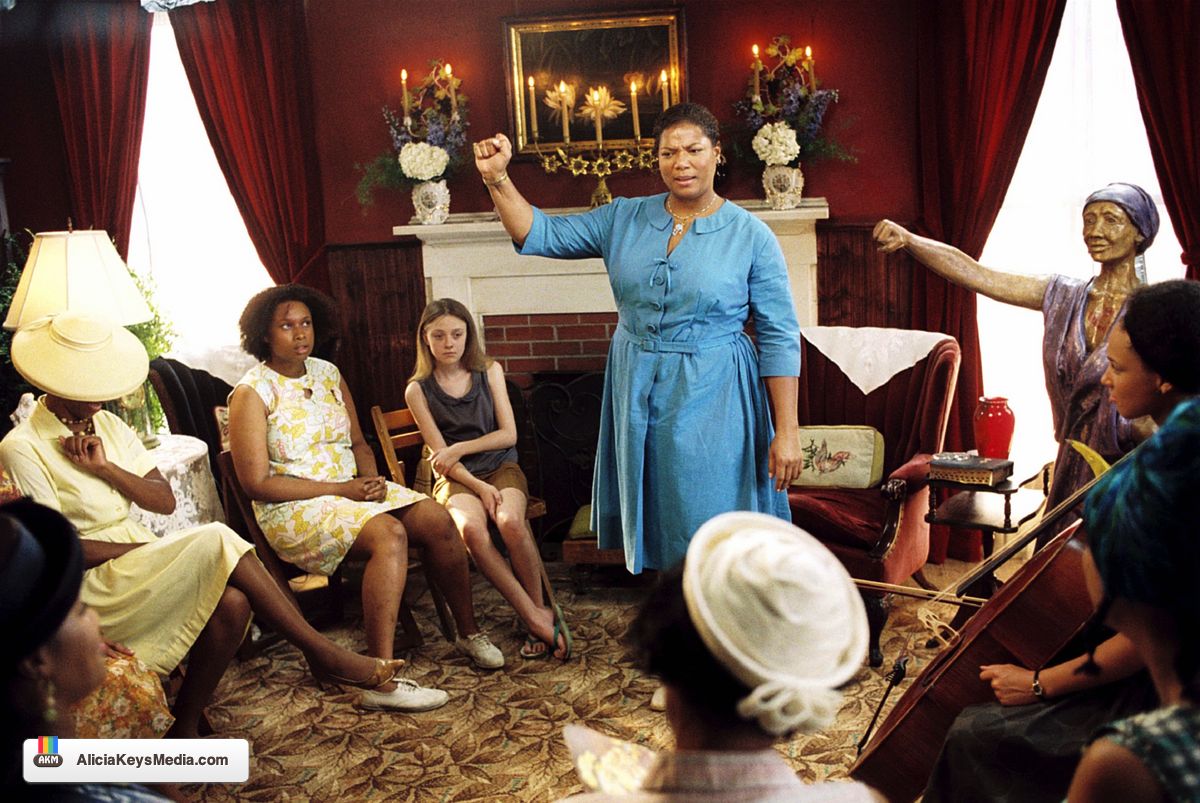


 The PBS Blog