Self-Publishing – DIY Promo Tools

free_resources5With the ever growing sea of Self-Published books, it is easy to throw up one’s hands under the pressure. One of the most challenging aspects of the process is finances. Many Self-Publishers do not have the money to invest. However, with Self-Publishing being the desired avenue for most authors, it has become an industry of itself and as such, there are tons of avenues out there we can follow to ensure a professional product. There’s Fiverr for example, where one can purchase a book cover design for as low as 5-$10. There is low cost editing options and even people willing to do free book reviews. Below are 15 DIY tools to help Self-Publishers to promote their books for next to nothing by Tony Levelle. I don’t believe you’ll have to use them all or that they will all work for you, but I think this is a good start for anyone looking to Self-Publish: I intend on using some of these bullet points myself and so I just thought I’d share them:

****************************

No matter what kind of book you’ve written (or plan to write) there are many ways to reach your audience. Each of the DIY tools listed here is low or no-cost, and each of them works in its own way. One or more may be perfect for you.

1. Start Early
The most powerful and essential steps you can take toward promoting your book begin long before the actual writing of the book. Three years before the book is published–if you can–start building a network of supporters and reviewers. Keep track of everyone you meet as you research and write the book. Pay special attention to, and make notes about, those who demonstrate a genuine enthusiasm for you and your project.

As the project evolves, keep in touch with these people. You might send them an occasional email or keep in touch via a social networking site like LinkedIn or Facebook.

For significant milestones–the signing of your book contract, the completion of the manuscript, the arrival of the galley proofs, and the arrival of the finished books–you might bring key people together for a house party. At the house party, you could read short excerpts from your book and answer questions about the project.

2. Contribute to Web Forums
Every field has at least one or two forums that people interested in your subject know and read. Find and join these forums.

Contribute to them freely. Give advice and reach out. Offer to help others. Put a link to your blog or website in your signature line. When you have a book contract and/or a book title, add the title to your signature line.

3. Start a Blog
Early in the process of researching and thinking about your book, start a blog. Add 120-130 words each day of helpful, inspirational information on issues in your field, which are related to the subjects in your book. Aim to create a genuinely useful body of knowledge over the following 12 months.

4. Write a Remarkable Book
Set out to write a remarkable book. If your book is not remarkable, keep working on it until it is. Give the manuscript to ten friends and ask for honest feedback. Find a brilliant editor (you can find such an editor at EFA) and pay him or her to edit your manuscript. Revise. Repeat. Don’t stop until your reviewers start saying things like: “I loved it! This book is amazing!”

A remarkable book will generate word-of-mouth publicity. One person will read it, and recommend it to his or her friends. They will recommend it to their friends. This is the best publicity you can get.

5. Cultivate a Positive Attitude about Book Promotion
Think of book promotion as storytelling. The story you are telling is why you wrote your book, how it can help others, and how the world will benefit from your book. If you can develop a positive attitude about book promotion, people will pick up on it, and tune in immediately. Some writers resent the chore of marketing. Their attitude seems to be, “I’m a writer. Marketing is the publisher’s job. Promoting my own book shouldn’t be my responsibility.”

Unfortunately–unless you are Stephen King or Malcolm Gladwell–the publisher probably won’t have the budget to market your book. If you don’t promote your book, no one else will.

6. Create a Media Kit
Your media kit should include:
* Professionally printed business cards with the book cover on one side and your contact information on the other side. Do not try to print them on your home printer. This is a time to invest in your product and yourself, not save money.

* A headshot by a professional photographer or a talented amateur. It should be well lit, with a neutral background. Your eyes should sparkle.

* A 100 – 150-word biography. The main purpose of the biography is to tell a reader why you are uniquely qualified to have written this particular book.

* A ‘one-sheet’ for the book: a single piece of paper with a glossy print of the book cover on one side and a one-page description of the book on the other side. Be sure to include a few short blurbs and recommendations from colleagues and friends in the description.

7. Create a Book Pitch
Consider writing at least three sales pitches for your book: 10 seconds, 30 seconds, and 60 seconds. When someone asks what the book is about, give them the 10-second pitch. If the person responds with interest, have a longer pitch ready! Practice your pitches on friends until they tell you the pitches work.

8. Build a Website
As publication day approaches, build a full website. The website should include:

* A book blog, in which you write updates, corrections, errata and respond to reader comments and suggestions. This book blog may become the basis for the second edition of your book.
* Sample chapters from your book
* A link to the Amazon page for your book, so people can buy the book online
* Your media kit (see step 5)
* Book reviews and blurbs.
* Your schedule of appearances, including bookstores, speaking engagements, and conferences
* Contact information.

9. Get Book Reviews from Individuals
Six months (nine if possible) before the book is due to appear in bookstores, start asking people for reviews and blurbs. Send reviewers a printed galley proof of your book. If you don’t yet have printed galley proofs, send a PDF containing the first two chapters, a table of contents and your bio.

Don’t be afraid to approach the ‘biggest names’ in your field. (This is important.) Ask for both reviews and blurbs. Busy people may only have time to write a few sentences. A word about PDFs: check with your publisher about their policies on review copies. Many publishers will NOT allow you to send out a PDF copy of the entire book. They are afraid the book will be stolen.

10. Write Articles
Every field has eZines, websites, and magazines that advocate or deal with the subject of your book. Find them. Once you know where they are, look through them and figure out which ones talk to the audience for your book. Contact those sites or publications and pitch articles that will be of interest to their readers. Schedule articles to appear around the time your book will appear in bookstores and on Amazon. For example, if your book is going to appear in bookstores and on Amazon in mid-June, schedule your articles to appear in July, August, and September. Remember to pitch articles early, because many magazines and eZines have a 3-6 month lead time. Mention your book title somewhere in the article. In online articles, link the book title to its Amazon page so readers can click over and buy the book.

11. Get Book Reviews from eZines and Magazines
Ask websites, eZines and magazines in your field to review your book. Some websites or eZines may offer to trade, to review your book if you write an article for them. For example, earlier this year I contacted Writers Store and offered to write an article about what I learned while promoting my most recent books: Producing With Passion and Digital Video Secrets. This article is the result of that contact.

12. Get 20 Amazon Reviews
Amazon reviews are amazingly effective. Everyone from book buyers to publishers reads them. Your goal is to get at least 20 reviews. Contact everyone you know and ask each of them if they would give your book an honest review. Let them know it can be brief. If they agree, send them either a galley proof, a promotional copy of the book, or a PDF containing a table of contents, two sample chapters, and your bio. Amazon’s Top Customer Reviewers are another source of high-value reviews. Find the reviewers who deal with books in your area. Write to them. Tell them you have written a book they might be interested in, and that you’d appreciate a review. If they respond, send them a galley proof or a promotional copy of your book.


13. Get Mentioned in email Blasts
Look for organizations in your field that send large-volume emails. Try to get your book reviewed in their email or newsletter. When the number of people receiving the emails is 100,000 or more it’s sometimes referred to as an email blast.


14. Speak at Conferences
As a published author, you have the qualifications necessary to speak at conferences. Contact conference organizers at least 6 months in advance. At first, you may have to register and pay a fee to speak. Later, when you become better known, conferences may seek you out, and may even pay you to speak.


You should be prepared to give a 45-minute presentation. A useful way to structure a 45-minute presentation is to speak for 30 minutes, and take questions from the floor for the last 15 minutes. Plan to take a few minutes after your speech to circulate with the audience. Have a table in the back of the room where you or someone on your team sells books.


15. Make and Post Online Videos
Make a few 5 minute videos (or a series of videos) of yourself talking about key issues in your field. Put the book title and URL on the bottom of the video screen and in the credits.

Post your videos on several of the many video sharing sites including sites like blip.tv, jump cut, our media, Vimeo, vSocial and YouTube. Embed the video clips on your website.
Plan on following your promotion plan–perhaps an hour a day–for at least a year. Resolve to do something every day on promotion. Remember – follow-up and persistence are the keys to success.

*****************************

I hope this list has been of help to you. In addition, if you’re a Self-Publisher and you are interested in letting me read a copy of your book in exchange for an honest review, please send me an email and I will give you the details. I will read your book for free and offer my opinion. Why am I doing this? Because as a Self-Publisher I know how tight finances can be and that every little bit helps. I have some time to read and would love to see what you have to offer.

Email: ahouseofpoetry@gmail.com
The Art of Storytelling

storytelling

When I think of storytelling, a familiar image creeps into my mind: an elder with the strength of several generations. Eyes covered with glasses slightly tilted off the nose, they nod slowly to the beat of a rocking chair. Their hands and knees are stiff with arthritis so it is rubbed continuously as the history of whatever crawls out of their mouth. And when it does, our ears jump with excitement, wondering how a single individual can be so vivid with detail. The story is told from somewhere down south under the roof of an inherited home, one passed down from generation to generation. A place where even the oldest relative once had his/her diapers changed, a place to always come back to and call home. A house in the countryside or a peaceful place in the city.

Storytelling has been around forever. It predates writing and has proven to be one of the oldest and most effective ways to relay a message. Stories have been shared in every culture for education, cultural preservation, entertainment, and for instilling moral values.

One of the characteristics of storytelling that makes it so powerful is the colorful expression as showcased by the orator. The tone of voice, gestures, creativity, and speaker’s point of view. I always enjoy a good sit down with the elderly in that I may relive moments to which I had not existed. Even in my mind, as I pass an elder on the street, I cannot help but fathom what today’s world must look like through their eyes. It is a silent and private game between that person and me. Quickly and excitedly, I create a background for them. Did that old Black lady experience Jim Crow? What was it like for her? Did that old white lady experience the first integration of schools? What was it like for her? As you can tell, it is why I love writing historical fiction. It is like getting inside a time machine and blasting myself into another world.

As I remember I was one day standing under a foyer at the Veterans Hospital waiting for my husband. Moshe. It was raining out so I was careful to keep under the hood of the building. An elderly white man came walking out of the building. His back was slightly hunched as he glided from one step to the next. “Is it still raining?” he asked, more so to the air than anyone in particular. “Yep,” I said looking into the sky. As he walked away, muttering a phrase under his breath I’d never heard but cannot remember accurately enough to share, I wondered about his youth and about how he would compare today’s world to the one he grew up in. Did he think the direction of things had bettered or worsened? I wondered.

Storytelling is a means for sharing and interpreting experiences. Stories are great teaching tools because, like love, it is a universal language. Universal in that they can bridge cultural, linguistic, and age-related divides. Although my image of the storyteller is that of an elder, storytelling can be adaptive for all ages. It can teach ethics, values, and cultural norms and differences. Books and organized / structured schooling are one way to acquire information, but experience has taught us that social environment and physical contact with others greatly benefit learning. It provides real-life examples of how knowledge is to be applied. Stories then function as a tool to pass on knowledge in a social context.

And since art is defined as the expression or application of human creative skill and imagination, storytelling is also a form of art, producing stories to be appreciated primarily for its emotional power and for the beauty in which it is told.

5 Spring Cleaning Tips

simpsons_couchYes. The flowers are budding. The birds are singing. And everything is in its state of renewal and freshness. As the children prepare for spring break there is something we adults have always looked forward to ourselves. That’s right: Spring Cleaning. It may sound simple enough, but there are lots of people with hectic schedules and little time to dedicate to the home front. But male or female, it is important to keep a clean house, especially in heat. Here are some tips to help get you motivated and to ensure that domestic duty never finds itself being neglected. They are also tips from my personal stash, meaning these are tips I actually use:

Tip #1: Paper Craze

school-bin-545x363

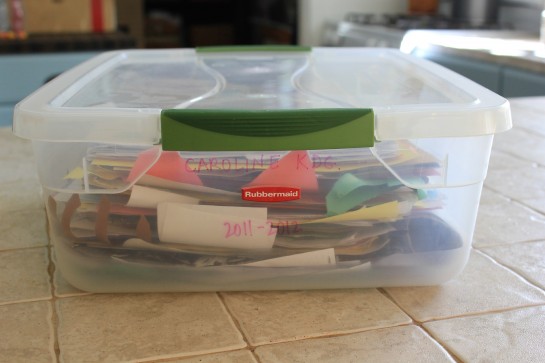
One of my biggest faults is having too much paper and stuff laying around. You know what I’m talking about: Those papers that are too important to throw away but not quite important enough to keep? Yea, those. I always find myself holding on to what looks needed but in reality is just occupying unnecessary space. If you don’t nip the paper craze in the bud though, it can create unnecessary mess. To solve this problem, our first tip is organization. First, set-aside a paper bin. You can even name it “Paper Bin” to add some fun to the mix (it also helps to date it so you know just how long you’ve had it). Every time you find paper you can put it in the Paper Bins. Next, clean the Paper Bin! Every so often your job is to sort through the bin for papers you know you don’t need. Be honest with yourself. Don’t try to hold on to old stuff you really don’t need. Make this a weekly chore. Once every week throw something away. This helps when you need to add more papers to the Paper Bin. The last step is very important because if you don’t start throwing stuff away the paper bin will get crowded and you’ll find yourself in the same position. Consider it taking out the trash or doing laundry. If you don’t cleanse, things can pile up around here!

Tip #2: Laundry Day

spring-cleaning-closet-400x300

This point is mostly for those of you with multiple little ones. If you have lots of children or just more than one (especially if they are small), laundry can be a scare. However, there is hope: Laundry Day. Set aside a day specifically for washing clothes outside of your normal household duties. By doing this, it lessens the load of everything else you already have to do. Why not give yourself room to really focus on cleaning by not worrying about the laundry too? Setting aside a separate day for washing clothes organizes your cleaning in a way that fits your schedule. I do it myself and getting laundry out of the way makes my Special Cleaning Day a breeze.

Tip #3: Special Cleaning Day

Spring-Cleaning-2

This is especially great for those of us who work a lot throughout the week. Set aside a special cleaning day; a day that will be dedicated to scrubbing, washing, and wiping. On this day, you want to clean the house from top to bottom without sugar coating it. This is not the time to scoop things into secret places or leave lingering for too long. On special cleaning days, you clean the house spotless. Why? It will help you throughout the week!

Tip #4: Weekly Tidying

Spring-Clean-the-Easy-Way

One thing that helps me keep a clean house is to perform little jobs throughout the week. This is not the big cleaning you do on Special Cleaning Day; this is the minor stuff such as vacuuming a few rooms and keeping things out of the way. Doing something new every day helps ease the load on Special Cleaning Days and Special Cleaning Days helps to ease the load throughout the week. See how that works? It goes hand in hand.

Tip #5: Kitchen & Bathroom Taebo

1421840009_takaritasra-felThe key to maintaining a fresh look even if things aren’t really as clean as you would like them to be is all in these two places: Kitchen & Bathroom. If you manage to keep dishes out of the sink and rings from around the tub, it tends to give the house a clean feel to it. Even if your dirty clothes basket overflows and there is dust elsewhere, you can still maintain a good grip by combating these two beloved places by keeping them nice and neat. It also helps for uninvited guest. Obviously it’s not a good idea to have a nasty home, but that doesn’t mean things can’t get messy (especially if you have children). Hey, it happens. But if you understand people you know they are apt to keen in on two places: The Bathroom and The Kitchen. Someone almost always enjoys a sit at the kitchen table or need to use the bathroom. Keep these tight and there are no surprises.

And I actually have one more: Life. Don’t just stop at cleaning your home, but take this time to reflect on life. What is it about your personal life that needs a good scrub? Now is the time to do it.

Do you have a Spring Cleaning Tip? Be sure to share it with us!

Why I Ignore Some of Your Ideas

“Stay true to your integrity. I can’t tell you how many times I have said no, even though it sounded like such a good platform-building opportunity. You are good enough doing exactly what you are doing.”

– Dr. Lissa Rankin, Author

In the world of Self-Publishing there are so many ideas out there. Everyone has something to say about what to do and how to do it. This supersedes Self-Publishing however, and can spill over into Blogging and Life in general. One undesirable of the internet is that you can always find someone to agree with you or to support your idea even if it is a false reality, makes no sense whatsoever, or is obviously weird. You can find any expert, and any article that will explain in sophisticated detail something that will support your point of view. The problem with this is that eventually the views of experts will cloud the view of the individual until you’re listening to everyone instead of focusing on why you began doing this in the first place. I write because I love to do it. And I believe that you put your all into those things that you love doing. You also put your all into those things to which you want to expand. Like a blog for example. Whatever personal goals you have for your blog, in order to reach them you have to put your all into it. That’s just common sense.

What I think we’re forgetting however, is to excel at being ourselves. Professional advice come a dime a dozen, but there is only one you whose going to do it the way that you would do it. In the end I believe a lot of us forget to stay true to our personal integrity and to make sure that we are not sacrificing that veracity for the sake of gain. But gain is interesting in itself. When I speak of gain I’m not talking about trying to be seen of men. By gain I mean excelling in whatever it is you wish to excel in. Whether it is a promotion at the job, a best-selling book, a new business idea, or a new blog, success consists of one key thing: those who excel at being who they are. They find something they enjoy doing and they do it well without giving too much of that self into the opinions of others. Whatever you do just do it well because it was your personality and talents that drew us in, in the first place. Be not mistaken: WordPress did not convince me to follow your blog or buy your book, and neither did your platform. The fact that you posted a thousand pictures on Instagram did not convince me to follow you, you convinced me to follow you. Marketing and Promotion is simply a leverage to help us to find you, but in the end we have to like you for who you are in order to truly support you. This is what I believe a lot of us are forgetting. That your personality, your writing, your talents, and the effort that you put into what you love will attract others who also enjoy what you love. Your light attracts the light of others.

I see it. The ease of being overwhelmed by following every Self-Published book idea and implementing everyone’s blogging idea. But the truth is that what worked for them may not work for you, and that you’re actually already doing it the way you are supposed to be doing it. I agree totally with Rankin. In that I have turned down opportunities for the sake of preserving my integrity. There are just some things I am unwilling to sacrifice because it will not be me. I love writing, but there are lots of things I love more. My truth is one of them.

The fact that someone thinks I should do something a certain way to be successful is irrelevant, especially since it depends on one’s definition of the word. My success is not yours and your success is, nine times out of ten, not mine. Thus, someone else’s concept of how it should be done does not move me. What moves me is the love I have for it. If I enjoy Twitter more than Facebook, then Twitter is the platform to which I will mostly build. And if I am lead to interact amidst the blogosphere, then Blogging is the platform to which I will mostly build. These are just examples, true examples as I do enjoy blogging and twitter, but examples nonetheless.Eventually, you will find that if you find one thing you love, and you put your everything into that one thing, it will work wonders for you.

The point is not to resist advice. For he who resists advice is nothing short of a fool. Advice is information. It is guidance, correction, instruction. The point is that whatever you choose to do, do it wholeheartedly. Do it well. It is wise to accept advice. And it is wiser to implement that advice into your daily life. And since this post is kinda advice in and of itself, it does not speak against it. But be cautious of the temptation to do more than what it is meant for you to do for the sake of “doing it right”. It may just be that you have struck gold in a particular area, and that everyone else is actually doing it wrong.

Just be yourself. And be good at it.

What The Heck is Author Branding?

writing_as_professionalAh, the freedom of Self-Pub, gotta love it right? You can write as many books, covering as many angles as your full heart desires. Romance, Sci-Fi, Historical, Biography, not even the sky is the limit. But what makes your Romance novel stand out from the rest? What makes your History book the best? Self-Publishing is not like other businesses. It is not a jewelry store, a brightly lit collection of possibilities. A host of shiny things that pretty much sell themselves. It is not a restaurant, a place where menus lay open for people to see and to choose. When I walk into Burger King I know exactly what I want and how I want it and I know what I am getting. I already know what to expect from the food. But book publishing is different from other businesses because there is a lot to learn and there is a lot to do.

writers-block2I think the most challenging aspect of Self-Publishing is being able to prove to your target audience that your book is worth buying. Especially as a new author. It is critical at this point that we show ourselves to be set-apart from the rest. That we garner the kind of trust in our readers that we have in Burger King. That when people pick up one of our books they know they are about to have it their way. That was corny, but the point is that they know that the journey in which they are about to embark on is a good one. Have you ever picked up a book and did not have to question if it would be a good one? That is because, like your favorite restaurant, you are familiar with the taste of the authors’ words and the way they move around in your mind when you read them.

writing-groupWhat is an Author Brand? As a Self-Publisher, it is not something that immediately comes to mind. In the midst of writing and editing and book cover design, branding is the least of our worries. Of course we think about it (eventually), but when we set out to write a book Author Branding is not at the top of our list of priorities. It is a term that is heard among literary agents and blah blah blah. We are Self-Publishers after all. We make and break our own rules. But, being a Self-Published Author does not mean you live on Mars. You are, after all, part of the world and in the business of publishing. It doesn’t really matter if you publish traditionally or if you self-publish, we can all benefit from learning more about the business, which is constantly changing.

AuthorBrand

Author branding in short is basically how you want to be known as an author. The good thing is that many of us have already begun a form of Author Branding by establishing our perspectives and personalities as we blog.

“Serious writers who want to succeed as authors should include branding in their early success planning. A strong brand helps an author in the same ways it helps a company. It gives you name recognition and helps you sell your products—your books.” – Nina Amir

I know, Branding sounds like a lot of work. Makes me think about large corporations and blah blah blah. But, the good news is that little ole me can establish a form of branding without hurting my brain with talk from branding experts and people with more degrees than hairs on my head. Below are six simple branding tips for authors as suggested by Nina:

Here’s how you start: Think about how you want to be known as a writer. To determine this, consider:

• the types of writing you want to do
• the subjects about which you want to write
• the types of stories you want to tell
• the themes you want to cover in your work
• the ways in which you want to serve your readers
• the clients or customers you want to attract
• the spin-off books (sequels or series) you would like to publish
• your values
• your interests
• your passion
• your purpose

Does something stand out? Is there one quality, topic or aspect you’d like to highlight so that you become known for it? If so, this is a good place to start. You then can create logos, taglines and websites that feature and highlight this concept so you become known for it. This becomes your brand.

literI like using myself as an example because no one likes to hear about the adventures of invisible people. I am flesh and bone and person so here goes. I suck at branding myself in the name area. I know what is required to establish myself across the web and yet I continue to move away from it (hey, maybe that is my brand, ha!). My Author Website, my blog, and my social networking sites pretty much have different names. I know, that sucks, but that’s me. I’m A House of Poetry, A Literary Korner, and a PBS Blog, it doesn’t get any more different than that. I am the brand far as I’m concerned, so like, whatever.

You can either be special like me or you can use this tip:

• Use your brand statement across all your social networks.

Use the same title, tag line, photo and colors, etc., across all your social networks, as well as in articles, videos, and guest post, and always provide a link “home.” This helps you get you known quickly and easily and is another way to strengthen your brand once you’ve developed it. And tie everything you do back to your author website.

Yea, sure. I’ll think about it.

The Problem With Natural Hair On TV

d76c14824b2956a3eece726e3df53d2b7ac5765d
PHOTO: COURTESY OF ABC.

An article was recently published about the rise of Natural Hair among black women on TV. Below is the featured article. What are your thoughts?  Is there a conscious awareness connected to the sudden surge of natural hairstyles from Blacks? Do you think it matters what state the hair is in?

The Problem with Natural Hair on TV

by Taylor Bryant

“If you tuned in to “How to Get Away with Murder” recently, you know that Viola Davis has spent some screen time without her wig on. It proved not only to be a raw and emotional episode, but it displayed a rare moment: a Black woman with natural hair on a mainstream TV network.

Turn back the clock 20 years, and you’d be hard-pressed to see a Black actress with hair that was anything other than just-got-out-of-the-salon laid. Flip through the tube in 1995, and you might find: the ladies from Living Single, all with straight strands (with some weaves thrown in), the freshly blowdried ‘do’s of Laura and Harriette on Family Matters, and Gina and Pam’s permed-out hair on Martin. Fast-forward a couple more years, and there’s some more representation with a two-for-one curly appearance in the form of the Mowry twins onSister, Sister. But, even their coils were straightened later in the series. As writer, fashion expert, and image activist Michaela Angela Davis points out, non-curly hairstyles that dominated the small screen in the ’90s were very much a sign of the times. “We were in a very conservative moment,” she says. “Relaxers were easier to get, easier to use, weaves came in…and getting straight hair just got more accessible.”

the-walking-dead-clear3danai-gurira11

While we’ve seen Black women’s natural hair on the small screen before the present-day era — these kinds of landmark moments date back to Cicely Tyson’s ’60s role in East Side/West Side — it’s becoming more common, and the new movement has been a long time coming.

6fdc496ef4525cc1cc3bdf5ebefd6b40caba8d5b
PHOTO: COURTESY OF ABC.

What does this modern evolution look like? Actress Tracee Ellis Ross has worn her curly crown in all its glory since 2000 on the (sorely missed) show Girlfriends, and continues to do so today, as the lead actress on ABC’s Black-ish. “I’m very conscious of how I wear my hair on the show, and yet it’s the way I wear my hair as Tracee,” she told Entertainment Weekly in December. “You hire me, you hire my hair, and you hire my ass. It’s all coming with me.” And, who could forget Davis’ wig-removal scene in earlier episodes of HTGAWM, which spurred many a think piece? According to Kent Nelson, the show’s hair-department head, Davis’ character Annalise is “unmasking” herself. “The armor and mask that she goes to work in every day is coming off,” he says. It signifies vulnerability, intimacy, and a shedding of society’s expectations. Which brings us to the problem with natural hair on TV right now: Yes, there are a lot more instances of it, but the way characters with it are depicted is not necessarily positive.

Take the Netflix series Orange Is the New Black, where the characters embrace, arguably, the widest range of textured styles in a series today (with the exception of Laverne Cox’s character, who, let’s be honest, would look fabulous with any style). There’s cornrows on Taystee, a short TWA style on Poussey, and, of course, Crazy Eyes’ signature bantu knots. “We really haven’t seen that many characters [like the OITNB ladies] on TV before,” says lead hairstylist Angel DeAngelis. “I think that’s why the show is so relatable and popular; because these prisoners look like people that are out there.”

Everyday People

Group of business people standing in huddle, smilingI see you breathing and believing and filled with emotion and background and circumstances. I see you angry and frustrated and happy. I see you succeed and fail, fall and stand up. I see you in need of inspiration and encouragement and it encourages me to provide that serenity as best I can on this blog, as an individual. I also appreciate the encouragement many of you give on your blogs. For the most part I’m that person nodding my head in agreement (or shaking my head) and walking away. If I like your post its not because I’m a robot programmed to do so. It means I really liked your post! Some of you are awkward though. I see you coming into class with tilted glasses and pocket protectors. Some of you are loud and outspoken, others are quiet and reserved. Some of you are wild and passionate about that wildness. That’s your business. Some of you are super smart and can’t really hold a decent conversation without going over someone’s head. Some of you take off people’s heads. Some of you are a lot simpler. You walk into the door ready to listen and engage. Some of you come in popping bubble gum and rolling your eyes. You don’t really wanna hear what this woman is talking about again but you can’t stop showing up either.

I didn’t intend on writing much today. But I came across a very interesting post by my girl Linda G. Hill: Your WordPress Audience. In this post, Linda posed an exciting question: How do you see your WordPress followers? Are they friends? Are they followers? Are they individuals? What if you could get your followers into one room and stand before them and write your post for them? That post inspired this one. For Linda’s post, Click Here.

14-writers-cafe.w215.h143.2x

I think it’s about personifying your post, about making sure that you insert your personality into your writing; finding that balance between personal and too personal. Never sacrificing your stand but just being real with people. I think this is important so that we can better connect with others. Linda’s post made me think about that, and why I see my subscribers as everyday people like me. This is why I wanted to express my thoughts about the post on this blog in front of all of you. I think it’s a very good topic of discussion and it’s a great way to look at your blog. I know a lot of us would see things differently if we were in front of each other than behind a keyboard. Makes you ponder the question: Who’s being real?

Group-Recovery-You-Are-Not-AloneWe are bloggers, people who have decided that a particular blog was interesting enough to subscribe to. (As a quick side note, I say subscribe and not follow because everyone “following” your blog is not necessarily following your blog. Instead, I like to think of it as people who decide to subscribe to receive your post in their emails or in their readers. And although I do have something called “Audience participation” I see each of you more as individuals) For those of us who have trusted that blog enough to take off our shoes (please don’t leave footprints on the carpet, thanks) and sit down and leave a comment at the table, or to like once or twice, it is obviously easier to get to know those people, and they become much more than just a subscriber we never hear from. But they become associates. And maybe even friends. I say friends slowly and loosely. Everyone is not your friend, that’s just real and it’s an important thing to know when interacting online.

But in any event, how do I see you?

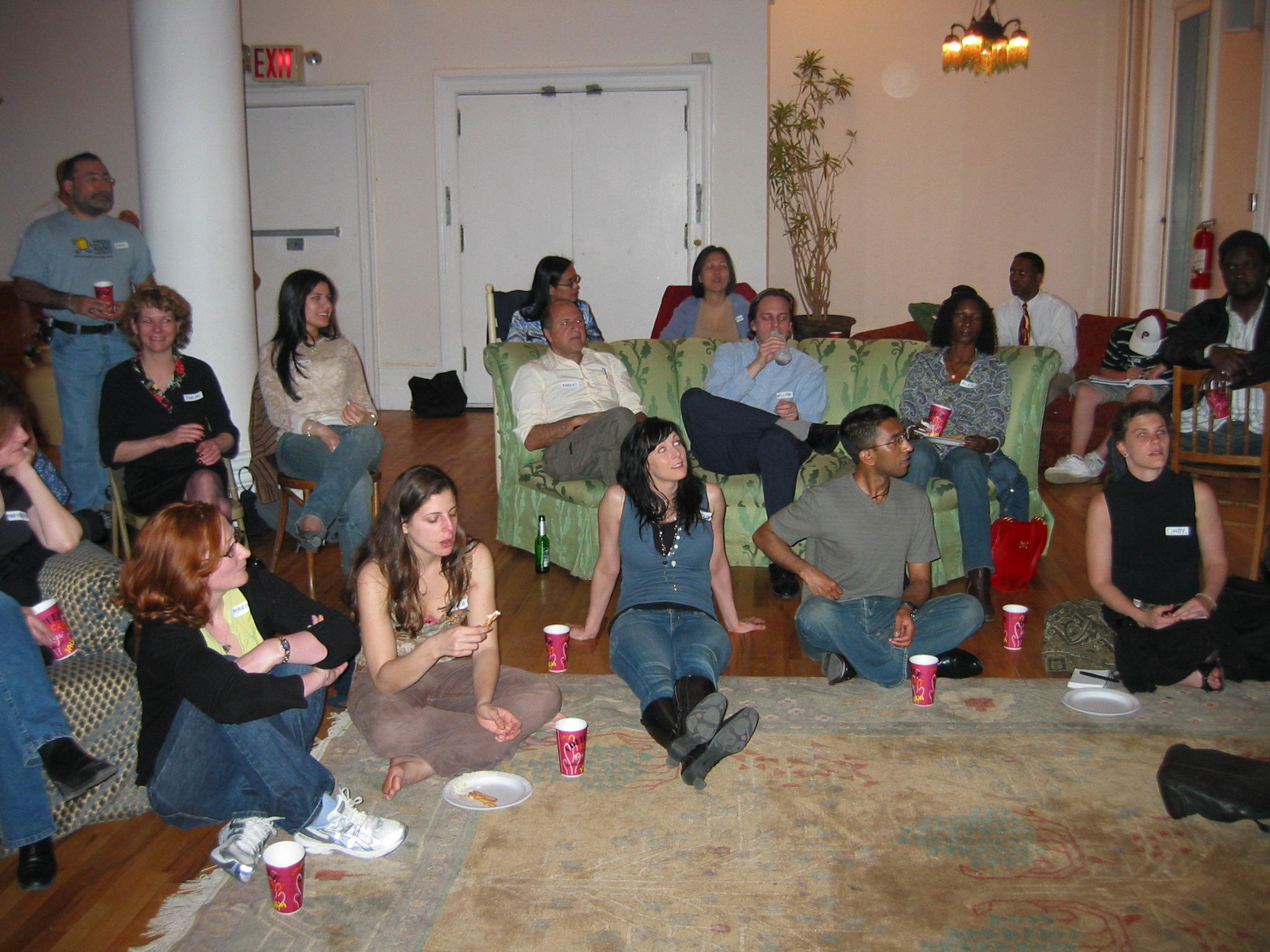
highres_444803Well, like I said, I see you breathing and believing and filled with emotion and background and circumstances like every day people. I wouldn’t say that I am standing before podiums and stages. I stand instead before you a woman. You walk into my place and we pull up chairs and gather together close like a writing group. I offer you beverages and snacks because I love to eat and I’m sure you do too. And depending on the atmosphere, we may even have a little wine. I only require that everyone has their writing brains turned on and their utensils ready to begin. Together, we nestle ourselves shoulder to shoulder, pencil, pad, smartphone or laptop in hand and we share. Our blogs collaborate and we are not just bloggers anymore but this is brick and mortar. Somewhere someone has built a time machine that takes you to this place as instantly as an email and together we meet eye to eye and I face you with my thoughts. There is a moment of silence as you listen and you read and decide how you would perceive the information. Some of you decide to get up and leave and never come back. Some of you scribble little notes on pieces of paper and place them into a drop box. Some of you speak, openly and candidly, you match your experience with mine. Some of you nod your head, and it is my hope that we can build. I picture us laughing and joking and learning and who knows where we’ll end up. Someone somewhere will get so upset that they storm out of the room. Some of you will cry because you can. Some of you will engage me in thought provoking and in depth conversation and who knows how long we’ll sit there.

And at the end we all give our goodbye greetings and there’s a sign-up sheet. Will your name be among those who will return? I wonder.

On the other hand, how about you? How do you see yourself as a blogger if you had to sit face to face with your subscribers? Would things be different? Would you be more or less nervous? Would you be the same person offline as you are online?