2015 Annual Report: The PBS Blog

4034761-120875522_3-v1I want to take this time to officially wave goodbye to 2015 with the presentation of our WordPress Annual Report. I’m so excited about how we did and most grateful to all the people who helped us to achieve our goals. Last year I didn’t dare share my data! Yea, it was that embarrassing. But that’s good because it means this blog has shown tremendous growth and I hope to exceed its numbers at the conclusion of 2016. Until then, here’s an excerpt of how we did:

“The concert hall at the Sydney Opera House holds 2,700 people. This blog was viewed about 16,000 times in 2015. If it were a concert at Sydney Opera House, it would take about 6 sold-out performances for that many people to see it.

Where They Came From:

138 countries in all!

Most visitors came from The United States. United Kingdom & Canada were not far behind.

Busiest Day

The busiest day of the year was November 25th with 140 views. The most popular post that day was If Your Blog Was a Resume

Top Commenters:

http://silverthreading.com
http://seasonedsistah2.ccom
https://rebirthoflisa.wordpress.com
https://jmdleflore.wordpress.com

**

I decided not to publish the entire report for personal reasons but I hope you are inspired by our sneak peek. Thank you for spending this time with me and I’ll see you soon.

Peace & Love

– EC

Author Spotlight: Yecheilyah Ysrayl

My Author Interview with Dottie Daniels.

dottiedaniels's avatarThe Write Perspective

Hey.

Here’s another author (she’s a poet as well) who also has a page here on WordPress. I consider myself and anyone else aware of her to be pretty lucky already as this author has a pretty powerful perspective and is more than capable of articulating her experiences and thought processes as it relates to the cultural upbringing of the African American experience. Her name is Yecheilyah Ysrayl and I had the pleasure of doing a Q&A session with her a few weeks ago. Below is the interview along with her social media contact info.

  1. I’ve read you were born in the South side of Chicago (so was I!), what were some of your earliest memories?

Hi Dottie. First, I want to thank you for taking the time to meet with me today. Yes, I am from Chi-Town indeed. Since I’ve been in Chicago for the better part of my…

View original post 953 more words

Blog Photos: I Scared Myself Away From My Own Post

OK, you may want to sit down for this one.

A couple weeks ago (or was it last week?? LOL), whenever it was, I had a blogger to comment on a post I wrote asking me to go into more detail concerning photos in a blog post. I never consider myself a “blogging pro” or “advice giver” so her question made me feel very positive about the post as feedback often does. Here’s her question and my response:

Q. Can you share more about your thought that sometimes pictures can take away from a post?

My response:

Sure. Pictures are a great way to compliment a blog post but photos in blog posts is about strategy and not just decoration. If the pictures don’t tie in well with the article it can take away from the written content and become a distraction. Photos chosen should have the potential to reveal something about the post even if there were no words because images set the tone for the post itself. Sometimes I decide not to include pics because I want the focus on the words and a photo in this sense can just be distracting. All in all bad image choices can have a great impact on how people see our blogs. 

This morning I did not intend on writing this post, but after scrolling through the reader I experienced something that validates just how important photos are in a blog post. I scared myself away from my own post.

9278a83a4f8c2b59431ec9c750abc190

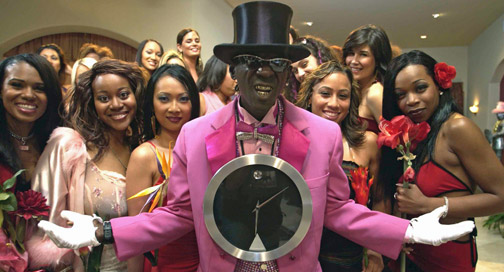
Yesterday, I wrote a post that included a picture of Flavor Flave. When I scrolled through the reader this morning I was shocked to see that photo front and center on my timeline associated with that blog post (go ahead, take a look). I startled myself because I would not have chosen for that picture to be the one used to feature the post. As I opened with “We all have our favorites…” needless to say Flavor Flave was not a good look. I do not nor have I ever been a fan. I do not take back my thoughts in the article and using the photo in the post did look good when I drafted it because it represents what I was speaking about, but it did not mix well with my opening statements or as an advertisement for the post in the reader.

Did I say advertise? Yes. It may not seem important at the time, but photos in blog posts tend to act as promotional items for our blogs before people actually click to see what the post is about. I wouldn’t say to stress out about it, but whether or not people are clicking to tune into our blogs have a lot to do with the way that people think in general and we all know by now (c’mon, say it with me) “Pictures are worth a thousand words”. Just keep in mind that the first picture used in the post will more than likely be the photo that stands front and center as representative of your post. My little experiment proved, beyond a shadow of a doubt, that image choices is not just about what looks good, but it is also about strategy because the photography tends to set the mood for the article itself. The photos you use in your post can have the potential to downgrade the quality of the article if it does not blend well with the written content.

Experiment: Conduct your own experiment. Write a blog post and use an image, any image. Go back to the reader and see which one shows up! If your not too chicken to risks a few likes and views, this can help you to see  how the pictures in the post shows up when people are actually scrolling through the reader.

Diversify Your TV / Movie Selections

I know we all have our favorites but it is time to upgrade. In a couple weeks we’ll be moving on into another year. As such, I would like to propose an upgrade in entertainment. Last month I wrote a post called “Before The Weeks Ends” about diversifying our bookshelves. In this post, I spoke about how dedication to only certain kinds of books can limit our perspective in life. I proposed instead a diversity in reading selections. Don’t just read Romance but have a few “How-To” sprinkled in there. Don’t just read Erotica only but throw in some African American Literature every now and again. Have something that you can go to for a little fun but also something that will educate you and give you insight beyond the norm. That said, this same logic can be applied to TV. What you put out and also what you take in is reflective in your life. Meaning that if I put positive energy out there I expect positive energy to come back to me. But if Flavor of Love, which projects a negative image of my people, is the only thing I’m giving my energy to, how can I ever expect to grow beyond that way of thought?

tumblr_inline_nuhk0uWWZZ1tb2t60_540

We can sit back and convince ourselves that these are just shows but it would be naïve to think it has no effect on our minds. While were on the subject (*climbs soap box*) why are some of these shows even out there in the first place? Why did Flavor of Love even exist? What was its purpose? Yes,  I watched the TV show back in the day and as I look back, what did it produce for me? What did it teach the teenage me? Did it teach me how to love? Did it teach me how to take care of a man? Did it teach me how to interact with the world? Own a business? What did Flavor of Love teach me as a young woman who needed to be guided?

Hype-Hair-Basketball-Wives

And why do black people support these kinds of shows anyway? The ones that take the worst of your people and highlight it to the entire world and is popular only because you watch it. Even though they do nothing for your growth as an individuals. There is nothing profound or mentally stimulating about these shows. There is nothing that will give you an understanding of life in these shows. These shows do nothing but highlight the activity of wild women that no man would ever commit to. These shows produce all this negative energy and then we wonder why we can’t get along with our men. Why we can’t stop using profanity. Why we can’t get along with other women. It’s because of what we’re feeding our minds. In your subconscious you’re imitating the women you watch every week and mimicking their ways.

*Gets down from soapbox*

Now, I’m not going to sit here and tell you what to watch and what not to watch. I am not your judge and we’re all adults here. What I will say is this: use a little wisdom in your selection. Like I said  I published a post on diversifying our bookshelves and I think this same logic can be applied to every aspect of our lives. Diversify your movie  and TV selections as well.  Don’t just sit back and watch the same shows over and over again. Throw some documentaries in there, some historical films, or tune into something that is new. It may be boring at first but so is everything that is different to your way of life. You never know, it just may give you insight into something you may not have known before. We cannot possibly think that what we read or watch or make permanent parts of our lives have no bearing on our lives. It takes more than just talking about growth to actually grow as individuals. It takes some form of change, not just for black people but all people. It begins with what we give our attention to because what we give always come back. Everything around you has an effect on you in some way. Choose wisely.

Going Natural: When LinkedIn Profiles Turns to Racial Profiling

How do we define professionalism?

Shannon Luders-Manuel's avatar(not) Mixed (up)

As I scrolled through my Facebook feed a few weeks ago, I came across a status update that was upsetting, though sadly not surprising: “That awkward moment when your decision to wear your hair natural comes up in an interview… and not in a complimentary way…”

My friend Sonia had interviewed for a position as a Social Media Specialist for a marketing startup in New York City. The interview took place in the common area of WeWork, a coworking office space where the startup had put down temporary roots. As distracting commotion took place around them, she and the rather cold interviewer had the following exchange.

Interviewer: “Is that how your hair is in your LinkedIn picture?”

Sonia: “…Yea.”

Interviewer: “Not straight?”

Sonia: “Nope.”

Interviewer: “Oh… Interesting…”

He then made qualifying statements, such as, “So you say you’re good at SEO,” and “You claim to be a good writer.” I…

View original post 451 more words

You Must Have an Agent, And Other Myths about Publishing

A wealth of information on book publishing

wbspeirjr's avatarAuthor William Speir's Blog

For years, I thought that the only way to get published was to be represented by a literary agent.  The publishing industry perpetuates this myth – just look at how much Writer’s Digest talks about finding and keeping agents if you don’t believe me. But the truth is: it is not necessary to be represented by a literary agent to get published. I’m living proof.

There are many ways to get books published. One option is self-publishing, although that option has the most difficult path to financial success for an author and puts 100% of the marketing and sales efforts squarely on the back of the author. Another option is small press publishing, which typically uses a business model where the publisher and the author are partners in getting the book published and into the hands of potential readers. The third option is large press publishing. Unless you’re already a…

View original post 1,287 more words

The Evolution of the Blog

blog-laptop

I was fulfilling some orders this morning, you know the daily grind, and my thoughts fell on blogging in general. I thought about the history of blogging and how it has changed over the years. But what my thoughts focused on more so is how the increase in technology seemed to have downgraded the professional image of blogging in the eyes of the (wait for it) blogger.

When we launch these blogs, I do not think we really understand its significance. At least I didn’t.

Anyone can create a blog today. It is as easy as signing up for a Word Press free account. You can write about what you want and organize your blog how you see fit. Though it is easy to do, have you ever thought about what it means to be a blogger? I remember watching television over the years and seeing someone speak. Sometimes the person speaking had a title that said “Blogger” and as he or she spoke concerning their subject of expertise I never second guessed that they were a professional. “Blogger” was no different to me then than “Attorney at Law” or “Psychologist”. That is because before the blog evolved into what it is today, it was a big deal.

“The modern blog evolved from the online diary, where people would keep a running account of their personal lives. Most such writers called themselves diarists, journalists, or journalers. The Open Pages webring included members of the online-journal community. Justin Hall, who began eleven years of personal blogging in 1994 while a student at Swarthmore College, is generally recognized as one of the earliest bloggers, as is Jerry Pournelle. Another early blog was Wearable Wireless Webcam, an online shared diary of a person’s personal life combining text, video, and pictures transmitted live from a wearable computer and EyeTap device to a web site in 1994.

The blog was independently invented by Ian Ring, in 1997. His online journaling platform was called an “e-journal”. Ring’s project was later abandoned, but was rewritten in 2006 but didn’t become popular amid the overwhelming flood of other CMS systems becoming available, including WordPress. Ring still maintains that he “invented the blog”, which is technically true even though there were other projects that could make the same claim with greater authority.

Another early example of an early online entry into the evolution of blogging was created by Dave Winer. Winer is considered a pioneer of Web syndication techniques and has been considered one of the “fathers” of blogging. As the editor of Scripting News claims that his site “bootstrapped the blogging revolution and that it is the longest running Web Log on the internet”, Winer did not use the term “blog” and has never claimed the term. However he has gone on record as saying that “The first blogs were inspired by this blog, in fact many of them, including Barger’s Robot Wisdom, used my software.”

Websites, including both corporate sites and personal homepages, had and still often have “What’s New” or “News” sections, often on the index page and sorted by date. One example of a news based “weblog” is the Drudge Report founded by the self-styled maverick reporter Matt Drudge, though apparently Drudge dislikes this classification. Two others—Institute for Public Accuracy and Arts & Letters Daily—began posting news releases featuring several news-pegged one-paragraph quotes several times a week beginning in 1998. One noteworthy early precursor to a blog was the tongue-in-cheek personal website that was frequently updated by Usenet legend Kibo.

Early weblogs were simply manually updated components of common websites. However, the evolution of tools to facilitate the production and maintenance of web articles posted in reverse chronological order made the publishing process feasible to a much larger, less technical, population. Ultimately, this resulted in the distinct class of online publishing that produces blogs we recognize today.” – Wikipedia

So what of all this? What’s the point?

coffee

From personal reflection, understanding the magnitude of what it means to blog helps me to maintain a level of professionalism on my blog; whether that is the appearance or the quality of the content. It helps me to remember that people are browsing the internet and coming across this blog from Google everyday in hopes of finding solutions to problems, or to overall be informed. It is not to say that blogs are not fun because I have lots of fun on this blog. And as we have read the first blogs were online diaries. Interestingly enough, many of the blogs I come across have this format.

The blogger is not a writer in the organized sense, just someone using the web as a way to publicly vent their thoughts (which I think we all do to an extent). It is just to say that I have come to look at blogging in a new light. As opposed to when I first started this blog, I place a kind of value on it now that I didn’t really think about before. Not value as in its my whole world or anything, but value as in the fact that real people are taking the time to stop here and to read and to learn. Therefore, how I present myself online, as a reflection of my real self, is not just some mediocre past time. What we write here is a big deal. Every day you are helping people in every aspect of their lives. To be a blogger then is kinda a big deal. I would even say it is something worth mentioning on a resume.

Timeline: Blogging Evolution:

January 1994
Swarthmore student Justin Hall creates first blog ever, Links.net.

December 1997
Online diarist Jorn Barger coins the term “Weblog” for “logging the Web.”

April 1999
Programmer Peter Merholz shortens “Weblog” to “blog.”

August 1999
Blogger rolls out the first popular, free blog-creation service.

January 2000
Boing Boing is born.

July 2000
AndrewSullivan.com launches.

February 2002
Heather Armstrong is fired for discussing her job on her blog, Dooce. “Dooced” becomes a verb: “Fired for blogging.”

August 2002
Nick Denton launches Gizmodo, the first in what will become a blog empire. Blogads launches, the first broker of blog advertising.

December 2002
Talking Points Memo highlights Trent Lott’s racially charged comments; thirteen days later, Lott resigns from his post as Senate majority leader.

December 2002
Gawker launches, igniting the gossip-blog boom.

March 2003
“Salam Pax,” an anonymous Iraqi blogger, gains worldwide audience during the Iraq war.

June 2003
Google launches AdSense, matching ads to blog content.

August 2003
The first avalanche of ads on political blogs.

September 2003
Jason Calacanis founds Weblogs, Inc., which eventually grows into a portfolio of 85 blogs.

January 2004
Denton launches Wonkette.

March 2004
Calacanis poaches Gizmodo writer Peter Rojas from Denton. Denton proclaims himself “royally shafted” on his personal blog.

December 2004
Merriam-Webster declares “blog” the “Word of the Year.”

January 2005
Study finds that 32 million Americans read blogs.

May 2005
The Huffington Post launches.

October 2005
Calacanis sells his blogs to AOL for $25 million.

December 2005
An estimated $100 million worth of blog ads are sold this year.

January 2006
Time leases Andrew Sullivan’s blog, adding it to its Website.

February 2006
The Huffington Post surges to become fourth most-linked-to blog.