Introduce Yourself: Introducing Guest Author Andi Brooks

Introduce Yourself is back!

Do you like our new badge? Yass!

Please help me extend a warm welcome to Andi Brooks.

Welcome to the PBS Blog!


What is your name and where are you from?

My name is Andi Brooks. I am originally from England, but I have lived in Tokyo for the last 15 years.

Nice! What would your perfect writing room look like?

That’s an interesting question as I was thinking about that only last week. I would love to have a desk in the bay window of a Victorian house overlooking the sea. A rugged, stormy coastline would suit me very well. I love to walk along the beach alone in winter and search the black waves for inspiration.

Yess. That sounds soo relaxing. Let’s talk about when you published your first book? What was that like?

My first book was a collaboration with the American writer Frank Dello Stritto. “Vampire Over London: Bela Lugosi in Britain” was originally published in 2000 and reprinted as an updated and expanded second edition in 2015. A biography of the famous Hollywood actor forever associated with Count Dracula’s role on stage and in the 1931 film, the book was the culmination of a decade of research. It was very exciting to see it in print and gratifying to have it universally praised by critics and readers.

Before working on the book, I wrote articles on vintage horror, sci-fi, and fantasy films for magazines in the UK and America. After the book was published, I put together a Bela Lugosi blog (https://beladraculalugosi.com/) to share the research material and wrote a silly poetry book, but I mainly devoted myself to writing music and promoting live shows in Tokyo.

Apart from one article on the love affair between Bela Lugosi and Clara Bow, which won the Rondo Hatton Classic Horror Award in 2017, I wasn’t really involved in writing much until I threw myself into Ghostly Tales of Japan.

This book is available now on Amazon!

What’s the most difficult thing about being a writer? The most exciting thing?

The most difficult aspect of being a writer for me is trying to overcome a lack of faith in my ability. I generally know when an idea is good, but I can’t overcome my doubts about my skill as a writer. If I hadn’t been firm with myself, I would still be revising the stories in my latest book, but there has to come a time when you have to say that enough is enough and put your pen aside. As it was, the stories in Ghostly Tales of Japan went through endless rewrites. I agonized over every choice of word and punctuation. It is good to strive for perfection, but you have to realize that there is really no such thing. Being always dissatisfied is a good motivator always to try harder.

The best thing about being a writer is hearing back from readers who have enjoyed reading your work. It makes all of the pain that goes into writing worthwhile.

We do tend to judge ourselves harshly but hearing feedback from readers makes it worthwhile for sure. Andi, who is your favorite writer?

It depends on my mood, but H. G. Wells and H. P. Lovecraft were firm favourites for many years. The scale of their imaginations is astounding.

Wait, wait, wait. I gotta ask you about the TV show real quick. Lovecraft Country, did you watch? Like or Nah?

I’ve never heard of it!

Whaat?

Living in Japan, you can miss an awful lot unless you watch Netflix and the like, which I don’t. I always tend to hear about things long after the fact.

Lovecraft is great for radio adaptations, but tends not to do so well on the screen. I did love the Reanimator films, but I haven’t seen many over good adaptations. I did a quick search online for Lovecraft Country and watched a clip. I can’t really tell if it’s for me or not, but you have sparked my interest, so I will give it a go.

And give it a go you should!

I also love the ghost stories written by M. R. James. I don’t think he has ever been better. At the moment, however, I am completely immersed in the writing of Carlos Ruiz Zafón. The Shadow of the Wind is one of my all-time favourite novels. I have reread it so many times. Although I said that there is no such thing as perfection, this book is as close as it comes. Carlos Ruiz Zafón’s skill was breathtaking. It is such a tragedy that he died so early. The world has been denied the many wonderful books he could have written, but what he left behind is something to be very grateful for. I have literally just put down The Angel’s Game, the sequel to The Shadow of the Wind. I can’t wait for the next book in the series, The Prisoner of Heaven, to pop through my letterbox.

I love it. What is the most thought-provoking book you’ve ever read?

Perhaps Oh! The Places You Will Go by Dr. Seuss. I read it to my son many times when he was small. The truth in that wonderful book will always be relevant. It made me reflect on the ups and downs of my life. Things certainly haven’t always gone to plan, but the disappointments resulted in me taking a different path, which led to where I am today, which is not a bad place to be.
What is the worst advice you’ve ever been given?

When I was at school, a career advisor told me that I should forget dreaming of being a writer, an artist, or a musician and get a job in a factory because it was regular work. I have ignored the advice of his like ever since.

I don’t blame you! Like, whaatt.

Outside of writing, what are some of your passions?

Music has been a big part of my life since my teens. I can’t imagine a day without music. I’ve been in many bands, either playing bass, guitar or singing. About three years ago, I put the guitars aside and decided to start making electronic music. It was something that had been in the back of my mind for a very long time. I regret not trying earlier because it has given me total musical freedom, but better late than never! You can find my electronic musical misadventures on my Bandcamp page (https://airstripone1.bandcamp.com/).

I love it. Musical Therapy is a real thing for sure. We love music on the PBS Blog. In fact, today’s Throwback Thursday! What kind of music do you like?

I listen to a very wide range of music. I like to have something to suit whatever mood I am in. My first music love was the 1970s British band T. Rex. They inspired me to try my hand at making my own music. David Bowie was also a big influence in the 1970s. Then along came punk rock, which was the perfect soundtrack for my teens. Buzzcocks, Siouxsie and the Banshees, X-ray Spex, and, of course, The Sex Pistols had a deep impact on me.

Towards the end of the 1970s and into the early 1980s, I loved British electronic music. Along the way, I’ve listened to everything from folk to jazz. I must give a special mention to Christmas music. I love Christmas and its music, both traditional and popular. I think I have around two hundred CDs of Christmas music!

Sheesh, Andi. Lol

Today, I have listened to underground Japanese electronic music, Nina Simone, the Blade Runner soundtrack by Vangelis, some solo albums by Mick Karn, and David Sylvian of the band Japan. I have an insatiable appetite for music, and I am addicted to buying CDs and records. I try to find something new to listen to almost every day.

What songs have you completely memorized?

My memory is absolutely dreadful! There are some song which I have been listening to for over forty years, and I still don’t know all the lyrics. It’s bizarre! The only song, apart from ones which I have written – and I’m not sure that I can remember them, which I think I know all of the lyrics of is, like many people, Bohemian Rhapsody by Queen. It’s not a song I usually listen to, but somehow it has wormed its way into my brain. If you only know the words to one song, it’s not a bad choice. I remember lines from movies more but often forget the plots. I love movies as much as music. One day I would like to make my own.

If you could live in a movie, which would it be?

I’m not sure that I would like to live in any of the movies I watch, being a lifelong horror fan.

Ha!

Even the non-horror films I like tend to have elements of darkness that I wouldn’t want to experience. If I’m forced to choose, perhaps it would be Lost Horizon – the Frank Capra original, not the musical remake. I don’t think I would hesitate to accept the offer of escaping the madness of this world to spend my days in the utopia of Shangri-La.

If you could, would you visit the past?

I would love to. There are so many great periods I would like to visit, but wherever I decided to go, I think I would stop off in 1979 first to give a few words of advice to my teenage self. I’m not sure that he would listen, but there are two facts of life that I wish he had known!
Thank you, Andi, for spending this time with us. We enjoyed you!


Copyright Andi Brooks

Andi Brooks is a writer of English and Irish descent based in Tokyo. He began writing on vintage horror and science fiction films for American and UK magazines in 1991. With Frank J. Dello Stritto, he co-wrote “Vampire Over London: Bela Lugosi in Britain” (Cult Movies Press 2000), a critically acclaimed biography of the Hollywood legend forever associated with the role of Dracula. In 2017, he received the Rondo Hatton Classic Horror Award for ‘Dracula and the It Girl,’ an article which recounted the short-lived love affair between Bela Lugosi and silent screen star Clara Bow. In 2020, he published “Ghostly Tales of Japan,” a collection of thirty original ghostly stories set in various Japanese history periods. He is currently writing a second volume of ghostly Japanese stories and a guide to the terrifying sites of Tokyo.

Be Sure You Are Following Andi on Social Media

…and if you are a Horror/ SciFi fan, be sure to check out his book!

Other Digital Platforms:


Are you an author? Looking for more exposure? Learn more about my Introduce Yourself Feature HERE. 


Note: We pushed this week’s feature back to today, but we will get back on schedule for the next feature. Author interviews post on Mondays.
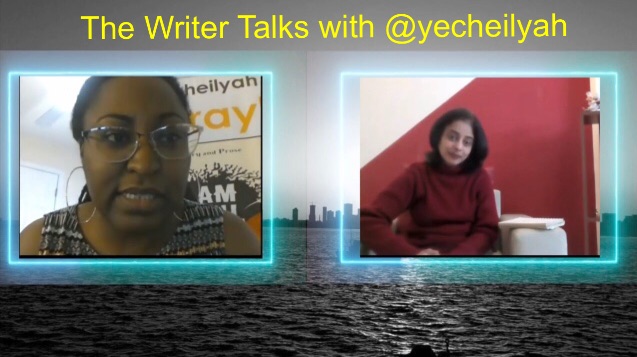
The Writer Talks with Asha G. Kumar Part One

Thank you to Asha G. Kumar, host of The Writer Talks, for having me on!

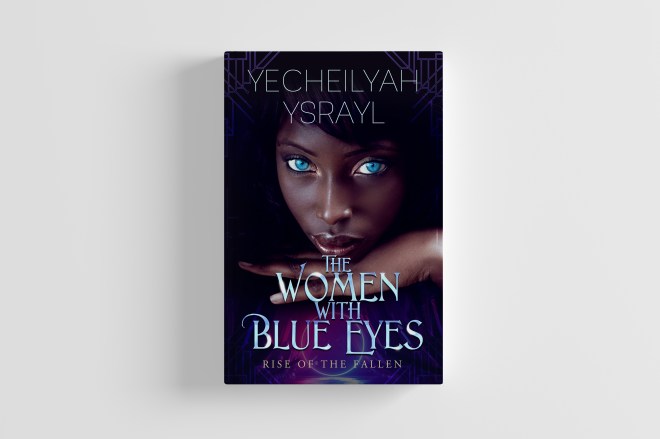
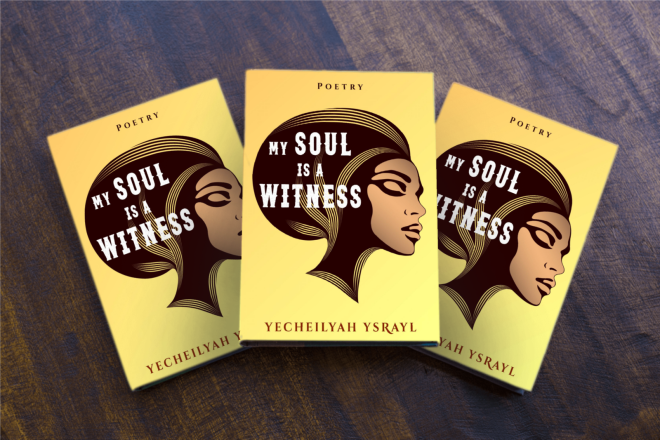
Check out Part One of this two-part interview with yours truly. In this first part, we talk about the inspiration behind my first forthcoming Urban Fantasy/SciFi/Speculative Fiction novel, The Women with Blue Eyesmy belief in aliens lol, and my latest poetry collection, My Soul is a Witness. In part two, we dig deeper into my journey as a writer, my advice to other writers, Black History, and you know I had to recite some poetry!

Part 1 is available now on YouTube.

Link below!

Subscribe | Like | Share |Save

Stepping Outside the Genre Box

Once upon a time, back in 2017, I shared the first chapter of a crazy fantasy story about fallen angels disguised as women with blue eyes killing black men for their power and one woman’s mission to stop them. I had no intentions of ever publishing it. My purpose was to share a free story on the blog that readers could enjoy. I played around using some of the same characters and background from another book I had written but have since retired.

To my surprise, so many people enjoyed the first chapter, so I came back the next week and wrote another chapter and then another and then another until I had written eighteen chapters of a book I never intended to write.

The more I shared, the more readers loved it. This got me excited!

In 2020, while we were all bored in the house and in the house bored, I worked on finishing the book. It is now a full-length novel I will release later this year.

If you have been following this blog over the years, you are already familiar with The Women with Blue Eyes (now titled The Women with Blue Eyes: Rise of the Fallen) and I am so excited to finish it for you.

Moral of the Story


It’s okay to step outside the box and write something different, especially if it’s something you know readers would enjoy. Master P is not just a rapper, he is also a full-blown businessman with several products. He has everything from cereal to oodles and noodles, to potato chips to fish fry.

As I was drafting this post, I tried to think of how to explain that it’s okay to write in a genre you are not typically known for without sacrificing your author brand.

My first thought was to remind you that you are the brand, not the book. It is less about the genre and more about how you stay true to your message.

This is still true, but last week I came across a post by Phyllis Zimbler Miller where she was given some advice that really put it into perspective for me.

Recently I was advised to “stay in my lane” of military and espionage writing so that I could be considered for that niche. This is especially so because my background supports this lane.

Yet when I mentioned staying in my lane to an entertainment industry exec, she had an interesting POV about branding oneself as a writer.

She didn’t agree with staying in one’s lane in terms of specific genres. Instead, her advice to me was to remain the same lens and perspective across genres.

“Remain the same lens and perspective across genres.”

I love this because it frees the writer from the genre box. In my own words, I would say to write in whatever genre you want, but keep your message consistent. While Master P does many different things he wasn’t known for before, his “No Limit” message stayed the same.

Since I usually write Black Historical Fiction, my story will incorporate black history, all the way down to how I represent the characters. In Greek Mythology, Paschar is the angel of vision and is a white male. In my version, Paschar is still a fallen angel, but she operates in the skin of a black woman.

I’ve also infused black history into the narrative with my character’s background and dialogue. If you’ve been following the series on this blog, Miss Vicky is a new character you haven’t met yet. She is a member of the renovation committee at the new Altgeld Projects and former cook for the Chicago Chapter of the Black Panther Party’s Free Breakfast Program. Here is an excerpt from her giving black history to a couple of corner boys working for Big Sam’s organization:

Closer to the buildings, girls jumped double-dutch on the sidewalk, and young boys stood up on their bikes, riding them back and forth. The boys wore no shirt, and yellow headscarves hung out of their back pants pockets. Their pants were always sagging, revealing their boxers underneath. They knew they will be scolded by Miss Vicky if caught. She was always telling them to pull their pants up and giving the history of Buck Breaking. It was the practice of slave owners raping black men as a form of punishment on the plantations and then forcing them to sag their pants in the fields, so everyone knew the cost of disobedience.

“Nuh, uh,” the boys would protest, “I heard that started in the jails Miss Vicky.”

“You heard wrong,” the middle-aged woman would protest, “that’s not to say it didn’t circulate in the jails, but that ain’t where it started. Buck Breaking was popular in the Caribbean ya see, and it involved white supremacists and slave owners raping a male slave in front of the public to embarrass him and make him feel less of a man. Buck Breaking became popular when slave rebellions went up. Enslaved men were first stripped naked and flogged.”

“What’s flogged Miss Vicky?”

“Boy, don’t they teach you nothing in school?”

The boy would laugh, holding onto the handles of his bicycle.

“He don’t go, Miss Vicky,” another boy would chide, laughing at his friend.

“You remember how ya mama beat you for stealing car parts last year? That’s flogging. Whippings. Beatings.”

“She flogged ya ass,” the boys’ friend would tease.

Vicky would hide her laughter and continue her lesson. “Like I said, they would flog—whoop the man in front of a crowd after they raped him to serve as a warning to other slaves. Sometimes enslaved men with families were forced to have sex with each other in front of their family, or they were raped in front of their sons…”

“Dang,” the boy would say, doing wheelies on his bike.

“Hmm hmm, sure did. Lot of ’em who had gone through the process of buck breaking killed themselves afterward or ran away and never returned. Better learn ya history.”

“Aiight,” the boys would say, smiling and riding off. Miss Vicky would go on to finish her laundry, and the boys would ride off and play. Secretly, they enjoyed listening to her black history stories and would ask her questions just to get her talking. Though, they still did not pull up their pants.

The boys were not regular teens. They were corner boys for Big Sam’s crew. The yellow bandanas that hung from their back pocket was proof that they belonged to the organization. Miss Vicky liked talking to them because they were innocent during these conversations. When she spoke to them, she saw their youthfulness peaking out from behind their eyes. It was hard trying to get a fourteen-year-old boy who paid all his mama’s bills with drug money and had already decided he was a man to listen to you, but when Miss Vicky told her stories, they listened. At these times, she could see them like she used to when they were just four and five years old before Scar recruited them.

How does a Black Historical Fiction writer write Fantasy? By infusing black history into the narrative. You will learn how it all ties in when you read the book.

Read. Read. Read.

Another tip I would add is to read books in that genre. No matter how deep your message, nothing will free you from not following the basic elements associated with that genre, so read, read, read. Otherwise, nothing is wrong with stepping outside the genre box.

Share Your Work

Next, don’t be afraid to share your work. I don’t know if I would have been as confident in this story as I am if not for my freedom readers and their feedback! Thank you all for helping me pick a subtitle. The winner (as you can see) is Rise of the Fallen!

Try It Out on the Blog

And finally, blogging is another great way to write your book! It gives you the chance to get instant feedback that could help you to stay motivated along the way.

“I don’t think Byron stands a chance from falling.”
“Wow wow wow. I am enjoying this story. I’m all invested. I can’t wait for the next installment. This story has some interesting characters. Keep up the excellent penmanship!!!!”

“I’m truly enjoying this :-). I’m glad I can click on episode 3 😛 Thank you EC. Much love from Spain.”

“More please!”

“Loved this and wanted to read more. Is there more?”

“You are an excellent writer.”

“Hi Yecheilyah! I’m new to this series. I will need to go back and catch up! Chapter ten is captivating.”

About.

When Tina’s nephew Ronnie died, it traumatized her. It wasn’t just that he died. It was the way he died. After taking custody of Ronnie’s sisters and brother, Tina experienced supernatural phenomenons that eventually led to therapy and hallucinogenic suppressants. This didn’t help.

She meets Azbuga, an Archangel sent to tie the missing pieces together, still connecting her to Ronnie’s death.

Paschar is the angel of vision. She once saw the beauty of visions from the Almighty and projected these into human consciousness. Now, she is limited, capable only of seeing physical beauty, extracting energy from mortal man, and projecting illusions.

Paschar has fallen, and in a jealous rage, she attacks black men for their power. How dare he choose them over her?

Can Tina, Jason, and Az defeat Paschar and her legion once and for all? More black men are dying, and you can’t fight spiritual warfare with physical weapons.

Coming 2021

10 Good Things that Happened In 2020

With everyone talking about all the bad things in 2020, I almost felt compelled to join in. Almost.

One day, I will open up about ten bad things that happened in 2020.

Today is not that day lol.

The interesting thing about this list is I forgot most of it happened!

I did not forget about the books I published or the fact that I am still above ground, but a lot of this other stuff had become blurred amidst the pandemic, my mom’s death, and other things. As I looked back at pictures and dates, I could only think, “wow. A lot of good happened this year. I was just too focused on the bad.”

As you read this, I hope you will think more about some good things that happened to you this year that you might have forgotten about in the chaos. Yes, even if the only good thing is that you did not contact this deadly virus and are still above ground. Even if all you did was stay safely inside, kept your job and your family healthy. These are the most important things.

10. REVIVAL with Harry Lennix

I had the privilege of being contacted by TriCoast Entertainment to review Harry Lennix’s new film, REVIVAL, featuring a star-studded, mostly black cast in the retelling of the Book of John. With Michelle Williams playing Mary Magdalen, Chaka Khan as Herodias, Wendy Raquel Robinson as the woman with the blood issue, Kenny Lattimore as Lazarus, Harry Lennix as Pontius Pilate and Mali Music as Yahoshua, Revival! is a part short film, part musical, and part Broadway Play. You can check out my full review here.

9. Freedom Train Network

I enjoyed being a featured author for The Freedom Train Network at its Black Woman Celebration back in May. I also got to interview with them on The Freedom Train Network Podcast. It was a fabulous experience, and I am so thankful for platforms such as this one. Joseph Ward, Patrick Irvine, and Sam Carter, three Tallahassee natives dedicated to the betterment of their city and black America, founded the network designed to highlight black entrepreneurs, black professionals, black community leaders, and black-owned businesses throughout the United States. They use this network to educate, inspire, inform, uplift, and equip listeners with valuable and purposeful information. The network also serves as a media resource directory for black Americans who may not be informed about their available resources. (FTN)

8. Ambassador for Greenwood Dist

I became an ambassador for this amazing clothing line called Greenwood Dist. Greenwood Dist. is passionate about “proving that a black-owned business can celebrate black excellence while still making the market’s dopest clothing.” Greenwood believes that “fashion, culture, media, and art can and SHOULD help advocate and ensure that people’s voices are heard. Black culture is the biggest determinant of what’s “cool” and popular. Our culture determines everything from the way society talks to the brands that are popular.”

If you care about supporting black-owned businesses and you care about supporting me, be sure to check out the site. If you see something you like, use my discount code Soul at checkout for ten percent off. 

7. Sold My Books at Barnes and Noble

When I first started working with B&N, I was skeptical. The chain is not exactly doing well. There is not much black literature on the shelves, and I wasn’t sure I could stand out among so many notable authors. With bookstores, it’s like people have to know already who you are to look for you. I hoped to get my Georgia online audience excited enough to visit the store in the area. Well, I don’t know if that happened, but I do know the books sold, and I could bring in more to stock.

6. Visited Spain for First Time

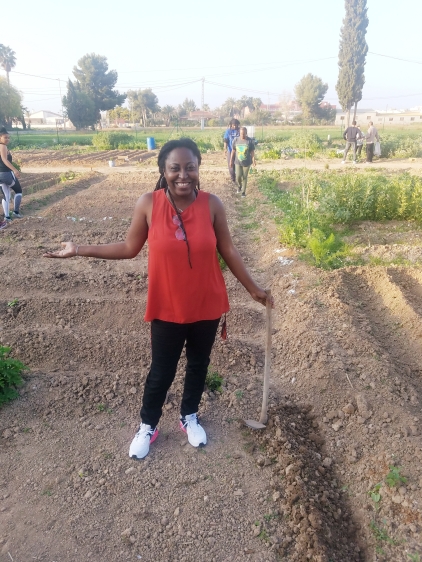
We got to visit Madrid and Alicante, Spain, for the first time. It was just as things unfolded with the virus. We went and got back just in time. (I think Spain shut down like a week later). We picked oranges and lemons from trees, helped plant a garden in Almoradi, a city that gives free land to its citizens, and ate homemade churros and chocolate with coffee. It was so good y’all. We did other things top of course, but this is the cliff notes version.

5. Published Four Books (3 Revised)

I revised The Stella Trilogy, something I have wanted to do because of the poor editing and cover design the first time around. All three parts got a professional edit, new covers, new formatting, and my own ISBN. And I could still release a new poetry book. Now that I think of it, I published four books this year. Between Slavery and Freedom is available free on my website here, and the entire Stella Trilogy is available on KU here.

4. Books in a School

Griffin High School bought some of my books for their school library after my visit in January. I didn’t get to sign them because COVID hit before I could but I am Soul, Renaissance, Revolution, Keep Yourself Full, and Even Salt Looks Like Sugar are all available at the school.

3. Books in a Public Library

I got I am Soul into the Dallas Public Library in Dallas, Georgia. We stock next month. This is exciting because it opens the door for me to get my books into other, larger libraries. As I have heard, it is easier to get into the others when you get into one. Well, we will see if that’s true. I want to focus less on selling books one-by-one and more on packaging them in bulk for larger companies and corporations and then, if it is Yah’s will, do more teaching and coaching. I will still write and publish my own books, but I am ready to move on to what’s next for me. There are no limits.

2. The Next Generation

I spoke to four classes of tenth and eleventh graders at Griffin about writing, publishing, my journey as an author, and advice on how they can Self-Publish their own books. This was the highlight of 2020 for me. I love young people, their innocence and straightforwardness, their non-sugarcoating questions. I love their realness. Because of school policy, I couldn’t take pictures of them except for the media specialist’s one, as seen here. However, some students bought books, some of them asked questions in private after the session, and almost all of them wrote to me thank you cards.

1. Alive and Well

Above all else, the most important thing of it all is that I still have the breath of life in my body. I am alive, my family is alive, and despite everything we are healthy and have lacked nothing during the pandemic.

UPDATE: I forgot about the awesome dinner I had as keynote speaker with Queens Circle of ATL Book Club! As I’ve said, a lot of good happened I forgot about in the chaos.

Call me naïve, but I still believe in silver linings. Even if it’s something you think you might have done poorly or something that went badly, always look for growth in it.

Dear Indie Authors, Please Identify Your Target Audience in 2021


Entrepreneurship has been the talk of 2020. With the COVID-19 virus sweeping the world, many new businesses have been born. It is a delight to see people take something as detrimental as a deadly global pandemic and use it as the catalyst for stepping outside their comfort zones. Every day someone is beaming about their new business endeavor, and I am here for it.

Self-Publishing a book is a business, too, so if you published a book this year, congratulations! This is a fantastic accomplishment that deserves recognition and celebration.

But Self-Publishing a book is not a business for every author.

There are two kinds of authors. We must identify them before going into it:

  • Authors who publish books for themselves
  • Authors who publish books for an audience

If you publish a book for yourself, you are not necessarily interested in creating a writing business from the book or making money. You might have published this book as a primary teaching tool to awaken the lost sheep, or you may have published this book as a lifetime goal you always wanted to achieve. You might want to print a few copies for family and friends, but you aren’t interested in creating a business out of it.

You are doing this for yourself, and there is nothing wrong with that, but also, in this case, you don’t have to continue to read this post.

You probably should though. Ya know, in case you change your mind.

If you are Self-Publishing a book that’s important to you AND appeals to a particular audience, you want to keep reading this post.

The Problem.

You write a book for yourself and then try to sell it to everyone.

“Most self-published books are vanity projects, which means, the author paid for the privilege of having them published, and spent money getting professionals to help them edit, design and produce it, but they earn less than they cost.” -Derek Murphy

The mistake is you wrote this book and did not think about who you want to read it so you try to appeal to everyone.


“It’s easy to fall into the habit of writing what you love or writing to impress your peers or your editor. That might make for good writing… but it won’t necessarily attract readers. To do that, you have to write for, well, readers.” – Writer’s Digest

The Problem.

Who are these readers? Hint: They are not everyone you know.

Dear Indie Authors, Please Identify Your Target Audience in 2021.

Identifying your target audience means identifying your customer demographics and then figuring out which tools will best attract them.

Rather than targeting everyone, you are focusing on the ideal customer for your business. “That means, stop beggingasking for help and support. Stop desperate, useless marketing tactics like spamming Facebook or blasting Twitter.” (Murphy)

You are not only identifying the ideal reader, you are thinking about real, actual people who would like to read your book.

“A lot of writing advice encourages you to define this ideal reader… but forgets to mention they need to be actual readers. If your ideal reader isn’t real, no one will read what you write. Instead of deciding what to write and defining a reader for it, start by defining your reader and writing for them.” – Dana Sitar

When you know your target audience it makes it easier to find your tribe. Your focus is on the people who are there instead of those who aren’t because you know you can’t please everyone.

But that’s what selling to everyone is like: trying to please everyone.

Instead of saying your book is for women, think about who these women are in more specific terms.

“My book targets women history buffs, aged 25-45, who love black history but are tired of the same white male-dominated narratives.”

Ask yourself: “Who am I writing this book for? What real people do I know would read a book like this? Maybe there is a black woman I know who is always talking about Ta-Nehisi Coates and happens to be reading Colson Whitehead’s Underground Railroad. She might enjoy my Stella Trilogy.

Not so Good Example:

“My book targets women 20-70, suffering, that want to feel better.”

This one is too broad. Every woman you know is suffering from something and want to feel better, and it will be hard to market a book to this wide of an age group. You got millennials and senior citizens in the same club.

Why Does It Matter?

Once you know your target audience and what they want, you can give it to them by being of authentic service to your tribe, which means offering exceptional value consistently. Consistency builds trust, and people buy from brands they trust.

Understanding our target audience doesn’t mean our family and friends won’t support us. It means we are not targeting them in our marketing. To target is to direct an action or message to someone or something. Pookie and Ray-Ray may know you, but are you trying to direct your message to them?

How many family members have bought your book?

I’ll wait.

But this doesn’t only apply to Self-Publishers but entrepreneurs in general, especially in the age of social media. Most people have not even done the basic work of securing a website. You appear out of nowhere with something to sell. You then tell people to cash app you the money and expect them to trust you enough to do it. You can have all the faith in the world, but it still doesn’t exempt you from following a basic business practice.

It’s easy to become frustrated and exhausted about the lack of support for a company without much to show for your efforts when you are trying to appeal to the broadest possible audience. If you start a business and then spam all your Facebook and Instagram friends hoping they will support you, your message may seem inauthentic and doesn’t really resonate with anyone in particular. – Tucker Max, How to Write For and Target the Right Audience for Your Book

Another benefit to knowing your target audience is knowing you don’t have to be everywhere to be seen. If your audience does not hang out on Facebook, you do not have to be on Facebook. If they are not on Instagram, you do not have to be on Instagram. It is easier to be consistent when your attention is focused instead of divided. Go where your people are and build.

Indie Authors, and new entrepreneurs in general, would be a lot happier if we focused on serving our targeted audience instead of everyone we knew. Everyone does not care about you or your business, and it’s a waste of time, energy, and resources trying to appeal to everyone. No one is obligated to support you. People do not care about your product, book, or service. They only care about what it can do for them. Please understand this.

“If you aren’t writing for an audience and carefully considering the commercial viability of your project, if you aren’t expecting and planning to make more money than you spend, and learning exactly what it takes to achieve that, then you’re publishing for yourself, and it’s a big risk and gamble.”

Are You Building a Book Business or a Hustle?

Self-Publishing a book is expensive without a return on investment. As Murphy explains, it just becomes a gamble. I like to call it a hustle. When I think of that word hustle, I think of someone doing anything and everything to make it instead of aligning oneself with a strategic plan and purpose. If you are continually spending money to produce something that doesn’t give anything in return, it can quickly get frustrating.

Excellent cover design, editing, ISBN, and all that is basic; we should all know the importance of this in 2021. The self-publishing service providers, coaches, vanity presses, and assisted self-publishers rarely talk about how authors can make money from that book they just paid five thousand dollars to produce. Launching a #1 Amazon Best Seller is great, but that doesn’t mean the author is earning money. Being on the Amazon Best Sellers list is cool but what’s even more neat is having a faithful readership because a loyal audience will bring consistent book sales.

This isn’t to say you shouldn’t pay to publish a high-quality product. It is to say that without an audience to buy it, it will feel like a waste of money.

Identifying a target audience is the key to any business’s success, and I mean success outside of personal gratification. In 2021, I hope we can all do better (myself included) in focusing on those who best fit the people we want to serve.

Looking for more Indie Author Basics? Click Here.


Don’t forget that if you have read My Soul is a Witness I am trying to reach 20 Book Reviews before this year closes and we are almost there! If you have the book (and have read it), do consider leaving an honest review on Amazon.

Why It Matters:

It’s a real challenge for Indie Authors to market books without Amazon reviews because reviews act as social proof and establish credibility and competence in the publishing marketplace. Are you an author? In need of reviews? Be sure you RSVP for my 2021 list. Click Here.

How to Review on Amazon:

Click this link. Scroll down to ‘Write a Customer Review,’ rate and leave your thoughts on the book.

Also, I am Soul is 99cents on Kindle for a limited time.

Black History Fun Fact Friday – Dr. George Cleveland Hall

This week, I spoke briefly on Dr. George Cleveland Hall, for whom the Hall Public Library in Chicago is named. I talked about the Hall Branch as the place I got my first library card and all the historical things I didn’t know that happened there. To read this post, click here.

Today, we are digging a little deeper into this man’s background, Dr. George Cleveland Hall.

As I dug into his story, I found Hall was a pretty big deal, and I am surprised there isn’t more information on him because this man was phenomenal and a significant influence on Chicago.

Dr. George Cleveland Hall was born on February 22, 1864. Not only was Cleveland a doctor, but he was also head of the Urban League and “one of the five founding members and the first president of the Association for the Study of Negro Life and History (ASNLH), currently known as the Association for the Study of African American Life and History (ASALH).” (William Smither)

In 1886, Hall graduated from Pennsylvania’s Lincoln University and studied medicine at Bennett Medical College and in 1896 graduated from Harvey Medical College.

Cleveland was a surgeon at Provident Hospital, the first private hospital in the state of Illinois to provide internship opportunities for black physicians, the first to establish a school of nursing to train black women, one of the first black hospitals to offer postgraduate courses and residences for black physicians, and the first black hospital approved by the American College of Surgeons for full graduate training in surgery.

Okay, Chicago!

George Cleveland Hall
Public domain image

In 1911 Cleveland founded the Cook County Physicians’ Association of Chicago, the organization of black doctors in the city.

But Dr. Hall’s significant influence on Chicago was not just about his expertise in the medical field. He is actually most known for his civic duty and grassroots work. In 1915, he joined Carter G. Woodson and others in the founding of the ASALH at the Wabash YMCA in historical Bronzeville.

Just wow.

I cannot believe I have not heard of Dr. Hall before. His contribution to black history and medicine is groundbreaking. He is right up there with Carter G. Woodson and then some. Hall also had a close relationship with Booker T. Washington.

Cleveland received two honorary degrees, one from Lincoln University for Doctors of Laws and another from Howard for Doctor of Science. He became the first black Chicagoan appointed to the board of directors for the Chicago Public Library.

Dr. George Cleveland Hall died at sixty-six in 1930.

On January 18, 1932, Chicago city officials dedicated the George Cleveland Hall Library to Dr. Hall, the first full-service library on the city’s Southside.

This is the same library where I received my first library card.

Yass.

For More Black History Fun Facts, click here.

No One is You And That is Your Power

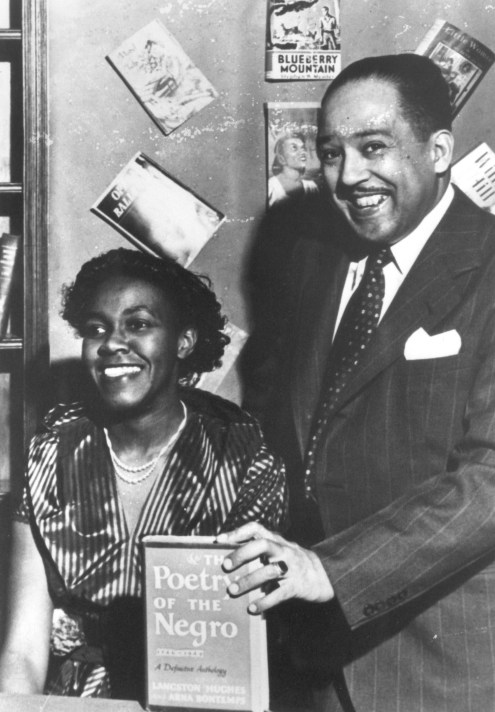
Langston Hughes and Gwendolyn Brooks at Hall Branch Library, Chicago, IL, 1949. Credit: George Cleveland Hall Branch Archives, photo 146, Vivian G. Harsh Research Collection.

I still go to libraries.

I got my first library card at the Hall Branch Library on 48th in Michigan on Chicago’s south side. I was thirteen years old and still needed my mother’s signature. I wasn’t into Black History back then. I chose this library because I wanted to check out books, and it was down the street from my grandmother’s house.

Here’s where it gets interesting.

Dr. George Cleveland Hall

Yesterday, I discovered Hall Branch was named for the renowned African American surgeon, social activist, and civic leader Dr. George Cleveland Hall (1864-1930). It was the first Chicago Public Library location with a Black branch manager, Vivian G. Harsh, who served as its first manager. We will get deeper into Hall’s background on this Friday’s Black History Fun Fact, the last one of the year.

In 1949, Langston Hughes and Gwendolyn Brooks visited the Hall Branch to celebrate the publication of The Poetry of the Negro Anthology.

On July 7, 2000, the Friends of Libraries USA (now United for Libraries) and Illinois Center for the Books designated Hall Branch as a literary landmark. This was in recognition of its promotion of African American literary culture by serving as a meeting place for such writers as Arna Bontemps, Gwendolyn Brooks, Lorraine Hansberry, Langston Hughes, Zora Neale Hurston, Claude McKay, and Richard Wright. (Learn more about the Chicago Renaissance of the Black Belt Here).

I thought I had picked this library at random and for no particular reason. I had no idea it was so rich with Black History or that it was this hub for Black writers.

This helped me to see how unique each of our journeys are. No one has walked in your shoes or experienced what you’ve experienced. No one is you, and that is your power.

Everything is a stepping stone to get us to the place Yah has destined for us, every path like a thread weaving and connecting everything together.

It would be years before I learned who Langston Hughes and Gwendolyn Brooks were, and many more years before I would publish a collection of poetry of my own.

Little did I know I was building on the same foundation as those who came before me.

Talk about the power of purpose!

Also, I still got that library card!


Have you read My Soul is a Witness? I am striving for 20 book reviews at minimum before the year is out. If you read this book, I would appreciate so much if you reviewed it! Go to the page here. Scroll down to Write Customer Review, click that, rate and review. Boom. Done.

Thanks!!