Integrity

I really dislike this day and age where everyone wants to be seen and praised and prized. Purposely present to spew pillars of knowledge pulled and preserved for a time. No one wants to be silent but everyone wants to be wise. So we selfie our way into stardom on the ground. No one wants to stand behind the curtain or risk being forgotten, or admit that integrity is doing what’s right …even when no one’s looking.

Blogging: Establishing Your Fine Print (Blogging with Purpose)

woman-writing-thinking-fireworks212

A couple years ago I wrote a post Does Your Blog Reflect Your Purpose? about how focusing on my purpose helps me to continue to write and also about living in the moment as a catalyst for post ideas. As I sit here, I decided to update my views on this topic with a follow-up: Blogging: Establishing Your Fine Print (Blogging With Purpose).

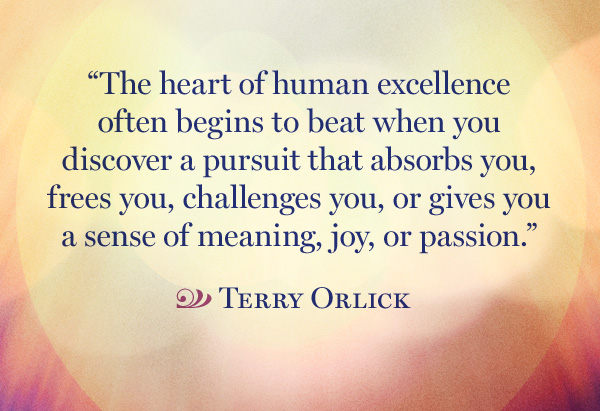
quotes-find-path-terry-orlick-600x411

Each blog is different because each individual is different. We each have our own set of thought processes and routines that we feel makes our writing better and our blogs overall capable of expansion. As such, I have noticed one thing in common with each blog that I follow, the ones I have come to really enjoy: Purpose. Most of the blogs I follow touch on a variety of topics. Our posts have the potential to scan the horizon. From poetry, to short story, to news articles, to quotes, you name it we’re writing about it. I love this because variety makes it possible to reach  more people than a singular subject ( or niche) and for this I love diving into varying topics.

The Fine Print

fine-print

Fineprint – inconspicuous details or conditions printed in an agreement or contract

While my blog, like most, is filled with variety, there is also a primary purpose that remains in the fine print and I have found it in each of the blogs in which I read. That purpose is the inconspicuous detail. It doesn’t matter how many topics the blogger touches on, each person has his own primary purpose for blogging and that is the foundation I think we should each take into account as we build readership. I call this The Fine Print. Everyone has one because we all have a certain set of values that govern how we live. This doesn’t mean we have to shout to the rooftops about it, but it is the underlining foundation to how we live our lives. If we apply this to blogging, I think it will help us to build and maintain focus. By us I mean myself as well. These posts are not professional blog advice, in fact its not really advice at all but thoughts I tell myself to help me to become better that I’d like to share.

Finding Your Fine Print:

1). What are you passionate about?

Think about what matters most to you outside of blogging. Your passion usually will lead to your purpose. Your purpose is then incorporated into your everyday life: including blogging.

2). What is the one thing that motivates you to blog? 

I didn’t ask you what your blog was about because it’s deeper than that. Your reason for creating your blog is also not necessarily that thing that keeps you blogging. Your blog can be about puppies but puppies do not get you up every day to publish posts. I also did not mention why you write because not all bloggers are writers. Some bloggers are photographers, chefs, etc. But I asked you what was the one thing that motivates you to blog because if you can name that thing that insists that you must blog, that thing that tugs at your being and demand that you release words into this public forum, then that is the first step toward finding your Fine Print.

3). Do not Preach Your Fine Print

Your Fine Print is for you. To help to keep you focused. Once you’ve defined your purpose, it’s not going to help you to preach to the choir. The reason this is called a Fine Print is because it’s a foundation to the entire document. You can read through an employee handbook, but the fine print is what sets the document apart as serious business.

A bloggers fine print is their driving force, their purpose, their one motivating factor, their reason for doing. Its not something they have to bring up in every conversation, but it is that thing in which they strategically incorporate into their blog in a way that drives curiosity and helps readers to get to know them better. If you bring your purpose up in every post it will drive people away. No one wants to be preached to or forced to accept anything. Your fine print is to help YOU to stay focused. When people sign a contract they are agreeing both to the contents of the document itself and also to the fine print. Fine Prints are that underlying message. When you follow a blog, you may not know it, but you’re not just supporting that blog, you are also agreeing with that blogs Fine Print, which is the whole point. In other words, that bloggers purpose for writing intrigues you in some way and has prompted you to endorse them.

Does your blog have a Fine Print?

Find out what drives you to blog and keep that as the underlying message to everything that you post. This is your Fine Print. It doesn’t mean bash everyone over the head with your ideas. It is instead using your purpose as a driving force to produce quality material. People follow blogs for so many different reasons that it is possible that your one weekly feature was their sole purpose for following you. In this way, you have reached them. Though your Fine Print is inspiring people, your weekly feature became the catalyst for which this was done, the method that has proven effective in a way that will continue to drive traffic.

4). Stay Focused

Purpose – the reason for which something is done or created or for which something exists.

Don’t get so caught up in the purpose of someone else that you subtly make their purpose your purpose. Your fine print is not really for them, it’s to help YOU to stay focused. Blogging is a communal activity. This means that one thing we all have in common is that we want our blogs seen by the online public for whatever reason (< your fine print). Otherwise we would all just keep. private journals, diaries, notebooks, whatever but we would not be writing so openly on the Internet. For whatever reason (fine print, purpose) we are writing online. No, we are not just writing for ourselves. I do not believe that. To publish material as openly as the internet has to be for a reason deeper than personal gratification. For whatever reason, we are blogging. We serve this community by interacting with one another. In essence we serve one another. But what I think keeps a good blog going is the individual’s  focus on their fine print once they’ve found it. It is not something they are willing to compromise and it is not something they will allow others to take away.

Have you ever read a book that was so good in the beginning but towards the end it fell short? That can happen with our blogs. We must remember that the fine print is not so much for readership as it is for our own individual marker to help keep us focused. This naturally makes it easier to produce material without compromising the integrity of the blog.

And that’s it for me. I hope these tips are helpful to each of you as you continue your blogging journey.

Why Are YOU Worth It?

I’m not asking you about:

Twitter followers…

IG followers…

Blog followers….

FB likes….

This is about YOU.

Why are YOU worth it?

Of course, I do not expect an answer. You aren’t doing this for me. It’s a deeply personal question that we should each ask ourselves daily. And it is a question that needs an answer. Comments disabled.

The PBS Blog Award Page

bitmoji-621158592

What a way to end the week! It’s been a long time since I’ve been nominated for a blog award. When I first began blogging in 2014, Blog Awards were a great motivation for me and a big part of helping to keep this blog going during those moments I felt like blah. Though I no longer participate in Blog Awards (Blog Award Free Since 1/20/16) I do acknowledge those who’ve nominated me and I have created a page for the awards. They are neatly stacked on the virtual shelf of The PBS Blog Awards page HERE.

Special thanks to Don Massenzio for nominating me for The Blogger Recognition Award. Every piece of support, every like, every comment, every re-blog, and every blog award gives this blog the fuel it needs to keep going. I still go through every like when I get the notification on my phone as if I don’t know who’s picture is coming up lol. They are just as important to me as the commentary and gives me the excitement I need to push onward.

Since I don’t actually participate in the Blog Awards I won’t go on to follow the rules but I would like to give the two pieces of blog advice, if I may.


  • Give two pieces of advice to new bloggers


  1. Make sure your blog is as easy to follow and navigate as possible. Keep it clean and the text easy to read (black text on white background always works). Be sure your blog has a Blog Follow button. Dashboard > Appearance > Widgets > I would recommend the one that says “Add an email sign-up form to allow people to follow your blog”
  1. Network with others. Comment back to comments left on your blog, visit the blogs of those who follow or liked you. Share content from other blogs. Carve out a day where you do nothing but read and interact with other blogs. Do for other blogs what you’d want people to do for you. Share their content across social media like you’d want them to do for you. Like their post and comment as you’d want them to do for you. Not just for the sake of trying to get something out of it but because good always comes back. Sitting on your hands wishing for more engagement won’t change a thing.

Now, go change the world.

bitmoji1051355227

Indie Author Support: Are You Harmful or Helpful?

This post came, literally, out of nowhere. In no way did I intend on taking an hour out of my schedule to write this post, but I wanted to share this article that was delivered to my email and get some feedback on it. It’s a great conversation starter.

http://www.creativindie.com/the-cardinal-sin-of-self-publishing/

According to Derek, the cardinal sin of self-publishing is hubris: foolish pride or dangerous over-confidence.

In brief, Derek explains how many Self-Published authors destroy their own success by getting too excited about their book and being rigid and inflexible.

I also took the time to read through the comments, which were just as interesting as the article. One comment in particular caught my attention:

“But, another factor, aside from the lack of ability of some to admit that they don’t know what they’re doing, is influence. The wrong kind. Authors are usually around other authors online, and the fact is, very few will tell their fellow authors that their covers suck, that their manuscript is not polished, that their blurbs are confusing, that the book needs major editing – an author cannot get honest feedback from their peers. Feedback which could help them improve. Maybe this happens because most authors don’t welcome negative feedback themselves – so they don’t give it. The result is, a mediocrity virus goes around, contaminating those around it.” – Eeva Lancaster

Whew! That’s a mouthful, but is she wrong? I’d love your feedback on this.

I get a small taste of this reviewing books. Though people are always respectful to me personally, it doesn’t take much to see when someone didn’t like how you felt about the book. You can sense it in the watered down thank you they give you or smell it in the silent treatment (where you never hear from that author again, nor are you on the receiving end of their support).

I’ve also seen poor work highly promoted, especially book covers that are not very pleasing to the eye (to the point where I am not interested in reading the book). We promote these books like they are NYT Bestsellers because these are our friends and we may not want to crush them by admitting “the person who did that book cover messed you up”. I mean, you wouldn’t say it like that but you get my point. Friends don’t hurt friends but such a thing feeds into Eeva’s point.

I’m not one to judge. I know that book cover design is expensive and I’ve had my own experience with mediocre looking covers. In addition, I’m a big advocate of treating others the way that I myself would want to be treated. Would I want you to publish your one and two-star reviews of my book and bring my rating down? Of course not so I don’t do the same to the books I read. I do, however, provide honest feedback (as promised) privately through email.

Still, for the everyday readers who purchase books and leave reviews, there is something genuine about those reviews when you read them that let’s you know the reader is being real. Readers don’t feel obligated to say something nice about a book because they know the author. They just keep it all the way real. Is this how it should be?

I think so but to an extent. I’m also a huge advocate for professionalism. Everything should be done with as much excellence as our time can afford. People are just not respectful. Period. While reviewers should be honest, I also think tact goes a long way. Criticism sandwiched between two soft pieces of bread goes a long way.

A lot of people also don’t understand the books they read. The first time I read Beowulf it was boring. I was also just in High School and had no clue as to what I was reading. I was just reading to get a grade pretty much. Meanwhile, boredom oozed from every page I turned. It was painful. Today however, because I understand the book, I find it intriguing and deep. Tell you another quick story.

In 2006, I went to the movies to watch Dreamgirls when it released. I was eighteen or nineteen years old. Anyway, I complained about the music. “It’s too much music in this movie”, I said. The lady behind me promptly put me in check, “It is a musical.” It sounded harsh to my young ears but she was right. Dreamgirls is a musical so there will be lots of music. The point? A lot of people don’t understand the books they read. If you’re reading erotica don’t complain there’s too much sex. That’s kind of the point.

And so, the question remains, in our quest to support each other, are we helping or hindering? Here’s Derek’s reply to the comment:

“There’s a common problem in self-publishing, that authors help each other and support each other (great) but also reaffirm misleading beliefs or ideologies that can be harmful (bad).” – Derek Murphy

That’s deep and I myself cannot honestly say that Derek does not have a point.

One of the disclaimers we reviewers use for book reviews is: “…in exchange for an honest review…”

(My disclaimer message will change. I will now be using the following disclaimer: ‘I received a copy of this book as a gift from the author’ will be the message that accompany each review instead of ‘I received this book free in exchange for an honest review’. To learn more about why I am making this change, read Debby’s most excellent article about cleaning up your Amazon links HERE.)

But, back to the point. We, reviewers, say, “…in exchange for an honest review..” but, are we being honest? Furthermore, how does one display honesty respectfully? Surely there’s no way to not hurt someone’s feelings. It’s inevitable and since people have so many different ways of thought, who knows what they may consider disrespectful. My thoughts is that everyone should just be as respectful but as honest as possible but I want to hear from you.

In our efforts to be supportive, are we helping each other by providing valuable feedback or hindering each other by sugarcoating the truth?

What are your thoughts?