Hugh Howey and The Data Guy have now done all their usual number crunching and published the latest report. What trends can we identify in 2017, based on their impressive (as always) work?
1. For traditionally published books, print is king.
2. However, this reign is highly genre-dependent. In adult fiction, for example, nearly half sales are digital.
3. Two years of Amazon discounts have let the publishing industry grow by 3,3%. But Amazon discounts have now ended. Expect a drop in 2017 in traditionally-published print titles.
4. This is actually good news for Indies, who usually focus on adult fiction and ebook sales.
5. Regardless, print vs digital is the wrong question. The right one is, online vs. brick & mortar. In other words, Amazon vs. everyone else.
6. Indie publishing is now a $1.25 bn industry.
7. Pricing matters: for Indies, the sweet spots are $0.99, $2.99, and $3.99.
OK, last reblog of the day lol. Most informative post. Quote: “But these days reviews are more important than ever. I am not going to put in a one or two star and tank the author’s overall ranking because fiction is subjective. That author just cannot please everyone.”
As we careen toward the New Year, many emerging writers have a goal to finally publish that novel and I hope you do! But the arts are kind of strange. We often get fixated on the creative side, without really understanding the business side of our business.
The publishing world is still in massive upheaval and it is a Digital Wild West. Old rules are falling away and new ones are emerging, but still? Knowledge is power.
In my book Rise of the Machines—Human Authors in a Digital World, I go into a LOT more detail and I highly recommend you get a copy if you don’t have one. I spend the first chapters of the book explaining how the various forms of publishing work so you can make an educated decision as you are building your brand.
All types of publishing have corresponding strengths and weaknesses and this is…
During a recent weekend, my seven year old daughter had an event with her dance group at a local street festival. As we walked around and looked at the various tables, we happened upon an author of children’s books who had some of her work displayed on a table. My daughter saw the books and we stopped at the table and listened to this friendly, grandmotherly figure tell us about her books. They were based on the antics of her grandson and looked very nicely illustrated.
We were about to move on when my wife blurted out that I had written some novels. The author’s first question was not about the genre or the titles. Her first question was, “who’s your publisher?” Before I could get the words DSM Publications (my initials are DSM) out of my mouth, my wife told…
Excellent advice from Don on why you should get started on writing your next book! Post Quote: “There are a lot of consumers of books out there. The more offerings you have, the more exposure you will get with those readers if they like your work.”
This chapter is about the activity that most of us probably enjoy the least, marketing our work. This is more than just posts on Facebook and Twitter. This is the part of independent publishing that I dread and that is the most cumbersome. To say you are an independently published author really means that you are taking on two full-time jobs, that of a writer and of a publisher.
I’m sure most of us would just like to write and ignore the marketing. Unfortunately, if you want to gain exposure, this is an unavoidable aspect of what we do. For the mundane marketing tasks, such as posting to Facebook and other social media outlets, I try to be efficient without spamming social media. Social media does have the word social as part of it. Things like automation and cut and paste marketing…
When I developed a passion for writing, I could not foresee what the publishing industry is like today. My vision was always to hold a book in my hands, feel the pages against my fingertips, and smell the fresh ink. It was always to see my name on the cover and read my words behind the pages. And more so, allowing others to take part in this journey by having them to read my words. With eBooks trending, it is no question what the increase and development of technology has done for authors. In short, Self-Publishing would not be where it is today. So it is without question that eBooks and Amazon Kindle has changed the game. However, I read something today that disturbed me a little bit. In one of the Facebook Writing Groups in which I am a part of, a writer was seeking advice on Book Promo. His question had to do with promoting his paperback book. One of the commenters told him he should do away with his paperback and stick to eBook only. Obviously, there is more money in the eBook game.
I do not believe this and I also do not believe this person’s advice is very wise.
As I always say, advice is subjective. It’s always personal. You can take it or leave it because not all of it may apply to you and not all of it is true. However, when it comes to advise or tips about someone’s career path or livelihood, I believe its important to know what you’re talking about. So in this case, it would have been more wise to tell the person (as many people did) to have BOTH an eBook AND paperback version of his book than to say to just do away with the hard-copy.
Many Self-Publishers underestimate the power of hard-copy in this digital world and I do think it is to our disadvantage. The truth is that the paperback has potential to earn you more money than your eBook. The reason is because there’s diversity to the paperback that the eBook just does not have. I’ll explain that more deeply later. For now, let’s look at this:
The stats tell us that the average self-published author will sell fewer than 250 books, and the average published author will sell fewer than 2,000 books. Books are now more cost-effective and easier to access, which has created a wealth of competition. Estimates tell us that one million books are published every year.”
In addition, it is my belief that this less than 250 book sell has a lot to do with a reliance on strict eBook sales. I believe this because an author can sell hundreds of paper-book copies alone at a book signing. First, let us establish something about Amazon Kindle. It’s not hard to become a bestselling author. For some categories all you have to do is sell maybe 100 copies (or less) of your eBook to make the #1 spot. This, according to The Millionaire Digest, is called gaming the system:
You can pick low-competition categories in Amazon and sell as few as ten books (in a particular period) and become a “#1 Amazon best-selling” author. Authors even make their book free through Amazon’s KDP Select program and claim “bestseller” status.
While I think selling 100 books is great, 100 copies of a book sold is a failure in the Traditional Publishing world as compared to, let’s say 10,000 or 100,000 copies. And even that, in Traditional Publishing, is funny. If a publisher printed 15,000 copies, shipped 10,000 and returned 8,000 then technically the author only “sold” 2,000 copies. This is what makes people Self-Publish. Ain’t nobody got time for all of that.
As for my personal opinion, I think one book sold is a success. If you sold 100 you’re a star in my book. But I digress.
The point is that I’m sure we all envisioned that making it to Amazon’s #1 spot requires selling much more than 100 eBooks. This isn’t to say those authors didn’t put in hard work, but that Amazon’s ranking is “iffy” to use an EC term. “Iffy” meaning ranks are not calibrated based solely on books sold alone. The truth is that Self-Publishing is hard work and for this reason many people have chosen the Hybrid Publishing method, which I actually think is interesting. I don’t have a lot of knowledge about it because I’ve yet to try Hybrid (I’m not a middle ground type person) but nonetheless, Hybrid Publishing is:
The hybrid author is someone who has book deals with traditional presses, but also self-publishes, or publishes in some other nontraditional way. Hybrid publishing encompasses the middle ground between traditional and self-publishing.”
Publishing using a combination of Traditional and Self-Publishing methods is an interesting thing. Though I’m Indie all the way, I don’t play the cool kid game. Traditional or Self-Pub, I like them both and I think Hybrid Publishing is on the come up. But this is precisely my point. (Though I am learning now that Hybrid Publishing is nothing more than Vanity Publishing. I don’t have the facts on that so I’ll just stick to what I know, but this is what I’ve heard.)
Because Self-Publishing is hard work, Indie Authors miss out on A LOT by opting out of print books. Someone in the group mentioned that the only people who will purchase your paperback are family members. This is also not true. According to Publishing expert Lou Aronica, self-publishers cannot afford to ignore print, as it still accounts for some two-thirds of book sales overall. “Print is not going away,” Lou said, “and outside of the US print is seriously not going to be a minority percentage anytime soon.” Lou goes on:
Ebooks are the preferred method of reading for a large percentage of readers and that will only get larger as the international markets reach their inflection point.
People won’t pay $12.99, but they’ll pay $9.99 — for e-books I’ve seen absolutely no price resistance up to $9.99. In fact $2.99 sometimes sends the wrong message. (With the exception of romance, because romance readers are different, the velocity of reading is different.)
It’s clear that publishers are raising e-book prices to make print more appealing.
It is clear that the increase in technology is not slowing and that authors are wise to have both an eBook and paperback copy of their book. Not only does it look more professional but you have options on sells. I’ve made over $1,000 in one night at an event selling paperback copies of my books. In fact, I make more in one day selling paperbacks than I ever did in eBooks. That’s because book promotion should go beyond social media and when it does, you need to be ready for it. It’s a lot more professional to sell a paperback to someone face to face with a business card and bookmark than it is to tell them to go to amazon and buy the eBook. Who’s to say they will remember to do that when they get home? I for one cannot afford to depend on your memories people (smile).
It is what makes publishing fun to me, hard-copies. Just this week I had to deliver some packages to the UPS Store and made a connection with the Notary there. I found it refreshingly exciting to verbally discuss my book as opposed to writing about it which I do most of the time. I started to think about public speaking and how this plays a role in book publishing.
With paperbacks, Indie Authors have the opportunity to network almost anywhere. Heck, you can sell books out of the trunk of your car if you wanted to, and set up various events to which your book is the star. As much as you need an eBook version as well, you cannot sign an eBook. As much as we’d like to push it away in the background, paperbacks are making a comeback. Well, at least in my neck of the woods.
Speaking of which, I’ll be in San Antonio this weekend at The La Quinta Hotel on 850 Halm Boulevard by the airport. I’ll have copies of my books if any of you are in town. Just approach the front desk and ask for Yecheilyah. I’m in town on business from Friday to Sunday time permitting. In the meantime, I have dropped the Kindle price again and am extending the Amazon sale through Thursday. If you want to check out my writing for cheap, The Road to Freedom is available now for $0.99 until Thursday.
Check out this excellent post by Kristen as a response to the “For me, traditional publishing means poverty. But self-publish? No way” article as posted to The Guardian.
Personally, I admire aspects of both Traditional and Self-Pub and I couldn’t have said it better. I really liked Myth #2: “Self-Publish and ALL Time Will Be Spent Marketing Not Writing”. This is actually not true and proves a lot of people judge books by their covers (pun intended). Sure, Indie’s promote a lot and this is what is seen in public, but those Indie’s who do more promo and marketing than they do writing their next book is…umm, doing it wrong and are not staples for the entire Indie Author Community.
One of the things I love about doing what I do is that I have the ability to connect so closely with you guys and speak on the topics that matter to you. Yesterday, a fellow writer shared an article from The Guardian, For me traditional publishing means poverty. But self-publish? No way. She wanted my take on what the author had to say.
All right.
For those who’ve been following this blog for any amount of time, I hope I’ve been really clear that I support all paths of publishing (vanity press doesn’t count).
All forms of publishing hold advantages and disadvantages and, as a business, we are wise to consider what form of publishing is best for our writing, our work, our goals, our personality, etc. But my goal has always been to educate writers so they are making wise decisions based off data, not just personal…
The rain sounds like marching footsteps on my roof. Yes, it is pouring out. So, I thought I’d take the cozy time spent underneath the covers to devote time to my laptop which means sharing another thought that recently crossed my mind concerning Self-Publishing. As always, my thoughts are based on my own experience. Will you get something out of it? It is always my hope that you will.
There is always something we can gain from one another. Always something we can add to our Self-Publishing arsenal of sorts. However, while each self-publisher is similar, each is also different. There is no one answer to self-publishing a book. There is no one way that it is done. In this post, JK Rowling is not merely representative of herself, but she is representative of others who have succeeded in the business of book publishing. Thing is, I am not JK Rowling and neither are you.
Using Rowling as a platform of discussion, I’ve viewed her countless outlines available online for her books in the Harry Potter series. They are very nice layouts and tend to be very organized but it was also very confusing to me. Rowlings outlines are, again, well organized but it is not something I could have followed. For me, to follow an outline for writing books would just confuse me and I will probably never finish it. It is just not the way that I write. I and me are key terms here.
What makes yourbook special? In a world where people are Self-Publishing books everyday (and often coming out with them at the same time) what makes yours worth the time? Wrote a Historical Novel? So what, so did the next guy. Wrote a Young Adult piece? Who cares, so did she. Her over there. Yes her, she wrote a Fantasy, Horror, Young Adult novel too. In a world where there are seas and seas of Self-Published books, it is not the concept of the story itself that is so different. I believe there are tons of books with similar themes. I also believe that every book has a question that needs to be answered, a message it is trying to deliver, or a problem that it attempts to solve and each author has to answer that question or reveal that message or provide a solution to that problem in his or her own unique way. This, the answer, is what makes him or her stand out. It is the unique combination of that authors own persona as well as his or hers approach that is different and that makes that author either stand out or blend in with the sea.
I’m sure authors whose names we all know have been influenced by others, of course. But they have also become known for their individuality. There is always something slightly different about how one author approaches a subject as compared to another. Terry McMillian and Sista Souljah are both talented writers, but Souljah can’t write like Terry and Terry can’t write like Souljah. For each to be successful, each will have to bring something to the table that is different in order to become their own name brands.
Dear Self-Publishers: You Are Not JK Rowling
It is not up to us to write like those who’ve become successful financially and globally. It is up to us to write in a way that works for us, according to our individual personalities and our individual styles. It appears that everyone wants to have the answer to how to Self-Publish a book. The truth? There isn’t one. At the end of the day we have to write stories that people want to read and lets just say the JK Rowlings are already taken. I’d be willing to bet that a book written with less than desirable grammar and poorly promoted can still be read IF it’s an engaging story. Writing is, after all, story telling which is not something everyone can do.
This, the skill of writing, tends to be overlooked when it comes to advice or discussion on self-publishing. I’ve seen tons of advice on how to promote, why it is important to get a story edited, why book covers should be appealing, ISBN Numbers, the list goes on and on. I’ve spoken myself about the importance of these factors, why they are important and so on. Except, I do not hear much about the actual skill of writing; the craft of story telling. Poor books is not always because the book cover is bad, the editing is crappy, or that the marketing skills are poor. No. It is because not everyone can write a book. I’ve read Traditionally Published books with tons of grammatical errors and yet people love the stories because they are told well. There is a skill there that draws readers in. Toni Morrison said it best when she said that obviously some aspects of the field can be taught, but you can’t teach skill or talent. I love to sing, but I am not going to walk into someone’s studio and record an album. While I’m sure my voice is decent, singing is not a skill that I have. I would much rather let the Alicia Keys and Whitney Houston’s have at it. As for my voice? Well, that is what showers are for.
As for the purpose of this post? Well, we’ve all heard it before: Be yourself, everyone else is taken.


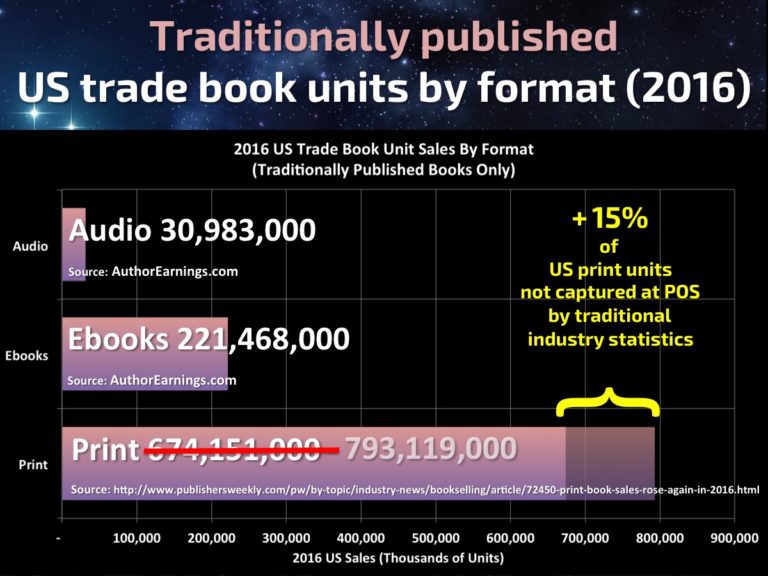
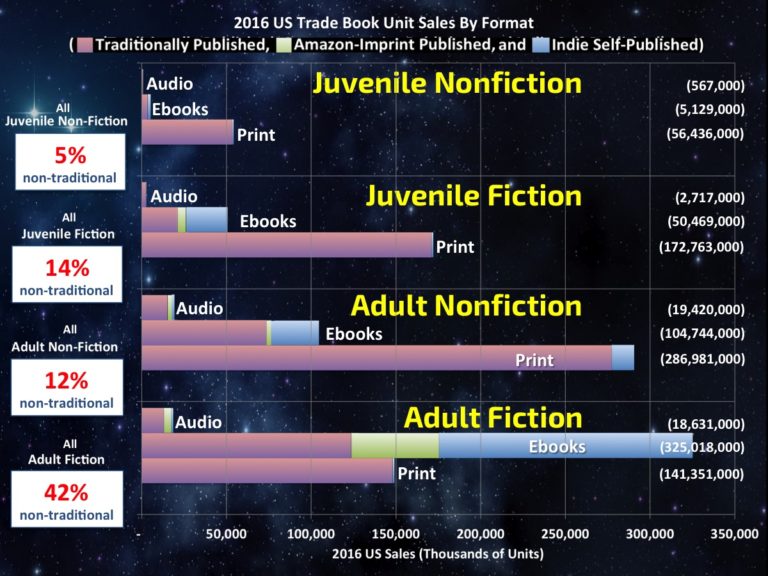

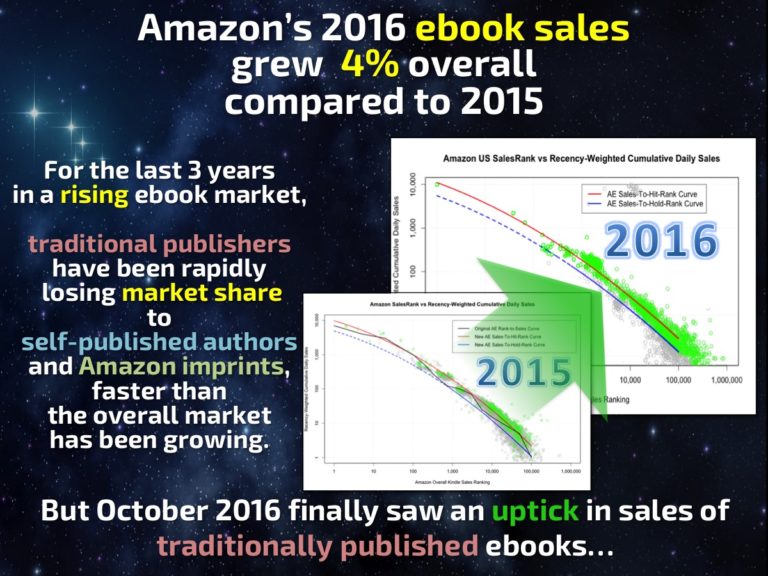

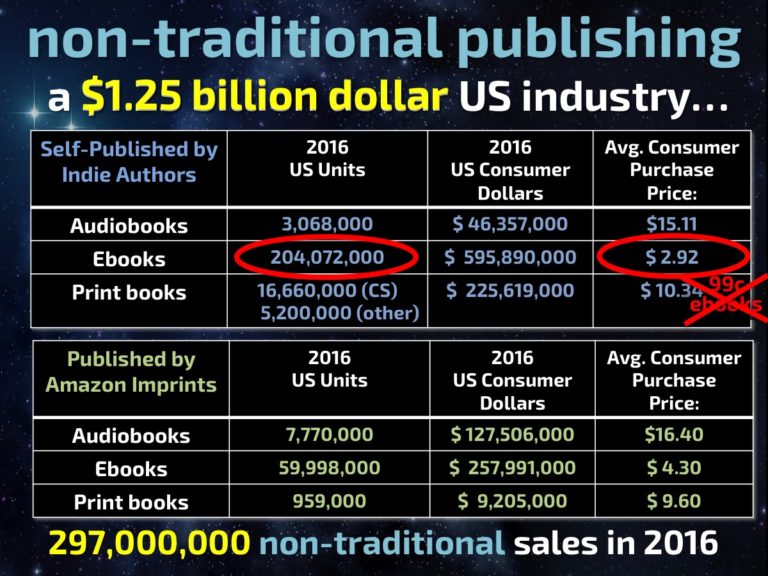
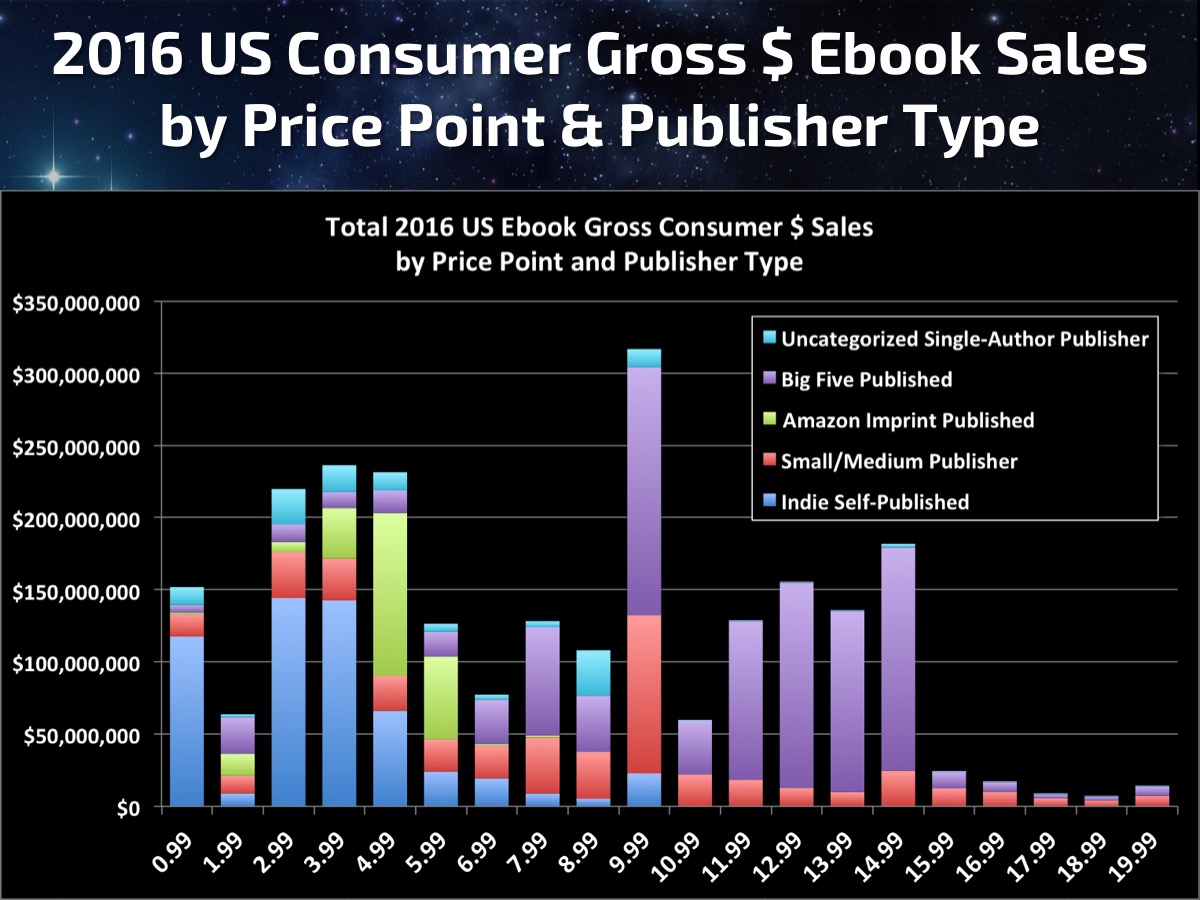




 Photo credit:
  Photo Credit:


 The PBS Blog