The World We Live In

0bb0c2891445bf8edd24fce6f179d125

We wake up in the mornings and we go to work or we go to our office if we work from home. We get the children ready for school and send them off. Kiss our husbands. Kiss our wives. We complain about our jobs or the traffic on the way. We go to the grocery store or we log into our social media accounts. We go about our day and we don’t pay attention nor are we prepared for the time when our days are interrupted. We dream like those in movies where disaster pierces the peace of those who never expected things to be different. Open your eyes and look around. Things are different. But we do not pay attention nor are we prepared. For those who do prepare, like the old man down the street with a basement filled with extra food and water, he is crazy. Even though we don’t really know what crazy is. He’s just it. A conspiracy theorist fool. He is mocked by those who go into the grocery stores never contemplating the moment when the land may no longer produce the potatoes they so casually lift into their carts. Never expecting that one day the land won’t produce and the trucks will no longer be capable of being driven to the store to put on the shelf the Idaho potatoes we never considered won’t be there one day.

We just go about our day, writing our books, taking our pictures, building our businesses and shopping at grocery stores we’ve claimed as our own. It will always be there when we need it, we say. Our desensitization to evil has gone unnoticed. Death itself is a past time no longer cloaked under the veil of mystery but walking around openly, shaking hands and taking bets. The constant fuel of white and black relations is just the same ole, same ole song we’ve been singing since the 1960s until we look up and a race war has begun (and I don’t trust the economy can take it. The old man is wise). Who knows what may come upon this Earth or if it will be our airport next time or our minds tampered with. Who knows where the next Manchurian Candidate will come from or who will hear the voices next, but I’m talking outside the box now, I shouldn’t do that. Isn’t that right?

Just as long as we can update our Facebook pages and RT our favorite Twitterbugs, maybe post a cool picture of yesterday’s meal on Instagram, all is well. Keep walking on the wheel. Hampsters spinning. People moving in the same place. Too busy living to live. Too busy to see the world ain’t safe no more. Louisiana dropped to freezing temperatures this weekend only to go back up to the seventies this week but that doesn’t mean anything. Half the continent is in the winter months. How fitting, for the love of the world has gone cold. A change has come and no one is paying attention.

How the WordPress Blog Subscription Works

blog

I’ve seen an increase in people who follow this blog outside of the blogosphere (*Waves!*) which basically means they aren’t active on blogs. They aren’t on WordPress, or Blogger or any other blog platform but do follow me through email. For this, I think it’s important to explain some WordPress basics. After all, it wouldn’t be fair not to show everyone around the place. Yes, please have a seat. Coffee?

When you follow someone’s blog, you do this in one of two ways. You either follow them through the Reader—your “Timeline” of sorts where you can read the posts of those you follow when you log in—or you can follow that blog through email. This means you will get an email every time they publish a new blog post. This button is usually located on the blogger’s sidebar (or slide-sidebar) and says, “Click to Follow this Blog and Receive Notifications Via Email”. (For bloggers, you can add this button to your blog by going to WP Dashboard > Appearance > Widget > Follow Button. There are two so make sure it’s the one that says under it “Add an email sign-up form to allow people to follow your blog”. Click and drag to the sidebar.)

The best place for this button is as near to the top of your sidebar as you can get it. I wouldn’t put it at the bottom. If your theme is set up that way (where most of the side-bar elements are at the bottom), I would change the theme. If people are lazy, they may not see your button and therefore you increase the chances of them not following your blog.

Adjusting Your Settings

If you opt to receive notifications of new post by email, it means you will receive an email every time that blogger publishes a new blog post.

Some of us post frequently. We are usually the bloggers who publish on the hour, every hour or every single day. Some may refer to us as “Powerbloggers”, or just those crazy people over there who spend unfathomable time blogging. You know, those people with the audacity to spend more hours blogging than you do at work.

We are also usually the bloggers who are very active and supportive of other blogs with little patience to be told when and when we should not write. Yea yea, “Quality vs. Quantity”. We get it, but we’re still going to blog like crazy. (What of both? Post valuable information often. Yea, I like that).

If you happen to stumble upon one of our blogs, it’s important that you take the time to adjust your settings once you’ve subscribed.

If you don’t want us invading your inbox, you can just adjust your blog settings so that you receive emails whenever you want. In other words, configure your blog’s subscription options.

The easiest way to do this is that when you get an email click on it and at the very bottom of the page, in the footnote area, look for Modify your Notification Settings or it will say “Manage Subscriptions”. Click that.

screenshot-225

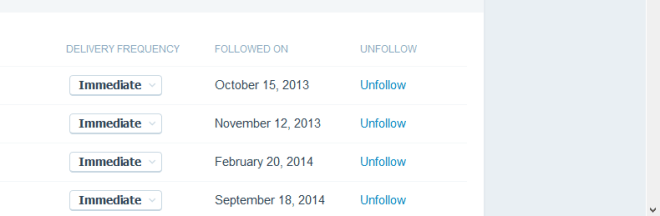
A page will come up with a list of all the people you’re following. You will see something that says “Delivery Frequency”. This is the frequency to which you will receive that blogger’s blog post. Immediate means it will be delivered to your inbox immediately, in real time. If this blogger posts a lot you may not want to get their posts immediately. If this is the case, you can change your frequency to daily or weekly and get the posts once a week or once a day instead of every hour.

Blog vs. Email List Subscriptions

Some people use their blog and email list simultaneously. That is, they use their email list to inform readers of new blog posts. When they deliver a new email via their list, you will also get their latest blog posts. However, subscribing to someone’s email list / newsletter and subscribing to their blog are two different things.

When you hit that Subscribe to This Blog button in my slide-side bar, you are opting to receive emails from this blog every time I publish a new post. When you sign up for my email list or newsletter (through the pop up alert or just by clicking on the link), you are opting to receive my email newsletters. These are not blog posts and are not from WordPress. These are emails sent once or more a month to my list of email newsletter subscriptions. Usually, a person’s email list is hosted through one of these:

  • MailChimp (Most popular because the free version lets you send up-to 12, 000 emails to a maximum of 2,000 people a month before an upgrade is needed).

But MailChimp is not the only program for building an email list. There’s also:

  • Campaing Monitor
  • Infusionsoft
  • Sendinblue
  • Active Campaign
  • Zoho Campaigns
  • Pinpointe

And the list goes on and on. The point is that if you’ve subscribed via any of these, you’ve subscribed to that person’s email list, not their blog.

I hope this is helpful to those of you who are new to the blogosphere and that it will be beneficial to your navigation. I do post frequently so if you don’t want me bombarding your email, you can always adjust your settings. This goes also for those of us familiar with WordPress but who do not like getting lots of email notifications of a post from those to which we are subscribed. Lots of bloggers complain about getting lots of emails. This is unnecessary stress considering you don’t have to stay subscribed to that blog nor do you have to receive notifications immediately. You can always just modify your settings.


Yecheilyah Ysrayl is the YA, Historical Fiction author of The Stella Trilogy, Blogger, and Poet. She is currently working on her next book series “The Nora White Story” about a young black woman who dreams of being a writer in The Harlem Renaissance movement and her parent’s struggle to accept their traumatic past in the Jim Crow south. “Renaissance: The Nora White Story (Book One)” is due for release spring, 2017. For updates on this project, sneak peek of chapters, the pending book cover release, and full blurb for this series, be sure to subscribe to Yecheilyah’s email list HERE.

Writing Symbolism: The Secret Life of Bees

To write subliminally is to operate below the threshold of consciousness. Writing subliminally means to produce a work that gives a message strong enough to influence mental processes or the behavior of an individual in a subtle and non-obvious way. Subliminal writing works well for religious, spiritual, or political writers who want to give important information in a way that is not preachy.

What is Writing Symbolism?

Writing Symbolism is when a message is given to a person’s subconscious or spiritual self to influence positive change in their physical self. Not to be confused with metaphysical psychology, this skill allows the writer to open the eyes of the reader in a way that is easier to understand or to digest. It makes readers think and tends to stay with us past the entertainment factor.

The symbolical writer’s goal is to tap into that spiritual consciousness that exists in all of mankind, but that has been lost or hidden in the world we live in. To create a stepping stone to the consumption of greater spiritual awareness.

This kind of writing, again, is most effective for writers who wish to incorporate spiritual or political concepts in their writing without being preachy.

I caution that writing subliminally is not easy and does not always mean that the messages are positive. If done wrong one can easily confuse readers or influence negative behavior or thoughts.

Let’s look at an example of a movie that incorporates a considerable amount of subliminal messages, some positive and some negative, The Secret Life of Bees.

Warning: This post includes spoilers of the movie. If you have not seen the movie and you don’t want to be told the ending, I recommend bookmarking this post, watching the movie, and then coming back and reading beyond this point.

Sue Monk Kidd

The Secret Life of Bees

81bdonfzzol poster-0fe58b5b-d307-4170-82dd-2d73e2a7dce5

The major theme of this novel is expressed in its title, which comes from a statement made by August:

“Most people don’t have any idea about all the complicated life going on inside a hive. Bees have a secret life we don’t know anything about (148).

In the movie, the viewer learns how most people are not what they seem to be on the surface. People’s lives are usually much more complex and complicated than they appear. The bees represent a community of people working together in a society that is represented by the hive and is symbolic of the Boatwright sisters and their community.

Mothers
alicia-keys-the-secret-life-of-bees-09

  • Lily is driven by her need to know about her mother so that she may learn more about herself. In seeking her mother, Lily finds mother substitutes. Rosaline, August, and the other women step into Lily’s life and provide the mothering that she needs so desperately.


  • The Black Madonna / Virgin Mary demonstrates each woman’s need to be mothered. The women’s devotion to the Mother shows the power and importance of a mother in the life of a woman.


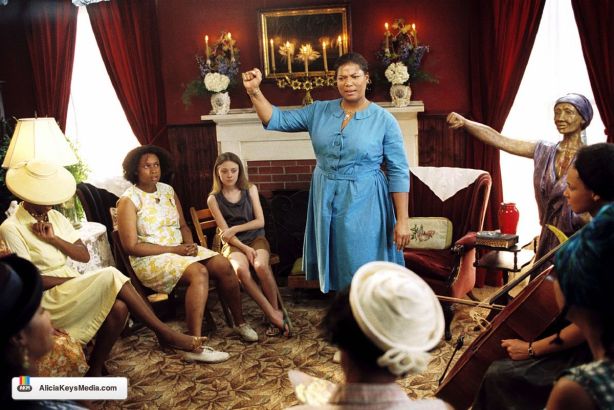
  • On another level, the Black Madonna / Virgin Mary is also symbolic of The Sacred Dark Feminine, which is highly promoted by the movie. The women do not just rely on the idol for mothering, but they worship her. Queen Latifah, who plays August, also symbolizes The Black Madonna / Sacred Feminine. Latifah is symbolically the physical manifestation of the Sacred Feminine idol.

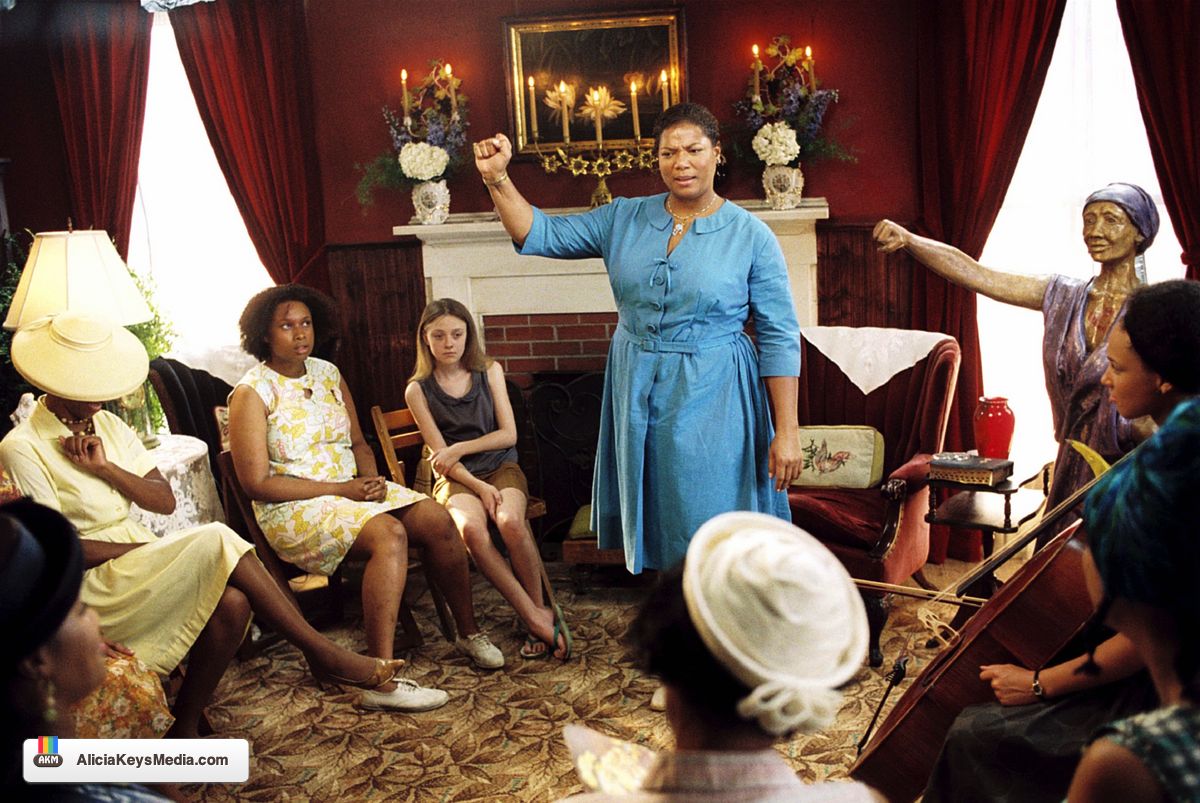
This is the perfect example of subliminal writing. The author doesn’t say this outright, but it can be inferred by Latifah’s leadership and her sisters’ admiration of her. The women depend on her (August), for guidance and motherhood. In one scene, she raises her arm in a tight fist and mimics the statue of the Black Madonna.

The Three Holy Women

thexsecretxlifexofxbeesx03x12x08xfc

The days of the week and the months of the year are named after Gods and Goddesses. (Thursday = Thors Day). The intention of giving the Boatwright sisters names that are months of the year is because the three holy women are symbolic of three Goddesses. There is also a trinity overtone here.

  1. The Childlike May
  2. The Sensuous and Artistic June
  3. The Wise and Kind August

The fourth sister (May’s twin who died and doesn’t appear in the film) was named April.

Rosaleen
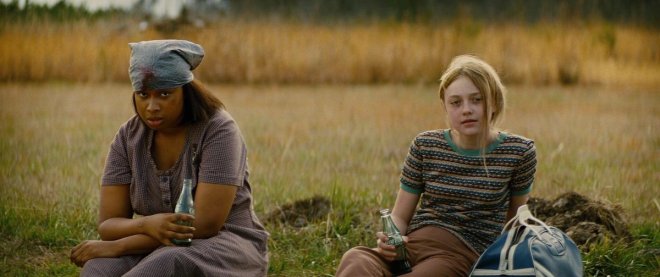
Rosaleen (Hudson) represents three symbols I could identify, but possibly more. While Jennifer Hudson seems the newbie on set– Dreamgirls (2006) being her first movie–within her role comprise several images. She is a mother figure, big sister figure, and more but first  she is “The Mammy Crone.”

“The Mammy Crone” is a caricature of the black woman that grew out of slavery. Enslaved black women saw their children sold or traded but they were required to raise white children. Enslaved black women fed white babies from their breast (called “Wet Nurses”) and treated them as if they had come from their loins. These black women were not the mothers of these children but they cared for them as if they were so they became known as “Mammies” instead of Mothers. This term, “Mammy,” was not an endearing one, though. This term was a derogatory one, a stereotype:

From slavery through the Jim Crow era, the mammy image served the political, social, and economic interests of mainstream white America. During slavery, the mammy caricature was posited as proof that blacks — in this case, black women — were contented, even happy, as slaves. Her wide grin, hearty laughter, and loyal servitude were offered as evidence of the supposed humanity of the institution of slavery.

This was the mammy caricature, and, like all caricatures, it contained a little truth surrounded by a larger lie. The caricature portrayed an obese, coarse, maternal figure. She had great love for her white “family,” but often treated her own family with disdain. Although she had children, sometimes many, she was completely desexualized. She “belonged” to the white family, though it was rarely stated.

The Mammy was a stereotype of the enslaved black girl grown old. She is elderly, fat, cheerful, and devoted to raising “Massa’s” children. She is often depicted as a heavy-set dark-skinned girl wearing a head-wrap that looks like a rag and caring for white youth.

But what is a Crone?

“In folklore, a ‘crone is an old woman who may be disagreeable, malicious, or sinister in manner, often with magical or supernatural associations that can make her either helpful or obstructing. The Crone is also an archetypal figure, a Wise Woman. As a character type, the crone shares characteristics with the hag.”

– Wikipedia

A Mammy Crone is a stereotypical enslaved black woman who cares for the affairs of white youth using her wisdom and supernatural instincts and abilities. She is like a fairy godmother but in a derogatory kind of way.

A powerful symbol in this movie is Rosaleen’s elevation from Mammy Crone in the beginning to Goddess at the end. This is seen by the changing of her name from Rosaleen to July. She has become like one of them.

Race

Men Drinking from Segregated Water Fountains

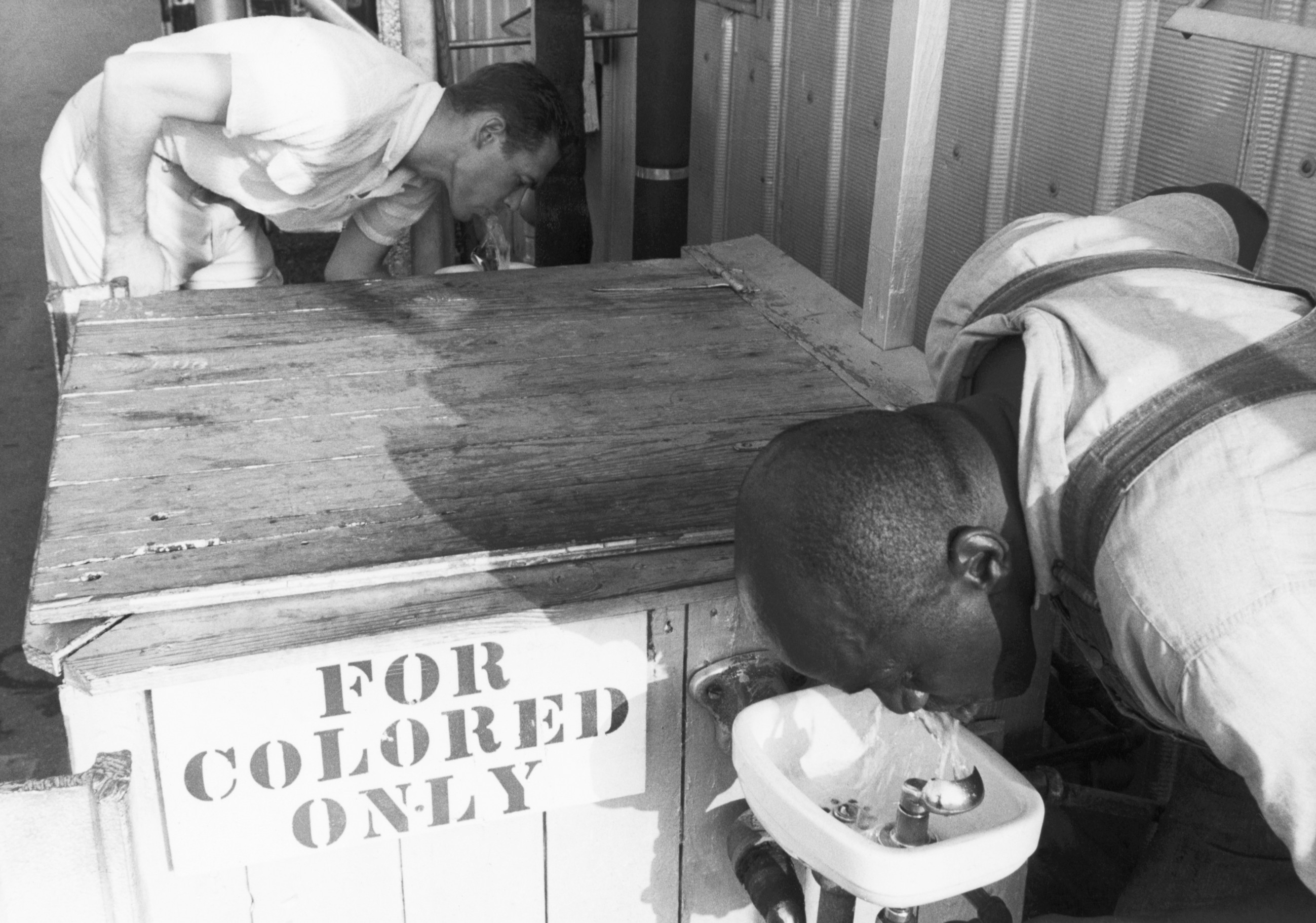
Of course, we cannot forget the antagonistic issue of race in the 1960’s south that is interwoven into the everyday relations between individuals in this movie. The plot demonstrates two encounters between whites and blacks in which the black person is treated unjustly. Rosaleen, for example, is sent to jail for defending herself and Zach goes to jail for not admitting which of his friends broke a bottle on a white man’s nose.

On another level, Lily must personally navigate the delicacy of the racial difference between herself and the African-Americans she comes to love in Tiburon. White people criticize Lily for living with the black women, who treat her better than anyone ever has. Lily develops romantic feelings for Zach, who tells her that he could get killed for even looking at a white girl. Finally, for the first time, Lily experiences what it is like to be judged based solely on her skin color when June complains to August that she does not want Lily in the house because she is white. I love how Kidd did this, showing the intimacy of Lily’s education on race by literally immersing her into the shoes of the black women she comes to love.

Death Gives Way to Life
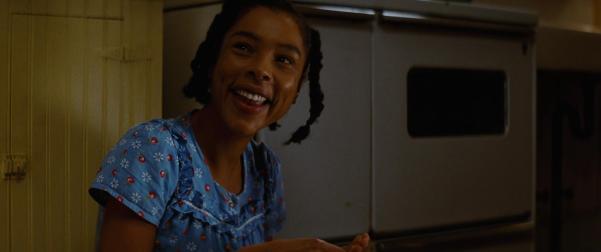
Throughout the movie, there is the theme of death giving way to life. It is sometimes good, but it is also sometimes bad. In the very beginning of the movie Lily tells us:

“People who think dying is the worst thing don’t know a thing about life.”

Here, we see how Lily’s life has been profoundly affected by her mother’s death. This statement suggests that living with someone else’s death can be more painful than dying. In this case, Deborah’s death has given way to Lily’s miserable life.

However, death can also be a positive force in the lives of the living that remain. Following May’s death August tells Lily:

“Putting black cloths on the hives is for us. I do it to remind us that life gives way into death, and then death turns around and gives way into life.”

The promotion of death as giving way to life is seen twice (or maybe more) in this movie as a positive force. The first instance is the way that May’s death propels June to marry Neil, thus establishing their new life together. The second time is when Lily finally reconciles with her mother’s death and is set free to truly begin her own life. But on a deeper level, the movie promotes the idea that life can also kill.

May kills herself because life is too much for her to bear. When Deborah learns she is pregnant with Lily she decides to marry T.Ray. Lily’s life leads to Deborah’s symbolic death on the peach farm, where she has a nervous breakdown because she cannot bear to live there. This new life (Lily) also leads to Deborah’s literal death when Lily accidentally drops the gun and Deborah is hit with a bullet.

Symbolic Writing is a challenge, but if done right is a powerful way to reach readers with a message. One thing to remember is that everything, like any good book, must connect. The Secret Life of Bees was well written with symbolism because not only did almost everything represent something deeper the author wanted you to see but it all connected and made sense. From the beginning of the movie to its end “The Secret Life of Bees,” is personified.

Even May’s death is representative of the secret life of bees. She is kind, smiling, and joyful. She cooks for everyone and is there for you. Only those who truly know her know how depressed she is. Only they can see her secret life with the letters and the wailing wall and upon her death, understand that everything is not always as it seems.

In her place is Rosaleen, the missing piece. Where there was once May, June, and August. There is now June, July, and August and yet again, death gives way to life in perfect order.


Editing Re-Blogs


sharing-is-caring

A re-blogged post is when you share someone’s content to your own blog. People have many different reasons for doing this. Primarily, re-blogged content is to share valuable information. I re-blog often on this blog and have found it to be a great way to network with other bloggers. As a result, I’d like to share some specific things I do with my re-blogs to get the most out of them. As you can tell from the commentary, this is a revision of an older post I published last year (2015) so you may already be familiar with these as many bloggers have mentioned them over time. But don’t worry, repetition is a good thing.

Edit Your Re-Blogs

  1. Add Tags, Category

I usually re-blog from my mobile. This is because I’m usually scrolling through my phone when I come across a good article I think should be shared and I like to share it right then and there so I won’t forget about it. It’s also easy for me to edit my re-blogs when I’m on my phone. When I re-blog a post, I immediately go into my dashboard and I add tags. Unlike original posts you draft yourself, a re-blogged post will not have tags.

As a shared post, the tags of the original owner are not included. To get the most out of the re-blogged post you must edit the post and add your own tags the same as you would any other post. I usually ensure the word “Reblog” is part of my tag to show I am not the original owner (and so that the post shows up for those searching the keyword “reblog”). This will help more people to see it, drive attention to the post and ultimately lead to more views for the original blogger. This is perhaps the most effective way to enhance visibility of a re-blog. Tag Tag Tag.

I also place the article in its appropriate category. Otherwise, the re-blog will fall under “Uncategorized”. To avoid this, you can choose a default category if you are usually at work or somewhere that prohibits you from being able to edit your re-blog. This means this is the category that all posts will automatically fall into. My default category is General Topics.

How to Change It

In your admin area, navigate to Settings > Writing > and then look for the drop down menu beside Default Post Category and set it to the category you want to be your default.

  1. Add Commentary

I always include commentary in my post if I can help it. In my opinion this boosts the value of the post, helping readers to see that not only have I read the original but that I got something out of it. Keeping it brief, I usually include what I enjoyed most about the article and of late I’ve also been adding a post quote or a direct quote from the original post that I found the most helpful or that gives an introduction into what the post is about.

You don’t always have to, but it helps to write a brief description of the post to get people excited about it. If your re-blog is about Self-Publishing tips for instance, maybe you can say: “Great Tips for Self-Publishers!” This will help grab someone’s attention to possibly check out the post.

  1. Disable Comments

Re-blogged posts do not belong to me. I did not write them and I am not interested in taking the credit. I’ve recently started disabling comments on my re-blogs because I want readers to comment on the original post. Since I didn’t write the post, it would just be weird asking me a question about it. Not only am I prompting readers to visit the other blog, but to also share the post from the original blog. Since re-blogged posts are just shared content from another person’s blog, it won’t have the entire post displayed, just a summary. It only makes sense then to share the post from the original blog. Otherwise, people must click on my blog just to click again to go to the original blog. Too many clicks mean “I don’t feel like doing all of this and I’ll come back to this post later (or not)“.

How to Disable It

Edit the post using the Improved Editor > More Options > Uncheck Allow Comments.

If you don’t want any ping-backs and trackbacks, uncheck that box as well. Readers will then be forced to interact with the original post.

4. Featured Image

Some re-blogs will include a featured image. If you don’t want this image prominently displayed on your blog, or you feel that it takes away from the post, you can go into your dashboard > Featured Image and disable it. I do this often when the image from the other blog makes the post look sloppy on my blog (keep in mind your space as well as images from re-blogged posts will now be a apart of your image archives).

What I Don’t Edit

Title – I do not see a reason to edit the title of someone else post. This takes away from the originality of the original blogger and teeters on a compromise of integrity. There are instances where this is acceptable but they are very limited. You may want to turn “dogs with personalities” to “Dogs with Personalities” to help the post to stand out more for the original blogger if you know capitalizing certain letters is important. In this instance you’re helping the original blogger by making sure it gets the visibility that it deserves. But for the sake of being accused of plagiarism, I would just leave the original title the way that it was when you found it.

How To: Edit Your Editors Edits.

Practical advice on editing your manuscript when it comes back from the editor. Post Quote: “I’m going to break it down into easy steps so that it doesn’t seem quite as frightening and explain what I did.”

*Comments disabled here.*


Gem Stone's avatar

Hello everyone and welcome to How To Wednesday-Saturday.

This post is later than usual due to my book Ethereal Lives being released last Wednesday. I’m afraid everything has been pushed to the back burner in the excitement, but I’m back now with a How To on editing. How to edit your editor’s edits.

2016-11-19-3 Manuscript with lots of edits.

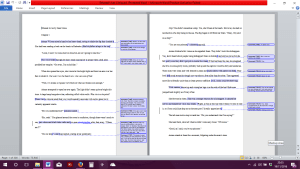
So, you send your book to your editor and after a great deal of waiting and thumb twiddling, it is finally returned to you, usually, looking something like this:

And, most often accompanied by this:

2016-11-19-4 Editor’s Letter.

Here you have a manuscript with endless comments and corrections and a letter from your editor, usually broken down into segments, listing everything that is wrong with your work. It can be very daunting and leave you wanting to cry as you try to figure out how to fix everything. I know when I…

View original post 551 more words