The Top 2023 Self-Publishing Platforms for Writers (Aggregators and Retailers)

According to Kindleprenuer, a vetted and well-respected platform for self-publishers headed by Dave Chesson (who has listed me among its Ultimate List of Best Book Review Blogs under Yecheilyah’s Book Reviews), these are some of the best platforms for writers who self-published in 2023. (I put them in my own order, though, lol.)

  1. Amazon’s Kindle Direct Publishing (Retailer)
  2. IngramSpark (Aggregator)
  3. Barnes and Noble Press (Retailer)
  4. Draft2Digital (Aggregator)
  5. PublishDrive (Aggregator)
  6. Apple Books (Retailer…direct access to Mac users)
  7. Bookbaby (Aggregator)
  8. KOBO (Retailer)

But what’s the difference between a retailer and an aggregator?

Book retailers are platforms where you can upload your book directly to their site and sell on their market. These are your Amazons, B&Ns, Kobo’s and more.

Book aggregators are third-party platforms where you may submit your book, and it will be distributed to book merchants all over the world. It is one of the simplest ways to get your book on practically every online retailer’s website without much effort. Draft2Digital and PublishDrive are two of the most prominent book aggregators.

What I Use

Amazon has an 85% market share over all these platforms, so I will start with Kindle Direct Publishing to get my books on Amazon.

While other platforms, such as Bookbaby and IngramSpark, can send your book to Amazon, I have found it best to use Amazon for Amazon to decrease the chances of my book not showing up or being out of stock.

However, I opt-out of expanded distribution while on Amazon, which will put my book into Ingram’s database under Amazon. I want it under my own company.

After I upload my files to KDP, I head over to Ingram.

Under my own Ingram account, I publish my book to IngramSpark. I have not done this with every book, but I have done it with my last two and in the future. I do this for easier distribution to bookstores and libraries but under my own company name (Literary Korner Publishing), not Amazon.

This is where having bulk ISBNs comes in handy, as you will need one for Ingram different from what you used on Amazon. Ya’ll know I don’t do free ISBNs except for with ebooks.

Then, I log into my account on Draft2Digital and upload my files there to get my ebook on all major online retailers—however, I opt-out of Amazon since I have already uploaded my book there separately.

I also have yet to use their print book version, now available for authors who want to use the feature. I only use them for the digital version of my book so if you’ve tried their paperbacks let me know how it turned out! How’s the quality compared to KDP?

When it’s said and done, I’ll have my book available on Amazon, B&N, iBooks, Kobo, and everywhere books are sold online with the option to get it into bookstores, libraries, and schools.
Save this post if you plan to self-publish in 2024 and let me know what has worked or not worked for you!

Why You Might Want to Increase the Price of Your Book on Amazon

Hey, gang!

I had a most amazing birthday week!

But now, it’s time to get back to work.

I am dropping this quick update you may or may not have known about.

Amazon is increasing its printing cost on June 20th.

The printing cost is the money you pay to get your book printed.

If you have self-published books on Amazon and the price of your book is too low (less than the new minimum) your royalties could be reduced, or you might not get any.

Printing Cost Changes

  1. All paperback and hardcover books will see an increase in their fixed costs to cover the materials, labor, and supplies.
  2. They are introducing a new fixed and per-page cost for paperbacks and hardcover books with a larger than standard (6 x 9) trim size.
  3. At the same time, they’re also decreasing the cost for some color-ink books ordered through specific Amazon marketplaces.

To see a full breakdown of the updated costs, check out this cost table link that Amazon put together here.

You have two options:

  • Leave your prices alone and accept the reduced royalties (if it applies to you)
  • Increase the sale price to offset the increased printing costs.

Here’s what you want to do:

  • Log into your Amazon K.D.P. Account
  • Go to your bookshelf
  • Click on the ellipes (…) next to your book and edit print book pricing.
  • Check to see if you will still get a royalty when the change kicks in. (It will show you on the page) If not, increase your book price.
  • Do it before June 20th.

Check out the Indie Author Basics archive here for more.

Avoiding Plagiarism

There is a reason why you cannot edit your own book, even if you are an editor. This is because quality editing involves more than fixing spelling and grammar mistakes.

These days, there’s an AI for that.

Professional editors also help you to avoid plagiarism.

Plagiarism – to steal and pass off (the ideas or words of another) as one’s own use (another’s production) without crediting the source; to commit literary theftpresent as new and original an idea or product derived from an existing source.

Most people don’t purposefully copy others works. They do not intend to use another person’s ideas or words as their own.

But this is exactly what occurs without mentioning the source of your material.

You are in danger of plagiarism anytime you present an idea, words, or quotes you got from someone else without citing them.

Suppose your work becomes popular—what we all hope for—and someone discovers that you have purposefully or carelessly used their words without their consent or crediting them. In that case, you could be subject to legal action, ruining your image as a writer.

A professional editor protects against this by noting where a citation is needed in your work.

On social media, this frequently occurs and without repercussion. However, if you do this in your book and then publish it, you can suffer grave consequences.

Solutions

  • Use end notes or footnotes to guide the reader to the back of the book, where you would have a notes section. In this notes section are your sources.
  • Remember that some sources require you to get permission before you print them. If you cannot get permission, consider removing the source altogether.
  • Also remember that nonfiction books intended to teach are not about personal opinion. It is about facts, proving and supporting those facts.

Just because self-publishing makes book publication quicker than traditional publishing, it does not absolve the self-publisher from the penalties associated with committing such literary violations.

Be sure to employ a qualified editor to prevent you from publishing a work rife with typographical, grammatical, and plagiarism errors.

Check Out More Indie Author Basics Here

Indie Author Basics streamlines and simplifies self-publishing so you can publish high-quality books without pulling out your hair.

How Much Time Do You Spend with Your Book Before You Self-Publish It?

Denzel Washington stopped eating pork, read the Quran, and went to Fruit of Islam lessons to get ready for his part in Spike Lee’s 1992 biopic Malcolm X. He was in character to the point where he even recognized the specific pair of glasses that Malcolm X was wearing on any given day.

Photo by Lara Jameson

Being on your own timeline is one of the tremendous benefits of self-publishing. The days of waiting ten years for a major publishing house to approve your work are long gone.

But how much time do you spend on your book before you Self-Publish it?

Sure. You can self-publish a book you wrote in two weeks, but is this wise? Has anyone seen the manuscript outside of yourself? Has it been properly edited? Formatted? And how’s that cover looking?

Remember, writing and publishing books are two separate processes.

There’s a reason books take a long time to release in traditional publishing, and while we self-publishers have the privilege of not having to wait as long, we should take our time.

I’m sorry to tell you, but being published on Amazon is not the flex it used to be. The platform is oversaturated with mediocrity. You don’t want your book swimming in this sea.

We can all agree Washington is a phenomenal actor, but exceptional people don’t just happen. Extraordinary people are birthed from hard work, practice, and study.

This is your reminder that you are not running late or behind in today’s immediate gratification society. You don’t have to publish your book right away just to be able to say you did.


Check out more Indie Author Basics Here

Indie Author Basics streamlines and simplifies self-publishing so you can publish high-quality books without pulling out your hair.

Dear Self-Publisher, How Your Book Looks Inside Matters Too: Don’t Forget Typesetting

By now, we know how important it is to have a dope book cover for our Self-Published book.

But it’s not always the book cover that gives a book away that it’s Self-Published. Sometimes, how the book looks inside makes it look homemade.

Typesetting: the spacing between words and letters, the font type & size, the page’s trim size, margin, and overall layout.

Grab a book that has been traditionally published (or professionally Self-Published!) and look over the pages. Take note of how it appears on the inside. Look at how tidy the words are! How are the left and right edges aligned, the typefaces are the same, and the paragraph spacing is perfect?

This is the result of expert typesetting.

Many Self-Publishers skip this stage. We don’t realize it because we submit the Word or PDF file we used to compose the book to our preferred print-on-demand.

But what’s wrong with that?

There is nothing wrong with that, except our manuscripts do not print exactly as we type them in Word, Google Docs, or Scrivener. The document requires proper typesetting and formatting for print and digital devices like Kindles and Tablets.

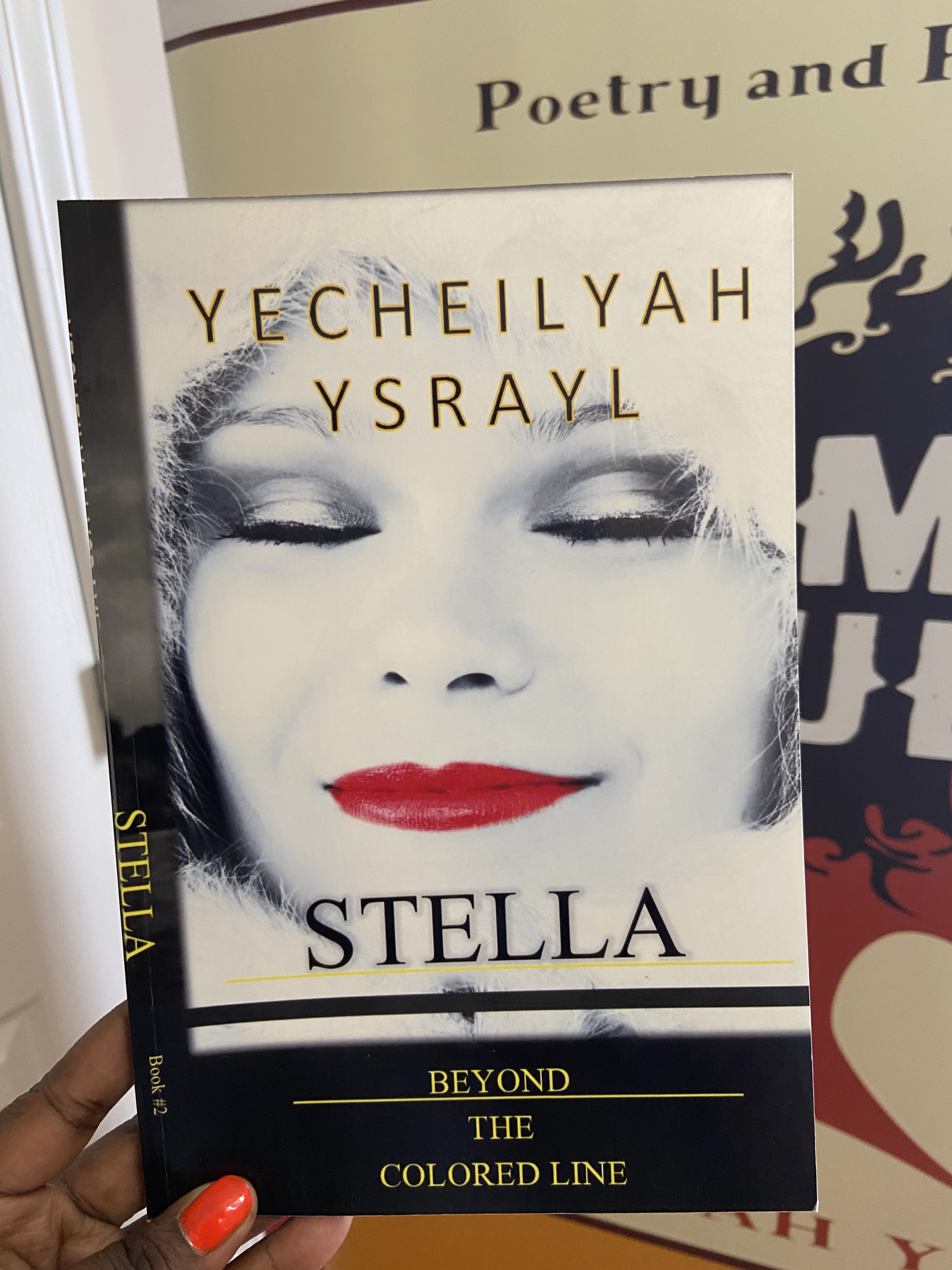
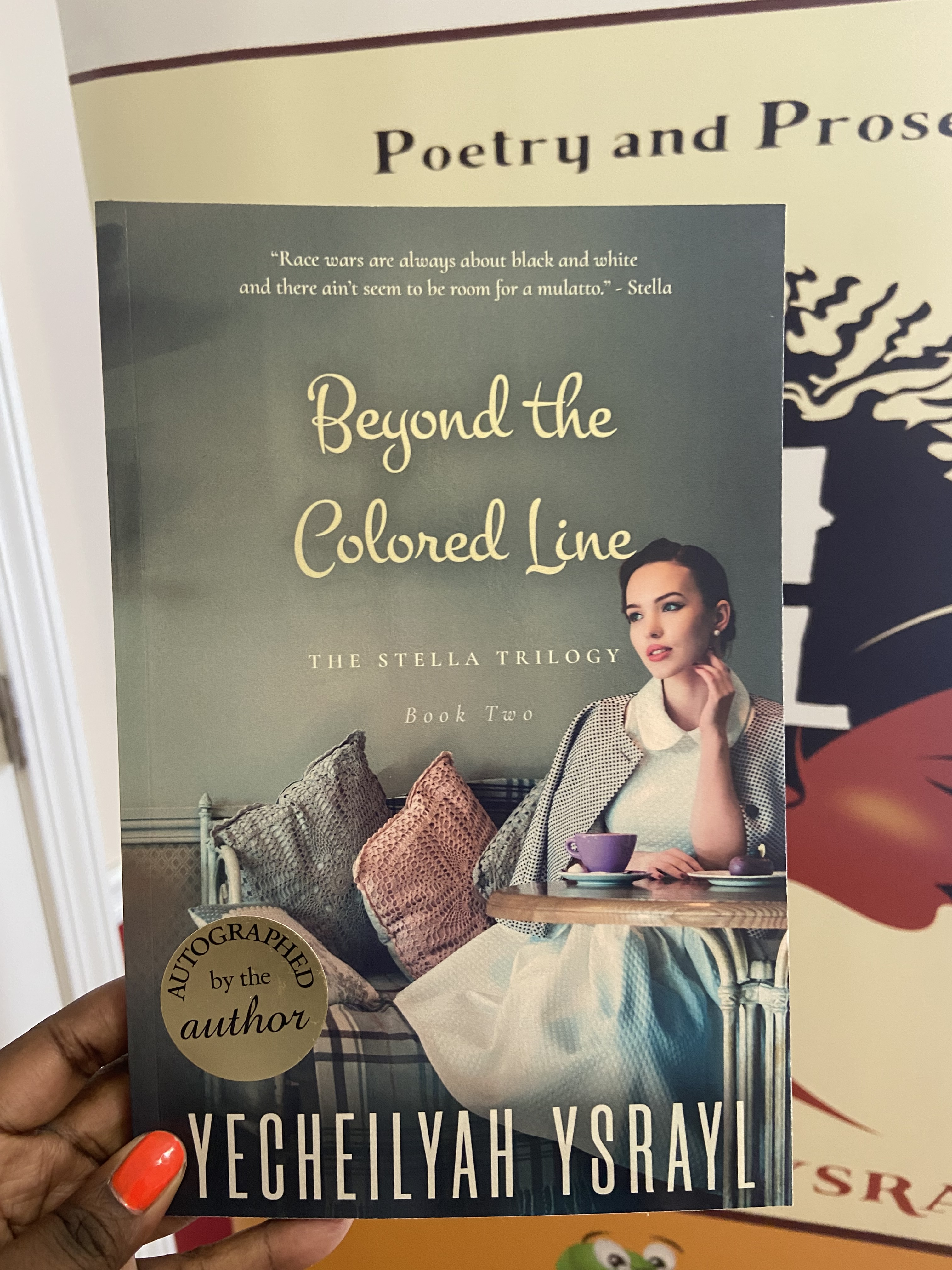
The cover of your book may suffer from a poorly formatted book. Take a look at book two in The Stella Trilogy, first edition.

I actually like the initial cover image. The problem is with the rest of the book.

Do you notice how the spine is twisted? Because the book was too short to have a spine, this occurred. Giving it one, nonetheless caused it to wrap around and face the front.

I didn’t realize the book needed more pages for a full spine because I’m not a graphic artist or skilled book cover designer.

While this cover image doesn’t pop as well as the first (IMO), the book is professionally bound. The alternate ending made the book long enough for a spine in the revised edition. The book features a more professional cover, professional formatting, and professional editing.

Recommendation. Before having your entire cover designed, wait until your book has been edited and properly typeset. Your graphic artist will require the precise number of pages and trim size to create a cover, back, and spine that perfectly matches the book.

Moral. Before hitting publish, make sure to hire a skilled typesetter to correct the placement of your text on the page.

If you want to try it yourself, here are some sources:

  • Reedsy Book Editor
  • Adobe In-Design
  • Microsoft Publisher
  • Vellum
    *Fiverr. Note: Professional typesetters can be found on websites like Fiverr. Make sure they are typesetting rather than just typography, though. Typefaces and other decorative elements make up typography. That’s not typesetting. Additionally, if they are only using Vellum, you can do it on your own by simply purchasing it.

Click Here to Check out More Indie Author Basics

Indie Author Basics streamlines and simplifies self-publishing so you can publish high-quality books without pulling out your hair.

Genuine Connections Will Take You Places Money Won’t

Since we live in a capitalist society, money is the first thing we think about when wanting to go places or do something, and if we don’t have the money, we become hopeless.

And I get it. You need money for everything. Not even a charity can run without funding. What kind of society makes it so you can’t even help people without money?

However, there are two other things we have that can make things easier:

  • Our mind
  • Our connections

Many people ask me about my self-publishing journey, and I can tell you it has been challenging. Nothing about self-publishing is easy, even now. However, what has made it easier is my connections with other people.

December, 30, 2017

When we first moved to Georgia, my husband and I visited the Nubian bookstore in Morrow. Every two weeks or so, we would buy books until we developed a relationship with the owner Marcus. As two nerds, we had no other agenda but to buy as many books as our wallets could afford and our arms could carry.

Two months later, I asked Marcus how I could get my own books into his store. (It had not occurred to me before then.)

To my surprise, we worked out a consignment deal on the spot and put my books on the shelf.

Then, he told me about the Medu Bookstore in Atlanta and referred me to Nia. I submitted I am Soul, which had to go through a review process. 

This is why…editing.

June 13, 2018

A couple weeks later, I got the call that I had passed the review board, and just like that, I was in two bookstores.

While hosting a book signing, I met a guy who told me there was a Barnes and Noble that accepts self-published books. He said I should check it out. I did, and a few moves later, I was in B&N.

Of all the advice I’ve ever given, this is probably the most important:

Building genuine connections and relationships with people can take you places money won’t.

It will allow you to skip steps you would otherwise have taken.

June 16, 2021

Once I am Soul passed the review board, The Women with Blue Eyes didn’t have to go through them to get on the shelves because they trusted me to deliver high-quality work.

In this season, instead of mindlessly scrolling social media, consider ways of leveraging your connections for more growth.

Something to think about.

Check out more Indie Author Basics Here

5 Lessons I Learned from In-Person Networking

Owners / Founders of Upscale Foot Spa

With back-to-back events, it’s been a busy few weeks. Here are some networking lessons I learned so far:

Wear Your Brand

One of the first things I noticed at the AOD (Accountability on Demand) Live business conference was that many people wore their logo, slogan, or tagline on their shirts and clothing. At Poet Fest, one poet even had her name written down her pants leg.

It was a great marketing technique that I had missed. Here I am with a Calvin Klein shorts set on, and everyone else is wearing their own name brands. I went home vowing to get some t-shirts done.

But then, I realized this is not about t-shirts or wearing your name on your clothes.

I probably won’t do that.

Whether you wear your logo figuratively or literally, this is about intentionally showing up for yourself.

Message received.

My shorts set was still cute, though.

Email / Text Marketing Is Prime Real Estate

More than selling books and gaining more social media followers, I have increased my email list substantially over a month.

But why is this important?

Keeping in touch via email and/or text marketing helps you to stay connected to readers you might have otherwise never seen again.

During your book signings, speaking events, and other things, keep either a notebook and pen on your table or a tablet.

Write Email List Sign-Up somewhere and put name and email so they know where to write it.

If using a tablet, have the spreadsheet already open where people can type their information.

People will walk by and just write their name and email, sometimes even before talking to you or buying a book. How is this a good thing?

It gives you the chance to build a relationship with them later. And then, they might just consider supporting your work.

This is also why I encourage Indie Authors to sell books from their author website, to stay connected with readers: because you have no idea who bought your book from Amazon unless they tell you or leave a review you can see.

Social Media is Still King

In 2022, people do not ask for your business card. They ask for your IG handle.

The first draft of this said, “Business Cards Are Still Useful,” and that’s still a lesson I learned as it made it easier for me to give out my contact information and served as a great conversation starter.

And, while I wouldn’t say business cards are dead, they are used differently in the age of social media.

If you are old school, you can take all your social handles and put them on a card. And although people will probably stash these bad boys away in their office drawer like I did when I got home, not before they follow your Instagram, Facebook group, and Twitter.

Social media is not only King but essential considering the current pestilence situation we got going on with Covid and Monkey Pox.

I don’t take pictures wearing my mask because I think it’s weird, but I always have it and my mini hand sanitizer. Please believe it.

The bottom line is, people are online all day, every day more than usual.

This means not being online and using social media is tragic for anyone looking to grow a business in 2022.

How to Actually Network

First, I am introverted. Walking up to strangers and talking to them isn’t my thing. However, I learned that is only a small part of real networking. The other part is to discern how (or if) we can best serve each other.

How can what you do and what I do become a bridge? How can we build on what we build?

That’s what networking is, making connections and building relationships.

Practical example: You are a writer, and there’s someone in your social circle who edits. It would be a good idea to connect with that person. 

But it doesn’t have to be someone who does something similar to what you do, either.

Michael Q. Lau helps you on your journey to health by optimizing your relationship between fitness and food.

Let’s say you have been trying to lose weight, work out and eat better. There is a nutritionist specializing in fitness in your midst. It would be best if you connected with that person and tried to see how to combine your personal goal of being fit with your business goals.

How can ya’ll turn this collaboration into something more?

Follow-Up

Communication is the cornerstone of all good relationships, so keep in touch with people.

Engage with their social media, follow their blogs, check out their services, ask them questions, subscribe to their email list, and so on.

Be present.

Stay safe folks