In Paperback and Amazon Kindle

7339029_1449095221.9709_funddescription

Good morning Lovelies,

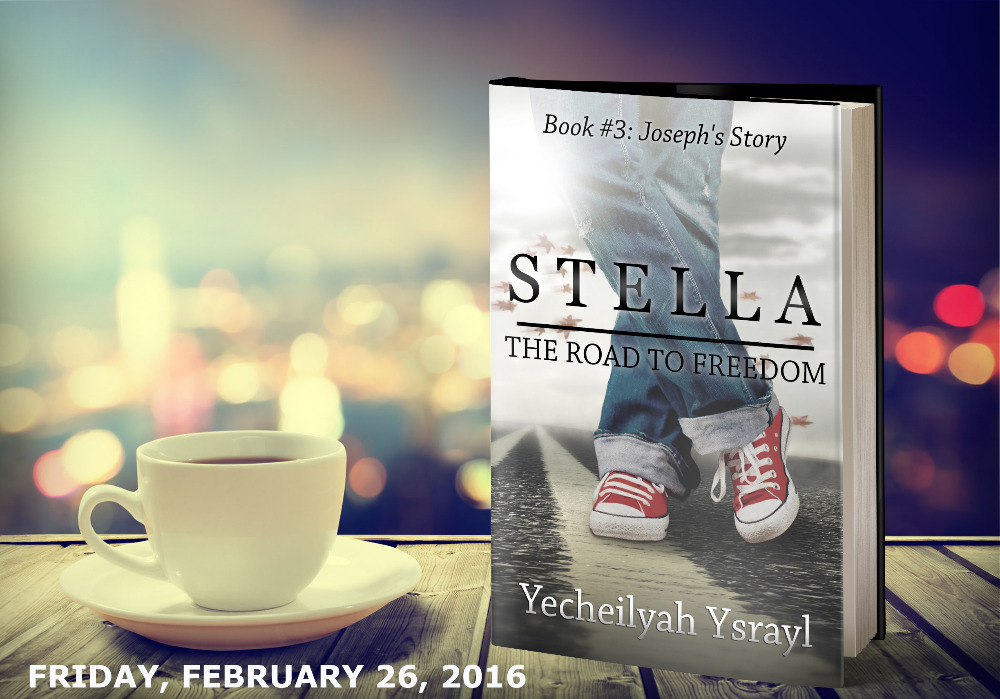
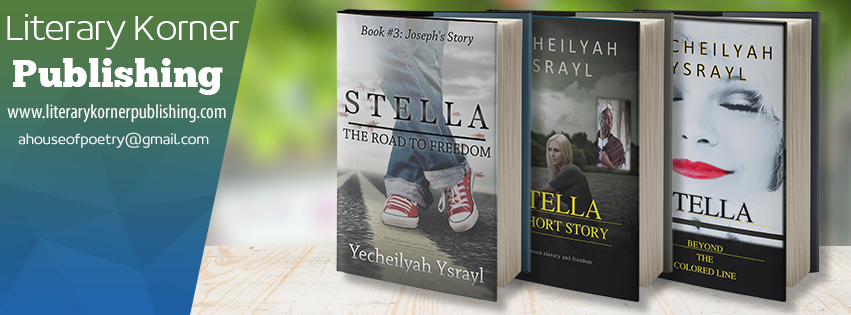
The Road to Freedom – Joseph’s Story is now available in Paperback and eBook on Amazon Kindle. This also means that the Stella Trilogy is complete and all three books are now available on the site, both individually as well as a bundle pack.

In the meantime, don’t forget…. I’m in Atlanta babies!!

file

Meet me in person at The Metropolitan Branch Library at 1332 Metropolitan Parkway from 12noon – 4pm for a signed copy of this book as well as the others in the series.

The Best Way for Writers to Use Amazon’s Preorder Feature

Great info over at Live.Write.Thrive on how to use Amazon’s PreOrder feature. Here are some key bullet points in the article that can help you to make wise preordering decisions (please visit the site for the entire article). Penny C. Sansevieri, Founder and CEO Author Marketing Experts, and best-selling author says:

  • First Time Published Author: If you’re a newly published author, the idea of a preorder probably seems exciting, right? Your book is up on the Amazon site as time ticks down to its release. And while it seems exciting, it’s not advisable to spend a ton of marketing time on the book because you can’t get reviews (though there is a workaround for that), but using this to build a fan base may not be the best idea. 
  • Already Published Author: If you have a book out there (or several), and you’ve built a mailing list of fans, then preorder may be a fun thing to do to build excitement for your upcoming book. 

I would still caution that the lion’s share of your work should only begin when the book is actually ready for purchase. Why? Because unless you are some mega-bestselling author, it’s hard to drive significant numbers to a preorder page.

The other issue is immediacy. If a reader wants something now, they may not want to wait for your book to be ready and will, instead, buy another Amazon-recommended book. Also, this is another reason to keep your preorder time short—which I’ll explain next.

<<<I only gave about 2 weeks for my preorders. Penny explains why you should keep your Preorder time short>>>

  • Timing of Your Preorder: Though I know there are folks who are fans of long preorders, I am not one of them. Amazon allows you up to ninety days, but when I’ve done this, I have found that a month is just about right. That way you can promote it to family, friends, and even your e-mail list, and still build some momentum for it without spending a ton of time pushing a book that no one can read.
  • Promoting a Preorder: Along the lines of what we discussed earlier, I would share this with your followers and your e-mail or newsletter list. If this is your second, third, or fourth book, the interest is going to be stronger than if it’s your first. But even a newbie author should not be discouraged from pushing this to folks who know you to let them know it’s coming. You can do this through images, blog posts, Facebook posts, and Twitter updates.

<<<Don’t Forget The Road to Freedom is available now for preorder at $0.99>>>

  • Pricing Your Preorder: For reasons I mentioned earlier, I would keep your pricing low— even if you plan on raising it later. Why? Well, you’re competing with millions of titles on Amazon and your book isn’t ready (yet), so the immediacy isn’t there. If you want to entice an impulse buy, keep the pricing lower at first, then once the book is live, you can always raise it.

Thunderclap: Day One Results

5507492-120875522_3-v1

Yesterday was the launch of my Thunderclap Campaign as we count down the days until Launch Day. One of the reasons I scheduled it so close to Launch day is because it helps keep the book fresh in everyone’s minds. I also will not have so much online time on the day of release. This weekend coming up is going to be very hectic and I will need the help of my blogging friends and social media buds to help keep the thunder alive online while I handle my thing on the ground.

So my first day and first time hosting Thunderclap went very well! Now, by very well I mean I only reached 6% of my goal lol. But over 10,000 people through social media have at least seen it. We just have to get 94 of them to thunderclap!

That was yesterday. Tonight concludes Day 2 of the campaign and I am now at 8% of my goal with a social reach of 15, 613. I’m really excited about everyone who put their hands in to assist me in this endeavor and I hope that you will continue to spread the word.

Click Here to Support My Thunderclap and Follow Me To Freedom!

Support My Thunderclap!

Have you joined the movement yet? I’ve partnered with Thunderclap to promote Launch Day of the 3rd Book in The Stella Trilogy. Visit my Thunderclap page to donate a Tweet or Facebook status update to help to spread the word of a dynamic story and a shared vision. It cost you nothing but your time. Click on This Link and choose either “Support with Twitter” or “Support with Facebook” or BOTH! Then, add your name to the Thunderclap and on February 26 everyone that has signed up will automatically post on Facebook or Twitter to encourage support of this work. It’s completely safe and will post one message on your behalf.

Right now, you’re probably asking yourself, what is Thunderclap? It’s a new website that allows people to pledge to Tweet or Facebook a message all on the same day–and at the exact same time– in order to achieve the maximum effect.

file

With your help, on February 26th hundreds of people across the country can join us on The Road to Freedom! I’m only asking for 100 supporters! We can do this. Let’s show out! #BloggerSupport #IndieAuthorSupport

Book Trailer: The Stella Trilogy

The Stella Trilogy is a 3 – Part (Short Story) Series about one family and their struggle for freedom against the backdrop of the African American fight for racial justice and equality. In Book One, Stella Mae endures the rigors of slavery. Sidney McNair passes for white in Book Two, and in Book Three Joseph is on a quest for freedom and gets way more than he asked for.

Book #3 Releases Feb. 26, 2016.
PreOrder it Now on Amazon Kindle for just $0.99.

Request e-copies of Books 1 & 2 Free in exchange for an honest review. (email ahouseofpoetry@gmail.com)

“We Slipped and Learned to Read”

5d25a2da4a0c0310961470f064550418

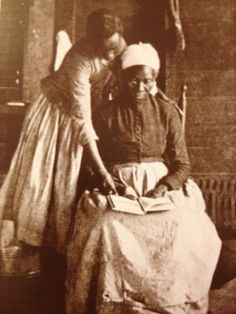
It is common knowledge that slaves were lawfully restricted from learning to read and write. One less commonly stated fact however, was that slaves were not completely ignorant. They could not read and write English but this did not mean they could not read and write period. As strangers in a foreign land, many African American’s had no knowledge of English or even America itself and thus had to be re-educated. Something they were restricted from as slaves.

It was obvious that slave owners understood that their control over the slave had to supersede the physical. To keep a slave in bondage, not just physically but spiritually and mentally, slave owners knew they had to invent a much stronger rope than one that wrapped itself around the Magnolia. To do this, they realized that knowledge is power and this realization became the beginning of slave codes throughout the United States that put restrictions on slaves learning to read and write. This included, most especially, reading the bible.

However, ironically, it was the reading of the bible and listening to the speech of their slave masters (who often spoke openly around blacks they assumed ignorant) that helped coach slaves into the reading process. The law was specific, reading or even teaching reading both had death penalties. Still, persistent as they were, slaves still found a way to by pass the law, slipped, and learned how to read. For many slaves reading and writing meant, if not physical freedom, mental and spiritual freedom. They could use it as a tool to escape slavery physically or write of the horrors of the institution as did many in the famous slave narratives. The following is an excerpt from a writing done by Janet Cornelius and published by Clark Atlanta University on slaves and literacy:

“Despite the dangers and difficulties, thousands of slaves learned to read and write in the antebellum south. Few left traces of their accomplishments, but 272 ex-slaves who told how they learned to read and write during slavery provide insight into the literacy process within the slave community. For slaves, literacy was a two-edged sword: owners offered literacy to increase their control, but resourceful slaves seized the opportunity to expand their own powers. Slaves who learned to read and write gained privacy, leisure time, and mobility. A few wrote their own passes and escaped from slavery. Literate slaves also taught others and served as conduits for information within the slave communication network. Some were able to capitalize on their skills and literacy as a starting point for literacy careers after slavery ended. Historians of education have drawn a distinction between bible literacy, whose prime motive was the conservation of piety and liberating literacy (slaves used the bible to learn to read), which facilitates diversity and mobility.”

– by Janet Cornelius, Phylon (1960-)

Vol. 44, No. 3 (3rd Qtr., 1983), pp. 171-186
Paper Published by: Clark Atlanta University

Williams Wells Brown – Novelist

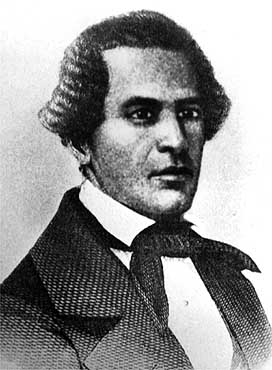
We have talked about some of the first black poets. Now, Williams Wells Brown is considered the first African American to publish a novel (recorded). Brown was born into slavery to a black mother and a white slave owner. Wells served various masters before escaping slavery in 1834. He then took on the name of a Quaker who helped him in his escape, Wells Brown, and in 1847 published a slave narrative, A Fugitive Slave. Brown’s only novel, Clotel was published in 1853 and tells the story of the daughters and granddaughters of President Thomas Jefferson and his slave woman. Wells also wrote a play “The Escape; or, A Leap for Freedom” in 1858, along with other historical writings.