6 Tips To Hook A Reader on Page One

This is really good advice. I’m going to print these bullet points out and check off a list 🙂

Carly Watters's avatarCarly Watters, Literary Agent

I’ve read thousands of “page ones.” Very often I don’t read page two.

Sometimes all I read is that first page and I make judgements based on what I see there. As an agent and a reader my practice is that if I’m not connecting with the material I move on–and quickly.

I wish I had time to give writers (and their books) more of a chance but I can tell a lot by one page: sense of dialogue, setting, pace, character, voice, and writing talent–yes, usually all from one page. Five at the most.

So how are you supposed to get us past one page?

6 Tips To Hook A Reader on Page One

1. Learn how to balance what readers need to know vs. what you, as the writer, want to tell us. I can sense a writer who is trying to show off very quickly. It really only takes…

View original post 582 more words

Self-Publishing: Target Markets

target-markets

Though it’s a lot of work, one of the many reasons I chose to Self-Publish is the control. One thing that I did not want is to be categorized. If for whatever reason I chose to include biblical text or any spirituality in my writing I did not want my work labeled Christian Fiction or anything unrelated to the kinds of books I represent even if it did contain biblical insight. I use this as an example to show that what I wanted was to produce books according to how I was being led and to not be held back by society’s precepts or interpretations. This does not, however, exclude me from the discipline this field requires, one of which is identifying target markets.

What is a Target Market?

A target market is a specific group of consumers at which a product or service is aimed. This group of people would also be referred to as your target audience. They are the group of people who your work is specifically targeted to. In this way, you can position yourself to be around this group of people off and online more so than any other group because they are the people who are interested in the kinds of books you write or rather, the kind of service you provide.

An example of Target Markets, according to an example given by Google is: “Schools are a key target for apps.” Why is this so? Education and how children learn is evolving just as quickly as technology. The aged old chalkboard is really not as effective in my opinion as interactive whiteboard systems. That said computers and teaching go hand in hand. In this way, schools are one of the major institutions who could support many of the learning apps available to be used in the classrooms. So for app developers, schools are a key target market meaning this is a group that they strive to appeal to in their promotions as the most likely to purchase their product. But to go further, they can break schools down into what kind of schools they are targeting. Public? Private? Magnet? Charter?

The easiest way to break down a Target Market without the confusion is to think about the kinds of readers who are interested in the kinds of books you write and to break these groups down into their smallest group. You can start broad but try to get it down to the most specific group possible: For example:

Women readers between the ages of 18 – 45. To define this further, I may choose to target online fiction readers of African American ancestry who are interested in history and short stories. This market can be broken down into two-three niches: online short story readers, historical fiction readers, and African American women readers. This example can also be broken down even further but I suppose we pretty much get the point. This does not exclude men from having a target market does not leave out everyone else, but it helps you to closely market your books to a group who, more so than others, will support it.

Everyone

Target-Audience-Promotional-Audience

Although technically speaking anyone who desires to make a profit is targeting everyone, everyone is not a Target Market. It is very unlikely, especially as a Self-Publisher, that everyone will buy your books. That said you have to break reader groups down into the most specified group possible and that’s basically what a Target Market is if you strip it of all the technical language. You are pointing to certain consumers and saying “I choose to market my product to you because we share the same interest.”

While I am still striving to understand the business side of publishing myself, I do know that Indie Authors must realize that their goals should be directly related to their purpose, but that this does not exempt any of us from basic business knowledge and implementation. Meaning that despite passion we still have to target a specific group of people because they are going to be the ones to support our work. We have to do this more so than anyone else because of the stigmas that, though fading, still exists for Self-Publishers. To determine your Target Market, ask yourself:

  • Who are my current customers?
  • Why do they buy from me?
  • Which ones bring in most business?
  • What characteristics and interest do they share?

Self Published Books and Libraries: How to Get Your Book onto Library Shelves

Great Info on Self-Publishing and Libraries.

readers+writers journal's avatarreaders+writers journal

 What Indie Authors Need to Know About the Library Market

By Jane Friedman via Publishers Weekly

It has become a cliché to talk about how e-book distribution has leveled the playing field for indie authors and made the publishing environment more democratic. But accessing the library market remains somewhat more difficult for single authors with just a few titles.
While indie authors can gain some access to libraries by making their books available through major library distributors, that doesn’t mean that those books will be purchased. In many ways, getting self-published titles into libraries hasn’t changed since the e-book revolution: authors still have to prove that they have quality products that fit the collection. And, unfortunately, authors still face the stigma of self-publishing: there’s a long history of patrons offering to donate handwritten poetry collections or memoirs to their libraries.
Though some libraries work with their communities to publish…

View original post 307 more words

Guest Post by @PSBartlett The Kind of Writer I Want to Be.

Excellent post. I really enjoyed reading this. My favorite line: “I don’t want to write about what everyone else is writing about. I don’t need to sit at the cool kids table to feel good about myself.”

Ronovan's avatarronovanwrites

Hello everyone,

Some of you may have heard that I have a book on schedule to be released around Christmas. It’s my debut novel, written with an author by the name of P.S. Bartlett. A book related to that novel is being released Oct. 5. It’s called Jaded Tides and it is book 2 in the pirate tales series and the third book leading up to her amazing Blue Diamond: The Razor’s Edge that I absolutely loved so much that Bartlett and I became friends and ended up writing a book together. Here today is a guest post by my partner in print. Over the next few days you will be seeing several posts about her here on Ronovan Writes. Now, onto our guest post today by Award Winning Author, P.S. Bartlett.

P.S. Bartlett AuthorThe Kind of Writer I Want To Be

I’ve believed since I dedicated myself to this journey two…

View original post 958 more words

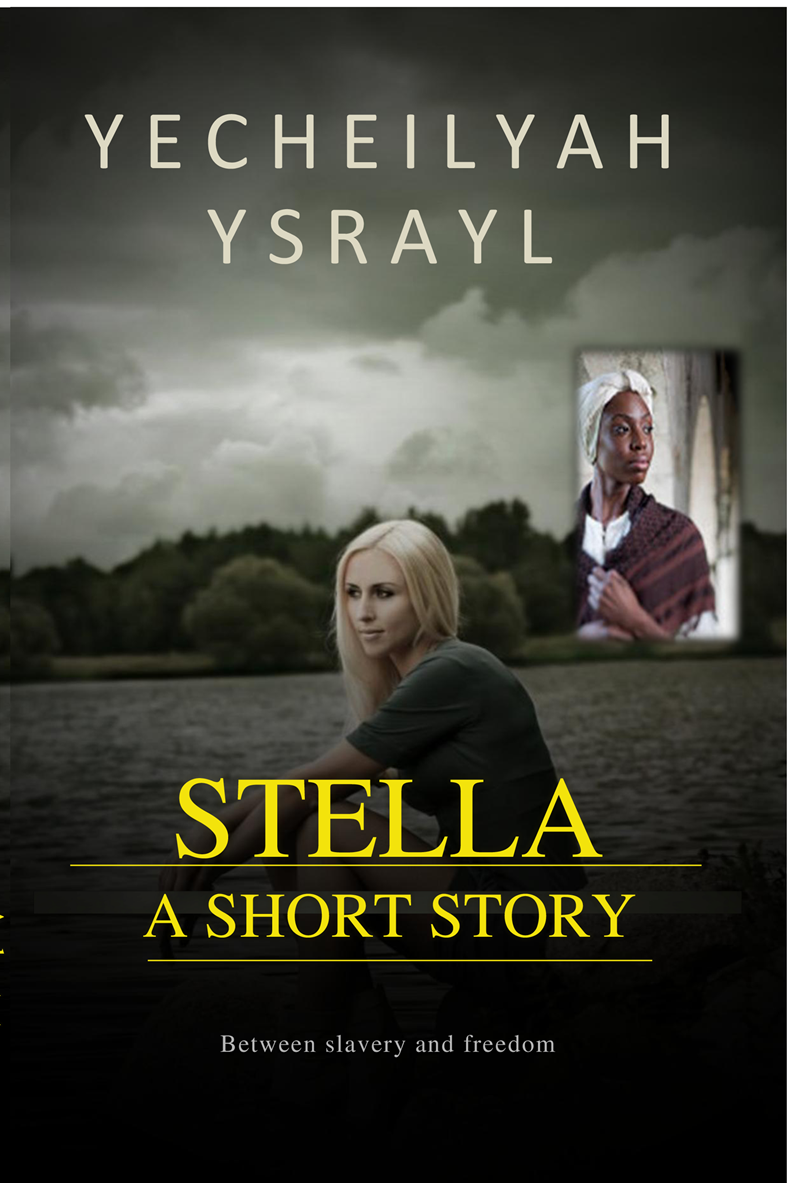
#Book #Review Stella Book 1: Between Slavery and Freedom by Lisa Tetting

Stella front

Stella is a story that resonates with me and challenged the sensibilities of people who judge others based on the color of their skin. It starts with Cynthia and her boyfriend Alex discussing the fact that Alex is not as invested in the relationship as she would like for him to be. Cynthia wants him to meet her beloved grandmother Stella, but he is not amendable. They instead go to an after-hours spot to get something to eat and meet up with a friend in the parking lot. It becomes apparent that both Alex and Cynthia strongly dislike black people.

Eventually, after some months Alex agrees to meet the grandma. We are introduced to a charming elderly lady in her 80s who loves her granddaughter, but dislikes the boyfriend. Stella overhears them talking negatively about blacks and decides they need a history lesson, more so for her granddaughter than the boyfriend. We find that Stella was named for her great grandmother who was a former slave. We hear the trials and tribulations that she endured during her life on the plantation, the heritage of her family and how it came to be they eventually became known as a Caucasian family.

Cynthia’s world is turned upside down with the knowledge that she is black and Alex abandons her as a result. The lesson in this is we are all tied together in some way and God did not intend for humans to be separated simply based on skin tone.

After the story is over, the author provides a history lesson for us about the existence of slavery in the North and the misinformation we are prone to believe. She also explains how slaves chose to change their names after being set free with some great examples to back it up. – Lisa W. Tetting, Author, Blogger

**************************

Wanderlust
Books 1 and 2 of The Stella Trilogy are available now:
literarykornerpublishing.com

*Buy 1 Get 1 Free!*

*Buy Stella Book #2: Beyond The Colored Line in paperback and receive a FREE download of Between Slavery and Freedom*

New Facebook Page

file-29

Hey guys,

I have set up a new Facebook page to help navigate you to my Author Website. I would like to fill my PBS Blog timeline with more blog material to be on accord with this blog instead of using it for everything.

For this reason you can stay in touch with my publishing projects through it’s own page.

Your support is most appreciated and a widget will go up tonight when I return from errands with the hubby.


Like Literary Korner Publishing by following this link:

http://www.facebook.com/literarykornerpublishing


Thanks a million! 🙂