Writing and Financial Stability – The Harsh Reality

2015-01-29-ineverwroteformoneywarrenadler

When I was in the eleventh grade, Mrs. Labno, my AP Lit teacher, gave us our end of the year assignment. We were to write an autobiography or rather, a condensed version of where we saw ourselves as adults. I still have that paper today and looking back on my own words I laugh. I was a trip. Having written it at sixteen and to be a published author today makes me feel two ways:

(1) I’ve kept my eyes on the prize, pursued my dream and made it a reality. Unlike many who evolve into wanting to be a writer, I’ve wanted to be an author since I was twelve. My career choice has never changed.

(2) I can see what my teacher was talking about and will be forever grateful for her insight about what I’d then rolled my eyes to, which was this:

When Mrs. Labno, the little lady whose students towered above her, saw that I wanted to be a published author with the big house on the hill and white picket fence, she was the first to give me the realness about money and writing: “You may want to do something else on the side.”

“What?” my sixteen-year-old self, rolled my eyes and concluded that Mrs. Labno didn’t know what she was talking about. I was brilliant, obviously. Who did she think she was to say that my dreams weren’t going to come true? Just wait until I publish my first book and it hits The New York Times Best Sellers List. I’ll show her.

Of course, I was at the age where we knew “everything”. This was also years before Amazon and Kindle so my aspirations were to be published the traditional route and I had no idea of queries and agents back then. In fact, I knew little to nothing at all. Except that I was going to be a famous writer.

Fourteen years and eight published and two unpublished books later I’m still waiting.

Though not talked about often, financial stability is the elephant in the room and a huge determinant for writers who consider doing this full time. By full time I mean to write exclusively, as in not having other streams of income. What’s frightening is that many ambitious writers do the unthinkable. They decided to Self-Publish a book so they quit their jobs and waited for the money to start pouring in. They are still waiting.

Is it possible to make enough money writing and publishing books that you can do it exclusively? Absolutely. Is it possible you will go broke quitting your day job after publishing your first book? Absolutely!

Mrs. Labno wasn’t saying that it was impossible to make enough money as a writer to live, but she was saying that it will take lots of time, hard work, dedication, and many books before an author sees the kind of return that will give them the comfort to quit their day jobs (Exception: write a killer book that gets you a major book deal from which you then start your own business and then live happily ever after).

Mrs. Labno was telling me that I should not put all my eggs in one basket, that I should have something else on the side that can help contribute to my income until my writing takes off instead of rely on writing alone. Thanks to her, I didn’t come into this field with the mindset that I’m going to make lots of money and neither do I write for these reasons. In fact, before I graduated college I started work as a Phlebotomist while I was writing. Because of this piece of advice, I didn’t come into this naïve and saved myself some heartache and guess what? I want to save you the false financial expectations too.

“As I’ve said many times before, most authors will be lucky enough to make enough from their writing to cover out-of-pocket cash expenses, let alone any kind of a profit at all. I’ve argued long and hard with those who express disappointment at the meager return they’ve seen, if any, for all their labor, but I am going to repeat again here—money should not be the reason you write or publish.” – Susan Toy

If you have not listened in at The Publishing Success Summit (Comprised of 65 Book Industry Experts – Published Authors, Author Platform Mentors, Designers, Editors, Literary Agents and Publishers) at the close of last year that I am sure you’ve seen floating around WordPress, then you have missed out. Well, sort of. I’ll be quoting some of those people in this article. Speaking of quoting, multi-millionaire Tom Antion’s interview was the most real to me. In it he said:

“Books are the high credibility. If you’re an author people give you credibility. But the bigger money is in the CDs, the coaching program, and the mentor program, and all the other stuff that you can sell.”

I’m not going to say successful authors because you don’t have to make lots of money to be successful. Instead I’ll say authors who are well off financially, do not just write books even if they did get that book deal. They may go on to:

  • Open and run their own publishing house
  • Travel and speak
  • Found their own product line of things outside of books

Sometimes credibility can create a deceptive view of an author’s financial success. What I mean is that sometimes for those of us who aren’t where we want to be, it’s easy to look at someone we perceive as “doing it” and think they’re making  a lot of money. It’s the reason you don’t ever compare yourself. You don’t really know how people are doing or what they really know. They can be far behind what you perceive or admire you when you think you are admiring them. Sometimes you can say something to someone assuming they don’t know anything and it turns out they are a well of information. Don’t assume people don’t know what you know and don’t compare your success to someone else. Stay humble.

Anywho, a lot of stuff looks good on paper but when it comes down to what authors actually make that’s when it becomes apparent most writers don’t make much.

Too many people are not being real about book publishing. Instead, we’re recycling information like vacuums and leaving out the realness. The truth is that everyone has bills to pay and unless you can pay your mortgage or rent, light bill and Comcast bills (they be tripping with those prices smh) off the back of your book sells alone, you may not want to quit your day job. It’s no different than starting any other business. The exceptions are:

  • Someone invests some serious money into your writing career. Like say if EC happens to meet and impress Oprah *Waves to Oprah* 😉
  • A Spouse who makes enough to take care of the both of you while you get your career off the ground (Can you say a blessing??).
  • You already own a business or receive government funding (retirement, SSI, Disability) that brings in considerable income.

Unless you are in one of these categories I mentioned, if you quit before you have a financial plan in place that will help you to live until your writing takes off, then you will have to beg people to buy your book just so you can put food on the table and unfortunately for you, book buying is not like other businesses.

It’s a lot more work to get someone to sit down and invest their time in reading a book than it is to convince them to buy a bar of soap or try this new recipe which is the real reason it’s hard to get reviews to be honest. People must invest their time into reading your book which tends to be a lot more expensive than money. If it does not look interesting no one will take a chance on it. It’s simply just a waste of their time. I don’t want to sound discouraging here but that’s just the truth. People will always put their happiness first. Before me and before you. Sad, but true. At the end of the day people are out for themselves.

Authorpreneurship

In my own journey to self-sufficiency, I’m learning that the best way to make a real financial gain from writing is to not just focus on writing and publishing books alone but to also consider what I can offer readers that are beyond the book. This has led to what is now being called Authorprenuership, or the combining of writing books with a business model.

Since writing books is a business, Authorprenuership is something that should be second nature for writers but unfortunately for many of us, it’s not. Instead, we tend to learn about Authorprenuership after the book is written instead of years before. Though a new term, Authorprenuership is the common business sense that’s been around forever. The term is new, the concept is not. It includes, but is not limited to:

  • Paid Public Speaking Engagements
  • Monetized Blogs
  • Podcasting
  • Videos
  • Online Courses
  • Radio Show Appearances
  • Coaching Programs
  • Mentoring Programs
  • Small Publishing Companies
  • Products such as Bookmarks, Coffee Mugs, T-Shirts, Ink Pens, Notebooks

The idea is to secure other streams of income around the book.

I wrote this article weeks ago, and it has sat in my Blog Post folder on my laptop for some time. After reading it repeatedly, I hesitated to publish this because I’m still on my own journey and I really wanted to make sense to you before presenting this information. It wasn’t until yesterday, while preparing for a radio show, that I decided to blow the electronic dust off this article and get it out of the drafts folder. While scrolling through twitter I came across Income expectations for self-publishing authors by Lieze Neven. I’m a big component of confirmations (meaning that when I pray on something I wait until the answer is confirmed before I act. A man may plan his way, but it is YAH Almighty that orders his steps, but I digress) and this was another one of the many articles I’ve come across about writers and finances. In it, Neven  provides a breakdown on how much authors make on Amazon and the rankings:

  • Most books on Amazon sell LESS than 10 copies a year. If you would price your book at $0.99 this would mean you get $3 per book per year. Auwch.
    At least 90% of the books on Amazon will make LESS than $100 a year says John K.
    A small handful of books, not more than 1000 – will hit the gold mine.

Here’s a breakdown of the Amazon ranks and what they mean.

Rank = 10: Avg daily sales to maintain rank = 1,289
Rank = 100: 191 daily sales
Rank = 1,000: 28 daily sales
Rank = 10,000 : 4 daily sales
Rank = 100,000 : 0.6 daily sales.

Even if these numbers aren’t exact, you get the point.

“Is it Worth It?”

I noticed in Liezen’s comment section that someone said that if these numbers are true then it’s not worth it except as a hobby. I disagree. Writing is always worth it!

Here’s the deal: Where do you want to be? What do you want? Imagine it. Write it down. Pray on it. Work toward it. Prepare for it. In the words of Oprah:

“I don’t believe in luck. To me luck is preparation meeting the moment of opportunity.”

What she said. Even though you may not be making the kind of money you want to right now see right now as an opportunity to prepare. You don’t want to wait until the door is open to have things together. You want to have your business plans and everything already in place when that moment comes, not scrambling to adjust. You want to have an engaging blog, engaging social media, book reviews, someone somewhere other than yourself talking about your work BEFORE the opportunity arrives. You never know who is watching you, reading your blog posts, your social media, or your author website.  So prepare for your time to shine.

  • Have a professional author photo across your social networks
  • Have business cards
  • Have an author website
  • Have a blog
  • Have an email list
  • Have a business plan
  • Have an author media kit or portfolio
  • Have book reviews
  • Have bookmarks showcasing your book covers
  • Have author interviews and guest posts
  • Host live book signing events and take pictures. Add this to your portfolio.

Have something ready to show that special someone that you are already working. Be professional. Be ready. (And authors? Please don’t leave a review or rating of your own books! As much as possible, let others do that kind of thing for you.)

Thirteen revisions and many weeks of putting it off later, I decided to put my big girl skin on and publish this post because I think it’s time we start being all the way real about the financial aspect of Self-Publishing. Yes, this is a great time to publish a book but in the words of Nina Amir, the marketplace is flooded, and flooded is probably an understatement. The marketplace is a Hurricane Katrina of books. If I throw a penny into the sea, unless that’s a special penny, it’s not going to make any dents. This means that unless you are willing to do the work (producing an excellent quality book, writing the book, promoting the book, building platform, speaking networking, blogging, etc.) then people will forget you.

I hope this has been helpful for those considering this route. Writing and publishing is both exciting and liberating but before quitting your day job remember, it takes time and security of multiple income streams to be able to be realistically financially independent. It takes establishing strong author platforms and building a business model around the book you wrote. The book is important because it gives you credibility and authority, establishing you as an expert on your topic. What gives you money? All those other things.

The moral of the story?

Don’t come into this hoping to make lots of money out the gate. That takes time. If you’re writing specifically for financial gain writing and publishing books is not the place for you. You’re in the wrong field.


Yecheilyah Ysrayl is an author, poet, blogger, book reviewer and author of “Renaissance: The Nora White Story (Book One) and other works. For updates sneak peeks of other projects, nuggets and tidbits, video tutorials, writing inspiration, and more, be sure to follow this blog and to subscribe to Yecheilyah’s email list HERE.
Black History Fun Fact Friday – The Chicago Black Renaissance

black-history

Many of us have heard of The Harlem Renaissance, the literary, musical, and artistic movement that exploded during the 1920s in Harlem New York. Also known as The New Negro Renaissance, the New Negro Movement, the Negro Renaissance, and the Jazz Age, the Great Migration of blacks from the south to northern cities like New York produced a national movement centered around black culture and tradition.

Music, poetry, literature, art, and theatre was brought to the mainstream from a black perspective in a huge way. Magazines such as The Crisis (the NAACP monthly journal) and Opportunity (the monthly publication of the Urban League) employed Harlem Renaissance writers on their editorial staff, published their poetry and short stories, and promoted African American literature through articles, reviews, and annual literary prizes. Names like Alain Locke, Langston Hughes, and Zora Neale Hurston come to mind.

However, though termed Harlem Renaissance, the time was much more complex than Harlem itself (which in many ways can make it hard to define). While standing as the anchor for the movement, Harlem was just one piece of a much larger puzzle. Across the United States and the Caribbean, The Renaissance was taking place. In fact, only some of the writers, musicians, and artists were native to Harlem itself. The Renaissance did not just happen in Harlem but a Black Metropolis was brewing in other big cities as well, such as Chicago.

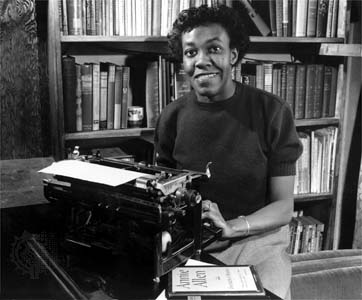
Gwendolyn Brooks
Gwendolyn Brooks

As the Harlem Renaissance was winding down, The Chicago Black Renaissance was getting started, or rather, continuing. Creativity and activism was blooming from the great number of blacks coming up from the south to escape Jim Crow and The Great Depression. While it’s true many blacks did not suffer as much during the depression due that many of us were already struggling (having been depressed since we got here) there were some who came to Chicago from southern states like Mississippi and secured well paying jobs that were no longer available. While at first blacks could work at factories, meat packing places, and steel mills, the great depression shut this down.

Blacks were also dealing with extremely poor living conditions and fighting housing discrimination. As more and more blacks moved to Chicago the city was also still getting a large immigrant population pouring in from Europe so there was always competition for jobs and since segregation was in full effect, many blacks found themselves at a loss. However, there is great beauty that often springs from the depths of struggle and The Black Mecca of Chicago’s South Side was quite literally a diamond in the rough.

The black belt of Chicago’s South Side, as it was called, was the location for such diamonds.  Jazz, Blues, and Literature flourished as an outlet for blacks to voice their discontent not only about the city but also the whole of the black experience in America in general, and when Gwendolyn Brooks passed a pool hall in a Chicago neighborhood and took notice of a group of young men standing around, “We Real Cool” (a poem that speaks from the point of view of these seven young men, see my analysis of the poem here) was born. Chicago exploded in culture from the 1930s through the 1950s and the south side remains the most cultured part of city today.

Music, art, literature, and journalism were all part of The Chicago Renaissance. Though never deemed “Chicago Renaissance” officially, there are many who contributed to the movement whose names we’ve grown to know. The writers: Richard Wright (born in Mississippi but moved to Chicago in 1927), Frank Yerby, Margaret Walker, Willard Motley, John H. Johnson (publisher of Ebony), St. Clair Drake and Horace R. Cayton (who later co-authored Black Metropolis), Gwendolyn Brooks, Arna Bontemps, and Lorraine Hansberry; entertainers Nat King Cole, Ray Nance and Oscar Brown, Jr.; dancers Katherine Dunham and Talley Beatty; photographer Gordon Parks, and the artists Elizabeth Catlett and Hughie Lee Smith.


Yecheilyah Ysrayl is the YA, Historical Fiction author of eight books, most notably The Stella Trilogy. She is currently working on her next book series “The Nora White Story” about a young black woman who dreams of taking part in The Harlem Renaissance movement and her parents struggle to accept their traumatic past in the Jim Crow south. “Renaissance: The Nora White Story -Book One” is due for release summer, 2017. For updates on this project, sneak peek of chapters and the pending book cover release for this project, be sure to follow this blog and to subscribe to Yecheilyah’s email list HERE.
How to Write With Authority Even If You Have Doubts

Feeling doubtful? Read this! Post Quote: “…the impostor syndrome is actually associated with high-achieving people! If you have those feelings, you may actually be more successful than you perceive yourself to be.”

*Comments Disabled. Please comment on the original post*

Black History Fun Fact Friday – The Fultz Sisters

black-history

As a twin, I could not help but be attracted to this story, and as I studied their life in preparation for writing this article, it wouldn’t take long for me to see the red flags. From the media perspective, you’d think the quads and their families were wealthy, with a house on 150-acres of land and the live-in nurse.

This couldn’t be further from the truth.

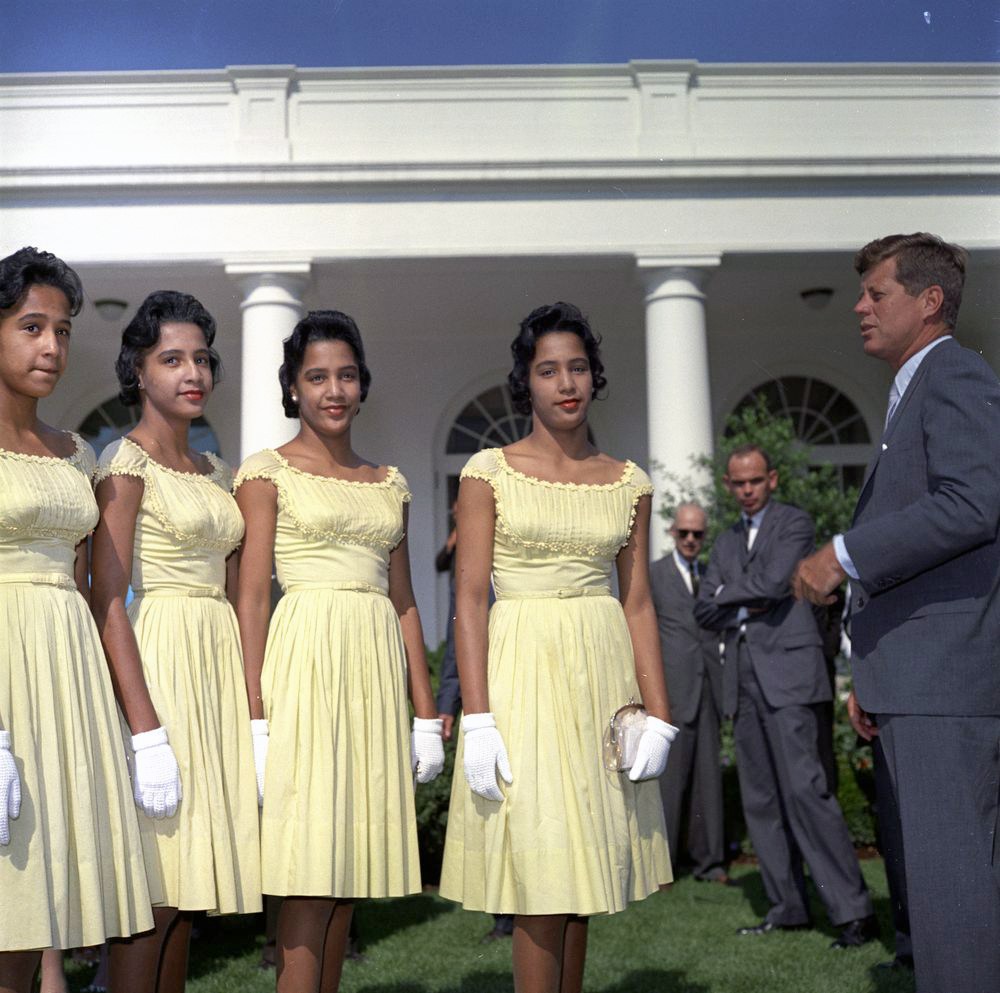
19a5122c74098a54eab59283a181042bMary Louise, Mary Ann, Mary Alice, and Mary Catherine were born on May 23, 1946, at Annie Penn Hospital in North Carolina. Known as “The Fultz Quadruplets,” they were the first recorded identical black quadruplets globally and the first set of quads to survive in the South.

If the fact they are all named marry isn’t weird enough for you, their white doctor, Dr. Fred Klenner, delivered and named the girls after women in his family. His wife, Mary Ann, his aunt Mary Alice, his daughter Mary Louise and his great aunt Mary Catherine.

The girls were born at the segregated hospital wing, which was really just the basement. Mr. Fultz (whose name was James, not Pete as he was called) was a Sharecropper, and Mrs. Fultz being both deaf and mute, couldn’t read and write according to “And Then There was One” by Lorraine Ahearn, (August 2002). Besides this, the Fultz’s had six other children without a car, electricity, phone, and running water.

Thus, they didn’t debate when Klenner negotiated a deal with a Pet Milk Company that paid all medical expenses, food, land, a house, and a live-in nurse to care for the girls. All of this was in exchange for using the girls for promotional purposes. Klenner even created a schedule where people could come and visit the quads, who were put on display behind a glass screen.

world-famous-fultzPet Milk sales skyrocketed as the girls helped to brand the product, becoming the face of Pet Milk. Pet Milk?

“And so it was that the Fultz Quadruplets left Annie Penn Hospital: under contract, named after their white doctor’s relatives, headed home to a glass-enclosed nursery and driven there in a pair of McLaurin Funeral Home ambulances.”

– Lorraine Ahearn

Blogger Ladyrayne on Talking Stuff, who wrote a post on the Quads after listening to The Tom Joyner Morning Show last year wrote, “According to Edna Saylor, the nurse who worked at the Annie Penn Hospital and who would eventually become the quads legal guardian, the farm that was given to the Fultz family really didn’t amount to much and PET could have done a better job when it came to helping the Fultz family. Ms. Saylor stated that PET took advantage of the Fultz family because they were considered backwoods type of people.”

The Quads were adopted by Charles and Elma Saylor, who moved them to Yanceyville, and their travels became more frequent. They flew to Chicago at the invitation of Ebony publisher Johnnie Johnson. He featured them on his cover four times, appeared in Chicago’s star-studded Bud Billiken Parade, went on TV with Roy Rogers and Texas Pete, and would go on to appear in many more ads and make TV appearances. At thirteen (1959), the sisters performed as a string quartet in the annual Orange Blossom Festival in Miami, Florida, and at sixteen (‘ 62), they were featured in a Pet Milk ad for an autographed picture. Many remember them most from their visit to meet Presidents Harry S. Truman and John F. Kennedy.fultz-quads

fultzquads1

Pet Milk became the first to offer nonfat dry milk, an advance over the powdered milk developed in the 1920s. Sales soared when Pet Milk took advantage of the post-war baby boom and promoted The Fultz Sisters, a national sensation due to their rarity, making 1950 the all-time-high sales year for Pet Evaporated Milk.

“For no matter what the public thought, the highly publicized Pet Milk advertising contracts had brought in just enough money—$350 a month— to keep the Fultz Quads off North Carolina’s welfare rolls.” (Chares L. Sanders, Ebony Magazine, November 1968)

Sadly, all the Fultz sisters developed breast cancer later in life, with only one sister who survived it (Mary Catherine).

SOURCES:
EBONY, “The Fultz Quads” by Charles L. Sanders, Nov. 1968.

Ebony’s Spread on the Sisters can be found on Google Books HERE (Page 212) (Its cool going through the Ads from 1968 too!)

News & Record

http://wc.rootsweb.ancestry.com/cgi-bin/igm.cgi?op=GET&db=caswellcounty&id=I37423

“And then there was one” by Staff Writer Lorraine Ahearn, Aug. 2002.

http://www.roccomanzi.it/IMP-VITAMINERALI/SCIENZIATI/scienziati-docu/klenner/FultzQuadswasone_file/FultzQuadswasone.htm

Talking Stuff Blog

https://talkinstuff.wordpress.com/2015/06/10/the-fultz-quadruplets/

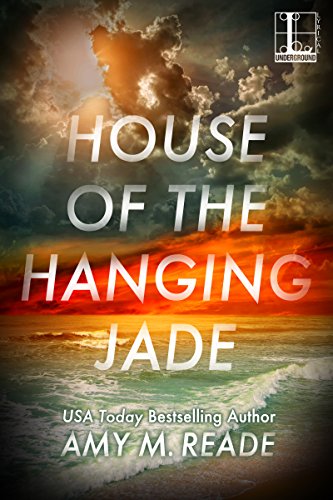
Yecheilyah’s Book Reviews – House of the Hanging Jade by Amy M. Reade

Title: House of The Hanging Jade

Author: Amy M. Reade

Print Length: 246 pages

Publisher: Lyrical Underground (April 26, 2016)

Publication Date: April 26, 2016

Sold by: Penguin Random House Publisher Services

Language: English

ASIN: B0138NHCMO


Not willing to cope with Washington’s brutal winters, Kailani breaks up with restaurant owner Geoffrey and leaves her job to return home, returning to the warm weather and beauty of Hawaii, black sand, and the curling waves of the Pacific Ocean. In preparation to return, Kailani searches for employment and secures a position as personal chef to Lars Jorgensen, owner of Kaimana Surf Company, and his wife, Dr. Barbara Merriweather, on the West Coast of the Big Island in the district of North Kohala.

When she arrives, the Jorgensen’s house is beautiful, and this sous-chef is ill-prepared for what awaits beyond the lush tropical gardens of palm trees, midnight jasmine, red ginger, and pergola laden with hanging Jade. As Kailani settles in, a series of events begin to unfold that question the stability of the Jorgensen household. First, Lars and Barbie don’t seem to like each other much, which could have something to do with Barbie’s roaming eye.

When Barbie asks Kailani to make more nutritious meals to reduce her family’s craving for junk food, the kids dislike Kailani’s healthy cooking. Nevertheless, this is not the full scope of Kailani’s issues. As Geoffrey relocates to Hawaii to be with her, things start to become strange, and a body is discovered on the Jorgensens’ property.

I liked reading about the kinds of meals Kailani would make for the family because she is a chef, especially as she started to get inventive to convince the kids to eat healthily. I got a sense of Hawaiian culture through it.

I also like how the plot focuses on this one family. That gives the story a TV show feel, which I like. Whenever I put my Kindle down, I think about what I will read in tomorrow’s House of the Hanging episode. The Jorgensen’s are off the chain.

What’s really going on in the house with the hanging Jade?

Ratings:
Plot Movement / Strength: 4/5
Entertainment Factor: 4/5
Characterization: 5/5
Authenticity / Believable: 4/5
Thought Provoking: 5/5
Overall Rating: 4 / 5 stars

House of the Hanging Jade is available  now on Amazon!

51zd4bwadxl

Be sure to contact this Best Selling Author at the links below!

Amy can be found online at the following places:

Website: www.amymreade.com

Blog: www.amreade.wordpress.com

Goodreads: www.goodreads.com/author/show/8189243.Amy_M_Reade

Amazon: www.amazon.com/Amy-M.-Reade/e/B00LX6ASF2/ref=ntt_dp_epwbk_0

Facebook: www.facebook.com/groups/AmyMReadesGothicFictionFans/

Twitter: www.twitter.com/readeandwrite

Pinterest: www.pinterest.com/amreade

Instagram: www.instagram.com/amymreade

************

bitmoji-926110877

The First 300: How I Reached 300 Blog Followers in 3 Months

blogging

I don’t know what it is this week but I’ve been in a blog subject type of mood. Every article post idea has been about blogging. Could be the excitement still emanating from my radio show feature with Annette earlier this week –listen here- or it could be the excitement over reaching the 1,000 subscriber mark (and the crowd goes wild…. or not), but I thought I’d share my first experiences as a new blogger two years ago.

I started this blog in 2014. This post’s conception was thinking back to the early days, where I praised reaching three hundred and four hundred followers. It was fun! I even monitored the international support I received, and I was really excited about it, and I suppose before we get into it, gratitude is the real first bullet-point. My focus was on my own growth, and I celebrated that increase regardless of how other bloggers were doing.

My first blogging experience with The PBS Blog, specifically, got off to a good start, and I managed to reach 300 followers in my first three months. Here’s some of what I did. Will it work for you? Possibly, but everyone has to find their own way eventually. These points are just here to give you a start and some encouragement.

1. Resurrect Old Writings

When I started this blog, I was still blogging on WordPress under a different account. The name of that blog was A House of Poetry (you can find my silly post about cheating on that blog with The PBS Blog here), and it was a blog dedicated entirely to poetry. The thing is, it didn’t go anywhere, and I wasn’t committed to it. 

When I started this blog, I started by transferring many of my published poetry from the old blog to this blog. I also tore into some old poetry books, rewrote some older poems, and added them to this blog. My goal was to introduce myself by showcasing something I knew was a strength: poetry. Every day I published a new poem, and the faucet was on.

  1. Get Organized

I knew I could not survive too long by publishing only poetry. I had already tried that, and it didn’t work.

I got organized and, admittedly, a tad bit crazy, but I’ll speak on that next.

I decided to incorporate some features into this blog. I decided to publish three posts a day, all covering three different themes: One poem, one article or creative writing piece, and one quote.

Every day I published these to attract more than one kind of reader. Some people liked the poetry most, others the quotes, and others the written piece. I was on the road to creating variety with my blog, which is what I wanted. Many people say to have a niche, but that has not worked well for me. What I needed was quality content and to better connect with others.

  1. Consistency

As I said, I got a little crazy on this blog.

I was publishing three posts every day, six days a week. I knew I could not keep up this momentum for long, but I felt it was essential to initially establish a presence, so I tried to achieve consistency. Beginnings are difficult and challenging, but character is critical for blogging, which is developed by consistently producing valuable and relatable content.

Even if you post once a day or even once a month, it can make a big difference.

It’s important to remember my first experience with blogging was not this blog.

“If at first, you don’t succeed, dust yourself off and try again.”

I have had two blogs before this one. With this blog, I have learned how to stay true to myself while incorporating my passion into something relatable to other people. Preach art all you want, but people need to feel and relate to what you say to truly understand it since people rarely give ear to what they do not understand.

  1. Persistence

Posting a lot does not mean that I was getting feedback. All of these beginner posts got anywhere between zero to five likes and no comments. I was not sure how to engage, or what it meant to produce quality content. I knew that I had something to say and that I needed to get a good foundation under me as a beginner. What it helped me to do was to be humble. I learned to always respond to comments and to rejoice at whatever growth I got. Ten likes were golden, and because of this experience, it still is. I even take the time to open every email notification of a new like or comment. I know which of you will like what based on your like habits! Yes, I’ve gotten to know you better too.

  1. Networking

The most effective strategy was networking, or as I like to call it, the bonding process. The posting was not, and I do not think it will ever be enough. My first time seeing real feedback was when I started to follow other blogs, comment on other blogs, share content from other blogs, and interact in challenges. This is when I saw real growth. I noticed one hundred followers in one month, then another hundred, and then another. I noticed that I was getting one hundred followers a month, and by the end of my first three months, I had a lovely three hundred under me.

  1. Building

I am not sure if there is a standard with blogging, but three hundred followers were mine initially. For a long time, I considered ending this blog. Over time, I decided it may be worth keeping. As I made this decision, I also had to consider building. The building meant paying attention to many technical things I had not paid attention to before, tags, content, images, social media sharing, and networking.

No longer was it sufficient to post anything, now I had to consider a lot of background work that may help build a more significant blog. In the beginning, it was posting, the equivalent to getting myself out there, but now, if I was to continue to grow, I had to continue to do more than just post. I had to consider how important blogging was to me and how much time I was willing to dedicate to it. Now it was about more than just posting; it was about doing the work.

bitmoji638116932

Here’s to another one thousand. Maybe someday, all of this work will pay off, and I will be writing and blogging full time. Here’s to endless possibilities. Cheers.