Notice the Breadcrumbs: A Reflection Activity

I’ve been writing poetry since I was twelve years old, but it wasn’t until I joined the UMOJA Spoken Word group in High School that I truly understood it and how to fuse the words on the page with my voice to bring them to life.

At the time, I didn’t know much about Kwanzaa or its meaning, let alone that UMOJA was the first principle. Lasting for seven days, Kwanzaa was initiated by Dr. Maulana Karenga in 1966, with each day representing a practice. Umoja, the first principle of the Nguzo Saba, focuses on unity on the first day, December 26th. According to Karenga, “during Kwanzaa, we practice the candle lighting ritual called ‘lifting up the light that lasts,’ based not only on the history of our people in practice but also on the sacred teachings of our ancestors.”1

Although I don’t celebrate holidays today, 2 I appreciate the breadcrumbs sprinkled throughout my life that helped me to later identify my purpose, which will always go back to restoring the forgotten heritage to the forgotten people. As one who does not believe in coincidences, I think it’s important, maybe even wise, to notice those tiny steppingstones throughout our lives that molded or mold us into the people we are today.

An example of breadcrumbs could be me joining the Umoja poetry group, meeting my husband in an African American studies class, and marrying him in February, Black History Month. We did not intend to do this as we did not have a wedding. We mutually decided to elope on what we thought was a random day during a random month.

I now know nothing is random. I do not believe that things just happen.

As we prepare to end another year and embrace a new one,3 I challenge you to think more deeply about the things that have happened in your past and that happen now and see if you can make connections between them and your purpose. Consider that there is more to those coincidences and Deja Vu moments we’ve been taught to toss to the wind. This is not only a fun reflection activity, but it can also be helpful for those who do not yet know their purpose or mission.

It takes a deep spiritual maturity to appreciate things we’ve experienced and see their connection to who we are now without condemnation of that thing or ourselves. Sure, you know what you know, but you didn’t always have that understanding. Once upon a time, you needed to be guided to where you are today. Those are the breadcrumbs.

Ten, twenty, maybe even thirty years from now, we will see hints given to us today that helped guide us to wherever we are in the future.

And in the future, we will smile and nod in recognition of those stepping stones we were too preoccupied with life to notice but that led us to where we are.


  1. “Celebrating Kwanzaa in Difficult and Demanding Times: Lifting Up the Light that Lasts.” Dr. Maulana Karenga. Los Angeles Sentinel, 12-26-24. ↩︎
  2. I appreciate and respect Kwanzaa for what it is, but I don’t participate in its associated rituals. ↩︎
  3. For the extra-woke people out there, yes, I know a new year technically does not begin in the dead of winter but in spring. However, we will still measure the time based on the Gregorian calendar’s two thousand and twenty-fifth year. You still have to report back to work, and your children will still return to school in January something 2025. Thus, I will use the measurement of time most familiar with today for clarity. Let’s not be Pharisees about this. ↩︎

Why The Tree Does Not Complain About Losing Its Leaves

Photo by Chris F

I love the beauty of nature and how paying attention to it helps me to understand life better. I mean, we are of the earth, after all. It amazes me how we can come from the dirt and assume no connection to it.

So, anywho, as I sat here reminiscing about everyone I’ve lost over the years, a thought struck me: You will never hear a tree complaining about losing its leaves.

Trees lose their leaves for various reasons, except for the evergreen, which retains its green foliage all year. Otherwise, deciduous trees (from a Latin word meaning “that which falls down”) drop their leaves primarily to conserve energy in preparation for upcoming harsh weather conditions by using less energy.

Losing its leaves also conserves moisture within the trunk and keeps it from drying out. The tree can now focus its energy on root growth.

Losing leaves allows wind to blow through the branches, reducing strain on the tree, which is especially important during winter storms.

Losing leaves also gives room for new leaves to grow in its place.

Although the tree appears inactive and desolate without leaves, it is still active, utilizing its energy and resources to develop its root system. A healthy root system will help the tree thrive in the spring.

Much like a tree that must shed its leaves for continual growth, so we must shed some things, too. It helps us to be better equipped to thrive in the conditions the next level requires.

Yecheilyah’s Book Reviews – Black Coffee by Bree Gordon

Title: Black Coffee: From Empty to Overflowing with Peace, Healing, and Purpose

Author: Bree Gordon

Publisher: Bree Gordon

Published: February 18, 2020

Pages: 122


Bree Gordon begins her book with frank sincerity and unabashed vulnerability. We learn about her trials and tribulations as her marriage unraveled and her mental health suffered. Gordon utilizes her therapy sessions as the basis for telling the stories of the women who made a difference in her life, and the revelation about who these women are will leave you speechless.

In this book, we meet not just Bree but also Linda, Gia, Reena, and Trina. It’s got that How Stella Got Her Groove Back and Waiting to Exhale vibe.

This book’s layout and packaging are both excellent. Gordon welcomes us with a stunning cover of her enjoying a cup of coffee and then weaves this motif across her chapters. From “Brewing” to “Spilling the Beans,” I like how imaginatively she titled the chapters to enhance the story. It brought the narrative and the title together well.

What truly sets this book apart is the inclusion of therapist notes. It will surely help other women who have had to walk in Gordon’s shoes.

Ratings:

  • Authenticity / Believable: 5/5
  • Organization: 5/5
  • Thought Provoking: 5/5
  • Solid Conclusion: 4/5
  • Overall Rating: 5 / 5 stars

Grab Your Copy of Black Coffee Here

bree

https://www.breejgordon.com/


To have your book reviewed on this blog apply here. The registry is open UNTIL AUGUST 1ST!

Be sure to apply BEFORE August even if your book releases after if you want a review on this blog.

Stay tuned for our next dope read!

Yecheilyah’s Book Reviews is a reputable review service that features writers from all over the world, both traditionally and independently published. We are listed on Kindlepreneur as a top-tier book review blog and Reedsy as one of their vetted active book blogs that provide insightful, excellent book reviews.

*Books are read in the order they are received.


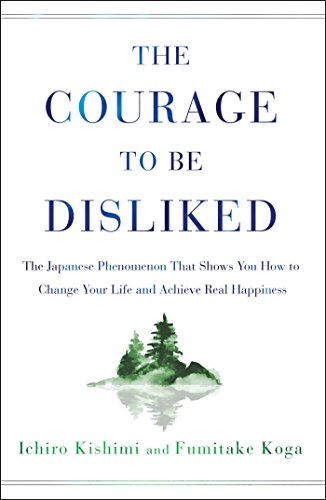
Yecheilyah’s Book Reviews – The Courage to be Disliked by Ichiro Kishimi and Fumitake Koga

Title: The Courage to be Disliked: The Japanese Phenomenon that Shows You How to Change Your Life and Achieve Real Happiness
Author: Ichiro Kishimi and Fumitake Koga
Publisher: Atria Books
Published: May 8, 2018
Page: 289


Written by Japanese writer Fumitake Koga and philosopher Ichiro Kishimi, in The Courage to be Disliked, an older man who adheres to Adlerian psychology and Greek philosophy has a conversation about life with a young man who is frustrated with life and thinks it’s unfair. Their discussion is built on the question of whether we choose to be happy. The dialogue-based style makes me think of modern-day interactions between young people and older generations and our own inner dialogues about life. (Neither person is named throughout the book.)

The young person’s argument that the world is confusing is an example of their discussion. The philosopher responds by asserting that we make the world complex, not that everything is complicated. He contends that life is subjective, and because we each see the world differently, it’s impossible to share our world with anyone else. The philosopher’s responses are simple, leaving you to wonder why you hadn’t considered it that way. I also appreciated how the young man’s genuine inquiries allowed the author to instruct through the philosopher.

The main takeaway from Kishimi and Koga is that unhappy people wind up living other people’s lives by chasing approval. They give up their own hopes, dreams, and aspirations in favor of conforming to others’ expectations. An example would be a young person who wants to be an author deciding to instead go to medical school to please his parents, whose wish is for him to be a doctor.

He must muster up the courage to deal with his parents’ disapproval of his decision to follow his literary ambitions.

Over the course of five discussions, the philosopher explains to his student how each of us can choose our own path in life, free from the constraints of the past and the expectations of others.

While I can’t entirely agree with the part about how trauma, according to Adlerian psychology, does not exist (and the dialogue style throughout the book does not particularly appeal to me), it is still a terrific inspirational read if you are interested in philosophy and psychology or want to know why people believe the way they do. The discussion will inspire you to evaluate life from a unique angle, possibly one you haven’t thought about before.

Ratings:

Strong Introduction: 4/5
Authenticity / Believable: 4/5
Organization: 3/5
Thought Provoking: 4/5
Solid Conclusion: 4/5
Overall: 4/5

Grab It From Amazon Here.

The Courage to be Disliked


To have your book reviewed on this blog apply here. The registry is open for a limited time.

Stay tuned for our next dope read, part two in Christa’s Sculptor series.

Yecheilyah’s Book Reviews is a reputable review service that features writers from all over the world, both traditionally and independently published. We are listed on Kindlepreneur as a top-tier book review blog and Reedsy as one of their vetted active book blogs that provide insightful, excellent book reviews.

*Books are read in the order they are received.


What Are You Sacrificing?

Last week, I planned on introducing a new Black History Fun Fact Friday. I also planned on revealing the cover to the poetry contest magazine to my social media (which I will do tomorrow, time permitting). This was a busy week for me (more than usual). This isn’t to say that “busy” is a measure of importance, but last week was a hectic one for both my personal and professional life. But also, it was a good busy (more like a focused busy). I got a lot done and gained some clarity. And although I still have emails, I haven’t responded to and travel to prepare for I am sitting down in the few hours I have here before running errands to talk to you guys and send an important message to my email list.

I find that how we direct our focus determines what will show up based on how we have prioritized. Those things we put first or last will naturally manifest in our life and align based on what we give more or less attention. If I know I have coursework due on Wednesday, for example, but I scroll social media until the final hour of when the work is due, chances are I won’t do well, and it won’t be because I am ignorant or incompetent. It will be because I did not set my coursework as a priority this week and give myself time to think through the assignment. Instead, I scrolled social media, which means I have set it as a priority over my coursework and are thus reaping the consequences of that choice. It doesn’t make it social media’s fault, and it doesn’t make social media an evil entity, but it was not the proper decision on this day.

I use social media because it’s an easy example, but I believe this can apply to anything from business practices to relationships and friendships.

What are you sacrificing?

I realized that whatever we pay attention to means sacrificing something else in its place. If we focus too much time on gossip and negativity, we are sacrificing something else in its place. If we spend too much time on social media, we are sacrificing something else in its place. Sometimes the sacrifice is not all bad; it makes sense depending on what is a priority at the moment. Sacrificing an hour of work to sleep and refresh is not a bad thing because, with rest, we can have better clarity to do the job. Surrendering a TV show to post something of value and substance to social media that will help someone else is not a bad thing. You see, I also learned this week that our priorities might change from day to day. What was most crucial yesterday may not be most important today.

From this point forward, I will be more conscious of what I am sacrificing when I am spending my time doing something because I know that whatever I focus my attention will manifest based on those things of which I have set as a priority.

Instead of saying, “I don’t have time,” I will say, “what am I willing to sacrifice to get this done? What am I willing to give up to do this?”

Those are the real questions.

Don’t Overpay to Play

I posted this message to my IG this morning and I thought I would post it here as well. I have added more bullet points after realizing how much this also applies to Indie Authors and our writing careers as well as real life advice.

  • Don’t go broke to sit at someone else’s table. Make sure that what you put your money into is worth the investment and not something you are doing to be seen. If you’ve ever observed me in person, you’ll notice I am quiet and laid back. I am not there to see what I can get. I am there to listen, to learn, and to connect so that when I go home, I can implement and apply. The other obvious meaning is, make sure your immediate needs are met before you play. Are your bills paid? Is your family fed? What can you realistically afford? I know social media has made entrepreneurship look glamorous but in real life people have day jobs and responsibilities. People are not winning everyday. Don’t be out here trying to prove a point. Take care of the most important things first.


  • “Don’t overpay to play,” also means to me not to overcompensate in the efforts to prove to people who you are. Sometimes I do this. I have a good heart. This is what I know about myself to be true and there’s nothing worse than people not seeing that. What I’ve realized, though, is that I can’t control how other people see me and I can’t “overpay to play” with them. People will see different versions of you depending on who they are, how they feel about themselves, and their philosophy in life. If you try too hard to prove you are a good person it will only come across as fake. Just be who you are, do what you do, and let the chips fall where they may. I also think it’s just as important to realize that we all have traits about us that are not positive. This is important. A person who understands both his strengths and weaknesses is a strong person. A person who can identify his weaknesses without pointing out the weaknesses of others is a stronger person. Realize that you are not 100% together and that people don’t have to like you.


  • New Indie Authors, don’t overpay someone to publish your book just because you’re desperate to see it in print. Overpaying could mean a different price depending on each individual’s budget but anything over the $5,000 point is steep. Don’t overpay to play author. While I am not a Traditional Publisher, the traditional publishing route is still a good option if you want the traditional publicity. While many Self-Publishers have gone on to have movies made from their books and have made millions from their books, there are many aspiring authors who are looking to be published traditionally but are not patient enough to go through the process. As a result, they overpay small Indie Publishers to do for them what they could have probably done for themselves. For example, don’t fall for someone promising to make you an Amazon Best Seller. To non-writers, family, and friends it may seem like a big deal and while commendable (I would never downplay anyone’s hard work), it’s not exactly the same as being a New York Times Bestseller. Amazon’s rankings are controlled by algorithms. In other words, computers. Any spike in sells (even if it’s just 5 books sold) can shoot a book ranking up. Sometimes all it takes to be an Amazon Best Seller is to sell 10 copies of your book on the same day. It’s not the same as outselling all the other books in your genre. I’m sorry but it’s the truth and this deception is not only bringing down the value of being a true Best Seller, but is starting to become a red flag to those who actually know how the system works.  I applaud anyone who has become a #1 Amazon Best Seller but I caution you not to pay for it. You can become an Amazon Best Seller on your own. It’s not worth $5,000.


  • This advice reminds me of the importance of boundaries, limits to where I’ll go. There must be a line that reminds you of your integrity, where you are not willing to go, no matter the circumstances or the price tag because your moral compass will not allow you to. “Don’t overpay to play,” also means to me, “remember your worth.” If you don’t have this mental limit in your mind you will sell out in whatever way it means to sell out. Boundaries go far beyond personal limitations but extend to our livelihoods as well.