But what’s the difference between a retailer and an aggregator?
Book retailers are platforms where you can upload your book directly to their site and sell on their market. These are your Amazons, B&Ns, Kobo’s and more.
Book aggregators are third-party platforms where you may submit your book, and it will be distributed to book merchants all over the world. It is one of the simplest ways to get your book on practically every online retailer’s website without much effort. Draft2Digital and PublishDrive are two of the most prominent book aggregators.
What I Use
Amazon has an 85% market share over all these platforms, so I will start with Kindle Direct Publishing to get my books on Amazon.
While other platforms, such as Bookbaby and IngramSpark, can send your book to Amazon, I have found it best to use Amazon for Amazon to decrease the chances of my book not showing up or being out of stock.
However, I opt-out of expanded distribution while on Amazon, which will put my book into Ingram’s database under Amazon. I want it under my own company.
After I upload my files to KDP, I head over to Ingram.
Under my own Ingram account, I publish my book to IngramSpark. I have not done this with every book, but I have done it with my last two and in the future. I do this for easier distribution to bookstores and libraries but under my own company name (Literary Korner Publishing), not Amazon.
This is where having bulk ISBNs comes in handy, as you will need one for Ingram different from what you used on Amazon. Ya’ll know I don’t do free ISBNs except for with ebooks.
Then, I log into my account on Draft2Digital and upload my files there to get my ebook on all major online retailers—however, I opt-out of Amazon since I have already uploaded my book there separately.
I also have yet to use their print book version, now available for authors who want to use the feature. I only use them for the digital version of my book so if you’ve tried their paperbacks let me know how it turned out! How’s the quality compared to KDP?
When it’s said and done, I’ll have my book available on Amazon, B&N, iBooks, Kobo, and everywhere books are sold online with the option to get it into bookstores, libraries, and schools.
Save this post if you plan to self-publish in 2024 and let me know what has worked or not worked for you!
I am dropping this quick update you may or may not have known about.
Amazon is increasing its printing cost on June 20th.
The printing cost is the money you pay to get your book printed.
If you have self-published books on Amazon and the price of your book is too low (less than the new minimum) your royalties could be reduced, or you might not get any.
Printing Cost Changes
All paperback and hardcover books will see an increase in their fixed costs to cover the materials, labor, and supplies.
They are introducing a new fixed and per-page cost for paperbacks and hardcover books with a larger than standard (6 x 9) trim size.
At the same time, they’re also decreasing the cost for some color-ink books ordered through specific Amazon marketplaces.
To see a full breakdown of the updated costs, check out this cost table link that Amazon put together here.
You have two options:
Leave your prices alone and accept the reduced royalties (if it applies to you)
Increase the sale price to offset the increased printing costs.
Here’s what you want to do:
Log into your Amazon K.D.P. Account
Go to your bookshelf
Click on the ellipes (…) next to your book and edit print book pricing.
Check to see if you will still get a royalty when the change kicks in. (It will show you on the page) If not, increase your book price.
Due to how the royalties are structured, an author with a 99cent ebook on Amazon will only get about 35 cents per sale. For books priced between $2.99 and $9.99, there is a delivery cost for the ebook file (based on the size) for each book sold.
You also pay Amazon a sales commission based on your royalty rate.
35% royalty: the Amazon sales commission is 65% for books priced below $2.99 and above $9.99
70% royalty: the Amazon sales commission is 30% for books priced between $2.99 and $9.99
What about taxes?
You pay that too.
These are just a few reasons why it can benefit you to sell your book directly to readers from your website.
While I have only made a few dollars in ebook sales from my new book, my print book preorder sales from my website are doing far better, and I am close to making money back from the cover art. By the time the book releases next month, I expect to make back what I paid for editing.
I am going to make this post real short because it’s real simple.
The hard truth is that if you are not selling books through your website or worse, you don’t have an author website, you are leaving money on the table.
While some authors have chosen not to deal with Amazon at all, it’s smart to make sure your book is on Amazon for a few reasons.
To start, Amazon is a giant. To have your book available there is just good sense. People trust Amazon, so some people will look for your book there before they look anywhere else. And with the pandemic, people use Amazon regularly. It’s all about making it easy for your readers, and being able to tell them to go to Amazon isn’t only super cool, but it’s also super easy.
But while Amazon is easily accessible to your readers, the relationship between Amazon and you as the author is a bit different.
There are tons of authors making good money from Amazon, but they are not the majority.
Here is an example from an author about his Amazon royalties:
“One month, I sold 5 paperbacks at a list of 13.99 each. The report stated the manufacturing cost was 5.33 (I assume each), and I’m on the 70% royalty. I got a total of 1.30 cents. That’s 26 cents a book. The next month I sold 1 paperback at 13.99, and I got a 3.13 royalty on it.”
The 2021 Guide to Amazon Fees and Royalties for Kindle eBooks and KDP Print, 2019, Comment Section
This is where your author website comes in to pick up the slack.
What if he had sold five paperback copies of this book from his author website? Since he would have to calculate shipping, let’s just round it up to a cool fifteen dollars per book. That’s $75 in his pocket. If he sells 20 books, that’s $300.
It might not sound like much, but it adds up if he sells books at this rate daily.
Even with website transaction fees, authors can still add more to their bank accounts by having their books on their websites alongside Amazon.
In closing, if you are a Self-Publisher, you can buy your books in bulk and sell them in bulk to companies and corporations like schools and independent bookstores.
Heck, you can sell the books out of the trunk of your car if you want.
The sky is not the limit of what you can do when you control the distribution of your own work.
Considering you are not signed to a publisher or are not restricted to any outside contracts that may otherwise prohibit you, you don’t have to be exclusive to Amazon. Instead, you use Amazon as one of many options.
For digital, you can set your book up on Draft2Digital to distribute it to several digital platforms outside of Amazon. For print, you can set your book up on Amazon KDP but also Ingram Spark for distribution to bookstores and libraries.
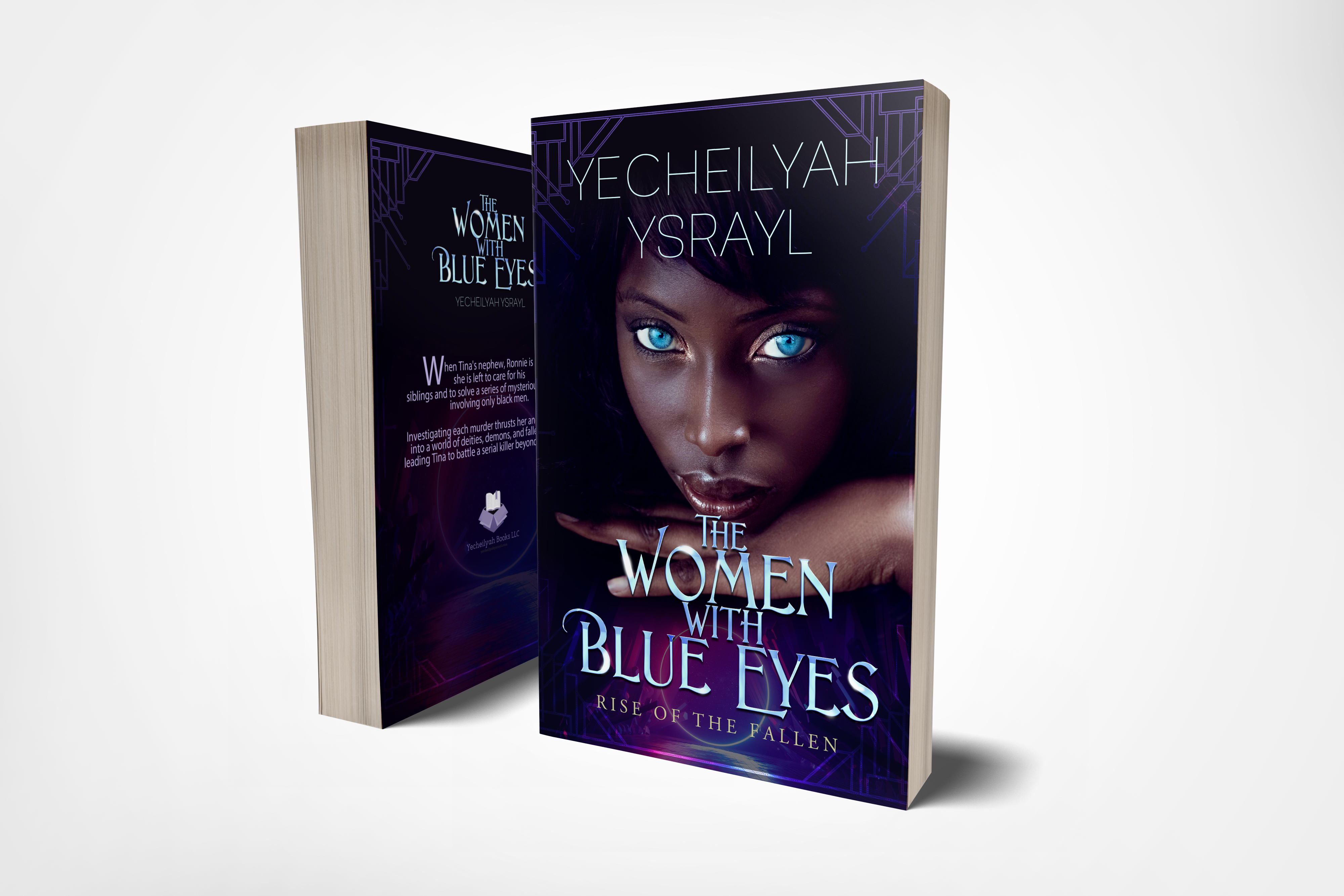
When Tina’s nephew, Ronnie is killed, she is left to care for his siblings and to solve a series of mysterious murders involving only black men. Investigating each murder thrusts her and her team into a world of deities, demons, and fallen angels, leading Tina to battle a serial killer beyond this realm.
I read a book a couple of weekends ago. I feel it has the utmost potential. To be clear, this isn’t a book from my book review service. I read this book on my own time from an author I do not know. I enjoyed the testimony; I loved the cover, and I can relate to much of the information.
Unfortunately, the book was in such terrible need of editing and formatting that it was troublesome to get through, which broke my heart. I am not usually ultra-sensitive to typos and such when reading a book for leisure. I am only irritated when the errors are so bad I can’t enjoy or understand the story.
I could tell very little money went into this book’s production just from reading it.
That is when I knew what I wanted to write to you as we enter this new month.
I know because I have been here. I have published books written in a Microsoft Word Document, turned it into a PDF, and uploaded it. I have not only removed a lot of my earlier works, but I have risked book reviews taking books down to revise them for this reason.
As many of us do when we enter Self-Publishing, I learned the hard way that authoring a book takes more than uploading a Microsoft Word Document or PDF to Amazon’s Kindle Direct Publishing or Lulu. The hardest pill to swallow is that it doesn’t have to cost an arm and a leg, but it’s essential for new authors who choose to Self-Publish to be aware there are costs involved. Self-Publishing is not the easy route if pursued the right way. It requires both time and financial investment.
What Happens Traditionally:
I found it is helpful to understand what happens when someone publishes a book traditionally.
Traditionally, a publisher offers an author a contract. The author signs with the publisher who prints, publishes and sells the book through bookstores and other retailers. The publisher is buying the rights to the book and pays the author royalties from the sales.
Since this isn’t my area of expertise, I will leave it here. That’s the gist of it, but to learn more on Traditional Publishing steps, click here.
The most crucial part as it relates to this post is that the traditional publishing house “takes on the responsibilities and costs of designing, printing, distributing, and marketing the book.” (McLachlin)
Vanity Publishing
Vanity Publishing, the center of much controversy in the Indie world, is a publisher who publishes a book provided the author can pay for services. If the author doesn’t want to do everything independently and can afford to spend thousands of dollars to publish this book, a Vanity Publisher will gladly publish them.
Vanity Presses can look like Traditional Publishers to the untrained eye, but there’s a significant difference. The Vanity Press does not get paid royalties from the sale like a Traditional Publishing House. The Vanity Press gets paid money upfront from the author to publish them. The author is paying to get their book published. As you now know, this is not how traditional publishing works. After the Vanity Press publish the book, some allow the author to own the book and keep the profit from sales, but some Vanity Presses do not.
Why VP’s charge
Image Cred: Reedsy
Newbie authors get excited to be “signed” with Vanity Presses under the presumption they are like traditional publishing houses. They are not. VP’s charge authors to publish them because, without paying for services, there are no services. Vanity Presses have a bad reputation for outsourcing to mediocre editors and designers, so authors spend thousands of dollars (sometimes upwards of $5,000+) to receive poor editing and crappy formatting and graphic design.
Take Rocket Science Productions / RSP Marketing Services, for example, where “Phase One” of this publishing scheme involves a $595 payment for copyright registration and an ISBN. (ALLI)
Self-Publishing companies that promise you can keep “100% of your copyright” promise the new author something they already own because the work is under copyright from the moment of creation. If the author wants to go the extra mile and register it, they can do that for $45, according to the .gov copyright website here.
ISBN’s are expensive, but you can purchase a block of TEN from Bowker (US) for $295.
That’s TEN ISBNs for TEN separate books (or multiple versions of the same book) as opposed to paying almost six-hundred dollars for ONE.
Morgan James Publishing is another example, a vanity press that profits by selling books to their authors rather than readers. (ALLI)
Author Solutions and anything under Author Solutions and Xlibris are also Vanity Presses to watch out for.
The only people who get paid in this situation are the publisher or company offering the services. There are tons of people making six figures off green Self-Publishers. If I charged eight thousand dollars per author, I’d be a millionaire too.
The primary way to identify a Vanity Press is to understand one simple fact:
A traditional publisher pays the author, not the other way round.
But the traditional publisher also owns the rights to the book, which is why many choose to Self-Publish.
Self-Publishing
With Self-Publishing, you pay to produce, market, distribute, and warehouse the book. This investment can get expensive, which is why I understand why writers fall for vanity presses. Suppose you pay $2,000 to get a book edited (which is not out of the ordinary for skilled, professional editing depending on the editing needed) and still need a decent cover and everything else. Why not pay $5,000 for a team of professionals to do everything for you?
The problem is that the books these “professionals” publish are low in quality, and sometimes the author doesn’t maintain the rights to their book even after paying so much to get it published. If you charge someone $5,000 to publish their book, it should look like it, and the author should own the rights to the book. There is no excuse for charging this much money to upload a poorly edited and formatted text with a generic cover to Amazon’s Kindle Direct Publishing and then call yourself a publisher.
Why Self-Publishing Can Be Free But Isn’t If You Do It Right
With Self-Publishing, you do not sign with a publisher, so there is no one to cover the cost of book editing and cover design. You are the publisher, so the financial responsibility is yours.
It will cost you nothing to upload a manuscript to Amazon’s KDP or Kobo or iTunes or whichever platform you’d like to use. You can take your Word Document or PDF and create an account with that platform and upload it. You can also go wide using Draft2Digital to make your book available on other ebook platforms like Barnes and Noble, iBooks, and iTunes.
But, if you want to produce a high-quality book, there are costs involved in getting the manuscript ready for publication.
You are not paying someone to publish your book, or I should say, upload your manuscript to KDP. You are investing in producing a quality product.
Technically, you do not have to pay anything to publish a book, but it will look like it.
You OWN your book, which places you in great authority, and with eminent authority comes greater responsibility. If you don’t want to be responsible for everything, then Self-Publishing might not be the route for you. It may be best to look into Traditional Publishing.
Again, it doesn’t have to cost an arm and a leg to publish a book. There are many great pre-made cover designs, for example, that are cheaper than custom made covers, and editors who have great deals.
This post’s purpose is not for you to think that paying a lot of money will make your book great automatically. No editor, despite how talented, can make a crappy story great again.
The purpose of this post is to inform those of you new to Self-Publishing that if you want to be an Independent Author/Publisher, you will have to invest some money in publishing your book if you want it done right.
Indie Author Basics with EC exists because after Self-Publishing my books, I quickly realized the lack of information available to Indie Authors. Sometimes the only way to learn is through experience, and I have discovered some ups and downs that I think will help those who are just beginning. I do not present these as concrete, guaranteed solutions, but I hope new authors can use these tips to better the Self-Publishing experience and make it less confusing.
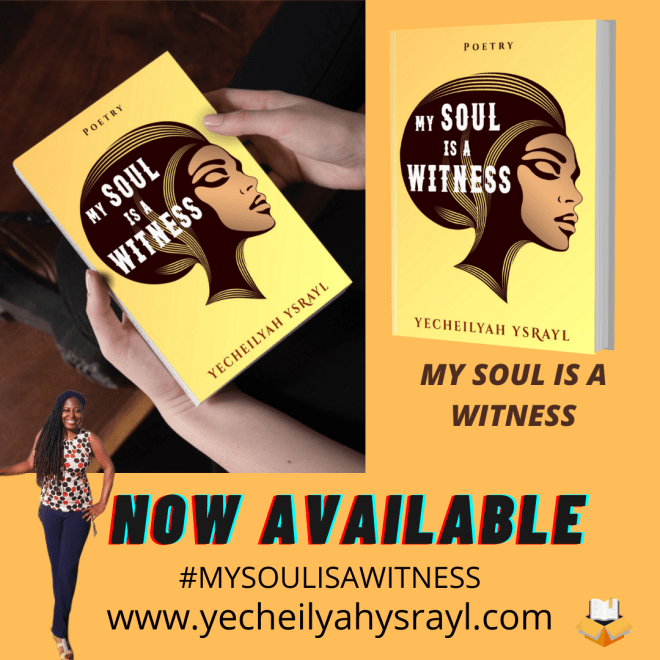
My Soul is a Witness, a collection of poems that reminds us that there is still hope in our darkest moments. Nothing we go through is without a purpose. No pain we suffer, and no trial we experience happens without reason. It all ministers to our education and the development of ourselves into the people we are ordained to become. It helps to cultivate in us a spirit of patience, faith, humility, and self-control.
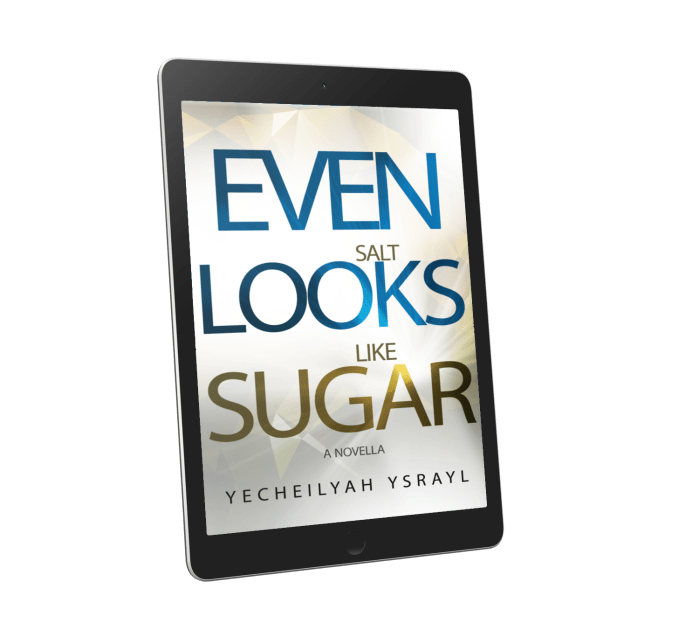
We are six days away from the eBook release of my new novella, Even Salt Looks Like Sugar so this is your once in a blue moon shameless self-promotion post. Go get it!!
Okay. Now that I have your attention. What is this about any way?
Wanda wants nothing more than to escape the oppressive upbringing of life with her abusive foster mother. Miss Cassaundra manipulates the system by bringing lost children into her home turned whorehouse and collecting the money. Wanda knows what it’s like to be abandoned and has no doubt Abby is Cassaundra’s next case. When an opportunity arises, that could save them both, Wanda must find a way to get the paperwork that will secure their freedom. But Cassaundra’s got eyes everywhere and no one can be trusted when even salt looks like sugar.
You should read this book if:
You are into Young Adult Fiction
You are passionate about African American experiences
You love women’s fiction
You love and care about children
You suspect something is wrong with America’s Foster Care system
You’ve been in the foster care system
You are a mother
You didn’t grow up with a mother
You are short on reading time (this is a short novel)
You are short on finances (this book is just 99cents)
PreOrder this short novel today in eBook at just 99cents on Amazon. CLICK HERE!!
Mark as “Want to Read” on Goodreads if you want to read it. CLICK HERE!!
Remember, setting up a Goodreads account is FREE and only takes a moment!
It’s been the talk of the Indie Author community for some time and today it has been confirmed. Createspace has officially merged with KDP as many had expected. CreateSpace has officially announced that CreateSpace (CSP) and Kindle Direct Publishing (KDP) will become one service. Click on the link below to Nicholas C. Rossis’s blog to learn more about actions you may or may not need to take with this new change.












 The PBS Blog