What to Do When People Unsubscribe from Your Author Email List and Why it is OKAY

Please check out this repost from 2019 below. It is about email list, but can apply to blogs and social media just the same.

Let’s address the elephant in the room.

Email Unsubscribes / Unfollows.

pexels-pixabay-53125

They can feel like silent rejections and sometimes confusing because you don’t always know why the person left. Unsubscribes can leave authors feeling abandoned, especially if the person was a long-time member of the list. All kinds of thoughts go through your head.

“What did I do wrong?”

“Am I providing value?”

“Does my writing suck?”

“Do I suck?”

“Did I email too much? Too little? What happened?”

The good news is that it is okay whether someone leaves your email list or your blog. In 2019, we were not taking losses, only lessons, and there are tons of lessons we can learn from email unsubscribes.

This list encourages and motivates you to push past that feeling of confusion and rejection.

  • Don’t subscribe people to your list without their permission.

Please don’t do this.

There are laws against doing things like this. Never, ever add anyone to anything without that person’s permission. I don’t care if it’s a Facebook group or email list. Get permission first. When you let people subscribe on their own, they can unsubscribe whenever they want and do it all without you being sued.

However, if you subscribe someone without their approval, you can be sure they will unsubscribe.

While there’s nothing wrong with compiling a list of supporters and emailing the old-school way (directly), we live in a different time. You need a track record that shows proof this person agreed to get emails from you. You need permission. Do not grab emails from blogs and websites. Choose an opt-in email form and let people subscribe on their own, or create an opt-in form of your own using google docs but just get permission. Don’t get sued.

  • Mailchimp
  • Mailerlite
  • Convertkit
  • Don’t take it personally.

If the subscriber was legal, and the person decided to leave, the most important lesson you can learn from this is not to take it personally. It could be because they did it to enter your contest and are no longer interested. It could be because they thought they signed up for something that turned out to be different from their expectations.

People have reasons for subscribing to a list/blog, and only some are clear about that reason. If someone mistakenly thought your list would offer something that it doesn’t, they may unsubscribe because it’s different from what they thought it would be.

It does not mean they are disinterested in you or that you do not have value. Don’t take unsubscribes personally. They are not rejecting you.

  • Never respond to an unsubscribe.

Resist the inclination to ask people why they left. Do not send them follow-up emails unless they have reached out to you. If they unsubscribed from your main list, they probably want to stop receiving emails from you. Again, don’t take the unsubscribe personally. One apple doesn’t stop no show (and that’s grammatically incorrect on purpose). Just keep grinding.

  • Quality over Quantity: You don’t have to have a gazillion email list subscribers to be Relevant.

With email lists, remember it’s more about the quality of your team. It’s better to have 30 or 40 committed people who are eager to support your work and read your books than 2,000 who won’t lift a finger to give you so much as a piece of advice. You ask a question and hear crickets. I have only about 172 subscribers to my list, and I am more than okay with this. Of course, I’d like to grow (who wouldn’t?), but I am in no rush. It’s challenging enough managing the people I already have. I’ll wait patiently. Always remember quality over quantity. It’s easier to manage 30 or 50 subscribers than to manage 200 or 300 starting out.

  • Resist the urge to vent your rage on your favorite social media Platform

Again, don’t take it personally. Email unsubscribes are like bad reviews that only you see. Just as it is not recommended to discuss the bad review, it is also not recommended to discuss the unsubscribe. We are all human but venting about these things on social media makes you look like an amateur. Accept this person has decided they are no longer interested in your content (for whatever reason) and move on. People come in and out of our lives for a reason, and we just have to accept when that season is over. Don‘t make it bigger than it is.

  • Remove and Renew

Don’t be afraid to lose people. You need to unsubscribe people you see who are no longer interested because there will also be people who won’t unsubscribe. They’ll just ignore you and delete your emails, or they may just ignore it without acting.

In pop culture, we call this Ghosting when someone disappears from your life without a word, leaving you to wonder what happened. It is a form of passive aggressiveness I do not recommend people to do. Communicate like an adult.

It’s a good idea to do a good ole cleansing occasionally. Delete some people. Don’t be so thirsty for high numbers to your own detriment. If they aren’t active, it doesn’t matter, and you are deceiving yourself. Every 2-3 months, I clean my list. I delete people who have yet to be active, have not been opening emails, clicking links, responding to questions, or participating. Their presence is irrelevant. I love them, but my emails are clearly not their cup of tea, and they shouldn’t be forced to drink. They must go.

If they aren’t active, it doesn’t matter that they follow you. Their presence is irrelevant, and you are deceiving yourself.

  • It takes time.

Writing is a business; like all businesses, it takes trial, error, consistency, and time to build. We may have been born with gifts, but no one knew exactly how to execute them. No one woke up with the skills to hire a team or produce excellent products. Similarly, you only know how to manage an email list through practice and hard work, and people will still unsubscribe.

UPDATE: Sadly, the Six-Figure Chick has passed on since this was first posted.

I used to transcribe to the same practices of some “gurus” who said to only email once a month. While I understand why you wouldn’t want to email too frequently, you must do what works for you. It’s a personal journey first.

So I followed my own path and now email whenever I have news. The truth is, it’s hard to stay connected to anyone you don’t speak to for months at a time. The email list can be an essential source of support if you want it to be. Or, the email list could be another social media account you update to tell people about your new books. *Yawn.*

Truth is, there will always be someone to unsubscribe. The real question is, who cares? People always unsubscribe from our lives, but we can’t stop working just because people leave. People unsubscribing from the list can be a blessing as it teaches us what works, what doesn’t, and how to better connect with our audience.

People unsubscribing is not even the real problem. The real problem is learning to connect with those who genuinely follow us. If we do our jobs well, we don’t have anything to worry about.

  • One door closes, one door opens.

Every time someone unsubscribes from my list, someone new subscribes. That’s the fun thing about it. When one door closes, another always opens. Just because a few people unsubscribe does not mean more won’t come. I’ve been successful in keeping my numbers steady because I am always blessed with a new person whenever someone else leaves. When unsubscribes do happen, now I just smile, knowing someone new is on their way, and hopefully, they’ll find value where the other person did not. The end of one relationship is the beginning of another.

Helpful Tips:

  • Ask your people questions to discover what they want.
  • Let your readers in a bit on who you are. Write stories, give updates not shared anywhere else, showcase your personality, e.g.
  • If possible, use a domain email address as your from address instead of gmail. Ex: yourname(at)yourdomainname(dot)com.

Reminders:

1. Don‘t take the unsubscribe personally
2. Don‘t subscribe people without their permission
3. Never vent your rage about it on your favorite social media platform
4. Quality over quantity
5. Recognize the growth that comes with removal and renewal
6. Remember that it takes time to build anything of substance
7. and that when one door closes, another always opens

For more email list building tips check out one of the most popular posts on this blog:
7 Things I Learned About Email List Building.

The Evolution of a Book Cover

I have always enjoyed looking at book covers. Choosing a cover is my favorite part of the Indie Book Publishing process. In the beginning, I didn’t care too much about the cover and that was cool. But then, as I matured, I started to look at my writing differently. I stopped looking at my writing alone and started looking at the book as a complete package. In doing so, I’ve learned that the best chances of a book succeeding is not just one thing, but a collection of things. Not just a nice cover alone or a well-written story alone, but everything together. That is what I’ve learned, and that is how I will look at book publishing from now on. I will look at the process as a complete piece, a body that I must dress not just outwardly but inwardly and not just inwardly but outwardly.

I have had a little success with I am Soul so I thought I’d talk a little bit about the evolution of the cover and how I think it has played a major role in that success.

To start, I wasn’t going to even release this book when I did. I was supposed to release book two of Nora December 20, 2017, my mothers birthday. Instead, I pushed that book back (it wasn’t ready) and released I am Soul.

I am Soul is a collection of poems from this blog as well as my personal journal, collected, compiled and edited into what is now my 4th collection of poetry. I call it I am Soul because some of the poems are personal, some of them are centered around the African American experience (a people of Soul) and also because people have always said that I have an old soul. Even as a kid people have said that I was mature for my age. For these reasons, I am Soul.

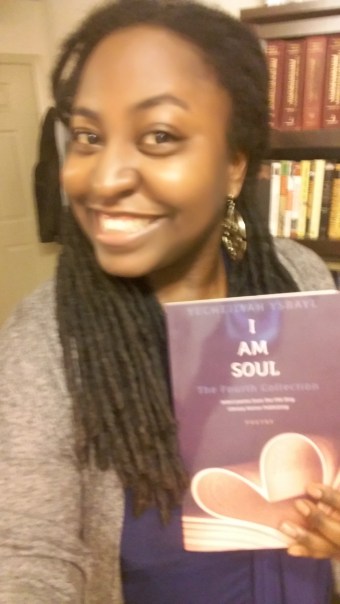
Grainy pic of me and I am Soul with old cover.

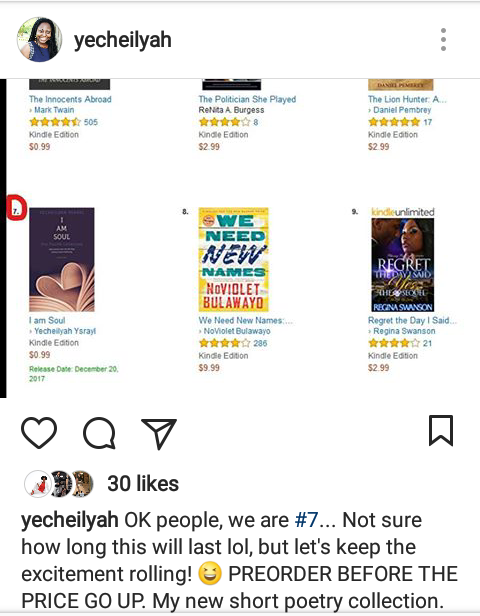
The first cover was decent. I liked it a lot. A purple book with a heart-shaped bible page. It was nice enough to land me the #7 spot in the African Literature category of Amazon before release day. It started at number 17, then dropped to number 9 and then number 7.

Screenshot_2018-06-24-11-14-59-1

But…

I liked the cover a lot but I didn’t love it. I couldn’t help but notice that the cover looked better electronically, to me, than it did when the paperback arrived. It also didn’t stand out very well on Amazon.

I AM SOUL- 3D

I still think this is a cute cover but it doesn’t look all that great offline. Once the book printed it didn’t look the same. The dark blue on top the purple didn’t pop. In fact, this is still the cover on Goodreads. I don’t know how to change it. At first I didn’t care but after awhile I had to follow my heart and change the cover. (A privilege of publishing books Independently. You can change what you want, when you want.)

I decided to try something that matched the name of the book and the content in full. When you think of Soul you think of something deeply personal and connected to that individual.

Soul is something Israelites (Blacks) have always had (think Soul Train), from our hair styles to our creative way of dance, the way that we dress, the way that we sing, and the way that we speak. We set the trends and nothing was more trendy than the Afro at the peak of the Civil Rights and Black Power movements. From the practice of shaving the head to pass as a free person in the antebellum south, to the Afro of the 60s and 70s that said that Blacks were proud of who they were and free to be so openly, natural hair had made a comeback.

FFxG
Young, beautiful Cicely Tyson.

In the 1950s-60s it was common for Black women in Africa to wear their hair in small bushes. In America, Black women stopped straightening their hair. Women like Nina Simone and Abbey Lincoln are examples. And then Miriam Makeba (“Mama Africa”) emerged with a fro in the January 1960s issue of Look Magazine and Cicely Tyson wore her hair in a fro on episodes of the CBS drama East Side, West Side. And as college students and political activists like Jesse Jackson and Angela Davis started wearing fros, the fro had eased on into the mainstream.

Before and After


It wasn’t just about hair no more than Samson’s locs was about being trendy. Those locs were a representation of power and strength and so the Afro was a representation of the social-economic and political era of the time. A time when Black men and women were gaining strength and reclaiming parts of their lost heritage, one hairstyle at a time. A similar revolution is taking place today. Black men and woman are embracing more of their natural selves and waking up to the true knowledge of who they truly are.

For all of these reasons, I felt an image of a Black woman wearing a fro spoke volumes concerning the kind of messages I was seeking to give with the poetry inside of the book. Not just the soul of one woman but the soul of a people. The soul of an era.

I still think both covers are nice in their own right but the one that sticks out the most and which embodies a much more clear message; the one that will not just appeal to those who are biblically conscious but reach a larger audience; the one that makes people stop in their tracks, is the new cover.

When I uploaded this to social media, readers responded immediately. This had not happened with the first cover.


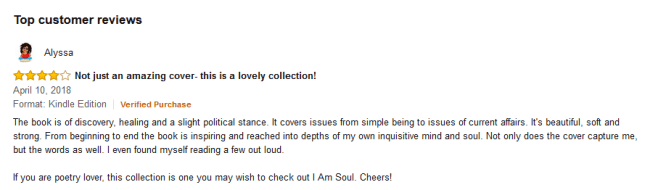
The new cover got me new reviews…

Screenshot (42)

I submitted this book to two different bookstores. One using the old cover and one using the new cover. The one with the new cover got a call back and the book is beginning to sell at the store. I am still waiting on a response from the store using the old cover.


I’ve learned that book covers really are important because I’ve experienced how important they are. Don’t get me wrong, content is just as important. At the end of the day if there’s nothing special to read there’s nothing special about the book. I am Soul still had to be edited and get through the bookstore’s professional reviewers to be stocked.

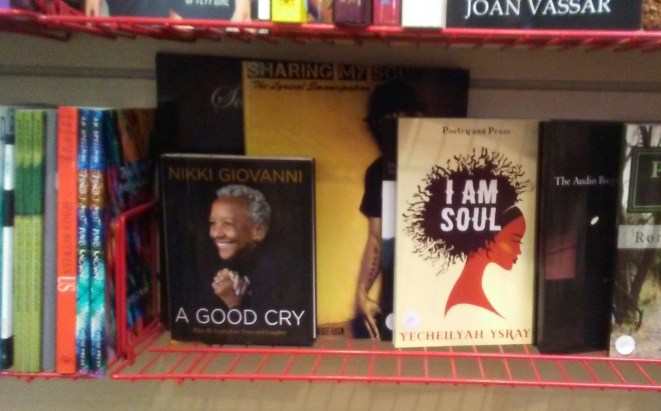
But, when I walked into the store yesterday, I couldn’t help but notice that because of the cover, Soul stuck out more than some of the other books that I could tell, as an Indie Author, were also self-published. In fact, to my surprise, Soul was sitting right next to Nikki Giovanni’s A Good Cry. Whether someone just sat it there or not, I cannot be sure. But, I was sure enough proud. I wasn’t going to taint the moment with thoughts of how it got there. It was there nonetheless.

20180623_135158-1


Get I am Soul Now on Amazon

or Choose Your Retailer

Book Review Registry: OPEN

Before the week ends, I would like to inform you that my book review registry is open. I am looking for some good reading to do this summer. I have also slacked on book reviews for this blog. It’s time to get back into the swing of things. If you submitted a book that I have not yet reviewed, you may resubmit your book for consideration as a reminder to me. Also if you’ve emailed me at any time about reviewing your book, please use the form instead. I do not accept unsolicited requests for reviews. You MUST go through the form to be considered.

To register your book for a review

CLICK HERE.


Be sure you have read my book review policy HERE before submitting your book.


bitmoji-20180426025841
Enjoy your weekend!

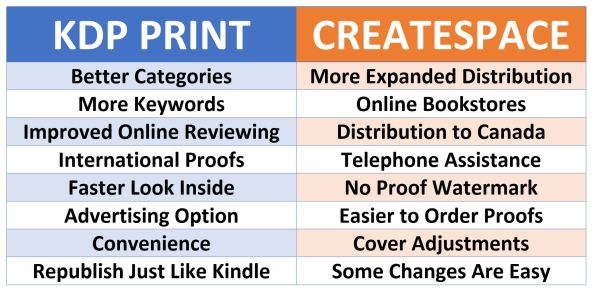
KDP Print vs. CreateSpace (Comparing the Little Details)

Awesome comparison! KDP Print is something to consider. (Comments disabled here. Please refer to the original post)

chrismcmullen's avatarchrismcmullen

KDP PRINT VS. CREATESPACE PAPERBACKS

I have published dozens of paperbacks with CreateSpace over the years, and have recently published some books (under pen names) with KDP’s new print-on-demand option.

While in many respects the two services are comparable (and both are Amazon companies), there are quite a few little differences.

DIGITAL PREVIEWS AND PRINTED PROOFS

There are several differences relating to printed proofs:

  • With KDP print, you don’t have to go through the manual file review process before you can order a printed proof. If you know what you’re doing, this saves 12 to 24 hours, but if you have a big mistake in your PDF files, CreateSpace’s manual file review would help to flag the issue before you waste time and money on a printed proof. However, both offer digital proofing tools to help catch mistakes before you order a printed proof.
  • KDP’s version of an interior reviewer…

View original post 1,933 more words

FREE ONLINE BOOK MOCKUP MAKER | Derek Murphy

I use a combination of Photoshop and covervault templates to create my book mock-ups but there’s a simpler version available for those of you without Photoshop or technical knowledge of the software.

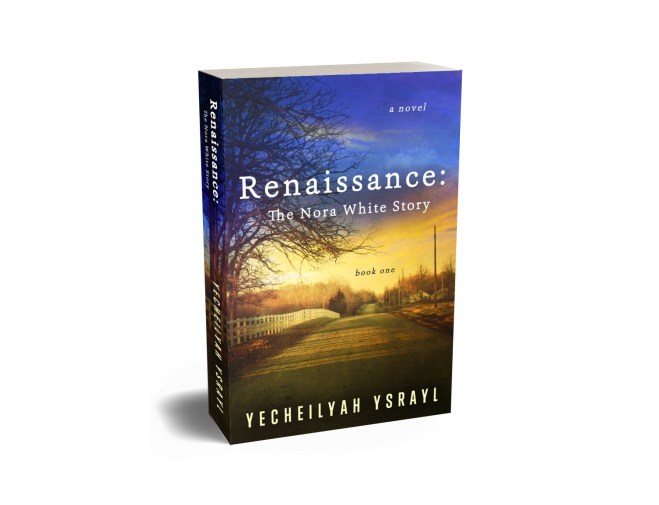
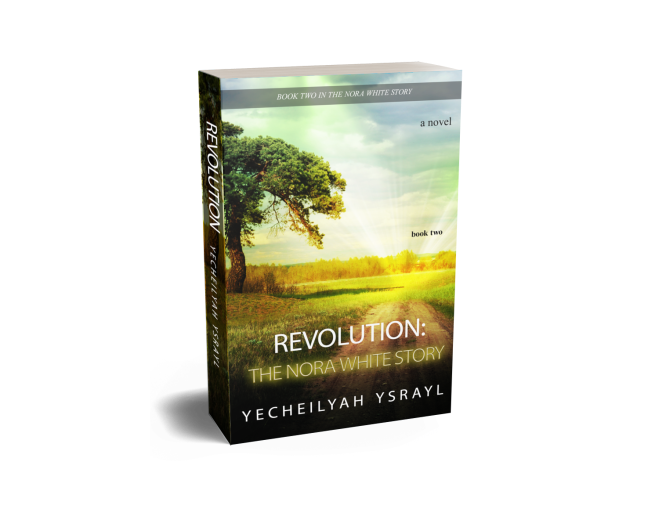
Derek Murphy just debuted his free book mock-up maker. It’s super easy to use and you don’t need Photoshop to use it. Simply upload your cover and spine (if needed) and download a JPEG or transparent PNG file. Here’s mine for Renaissance and Revolution. As you can see it looks pretty neat.

Renaissance: The Nora White Story – Book I

Revolution: The Nora White Story – Book II

GET STARTED HERE

I also found 3 more unique resources for cover design.

You’re welcome 🙂

How Does Amazon.com Sales Rank Work?

Good breakdown.

chrismcmullen's avatarchrismcmullen

AMAZON.COM SALES RANK

Amazon assigns a sales rank to every product that has sold at least one time.

The lower the number, the better the product is selling.

For example, a sales rank of 2500 is better than a sales rank of 375,000.

The product that sells the best in its category has a sales rank of 1.

CATEGORY RANKS

Amazon has different ranks for different types of products.

Books are ranked independently from sports equipment and video games, for example.

For a given type of product, there are also category ranks.

For example, a few Books categories include Romance, Children’s, and Science.

A great overall rank is more impressive than a category rank.

For example, a book has to sell quite frequently to rank 500 overall in Books, but can sell much less frequently and still rank 500 in Romance.

A good rank in a broad category is more…

View original post 2,918 more words

10 Ways to Write an Unforgettable Memoir | Shayla Raquel

jeshoots-com-219386-unsplash

Check out this most excellent post from Shayla on writing a memoir. Number One is a most important point. I always wanted to write a memoir but I stopped writing the drafts and deleted the sneak peeks I’d shared with my email list (so embarrassing lol) and decided to start over. I’ve learned so much since then with one of the major things being the difference between a memoir and autobiography.

1. Learn the differences between a memoir and an autobiography.
A common mistake is to pour your heart and soul into a book and market it as the wrong genre. An autobiography is a chronological telling of your life, but a memoir hones in on a specific timeline or event. It doesn’t mean you can’t have flashbacks or backstory; you can. But you must understand the big and subtle differences between the two before you write, publish, and market your story.

Ask yourself:

  • Does my story reflect on my entire life (autobiography), or a key aspect, theme, or event (memoir)?
  • Does my story start at the beginning of my life and progress to the end (autobiography), or does it start anywhere and move around in time and place (memoir)?
  • Does my story require hours of fact-checking (autobiography), or is it more personal, requiring less fact-checking (memoir)?

“A memoir is how one remembers one’s own life, while an autobiography is history, requiring research, dates, facts double-checked.”

—Gore Vidal, Palimpsest

Read more of Shayla’s Guest Post by clicking through to the original post here.