Joy Lived Here Too

My husband’s cousins came over to get some Italian Beef meat we brought back from Chicago. We had frozen it for them. They stayed for hours, most of the time comprised of us sitting around the table catching up. Although we have been married for almost 14 years, there are still family members of his I am meeting for the first time.

“So you’re from Chicago too?”

“Yes. I grew up in Robert Taylor…”

His wife, the cousin, tilted her head, her eyes widening, “Really?”

“You know how to fight then huh?” The husband says, shaking up with my husband, “You gotta know how to fight growing up in Robert Taylor!”

I laugh with them, but my spirit settles into uneasiness. I don’t want to talk about me anymore. We changed the subject.

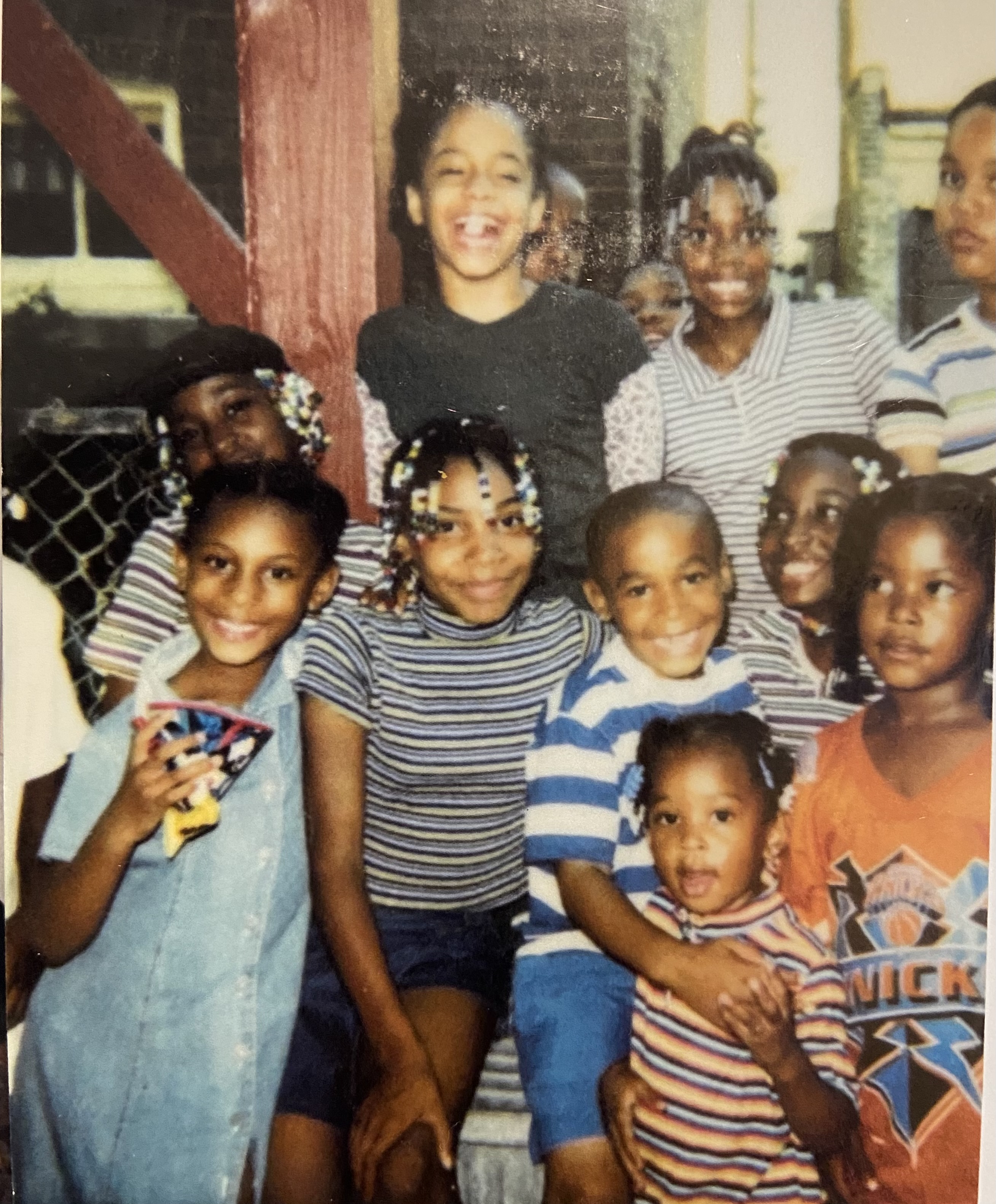
Lil R’s Bday Party. Can you find me in this pic??

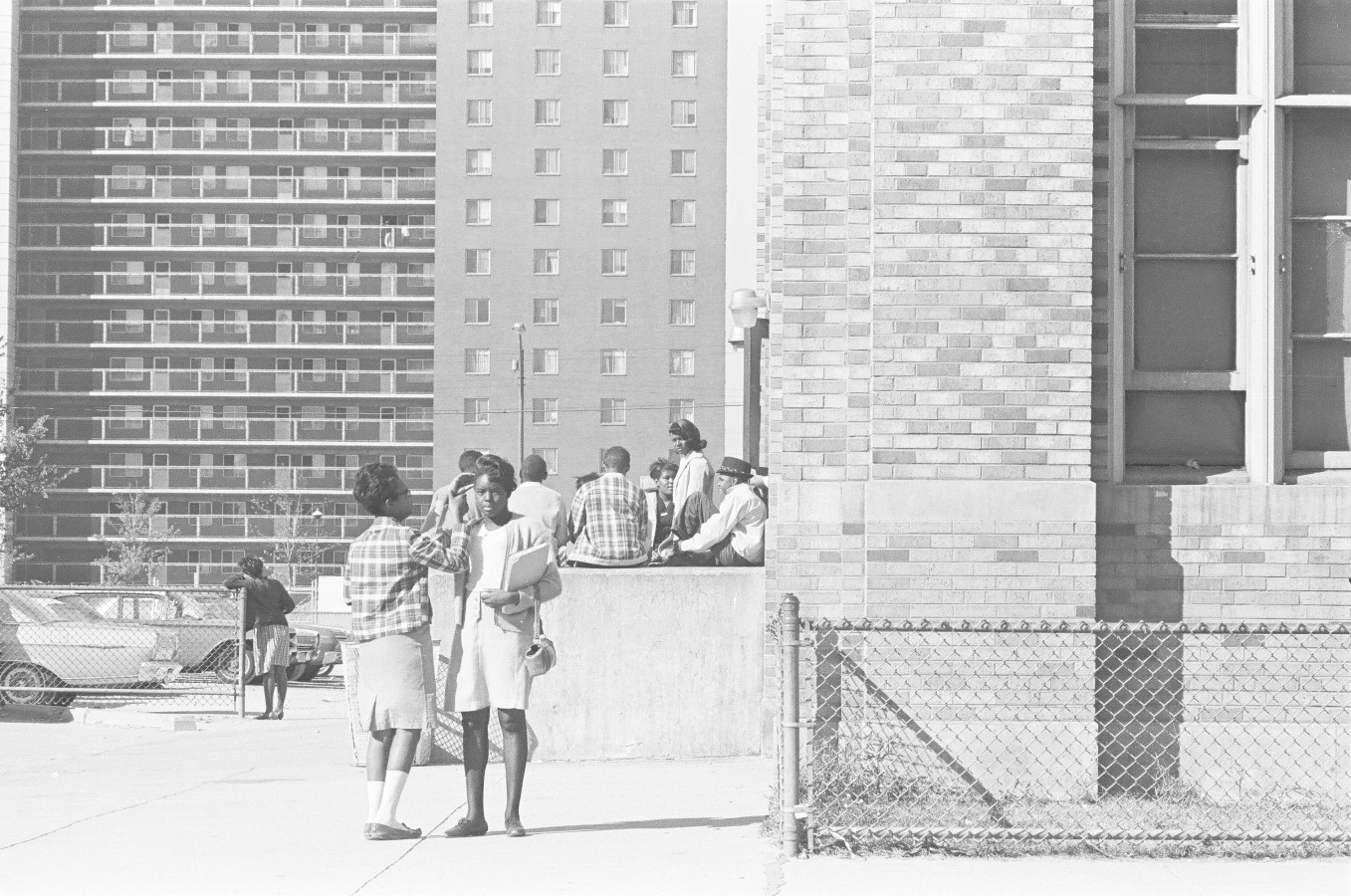
People are baffled to discover I grew up in Robert Taylor, and they don’t know what to say. Even those who try to form words still end up saying something that sounds like “sorry.” They look into my eyes as if they can see what I see. They want to know how someone as educated and “put together” as myself grew up in the place their mothers have warned them to stay away from.

But, we were not aliens living on a different planet. We were people, Black people, and where there are Black people, there is joy to be found somewhere. When the first of the month hit, we took advantage of the glints of light that seeped in to offer a reprieve to our distress.

Women sat on the porch laughing and gossiping as their sheets dried on the gates, and children ran back and forth, bellies full of food and hope.

The men and hustlers brought out tables and chairs they carried downstairs to play spades in front of the building. You couldn’t tell them they weren’t sitting on their own front porch instead of in front of a 16-story government building. They talked smack and poured out liquor for the homies they lost.

As for music, it was our salve and savior.

We left our doors and windows open so that the music from the stereo could scream and echo throughout the building. Nobody protested when someone’s entire door was open, and music was blasting. We sang along to Whitney Houston, Mary J Blige, Tupac, Biggie, Queen Latifah, MC Lyte, and many more, grateful for the opportunity to hear these songs while they were young.

Music transformed our pain into power. It didn’t feel like we lived in the ghetto when cousin Rachel blasted The Fugees from her speakers. It simply felt like home.

Where despair tried to rob us of joy, creativity flourished, and we created our own fun, and I think it’s important to talk about this light, too. It wasn’t all gangs, crack addicts, and shootouts.

Joy lived here too.

One More Game

(AP Photo/Julio Cortez)

From my eighth-floor window
I could hear hope bounce back and forth
on concrete loitered with crack vials.

Dirt-caked Nikes were like hands
reaching for revolution
in the air.

It didn’t get them out of the projects,
but Jordan would have been proud
the way these boys balled.

It kept their bodies distracted from the hunger
of not eating for three days.
Here, many children raised themselves.
Forced to grow up without grownups.

It’s a strange thing not to have parents
strange the way these kids parented
themselves.

Adults in small bodies
swallowing their pride for one more game.

They might not eat today,
but boy, how they balled.


This was inspired by the real events of growing up in The Robert Taylor Projects as a kid in early 90s Chicago. Head over to my TikTok @yecheilyah to listen to the poem.

Our 6th Annual Poetry Contest is on the Way!

Stay Glued.

No Whining Wednesday – Never Judge Clarity on How Others Respond

NWW(1)

No Whining Wednesdays are back!!

It’s been awhile so let’s do a quick recap.

What is No Whining Wednesday?

Coined by Iyanla Vanzant, NWW is a segment I added to this blog a couple of years ago to help us stay motivated for the remainder of the week. You can look at it as the extra push to get over the hump on “hump day.” For the entire day on Wednesdays, you cannot whine, complain, or criticize.

No Whining Wednesday is not only a fun exercise but a gratitude practice. To keep from complaining, you have to remind yourself of all the things you are grateful for.

The hope is we can lessen the complaints we have not only on Wednesdays but every day.

Here are some definitions:

To Whine – give or make a long, high-pitched complaining cry or sound; to grumble, murmur or complain in a feeble way.

To Complain – express dissatisfaction or annoyance about a state of affairs or an event; state that one is suffering from; state of grievance.

To Criticize – indicate the faults of (someone or something) in a disapproving way; to condemn, attack, discourage.

If you are new to this blog please visit the NWW page here for past episodes.

Today’s inspiring word to help get through your day comes from Vanzant herself.

IMG-1375

Though I am a black movie buff and can probably quote the lines to every black movie ever made, I don’t watch much TV during the day. Most of my TV watching is in the evenings and on the weekend. If I find I am finished with work early, I am reading or listening to a YouTube video in the background while doing laundry or something. While listening to an inspirational compilation of Iyanla Vanzant’s speeches, I came across this quote.

“Never judge your clarity on how others respond.”

I am sure we can all draw our own meaning from this. For me, it means having the courage to stick with what you know is right in your heart. It means if you’ve been given divine instruction to do something, don’t change your mind because someone else rejects the idea or doesn’t understand it. It means if you’ve been given absolute clarity on something, don’t let others plant the seed of doubt in your heart despite how good their intentions. It means to hold on tight to your integrity.

Clarity – the quality of being coherent and intelligible. Clearness or lucidity as to perception or understanding; freedom from indistinctness or ambiguity.

It was hard for me to delete my email list at first because I was worried about how other people would respond. I didn’t want anyone to take it personally. Look at me, worried about how somebody else will feel about something I am absolutely clear about doing. Ain’t that crazy?

It was only when I listened and did what I knew needed to be done that I could see the freedom in the decision.

Since restarting my list, I have far fewer subscribers but more engagement. My open rate went from 30-70% because the people on my list want to be there. I am absolutely clear about that.

Your turn!

What does this quote mean to you?

Have you ever changed your mind about something you were clear about because of how someone else responded?

How do you plan to lessen your number of complaints today?


The Black Plague

Steppers Delight Giclee On Canvas by John Holyfield

They treated them like The Black Plague.

This walking pestilence ravaging the Earth.

Walking all proud-like and powerful

all royalty-like and purposeful

infecting generations of people with its culture, music, dance, and cornrolls.

This was a virus that needed to be controlled.

They could not have this thing infecting people with all this hope.

COVID-19 is terrifying, but empowering the people was worse

so, the powers that be raised their glasses, smiled and solidified the oath.


The first phase was overt

strip them of their names, rape their wives, and remove their clothes.

Next, shackle them together and dismantle their dignity.

The vaccination was so far working.

They became Mammies instead of Mothers

and Negroes instead of Kings.


But the Black Plague continued to spread

continued to influence

and shift the direction of the Earth

there was no restraining the wind

out of its affliction grew the epidemic

of black excellence

building communities, gaining wealth, and reestablishing identity.

The so-called powers had to take their power back

and so, they infected their neighborhoods with crack.

Mass incarcerate them

“Jump Jim Crow” them

redline them

school-to-prison pipeline them

hide their history

hide their truth

miseducate them and kill the youth.

Put your knees on their necks

and stick your knives in their backs.

But none of it worked.


It was a secret deeper than White Supremacy

more in-depth than the witchcraft of stolen identity

deeper than unarmed black men bleeding in the streets

more frightening than charred bodies hanging from trees

more detailed than this apparent sickness was the truth

these people they called plagues were not plagues at all

they were Prophets

and healers of the Earth.


It was no wonder the more they were afflicted,

the more they grew.

My Memoir Writing Journey

What exactly am I working on now? A lot of things but mostly my memoir. Now that Keep Yourself Full is on its way out, I want to get this done and I will have to deter a lot of projects to do it. At least until I finish the first draft and then I can work on other stuff and just work on the memoir from there. (I will still revise The Stella Trilogy first and release my next collection of poetry).

This is the hardest writing job I’ve ever undertaken. I have deleted everything I ever sent my email list as a sneak peek two years ago (can’t believe I let you in on that *insert eye-ball roll*) and have started over. I am fifty pages and nine chapters into the first draft so it’s not so bad considering starting over. What I don’t want this memoir to be is an autobiography. I’ve always wanted to write an autobiography, but that’s before I learned the difference between the two.

I learned memoirs differ from autobiographies. Memoirs are popular because they center on one theme and read like novels, making them much more interesting than the chronological format of the autobiography.

Theme

One thing I am working on is not making this psychoanalytic if that’s the right word. While I’ve endured much trauma in my life, I don’t want this to be a dark history of my crazy. I don’t want this to be a therapy session. This is difficult because I’m not a sugarcoat type person and neither is my mother. I gotta keep it all the way real. I gotta be honest. How do I do this without going too far?

My title is “I Wasn’t Built to Break,” so my theme is to take all the things that have been obstacles and challenges in my life, that could have broken me physically, mentally, and emotionally, but didn’t. This means that I will not go into every single detail of my life but I will focus on certain significant events, starting with growing up in the Robert Taylor Projects.
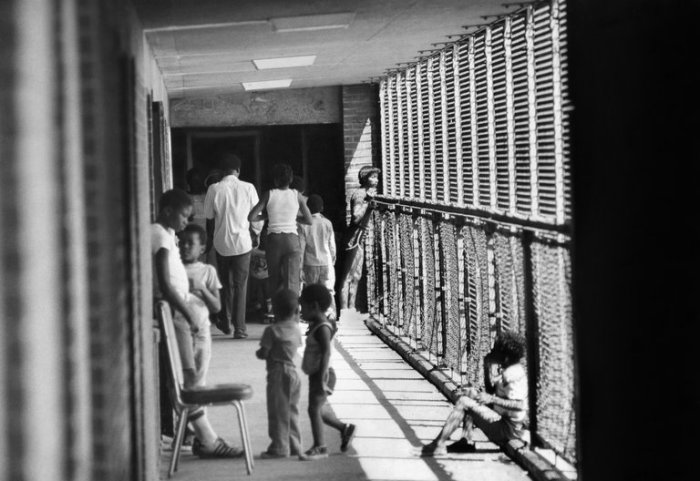
Anyone who grew up in any of Chicago’s projects is a survivor in my eyes, a warrior. It meant they not only escaped the drugs, violence, poverty, neglect, and gangs, but they also escaped literal death. Perched above the high-risers of Robert Taylor and Cabrini Green, snipers (aka Gang Members) with high-powered rifles would sit on a top floor (in a vacant apartment) and shoot their rivals. These bullets though, often hit innocent bystanders, mostly children.

I remember my Uncle coming to school to get us early because the buildings were shooting, and we had to run to our building. When I say it was a Warzone, I mean that literally. And none of us project kids ever got counseling or therapy for the things we saw. Not even the classmates of the seven-year-old Dantrell Davis from Cabrini who was shot by a sniper on his way to school in 1992 in front of his mother, teachers, police officers, and classmates.

Historical

Writing a memoir is no easy task so my approach is to research and write this as if I am writing a historical novel. Since I enjoy writing Historical Fiction, I want to incorporate history into my testimony. Instead of focusing on my experiences only, I want to take us back into the politics of some of what was going on in the world I did not have knowledge of as a kid. There’s my world where I can only see what’s in front of me and around me and then there’s the world at large. How did the decisions of others affect me, one of 21,000 children growing up in what became known as one of the poorest urban communities in the United States, a concentration of poverty they called it?

I want to go into how the projects under the Chicago Housing Authority (CHA) replaced the Chicago Slums, the discriminatory policies like redlining that kept blacks from purchasing homes in their own neighborhoods, the kitchenettes and one-room basements blacks lived in during the 30s, 40s and 50s, the beacon of hope the projects promised as a replacement, the mixed-community that was there (because whites and blacks both lived in the PJs!), the racial riots that never made the news, and the racist policies that caused many white families to move out of the projects and into the suburbs.

And what about the Plan for Transformation that demolished Public Housing and replaced them with a mixed-income community of condos and townhomes? What did this cultural mix mean for former public housing residents? And who was Robert Taylor? The black man on the board of CHA who opposed building the projects on the same land as the slums? The black man who wanted to spread the buildings out, so they fully integrated blacks throughout Chicago and who, after CHA refused, quit. I hope that if I do this, it will be a much enjoyable read.

I want to incorporate both history and personal testimony with the testimony supporting history. I remember for instance that whole “Homie the Clown” Scare of the early 90s. I remember that because I had nightmares of the clown coming into our apartment and chasing me around the couch. In 1991, rumors surfaced that a man who we called “Homie the Clown” was riding around in a van kidnapping and killing kids.

“Homey the Clown,” was the name of a character played by Damon Wayans on the early 90s sketch-comedy show In Living Color. The character was an angry black ex-con who carried a sock for knocking bad kids upside the head. His catchphrase was “Homey don’t play that.” Our “Homie the Clown” was allegedly dressed as a clown and went around kidnapping kids. Rumors said that he rode in a van and liked to stand next to mailboxes eating bananas.

This sounds silly now, but it was serious back then, just like the recent clown scares. We got let out of school early and children were afraid to walk by mailboxes. It also didn’t help that Stephen King’s IT had also just come out.

Community

It wasn’t all bad though so I want to talk about the close-knit community that existed there too that never made the news. Generations of families grew up together in what is rarely seen today. My mother’s friend, who lived next door, helped her to babysit. People watched one another children, shopped together, stepped up when someone was in need and shared food. We could go next door or downstairs to ask if someone had sugar or flour. We bartered services and passed along information about job openings or what was new at the Aid office and the candy lady was an entrepreneur. She used her food stamps to open a candy store back when you can get one piece of candy for every penny you had, better known as Penny Candy. People threw house parties and sleepovers.

Robert Taylor was not just a concentration of poverty. It was also a thriving community. When things were good, they were really good, and everyone was family. But you didn’t see this on the news. We were not all crack babies. We were not animals.