I’ll Carry It With Me

047

From the bowels of the deep south
To the place of the rising sun
She’ll stretch her roots to the ends of the Earth
And her scent to the universe edge
From the Nile
To the Euphrates
Her soul is Langston
And has grown deep like the rivers

On her bark
Are the names whipped out of her ancestors skin
Pocketbook scriptures ripped out from underneath their tongues
And she stands there
Towering over the people who pass her by
Singing their song in the wind

She remembers the scratchy fiber
It was course and woolly
Like Nyongo’s hair
When they tied her arms
Around the Magnolia

She was there when Moses died
They buried his bones under the shadow of her roof
Tied bright yellow ribbons to her branches like shackles on her arms
So that Tubman can tell that she was a slave
And carry her falling leaves to freedom
She sings her song
From the bowels of the deep south
And the deep North
clean across the Atlantic
And on up to Spain
Where the ships of Tarshish came first

But you will never know of it
Not when you see her standing there
All tall
And full of pride
her petals are soft and delicate
and burning passion like the sun
But I won’t forget
I’ll bottle her scent and carry it with me
The history of her children
The memory of the hanging tree

Writer’s Quote Wednesday – Bernice McFadden

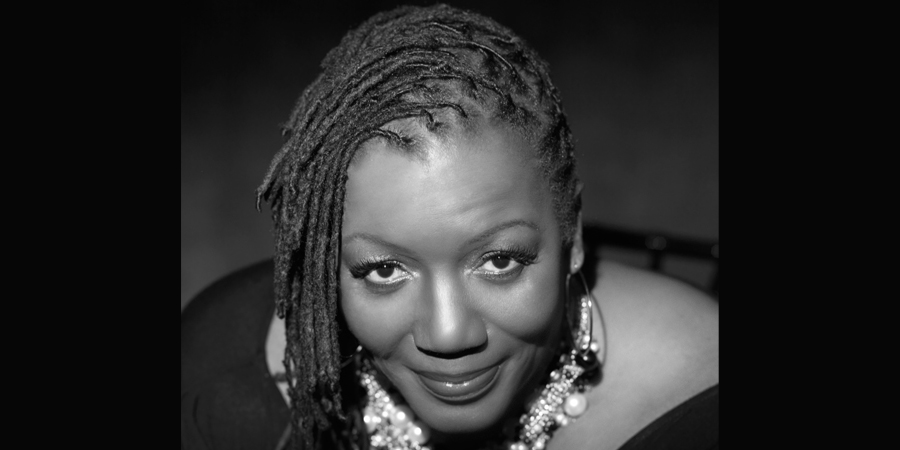
Good Morning Lovelies and welcome back to another segment of Writer’s Quote Wednesday as hosted by Colleen of Silver Threading. This week I am quoting from Bernice McFadden:

900x400_BW2“I write to breathe life back into memory and to remind African Americans of our rich and textured history.” – Bernice McFadden

I had to reread this quote a few times. I understood it well. I had to reread it to make sure they were not my own words. Its as if McFadden had found a way into my head. Maybe the ancestral blood that links our DNA pulled from the genetic instruction and spoke our hearts into words. Maybe she just heard it in my bones, but this is one of the many reasons why I write: “To breathe life back into memory and to remind African Americans of our rich and textured history.” The quote suggests there is something not living among us, something not honored, not recognized, not praised. It is my hope that my work can be part of the resurrection

About The Author: From Her Author Website

BERNICE L. McFADDEN is the author of nine critically acclaimed novels including Sugar, Loving Donovan, Nowhere Is a Place, The Warmest December, Gathering of Waters (a New York Times Editors’ Choice and one of the 100 Notable Books of 2012), and Glorious, which was featured in O, The Oprah Magazine and was a finalist for the NAACP Image Award. She is a three-time Hurston/Wright Legacy Award finalist, as well as the recipient of three awards from the Black Caucus of the American Library Association (BCALA). She lives in Brooklyn, New York. The Book of Harlan is her latest novel.

*********************

010516_2129_writersquot1

They Don’t Know Who They Are

There’s a rumor taking place among African Americans in America. A rumor that has always been there but that is now being echoed from the mouths of others. We heard it first from Raven-Symoné and then Whoopi Goldberg, and now Stacey Dash.
jamestownvasign

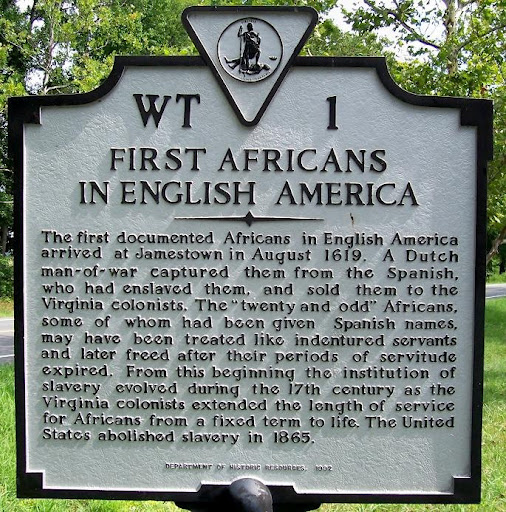
Let us start by saying that The United States has been drunk off the blood of the African American for 397 years now–that is from 1619 to the present, when blacks were first brought here in a servitude capacity on the banks of the James River in Jamestown Virginia. Since then blacks have fought in every American war and contributed to every major American architectural structure. Blacks have single handily been the backbone to American wealth and prosperity. Their slave labor is the reason many people are still wealthy today. It is no coincidence that they succeeded in the cotton fields where the Native did not. They were not brought to America by mere chance, but their captors understood their farming history as a people and their capacity to flourish. It is because of this that many African Americans feel that there is no one more American than they. This is when things get weird.

The servant is not invited to the party as a guest. The servant is invited as a servant. His job is not to mingle or even to sit at the masters table. The servant is not prohibited to kick his shoes off, go upstairs and rest. The servant is not there to get comfortable. The servant’s job is to serve. The black man and woman didn’t come to America on a plane. The black man and woman came to America in shackles. We’re not talking about the blacks who arrived here prior to 1619, we’re talking about the blacks who began what is infamously known as The Trans-Atlantic Slave Trade. These blacks, it is clear, have no idea who they are as a people. They have been robbed and spoiled and hidden into prison houses. They have no idea what’s going on around them or in front of them. They are wild bulls in a net and filled with the fury of the Almighty. Mistake it not that they are blessed. Any contribution from them is prosperity. The blood in their veins is still a covenanted one. They sing songs about redemption and have built communities out of nothing.
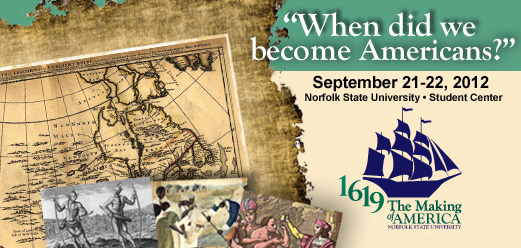
1619Image

However, at what point has American become synonymous with ethnicity, or rather, nationality? Were not your ancestors considered less than human beings when this country was built? If given the chance do you think the founding fathers would not have signed the constitution in your blood? You cannot align yourself with the Native because he too had you as slaves. Did your rights not have to be amended or added on like a button to a shirt? What to the slave is the 4th of July?

The Mexican American is American. The Canadian American is American. The European American is American. The Irish American is American. All of these people are Americans because they live in America, but when we talk about the nationality, which refers to a country, who are you? Every other people in America can still point in the direction of their natural heritage except the African American in America. This perpetual state of ignorance has caused many of them to settle for being Americans. They don’t know who they are. Just because I help build someone’s house, this does not make it mine.

Brown Skin

Mississippi lips

Lousiana tongue

West African shaped nose

Skin kissed by the sun

Israelite Culture

American Captive

Egyptian Color

russet brown

seal

dark puce

blue black eastern man

blue black woman

symbols of authority over her head

natural beauty no longer dead

hair like sisal rope

braided

coiled

nappy

strong

prayer hands that crack open the sky

from the place of the rising sun

to a land that sought to shackle their tongues

run aways

slave ships

cotton fields

those days

share

croppin

jim crowing

freedom ridin

no more hidin

Mississippi lips

Lousiana tongue

West African shaped nose

Skin kissed by the sun

brown skin

Must Reads: Negro Slave Songs in The U.S.

51oVlfHmDDL._SX331_BO1,204,203,200_

This is a highly recommended book for African Americans who want to study history. “Negro Spiritual Songs” were not made up babble at random but they were songs that talked about the history of the African American in America. Massa was not just a broken dialect of the word “Master” but it is actually a Hebrew word meaning “Oppressor”. Black people were only illiterate to the extent that they did not read and write English but it doesn’t mean they could not read and write period. What if you were taken to China and dropped off, would you be able to read and write Chinese? Fluently at that?

The point is that if you do not know enough of your history to go back 300 years ago and help your people then, you will not be able to help your people today. If you couldn’t liberate them 300 years ago you cannot do it now.

Don’t allow someone to tell you your history, study your history. If they didn’t treat you right, what makes you think they taught you right?

Click Here To Buy On Amazon. Used Copies Are $0.01!

The Evolution of the Blog

blog-laptop

I was fulfilling some orders this morning, you know the daily grind, and my thoughts fell on blogging in general. I thought about the history of blogging and how it has changed over the years. But what my thoughts focused on more so is how the increase in technology seemed to have downgraded the professional image of blogging in the eyes of the (wait for it) blogger.

When we launch these blogs, I do not think we really understand its significance. At least I didn’t.

Anyone can create a blog today. It is as easy as signing up for a Word Press free account. You can write about what you want and organize your blog how you see fit. Though it is easy to do, have you ever thought about what it means to be a blogger? I remember watching television over the years and seeing someone speak. Sometimes the person speaking had a title that said “Blogger” and as he or she spoke concerning their subject of expertise I never second guessed that they were a professional. “Blogger” was no different to me then than “Attorney at Law” or “Psychologist”. That is because before the blog evolved into what it is today, it was a big deal.

“The modern blog evolved from the online diary, where people would keep a running account of their personal lives. Most such writers called themselves diarists, journalists, or journalers. The Open Pages webring included members of the online-journal community. Justin Hall, who began eleven years of personal blogging in 1994 while a student at Swarthmore College, is generally recognized as one of the earliest bloggers, as is Jerry Pournelle. Another early blog was Wearable Wireless Webcam, an online shared diary of a person’s personal life combining text, video, and pictures transmitted live from a wearable computer and EyeTap device to a web site in 1994.

The blog was independently invented by Ian Ring, in 1997. His online journaling platform was called an “e-journal”. Ring’s project was later abandoned, but was rewritten in 2006 but didn’t become popular amid the overwhelming flood of other CMS systems becoming available, including WordPress. Ring still maintains that he “invented the blog”, which is technically true even though there were other projects that could make the same claim with greater authority.

Another early example of an early online entry into the evolution of blogging was created by Dave Winer. Winer is considered a pioneer of Web syndication techniques and has been considered one of the “fathers” of blogging. As the editor of Scripting News claims that his site “bootstrapped the blogging revolution and that it is the longest running Web Log on the internet”, Winer did not use the term “blog” and has never claimed the term. However he has gone on record as saying that “The first blogs were inspired by this blog, in fact many of them, including Barger’s Robot Wisdom, used my software.”

Websites, including both corporate sites and personal homepages, had and still often have “What’s New” or “News” sections, often on the index page and sorted by date. One example of a news based “weblog” is the Drudge Report founded by the self-styled maverick reporter Matt Drudge, though apparently Drudge dislikes this classification. Two others—Institute for Public Accuracy and Arts & Letters Daily—began posting news releases featuring several news-pegged one-paragraph quotes several times a week beginning in 1998. One noteworthy early precursor to a blog was the tongue-in-cheek personal website that was frequently updated by Usenet legend Kibo.

Early weblogs were simply manually updated components of common websites. However, the evolution of tools to facilitate the production and maintenance of web articles posted in reverse chronological order made the publishing process feasible to a much larger, less technical, population. Ultimately, this resulted in the distinct class of online publishing that produces blogs we recognize today.” – Wikipedia

So what of all this? What’s the point?

coffee

From personal reflection, understanding the magnitude of what it means to blog helps me to maintain a level of professionalism on my blog; whether that is the appearance or the quality of the content. It helps me to remember that people are browsing the internet and coming across this blog from Google everyday in hopes of finding solutions to problems, or to overall be informed. It is not to say that blogs are not fun because I have lots of fun on this blog. And as we have read the first blogs were online diaries. Interestingly enough, many of the blogs I come across have this format.

The blogger is not a writer in the organized sense, just someone using the web as a way to publicly vent their thoughts (which I think we all do to an extent). It is just to say that I have come to look at blogging in a new light. As opposed to when I first started this blog, I place a kind of value on it now that I didn’t really think about before. Not value as in its my whole world or anything, but value as in the fact that real people are taking the time to stop here and to read and to learn. Therefore, how I present myself online, as a reflection of my real self, is not just some mediocre past time. What we write here is a big deal. Every day you are helping people in every aspect of their lives. To be a blogger then is kinda a big deal. I would even say it is something worth mentioning on a resume.

Timeline: Blogging Evolution:

January 1994
Swarthmore student Justin Hall creates first blog ever, Links.net.

December 1997
Online diarist Jorn Barger coins the term “Weblog” for “logging the Web.”

April 1999
Programmer Peter Merholz shortens “Weblog” to “blog.”

August 1999
Blogger rolls out the first popular, free blog-creation service.

January 2000
Boing Boing is born.

July 2000
AndrewSullivan.com launches.

February 2002
Heather Armstrong is fired for discussing her job on her blog, Dooce. “Dooced” becomes a verb: “Fired for blogging.”

August 2002
Nick Denton launches Gizmodo, the first in what will become a blog empire. Blogads launches, the first broker of blog advertising.

December 2002
Talking Points Memo highlights Trent Lott’s racially charged comments; thirteen days later, Lott resigns from his post as Senate majority leader.

December 2002
Gawker launches, igniting the gossip-blog boom.

March 2003
“Salam Pax,” an anonymous Iraqi blogger, gains worldwide audience during the Iraq war.

June 2003
Google launches AdSense, matching ads to blog content.

August 2003
The first avalanche of ads on political blogs.

September 2003
Jason Calacanis founds Weblogs, Inc., which eventually grows into a portfolio of 85 blogs.

January 2004
Denton launches Wonkette.

March 2004
Calacanis poaches Gizmodo writer Peter Rojas from Denton. Denton proclaims himself “royally shafted” on his personal blog.

December 2004
Merriam-Webster declares “blog” the “Word of the Year.”

January 2005
Study finds that 32 million Americans read blogs.

May 2005
The Huffington Post launches.

October 2005
Calacanis sells his blogs to AOL for $25 million.

December 2005
An estimated $100 million worth of blog ads are sold this year.

January 2006
Time leases Andrew Sullivan’s blog, adding it to its Website.

February 2006
The Huffington Post surges to become fourth most-linked-to blog.