I was sitting here thinking about how I got to this place of advocating for the restoration of Black history. If it were solely up to me, I would have chosen a less taxing, less unrewarding cause to advocate for.
However, in the words of Nina Simone, “I have no choice in the matter. An artist’s duty, as far as I am concerned, is to reflect the times.”
In school, I was not a student who loved history, and I certainly had no plans to teach it when I grew up.
Unlike other professions where a mistake can be smoothed over, history leaves no room for error. The slightest slip can draw the sting of a thousand voices ready to correct, dismiss, or condemn.
I’ve experienced people debating a point in a video or article they didn’t even finish watching or reading. Yet, here they are, flying Delta to the comment section to respond.
It’s like people talk with their mouths open, the meat still in between their teeth, droplets of spittle sky rocking out of their mouth from food they have not chewed properly, let alone swallowed.
In a time where many of the Civil Rights that Black people fought for are being stripped away, there is no safety net when the facts slip.
Still, I show up.
I press record and publish with hands slick from sweat, skin raw from the invisible cuts of criticism, and keep offering what my people literally bled to learn.
Even when I wonder why I’m doing this, I keep moving forward, not because it’s always fun. It is not. As the saying goes: “Heavy is the head that wears the crown.”
I move forward because I must, and because, to quote Toni Morrison, “This is precisely the time when artists go to work. There is no time for despair, no place for self-pity, no need for silence, no room for fear. We speak, we write, we do language. That is how civilizations heal.”
And so, while it is not always exciting, it is worth it.
I march on, a pen in my hand, a computer in my lap, and a calling in my heart.
As I learn more about self-publishing and strive to develop and sell better books, I realize how important it is to write a marketable book. As I speak with other writers who want to self-publish, I realize how important this stage is to the process.
Traditionally, publishers will turn down a book if it’s not marketable. In self-publishing, there are no gatekeepers to make that decision, as the author has more creative control.
The disadvantage to this, however, is that the self-published book that doesn’t have a market also doesn’t sell well, and the author learns the hard way why publishers tend to be so selective.
“No matter how you decide to publish, your book, ultimately, ends up a product in the marketplace—a product for sale. Yes, your creativity, authenticity and even inspiration make it stand out from the pack. However, often, more than these things, a bestseller is created by your ability to:
write a book that is unique in a category
write a book that is necessary in a market and category
write a book that targets a large potential audience
successfully target and promote to a market.”
Nina Amir, How to Write Marketable Books that Feed the Soul
Publishing is challenging, period. It doesn’t matter if you are self-publishing or publishing traditionally; it’s hard work.
But it’s even harder to push a book that has no market.
One way to discover this is to ask yourself questions.
Are there other books similar to the one I am writing that have been successful?
Years ago, I spoke with an author who said they wanted to write a cookbook that is also a self-help book and a memoir.
It would be difficult to market this kind of book because it has no clear focus, and there is no evidence of someone combining so many different genres in one book and doing it successfully. It is confusing, and there is no audience for it.
We frequently want to produce the most innovative and unique story ever written, which causes us to overthink. The concept that we have a completely original idea that has yet to be realized is a fantasy. It is not real. Each story idea has been tried before. What distinguishes a book is our unique perspective.
It’s YOUR voice that makes it different. It’s YOUR voice that makes it stand out.
Photo by Oladimeji Ajegbile
What’s the competition like?
What are the top five to ten books in your categories that are doing well? This is not to compare yourself to them and feel bad about it. This allows you to determine whether there is a need that you can supply. In what ways is your narrative set-apart? Are there any gaps in the market you can fill? The lack of this type of market analysis is why self-published books fail to sell. There is a lot of inventiveness, but more business principle implementation is needed.
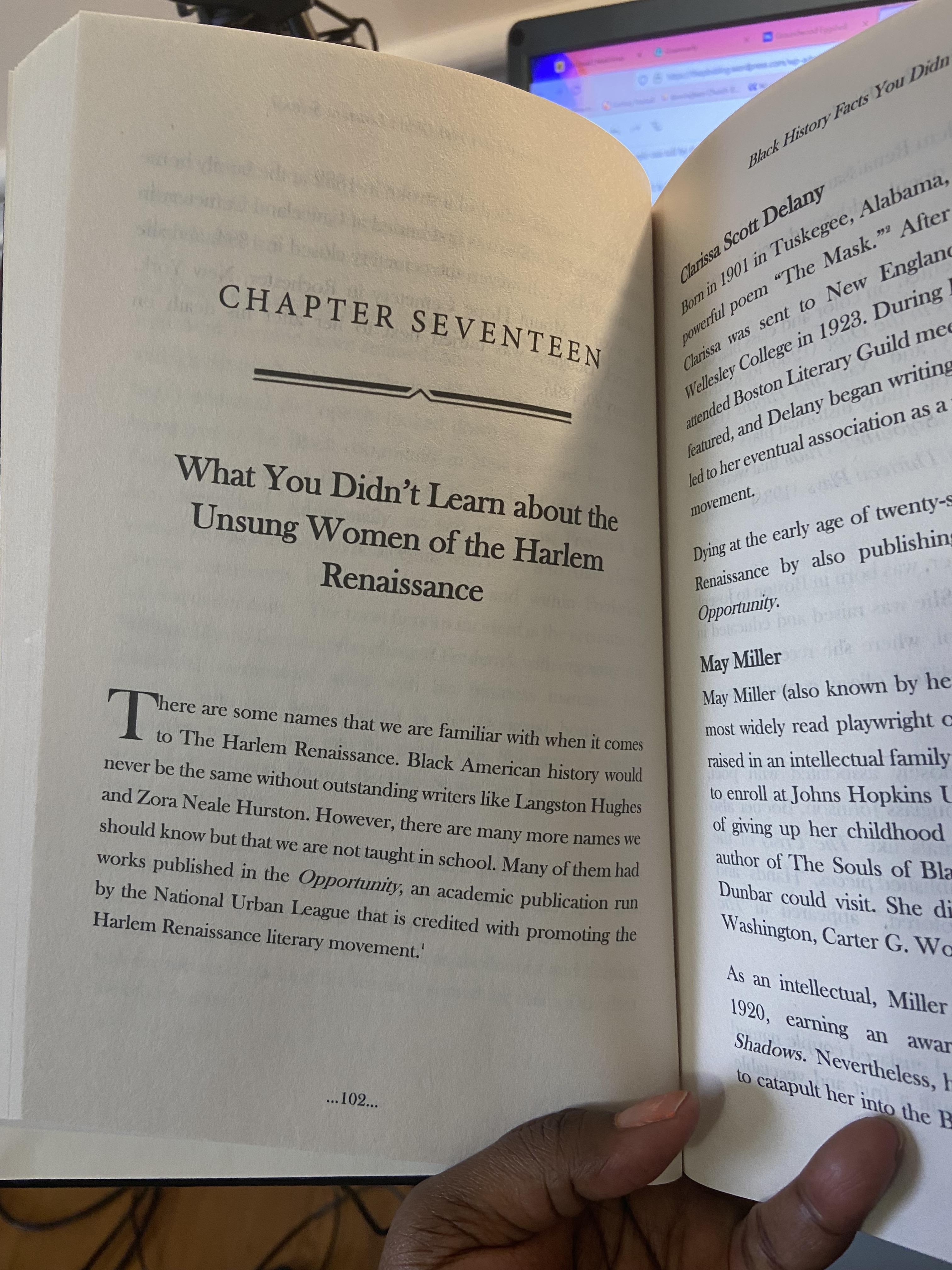
When I chose to publish Black History Facts, I knew I wanted it to be both instructive and straightforward. I didn’t want it to be so nerdy or long that the average individual became bored and stopped reading. I based this on other nonfiction history books that are comparable to mine but that I get bored with over time.
I also considered young readers early in their black history journey. Is there something a young person could read on their way to the longer, more advanced reads? I wouldn’t recommend Black AF History to my thirteen-year-old niece. It is an excellent education, but I know she’s not going to read 432 pages. I took all of this into consideration.
What are people’s reactions when I talk about my book? Do they gasp? Do they want to know more? Do they ask follow-up questions? Are they checking in to see if I’ve finished it yet?
If people keep asking about your book, that’s a clue that it is marketable because of its demand. If your logline or first few sentences intrigue them, you might have yourself a winner.
Another thing you could do is to use your blog as a test platform. Share a few chapters of a story and see what kind of engagement and feedback you get. I’ve written a few books from this blog by doing that, including Black History Facts.
“Publishing is a business, and the business owner needs to be as certain as they can be that the products or services they offer for sale will sell and make money for them. It is no different from a boutique owner deciding to stock one dress style and not another – or a building contractor using the same sub-contractors because they have demonstrated a superior service in the past.”
Nina Amir, How to Write Marketable Books that Feed the Soul
While editing, cover art, and formatting are must-haves for any book, writing a book that people want to read, one that is marketable, is the first step to self-publishing a book that sells.
Self-publishers who use Print-On-Demand may find themselves in a situation where, though they’ve done all they could to produce a superior product, the lack of resources to truly make it shine will still leave the book with that this must have been self-published glow.
That is why the paper you choose for your book is important as it could set the tone for how professional (or cheap) your book looks on the inside.
So let’s talk about it.
White, Cream, or Groundwood Eggshell?
If you have yet to reach the stage where you’ve published your book, bookmark this for later!
In short, you will get to choose your paper when uploading your files to KDP, Ingram, or whichever platform you choose and setting everything up for publishing. This is the paper used to print your book. Your choices will be white, cream, or, if you are using Ingram Spark, Groundwood Eggshell.
I do not recommend white paper except in cases of books with color images. Otherwise, you want to choose cream paper when publishing your book.
It is easier on the eyes than white and makes your book look more professional on the inside.
I always say there is a lot self-publishers can learn from traditionally published books. If you go to your bookshelf and crack open a traditionally published book, the paper is a creamy, off-white. For self-publishers, cream paper is the closest you’ll get to that.
Well, it was the closest.
Enter, my new favorite, Groundwood Eggshell…
I love how this paper makes my book look like it was printed by a publishing house.
It’s not always the case that a Self-Published book looks self-published because of poor editing or cover art.
It can also be because Print-on-Demand does not offer the same industry-level finish to the physical product as traditionally published books by larger publishers.
Some people can tell by the glossy finish and white paper the book has been self-published.
Annd it doesn’t help that Amazon puts a Not for Resale strip on their proof copies. (This was not always the case). At first, I thought it was a nice touch, but now it’s like a big red flag that screams: “I published this book on Amazon!”
That’s why I like Ingram Spark’s quality, specifically their hardcovers and Groundwood Eggshell paper option better than Amazon. The grade of the physical book is excellent and sets the book apart to where it looks like it was printed by a publishing house.
For the record, I am not saying a self-published book is not good unless it is like a traditionally published book.
I am saying that self-publishers do not always have access to the resources to produce a book that can compete with books published by companies with bigger budgets and better materials.
Imagine if Black schools could have received better resources, school houses, books, everything they needed, but remained all-black.
In the same way, imagine if self-publishers and indie authors everywhere had the same access to tools similar to traditional publishing houses but remained independent in the process.
When choosing your paper, I do not recommend you ever choose white except in the special case we discussed. Always go with the cream, and if you are using Ingram, try that Groundwood Eggshell.
If your book is properly edited and formatted, this paper should make your interior pop out.
Social media is not a marketing plan but can be part of a larger strategy because it is a connection tool. It helps you to find, connect with, and nurture your audience.
It is through these connections that you build the like and trust factor. People believe in you and trust you.
When people believe in you, they buy from you.
Here are Some Ways to Use Social Media as Part of Your Larger Strategy:
Share your journey and inspiration.
Why are you writing this book? Who are some of your favorite authors and their books? What inspired you to write in the first place? What’s the story behind your title? What’s your story?
Follow accounts related to your topic.
Who follows you on social media is less important than who YOU follow. These accounts influence you personally and train the algorithm to show you more of the same.
Engaging with accounts that are relatable to your topic, beliefs, morals, values, and passions will do two things.
First, it will make you aware of trending topics in the news related to your area of expertise, which will help you create relatable content.
Discussing current events related to your book’s genre can be a great way to generate interest and attention while using social media to share your thoughts and insights. This helps build your author platform, authority, and attract more readers to your work.
Secondly, following like-minded accounts and engaging with them will introduce you to more people who might enjoy reading your kind of book.
Center Content Around the Topics/Themes of Your Book
Focus your messaging on connections and themes related to your book. Consider how the post might be educational, inspirational/motivational, informative, or entertaining. Even when I post something silly to TikTok, I make sure it aligns with what I am known for.
My rule of thumb is that the post must have something to do with black history/history in general, poetry, or books in some way. As a result of only focusing on these things, I’ve grown my TikTok account from 3K to 26.1K followers, highest view at 1.5 million, and increased subscriptions to my email list.
Leverage Relationships
Collaborate with other writers, authors, and business people who write books similar to yours or offer a service you can benefit from. Can they get you on their podcast? Review your book? Promote it on their pages? Can they repost/share your book cover? Do they know of anyone who can offer a service related to what you do? As the old saying goes, “closed mouths don’t get fed.” A lot of opportunities to gain exposure comes from simply asking.
Social Proof
We live in a world where most people only believe what they see. Share screenshots of book reviews, excerpts, quotes, and recommendations from others to provide social proof that can help boost interest in your book. This proof can also showcase your writing through blog posts, articles, videos, graphics, and more. Give people a taste of what they can expect from the whole meal. People self-publish books every day so show what sets you apart.
I hope this helps get your 2024 book marketing efforts off to a good start!
I didn’t plan on posting today, but there is a debate going on about whether new authors should spend money on self-publishing their books.
In brief, publishing a book you want others to spend their money on will cost some financial investment if you care about your reader’s experience.
There’s a reason authors who sign with conventional publishing houses don’t pay money for editing and cover art. It is because the publisher has a team of experts to take care of that. In exchange, the author sells the rights to their book and receives royalty payments for sales.
As a self-publisher, you are the publisher, which means you are responsible for outsourcing everything you need to ensure a profitable product.
It doesn’t have to be an arm and a leg, but you want to, at minimum, cover editing, a decent cover design, print and digital formatting, and own your ISBN from Bowker so that you are the publisher of record.
Paying someone to publish your book is also not self-publishing.
If you paid someone to publish your book, including editing it and everything else, you have not self-published it. You have paid a vanity press to publish it for you.
I’ve heard too many horror stories from authors who say they will never self-publish again, only to discover they never actually self-published. They signed with a vanity press who uploaded the book to Ingram, and did little more than the author could have done themselves.
But this isn’t about vanity presses. This is about how too many people self-publish because they think it’s easier than all other routes: vanity, hybrid, and traditional. They have not considered if they have the time and resources to self-publish or if it’s even something they are really interested in.
The truth is that not everyone is equipped to be their own publisher, which is fine! First-time authors are not required to self-publish, but if they do, they must recognize the financial risks involved in providing a quality product worth people’s money.
You cannot throw a book together that you claim you didn’t do to make money and then sell this mediocrity to other people.
Cause technically, you can self-publish for $0, but it will look like it.
I blame the existence of this debate on the whole “art” conversation. Authors don’t think they have to invest financially because too many of us consider publishing a book a passion project instead of a business decision.
I didn’t just pop up out of nowhere teaching this through Google and YouTube University.
I teach this because I’ve lived through it.
And, while much of what I discuss is well-known on the tail end of 2023, it wasn’t when I first started. Self-publishing has been around for ages, but Print-On-Demand was new, and no one was talking about it, let alone their journey.
Without that first book, there would be no I am Soul or any other book.
I self-published my first book in 2010, and it was trash.
But I was 23 and unafraid.
There is something to be learned from young people.
The content was good, but the production was poor.
I knew nothing about editing, book cover art, or proper formatting.
Every mistake that could be made by self-publishing a book, I have made it and then some over the years.
But even though the book was far from perfect, I still sold copies. And even though I didn’t know what I was doing, my youthfulness had armed me with the boldness to put it out there anyway.
I cannot say if I would have taken that leap of faith, the proof of what is not seen, had I known everything there was to know about book publishing. It would not have been perfect enough for me.
The most insightful lessons you will learn is through doing the work.
Don’t let overthinking paralyze you into not taking action.
A pre-order is when you make a book available for purchase before its official release date—typically a week to a year in advance.
Traditionally, publishers have books available for preorder as early as six months to a year in advance. They do it because strong pre-sales tell retailers the book will be in high demand, affecting the number of books stocked at stores and allowing them to make bestseller lists.
Self-published authors can learn from this, not necessarily to make the bestsellers list but to gauge interest in their new book and give them time to market/promote it.
I believe studying the traditional publishing model can help Indie Authors become better self-publishers in some areas, but that’s a conversation for a different day.
By putting my book up for preorder, I have not only made early sales but already have a bookstore interest in stocking it. (I am also aiming for schools. We’ll see how this goes!)
Reasons for setting up preorders depend on your marketing strategy, which could be:
To gauge interest in the book based on preorder sales
To increase sales ranking
To get the proof copy of the book into the hands of early reviewers, bookstores, and organizations
To give you time to market /promote the book (on/offline)
To prepare your audience for the next book in a series
To build excitement and anticipation
Preorders that tend to do well
Authors with several books published and larger audiences tend to do better with preorders because they already have people waiting for their next book.
Even if the author has a small audience, preorders can be good if the book is in high demand. It is one of the reasons I put my black history book up for preorder so early.
I’ve built up enough hype and awareness for the book that people were already looking for it on Amazon and asking where they could buy it. Putting it up for preorder ensures I take advantage of the opportunity to catch interested readers while the book is on their minds.
blkhistorybook.com
Authors writing a series also do well. They might offer the first book at a discount and then have the next book on preorder. People who love the first book in the series will likely buy the next one.
Preorders that don’t do as well
First-time authors who don’t have an audience do not always do well with preorders and might benefit from just releasing the book. As stated, preorders are more useful for experienced authors because they already have an audience.
It is also not a good idea to set up preorders if you’re not able to commit to a publication date in advance.
The most important thing to remember is that you have much more flexibility and creative control as an independent author than if you were traditionally published. You can play around with different strategies and see what works.
Cover Reveals
Cover reveals are fun and all, but they serve no real purpose if people can’t buy the book or preorder it on the spot. I recommend holding off on showing the cover until you are ready or almost ready to accept orders.
Promoting Preorders
Although preorders are a beneficial marketing strategy for some authors, it is also a lot of work. Here are my top tips:
Consider running your preorders for a shorter time than the traditionalmodel. Just because your celebrity authors release books on preorder a year in advance doesn’t mean you have to. We are Indies. We do what we want. (*wink*) Yours can be as short as two weeks to a month before release. Also for Amazon, the preorder only counts on the day of the order. This means that the longer the preorder period, the harder it is to sustain a high ranking on that book. (If your goal is to achieve a high ranking.)
Preserve most of your energy for when the book is out. Too many authors get hung up on the release date and wear themselves out. Remember that your book will sell for weeks, months, and years afterward, so pace yourself. If your preorders are through Amazon, you still receive your royalties per their regular royalty payment schedule after your book is published anyway, not before.
This is my first experience running a lengthy campaign, but I’m saving most of my energy for when the book comes out. Those of you who know me are aware that I rarely do anything without a purpose. Because I anticipated my schedule would be hectic toward the end of the year, I postponed the release until the new year. I’ll put it to the test and, of course, report back!






 The PBS Blog