Coconut Oil Based Toothpaste


Note: I am not a healthcare professional and this should not be substituted for professional advice. I am simply sharing my experience as usual. Please consult a professional if you feel you need to before trying anything new.

***

Oral health has a lot to do with your overall health. In fact, bad teeth and gums can lead to heart disease when the bacteria from gum inflammation, lead to gingivitis and, if left untreated, this Bacteria enters the bloodstream and travel to the heart’s arteries, causing them to harden. Plaque starts to grow on the arteries’ inner walls, which can restrict blood flow throughout the body.

I wish someone would have taught me this a long time ago because my teeth need lots of work. There is one thing I am proud of about them though. Despite everything that’s wrong with them, there’s a silver lining in that I am thirty years old and have never had a cavity.

I don’t like to use traditional toothpaste much. It’s too sweet and makes me feel like I am brushing my teeth with candy. It’s to the point now that I don’t even think it makes your breath smell good at least. So, sometimes I substitute with Coconut Oil Based Toothpaste I make myself with common items I can always find around the house.

Ingredients

  • Coconut Oil
  • Baking Soda
  • Peroxide
  • Mint or essential oil of choice
  • Stevia Powder

How it Works:

1/2 cup Coconut Oil

2-3 Tablespoon Baking Soda

2 small packets Stevie powder

One capful peroxide (opt)

10-15 drops essential oil

Melt coconut oil (or slightly soften…I recommend slightly softening. Completely melted doesn’t work well for me).

Mix in the other ingredients per their measurements and stir well.

Let cool completely.

As the coconut oil hits your teeth and gums, microbes are picked up as if being drawn to a powerful magnet. The bacteria hiding under the crevices in the gums and pores within the teeth are sucked out and held firmly in the solution. Brushing with Baking Soda removes stains aroused by tea, coffee, sodas, and smoking. Mixing Baking Soda with water releases free radicals from the mixture. These free radicals break down stain molecules on the enamel that can be scraped off with a toothbrush.

“Hydrogen peroxide is used safely and effectively in dentistry today. While its most common application involves tooth whitening, significant health benefits are documented using hydrogen peroxide to treat gingivitis and periodontitis.” (Jeanne Bosecker, BSN, RDH) However, using peroxide is optional (Learn More Here). You can successfully mimic this mixture without it. If you choose to use peroxide (as I do, it mixes so well with the baking soda), be sure to get the 3% Hydrogen Peroxide to be sure its safe for oral use.

The Stevia Powder and essential oils provide a fresh taste and good smell (though I tend to leave the Stevia Power out.) Baking Soda and Peroxide may be good cleaners but the combination doesn’t have a fresh minty smell. Baking Soda is also nasty so the oils help with that taste. I have also found it useful to use mouthwash afterward.

Storage

You can put it in any container in a cool dry place or even put it in a Ziploc bag. You can really get creative with the Ziploc by cutting it at the corner and taking an old toothpaste tube, cut the top part off and then insert and adjust the Ziploc bag.

While I do still use toothpaste because of the abrasiveness of the baking soda on the enamel, I like to use my coconut mixture more and have found it does a better job than traditional toothpaste. It’s not real sweet and makes my mouth feel fresh.


Yecheilyah (e-see-lee-yah) is an Author, Blogger, and Poet of nine published works including her soon-to-be released short inspirational guide “Keep Yourself Full.” Learn more by exploring Yecheilyah’s writing on this blog and her website at yecheilyahysrayl.com. Renaissance: The Nora White Story (Book One) is her latest novel and is available now on Amazon.com.

Black History Fun Fact Friday Returns

cFhOn2k

As long as you’re trying to change a system within that system it will never work. If you were never designed to be part of the system, you cannot expect that system to treat you with fairness. If you never intended for a people to be free within your gates there will always be laws in place to ensure that they are never freed. Chattel Slavery, Black Codes, Jim Crow, Convict Leasing, Police Brutality and the like are all examples of America ensuring that a people remain as they were intended to be, slaves.

I am just a week in my new place and still without internet and have been blogging from my phone, but Black History Fun Fact Friday is returning soon.

We’ll be starting a series (because it’ll take multiple posts) on:

The History of Oppression in America

We’ll touch on the hidden message behind the #TakeAKnee protests, The relocation of Japanese-Americans into internment camps during World War II, the stealing of Native American land, the stigmatizing of Mexicans in the 30s (the origin of the name Marijuana for cannabis to make it seem like a “Mexican Drug”) the Drug Enforcement Act of 1914, the War on Drugs that promoted crack as the Black man’s drug and the association of Heroin with Chinese American Immigrants in the late 1800s, early 1900s.

Meanwhile, you can catch up on previous Black History Fun Facts by visiting the page HERE.


Stay tuned and enjoy the weekend.


Shadows and Lights of Harlem – Interview with Author Yecheilyah Ysrayl

I am mobile and will be over the next few days so I’ll be sharing Guest Posts this way because I cannot reblog.

Be sure to stop by Sarah’s blog for my latest interview on Renaissance: The Nora White Story (Book One)

Special thanks to Sarah for having me.

CLICK THROUGH TO THE ORIGINAL LINK BELOW:

https://theoldshelter.com/shadows-and-lights-of-harlem-interview-with-author-yecheilyah-ysrayl/

Black History Fun Fact Friday – Historic Rivals: W.E.B. Dubois vs. Booker T. Washington

Today, I thought I’ll do something fun. I would like to do a few of these so let’s call this part one. Let’s see who was at war and why. Of course, we have to start with the famous rivalry of all time:

W.E.B. Dubois vs. Booker T. Washington

Yecheilyah sits in a chair with papers as W.E.B. Dubois and Booker T. Washington step into the ring. Dubois adjusts his tie, shaking hands with members of the NAACP (National Association for the Advancement of Colored People….am I the only one who finds it odd this organization still refers to us as Colored people?? Deuteronomy 28:37…anyway, as usual, I digress lol).

Washington sits in a chair. Surrounded by students, he crosses his legs and flips through a book.

“Ya know,” Washington looks up, “I’ve read The Souls of Black Folk. I must say I am not very impressed.”

Dubois brushes lint from his jacket, “I didn’t think you would be.”

EC: *Clears throat*. Alright gentlemen. We’re about to start.

NAACP members and students step down from the ring and sits in the audience with those reading this blog.

Washington puts his book to the side. “Noted”, he said staring at Dubois. “Besides, I must say Yecheilyah, I love what you’re doing with your work. It is my belief that we should be accountable for ourselves in every way.

EC: “Than…”

“Booker, your proposal”, interrupted Dubois, “that we should take accountability for ourselves is not only unfounded but also paradoxical. It would be difficult for Negros to gain any real power, for instance, if they are denied the right to vote.”

Washington put up a hand, “IF, Negros had real power, it would be in education in the crafts, industrial and farming skills and ownership of their own businesses.”

“And how, Mr. Washington, do you suppose Negros could operate these businesses sufficiently without an education?”

Washington sighs, “I do not care to venture here an opinion about the nature of knowledge. It is clear to anyone who reflects on the matter that the only kind of knowledge that has any sort of value for a race is knowledge that has some definite relation to the daily lives of the men and women who are seeking it.”

Dubois throws his hands into the air, “You’re promoting submissiveness by asking the Negro to relinquish fundamental privileges. First, you ask him to relinquish his political rights and then his civil rights. This only speeds up the process to which Negros have regressed.”

Washington stands, pointing his finger at Dubois “You’re taking my words out of context. I am simply stating that it is my aim to teach students to live a life and make a living by which after they graduate they can return to their homes and find profit and satisfaction in building up the communities from which they’ve come.”

EC: Gentlemen, please. We don’t have time for this. I respectfully ask for you to both be silent so that we can give the people a little bit of a background on you. Is that alright?

NAACP member runs up to ring, hands Dubois a drink of water as he loosens his collar and takes a drink. Member returns to his seat among the bloggers, “I concur. Let’s move on”, said Dubois.

Washington returns to his seat, crosses his legs, “Indeed.”

As you can see, these two were not besties. Tensions always existed among Black intellectuals and Blacks who were more grassroots and this separation exists today. W.E.B. Dubois and Booker T. Washington are great examples of this.

William Edward Burghardt DuBois was born free in 1868 in Great Barrington, Massachusetts in an integrated community. He attended local schools and excelled in his studies. When Dubois finally encountered racism, the experience changed him and he decided to further his education with a focus on equal rights for Black Americans. Dubois was the first Black man to earn his Ph.D. from Harvard in 1895.

Cheers erupt from members of the NAACP. Dubois takes a bow.

Booker T. Washington was born into slavery in 1856 in Virginia. After the Civil War, he worked in a salt mine and as a domestic for a white family and eventually attended Hampton Institute, one of the first all-black schools in America. After completing his education, Washington began teaching and in 1881 was selected to head The Tuskegee Normal and Industrial Institute in Alabama. The school’s purpose was to give African Americans practical, hands-on skills and would later be known as Tuskegee University.

Whistles come from Washington’s students. He waves.

Dubois wanted to focus on creating an educated black intellectual class he called The Talented Tenth, in which ten percent of the intelligent of the race would lead and guide the direction of the other ninety percent.

Dubois: That is right. Political power and sovereignty should remain important.

*Washington rolls eyes*

Washington on the other hand, born into slavery, thought former slaves and their descendants should be financially independent and that black communities could prosper only by way of owning their own businesses.

Washington: Indeed. Blacks should elevate themselves through hard work and material prosperity.

*Dubois coughs*

Both sought to advance the plight of African Americans and by the early 20th century both Washington and Dubois were two of the most influential Black men in the country. However, their ideologies were very different. Dubois was more focused on education and civil rights as the only way to achieve equality. Washington was more grassroots and focused on fundraising for the Institute and teaching young people how to work with their hands, farm, and entrepreneurship. Dubois and Washington’s differences came to a head in 1903…

Washington: How do you young people say it now? ‘Bring that up.’

Dubois: Let’s hear the entirety of the matter first.

EC: Umm. If I can just finish this real quick. I’m almost done.

Washington: May I ask a question?

EC: Sure, of course.

Washington: What is a Bestie?

EC: Its just short for like Best Friends.

Washington: I see. And I assume one would have to be friends first before they are best friends. Am I correct in this assumption?

Dubois: You are taking up all the time.

EC: We do need to move on but I’d love to explain it to you later.

Washington: I would like that.

*Dubois shakes his head*

The men go silent. Smiles and waves at readers.

Dubois and Washington’s differences came to a head in 1903 when Dubois published The Souls of Black Folk where he directly criticized Washington and his approach.

EC: That’s a little below the belt, don’t you think?

Dubois: Well, Negros should stand up against Washington’s contentions.

EC: Dang.

Washington: I am not going to justify that with a response.

Dubois: Then don’t respond.

Washington: Do not tempt me, Mr. Dubois.

EC: Well, that’s our time. Gentlemen, thank you, both for taking the time out of your super busy schedules to have this discussion. I know you have lives to save. Literally. I do hope you can find some common ground.

Washington: I doubt it.


In the end, Dubois and Washington did agree on something. Though they had two different ways of going about it, they each thought education was important to advancing ones life.

Stay tuned for our next rivals!

#RRBC Watch #RWISA Write Showcase Tour: WORDLESS by Beem Weeks

Welcome to Day Four of  The WATCH RWISA (RAVE WRITERS – INTERNATIONAL SOCIETY OF AUTHORS) WRITE Showcase Tour, a branch of The Rave Reviews Book Club.

Unfortunately, I cannot go on with the rest of the tour. This will be my last feature. I do hope the writers go on to do well and that you will show your support and appreciation for the rest of the hosts taking part in this program.


Author Photo. Beem Weeks.

Wordless

By Beem Weeks


“What’s that word say?”

“That’s an easy one, Daddy. Just sound it out.”

Levi Bacchus can’t read. 36 years old, and he’d never learned the meaning of a single sentence.

“I just ain’t cut out for this, Jamie Lynn.”

The girl’s countenance dropped in disagreement—just like her mother, that one.

“So, you’re a quitter now?” she bellowed, sounding too much like the woman who’d walked out of their lives two years earlier.

Levi took offense. “Mind your manners, Missy. I ain’t never been called no quitter.”

“Reading is something everybody should be able to do, is all I’m saying.”

“It’s easy for you,” Levi argued. “You’re just a kid, still in school. You have teachers telling you what to do and how to do it. I’m just too old for learning.”

The girl narrowed her gaze, jabbed a finger into the open book. “From the beginning,” she demanded.

His heaving huff meant he’d do it again—if only for her sake.

Words formed in his head before finding place on his tongue. Some came through in broken bits and pieces, while others arrived fully formed and ready for sound.

Jamie’s excitement in the matter is why he kept trying. Well, that and the fact he’d long desired the ability to pick up the morning paper and offer complaint or praise for the direction of the nation. All those people in the break room at the plant held their own opinions on everything from the president to the latest championship season enjoyed by the local high school football team.

“That’s good, Daddy,” Jamie said, patting her father on the arm. “That’s really good. You’ll be reading books before too long.”

A smile worked at the edges of his lips, refusing to go unnoticed.

“I’d like that, Sweet Pea.” That’s all he’d say of the matter. If it came to that, well then, he’d have accomplished something worth appreciating.

Levi harbored bigger notions than merely reading books. When a man can read, he can do or be anything he wants to be. His own father often said a man who can’t read is forever in bondage. How can a man truly be free if he cannot read the document spelling out the very rights bestowed upon him by simple virtue of birth? No sir; being illiterate no longer appealed to him.

Of his immediate family—father, mother, two older brothers—only Levi failed to attend college. Oh, he graduated from high school. Being a star quarterback will afford that sort of luxury. But when those coaches from the universities came calling, low test scores couldn’t open doors that promised more than a life spent in auto factories.

He’d seen a show on TV about a man who’d been sent to prison for five years for armed robbery. While there, this man learned to read, took a course on the law, and became a legal secretary upon his release. Eight years later, he’d earned a law degree and opened his very own practice.

Levi didn’t see himself arguing cases in a court of law—defending criminals most likely to be guilty just didn’t appeal to his sense of right and wrong. What he did see, however, is the need for a good and honest person to run the city he’d forever called home.

“Think I could be mayor?” he asked his daughter.

Jamie Lynn always grinned over such talk. “Everybody has to have a dream, Daddy.”

It’s what she always says.

Everything begins with a dream.

She gets that part of her from her mother.

“Once I can read without stopping to ask questions,” he mused, “maybe I’ll throw my hat into the ring, huh?”

“There’s nothing wrong with asking questions,” she answered, weaving wisdom between her words.

*      *      *

She’d been a girl scout, his daughter—daisies and brownies before that. It’s the other girls who bullied her out of the joy that sort of thing once offered. Straight A’s have a way of making others feel inferior, even threatened.

But Jamie Lynn isn’t the type to pine or fret. She chose to tutor—and not just her father, either. Kids come to the house needing to know this and that among mathematics or English or science. Her dream? To be a teacher one day.

And she’ll accomplish that much and more.

Her mother had that very same sense about her as well. She knew what she wanted in life, and cleared the path upon which she traveled.

High school sweethearts they’d been, Jamie Lynn’s mother and father. She’d been the pretty cheerleader, he’d been the All-American boy with a cannon for an arm. She went to college, he didn’t.

But she returned to him, joyfully accepting his proposal for a life together. Her degree carried her back to the high school from which they’d both graduated. This time, rather than student, she became teacher—American History.

Levi went to work building Cadillacs in the local plant. It paid well, offered medical benefits and paid vacation time. Life settled into routines.

Then came their little bundle. This didn’t sit well with the newly-minted history teacher. No sir. It’s as if Levi had intentionally sabotaged his own wife’s career in some fiendish plot to keep her home.

Words of love became “stupid” and “ignorant” and “illiterate ass.” She walked out one evening and never came back to the home they’d built together.

A former student, he’d heard—five years her junior. They’d ran off together, supposedly making a new home somewhere out west.

Levi didn’t challenge it. He received the house and the kid in exchange for his signature on those papers he couldn’t even read.

Jamie Lynn, she’s the light that shined in his darkness, showed him there’s still so much more living to be done. And learning to read, well, that just added to the adventure.

*      *      *

The night came when he read an entire chapter from one of Jamie Lynn’s old middle school books—straight through, unpunctuated by all those starts and stops and nervous questions. By the end of the month, Levi had managed the entire story—all 207 pages.

“We have to celebrate, Daddy,” she insisted.

It’d been the silly draw of embarrassment that twisted his head left and right, his voice saying, “No need to make a fuss, Sweet Pea.”

But fuss is only the beginning. “Dinner and a movie,” she ordered. “Then we’ll stop off at the mall and pick out a few books that you might like.”

There were stories he recalled from his boyhood; books other kids clutched under their arms and took for granted. Stories that stirred so much excitement in those young lives.

They’d belong to him now.

“You’re finally blooming, Daddy—just like a flower.”

And so was his daughter.

A teacher in the making.


Thank you for supporting this member along the WATCH “RWISA“ WRITE Showcase Tour today!  We ask that if you have enjoyed this member’s writing, to please visit their Author Page on the RWISA site, where you can find more of their writing, along with their contact and social media links, if they’ve turned you into a fan.  WE ask that you also check out their books in the RWISA or RRBC catalogs.  Thanks, again for your support and we hope that you will follow each member along this amazing tour of talent!  Don’t forget to click the link below to learn more about this author:

Beem Weeks RWISA Author Page


Yecheilyah’s Book Reviews – The Stranger by Joan Hall

Title:  The Stranger

Author: Joan Hall

Print Length: 102 pages

Publication Date: October 21, 2016

Sold by: Amazon Digital Services LLC

Language: English

ASIN: B01M8LJFMT

The Stranger is a short read about a woman named Julie Williams, the owner of Uncommon Grounds coffee shop, the wife of a loving man and two grown children who are doing well for themselves. Julie’s life is stable and put together and everything seems fine except the feelings Julie has of her mother.

Margie Smith has just passed and there are only a few people at her funeral. As the minister gives his words, it becomes apparent that both Julie and her husband did not like Margie. She is remembered as a mean woman who cared about only herself. Not only does Julie and Mark feel this way, but even Stella Green, the nurse who worked for Margie, found the woman difficult. It seems Margie was just a mean woman and I enjoyed trying to figure out why as the author gave bits and pieces of her persona. Meanwhile, someone is watching as Julie leaves the cemetery and he seems to have just as much disdain for Margie as she does.

Since the book is short I’ll leave it here. It’s a fast paced read and I enjoyed trying to figure out who The Stranger was following Julie. I thought the feelings she had toward her mother started to get a tad repetitive and Julie was starting to get annoying with it. I just wanted her to let it go because it didn’t seem that deep. However, this too plays into the mysterious feel of the novel. Who was Margie Smith really?

I’m starting to really enjoy these psychological reads and was excited to have caught onto The Stranger’s identity ahead of time which I gave myself cool points for. (It was like a mental game lol) The Stranger is a tad predictable for me personally and I wanted more on Julie’s mother. However, an overall enjoyable read. You can’t go wrong with a book that’s short, well written and to the point.

Ratings:

Plot Movement / Strength: 4/5

Entertainment Factor: 4/5

Characterization: 5/5

Authenticity / Believable: 5/5

Thought Provoking: 4/5

Overall: 4 / 5

The Stranger is available now on Amazon

51Sf99RVeuL

Be sure to follow Joan online!

Author Website: http://www.joanhall.net/

Twitter Handle: @JoanHallWrites

Facebook: https://www.facebook.com/joanhallwrites/

Goodreads:  https://www.goodreads.com/author/show/15256532.Joan_Hall

Pinterest: https://www.pinterest.com/joanhallwrites/

Black History Fun Fact Friday – Nora Holt

Did you know there was a woman writer during the Harlem Renaissance named Nora? Yup.

Nora Ad 2

One of the things I wanted to do with The Nora White Story project is to make everything make as much sense as possible. I know how important it is that everything fits the era to include names. Thus, I used names that were familiar with the time. Some of the names, like Nora, jumped out at me from the start. However, some of them were not so easy. To make sure everyone’s name (even minor characters) fit the time, I Googled the census data for popular names of the 1920s and scrolled through male and female names. So, who was Nora Holt?

b309ac2287f956bb144110c56b09e144
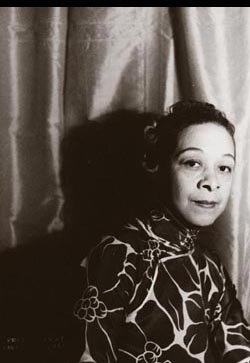
Nora Holt

Nora was a singer, composer and music critic. Born Lena Douglas in Kansas City, Kansas; Nora graduated from Western University of Quindaro, Kansas and later earned a Bachelor’s degree in music in 1917. In 1918, she earned her Master’s Degree in music at Chicago Musical College, becoming one of the first African-American women to complete a Master’s program in the United States. Her thesis composition was an orchestral work called Rhapsody on Negro Themes.

Nora was married quite a few times. On the fourth time, she changed her name from Lena to Nora when she married George Holt in 1916.

From 1917-1921 Nora contributed music criticism pieces to the Chicago Defender, a black daily newspaper. In 1919, she co-founded the National Association of Negro Musicians and then spent 12 years abroad in Europe and Asia singing at night clubs and private parties. Although composing over 200 works of orchestral music, one of the reasons Nora Holt is not well known is because her work was stolen. Upon leaving for Europe in 1926, she placed her manuscripts in storage when she returned they were gone. Only one piece survived because it was published prior to the theft and is called Negro Dance, (ragtime-based piano piece).

1005795l
Nora

Holt moved to Harlem in the early 1920s, where she became an important part of the Harlem Renaissance. She became good friends with novelist and critic Carl Van Vechten.

(You can meet some of these historical figures when they make special guest appearances in my new novel, Renaissance: The Nora White Story which releases tomorrow. Today (7/14) is the last day to get it at the reduced price of $1.99)

Nora was also a teacher. She studied music at the University of Southern California in the 1930s and went on to teach music in Los Angeles for several years. Nora was well rounded. Not only was she a writer and musician but she also ran a beauty shop. Apparently Nora knew how important it was to stay fly :-).

In 1943, Holt took a position as an editor and music critic with a black-oriented publication Amsterdam News and went on to live a full life. During the early 1950s and early 1960s, she hosted a radio concert series called “Nora Holt’s Concert Showcase”. It ran to 1964 and in 1966, she was a member of the First World Festival of Negro Arts in Dakar, Senegal.

holt_nora_douglas
Photo of Nora Holt, taken by Carl Van Vechten, 1955

Nora Holt died January 25, 1974, in Los Angeles.