Are You REALLY Promoting Your Book?

Are you really promoting your self-published book?

Or does it just look and feel like you are promoting your book?

  • If you are only telling people you wrote a book, but you are not telling them what the book is about, you are not really promoting your book.
  • If you only show us the cover of the book but do not educate us about the content and core message, you are not really promoting your book.
  • If you only post Amazon links to social media but do not discuss the book and what we can learn from it, you are not really promoting your book.

These things can be a part of book promotion. Still, alone, they do nothing to generate enough interest in people to want to buy the book, and that is what book promotion is:

A culmination of your activities and strategies to create awareness and generate interest in your book.

This includes but is not limited to:

Advertising: Paid Ads (or just ads in general), digital or print material, website or landing page, etc.

Publicity: Interviews, book reviews, media coverage, guest blog posts, podcasts, etc.

Social Media: Building engagement with readers through entertainment and educational content using any of the many social media platforms. Blogging can also fall under this and is a powerful tool for community.

Events: Conferences, Author Talks, Book Signings, Book Fairs

The purpose is to create enough buzz to interest readers to purchase the book.

  • Anytime you share a review from someone who reads your book, you ARE promoting your book.
  • Anytime you create content (graphics, excerpts, videos, etc) that educates or entertains people about your book’s message (nonfiction), characters, or plot (fiction), you ARE promoting your book.
  • Anytime you talk about the book on a podcast or in an interview, you ARE promoting your book.
  • Anytime you share your journey and what it was like writing the book, you ARE promoting it.
  • Anytime you write on a topic that is relatable to the things we can find in your book, believe it or not, you ARE also promoting the book.

We can do many things that look like book promotion on the surface but are ineffective in raising awareness among our readers about the book’s topic and why it’s important to them.

But I hope this post gets you thinking about deeper ways to connect with your audience!

If this has helped you, let me know!

Click here for more Indie Author Basics to encourage you through the Self-Publishing / Indie Author Process!

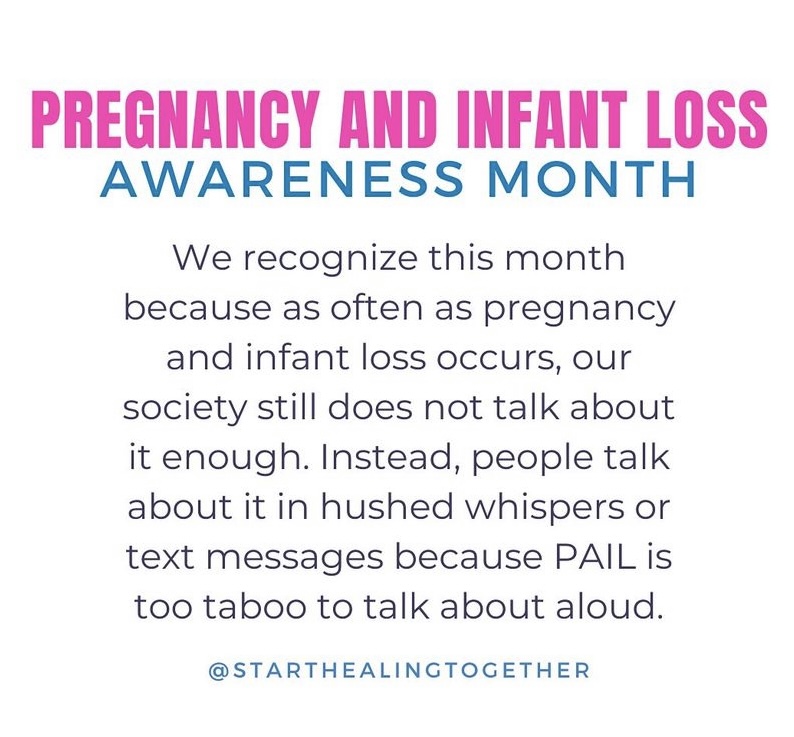
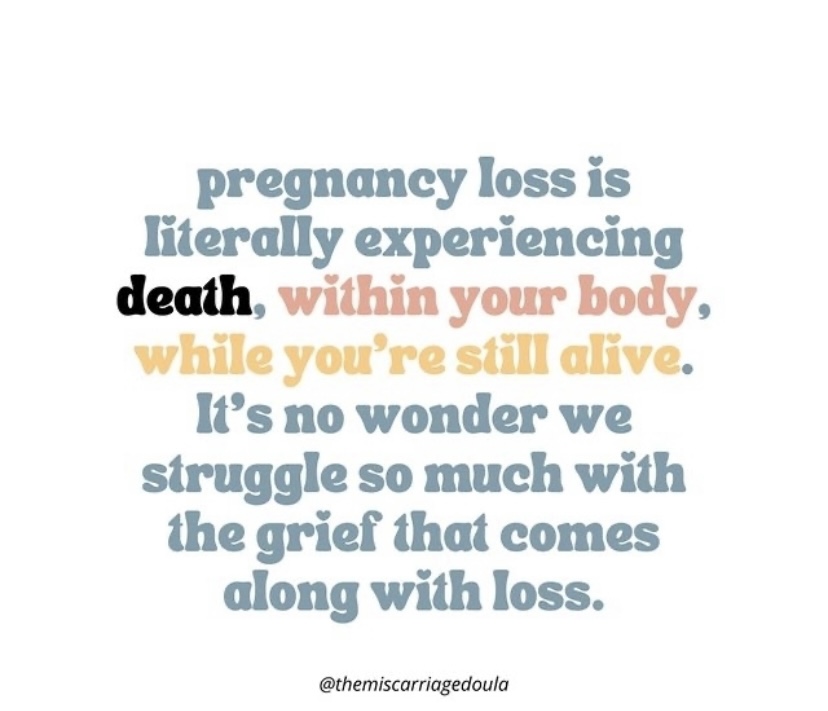
PAIL: Pregnancy and Infant Loss Awareness Month

If you log into my Instagram account and go to my for you page, you’ll see tons of pictures of pregnant mommies, infants, and babies.

I didn’t mean to do this. I watched one video of a cute little baby, and now my search bar looks like I am trying to adopt somebody’s chiren.

Even then, it didn’t occur to me that October is a month when we raise awareness of a special kind of loss.

Even as my heart grew sad over some of the pictures, I still did not realize why I was watching this.

My personal journey begins with a miscarriage in the summer of 2020 and then two ectopic pregnancies between 2021-2022. I experienced pregnancy three times (even going through surgery), but there is nothing to show for it.

October is Pregnancy and Infant Loss Awareness Month. It is a time to remember the women who have experienced loss through:

  • Miscarriages
  • Ectopic
  • Stillbirth
  • Infertility
  • Embryo Loss
  • Molar Pregnancy
  • Infant Loss
  • Child Loss
  • Neonatal Loss
  • Surrogate Loss
  • Failed Adoption
  • SIDS
  • Blighted Ovum
  • Chemical Pregnancy

If you’ve never heard of these, this is a great time to research them, to reach out to women/parents you know who have experienced loss, and to overall educate yourself about PAIL.

Tell Us What You Published Instead of How You Published

How often have you heard a traditionally published author say, “I’m a traditionally published author?”

They might say they are a published author but not a traditionally published one. That’s because there are millions of traditionally published authors.

In the same way, introducing yourself as a self-published author does nothing to help the person understand what you write.

It is not bad to call yourself a self-published author or to be proud of that. However, since many self-publishers have smaller budgets, we often desperately identify how we published instead of what we published to get people to take a chance on our books. But this strategy does not work well.

When I pitch schools and bookstores to carry my book, I rarely introduce myself as a self-published author. They will already know this when they look up my ISBN.

Instead, I discuss the book and why it is a good fit for their audience.

Instead of telling people, “I’m a self-published author,” and pushing your book in their face, identify your genre, book, and how it serves your target audience.

You can do this in one sentence:

Original: “I am a self-published author of three books.”

Revised: “I am the author of The Stella Trilogy, a Historical Fiction series that explores African American History, civil rights, and the struggles of Blacks in America.”

I hope this helps someone!

Click here for more Indie Author Basics to encourage you through the Self-Publishing / Indie Author Process!

Why Not Joy?

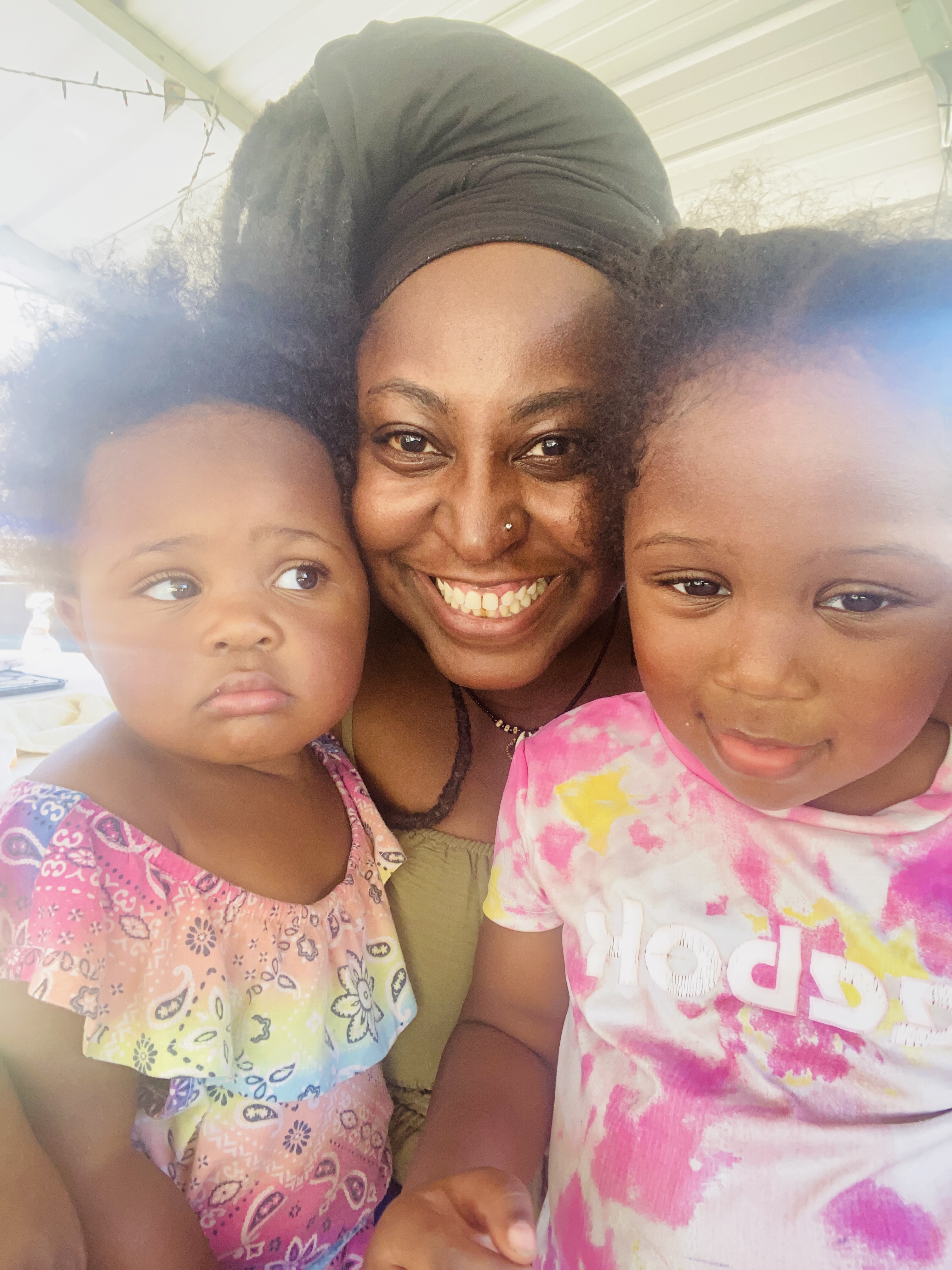
Spent time with these cuties this weekend!


Why write poems about joy in such a time as this?

This has been a constant question in the back of my mind. It is not something anyone has asked of me personally, but something that the subconscious, always overthinking part of my brain asks when it wishes to second-guess itself. And, in the rebuke of these thoughts, I answer:

“Why not joy?”

I do not mean always being happy when discussing cultivating a spirit of joy. No one is always joyful in the basic sense of the word. I do not mean toxic positivity or whatever that’s supposed to mean.

In the same way that we embrace anger, grief, and frustration (which are normal and have their place), we can also embrace more joy and gratitude. If sadness and depression suck our bones dry and drain our life force, then joy and gratitude can be a powerful life-saving nourishment.

As I’ve said in Black Joy: “Nobody talks about society’s addiction to Black trauma / how much more profitable it is to talk about pain than poems/depression than joy.”

This constant cycle of death and war is draining to the soul and rotten to the bones. Where do we find or hold onto our sanity without joy? Have we forgotten that it has always been here with us? If enslaved people found joy, why not us? Or do we believe we are that special of a generation that we can survive without it?

In “The Role of Joy and Imagination in a Revolution,” author Marii Herlinger writes: “White supremacy culture values objectivity, overworking, and neglecting self-care — joy interrupts that. White supremacy culture teaches us to be individualistic, self-serving, and distrustful of each other — love interrupts that. Therefore, joy, imagination and love are revolutionary tools which actively defy capitalism and white supremacy.”

Sounds like a page out of Tricia Hersey’s book!

Speaking of Hersey, in the same way that resting more does not make one lazy, nor is it the same thing as being idle (you can be well-rested and still do the work), more joy does not make one blind to the atrocities of the world. On the contrary, it can help one to see things more clearly by stepping outside of the chaos. As Jaiya John puts it, “It can be a revolutionary act of love for yourself and others to not let yourself be sped up by the pace of a toxic, anxious, frantic, desperate, traumatized culture. Stay slow, my friend. Everything beautiful in you is gestating.”

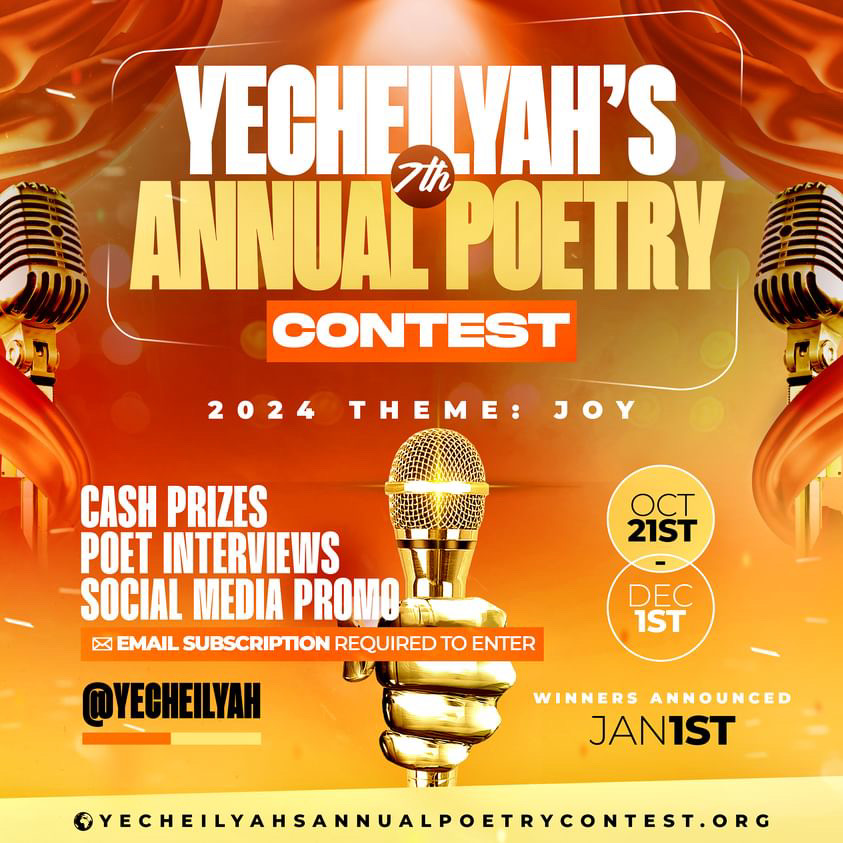
This year, our poetry contest theme is joy, so I want to give you more to consider as you pen your entry!

The Latin word for Joy is gaudium, meaning to rejoice. Think of a time when you found joy in the unexpected. How did that make you feel? In what ways did you rejoice?

I cannot wait to read/hear your masterpiece!

We accept entries from October 21st through December 1st!

PS. I just found out this blog has been listed among Feedspot’s 30 Best Self-Help Book Blogs and Websites of 2024! Thank ya’ll for rocking with me!

Building Emotional Connections with Readers

Being an author is hard work. Being an Independent Author with no large publishing company, financial backing, or publicity to support you is downright grueling. Who would even want to do this? It is certainly not for the weak.

However, there are things that set some authors apart from others.

And usually, I talk about producing a professional book, but I am not even talking about that here. It is also not about:

  • If those authors are better writers.
  • If those authors are better people.
  • If those authors have more money or even make more money.

It is not even about those authors having a better-quality book (tons of pretty books are not selling).

It is about how those authors have taken the time to nurture and edify their audience with their message before, during, and after their book is published.

These authors have an identity people are familiar with because they have authentically shared their stories, experiences, and knowledge surrounding their topic. This increases their value and creates an emotional bond that makes people want to go out and buy their book when they do publish it.

But this is different from what most self-published authors do.

Most self-published authors, especially new authors, publish a book on a random topic no one has heard them speak on before and hope people will buy it.

We call this hope marketing and it does not work.

You must absolutely take the time to educate and inform people about the content of the book you are writing if you expect them to care enough about it to buy it.

While I have bought books on a whim, for the most part buying a book is an emotional decision. This means we must build awareness that gives people a reason to buy.

People need to know who we are, what we do, and why it’s important to us.

None of this is about selling a book. That part comes later. In the beginning, it is about awareness and emotional connections.

It is as deep as understanding your morals, values, and identity and communicating how this ties into the topic you are discussing.

Click here for more Indie Author Basics to encourage you through the Self-Publishing / Indie Author Process!

Yecheilyah’s Book Reviews – Leaving Fatherland by Matt Graydon

Title: Leaving Fatherland

Author: Matt Graydon

PublisherCranthorpe Millner Publishers

Published: August 20, 2024

Pages: 326 pages


Matt Graydon’s gripping, well-researched historical fiction debut Leaving Fatherland explores the difficulties of growing up with an abusive father in the context of World War II, Hitler’s ascent, and how our early years have a significant influence on our adult life. Right away, we are introduced to the abuse Oskar Bachmann suffers at the hands of his father, Karl, who assaults his son both physically and mentally. He refers to him as weak and wishes that he, like his brother Emil, had joined the Hitler Youth.

The first time Karl hits Oskar in the book shocked me, even though the author did an excellent job showing the cruelty that led up to it. This would profoundly affect Oskar throughout his life, a life the author shares with us in such detail that it reads like an autobiography.

Contrasted against Karl’s cruelty is his mother Aneta’s kindness and gentleness, a welcome relief. She encourages him to read, which becomes his safe space. Aneta also finds a way to buy Oskar a tourist-class ticket to America to complete his education.

“The pages of the books I wrapped around my mind and soul like blankets brought distraction and great solace from the relentless strife of home life.”

-Leaving Fatherland, Oskar Bacchman

Oskar continued on to study psychology at Manhattan’s University of New York, a decision he made especially to gain a deeper understanding of his father. Even though Karl is mean to him, Oskar still loves him, evident in his desperate attempt to understand him. In his own words: “I’ve learned it’s possible to hate what your father is and yet still yearn for his approval.” As he navigates the city and makes new friends, Oskar is still affected by his father’s actions as shocking revelations about Karl’s ties to Hitler emerge.

I love the research that went into this book, even down to the Black man taxi driver referring to the ten-dollar bill as a “sawbuck.” Even though the author is not Black, his depiction of the driver and his persona was spot on. Bachmann referring to him as a “Negro cab driver” and how he had not seen many Black people growing up in Germany also fit the times (1930s).

Although a lengthy read, Oskar’s life is filled with many secrets and unexplainable fortunes, culminating in a surprising revelation that connects everything together.

89707

Ratings

  • Plot Movement / Strength: 4/5
  • Entertainment Factor: 4/5
  • Characterization: 5/5
  • Authenticity / Believable: 5/5
  • Thought Provoking: 5/5

Overall: 5/5

Leaving Fatherland is Available Now on Amazon!

Leaving Fatherland_WEB FRONT(1)


About the Author

Matt Graydon Author Photo

Matt Graydon has loved writing since childhood. In his early career, he trained and then worked as a journalist for local and national newspapers, developing research skills that proved vital in his historical fiction writing. He later worked as a senior public relations executive for major corporations in a global context, interacting with people from many cultures around the world. In recent years he rekindled his love of creative writing, attending expert writing courses by Faber and others to develop his craft. He is an active member of the UK’s Society of Authors and belongs to the Phoenix Writing Group in Dorking. He has had both poetry and short stories published, most recently Saigo No Tatakai, an account of a kamikaze attack in the Second World War told from both sides.

Matt lives in Surrey, with his wife, adult children and an unruly cockapoo. When not writing, he spends as much time as possible outside gardening, or engaging in astronomy and photography.

Links:

Website: www.mattgraydon.com

Facebook: Matt Graydon Writes

Instagram: @matt_graydon_writes

Twitter: @graydonwrites


To have your book reviewed on this blog, apply here!

Stay tuned for our next dope read!

IMG_8994

Yecheilyah’s Book Reviews is a reputable review service that features writers from all over the world, both traditionally and independently published. We are listed on Kindlepreneur as a top-tier book review blog and Reedsy as one of their vetted active book blogs that provide insightful, excellent book reviews.

*Books are read in the order they are received.


Social Media is just ONE Way to Get the Word out About Your Book

Highwater High School orders copies of Black History Facts

For many authors who use social media to promote their books, it’s a game-changer. From Instagram reels to TikTok, people are making decent income from their talents.

However, social media is only ONE of many places to sell and promote your book in 2024 and onward.

Bulk Sales to Schools, Universities, Corporations

It’s fantastic to sell $20–30 books one at a time on your author’s website, Amazon, and other online merchants, but selling 10 or more copies at a time in bulk orders is even better.

Why is it better?

Because large organizations and networks have the budget to spend much more than your average consumer trying to make ends meet just like you are. Depending on the organization, you might even sell hundreds if they truly feel you. In fact, everything else we talk about in this post comes back to bulk sales since all these organizations can buy your book in bulk to some extent, whether five copies or 500 copies.

Book Clubs, Book Talks, Open Mic

Offline book clubs are not appreciated talked about enough. Here are groups of people deciding to read one book together and discuss it. What a wonderful way to spread a book’s message and buy that book in bulk! Author events, book talks, and open mics are also good. They also provide great networking opportunities. You’ll meet people with great influence you probably would not have met online.

Queenz Cirlce of ATL gave me gifts!

I once met an older woman at a book signing who was interested in using The Women with Blue Eyes for a book club she hosts. She is old enough to be my mother and does not have social media. However, she does have a book club full of women who read and said she will talk with them about the book. She never got back with me, but this is an example of an opportunity I could have used to sell that book in bulk.

Another example that worked out was meeting a young lady who invited me to be a keynote speaker at her book club back in 2018 (Queenz Circle of ATL) to discuss Even Salt Looks Like Sugar. It was a private, offline dinner. We read from the book, laughed, ate a delicious meal, took pictures, and I sold copies of the book. It was amazing and none of it was online.

Podcasts, Radio Shows

Podcasts can be on or offline since many of them are also streamed on YouTube or Spotify these days, but this is another great way to get the word out about your book. Radio shows are also a great, offline way of promoting your book to listeners. The perk here is that you get to articulate in your own words why your book is so special and what sets it apart. You can then take clips from your interviews and cut them down to fit on Instagram, TikTok, YouTube, Facebook, or wherever you engage online.

This leads me to my next point.

The Work You Do Offline Creates Your Online Content

How you show up offline, whether taking better care of your mind and body, eating, or networking with business professionals, becomes the content you can repurpose online. Attending an event, being interviewed at a radio station or on a podcast, meeting up with readers for an author talk, and whatever work you do in the background becomes the content you post online. This can be photos, videos, testimonials, or whatever you captured from the event.

If you know how to utilize it, social media is a powerful tool for marketing, selling, and promoting your book. It is not the only option, though. Traditional networking techniques and in-person meetings are quite effective and provide you with content for your online posts!

Click here for more Indie Author Basics to encourage you through the Self-Publishing / Indie Author Process!