Revising The Stella Trilogy: Book Two – Beyond the Colored Line

Book one is out and we are on to book two!

My main challenge for book two is making sure that it stays consistent with book one. This is important for any series, but for Historical Fiction, it is even more critical.

Since writing Historical Fiction is writing set in a time that has already occurred, the details of the past must be realistic to what was going on. A good Historical Fiction book places fictional characters somewhere in a world that has already existed in a way that reads authentic. Readers should be able to reimagine what that world was like by immersing themselves in the life of the characters and the world around them. I like to think of it as a time machine, which is also what makes writing #Histfic fun to me.

Style, Language, Dialogue

Like book one, book two opens in 1996 and picks up where we left off at Mama Sidney’s house in book one. But book two also takes us back into the life of Mama Sidney, and we revisit history from the 1920s through the 60s. My focus for book two was to make sure the dialogue, language, racial and political events occurring during this time were realistic to what was happening in the world. We talk about The Great Depression and touch on the reoccurring lynchings taking place in both the north and south. We look at the brutal murder of Emmett Till, the shooting of Dr. King, Jim Crow Laws, and The Black Panther Party. While I immerse Stella in her own world, there is still the larger world to deal with and we watch how she navigates both. How does Stella’s personal identity crises correlate to the identity crises plaguing her larger community?

Racial Terminology

The biggest thing to deal with for book two is the racial classifications of blacks during this period. African Americans are the only people whose racial terminology has changed with the census. We have been “Niggers,” Negros, Coloreds, Blacks, and African Americans, and this can get confusing when trying to use the right term for the right year. This is also not to mention other racial “nicknames” we called ourselves, such as Afro-American and The New Negro.

The challenge of using the right term for the right years is because there were terms that blacks preferred to call themselves and terms used discriminately by the wider society. Although by the 60s Black Americans were preferring to be called blacks or Afro-Americans (as Malcolm X used a lot after leaving the Nation of Islam) white separatist signage still referred to us as coloreds. “Whites Only / Coloreds Only,” or “Welcome to the Colored Zone,” banners and store signs could have read.

Credited to W.E.B. Dubois and Booker T. Washington, blacks advocated for a switch from Colored to Negro in the early 1920s. As blacks redefined themselves, terms like “The New Negro,” became popular and sparked a movement that later became known as The Harlem Renaissance.

By the 1960s, though, African Americans had transitioned from being “Negros,” to “Blacks.” (Malcolm X specifically didn’t like the term Negro).

During the Black Power movement when sayings such as “I’m Black and I’m Proud,” were popular (think James Brown “Say it loud, I’m black and I’m proud!”) blacks wore their hair natural, read and published black literature and did what they thought would reconnect them with their lost heritage. In this process, many black political leaders of the time, such as Kwame Ture or Stokely Carmichael, helped to shift the terminology away from Negro and toward Black. Black publications like Ebony followed by switching from Negro to Black.

While a large majority of people still preferred Negro, “Black“ was becoming the preferred term with the New York Times and Associated Press abandoning “Negro” in the 1970s.

By the 1980s, Jesse Jackson called for a shift from Black to African American and while the change is still not as accepted or monumental as black was during the 60s, it is the term most socially acceptable when referring to black Americans.

I had to consider these changes when referring to blacks throughout this part of the book. What did they call themselves? What did society call them? How do I integrate this into the dialogue and setting realistically?

Setting, language, and dialogue is the backbone of Historical Fiction because the setting makes the story seem real and determines the character’s beliefs and actions. Not only do I strive to make the characters stand out but the culture of the time in which they live.


About Book Two:

In book two, we dig deeper into the McNair family’s legacy. Named after her great-grandmother, Stella has a very light complexion causing her to be the tease of her classmates. Unable to find solace among her African American contemporaries, Stella finds it challenging to adjust to a world where she is too light to be black.

After The Great Depression of the 1930s forces Stella’s family to move to Chicago, a conversation with Aunt Sara provokes Stella to do something that will dramatically affect not just her life but the life of her children and grandchildren.

Stella: Beyond the Colored Line will be available through my website and back up on Amazon in digital and print by April 24th. I am not putting the rest of the books up for preorder, so you’ll be able to order it immediately on 4/24.

If you have not already read book one, click one of the links below.

Amazon Kindle

Signed paperback

https://www.yecheilyahysrayl.com/bookstore/stella-between-slavery-and-freedom
People Will Never Forget How You Made them Feel

If there is one thing I have learned in both my personal and professional life (to include blogging) is that change is inevitable. One day you will look up and the people who were rooting for you, in the beginning, are not rooting for you any longer. As I’ve said on this blog once before, you can look up and see an entirely new group of supporters/readers.

Just as quickly as COVID-19 has swept over the world, people will pack up their support and leave you dumbfounded. What happened? What changed? Am I no longer interesting? Is the content no longer quality?

It’s easy to blame ourselves. It’s our blog, our book, our product. And while we are conscious enough to know that sometimes our circle will decrease in size, we must remind ourselves that while the support might decrease in size that doesn’t mean it doesn’t increase in quality. A lack of interest sometimes has nothing to do with us. Although it may feel like it, it’s not personal.

But as I’ve said, we are human with feelings and thoughts and emotions. We cannot help but wonder. These are the times where we will need to pick up our faith, hold on to those gifts and hold our heads higher than we’ve ever held it before. I can’t tell you why some people leave, why they unsubscribe from your life or what you did to influence this decision. What I can echo are the words from one of our favorite poets and one of my favorite quotes:

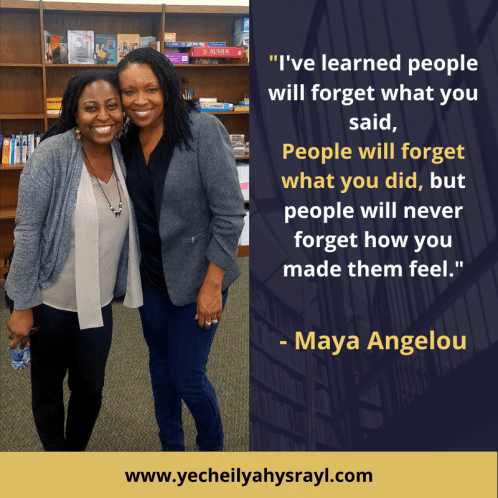
“People will forget what you did, people will forget what you said, but people will never forget how you made them feel.”

These are such powerful words to me because it’s a two-edged sword. Whether you make people feel inspired and empowered or whether you make them feel discouraged and disheartened, people will remember it.

People will leave when they’ve served the purpose in your life it meant them to serve and some of them will even forget what you’ve done. What they won’t forget is the impact you’ve had on their life, the imprint you left there and how you made them feel.

Entrepreneurship, authorship specifically, is hard and I know that in this climate “hard” doesn’t seem like a strong enough word to describe what it’s like to endure this, but I hope this message and Angelou’s words were not only encouraging for you today but that they help you persist in the troublesome areas.

One of the most important lessons I’ve learned was understanding the state of my mental health is much more important than my career because my level of self-worth and self-love is what will drive the work.

A text I received from Ms. Edwards (pictured) inspired this post; how good it felt to know someone was thinking about me. So whether it’s a text, phone call, email or DM, it doesn’t take much to be kind. Since we are all in the same boat right now, with the time you have, be sure to reach out to someone who has made an impression on you and show them you appreciate them.

Let us remember that support is a verb.

Movie Night Friday – REVIVAL with Harry Lennix

Revival


Movie Night Friday is back!

I come from a movie family. My aunt used to collect VHS tapes and then later, DVDs. If she were still alive, she would have every movie streaming app there is and collect Fire Sticks. We are a family who walks around quoting movie lines and seeing if people can guess what movie it is. It’s only right that I feature a series on this blog about movies. Movie Night Friday is nothing new. It is a segment I started on this blog years ago (2015) to feature my favorite films and why I love them. My favorites are broken down into different categories, though, so Malcolm X could number one in one category Lean on Me in the next, Boyz N Tha Hood in the next, The Great Debaters in the next, and Revival in the next.


Revival! features a star-studded, mostly black cast in the retelling of John’s book, featuring the resurrection, life, and ministry of the Messiah. Viewers will watch the bible play out through some of their favorite actors and musicians in a mixture of onstage performances, gospel songs, and spirituals, so that Revival! becomes more than just a movie, but an experience. Michelle Williams playing Mary Magdalen, Chaka Khan as Herodias, Wendy Raquel Robinson as the woman with the blood issue, Kenny Lattimore as Lazarus, Harry Lennix as Pontius Pilate and Mali Music as Yahoshua, Revival! is a part short film, part musical, and part broadway play.

What attracted me to Revival?

When TriCoast Entertainment reached out to me for a review, my first impulse was to watch the trailer. As a spiritual person who believes in the bible but not a Christian, I wanted to make sure this was the kind of film I can stand behind, support, and promote. When I watched the trailer, the first thing that piqued my interest immediately was the almost all-black cast and, even more, the black Messiah.

Many African Americans do not see themselves in scripture and are thus convinced they are not there and have nothing to do with this powerful historical text. Further, few films reveal the actual physical appearance of the people of the bible. Where are we? It is a question I often hear from black people when discussing scripture. Some of us don’t think we were there at all. But the truth is that many of the people’s nationalities in the bible, including the Israelites, Egyptians, Babylonians, and Assyrians, were black-skinned people.

Best Scenes

I think the Pharisees did an excellent job of being hypocrites (haha), and they were in some of my favorite scenes, but my most favorite part was the scenes where Yahoshua is fighting off the temptation of the devil. Taken from Matthew 4:1-11, the creativity of the temptations had a modern touch. Still, it did not take away the reality of the devil’s persistence in his attacks and how we must be just as persistent in our resistance to those attacks. In the movie, these attacks take various forms, such as Satan as a man sitting at the beautiful dining spread to tempt Yahoshua to eat during his fast and command the stones to become bread (Matt. 4:1-4). Another instance is of a little boy and another seducing woman trying to entice him with her body. The best of these scenes for me was when the devil transformed himself into that of a little boy on top of the Hollywood sign and there tempted Yahoshua to jump.

We live in a world where Hollywood is a place everyone strives to be apart of. It represents the epitome of success for some and the place everyone wants to be. Here, celebrities are worshiped as gods. Most people aren’t taken seriously or acknowledged for their art, whether music, writing, or theater, until they have become promoted on a mainstream level. Therefore, inspired by the scripture where the devil takes the Messiah on a high mountain and tells him to throw himself down (Matt. 4:6), Mali and the little boy sitting on top of the Hollywood mountain was a brilliant idea. It was also a good idea to portray the devil as an innocent young boy since we know that he can transform himself into an angel of light (2 Co 11:14).

Least Favorite Scenes

I enjoyed some of the songs, but the combination of several mediums was my least favorite part. I would have liked to see the film part as a consistent thread throughout (like a movie) without being jolted from the narrative for someone to sing for three minutes. At times it did work, but there were also times I was immersed in the story and then snatched out of it. I think the musical/stage play part could be a separate production of itself so that it doesn’t disturb the transition between scenes and distracts from the core story.

The lady with blood flow was also my least favorite scene because the scripture doesn’t mention anything about the woman’s flow of blood coming from bruises. Based on Lev. 15:25-33, I understood this flow of blood was a literal flow of blood as in a menstrual cycle. Wendy Raquel Robinson’s acting was excellent, though, as usual.

Mostly All Black Cast

I have to bring it back to the mostly all-black cast! This is hands down my favorite part of the film, and I’d like to end this review with a bit more context to explain why I think this is so important for African Americans to see.

According to Revelations chapter one verse 14-15, the messiah is described by John as having hair like white wool and feet like burnished brass as if refined in a furnace. So, when he shows up in this film dark-skinned with full lips and a full beard, it is refreshing. If Yahoshua were to walk the earth today, he would do so as a black man, so we are not only looking at ourselves, but we are looking at the truth. Initially, the descendants of both Shem and Ham were black people. Gerald Massey, English writer and author of the book Egypt the Light of the World, wrote:

“The dignity is so ancient that the insignia of the Pharaoh evidently belonged to the time when Egyptians wore nothing but the girdle of the Negro.”

Sir Richard Francis Burton, a 19th-century English explorer, writer, and linguist in 1883 wrote to Gerald Massey:

“You are quite right about the ‘AFRICAN’ origin of the Egyptians. I have 100 human skulls to prove it.” 

Scientist, R. T. Pritchett, states in his book, The Natural History of Man:

“In their complex and many of the complexions and in physical peculiarities the Egyptians were an ‘AFRICAN’ race.”

And finally, the ancient Greek historian, Herodotus, who visited Egypt in the 5th century B.C.E., saw the Egyptians face to face and described them as black-skinned with woolly hair. Consider also that the word Ham in Hebrew is Khwam, and it means “hot, burnt, and black.”

If it is true that the Egyptians were black, and we know that they were, then it is also true that the Israelites were black. The Israelites became a nation in Egypt (the land of Ham). Jacob’s sons arrived 70 in number (Gen. 46:27, Ex. 1:5) because of the famine, but as Joseph ruled Egypt (Gen. 41), his brothers did not at first recognize their Israelite brother among the black Egyptians. (Gen. 42:8)

Additionally, Moses passed as the grandson of the Egyptian Pharaoh for forty-years. (Acts 7:23)

How could this have happened if he didn’t look like him?

“Moses had to be of the black race because he spent 40 years in Pharaoh’s place. He passed as the Pharaoh’s grandson, so he had to look just like him.”  – KRS One, “Why is That”

For this, Harry Lennix’s mostly black cast is necessary because while the world has come to accept, in part, that Ham’s descendants were black, the world has not come to fully embrace the black origin of the descendants of Shem, the original Hebrews.

Moses, Abraham, The Prophets, and even the Messiah, would have looked like African Americans had they walked the earth today. I believe that Lennix’s decision to make Yahoshua and most of his disciplines black is not just a form of creative expression but a powerful re-education of black biblical history.

I give Revival! four out of five stars.

I want to extend a thank you to TriCoast Entertainment for the opportunity to review the film REVIVAL starring Harry Lennix (The Blacklist, The Five Heartbeats, Love & Basketball, Ray), Wendy Raquel Robinson, Chaka Khan, Michelle Williams, Mali Music, and other musical legends.

*TriCoast Entertainment has released REVIVAL onto various digital & DVD platforms (Amazon, iTunes, FLIXFLING, Vimeo on Demand, Vudu, FANDANGO, Google Play), Walmart, Target and Best Buy.

**Direct Amazon link: https://amzn.to/3aRERRv

***For more information, please visit: https://revivalthemovie.com/

***Image Stills (including blog cover image featuring Harry Lennix) used with permission.


Can’t get enough of Black History? Don’t forget that book one of my novella series Stella: Between Slavery and Freedom is now available.

Get it here in ebook

Get a signed paperback copy here

Stella: Between Slavery and Freedom (Book One)

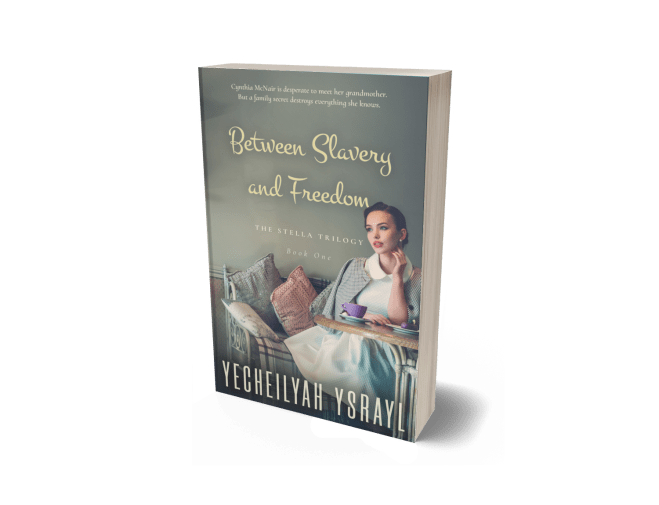
Book one in The Stella Trilogy is officially back on Amazon and my website and book two is on its way!

Stella is a work of Historical Fiction and is distinctive in its focus on one woman’s road to self-discovery, against the backdrop of the African American fight for justice, racial equality, and freedom. The three-part novella series focuses on the history of one family in their struggle for racial identity. We discover in this trilogy how three individuals living in separate periods strive to overcome the same struggle, carefully knit together by one blood.

In book one, Cynthia McNair and her boyfriend, Alex, express some racists’ feelings toward blacks. They visit Cynthia’s Grandmother Sidney McNair, who recounts the story of her ancestor, a slave named Stella Mae. Cynthia has no idea of her African ancestry or how deep this rabbit hole goes.

“Yecheilyah Ysrayl takes us on a colorful and thought-provoking journey through the eyes of a mulatto slave woman Stella. Generations later, Stella’s descendant Cynthia McNair has no idea of Stella’s life as a slave, nor the true identity of their bloodline. Since Cynthia is a racist she is in for a rude awakening. Stella is reminiscent of a wonderfully written slave narrative, a story of history and pain, it is a brilliant opener of the Stella series.” 

– Kathryn Reed

Order the Kindle Ebook for 99cents

Order a Signed Paperback from my Website 

Mark as Want to Read on Goodreads

(Already read Stella? Mark as read and leave a review)

Book Publishing in the Age of COVID-19

Kayana Szymczak (for STAT)

I know some of you are wondering about the effects of the Coronavirus on the book industry. Some of you have asked if you should still publish your books.

Yes, I do think you should proceed with publishing your books.

Based on the current climate, I also think it is wise for all businesses to expect some changes as a result of COVID-19, which is now a global pandemic, according to The World Health Organization. On Wednesday night, President Donald Trump also suspended travel from Europe to the US for thirty days, excluding the UK.

What we know for sure is there have been significant changes due to this virus. We have seen changes in the stock market, cruises, theme parks, tourism, sports, and travel. Factory closures in China (the world’s largest exporter, responsible for a third of global manufacturing. China accounts for more than 80% of imports of toys alone) led to a record low in the country’s Purchasing Manufacturing output. Italy, which has the world’s ninth-largest economy, is on lock-down, and the state department raised the worldwide travel advisory level to Level 3: Reconsider Travel. This advisory means there is an official warning against nonessential travel.

The entertainment industry has seen changes as well with Tom Hanks and his wife testing positive for the virus.  In the sports world, the NBA has suspended the season until further notice because of Utah Jazz center Rudy Gobert, testing positive. Yesterday morning, a second Utah player, Donovan Mitchell, also tested positive.

The NCAA men’s and women’s basketball tournaments have been canceled, the MLB suspended training, delaying opening day two weeks, the NHL suspended its season, and tons of other sports activities are being canceled.

Trillions of dollars have been wiped from the financial markets this week, and small businesses are already seeing signs of struggle as supply chains dry up. Yes, human suffering can be due to illness, but it can also be due to people not being able to pay their bills, subsequently losing their homes and going hungry.

Consider too the 24 states (more by the time this post is live) under a state of emergency.

What we are seeing is the potential unfolding of several crises, all happening at once. People are panicking and making up stuff, buying out the toilet paper for some strange reason, leaving their jobs; children are not going to school, and conferences, venues, and even sports games are being suspended until further notice.

Whether you want to believe this is media sensationalism or not, the reality is that things are different and there have been changes in the world that are affecting the lives of real people.

This post is about adjusting to these changes as a businessperson in publishing, the hope I see for authors in an age where the go-to form of entertainment (sports) is brought to its knees, and the good news in store for Self-Publishers.

Here are the changes I discovered so far in publishing. Please add on to them by commenting below on what you are hearing as well.

  • Book Fairs and Conferences (where large communities of people gather) are being canceled. This “social distancing,” as it is being called, includes The London Book Fair (The UK’s largest book fair event), the Bologna Children’s Book Fair, and the Leipzig Book Fair.


  • An employee at Amazon was diagnosed with COVID-19. The bookstores in NY have been holding up so far, I hear, but amazon workers from New York are working from home. “Sellers on Amazon’s marketplace are reportedly struggling to bring goods into the country.”


  • Not exactly sure if this is directly linked to the Coronavirus, but I am hearing it’s been a hard week for big publishers. Three of the big five are struggling, specifically MacMillan, Hachette, and Simon & Schuster.


  • Some individual authors have reported a decline in book sales since COVID-19, but some have seen an increase. There is no telling to my knowledge if there are any significant cases of falling book sales among Indies. I do know sales of apocalyptic type literature is on the rise.


  • Some Authors/Publishers are focusing on the online version of their book business to avoid contact with large groups of people. Examples include releasing digital products, blogging, and live streaming events and conferences. ALLi’s Self-Publishing Advice Conference will be online.

The good news for Indie Authors is that Self-Publishing has its strengths online. Making use of the internet by continuing to release books and digital products through author websites, blogs, live streams, and social media is a smart move in the age of COVID-19. Small book signings might be okay, but most states are now restricting larger gatherings.

My final thought is this:

If you are planning to publish a book in the next few days, few weeks, few months, my thought is to go ahead and keep to your schedule, but take the effect COVID-19 can have on small businesses seriously. Make preparations for working from home as much as possible just in case your city is the one on lockdown.

Update:

The US is officially under a National Emergency, so movement is even more limited, and there is talk of more travel bans.

Virtual Book Tours, Online Presentations and Conferences, Facebook and IG Live, Digital Products, Radio shows, Text Interviews, Online Services, Blogging, Guest Blogging, Blog Tours…are all things you can do as an author that doesn’t require face-to-face contact.


Preorder Stella: Between Slavery and Freedom today.

Don’t forget to pick up your copy of book one in The Stella Trilogy. Something tells me you’re gonna need something to read 😉

>>Get it Here<<

The Stella Trilogy: The Research (Book One)

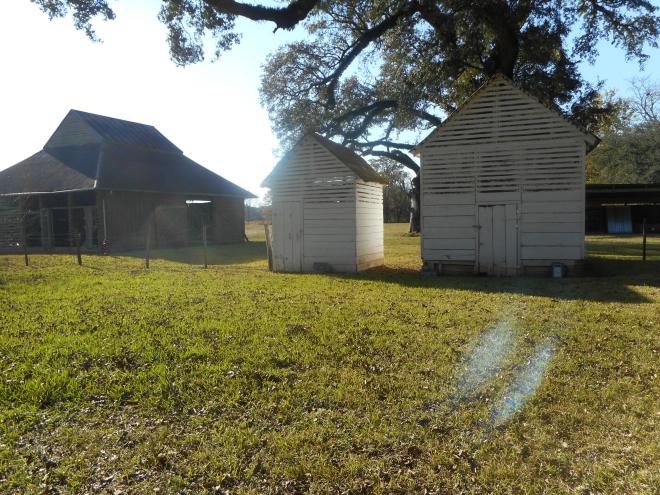
Cane River Creole National Park – Oakland Plantation, Natchitoches, Louisiana, November, 2016.

Since the meat of book one focuses on what life was like for a little girl, and then a young woman, growing up in slavery, the bulk of my research had to do with reading slave narratives and studying enslavement through the eyes of women and children.

Between Slavery and Freedom centers on Stella’s enslavement on The Saddler Plantation in Louisiana. As I introduce us to the first Stella, she is a six-year-old girl enslaved with her mother, Deborah. At this age, she is not aware that she is living property, which was typical for some enslaved children in their early years. She plays with the other children, including the slave owners’ daughter, but she does not yet understand the value of her flesh, that she could be bought, sold, traded, transferred, deeded, and gifted. Stella describes the plantation as a “big family.” She loves running through the dirt and the way it feels on her toes. She talks of childish things like eating sweet cakes, playing with Miss Carla, and trying to convince Mama, she touched the sun.

“One time, I made it where I touched the sun. It wasn’t even hot either. It didn’t feel like nothing but air. I told Mama the sun was tricking us. 

“And how it do that?”

“Cause Mama. I touched it, and it ain’t burn my finger none. It feels hot, but it ain’t really.”

– Stella, Between Slavery and Freedom

Historically, enslaved children who had a “childhood” in this way realized their status gradually. Their awakened consciousness may have been signified by seeing a family member sold for the first time or being sold themselves. The research points to ten as the age where the enslaved child knew and understood that he or she was property, except in the circumstances, as I have mentioned. As soon as they were old enough, the enslaved child’s life changed, and they realized that their lives as enslaved differed greatly from the lives of the white children they once played with as small children.

Slave-owners raised southern white youth as enslavers in training. Sometimes slave-owners gifted their children an enslaved person as a pet (sometimes it was the same child they played with). Literature also played a role in the training of southern youth to not only accept slavery as a regular part of society but to prepare them to own slaves of their own. Examples of such books is The Child’s Book on Slavery; or Slavery Made Plain. In a chapter called The Duty of Learning about Slavery, it states:

“if slavery is good, we ought to help it forward…”

In a chapter called Does Color Make Slavery, it states:

“Moses and all his people, I have said, were slaves in Egypt, but they were not colored people.” 

This explanation was to try to explain to the children that slavery wasn’t based on skin color, and it is a lie. Egypt is in Africa. Moses and his people were “people of color.”

In a chapter called What is a Slave, the author compares the enslaved to a horse, saying:

“Perhaps your father has a horse. That is his property. He has a right to make the horse work, only he should treat him kindly and give him good food. If the horse is his, nobody has a right to tell him he must not use the horse so. And then, if he thinks it best, he has a right to sell the horse to somebody else. Nobody has a right to forbid him. He need not go and ask even the horse, if he may have him plow the garden, or draw the wagon, for the horse would not understand him, and could not speak to him, and will never grow so old or so wise, that he can understand our words, and talk himself.”

Source: https://archive.org/details/ASPC0001969600/page/n5/mode/2up

Speaking of literature, another part of writing book one was reading many slave narratives, including Frederick Douglass An American Slave, and Up from Slavery. Other books included When I Was a Slave: Memoirs from the Slave Narrative CollectionBullwhip Days: The Slaves Remember, and Remembering Slavery: African Americans Talk About Their Personal Experiences of Slavery and Emancipation.

Cane River Creole National Historical Park

Cane River Creole National Park – Oakland Plantation, Natchitoches, Louisiana, November, 2016.

“Some people have to take the cotton and pick out the seeds, and others have to spin and weave. They don’t do nothing but spins and weaves. Some people even had to turn the weaves into threads.”

– Stella, Between Slavery and Freedom

More profound than this is my visit to a former slave plantation at The Cane River Creole National Historical Park in Natchitoches, Louisiana.

You might ask yourself why anyone would want to visit such a place. I was writing about people living on a slave plantation and what better way to get inside their heads than to visit one.

Originally called Bermuda, the founder of Oakland was Jean Pierre Emmanuel Prud’ Homme, who began farming the land in 1785 and received a Spanish land grant in 1789. The land’s first cash crops were tobacco, indigo, and cotton. The Prud’ Hommes were the first family west of the Mississippi River to farm cotton on a large scale.

Cane River Creole National Park – Oakland Plantation, Natchitoches, Louisiana, November, 2016. Slave Quarter turned home of Sharecroppers

“Down in the quarters, every family had a one- or two-room log cabin. Mostly one room though. We had mattresses filled with corn shucks. Sometimes the men build chairs at night. We didn’t know much about having anything, though. There were a lot of cabins for the slaves, but they weren’t fitting for nobody to live in. We just had to put up with them.”

– Stella, Between Slavery and Freedom

After the Civil War, sharecropper and tenant farmers continued to live on the land until the 1970s, and slave quarters became homes to sharecroppers later. The people worked twelve hours a day, six days a week. Seeing this with my own eyes put it into perspective how the south had reconstructed slavery by returning land to former slave owners and putting former slaves back into the fields under another name. Slave codes designed to control the enslaved became black codes intended to control freedmen, and cotton pickers became sharecroppers.

Martha Ann, an enslaved Laundress, worked in this wash house in the 1850s. In the 1940s, her descendant, Martha Helaire, earned $4 an hour working here as a Laundress. All we have to do is walk a few steps to the washer and dryer.

I blogged about this visit years ago. Get the full picture and see more pics by revisiting that post here.

Living on 40 Acres of Land

Finally, part of my preparation for book one also included where I was living at the time I started writing these books.

At the time I released the first book in this trilogy, my husband and I lived in an old house owned by our elderly cousin on 40-acres of land. Over the years, we planted a garden on the property, built a chicken coop and raised chickens, owned several dogs, goats, and even a horse. My grandmother-in-law also recounted stories of when she and some cousins picked cotton on this land.

The elderly cousin and her father built the house we rented many years ago. It was an old house and an old land. It was easy for my overactive imagination to envision what it would be like if we were not renting this house from our cousin; if we were not free to live life on our own terms; if this was not the 2000s, but the 1800s, and if we were not free but enslaved. I walked the property, breathed the air, and looked up at the trees. I had dreams of black people hanging from those trees and visions of people trying to escape.

We lived on that land for five years, eventually moving away in 2015, and I had a completed manuscript.


Preorder the ebook here for just 99cents

Preorder a Signed Paperback Here

Mark as Want to Read on Goodreads

(If you read Stella the first time around I would most appreciate you marking it as read on Goodreads!)

Stella: Between Slavery and Freedom (Preorder Book One)

Stella is a work of Historical Fiction and is distinctive in its focus on one woman’s road to self-discovery, against the backdrop of the African American fight for justice, racial equality, and freedom. The 3-Part series focuses on the history of one family in their struggle for racial identity. We discover in this Trilogy how three individuals living in separate periods strive to overcome the same battle, carefully knit together by one blood.

Preorder Book One Now. 3/24/2020

These books were first released in 2015 and helped elevate my writing to another level. These were not the first books I had ever written. Still, they were the first books to appeal to people outside of my circle and were my first Historical Fiction books.

I took the risk of removing them to get them re-edited, re-formatted, and the covers recreated.

I am happy with my decision and even prouder of this work. I get to relaunch these books and reach more readers of African American Historical Fiction. I am hoping to at least sell 50 copies of book one to start (at least 25 ebooks, 25, print books), and I hope you can help me with that!

Stella: Between Slavery and Freedom

In book one, Cynthia McNair and her boyfriend, Alex, express some racists’ feelings toward blacks. They visit Cynthia’s Grandmother Sidney McNair, who recounts the story of her ancestor, a slave named Stella Mae. Cynthia has no idea of her African ancestry or how deep this rabbit hole goes.

Book one is available now for preorder in digital and print. Release day is March 24th.

The preorder price is 99cents but will go up after release, so you want to take advantage of this.

Preorders are also available in paperback through my website. Paperback books are signed and will ship the first week of April.

*If you already read this series, you should know book one has an alternate ending! The story is the same, but the books are better polished, and each book flows smoothly into the next book. This time, while the books can be read alone, they are much more in a series format. You will want to read all three books to get the full picture. Well worth re-reading! 

Preorder the ebook for 99cents

Preorder a signed paperback

Mark as Want to Read on Goodreads

(Already read Stella? Mark as read and leave a review)