Black History Fun Fact Friday: The Brown Paper Bag Test

An Instagram video inspired today’s post, where a group of young black people engaged in a debate about whether light skin blacks are treated better than dark skin blacks. This debate spun out of control and eventually led to a full-blown argument that made it difficult for the viewer to comprehend what each party said. In the young people’s voice was a lot of hurt and pain. The caption on the video read: “Does Light-Skin Privilege Exist in America?”

Not to bestow to Willie Lynch any gift of prophecy, but when he said to “pitch the light-skin slave against the dark-skin slave and the dark-skin slave against the light skin-slave,” it was as if he c-sectioned the calendar and saw color bias in black people’s future.

Even if one does not wholly believe The Willie Lynch Letter is entirely accurate, one cannot ignore the Black community’s divisions based on skin color in a way that is strangely accurate to William’s letter. To add to this, Willie Lynch did not say these divisions will help for a few days, weeks, and months. In 1712, William Lynch said that if implemented “properly,” slave owners could expect these divisions to keep the blacks mentally enslaved and divided for generations.

It is 2021, but skin-tone is still an important physical characteristic among some black people that sometimes cause divisions in the black community. Historically, people immediately noticed a black person’s skin-tone and recognized it as a critical component in joining churches, fraternities and sororities, and other social interactions. Throughout history, variations in skin tone have reflected social status and hierarchies. The most notable social experiment was the paper bag test, used widely among African Americans to determine inclusion in certain activities and groups.

The Brown Paper Bag Test

The Brown Paper Bag Test, known widely as “The Paper bag Test,” was a form of racial discrimination practiced within the African-American community in the 20th century by comparing an individual’s skin tone to a brown color paper bag.

If a person’s skin tone matched or was lighter than the brown bag, they would be more likely to be accepted than a person whose skin tone was darker than the paper bag.

Many famous black clubs and social organizations used this test to determine membership, including churches and employers.

The Lighter the Skin, the Better the Chances
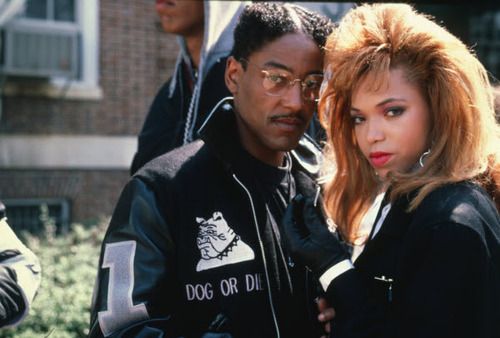
In Spike Lee’s movie, School Daze, two groups of black sorority women are at odds over which group’s hair and skin color are best. In the film, the Gamma Rays had to be “paper bag light.”

The Alpha Kappa Alpha Brown Paper Bag Test

A letter from 1928, written by sophomore Edward H. Taylor, at Howard University discusses the Alpha Kappa Alpha brown paper bag test and colorism. Watch the Yard details the statements made in the student newspaper “The Hilltop.” Watch the Yard said the article:

“accused fraternities of “splitting the various classes into groups of different shades — yellow, brown, and black.” According to Taylor, “The light-skinned students are sought after by the fraternities and sororities, particularly the latter, as members and the dark ones passed by. The darker brown students then form their own cliques while the blacks are left in the cold.”

Jack and Jill Brown Paper Bag Test

Jack and Jill of America was established in 1938 with a mission of “nurturing future African American leaders by strengthening children through leadership development, volunteer service, philanthropic giving, and civic duty.”

But an article from the Pittsburg Courier says Jack and Jill has seen its share of negative press from the Black community over the last 81 years. Similar to African-American sororities and fraternities, in the early years, Jack and Jill had a reputation of only being for elite “light-skinned Blacks”. The article says:

“some Blacks saw it as open only to those who had ‘good hair’ and were able to pass ‘the paper-bag test.’”

Resumes Used to Emphasize “Light Colored”

Nadra Kareen Little from ThoughtCo. discussed colorism in her article about skin tone discrimination. The article said:

“Colorism didn’t disappear after the institution of slavery ended in the U.S. In black America, those with light skin received employment opportunities off-limits to darker-skinned blacks. This is why upper-class families in black society were largely light-skinned.”

Her article mentions a writer Brent Staples who discovered this while searching newspaper archives near the Pennsylvania town where he grew up. She said:

“In the 1940s, he noticed, Black job seekers often identified themselves as light-skinned. Cooks, chauffeurs, and waitresses sometimes listed ‘light colored’ as the primary qualification—ahead of experience, references, and the other important data. They did it to improve their chances and to reassure white employers who…found dark skin unpleasant or believed that their customers would.”

Article from the NY Times that gave an example of a job ad from the 1950s that specifically requested applicants with light-colored skin.

“The owner of Chock full o’ Nuts, a white man named William Black, advertised in the tabloids for ‘light colored counter help.’

Advertising jobs for people with lighter skin or “Eurocentric” features is no longer legal or acceptable when doing business, but research shows that these preferences still play a role in our society. The same NY Times article reported that:

“Researchers tell us that it affects how people vote; who appears in Hollywood movies and television news shows; who gets hired and promoted in corporate America; and even who gets executed for murder.”

https://blog.ongig.com/diversity-and-inclusion/brown-paper-bag-test/

Passing

“Passing is a deception that enables a person to adopt certain roles or identities from which prevailing social standards would bar him in the absence of his misleading conduct. The classic racial passer in the United States has been the “white Negro:” the individual whose physical appearance allows him to present himself as “white” but whose “black” lineage makes him a Negro according to dominant racial rules.”

– Randall Kennedy, Racial Passing


Racial passing was a common practice among lighter-skinned African Americans and is the focal point of book two of The Stella Trilogy, where Stella changes her name to Sidney McNair, marries a white man, and has biracial children whom she raises as white. This narrative is taken directly from historical accounts of light-skin blacks (mixed or not) passing and living their lives as Europeans.

As a child of a white mother and a light-skinned black man, Gregory Howard Williams was a person who assumed that he was white because his parents pretended to be white. Not until he was ten years old, when his parents divorced, did Williams and his brother learn that they were black.
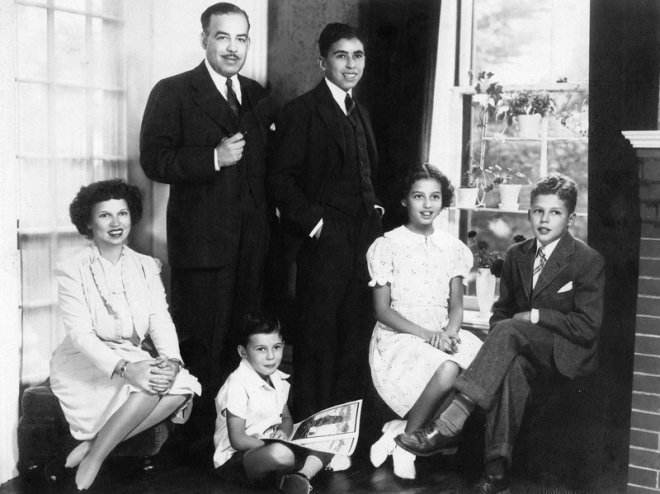
Dr. Albert Johnston passed in order to practice medicine. After living as leading citizens in Keene, N.H., the Johnstons revealed their true racial identity, and became national news.

Many lighter-skinned blacks pretended or classified themselves as white in the US, which gave them access to the rights and opportunities that other blacks could not enjoy. In the image we see here, Dr. Albert Johnston passed to practice medicine. After living as leading citizens in Keene, N.H., the Johnstons revealed their true racial identity and became national news.

For Stanford historian Allyson Hobbs, a similar situation occurred where she discovered a cousin she had never met. This cousin lived in California as a white woman from her mother’s instruction, who sent her away from Chicago many years ago. The mother thought her daughter would have the best chance of success living as a white woman.

“She was black, but she looked white,” Hobbs said. “And her mother decided it was in her best interest to move far away from Chicago, to Los Angeles, and to assume the life of a white woman.”

This came around and bit the mother when her husband died and her daughter, now fully immersed in her life, said that she would not attend the funeral, saying, “I can’t. I’m a white woman now.”

The most famous instance is probably art imitating life in the 1934 film “Imitation of Life,” starring Fredi Washington playing a black woman who passes as white. They made this movie at a time where passing was a widespread practice for fair-skinned blacks. They remade this film in 1959.

Colorism

Colorism is prejudice or discrimination against individuals with a dark skin tone, typically among people of the same ethnic or racial group, where lighter-skin is treated more favorably than darker skin. The brown paper bag test was used to determine who was acceptable and not based on colorism or color bias. When darker-skinned blacks bleach their skins or attempt to look lighter for the special treatment given to lighter skin (such as to join an organization), it is like passing.

While this is fading as dark skin is becoming more and more appreciated, that video of those young people arguing is proof there is still some work to do.

Mixed-Ish

MIXED-ISH – ABC’s “mixed-ish” stars Mykal-Michelle Harris as Santamonica Johnson, Arica Himmel as Bow Johnson, and Ethan Childress as Johan Johnson. (ABC/Mitch Haaseth)

In the latest Mixed-Ish episode, Johan (pronounced Yohan) allowed his peers to think he was Mexican, thus passing for Mexican. Alicia’s sister Denise’s remark that Rainbow’s parents had indirectly caused this by living in a community where race, specifically blackness, was not discussed or considered has some truth to it. People think that by saying, “I don’t see race,” this is a compliment, but it is not. The one who does not see race also does not see racism.

“You all taught that poor boy of being ashamed of being black. You took him to that commune where…nobody talked about race, and that taught him not to be proud of his blackness.”

Why is there truth to this? Because one cannot be proud of what one does not know exists. If Johan does not know what it means to be black and all his people’s rich experiences, how can he see the shame in not telling his peers who he really is? Johan allowed his peers to think he was Mexican because he does not fully understand who he is as a black boy.

[Side Note: Can someone explain to me why they chose The Color Purple as the movie to help a black boy understand blackness? I can think of tons of movies from the 80s that are better suited to teach blackness to black children. The Color Purple ain’t one of them. They could have put on Cornbread, Earl, and Me.]

It turned out the kid who called Johan the racist Mexican slur was also black. This is another example of color bias within the African American community. Now, whether the child understood Johan to be black reflects the school system and the lack of representation of black people and black history. Contrary to the popular myth, not all light-skinned black people are mixed. Blacks produce a variety of skin-tones within the race, but that is a topic for a different day.

All Black is Beautiful

Today, “Blackness” (black skin) is promoted in pop culture. I hate to say it this way, but “dark-skin is in.”

With actresses like Daniel Kaluuya and Lupita Amondi Nyong’o, people once looked down on for being “ugly” for their dark skin tone (“too dark”) are now looked upon as being sexy, beautiful, and exotic. Dark skin is now socially acceptable, highly praised, and elevated, among many now seeing the beauty of brown skin.

While this is not a bad thing, the hope is that it has not become some fad in which dark-skin is fetishized. We would not want a reversal of the paper bag test in which light-skinned blacks are looked down on in the way dark-skinned blacks have always been. Blackness is not a trend that goes in and out of style and should not be treated as such.

The message here should be that all black is beautiful, no matter the shade.


Check out more Black History Fun Fact Friday Articles Here.


Want to contribute your own article to Black History Fun Facts? Learn how here and then submit your piece!

American Hypocrisy

Photo by Paul Weaver on Unsplash

About a week ago, a reader notified me that a review I published to this blog was from a book written by a woman who took part in the insurrection of January 6th. I did not know, as I had published the review months ago. I enjoyed the book, but I have since removed the review and deleted the read’s promotional tweets.

What happened at the Capitol was wild, but America’s hypocrisy amazes me.

Where was this energy when Tulsa and Rosewood’s black people had their homes raided, their communities bombed and their family killed? I have yet to hear the Ku Klux Klan declared a terrorist organization.

When black homes, businesses, and communities were bombed, the people who attacked them were not considered terrorists.

It wasn’t terrorism when strange fruit hung from trees.

Attacks on Black Americans are not considered “an attack on our democracy.”

When they dragged fourteen-year-old Emmett Till from his family’s home, shot him with a 45 caliber pistol, beat him to a pulp, and drowned him in a lake with a 75-pound cotton gin and barbed wire around his neck, his murderers were not deemed, terrorists.

They were acquitted.

When unarmed black men, women, and children are killed, the murderers are not considered terrorists.

Showing pictures of Malcolm X and Fred Hampton’s deceased body all over the newspapers was not “shocking,” nor was it “an attack on our democracy.”

On June 17, 2015, Dylan Roof walked into a church, killed nine black people, and injured one more person. Later, he confessed that he committed the shooting in hopes of igniting a race war.

But when he was caught after the search, police did not “fear for their lives.” He was not shot dead.

On May 2, 1967, 30 Black Panthers walked into the California State Capitol building with rifles and shotguns (it was legal to carry back then openly) that catapult them into the national spotlight and made national headlines. From this point on, The Black Panthers were terrorists.

  • Their headquarter offices were bombed and raided.
  • Their members were shot and killed.
  • The laws were changed, making it illegal to open carry.

Where is the outrage, America, when black people are attacked like your beloved Capitol? Where is this energy?

Americans are admonished never to forget 9/11.

Jewish Americans are admonished never to forget the holocaust.

But it is often stressed that Black American’s forget slavery and centuries of oppression.

We are not the same.

Malcolm X said, “If you’re not careful, the newspapers will have you hating the people who are being oppressed, and loving the people who are doing the oppressing.”

Today, social media and mainstream media are the newspaper, and if we are not careful, it would have us believe the same system that works for the oppressor is the same system that works for the oppressed.

No way was the Panthers politely told to leave the Capitol in California.

No way did the police stand by and calmly escort members of BLM off the streets during protests.

What happened on January 6th was wild, but it should not be surprising.

We are seeing only the beginnings of the “chickens coming home to roost” (to quote Malcolm) for America.

It is what it is.

“It was horrendous,” a CNN commentator called the January 6th events.

But so was watching a police officer put his knee on the neck of a black woman in 1963. And so was watching a police officer put his knee on George Floyd’s neck in 2020.

Let me make this a bit more plain: You watched a man die on TV.

But this was not considered an act of terrorism. Why? Because the same system that works for America is not the same system that works for black people.

Joe Biden said, “The scenes of chaos at the Capitol do not reflect the true America. This is not who we are.”

Respectfully, I disagree.

This is America and always has been America.


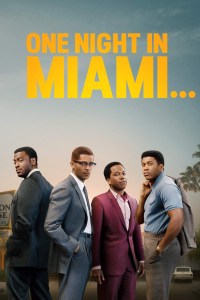
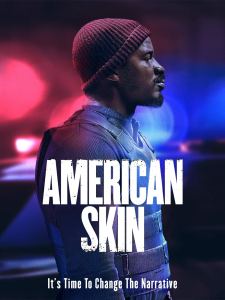
Movie Night Friday is back with my review of these two movies coming to you in February.

The Power of Your Author Name: A Message to First Time Indie Authors

Barack Obama released another book on the seventeenth of November, 2020. It was already a Best Seller with over two-thousand book reviews on Amazon just a few days after release. Obama’s name alone skyrocketed this book to the Best Seller’s List before we had time to decide what we wanted for breakfast that morning.

And Sister Soldier’s March 2021 release, “Life After Death,” the long awaited follow up to The Coldest Winter Ever is already a Best Seller. That’s right. A Best Seller and the book is not even out yet.

The same can be said of Amanda Gorman, whose poetry book The Hill We Climb, and Children’s Book, Change Sings, is already a best seller.

These books don’t release until September!

Today, we are talking about the power of your name and the role it plays in your author branding and marketing yourself as a first-time Indie Author.

What’s in a Name?

A person’s name is a connection to their identity and individuality. It is the history of who a person is. When you think of names that have become prolific, you are not just thinking about a person’s name. You are thinking about all the things that person has done, their experiences, and contributions to the world.

Sometimes, we hear a name, and it is not a good image we see. Names like Jefferey Dahmer and John Wayne Gacy make us tremble, but even these names show a name’s power. We tremble because their names are connected with the horrific things they’ve done, and hearing those names brings to our memory those heinous acts, in the same way, hearing Maya Angelou’s name gives us hope.

When branding yourself as an author, it is good to have the same author name consistent across platforms. Your name doesn’t just tell someone who you are, but it helps build brand recognition.

This means using the same name across your author’s website, the same name in your social media handles and emails, and the same name on your book covers.

“You can show genre with cover design, blurb, logo, and many other cues, but publishing under lots of names in the digital age is a recipe for disaster.” – Anne R. Allen

The more people see your work connected with your name, the more they remember who you are.

It is why we call them “Name Brands.”

Michael Jordan is a brand name, an icon whose career has made his identity equivalent to excellence. When people buy Jordans, they know they are buying a top-quality shoe. And even if it is not a top-quality shoe, it is what the people believe. Why? How did someone whose name once meant nothing now mean everything?

Well, that’s another blog post. For now, let’s just stay on topic and keep it simple.

Michael Jordan proved himself as an exceptional basketball player, and his work ethic is connected with his nameThe more his work became recognized, so did his name.

Your work and your name are connected, whether you are a servant of good or bad. If you are doing good work (in this case, we are discussing writing) and not using your name or changing your business name every six months, you make it hard for people to connect who you are with what you do.

“It’s much easier to build brand recognition if you keep all your publishing activity under the same name and the same expression of that name.” – Jane Friedman

Nikki Giovanni, Ralph Ellison, Lorraine Hansberry, Langston Hughes, Walter Mosley, Toni Morrison, and Richard Wright.

Chances are you’ve heard these names before, and if you are like me, you will notice these names on book covers at any bookstore. You might even stop to scan or flip through the pages of a book simply because you recognize these author’s names.

Book Titles

The name of this blog started as the name of a book series I was writing.

In my Pretty Woman voice, “Big mistake. Big. Huge.”

While I have found a new purpose in this blog, it was a mistake to name this blog after a book. The problem with using the title of your book as your blog name, author website, or social media pages is you will probably write more books.

Are you going to create more websites and accounts for all the books you are writing?

Of course not.

Your name is one of the most powerful, FREE resources you have for marketing yourself as an author.

When you first meet someone you introduce yourself, and you start with your name because your name is your identity. It is more important than your job title and degrees. And when people remember our name, it makes us feel important, recognized, and valued.

What about Pen Names?

Anne R. Allen has published an excellent article on that already, so I will refer you there. While her post is about why pen names are not a good idea, Anne’s number one good reason for using a “pen” name is the one loophole.

  1. It’s the name you’re known by, even if it’s not the name on your birth certificate.

It is absolutely okay to use a name that you’ve been known by even if it’s not your birth name. The key is not to keep changing it though. Pick a name and stick with it.

Consider Maya Angelou, Ntozake Shange, Sonia Sanchez, Kwame Ture, Whoopi Goldberg, and others. None of these people were born with those names just as I was not born Yecheilyah Ysrayl. Although I was not born Yecheilyah, I do not consider it a pen name. It is more than that, it is the name for which I am now known.

Use Your Name

“Once you know what author name you’ll be using, be relentlessly consistent in the expression of that name throughout your websites and social media accounts.”

– Jane Friedman

No matter what name you choose to brand, use that name everywhere. It will help people to identify you, and when they remember you, they remember your work.

No one cares about the title of your book or your book, for that matter.

What people care about is you, the author so it is your NAME and your author photo that will stand out the most in your social media profiles and on your website.

Think about it: It’s not about “A Promised Land.” It is about the fact that Obama wrote it. He could have titled the book The First Black President and people would have bought it. People are buying him. People are buying Obama.

I am not a fan of the term, but when people say that “people buy people,” what they mean is in the beginning, readers are interested in the person more than the book. Then as they begin to trust the person, they trust anything connected to the person, including the book.

  • Who are you?
  • What do you enjoy doing outside of writing?
  • What motivates/inspires you to write?
  • What has your journey been like?
  • What’s your story?

Instead of using a lot of different names or the title of your book, focus on branding one name across platforms.

www. AuthorName . com
Facebook.com/Author Name
Twitter: @Author Name
Instagram: @Author Name
Clubhouse: @Author Name

The stronger your brand name, the easier the marketing. We all hope to get to the point where people hear our name associated with something and run out to support it without blinking.

Use your name. That is all.


Looking for more Indie Author Tips? Check out the catalog of articles here. From this point forward, Indie Author Basics posts will publish on Wednesdays.


I am Soul is 99cents for a limited time. And remember, if you read it, review it!

Introduce Yourself: Introducing Guest Author Andi Brooks

Introduce Yourself is back!

Do you like our new badge? Yass!

Please help me extend a warm welcome to Andi Brooks.

Welcome to the PBS Blog!


What is your name and where are you from?

My name is Andi Brooks. I am originally from England, but I have lived in Tokyo for the last 15 years.

Nice! What would your perfect writing room look like?

That’s an interesting question as I was thinking about that only last week. I would love to have a desk in the bay window of a Victorian house overlooking the sea. A rugged, stormy coastline would suit me very well. I love to walk along the beach alone in winter and search the black waves for inspiration.

Yess. That sounds soo relaxing. Let’s talk about when you published your first book? What was that like?

My first book was a collaboration with the American writer Frank Dello Stritto. “Vampire Over London: Bela Lugosi in Britain” was originally published in 2000 and reprinted as an updated and expanded second edition in 2015. A biography of the famous Hollywood actor forever associated with Count Dracula’s role on stage and in the 1931 film, the book was the culmination of a decade of research. It was very exciting to see it in print and gratifying to have it universally praised by critics and readers.

Before working on the book, I wrote articles on vintage horror, sci-fi, and fantasy films for magazines in the UK and America. After the book was published, I put together a Bela Lugosi blog (https://beladraculalugosi.com/) to share the research material and wrote a silly poetry book, but I mainly devoted myself to writing music and promoting live shows in Tokyo.

Apart from one article on the love affair between Bela Lugosi and Clara Bow, which won the Rondo Hatton Classic Horror Award in 2017, I wasn’t really involved in writing much until I threw myself into Ghostly Tales of Japan.

This book is available now on Amazon!

What’s the most difficult thing about being a writer? The most exciting thing?

The most difficult aspect of being a writer for me is trying to overcome a lack of faith in my ability. I generally know when an idea is good, but I can’t overcome my doubts about my skill as a writer. If I hadn’t been firm with myself, I would still be revising the stories in my latest book, but there has to come a time when you have to say that enough is enough and put your pen aside. As it was, the stories in Ghostly Tales of Japan went through endless rewrites. I agonized over every choice of word and punctuation. It is good to strive for perfection, but you have to realize that there is really no such thing. Being always dissatisfied is a good motivator always to try harder.

The best thing about being a writer is hearing back from readers who have enjoyed reading your work. It makes all of the pain that goes into writing worthwhile.

We do tend to judge ourselves harshly but hearing feedback from readers makes it worthwhile for sure. Andi, who is your favorite writer?

It depends on my mood, but H. G. Wells and H. P. Lovecraft were firm favourites for many years. The scale of their imaginations is astounding.

Wait, wait, wait. I gotta ask you about the TV show real quick. Lovecraft Country, did you watch? Like or Nah?

I’ve never heard of it!

Whaat?

Living in Japan, you can miss an awful lot unless you watch Netflix and the like, which I don’t. I always tend to hear about things long after the fact.

Lovecraft is great for radio adaptations, but tends not to do so well on the screen. I did love the Reanimator films, but I haven’t seen many over good adaptations. I did a quick search online for Lovecraft Country and watched a clip. I can’t really tell if it’s for me or not, but you have sparked my interest, so I will give it a go.

And give it a go you should!

I also love the ghost stories written by M. R. James. I don’t think he has ever been better. At the moment, however, I am completely immersed in the writing of Carlos Ruiz Zafón. The Shadow of the Wind is one of my all-time favourite novels. I have reread it so many times. Although I said that there is no such thing as perfection, this book is as close as it comes. Carlos Ruiz Zafón’s skill was breathtaking. It is such a tragedy that he died so early. The world has been denied the many wonderful books he could have written, but what he left behind is something to be very grateful for. I have literally just put down The Angel’s Game, the sequel to The Shadow of the Wind. I can’t wait for the next book in the series, The Prisoner of Heaven, to pop through my letterbox.

I love it. What is the most thought-provoking book you’ve ever read?

Perhaps Oh! The Places You Will Go by Dr. Seuss. I read it to my son many times when he was small. The truth in that wonderful book will always be relevant. It made me reflect on the ups and downs of my life. Things certainly haven’t always gone to plan, but the disappointments resulted in me taking a different path, which led to where I am today, which is not a bad place to be.

What is the worst advice you’ve ever been given?

When I was at school, a career advisor told me that I should forget dreaming of being a writer, an artist, or a musician and get a job in a factory because it was regular work. I have ignored the advice of his like ever since.

I don’t blame you! Like, whaatt.

Outside of writing, what are some of your passions?

Music has been a big part of my life since my teens. I can’t imagine a day without music. I’ve been in many bands, either playing bass, guitar or singing. About three years ago, I put the guitars aside and decided to start making electronic music. It was something that had been in the back of my mind for a very long time. I regret not trying earlier because it has given me total musical freedom, but better late than never! You can find my electronic musical misadventures on my Bandcamp page (https://airstripone1.bandcamp.com/).

I love it. Musical Therapy is a real thing for sure. We love music on the PBS Blog. In fact, today’s Throwback Thursday! What kind of music do you like?

I listen to a very wide range of music. I like to have something to suit whatever mood I am in. My first music love was the 1970s British band T. Rex. They inspired me to try my hand at making my own music. David Bowie was also a big influence in the 1970s. Then along came punk rock, which was the perfect soundtrack for my teens. Buzzcocks, Siouxsie and the Banshees, X-ray Spex, and, of course, The Sex Pistols had a deep impact on me.

Towards the end of the 1970s and into the early 1980s, I loved British electronic music. Along the way, I’ve listened to everything from folk to jazz. I must give a special mention to Christmas music. I love Christmas and its music, both traditional and popular. I think I have around two hundred CDs of Christmas music!

Sheesh, Andi. Lol

Today, I have listened to underground Japanese electronic music, Nina Simone, the Blade Runner soundtrack by Vangelis, some solo albums by Mick Karn, and David Sylvian of the band Japan. I have an insatiable appetite for music, and I am addicted to buying CDs and records. I try to find something new to listen to almost every day.

What songs have you completely memorized?

My memory is absolutely dreadful! There are some song which I have been listening to for over forty years, and I still don’t know all the lyrics. It’s bizarre! The only song, apart from ones which I have written – and I’m not sure that I can remember them, which I think I know all of the lyrics of is, like many people, Bohemian Rhapsody by Queen. It’s not a song I usually listen to, but somehow it has wormed its way into my brain. If you only know the words to one song, it’s not a bad choice. I remember lines from movies more but often forget the plots. I love movies as much as music. One day I would like to make my own.

If you could live in a movie, which would it be?

I’m not sure that I would like to live in any of the movies I watch, being a lifelong horror fan.

Ha!

Even the non-horror films I like tend to have elements of darkness that I wouldn’t want to experience. If I’m forced to choose, perhaps it would be Lost Horizon – the Frank Capra original, not the musical remake. I don’t think I would hesitate to accept the offer of escaping the madness of this world to spend my days in the utopia of Shangri-La.

If you could, would you visit the past?

I would love to. There are so many great periods I would like to visit, but wherever I decided to go, I think I would stop off in 1979 first to give a few words of advice to my teenage self. I’m not sure that he would listen, but there are two facts of life that I wish he had known!

Thank you, Andi, for spending this time with us. We enjoyed you!


Copyright Andi Brooks

Andi Brooks is a writer of English and Irish descent based in Tokyo. He began writing on vintage horror and science fiction films for American and UK magazines in 1991. With Frank J. Dello Stritto, he co-wrote “Vampire Over London: Bela Lugosi in Britain” (Cult Movies Press 2000), a critically acclaimed biography of the Hollywood legend forever associated with the role of Dracula. In 2017, he received the Rondo Hatton Classic Horror Award for ‘Dracula and the It Girl,’ an article which recounted the short-lived love affair between Bela Lugosi and silent screen star Clara Bow. In 2020, he published “Ghostly Tales of Japan,” a collection of thirty original ghostly stories set in various Japanese history periods. He is currently writing a second volume of ghostly Japanese stories and a guide to the terrifying sites of Tokyo.

Be Sure You Are Following Andi on Social Media

…and if you are a Horror/ SciFi fan, be sure to check out his book!

Other Digital Platforms:


Are you an author? Looking for more exposure? Learn more about my Introduce Yourself Feature HERE. 


Note: We pushed this week’s feature back to today, but we will get back on schedule for the next feature. Author interviews post on Mondays.

The Writer Talks with Asha G. Kumar Part One

Thank you to Asha G. Kumar, host of The Writer Talks, for having me on!

Check out Part One of this two-part interview with yours truly. In this first part, we talk about the inspiration behind my first forthcoming Urban Fantasy/SciFi/Speculative Fiction novel, The Women with Blue Eyesmy belief in aliens lol, and my latest poetry collection, My Soul is a Witness. In part two, we dig deeper into my journey as a writer, my advice to other writers, Black History, and you know I had to recite some poetry!

Part 1 is available now on YouTube.

Link below!

Subscribe | Like | Share |Save

Black History Fun Fact Friday – 4 Little Known Fun Facts About Dr. King

Born Michael King

In Atlanta, Georgia, Dr. Martin Luther King, Jr., was born Michael King, the second of three children born to Micheal King Sr., and Alberta Christine on January 15, 1929. Micheal Jr. was born and raised on 501 Auburn Avenue in the Sweet Auburn neighborhood, then home to some of the country’s most prominent and prosperous African Americans and now part of the MLK Birth Home Tour of the National Historical Park. The house was purchased by King’s grandfather Reverend Adam Daniel Williams, Alberta’s father, in 1909.

Michael King Sr. changed his and his son’s name to Martin after Martin Luther and the Protestant Reformation, which led to a split with the Catholic Church. He did this after touring Germany and witnessing the beginnings of Nazi Germany while in Berlin (Adolf Hitler had become chancellor the year before King’s arrival), according to the Martin Luther King, Jr. Research and Education Institute at Stanford.

The Poor People’s Campaign

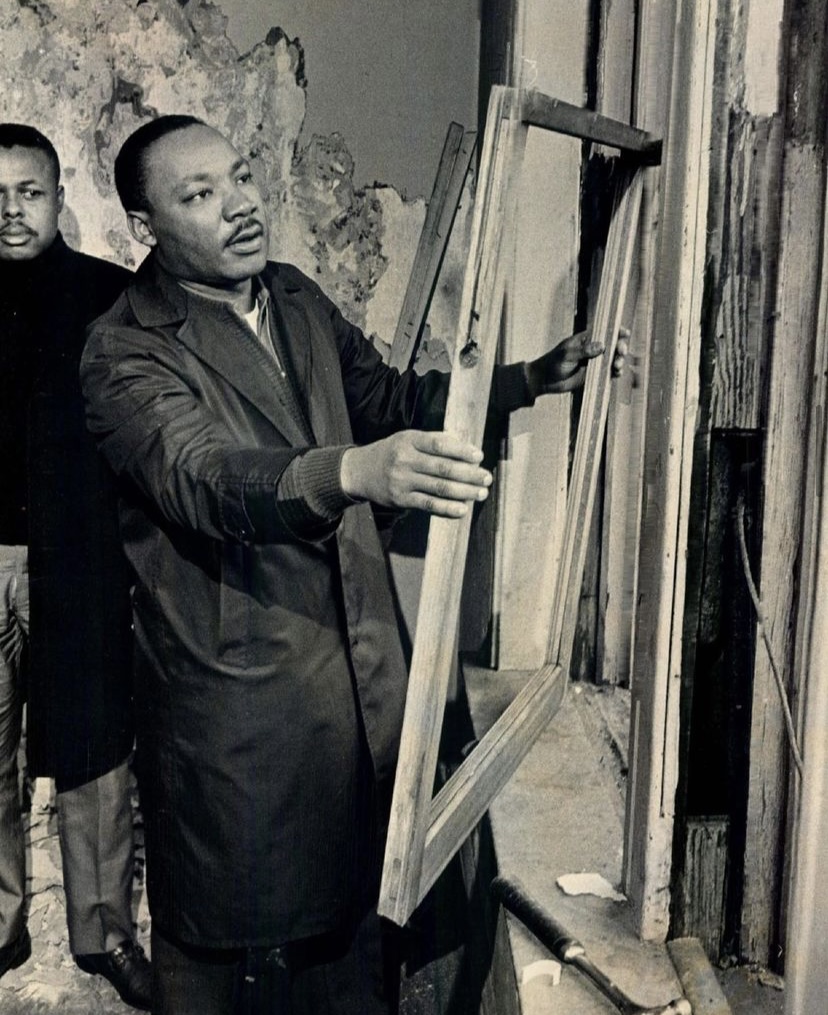
Dr. Martin Luther King, Jr., displays the poster to be used during his Poor People’s Campaign  spring and summer, March 4, 1968. King said the campaign would begin April 22 but he was murdered April 4th (AP Photo/Horace Cort)

Dr. King founded a program called The Poor People’s Campaign, a movement that “sought to bring a multiracial coalition of religious leaders, workers, and the poor together to fight poverty in a way that intentionally centered the voices of the marginalized.” Officially commencing in December 1967, Dr. King wanted to bring together poor people from across the country to demand better jobs, homes, education, and better lives. The purpose behind the campaign was to “dramatize the plight of America’s poor of all races and make very clear that they are sick and tired of waiting for a better life.”

“If you are, let’s say, from rural Mississippi and have never had medical attention, and your children are undernourished and unhealthy, you can take those little children into the Washington hospitals and stay with them there until the medical workers cope with their needs. And in showing it your children, you will have shown this country a sight that will make it stop in its busy tracks and think hard about what it has done.” – Dr. Martin Luther King Jr.

Ultimately, King put together a plan that he thought would help solve poverty so that every American had a guaranteed income. Dr. King set his program to begin on April 22 but was assassinated on April 4, 1968.

Fought for Better Schools for Children in the Cabrini Green Projects

Civil Rights Museum, Lorraine Motel, 2018.

In 1966, Dr. King moved into an apartment on Chicago’s West Side as part of the Freedom Movement. He was less interested in Civil Rights by then and more interested in Human Rights, including fair housing in Northern cities. Chicago in the 1940s, 50s, and 60s was a segregated city plagued with a system of redlining that prevented blacks from purchasing property in their own communities. Not only was the rent high, but run-down apartments were divided into Kitchenettes that split six-family apartments in half, so they became one-room apartments.

“The Kitchenette is our prison, our death sentence without a trial, the new form of mob violence that assaults not only the lone individual but all of us in its ceaseless attacks.” – Richard Wright.

The Projects were the answer to the slums but did not fare much better. People eventually abandoned public housing for the suburbs, offended that blacks were “being treated as whites.” Newspapers and Ads boasted Blacks and Italians living side by side, happy and positive. The public did not have it. Riots broke out as whites pulled blacks out of their cars, beating them. Middle-class blacks were forced out as the screening process got more and more relaxed. Eventually, they put up gates, which made residents feel imprisoned. The once “promised land,” that was the newly established public housing program, became just another ghetto. Black schools also suffered.

One elementary school was overcrowded, and King fought with residents to get a racist teacher fired. “The people from Mississippi ought to come to Chicago to learn how to hate,” he said after being stoned by angry white residents in the then all-white Marquette Park on the city’s Southwest Side. When parents were in their third day of a planned strike, Dr. King met with them, saying, “Should you in any way be persecuted or prosecuted for attempting to seek the best education possible for your children, I can assure you that thousands of parents from all over the city will come to your aid and together we will join you in jail if necessary.”

Campaigned for Black Sanitation Workers in Memphis

Dr. King helped black sanitation workers in Memphis, Tennessee, in March and April of 1968. He compared their struggle with the poor people’s campaign, saying, “A fight by capable, hard workers against dehumanization, discrimination and poverty wages in the richest country in the world.” The deaths of Echol Cole and Robert Walker brought the issue of sanitation workers into the public eye. These men were crushed to death by a trash compensation mechanism on a garbage truck that malfunctioned on February 1, 1968. Dr. Martin Luther King was in Memphis for that strike when he was murdered at the Lorraine Motel.

The deaths of these men highlighted the dangerous conditions under which these men worked. The strike brought it to the attention of Civil Rights leaders like Dr. King, who “saw the Memphis strike and the workers’ demand for union rights as embodying the goals and values of his fledgling Poor People’s Campaign.”


More fun facts about King will be featured in the Black History Facts You Didn’t Learn in School book.

For now, be sure to check out other Black History Fun Facts on the page here.

Stepping Outside the Genre Box

Once upon a time, back in 2017, I shared the first chapter of a crazy fantasy story about fallen angels disguised as women with blue eyes killing black men for their power and one woman’s mission to stop them. I had no intentions of ever publishing it. My purpose was to share a free story on the blog that readers could enjoy. I played around using some of the same characters and background from another book I had written but have since retired.

To my surprise, so many people enjoyed the first chapter, so I came back the next week and wrote another chapter and then another and then another until I had written eighteen chapters of a book I never intended to write.

The more I shared, the more readers loved it. This got me excited!

In 2020, while we were all bored in the house and in the house bored, I worked on finishing the book. It is now a full-length novel I will release later this year.

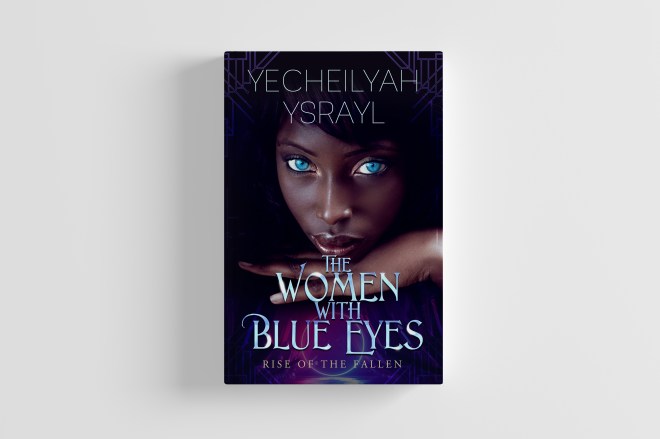
If you have been following this blog over the years, you are already familiar with The Women with Blue Eyes (now titled The Women with Blue Eyes: Rise of the Fallen) and I am so excited to finish it for you.

Moral of the Story


It’s okay to step outside the box and write something different, especially if it’s something you know readers would enjoy. Master P is not just a rapper, he is also a full-blown businessman with several products. He has everything from cereal to oodles and noodles, to potato chips to fish fry.

As I was drafting this post, I tried to think of how to explain that it’s okay to write in a genre you are not typically known for without sacrificing your author brand.

My first thought was to remind you that you are the brand, not the book. It is less about the genre and more about how you stay true to your message.

This is still true, but last week I came across a post by Phyllis Zimbler Miller where she was given some advice that really put it into perspective for me.

Recently I was advised to “stay in my lane” of military and espionage writing so that I could be considered for that niche. This is especially so because my background supports this lane.

Yet when I mentioned staying in my lane to an entertainment industry exec, she had an interesting POV about branding oneself as a writer.

She didn’t agree with staying in one’s lane in terms of specific genres. Instead, her advice to me was to remain the same lens and perspective across genres.

“Remain the same lens and perspective across genres.”

I love this because it frees the writer from the genre box. In my own words, I would say to write in whatever genre you want, but keep your message consistent. While Master P does many different things he wasn’t known for before, his “No Limit” message stayed the same.

Since I usually write Black Historical Fiction, my story will incorporate black history, all the way down to how I represent the characters. In Greek Mythology, Paschar is the angel of vision and is a white male. In my version, Paschar is still a fallen angel, but she operates in the skin of a black woman.

I’ve also infused black history into the narrative with my character’s background and dialogue. If you’ve been following the series on this blog, Miss Vicky is a new character you haven’t met yet. She is a member of the renovation committee at the new Altgeld Projects and former cook for the Chicago Chapter of the Black Panther Party’s Free Breakfast Program. Here is an excerpt from her giving black history to a couple of corner boys working for Big Sam’s organization:

Closer to the buildings, girls jumped double-dutch on the sidewalk, and young boys stood up on their bikes, riding them back and forth. The boys wore no shirt, and yellow headscarves hung out of their back pants pockets. Their pants were always sagging, revealing their boxers underneath. They knew they will be scolded by Miss Vicky if caught. She was always telling them to pull their pants up and giving the history of Buck Breaking. It was the practice of slave owners raping black men as a form of punishment on the plantations and then forcing them to sag their pants in the fields, so everyone knew the cost of disobedience.

“Nuh, uh,” the boys would protest, “I heard that started in the jails Miss Vicky.”

“You heard wrong,” the middle-aged woman would protest, “that’s not to say it didn’t circulate in the jails, but that ain’t where it started. Buck Breaking was popular in the Caribbean ya see, and it involved white supremacists and slave owners raping a male slave in front of the public to embarrass him and make him feel less of a man. Buck Breaking became popular when slave rebellions went up. Enslaved men were first stripped naked and flogged.”

“What’s flogged Miss Vicky?”

“Boy, don’t they teach you nothing in school?”

The boy would laugh, holding onto the handles of his bicycle.

“He don’t go, Miss Vicky,” another boy would chide, laughing at his friend.

“You remember how ya mama beat you for stealing car parts last year? That’s flogging. Whippings. Beatings.”

“She flogged ya ass,” the boys’ friend would tease.

Vicky would hide her laughter and continue her lesson. “Like I said, they would flog—whoop the man in front of a crowd after they raped him to serve as a warning to other slaves. Sometimes enslaved men with families were forced to have sex with each other in front of their family, or they were raped in front of their sons…”

“Dang,” the boy would say, doing wheelies on his bike.

“Hmm hmm, sure did. Lot of ’em who had gone through the process of buck breaking killed themselves afterward or ran away and never returned. Better learn ya history.”

“Aiight,” the boys would say, smiling and riding off. Miss Vicky would go on to finish her laundry, and the boys would ride off and play. Secretly, they enjoyed listening to her black history stories and would ask her questions just to get her talking. Though, they still did not pull up their pants.

The boys were not regular teens. They were corner boys for Big Sam’s crew. The yellow bandanas that hung from their back pocket was proof that they belonged to the organization. Miss Vicky liked talking to them because they were innocent during these conversations. When she spoke to them, she saw their youthfulness peaking out from behind their eyes. It was hard trying to get a fourteen-year-old boy who paid all his mama’s bills with drug money and had already decided he was a man to listen to you, but when Miss Vicky told her stories, they listened. At these times, she could see them like she used to when they were just four and five years old before Scar recruited them.

How does a Black Historical Fiction writer write Fantasy? By infusing black history into the narrative. You will learn how it all ties in when you read the book.

Read. Read. Read.

Another tip I would add is to read books in that genre. No matter how deep your message, nothing will free you from not following the basic elements associated with that genre, so read, read, read. Otherwise, nothing is wrong with stepping outside the genre box.

Share Your Work

Next, don’t be afraid to share your work. I don’t know if I would have been as confident in this story as I am if not for my freedom readers and their feedback! Thank you all for helping me pick a subtitle. The winner (as you can see) is Rise of the Fallen!

Try It Out on the Blog

And finally, blogging is another great way to write your book! It gives you the chance to get instant feedback that could help you to stay motivated along the way.

“I don’t think Byron stands a chance from falling.”
“Wow wow wow. I am enjoying this story. I’m all invested. I can’t wait for the next installment. This story has some interesting characters. Keep up the excellent penmanship!!!!”

“I’m truly enjoying this :-). I’m glad I can click on episode 3 😛 Thank you EC. Much love from Spain.”

“More please!”

“Loved this and wanted to read more. Is there more?”

“You are an excellent writer.”

“Hi Yecheilyah! I’m new to this series. I will need to go back and catch up! Chapter ten is captivating.”

About.

When Tina’s nephew Ronnie died, it traumatized her. It wasn’t just that he died. It was the way he died. After taking custody of Ronnie’s sisters and brother, Tina experienced supernatural phenomenons that eventually led to therapy and hallucinogenic suppressants. This didn’t help.

She meets Azbuga, an Archangel sent to tie the missing pieces together, still connecting her to Ronnie’s death.

Paschar is the angel of vision. She once saw the beauty of visions from the Almighty and projected these into human consciousness. Now, she is limited, capable only of seeing physical beauty, extracting energy from mortal man, and projecting illusions.

Paschar has fallen, and in a jealous rage, she attacks black men for their power. How dare he choose them over her?

Can Tina, Jason, and Az defeat Paschar and her legion once and for all? More black men are dying, and you can’t fight spiritual warfare with physical weapons.

Coming 2021