

I really enjoyed reading this. Excellent tips on writer advice. There’s so much of it out there but is it accurate?
*Comments disabled here. Please comment on the original post*
I really enjoyed reading this. Excellent tips on writer advice. There’s so much of it out there but is it accurate?
*Comments disabled here. Please comment on the original post*

A re-blogged post is when you share someone’s content to your own blog. People have many different reasons for doing this. Primarily, re-blogged content is to share valuable information. I re-blog often on this blog and have found it to be a great way to network with other bloggers. As a result, I’d like to share some specific things I do with my re-blogs to get the most out of them. As you can tell from the commentary, this is a revision of an older post I published last year (2015) so you may already be familiar with these as many bloggers have mentioned them over time. But don’t worry, repetition is a good thing.
Edit Your Re-Blogs
I usually re-blog from my mobile. This is because I’m usually scrolling through my phone when I come across a good article I think should be shared and I like to share it right then and there so I won’t forget about it. It’s also easy for me to edit my re-blogs when I’m on my phone. When I re-blog a post, I immediately go into my dashboard and I add tags. Unlike original posts you draft yourself, a re-blogged post will not have tags.
As a shared post, the tags of the original owner are not included. To get the most out of the re-blogged post you must edit the post and add your own tags the same as you would any other post. I usually ensure the word “Reblog” is part of my tag to show I am not the original owner (and so that the post shows up for those searching the keyword “reblog”). This will help more people to see it, drive attention to the post and ultimately lead to more views for the original blogger. This is perhaps the most effective way to enhance visibility of a re-blog. Tag Tag Tag.
I also place the article in its appropriate category. Otherwise, the re-blog will fall under “Uncategorized”. To avoid this, you can choose a default category if you are usually at work or somewhere that prohibits you from being able to edit your re-blog. This means this is the category that all posts will automatically fall into. My default category is General Topics.
In your admin area, navigate to Settings > Writing > and then look for the drop down menu beside Default Post Category and set it to the category you want to be your default.
I always include commentary in my post if I can help it. In my opinion this boosts the value of the post, helping readers to see that not only have I read the original but that I got something out of it. Keeping it brief, I usually include what I enjoyed most about the article and of late I’ve also been adding a post quote or a direct quote from the original post that I found the most helpful or that gives an introduction into what the post is about.
You don’t always have to, but it helps to write a brief description of the post to get people excited about it. If your re-blog is about Self-Publishing tips for instance, maybe you can say: “Great Tips for Self-Publishers!” This will help grab someone’s attention to possibly check out the post.
Re-blogged posts do not belong to me. I did not write them and I am not interested in taking the credit. I’ve recently started disabling comments on my re-blogs because I want readers to comment on the original post. Since I didn’t write the post, it would just be weird asking me a question about it. Not only am I prompting readers to visit the other blog, but to also share the post from the original blog. Since re-blogged posts are just shared content from another person’s blog, it won’t have the entire post displayed, just a summary. It only makes sense then to share the post from the original blog. Otherwise, people must click on my blog just to click again to go to the original blog. Too many clicks mean “I don’t feel like doing all of this and I’ll come back to this post later (or not)“.
Edit the post using the Improved Editor > More Options > Uncheck Allow Comments.
If you don’t want any ping-backs and trackbacks, uncheck that box as well. Readers will then be forced to interact with the original post.
Some re-blogs will include a featured image. If you don’t want this image prominently displayed on your blog, or you feel that it takes away from the post, you can go into your dashboard > Featured Image and disable it. I do this often when the image from the other blog makes the post look sloppy on my blog (keep in mind your space as well as images from re-blogged posts will now be a apart of your image archives).
Title – I do not see a reason to edit the title of someone else post. This takes away from the originality of the original blogger and teeters on a compromise of integrity. There are instances where this is acceptable but they are very limited. You may want to turn “dogs with personalities” to “Dogs with Personalities” to help the post to stand out more for the original blogger if you know capitalizing certain letters is important. In this instance you’re helping the original blogger by making sure it gets the visibility that it deserves. But for the sake of being accused of plagiarism, I would just leave the original title the way that it was when you found it.
Practical advice on editing your manuscript when it comes back from the editor. Post Quote: “I’m going to break it down into easy steps so that it doesn’t seem quite as frightening and explain what I did.”
*Comments disabled here.*
Hello everyone and welcome to How To Wednesday-Saturday.
This post is later than usual due to my book Ethereal Lives being released last Wednesday. I’m afraid everything has been pushed to the back burner in the excitement, but I’m back now with a How To on editing. How to edit your editor’s edits.
 Manuscript with lots of edits.
So, you send your book to your editor and after a great deal of waiting and thumb twiddling, it is finally returned to you, usually, looking something like this:
And, most often accompanied by this:
 Editor’s Letter.
Here you have a manuscript with endless comments and corrections and a letter from your editor, usually broken down into segments, listing everything that is wrong with your work. It can be very daunting and leave you wanting to cry as you try to figure out how to fix everything. I know when I…
View original post 551 more words

Wow. Poets check it out! $10,000 Award Poetry contest. Being I’m not even 30, I can’t participate lol. Post Quote: “The award seeks to recognize an American poet who is at least 40 years old and who has never published a book-length collection of poetry.”
*Comments disabled here*
The Poetry Foundation recently announced that it will once again be holding its Emily Dickinson First Book Award. Though the contest is held infrequently, it is a wonderful opportunity for poets. It also has several unusual restrictions. The award seeks to recognize an American poet who is at least 40 years old and who has never published a book-length collection of poetry.
The prize for this award is extraordinary. The winner will receive $10,000 as well as the publication and promotion of a book of poetry by Graywolf Press. In addition to having a stellar name, Graywolf Press has published some amazing works including Max Porter’s Grief is the Thing with Feathers, Elizabeth Alexander’s American Sublime, and Kevin Barry’s Dark Lies the Island. (The Press has an extensive list of award winning books.)
In order to be considered, contest entrants must submit a poetry manuscript between…
View original post 92 more words
Great tips on growing a blog before you dig in for the weekend: Post Quote:
“You have to read a lot of blogs. You have to comment on a lot of blogs. You have to click Like on a lot of blogs. You have to Follow a lot of blogs. You must have a mindset of working your blog page. If you make 1 or 2 posts per week and interact with no one, yet expect the waves of worshipers to pour in, then you are going to be disappointed.”
*Comments disabled here*
Very helpful. *Comments disabled here*

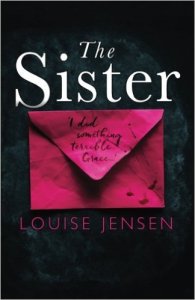
Writing The Sister took me 18 months. During that period I rewrote multiple times, changing the point of view, the tense, and even the genre. When I couldn’t write any more I paid for a professional critique, got feedback from beta readers, and still I wasn’t happy enough to submit it. After weeks of more tinkering there was absolutely nothing left I could do but I still hesitated in submitting it, was it ready? How do we ever know?
Writing The Gift has been a completely different experience. Writing to a deadline means I have not had time to go through the same process that I went through with The Sister. A process that involved putting in a drawer and coming back to it after a month with fresh eyes. Now I am coming to the end of my copy edits it is time for me to let go…
View original post 994 more words
Crafting Compelling Stories from the Heart
Rest is Resistance
a collection of beautiful things
I am more than breath & bones. I am nectar in waiting.
virtually travel with us
Dr. Andrea Dinardo, Ph.D., Psychology
Supporting and Promoting Indie Authors
Adventures in Writing
Writer, Reviewer, Activist
The best Mommy advice on all things kids
Writing Advice from a YA Author Powered by Chocolate and Green Tea
Parenting Blogger, Poet & Storyteller, and Children's Book Author.
Changing the World one Article at a time
where all emotions are cared for!
Entertaining Stories and Motivational Quotes
Sweet As Honey Among The Pages.
press on to know the lord
Changing the world, one word at a time.
Featuring books written by authors of color.
Essays, art and poetry
Leaving it all on the page because we are all shattered mirrors looking to mend our images.
Casting Alerts. Podcast series and talent directory about Blacks in Hollywood
Let's Talk About Books
Always on the hunt for a good story


 The PBS Blog