Its late but Friday is not over people! Well, not for some of us anyway so we’re going to squeeze this article on in.
Today, we have a special fun fact for you. My maiden name is Hereford and I have a mother, brother, and sisters who still carry this last name. In fact, I’ve met very few people with this name I was not related to. Unlike Johnson, Brown or Jackson (no shade to those with these last names), Hereford is not as common. So when I came across this man online, I was noticeably interested. My mother says that my grandfather, her father, is from Alabama and that Sonnie looks like her dad. This has prompted me to do more research on the man and to plan a visit to Alabama to discover more. It’s possible we had a Civil Rights Activist in the family and didn’t know it. In 1961, Hereford was one of the plaintiffs suing the Huntsville school system to end segregation, and in 1963, his son, Sonnie Hereford IV, was one of the first four black children to enroll in a previously all-white public school in Alabama. But, let’s start from the beginning.
Dr. Sonnie Wellington Hereford III was born on January 7, 1931, in Huntsville, Alabama. The family had no running water or electricity and Sonnie had to walk seven miles to school. The school, next to a garbage dump, didn’t have a library or cafeteria, much like most black schools at the time. Hereford was a farmer but developed a love for education. Even though his school had no library, the teachers were invested in him as they were in all their students. Though lacking in resources, black schooling at the time was exceptional, involving a strong community spirit and discipline. Teachers took on more than just a role as a teacher but they were also mothers, fathers, and mentors. For this, Sonnie received a good education and decided he wanted to become a doctor.
Sonnie graduated first in his class and applied to the University of Alabama for their pre-med program. However, Sonnie’s application was denied because of his color so he enrolled at Alabama A&M University instead. Hereford graduated from A&M in 2 years and went on to receive his medical degree from Meharry Medical College. He began his career at Huntsville Hospital in Huntsville Alabama and went on to play important roles in the struggle for Civil Rights. Not only was he a doctor but he also helped to aid men and women attacked during the Selma to Montgomery march, welcomed Martin Luther King Jr., to the city in 1962 and helped to integrate the city at various establishments. In fact, school desegregation is what Sonnie became most known for.
Sonnie IV was among four children chosen to desegregate schooling in Alabama and on September 3, 1963, Hereford took his six-year-old son to school but they could not get in. Instead, a mob waited for them and none of the other children were admitted to the other schools either. Sonnie didn’t give up, he returned but the school was locked down and guarded every day with armed troops. Eventually, Hereford contacted the federal judge and over time an order was issued to desegregate the schools in Huntsville. On Monday, September 9, 1963, Hereford successfully enrolled his son at Fifth Avenue School making Sonnie Hereford IV the first African-American student admitted to a previously all-white public school in Alabama. That following week, Sunday, September 15, the church bombing occurred in Birmingham killing four little girls at the 16th Street Baptist Church.
Sonnie died at 85 years old, two weeks before the ribbon cutting ceremony at the Sonnie Hereford Elementary School in Huntsville Alabama, named for him by the Huntsville board of education. The school ranges from Pre-K to sixth grade.
Learn more about Sonnie at the informative video below!
I was interviewed by Atlanta’s African American Book Festival a couple months ago. Check out the feature at the link below! Also, for you Atlantians, be sure to register for the first inaugural AAABF festivalthis summer. “The Atlanta African American Book Festival is a great opportunity to showcase your work. Vending at the Atlanta African American Book Festival is an investment in your community, business, and personal brand.”
ps. I was a little nervous so I made some mistakes. The Aftermath was not my first book, just my first novel. My first book was a collection of poetry. Also, the deer thing was weird but I didn’t know what to write at first lol. Reedsy also listed The PBS Blog among the Best Book Review Blogs for both 2017 and 2018 so far.
I’ve heard it over and over again: “The more you write, the better you become at it.” I get it. It’s practice. The more you do something, the better you become at it. When it comes to writing though, I think there is more to it than that. You can write and write and write but if you’re not correcting your mistakes as you write, you are not necessarily going to become a better writer.
My new author tip for you today is this:
Learning and applying what you learn as you write makes you a better writer not just writing for the sake of writing. You don’t have to write every day to become better. Understanding what needs to be improved on and correcting it as you write, makes you better. Otherwise, you’ll keep making the same mistakes and thus, produce the same kind of work. This means that if you’ve been producing mediocrity unless you correct yourself, you’ll just continue to write and produce mediocrity. It’s that aged old saying, “insanity is repeating the same thing and expecting different results.”
I have been writing and publishing books for over ten years. In this time, I have remained true to my authenticity, my morals and values. I have sat down to write what I wanted when I wanted. However, my years in publishing doesn’t mean that I am a better writer. What makes me a better writer today compared to ten years ago is if I have been applying what I’ve learned to the skill. I measure my progress not by how many books I’ve published or how many years I’ve been publishing or how many reviews I have. I measure my progress based on how well I’ve been able to correct the mistakes pointed out to me.
With the help of my beta readers and the WordPress blogging community, in general, I’ve been capable of recognizing and understanding so much more about writing than I ever have in the years prior. While I have a long way to go, the books I published in the years I’ve been blogging are noticeably better, in my opinion than the ones I published before starting this blog. I credit this to nothing except for applying many of the things I’ve learned from others who are more knowledgeable and skilled than I am, to my work. I believe that as authors we have to be very intentional about this and very aware of what works for us and what does not work for us. Don’t just assume that people are always hating on you or don’t understand you or don’t like you. Consider all feedback as constructive to the process.
In these past few months (where I’ve had the opportunity to speak with people face to face, consultants, bookstore owners, and their reviewers,) I’ve come to understand that the more aware I am of my strengths and weaknesses, the better I can build on those strengths and improve on those weaknesses. The more aware I am of what needs to be corrected and the more intentional I am to actually correct it, the better I become as a writer. Not just writing alone, but learning and applying that knowledge to my writing and to the publishing process as a whole as I learn and as I grow.
Be sure to check out more Indie Author Basics by visiting the Writer / Tips and resources page!
UPDATED: The layout has changed since this post was last published in 2017. I am republishing this with instructions on using the new platform, which I have found more straightforward than the previous layout.
I read a ton of books written by Indie Authors. If I like a book, I am going to click on their name on Amazon.
What happens when I click on this name are two things:
It will take me to the author’s page with a listing of all their books to date, along with their bio, videos and photos, blog updates, and website link. (Update: Amazon Author Central no longer includes the blog posts.)
Or..
It will take me to a page on Amazon with a listing of that author’s book, along with a lot of other authors.
Authors, don’t forget to set up your Amazon Author Central Page. In this post, I show you how.
What is an Author Central Page?
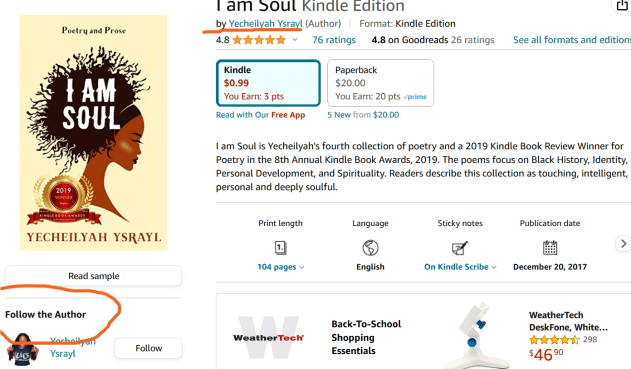
Author Central is your author page on Amazon. If this is set up, readers can click on your name under your book as seen below…
And be taken to a page that looks like this….
Update: The page looks different now, but it still lists your books and other info as shown.
There’s an author photo, bio, display of all the books you have on Amazon next to your photo, and at the bottom. You can also add your blog feed to your page and videos.
The layout of the page has changed. You used to see this page…
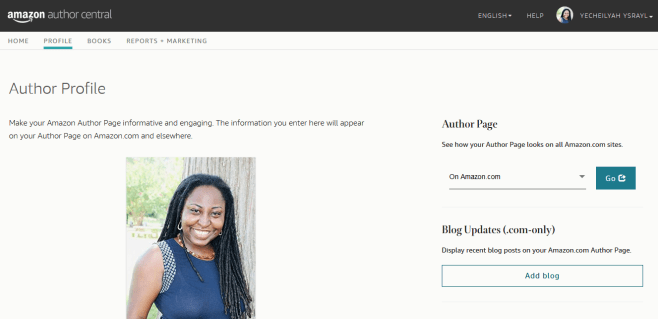
Now it looks like this…
And it is a lot easier to set up this way.
On this page, go to Edit Profile
It will take you to a page that looks like this.
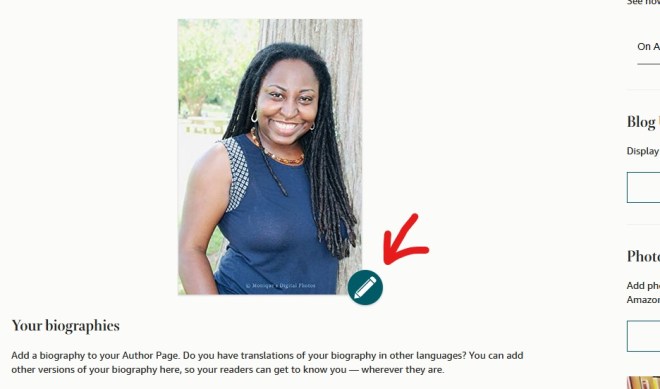
Upload your photo here…
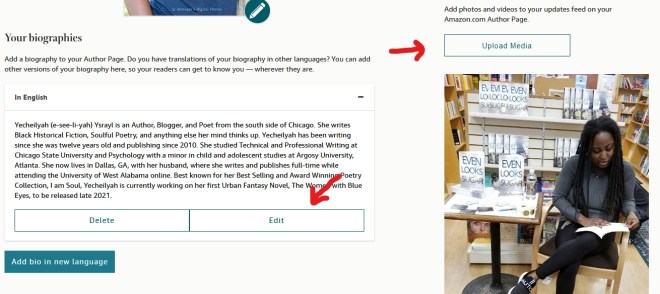
Add a bio here and media like photos and video
Now add your books…
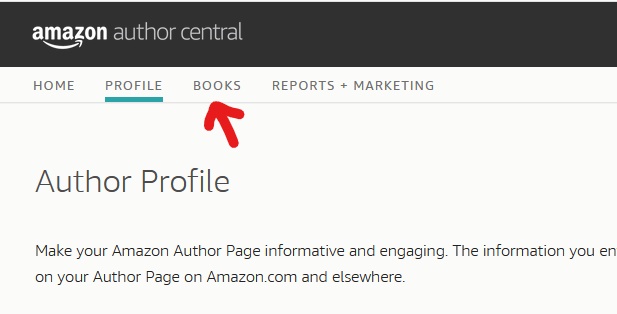
Scroll back up and click on Books
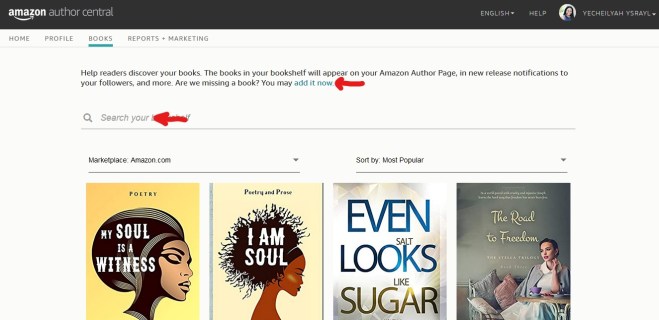
It will take you to a page that looks like this. If you have books already added you should see them here.
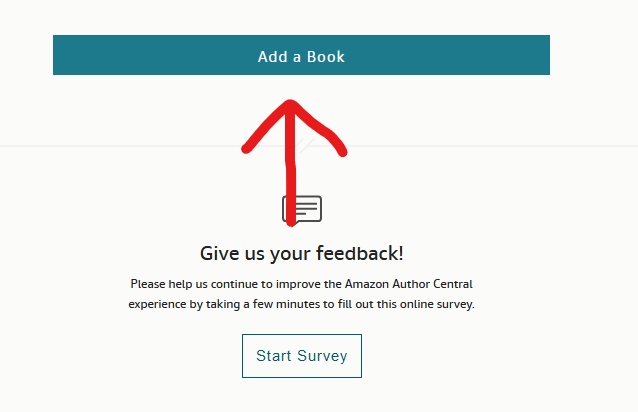
If you have no books added, simply click on the Add a Book Button
And then search your book on Amazon by your Name, Title, or ISBN
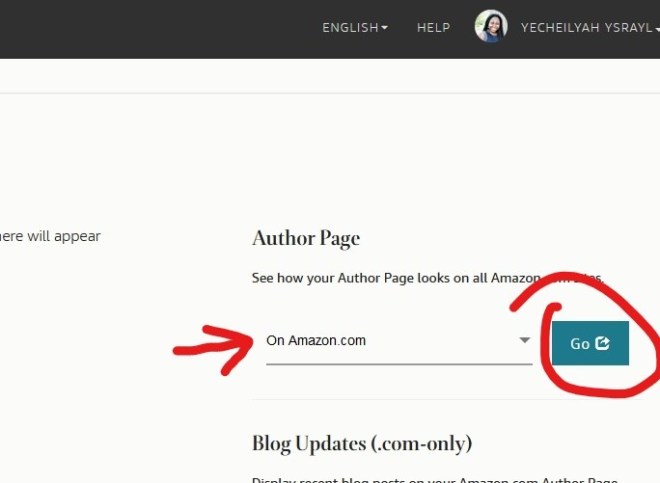
Now go back to profile and click here to see your page on Amazon.
It should take you back to this page
Now test it. Go back to your page and click on your name.
If set up correctly, it should take you back to the page you just left.
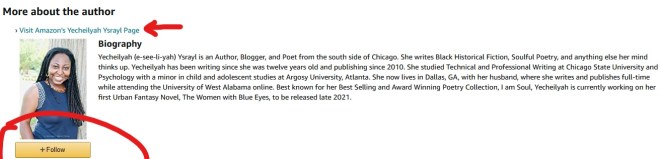
Another thing that makes this cool is that your bio will also show up on the book page where readers have bought it. And once again, it is the opportunity for readers to follow you! It looks like this.
Welcome to Introduce Yourself, a new and exciting blog segment of The PBS Blog dedicated to introducing to you new and established authors and their books.
Today I’d like to extend a warm welcome to Frank Parker. Welcome to The PBS Blog! Let’s get started.
What is your name and where are you from?
My name is Frank Parker. I was born and grew up in Herefordshire, a small rural county next to the border between England and Wales. I lived for the first decade of my life in a small stone cottage beside a stream with a couple of waterfalls. We were surrounded by traditional hay meadows and grew all our own vegetables in a medium sized garden. My parents were from London originally. They were married shortly after the commencement of World War II. Dad was an airman. Two years after I was born he was killed in action whilst taking part in a bombing raid over Germany. Having only one parent qualified me to attend a boarding school where, from 1952 to ’58, I was educated in the manner of a traditional English Grammar school.
Did you say Herefordshire?? My maiden last name is Hereford!
Are you married Frank?
In September 1963, I married the love of my life. We had met two years before. I still recall the day. It was August bank holiday 1961, the day of the annual village show. I was supposed to meet up with my then girlfriend, enjoy the many activities on offer then go on to the dance in the village hall afterwards. She arrived in the company of two friends. Try as I might I could not separate them. As a gauche 19-year-old, I didn’t know whether to be flattered being accompanied by three young women or disappointed that I could not be alone with the one I wanted to be with. Later she turned up at the dance in the company of another youth and I danced with one of her friends. That was it. Me and the friend were set on a course that sees us still together all these years later.
Beautiful. What’s your favorite food?
I love cooking and eating dishes in the styles of the Indian sub-continent. My preference when dining out has always been Indian. I recall when I lived in South Africa, in 1974, we would spend Sundays around the pool at a nearby hotel which served excellent curries that we washed down with locally produced ale. In 1990 I discovered the ‘Balti’ style of Indian cuisine whilst working in the English Midlands. More recently I watched Rick Stein’s television series in which he toured India discovering the various regional styles. I have his book of the series and regularly produce dishes from it.
Oh OK. So what you saying is we need to be at yo house then huh Frank? 🙂 In your own words, define racism.
Racism, to me, is the mistaken belief that people from the same ethnic origin as yourself are superior to those from all other ethnicities. It is made worse when that belief leads people to behave disrespectfully towards people who do not share their own ethnicity. Being disrespectful towards others is not acceptable in any circumstance, but when it is justified by reference to a perceived difference based on ethnicity, sexuality or physical or mental deformity it is especially deplorable.
Frank, are you a political man?
I have held a strong interest in politics for as long as I can remember. My response to the previous question should make it clear that I follow the Liberal tradition. In the 1980s I put my political beliefs into practice, becoming a local politician in my then home district in the East of England. I also worked in a voluntary capacity on campaigns for the Party. Aside from Party Political activities, I cannot avoid political comment in my writing, especially my blog. I also believe that it behooves us all to involve ourselves in unpaid activities utilizing one’s time, skills and energy wherever there is a need in the local community.
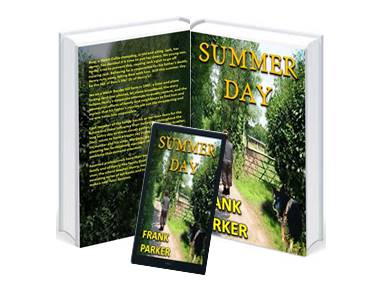
Summer Day by Frank Parker is AVAILABLE now on Amazon.
What genre do you write in, why?
You might gather from the above that the genre in which I am most comfortable is Historical Fiction, often based on the lives of real people. I am especially interested in ordinary people who find themselves in the midst of significant events, how do they respond to the consequences of war, epidemic or famine? It is easy to investigate the causes of such events or to condemn those whose mistaken beliefs lay behind some evil deed. Among the suffering of ordinary people are to be found tales of great heroism at the personal level. That’s what I hope to bring to the fore.
I’m a fan of Historical Fiction myself. What TV channel exists but really shouldn’t?
I’ll end with a controversial thought about TV channels. I don’t either want to see the demise of any existing channel or the creation of any new channel. What really annoys me is that we have so many channels dedicated specifically to sport and yet sport seems, to me at least, to be taking up an increasing proportion of mainstream television schedules. Let’s leave sport on the sports channels and keep mainstream television free for news, documentaries, drama and the arts.
Who is your favorite writer?
I find it difficult to single out one individual as a favorite writer. There are many authors whose work I have enjoyed in different phases of my life, from Enid Blyton and W.E. Johns in childhood, through Agatha Christie, Robert Heinlein and Ray Bradbury in my youth and early twenties, to great Irish writers like Colm Toibin, Sebastian Barry, John Boyne and Ann Enright today. I like a work of literature to provide a new insight into the human condition, to make me laugh and cry or simply to marvel at the use of language. If only I could manage that in my own work I would be a happy man indeed!
I love literature of the same kind so I definitely feel you. What’s your favorite Historical figure?
I don’t have a favorite historical figure. I find it reprehensible that official histories pay so little attention to the achievements of women, and then only those who exhibit masculine qualities. Warrior women like Boudica or Joan of Ark. Devious, deceitful women like Cleopatra. The truth is that whilst men were attracting fame – or notoriety – by fighting wars or making significant discoveries, it was the women who remained at home and managed the family estate, overseeing everything from planting and harvesting to organizing essential repairs and improvements, thereby ensuring that what the men came back to was frequently in a better condition than when they left. So, my favorite figures from history are those unsung heroines without whom no battle would have been worth winning, no new knowledge worth the knowing.
If you could shadow your favorite artist, who would it be?
When I was in my early teens I came across a book in the school library. It was a big colorful book of the kind that are usually referred to as ‘coffee table books’. It was full of reproductions of famous art works. The particular work that had an enormous impact on me, such that I can still recall it some 60 years later, was titled ‘Burning Giraffe’. It was painted by a Spanish artist named Salvador Dali. In the intervening years, I have seen many documentaries and read many articles about this eccentric gentleman and his fellow surrealists. As someone who has tried, largely unsuccessfully, to paint, I would have loved to have been able to spend a day in the company of Seńor Dali, to discover his techniques, gain insights into the way his mind works and discover how he was able to translate his thoughts into images on canvas, film or sculpture.
Thank you Frank for spending this time with us! We enjoyed you.
Frank Parker
Bio.
At 17, Frank’s plan to become a reporter was scuppered by advisors who insisted he “get a trade”. He became an Engineer. In the 1980s he tried a career change becoming involved in local politics. Articles he wrote at that time appeared in obscure political journals and he contributed business profiles to a regional “Business Link” magazine. These did not pay the bills so he returned to Engineering until retirement in 2006. Since then his short stories and poems have been included in several short print-run anthologies. He has self-published four novels, and two collections of poems and short stories. He is presently researching, and writing about, the famine that afflicted Ireland between 1845- 52.
He lives in the Irish Midlands with the woman he married in 1963.
Authors! Don would like your feedback! Check out this post.
“This post calls out to those of you that are authors. I’m trying to open a dialogue and share my experiences in an effort to see if we have a commonality in our goals and how we get there.”
This post calls out to those of you that are authors. I’m trying to open a dialogue and share my experiences in an effort to see if we have a commonality in our goals and how we get there. I am always torn on this blog to identify as an author who is selling books. That’s why I started it, but it has evolved into something much more.
I am someone that is extremely reluctant to blow my own horn. Building myself up is not one of my strong points. In fact, people who know me will tell you that I am the first to put myself down in order to diffuse others’ attempts to do so.
This past April marks three years since I jumped feet first into the self-publishing arena. Has it been all rainbows and unicorns? Not exactly. Have there been times when I’ve given up hope…











 This post calls out to those of you that are authors. I’m trying to open a dialogue and share my experiences in an effort to see if we have a commonality in our goals and how we get there. I am always torn on this blog to identify as an author who is selling books. That’s why I started it, but it has evolved into something much more.

 The PBS Blog