Wondering how many revisions you should make before submitting to the professionals? Technically, as many as you want but I found this article most helpful. I love how they break it down into steps so it’s not overly complicated. I also like the idea of self-editing / revising twice then submitting the third draft to betas, and then revising once more after that. I also love the rules for Betas. Check out the post at the link below!
(BTW, it’s not a good idea to publish a 1st draft. A first draft is after you’ve finished writing the story for the first time and it has not been revised or self-edited before being submitted to an editor.)
I am honored to have the opportunity to introduce you to a new author. She asked me if I could help her to promote her new release and of course, I am always willing to help. That said, you don’t know Sojourner yet but you will! She will be interviewed on this blog next month. Until then, she has a new release! Whoop!
First, let’s get to know Sojourner a bit:
Born and raised in Birmingham, Alabama. Sojourner McConnell lives in Winchester, Kentucky with one of her daughters and three of her thirteen grandchildren. She has six grandchildren in Alabama and four that live in Michigan. With all those children and grandchildren, she has crafted her storytelling skills. Sojourner’s new book is a children’s chapter book, Who’s That in the Cat Pajamas which is available on Amazon now.
Her next book, Blip, is a Sci-Fi book with humor and intrigue and is due out by December 2017. The Path of the Child, The Power of Forgiveness, and 31 Days of October are also available in paperback and in eBook format on Amazon and other retailers. Sojourner brings a taste of strong personalities with a healthy dose of southern charm to her characters.
“You know what really grinds my gears? When Sojourner is on the computer ALL day.” – Beau
When not writing, she is busy entertaining her Australian Shepherd, Beau. Unfortunately, Beau tends to get jealous when she spends too much time working on the computer.
OK already, that’s enough. We don’t wanna give away too much of the goods before the interview! Now, about the book!
When the wind brings the cries of children to her ears, Dolcey is spurred into action. Comforting and aiding children in need are her main focus. Welcome to Dolcey’s world. Welcome to a world of magic and endless possibilities. When Emily has a big problem, her family tries to help, but some problems need something special to make things right. Just when it seemed she was destined to be doomed, she discovers an unexpected savior- a magical cat that will lead her on a spectacular spectacle of an adventure like no other!
Ever wondered how to write numbers and time in Fiction? Check this out! The Editor’s Blog shows us how it’s done.
“We’ve got rules and standards for everything we include in our novels—how to start those novels, how to increase tension, how to introduce characters, how to format, what to include in dialogue, how to punctuate dialogue, what to exclude from the first chapter. And we have rules for numbers. Or maybe we should call all these rules conventions.
This article covers a few common specifics of using numbers and numerals in fiction. I’m just going to list the rules here, without much explanation, laying out those that you’ll typically make use of in a novel. Keep in mind that there are always exceptions. For the most part, you’ll want to stick to the standards to make the read smooth and easy for the reader and create consistency within the manuscript.
Yet we’re talking fiction here, not a treatise or dissertation or scientific finding. You have choices. And style choices sometimes get to stomp all over the rules. If you want to flout the rules, do so for a reason and do so consistently every time that same reason is applicable in the manuscript. For a comprehensive list of the rules concerning numbers, check out the Chicago Manual of Style or another style guide.”
My monthly Guest Post with Chris. Writing 1920s Fiction in 2017 has its challenges. It is also a lot of fun. (I’ve been away from the blog lately but I’ll be returning soon.)
One of the important pieces of research I must do for my books is to look at the differences between how we live today and how we lived in the early 1900s. In writing book one of The Nora White Story, for instance, I found myself researching some strange things, such as how the people bathed back then. It may sound funny but such details can make or break a work of Historical Fiction. Sometimes, you’ll find yourself doing weeks of research just for a single scene. Here’s an excerpt from The Nora White Story:
“Sunday night baths were the norm but the boys got so dirty in the field that mom was bathing them every night. Nora and Walter would take turns drawing the water up from the well on the land, Nora would set it to boil on the stove and let sit for cooling…
Authors! Don would like your feedback! Check out this post.
“This post calls out to those of you that are authors. I’m trying to open a dialogue and share my experiences in an effort to see if we have a commonality in our goals and how we get there.”
This post calls out to those of you that are authors. I’m trying to open a dialogue and share my experiences in an effort to see if we have a commonality in our goals and how we get there. I am always torn on this blog to identify as an author who is selling books. That’s why I started it, but it has evolved into something much more.
I am someone that is extremely reluctant to blow my own horn. Building myself up is not one of my strong points. In fact, people who know me will tell you that I am the first to put myself down in order to diffuse others’ attempts to do so.
This past April marks three years since I jumped feet first into the self-publishing arena. Has it been all rainbows and unicorns? Not exactly. Have there been times when I’ve given up hope…
Recently, I was explaining the concept of an inciting moment to my five-year-old (he’s a bit young, but one might as well start early, right?), and it got me thinking about how critical the concept is.
Some writers may call it an inciting incident, and others have probably never heard of it, including the idea without any formal title or understanding of how it works, but the inciting moment is what happens to make the world of the story change. One of the many rocks dropped in the story-pond that set off a series of ripples. It’s the spark that jolts the story to life.
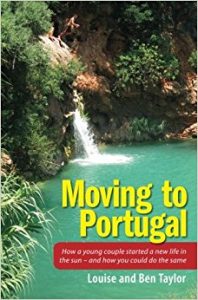
This is a guest post from Ben Taylor, a British freelance writer who spent several years living in Portugal and wrote a book about the experience. He now lives back in the UK, where he founded Home Working Club, a site dedicated to helping people explore freelance opportunities – in writing and various other fields.
5 Things I Learned About Marketing my First Book
Read on Amazon
I never intended to write a book.
It came about by accident, after I started a blog about moving to Portugal from the UK. While I won’t pretend that I didn’t hope people would read and enjoy the blog, I never had particularly big plans for it. I figured that, if nothing else, it was a good way to keep a journal of the experience.
However, after I’d been going for a year or so, the site got rather popular. It…







 This post calls out to those of you that are authors. I’m trying to open a dialogue and share my experiences in an effort to see if we have a commonality in our goals and how we get there. I am always torn on this blog to identify as an author who is selling books. That’s why I started it, but it has evolved into something much more.


 The PBS Blog