It is September 23, 2009, and there is a dust storm in Sydney. But, Grace is from a family of pagans, so it is not only a dust storm for them. As the amber glow, which Grace calls the glowing, tangerine-colored fog, blankets the city, Grace Fieldgrill, now in her seventies, senses her time has come to die. The amber glow will want a sacrifice, and she is ready to give herself.
Grace believes the day she unlocks the trunk in the corner of her room, the spirit of John, her feu sacré or sacred flame, would come, as prophesied by her mother, to whisk her away. But, before she dies, she wants her son, Christian, to know the truth about his birth father and her granddaughter Samantha (Sam) to succeed in her career. These are affairs she must sort through before sunset. Grace commands Sam to unlock the trunk, and this is where our story begins.
“73-years is a long time to remain earthbound when you want to fly.”
I am not convinced Ms. Waters is not a poet. As with Catch the Moon Mary, Fields of Grace is full of poetic language and reads like a romantic love story and a historical fiction novel. When Sam opens the trunk and pulls out items, we follow Grace back to 1934, where she lives at the Wyncote House, a ladies-only establishment. The women of the house are hilarious. Although, Julia’s low self-esteem and constant complaints about not being pretty made me want to jump through the page and shake her.
As a history buff, I loved how the author used actual historical figures to interact with the fictional characters, which I love doing in my own writing. Sir John Gielgud was an English actor and theater director whose career spanned eight decades. And Peggy Ashcroft was an English stage actress who appeared in both classic and modern plays. Peggy and Gielgud’s relationship in the novel reminded me of brother and sister:
‘Our new thespian is rich, flings money like confetti at a wedding. A little flattery will grant me artistic freedom.’
‘Peg pushed my remaining ribbons aside and swiveled to face Mr. Gieldgud. ‘How rich?’
‘I knew that was all you heard.’
Wendy Waters, Fields of Grace
The author also gives us updates on Hitler and the pending war and where the world stood on women’s rights at the time.
Some parts were so fun I found myself reading some of the lines aloud as if I was in a play. Here is a funny exchange between Peggy and Grace about a handsome man named Dashiell Tanner, who has just replaced another actor:
‘I think he has talent, don’t you?’
‘No.’
‘He’s incredibly handsome.’
‘He’s incredibly arrogant.’
‘So, you’re not in love with him?’
‘Do I sound like I’m in love with him?’
Wendy Waters, Fields of Grace
You will learn the significance of this exchange when you read the book.
The story goes back and forth from past to present. I was worried about getting lost, but the author did this so well it was not confusing at all.
My only criticism is the book is very long, and it might be too much for readers with not a lot of time on their hands. (It took me a while to finish myself). Otherwise, I found Fields of Grace to be an exciting and entertaining read.
I saw the competition pop up on my IG thread, and the theme of love caught my eye immediately. Being that I am a woman known for always speaking about love and pride myself in how I love people, there was no question on whether I would enter the poetry contest. In addition, I had already written a poem on love and initially submitted that poem because I was not sure if I would have enough time to create a new poem. However, after submitting my first poem, I read how participants could submit two poems and the challenge to us poets to look beyond the normal description of love we often see in poetry. This forced me to visualize all the different perspectives of love.
I love it. What do you love most about poetry?
I love that poetry takes on a life of its own. It can be a song, a narrative, a teacher, a friend, a love letter, a movement, etc. It has its own language to the reader because poetry is personal. It not only speaks to us, but it has the power to move us individually in various ways as if it knows each of us intimately. Does that make sense?
Yes, it does! How did you get started writing?
I started writing when I was very young- it was my escape, and writing was my voice. Although I was outgoing and never had a problem with talking, I struggled with my identity (being understood), so my journals were the only place where I could be myself. I loved how words had the ability to say what I wanted to express vocally. In short, when I wrote, I was free to be me, raw and unapologetic.
You are an author. What has that journey been like for you?
I have to say exciting! I love to hear how something I wrote transformed or inspired someone, which is mostly the core of my writing. But it is also hard because if you are not an established author, it is hard to get your work out there when you are self-published. I had to decide to enjoy the journey no matter what, but your greatest desire is for your work to be read as an author—the journey itself has also been an adventurous teacher. There have been many doors of opportunities that opened for me that I never imagined. For example, my book has been used as a resource in a business. I also use my book as a resource in my work as an encouragement coach, not to mention the speaking opportunities.
You are doing such excellent work. I love it.
As I mentioned earlier, you challenged me. That challenge forced me to look inwardly beyond the “emotion of love” beyond “conceptualizing love,” and I was able to see love in ways that superseded my surface emotions and mental awareness. Realizing that love has always been present, but we are often unaware of its presence. I can admit, I didn’t recognize or appreciate it when I was younger because I allowed others to define love for me.
So, I wanted to give tribute to that type of love and the givers of such love. When they gave, they gave all they had. So as the memories washed over me, I began to write, and it flowed from my being. I saw faces- my mother, grandmother, neighbors, friends. I saw our ancestors, their scarred backs, and forgotten history. When I finished, there was joy and sadness within my heart, and I was proud and, without a second thought, submitted it. It deserved to be read even if I didn’t win. I wrote this poem quickly as the memories washed over me.
That’s beautiful and I can tell you put a lot of thought behind your poem. It’s deep and relatable. I felt right away how set-apart your poem was from the beginning.
What would you say is your writing strength and weakness?
My strength is that I can create a piece quickly. If I am passionate about a topic, the creativity flows. I also love taking chances as a writer, even if I am uncertain if I can write about a particular topic or theme. I put myself out there! I believe it is because I know myself, so I am no longer writing to be affirmed as a writer. I fell in love with my voice, whether written or verbal.
Wait a minute. Sis said, “I know myself, so I am no longer writing to be affirmed as a writer.” That’s a bar.
Okay, go on, lol.
My weakness. Wow, there are two that come to mind. The short one is learning to get out of my head to fully unlock the untapped potential and creativity that I know I have. My second weakness is more of a past weakness, which is fear because it hindered my writing for so long.
I love it! And I think it’s what sets you apart. Are you working on any writing projects/books?
I am currently a full-time student, so I only take on small writing projects for people, such as writing personalized poetry pieces or short stories for birthdays, events, or special projects.
Oh, that’s cool!
I have more books in me, but I am trying to get through these last two years of schooling. I recently, right before school started, for the first time, had the opportunity to work on a script project for a short series, and I can’t wait to see where it goes. There are still more episodes to be written, and I hope I have the time to be on the rest of the project. I will say this, scriptwriting gave me a new desire to write a fictional book and maybe dabble even more into scriptwriting for films.
Yes! I see it.
Where do you see yourself a year from now?
On my last year of college, celebrating being a writer on the series project I mentioned earlier and seeing it on Netflix or Hulu. My book being not only in other states but other countries and being a best seller. I want to impact more lives through my encouragement, coaching, and writings, and I expect more unexpected opportunities that blow my mind! I am also a huge supporter, so I want to be in a position to help beginner writers in whatever way I can.
That all sounds amazing and I pray you go as far as you are destined to.
And without further ado, I introduce to you “Love Is,” by Tiffany James
Grandma’s Hands by Curtis James, June 27th, 2011
Love is distinctively woven into the fabric of our being experienced through the ordinary each day a silent wave of an old memory washing over us; a segue to our humanity.
Love is home, love is grandma’s baby love is survival and hustling; cleaning toilets, scrubbing floors, changing diapers, washing clothes by hand, and layaway plans.
Love is spiritual; a scared village, the spirit’s libation, broken history, and love is migration love is food stamps, government cheese, grits with sugar, and collard greens love is the sand between my toes.
Love is the prize at the bottom of the crackerjack box, love is hopscotch, and double-dutch love is afro-puffs, two French braids and your first French kiss love is overtime, colored easter eggs, Santa Claus tales, and hand-me-downs.
Love is that switch from the tree, love is praying hands and bended knees love is loud, silent, large, small, and intriguingly complex —Love is Proud love is scarred backs and stubborn roots —old hymns and sung negro spirituals.
Love is “I told you so” love is easy like Sunday morning love is Betty Wright, Marvin Gaye, Smokey Robinson, and Patti LaBelle; a brilliant collaboration of lyrical hands fighting for the same devotion because love is Soul Train.
Love is rich soil to the soul love is fearless laughter, getting up at 6am, sleepless nights, untold stories and second chances love is the ancestors’ wisdom —the great orator and the greatest debater.
Love is underestimated, yet chosen love is fierce; righteously angry, patient, and sacrificial — it is the caged bird singing love is the paint, painter, and work of art.
Love is a savior —the hero’s journey Love is amazing grace Love is wealth, life, and death.
Love is not weak; it bows down to no one yet surrenders itself to everyone by its own authority — love is badass. Every time I close my eyes, I witness love.
Love is distinctively woven into the fabric of our being. experienced through the ordinary each day
Today wraps up our poet spotlight for the 4th Annual Poetry Contest. I want to thank everyone who has participated and supported our poets this year. If you want to help coordinate or sponsor next year’s contest, please reach out to me at yecheilyah@yecheilyahysrayl.com. I love hosting these contests, but I can’t do it without your help.
Congratulations again to all our poets!!
You can find their bios on the dedicated page for year four.
On July 20, 1969, the world watched as America walked on the moon. In Black America, something very different was happening. We were in the middle of the Harlem Cultural Festival, a series of music concerts held in Harlem, Manhattan, and New York City during the summer of 1969 to celebrate black music, culture, and black pride.
Also known as Black Woodstock, it is the subject of the Hulu documentary Summer of Soul, appropriately named and highly recommended. Some call it “The Revolution that Could Not Be Televised,” because the footage has been unseen until now.
Why hide film showing a sea of beautiful black people having fun? Nevermind.
Also, in July of this year, Black America mourned the loss of another Civil Rights Activist. Just fifteen months after the death of Dr. King, we saw the death of his baby brother Rev. A.D. King.
Note:
In this post, I will occasionally refer to Dr. King as Martin to distinguish him from the other King. This informal approach is in no way intended to be disrespectful to either man.
Who Was A.D. King
Alfred Daniel “A.D.” King, the father of Alveda King, was born on July 30, 1930, in Atlanta, Georgia. On June 17, 1950, he married Naomi Barber, with whom he had five children.
Like his brother, A.D. graduated from Morehouse College, but he was less interested in academics. Although he eventually yielded to the calling of a pastor, he initially strongly resisted that as well. A.D.’s grassroots connections would come in handy later in life when he would help to recruit people for Civil Rights Demonstrations.
While Dr. King knew the boardroom and could maneuver his way around intellectuals, A.D. knew the streets (street smart if you will) and was responsible for organizing and strategizing many of the marches King is famous for, becoming known as a master strategist. He had a gift for leading the youth and had his ear to the ground about what the people wanted, and Martin depended on him heavily.
A.D. faced many of the same struggles as Martin and several other civil rights leaders during the 1950s and 60s, including being arrested in an October 1960 lunch counter sit-in in Atlanta. A.D. and his wife also escaped a bombing to their home.*
*Bombings were so often in the black community during that time that Birmingham had been nicknamed Bombmingham.
Rev. A.D. and Dr. King did not only look alike, but they also sounded alike and were nicknamed “Sons of Thunder” by King. Sr.
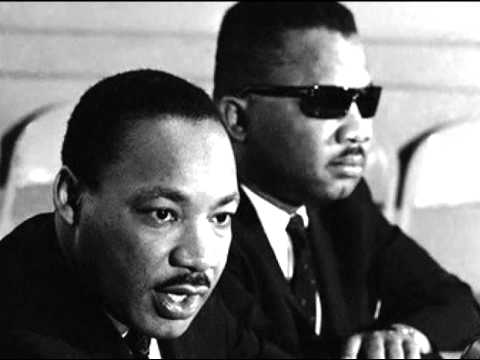
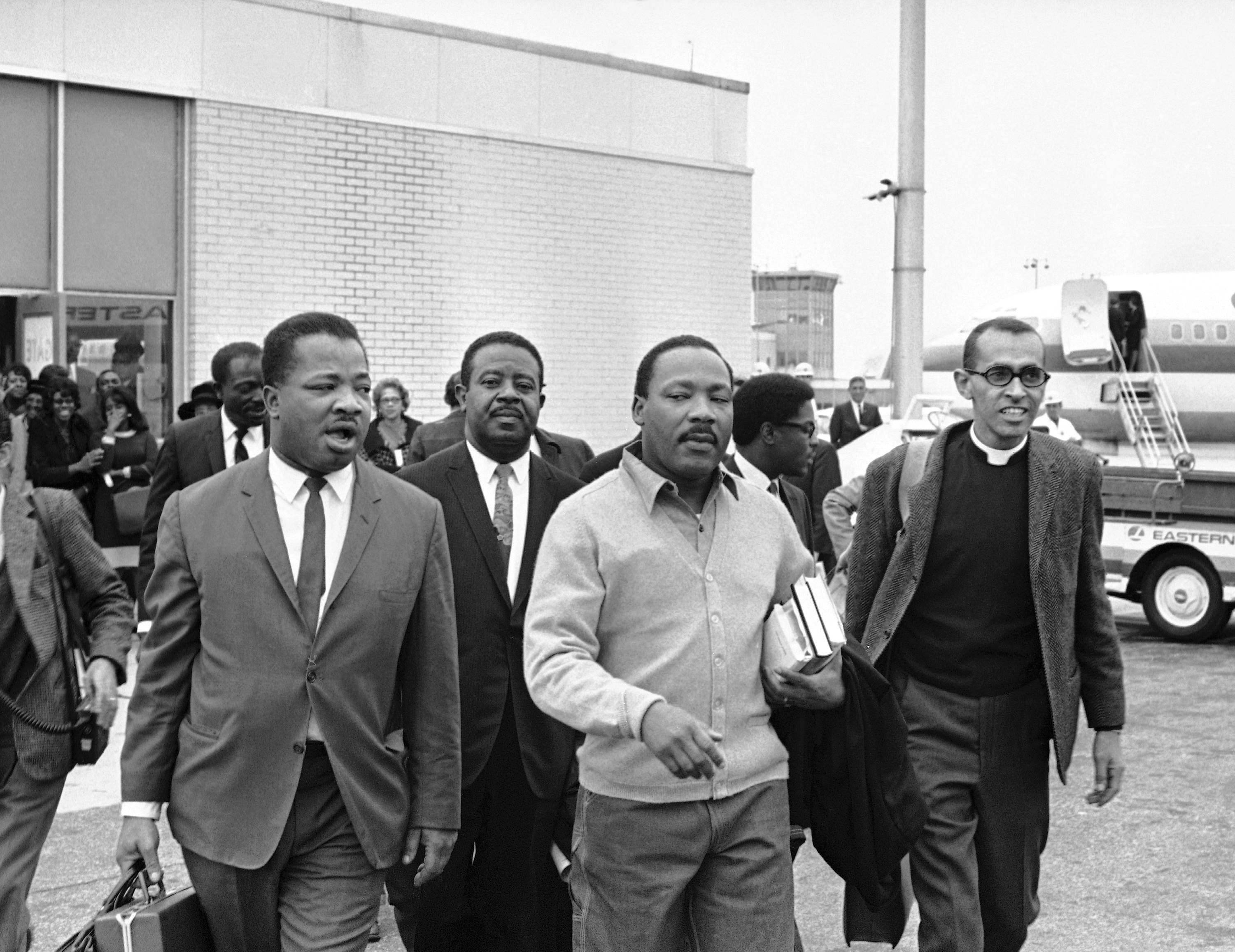
Rev A.D. King, younger brother of Martin Luther King (first from left). Photo: Pinterest
A.D.’s personality is said to have been relaxing with a sense of humor.
Cause why he got them glasses on? Brother did not want the spotlight.
Although his activism mirrored Martin’s, A.D. did not like the limelight and had no intentions of usurping that authority from his brother. Friends and family say A.D. King was humble and was not worried about walking in his brother’s shadow. Instead, he played his part and let Martin play his. A.D. supported his brother one-hundred-percent and was in the middle of every movement:
When Dr. Martin Luther King, Jr., was murdered on April 4, 1968, it hurt A.D. deeply, and he never recovered, as he felt it was his responsibility to protect his brother, A.D.’s widow, Naomi King, once recalled.
On July 21, 1969, at the age of 38, a year and a half after Martin’s death, A.D. mysteriously drowned in the family swimming pool.
It is a mysterious death because A.D. King was a “very good swimmer,” according to his niece, Bernice King, Martin’s daughter. According to Derek King, A.D. King’s son, emergency workers noted there was no water in his lungs. “Ain’t no water in his lungs,” one of them said, “he was dead before he hit the water.”
Why is the legacy of little-known Civil Rights icons like A.D. King important?
I am sure you’ve heard the news.
“The Texas Senate has voted to pass a bill that would remove a requirement for public school teachers to teach that the Ku Klux Klan is “morally wrong.”
“The Texas Senate on Friday passed legislation that would end requirements that public schools include writings on women’s suffrage and the civil rights movement in social studies classes. Among the figures whose works would be dropped: Susan B. Anthony, Cesar Chavez, and Martin Luther King Jr., whose “I Have a Dream” speech and “Letter from a Birmingham Jail” would no longer make the curriculum cut.”
It used to be Dr. Martin Luther King Jr. was the only name we knew and were taught in history class. Now they are doing away with him, too, it seems.
As more is revealed about the truth of who Dr. King was beyond the “I Have A Dream” speech (including that when he was born, Martin Luther King Jr.’s name was Michael…read more about that here), it is no surprise to me that systems are now trying to limit the already limited information we have on him.
Thus, it is also no surprise little is known of his brother, although he was so prominently involved in everything Dr. King stood for. Their mother, Alberta King, was also killed.
There is definitely something strange about this.
Family matriarch Alberta Williams King is flanked by her sons, the Rev. Martin Luther King Jr. on her right and Rev. A.D. King on her left. Isaac Newton Farris, the husband of her daughter, Christine, stands behind them. (AJC file photo) Credit: contributed
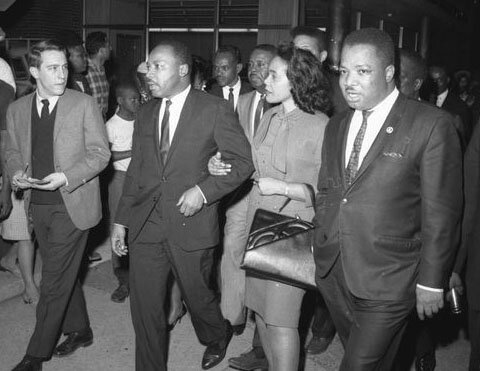
Now that you know A.D. King existed, the next time you see a photo of Dr. Martin King, also look for Rev. A.D. King. Chances are he was right there, hiding in plain sight.
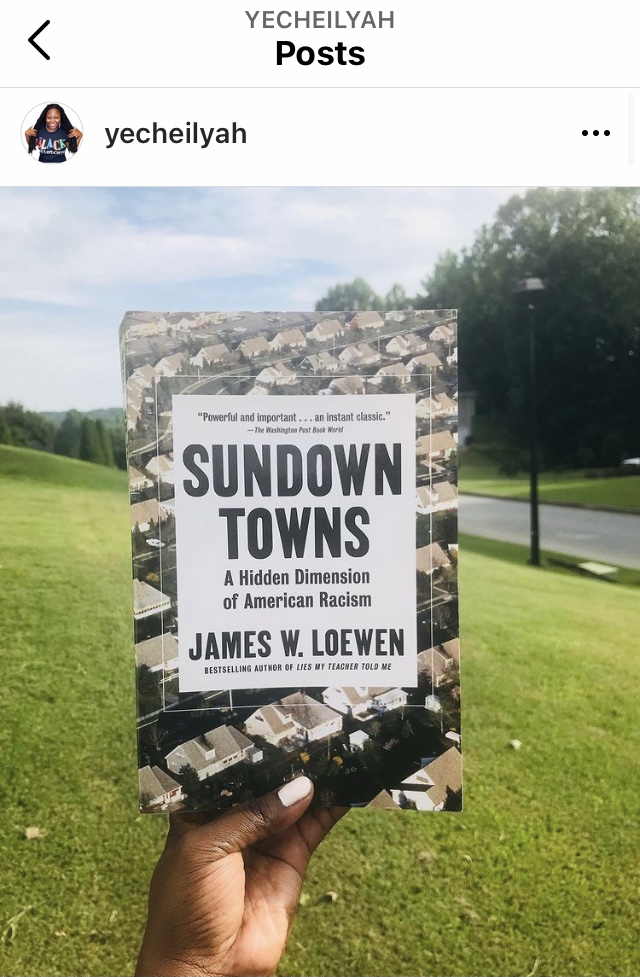
“Beginning in about 1890 and continuing until 1968, white Americans established thousands of towns across the United States for whites only. Many towns drove out their black populations, then posted sundown signs.” – James W. Lowen
When I first published this article in 2017, I got much controversy about it. I didn’t take it personally for two reasons. First, very little literature covers sundown towns, and not much is said about it in the limited topics covered during black history month.
The other reason is, although these towns were known as sundown towns, the people of the town did not call it that. It was only a well-known fact that some blacks were not allowed in some towns, and if they visited, they had better leave before the sun sets or risk lynching. Therefore, when I wrote about it, some people thought I was making it up.
Follow me on Instagram @yecheilyah
This past week, I posted this image to my Instagram, and I was surprised to see how many more people had not heard of this. For this reason, today, we are revisiting our black history fun fact on sundown towns.
“Is it true that ‘Anna’ stands for ‘Ain’t No Niggers Allowed’?” I asked at the convenience store in Anna, Illinois, where I had stopped to buy coffee. “Yes,” the clerk replied. “That’s sad, isn’t it,” she added, distancing herself from the policy. And she went on to assure me, “That all happened a long time ago.” “I understand [racial exclusion] is still going on?” I asked. “Yes,” she replied. “That’s sad.”—conversation with clerk, Anna, Illinois, October 2001.
Anna, Illinois, was named after the daughter of the town’s founder but got its more derogatory name after the 1909 lynching of a black man in Cairo, IL, and the mob of angry white citizens who drove out Anna’s 40 or so black families following the lynching. It is at this point that Anna, IL became a sundown town.
A sundown town is a town with an exclusive population of non-whites on purpose. They are towns with overwhelming populations of non-whites and are so deliberately. Sundown towns were also known as “Sunset Towns.”
“A sundown town town is an organized jurisdiction that for decades kept African Americans or other groups from living in it and was thus “all-white” on purpose.”
Side Note: In the black community, black kids are constantly warned to “come in the house when the street lights come on,” so many of us had to be in the house before the sunset. I wonder if Sundown Towns had something to do with this. Not to say black parents are the only ones with this command, but it’s food for thought.
Although signs were posted, forced exclusion was also implemented:
“There were also race riots in which white mobs attacked black neighborhoods, burning, looting, and killing. Across America, at least 50 towns, and probably many more than that, drove out their African American populations violently. At least 16 did so in Illinois alone. In the West, another 50 or more towns drove out their Chinese American populations. Many other sundown towns and suburbs used violence to keep out blacks or, sometimes, other minorities.”
– America’s Black Holocaust Museum, James W. Loewen, PhD; Fran Kaplan, EdD; and Robert Smith, PhD
The Beginning
Sundown towns began after slavery and the Civil War when blacks left the plantations and poured into every city and corner of the country. This was followed by the system we know as Jim Crow.
Jim Crow laws were state and local laws that enforced racial segregation in the southern and northern United States to keep blacks in a state of servitude. It included having to look down and step to the side when a white person walked by, drinking from separate water fountains, entering the rear of the bus, sitting in the balcony of the movie theater (which came to be known as “Nigger Heaven,”), attending separate schools, and more.
While Jim Crow and segregation are most notably known as a southern practice (“The Jim Crow South”), it also existed in the north. In fact, many parts of the north were more segregated than the south, and when it comes to Sundown Towns, these communities mainly existed in the north as the Great Migration brought floods of blacks into northern cities. Many suburbs to this day are mostly white because they were either part of redlining -the systematic denial of various services to black residents either explicitly or through the selective raising of prices – or its white residents ran its black residents out of town, and the descendants of those people kept it that way.
I’ll use Chicago as an example, still one of the most segregated cities in America. Yes, I said Chicago. Remember, we started this conversation with Anna (“Ain’t No Negroes Allowed”), Illinois.
From Time .com / Bettmann / Getty Images
Dr. Martin Luther King Jr. visited Chicago in 1966 due to the high poverty rate in black neighborhoods and rented an apartment on the west side. He was there as part of what he would call The Poor People’s Campaign and the Freedom Movement. On August 5, 1966, King led a march through Cicero, an all-white district, and was hit in the head with a rock by members of the angry mob.
Years later (the early 80s), my brother-in-law and his friends would be chased out of this same area, racial slurs hitting their backs as they rode their bikes out of Cicero.
This statue below is of Orville Hubbard, which sits outside of the City Hall in Dearborn, Michigan, was the cause of much controversy when people started to learn more about his past.
Hubbard was the mayor of the then all-white suburban town outside of Detroit from 1942 to 1978 and, in a 1969 speech acquired by the New York Times, said that “If whites didn’t want to live with N–they sure didn’t have to.” He went on to say this was a free country, and this was America.
“City police cars bore the slogan ‘Keep Dearborn Clean,’ which was a catch phrase meaning ‘Keep Dearborn White,’ ” according to David Good, a lifelong resident of the city who is the author of ‘‘Orvie: The Dictator of Dearborn,” a biography of Mayor Hubbard.
“Out here in Dearborn where some real Ku Klux Klans live. I know Dearborn, you know I’m from Detroit, used to live out there in Easten. And you had to go through Dearborn to get to Easten. Just like riding through Mississippi once you got to Dearborn.” – Malcolm X
Over time the name “Sundown-town” faded, but Sundown Suburbs still exist. A sundown suburb is a discrete way in which Sundown-towns live today when large white populations migrate to the suburban part of the city with the express purpose of separating themselves from the minority population. We can see this in our Cicero example.
I have not been as active on this blog as I need to, but know if you see me less, that’s because I’m doing more!
Although I have not published much, I have a bit I am working on, including a new potential author client preparing to release her book (throws invisible confetti), part two to #TWWBE (Yep. Surprise), the anthology for Black History Fun Fact Friday, and tons of articles sitting in my drafts, waiting to be picked to go next.
Today, I want to give you an update remixed with a lesson I’ve learned in the process.
I am starting over with my email list, and I am deleting my Business Facebook page at the close of this year.
I have had the same author email list since 2015, and hard as it was for me to accept, I don’t have the same audience. Much has changed between then and now.
I received good email opens but very little engagement. It started to feel like people were watching me, although they were no longer interested in what I had to offer. I got little feedback which made drafting and sending emails less fun. I was also getting a lot of spam sign-ups. That’s when I knew it was time for a change.
This morning, I deleted everyone from the old list* except for the two people who emailed me a reply to say they are interested in being on the new list.
*This is not my poetry list, but my general author list. If you are subscribed to the poetry list, you are good!
I started to backtrack, though. Building an author email list isn’t easy, and neither was deleting over four hundred emails I’ve worked hard to accumulate over the years. I started to send one final email asking people to reply if they are interested in being added to the new list.
Then, I realized this was an excuse to hold on a bit longer.
The truth is the interested people had already told me as such, and I had to accept that.
It is also true quality will always be better than quantity.
In the end, it didn’t matter how many people were signed up. What mattered was who was engaging. How is it only two people replied to me? I decided this was unacceptable.
I also decided to change my strategy. It is not lost on me my part in this. I’ve struggled with my list for some time, and I hope to become better at it.
And instead of deleting my email list altogether, I am starting over. I still believe in the value of the author’s email list, especially in light of how many people have their social media pages deleted.
The lesson can be summed up in the following quote:
“You get to change your mind about things that are no longer aligned with or supportive of your growth.”
– Alex Elle
Simply put, it’s okay to begin again.
How You Can Help!
For Author Updates subscribe to my Email List at the link below. This is a new list. If you did not respond to the last email, you were removed and will need to resubscribe to continue receiving updates from me.
I am from Chicago, where kids paid close attention to the shoes you were wearing after winter break.
Everybody was checking to see who was wearing something new. See, in the hood where money is scarce, you got your best clothes and shoes around Christmas, so when kids come back from break, everybody is looking to see what you got on.
I walked into my eighth-grade classroom with my all-blue suede Timbs (what we called Timberland boots), and I didn’t like the way everyone’s eyes noticed them.
The same thing happened in High School.
I grew up poor and didn’t start wearing name-brand shoes until the second round of sixth grade. While I loved Air Force Ones, I had never owned a pair of Jordans.
It wasn’t until High School I owned a pair and joined the other “cool” kids and experienced what it was like to sit on the pedestal of those who wore Jordans.
And I didn’t like it.
I wished I hadn’t worn those shoes. I liked them a lot, but I didn’t like the attention they garnered. I also didn’t like being like everyone else. I quickly realized I wasn’t a Jordan-wearing type of person. As I got older, I learned I am not all that into gym shoes (sneakers if you are not from the Chi) in general. I wear them, and I have them (and I like looking at the different styles), but my personal style is more casual.
But anyway, those Jordans were my first and only pair.
Here’s the truth:
I don’t like the spotlight. Despite what I do for a living, I am not an “out there in front” kind of person, and I get embarrassed easily because I’m shy.
Just as Moses did not want to go to the Pharaoh and tell him to let his people go at first, I do not always want to show up.
But at some point, Moses had to obey the voice that spoke to him and fulfill his purpose which is why I show up despite the quiver in my chest.
Maya Angelou said courage is the most important of all virtues because, without courage, you cannot practice any other virtue consistently.
You can’t be consistently kind or loving, or generous. You can be these things for a time, but not consistently because there is no endurance without courage.
When the threat is too much, you will quit if not for courage. So, while everyone is afraid, those who are courageous go on despite the fear.
“I do what I hate to do, but I do it like I love it. That’s discipline.” – Mike Tyson
What Tyson isn’t saying:
Settle for a life that does not bring you joy.
What Tyson is saying:
Even while doing what you love, there will be moments where you have to be disciplined to accomplish a goal, and this won’t be fun, but it will be worth it.
Quick Tips.
Stop Predicting What Other People Are Thinking
I am pretty sure we are all guilty of this!
The biggest stumbling block to showing up is thinking about what other people would think of you. We make up these stories in our head about what we expect to happen and what we think other people are thinking.
Tell yourself a different story than the one in your head.
People do love you and think about you often.
Readers do want to read your book, and they do care about your story.
People want to hear from you more than you think.
You do matter.
I mean, I know you’re a genius and all that, but you can’t predict what people are thinking. You just cannot do that to yourself.
“But I don’t want people to think…”
This is a phrase we should all work to eliminate from our vocabulary, and I admit, I have work to do myself. When we say things like this, we are expecting a response that may or may not even be real.
“I don’t want to post about my book because I don’t want people to think ________.”
If you don’t tell people about it, how are they supposed to know it exists? What about this instead:
“I am so excited to tell people about my new book!”
I notice the more I am excited about something, the more excited the people around me are. Take the smile test for example.
Look at someone and smile. I bet you they are going to smile back. If they are extra silly like me, they might even laugh. Then you will laugh, and neither of us knows what’s funny.
One of my favorite quotes is:
“What would you do if you knew you couldn’t fail?”
Anticipate the best possible outcome instead of the worst.
Release the Need to Know.
Trying to control the outcome is like trying to catch the wind. Get excited about what you don’t know and all the possibilities of a new experience. You don’t need to know the outcome to start.
You Don’t Have to Say Yes to Everything.
You don’t have to drink from every cup handed to you. That’s how you get poisoned. You are only required to accept those things that speak to your soul, nothing more and nothing less. If it does not set your soul on fire, you don’t have to do it.
Saying no is not wearing Jordans if you really don’t like them.
Another quick story.
In my early teens, fifteen-sixteen-ish, my brother spray-painted hats and t-shirts for the neighborhood. He did stuff like this all the time because he’s an amazing artist. He even designed clothing for the entire cheerleading team. Anywho, my brother spray-painted my and my sisters’ and cousin hats to match our shirts. That’s how I got into wearing hats that summer. Eventually, my sisters and cousin let go of the hat thing, but I would still wear mine even at school. My twin thought I looked like a boy, but I wasn’t a tomboy. I just liked the hat.
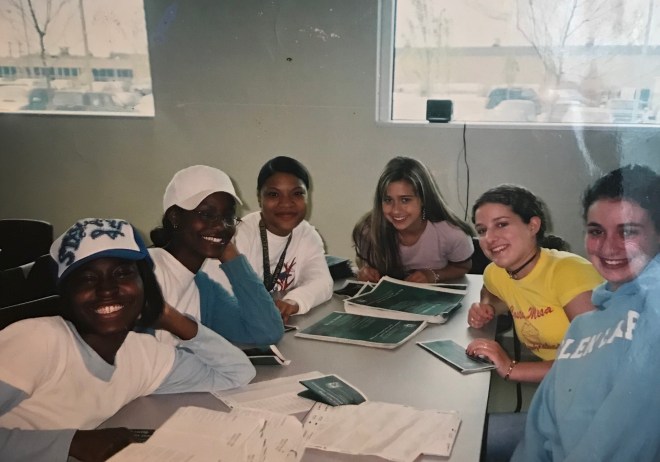
My High School Pen Pal Program. Me in front, rocking my spray-painted hat and a blue long-sleeve underneath my short sleeve because I was cold, lol.
Saying no is also about not denying a part of yourself because of what other people think.
This means knowing ourselves well enough to know what we want and don’t want.
Sometimes, we accept things we don’t like, things that are not inherently us, and things we are not comfortable with because we don’t know ourselves, and that’s another discussion altogether.
It can be hard to show up when you are naturally more laid back and reserved, but I challenge you to push yourself. The best way to get used to doing something is to get out there and do it, and the more you do that thing, the easier it’ll be.
And being an introvert doesn’t necessarily mean that you are shy, although many shy people are introverted.
I took an online quiz before posting this. My results say I am an introvert (not surprised) with the following traits:
You crave alone time. Having time to think, private space, and quiet time helps you feel rested and whole.
People can drain you. Even the most well-meaning people can pull a lot out of you. You can absolutely do social situations; they just take a lot of energy.
When socializing, you like to observe before partaking. You like to think before you speak and have one-on-one conversations rather than speaking in groups.
“Our deepest fear is not that we are inadequate. Our deepest fear is that we are powerful beyond measure. It is our light, not our darkness that most frightens us. We ask ourselves, ‘Who am I to be brilliant, gorgeous, talented, fabulous?’ Actually, who are you not to be? Your playing small does not serve the world. There is nothing enlightened about shrinking so that other people won’t feel insecure around you. We are all meant to shine, as children do. It’s not just in some of us; it’s in everyone. And as we let our own light shine, we unconsciously give other people permission to do the same. As we are liberated from our own fear, our presence automatically liberates others.”
I am not at all surprised I am enjoying Cicely Tyson’s memoir, Just as I am. While I am not an actor,* I try to learn as much as I can from others. Even if it’s reading a book, I want to know what brought us together and what purpose I might piece together that we are intended to serve to each other.
I have had this post sitting in my drafts since the beginning of May. It wasn’t until I read this chapter last night I could finish it and feel comfortable publishing it.
In Chapter Ten, Center Stage, Miss Cicely is recounting her training with Vinnette Carroll, playwright, actress, theater director, and the first black woman to direct on Broadway, with her 1972 production of the musical Don’t Bother Me, I Can’t Cope.
In discussing art, Miss Cicely (I like saying that) explains in just a few short sentences everything I want to convey in this post.
“Vinnette taught me to learn technique and then to forget it–and to resurrect it only if it served my portrayal. Technique is important, to the extent that it is undergirded by emotion. I once knew an actress who was a brilliant technician, but her portrayal fell flat. She could create a moment and bring it to fruition, yet it was apparent she wasn’t feeling anything, and as a result, neither was her audience.”
Cicely Tyson, Just as I am, Chapter Ten, pg. 156-57
“Technique is important, to the extent that it is undergirded by emotion.”
I never consider myself an expert on anything. I will say what I have come to know in my experience, both as a writer and listener of poetry, is to watch out for intellect. By intellect, I mean the need to be so fancy you confuse the reader. It is, in my opinion, similar to using technique and forgetting emotion.
That is why I often feel that intellect, if not used in balance with emotion, passion, and heart, is the enemy of sound poetry.
“Watch out for intellect, because it knows so much it knows nothing and leaves you hanging upside down, mouthing knowledge as your heart falls out of your mouth.”
I have read poetry so over my head I could not possibly relate to it. Metaphors and similes were so puzzling I am not even sure Maya Angelou could decipher what the poet meant if she were alive. I once read a poem that ended with the author saying he or she had eaten a bird. I do not know who or what the bird symbolized. All I know is a bird at the beginning that ended up eaten by the end of the poem.
Poor bird.
I did feel sorry for the bird to this poet’s credit, so I was not without emotion completely. It is not lost on me that readers can discover their own meanings and interpretations of poems, which is part of the fun. We learn what the author intended for the poem to communicate and what we got from it based on our personal experiences and feelings. I love hearing how a poem I’ve written resonated with readers, even if what they got from it was different from what I thought as I wrote it.
But, I like to think reading and writing is a partnership. While the first person our writing serves is ourselves, I would hope there is something to be gained by the reader too. I don’t want to get so wrapped up in the beauty of language that there is no substance, just pretty words. I expressed this in the poem Give Me Life.
To me, this would be similar to the woman Tyson references, who was a brilliant technician when acting but could not move her audience.
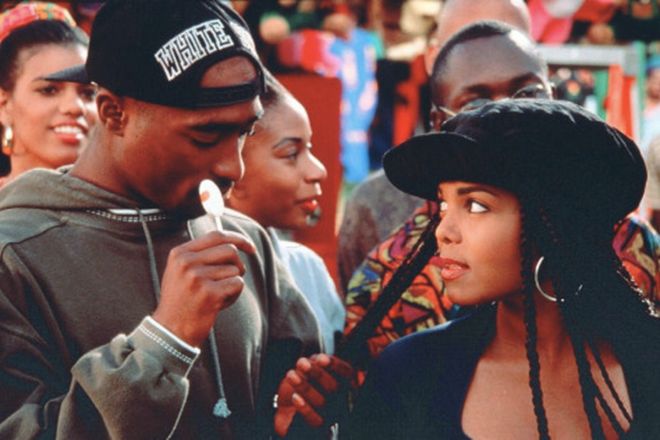
If you know anything about me by now, you know I am a Black Movie Buff. It’s like Justice said in Poetic Justice about having something deep to say, about having a voice.
Lucky: “What you write about in that notebook?”
Justice: “That’s my poetry.”
Lucky: “You trying to say my cousin’s shit ain’t poetry?”
Justice: “It ain’t if he ain’t got nothing deep to say. Gotta have a voice. A perspective.”
Intellect can be a strength or it can be a weakness.
If there is an easier way to say something, write it plainly, and it will reveal its own depth. I like to write the poem as it comes to me and then come back later to dress it up. Ain’t nothing wrong with a little icing once you have the cake.
Here is another quote I picked up from the quote of the day from author and editor Shayla Raquel’s newsletter, which I also just read yesterday.
“Your writing voice is the deepest possible reflection of who you are. The job of your voice is not to seduce or flatter or make well-shaped sentences. In your voice, your readers should be able to hear the contents of your mind, your heart, your soul.”
— Meg Rosof
*I said at the beginning of this post I was not an actor. I should say I am not a professional actor, as I do have some experience with it. In High School, I was part of a special program to write and perform plays. I cannot remember the program’s name or what the aim was, but this was my first official summer job. I did this for the summer of my Sophomore and Junior year, taking an official drama class my senior year, where I would also perform my poetry live for the first time as a monologue. In 2015, I was featured in a stage play at the DuSable Museum.
But as I reflect, fun as it was, I prefer to write the screenplay. Ya’ll can do the acting.
Have you entered this year’s poetry contest? I hope I gave you some inspiration! Take your time but keep your eyes on the clock. June will be here before you know it.



















 The PBS Blog