You Are Missing Out

“If growing up is painful for the Southern Black girl, being aware of her displacement is the rust on the razor that threatens the throat. It is an unnecessary insult.”

– Maya Angelou

I am excited to have reached my substack goal of having the first ten subscribers! Actually, I have eleven, so I have exceeded my goal. Tee Hee.

WordPress will always be home, and I will continue to write here. My goal on Substack is still to restore Black historical truth, except I am restoring my own truth. I am opening up more about my personal story and laying the foundation for a new journey.

But it’s not just about my story.

“I Wasn’t Built to Break” isn’t just about a car accident or a broken leg—it’s about the fractures life leaves behind. It’s about shattered hearts, struggling communities, and the resilience that rises through the cracks.

Yes, I’ll share the story of that life-altering accident, but I’ll also take you through my early years wrapped in poverty, my battles with fertility, and the relentless attempts this life has had to break not just me but Black women like me.

And yet, through it all, I stand, we stand—unshaken, unbroken, and undefeated.

Hop on over there and subscribe so you don’t miss it!

We are already three articles in. Click on the link below to catch up.

https://yecheilyah.substack.com/

Always There Are the Children

Something devastating is happening, a bone-chilling, frightening thing.

The children are dying.

In this year alone, I have learned of the deaths of four young people, three of them children under 25 years old. All of them were from people I know; they were firstborns, the first fruits of their mother’s wombs.

It has made me reflect deeply on how we foster future generations while remembering old ones. As a history buff, I understand how easy it is to dwell on the past. However, I’ve realized that the past, present, and future are inextricably linked; if we ignore one, we disregard the others.

I had the fortunate opportunity to speak with my husband’s great-aunts this past weekend as we mourned the death of their sister, our grandmother. They are all in their 70s and 80s, so I asked them what advice they have for the next generation. Almost everyone said to listen to the elderly. Essentially, you should obey your mother and father. Today, many may refer to this as honoring the ancestors. Whatever phrase you use, the broad consensus is to listen to those who came before you.

Growing up on a farm, where they grew and raised everything they ate, I got the impression they weren’t just saying this because they were elders but that it was a genuine conviction in which they truly believed.

Growing up, many of us heard the warning: “Honor your mother and father so your days are prolonged on the earth.”

I think about the depth of this as I watch the children perish.

One of my favorite poems from Nikki Giovanni is “Always There Are the Children.”

For me, it is a reminder that we do not live forever in these bodies. We will pass on one day, but there will always be children. What we pour into them while we live determines whether there will be more Nikki Giovannis and Maya Angelous.

Unfortunately, we live in a world obsessed with two things: appreciating people only once they’ve passed and only once they have become great. Rarely do we recognize the process and honor the in-between spaces. Seldom do we honor the becoming.

This robs the children.

And the children are not just minors in small bodies; we are the children, too. We are also daughters and sons, and I hope that we learn to nourish ourselves in the same way that those who came before us were nursed, and that we do so early on, rather than waiting until we are thought to have made it, because we are born worthy.

“We prepare the way with the solid
nourishment of self-actualization
we implore all the young to prepare for the young
because always there will be children.”

-Nikki Giovanni

The Power of Reading

Photo by Rahul Sha

I believe reading to be so powerful that it has the capacity to make one wise regardless of whose institution of higher learning the person has or has not attended. In the world of books, it makes no difference whether they completed grade school, high school, or learned to read later in life. That is the capability of the human mind. It is reprogrammable for excellence. The person who spends more time reading than engaging in frivolous activities can become a person of intellect of the highest degree despite their circumstances. Of this, I am sure.

My experience with reading is that it has an unparalleled ability to jolt the mind into action, turning readers into superheroes capable of phonemic awareness, visual and auditory processes, comprehension, and fluency. Nothing would make me happier for this generation than for them to sit down with a book and taste the deliciousness of its knowledge on their tongues. Magic exists in the world of expanded vocabularies, the ability to think critically, analyze, and solve problems. With just one flavorful novel, they, too, can be hooked on the limitless potential of being a well-read person.

You Are Woman

Photo by Kingsley Osei-Abrah on Unsplash

You are a rarity.
A gemstone that is not only precious but scarce.
You’ve been disgraced and beatdown so long
I doubt you know the difference.
Something is only precious when it is preferred.
But when a gemstone is rare
people search for it, and when they find it, they rejoice
for a rare gem is not easily available
for it, one must look.
There is no creation like you.
There is no body like yours.
No mind can conceive of the things you’ve seen
Even the ground is confused in the way that you walk
When you wake, the earth
quakes and shudders and the sun smiles
No instruction can map out the contents of your mind
You precious one.
You rarity.
You delicate rock.
You silk mountain.
Do not become small for those who refuse to climb.
Let the ordinary ones stay on the ground.
Let those who cannot swim stay on land.
Understand, you are a fist full of moon.
And those who cannot appreciate your light
must stay in the darkness.
There is no place for shadows
in the land of the living.
You are life.
You are womb.
Without you, the man was incomplete,
and without help.
You are not only golden
You are gold.
You are historic.
You are not only precious
You are rare.

You are woman.

The Year of Wisdom

Photo by Reneé Thompson on Unsplash

I thought year thirty-three was going to be the year of wisdom.
Profundity would find me on the edge of the ocean
dipping my toes in the waters of understanding.
Clarity would embrace me like a sister
and I would smile a thousand times.

But buried under year thirty-three
naïveté found me on the edge of stupidity
and dipping my toes in the waters of doubt.
Confusion embraced me like a sister,
heartbreak like a friend,
and I felt that I could die
a thousand deaths.

Thirty-three became the year of mourning.
A scorching misery, I would pull over my head
like a hoodie, pulling against the drawstring
so it covered my face
unafraid that someone might
mistake the heart in my hand
for a weapon and kill me
like an unarmed black man.

And I did not care if they did.

I was sackcloth and ashes.
Beaten by loss-the death of a mother,
uncle, brother, and the loss of a friend.
My tongue could taste the bitter tang
of humiliation like plaque on my teeth,
and tears turned into oceans I drowned in.

I thought year thirty-three was going to be
the year of wisdom.

And, strangely, it was.

Thirty-three quieted me.
It forced my tongue to the roof of my mouth
fixed my jaw to clench shut my teeth
while cultivating me in the furnace of affliction.

Profundity did not find me
on the edge of the ocean,
and I have not dipped my toes
into the waters of some grand understanding.
Instead, the flames of truth
burned off the useless layers
on the surface of my skin.
My tears are oceans of holy olive oil
washing away the sorrow from my soul.

Seeds of fight root themselves
in the crevices of my heart
that I have pushed back into my chest
so that out of the ashes of pain
wisdom may grow
so that out of silence,
understanding will meet me here once again
on the edge of the ocean
where I am smiling
a thousand times.


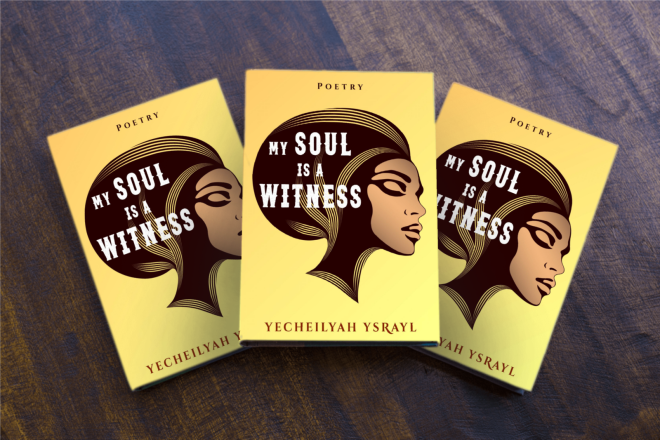
Don’t forget that if you have read My Soul is a Witness I am trying to reach 20 Book Reviews before this year closes and we are two reviews away! (Update: For some reason one of my reviews were removed. Boo. So I am 3 reviews away). If you have the book (and have read it), do consider leaving an honest review on Amazon by Jan 1.

Note: This poem is not in the book. It is new for those flipping your pages wondering where it is lol.

How to Review on Amazon:

Click this link. Scroll down to ‘Write a Customer Review,’ rate and leave your thoughts on the book.

Also, I am Soul is 99cents on Kindle for a limited time.

Humility vs. Fear

Photo by Alexandra Gorn on Unsplash

There is a humility that is sacred and far more valuable than any tangible thing. Then there is a humility rooted in fear. This humility is not real. It is the mask we wear when we are afraid to step outside of our comfort zones. It is the fear of being “too much.” It is the fear of being perceived as arrogant and proud. There is a pride that leads to destruction. It operates under the belief that we cannot teach it. It is that nasty arrogance they always warn us to stay away from, and for a good reason. But there is another way in which to be proud. It is the pride that gives us the courage to be who we are. It is the pride that acknowledges all the struggles we’ve endured to be where we are. It is the fulfillment that gives us the intestinal fortitude to hold our heads up and believe that we are capable despite all obstacles and impossibilities. There is a nasty and egotistic pride, and then there is a pride that is self-respect. There is sincere humility that will take us places money and status never will. Then, there is a humility that keeps us stuck because it is not humility; it is fear.


Writing Journals for Poets and Writers Are Now Available for preorder!!

Every journal includes a high-quality stainless steel diamond pen.

PreOrder Now

www.mysoulisawitness.com

The Mistake

This poem was inspired by Maya Angelou’s “We Wear the Mask,” and Paul Laurence Dunbar’s “Mask.”


Photo by Alexander Krivitskiy on Unsplash

We define grief as tears, not smiles
heartbreaking groans, and complaints
an emotion-gripped body that bends and aches
a display of physical pain is how we mistake
what it means to grieve.

We lookout for people who are visibly sad

a distraught tone of voice, a mind gone mad

a person who neglects to eat, but drinks

or maybe have a hard time falling asleep.

The physical signs of a distressed soul are what we see for ourself

and to this, we say, “careful now, of your mental health.”


But what of the people who are not so physically troubled?


They wake up each morning

their heads held high.

They could wallow in self-pity but prefer to fly.

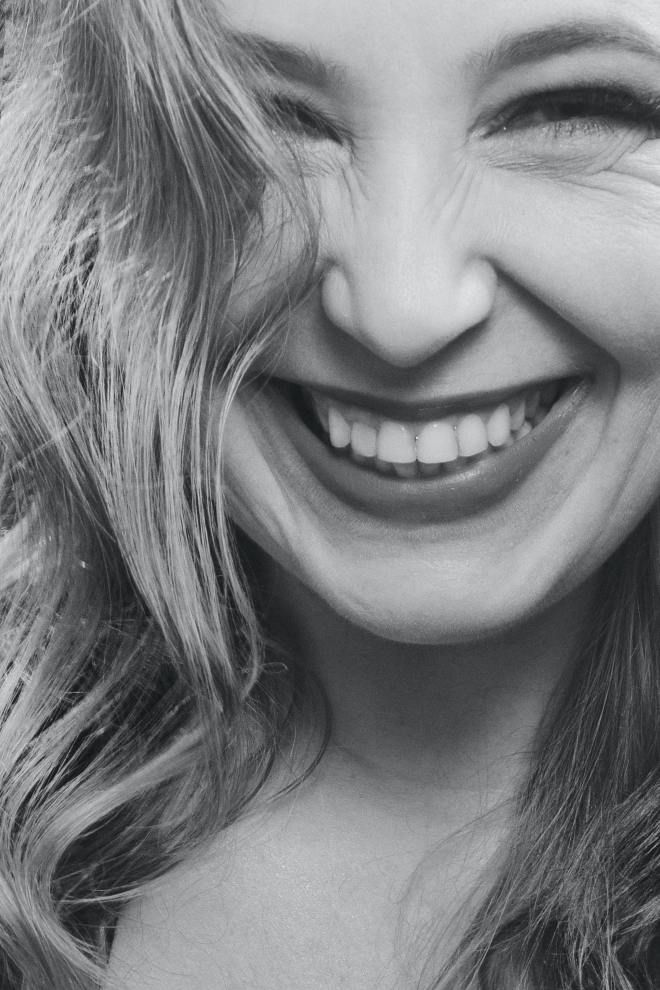
They spread their cheeks, so we see their teeth,

and somehow, deep underneath the grief, they smile.

Their shoulders do not droop or bow or lean,

and from their eyes, no tears be seen.

We run to them for advice, and in their ears, we spill our guts

“They are pillars of strength, no matter what,”

we say

and this is the mistake.


Right there in those smiling faces, see the invisible rock.

The chains of depression’s coffles

it’s whips and lash and knock

its uninvited entry when our smiling support goes home

and lay their pillars on their pillows 

before crying themselves to sleep.


In a world as destructive as this one, 

they need not make it known 

that even the happiest person 

still cries and loathes and moans.

Even the most joyous of us, with praise smeared on our lips

have some load to carry, 

we wish to be helped with.

But if physical anguish is the only measurement

by which we weigh grief

then these people don’t have a chance

of attaining such release.


And yet, where would we be without these rays of light

who helps us, if for a moment, to believe all is right?

Where would we be without people with such faith?

Those who pull us from the grave, 

even as they stand on the edge of death and wait?

Too solid to bend and too proud to break.

They go on permitting us to believe 

pain is but a physical thing.


This is the mistake.