Yecheilyah’s Book Reviews – In Search of a Salve: Memoir of a Sex Addict by KE Garland

Title: In Search of a Salve: Memoir of a Sex Addict

Author: KE Garland

Publisher: New Reads Publications

Published: September 26, 2023

Pages: 326


“I was nine years old when I figured out that if I squeezed my legs together hard enough, it would create the most electrifying pulsation, in the general area my mother, her mother, and her mother called our “killa cricket.”

-KE Garland

In Search of a Salve snatches us into the author’s world with the rawness of a Sister Souljah book. Like Winter Santiaga, KE Garland has no sugarcoated, watered-down stories to tell you.

Unlike Winter, Kathy’s story is no fairytale.

The author takes us through the series of tragic incidents that led to her preoccupation with sex, including child-on-child molestation, car accidents, and the death of her adoptive mother. Garland expertly reveals how she utilized sex as a salve for a wound she wasn’t completely aware even existed, leading her down a path of multiple sex partners and abortions.

However, don’t assume this book is about the author’s naughty antics. This memoir stands out because it doesn’t only list regrettable events and bad decisions. What’s important is the linkages between how trauma impacts the body, permeates the mind, and results in addiction.

“I didn’t cheat because I had a vanilla sex life. I cheated to escape the discomfort of trauma.”

-KE Garland

We learn how cognitive therapy helped the author to pay more attention to her thinking and the meaning of key terms like exhibitionism or the urge to show yourself to others in public. These explanations helped me better understand the author’s actions beyond the physical, such as the disconnect that exists when the mother-child bond is broken early in life, resulting in a dysregulated nervous system.

1695663292

“No oxytocin. No emotional bonding. No maternal attachment. Emotionally dysregulated….I began life, like most babies, listening for the sound of my mother’s voice and never found it, and I’d never stop longing for her.”

-KE Garland

This book prompted me to have more compassion for the lived experiences of people who struggle with addictions that society has deemed as nothing more than an immoral decision, but that is much more layered. As Garland searched for a salve, I, too, discovered insight into questions about my own trauma, belonging, and motherhood.

“I was motherless and it hurt whenever I didn’t have one to show up for me.”

-KE Garland

KE Garland courageously uses her story as a catalyst for further instruction about not only sex addiction but addiction in general.

In Search of a Salve will break your heart, pierce your soul, and then soothe you with knowledge about sex, trauma, despair, and the root of these behaviors beyond poor life decisions.
IMG-7478

Ratings:

  • Strong Introduction: 5/5
  • Authenticity / Believable: 5/5
  • Organization: 5/5
  • Thought Provoking: 5/5
  • Solid Conclusion: 5/5

Overall: 5/5

It’s Release Day!!

Grab Your Copy of In Search for a Salve Here

In Search of a Salve_Book_Cover

Yecheilyah’s Book Reviews is a reputable review service that features writers from all over the world, both traditionally and independently published. We are listed on Kindlepreneur as a top-tier book review blog and Reedsy as one of their vetted active book blogs that provide insightful, excellent book reviews.

*Books are read in the order they are received.

*The Review registry for 2023 is closed.


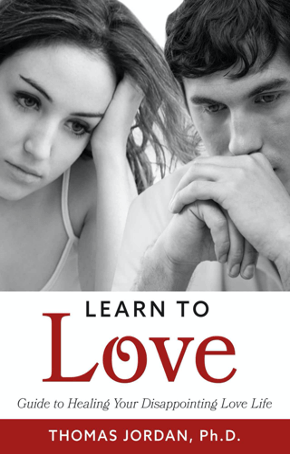
Yecheilyah’s Book Reviews – Learn to Love: Guide to Healing Your Disappointing Love Life by Dr. Thomas Jordan, Ph.D

Title: Learn to Love: Guide to Healing Your Disappointing Love Life

Author: Dr. Thomas Jordan, Ph.D

Print Length: 132 pages

Publisher: Book Baby

Publication Date: December 16, 2019


Clinical psychologist Dr. Thomas Jordan Ph.D. offers various suggestions for how couples might enhance their romantic relationships in his book Learn to Love: Guide to Healing Your Disappointing Love Life. He demonstrates how those earlier love experiences have impacted our current perception of relationships going all the way back to conception using a psychological blueprint.

He uses his personal life experience to show how what we learn in our family shapes our experience of interpersonal reality when we become adults. (Jordan, 92) Dr. Jordan challenges readers to identify what they’ve learned, question what they’ve learned, and then try something new. As you can tell, Dr. Thomas’ explanations are easy-to-understand, and his examples are clear and concise.

One of his most important points is about learned beliefs, behavior, and feelings. Jordan asserts, for example, that if what we’ve learned about love was unhealthy growing up, we will unknowingly, somewhat subconsciously, repeat what was unhealthy in our adult relationships. The key here is what you believe about love relationships will shape your experience.

Suppose someone taught you to think relationships are dishonest because you experienced dishonesty growing up. If you are unaware of this learned belief and have not made changes, chances are your current relationships will recreate dishonesty and generate a feeling that someone is deceptive.

This same thing can apply if you’ve felt abandonment (loss), exploitation (used), abuse (fearful), mistrust (suspicious), controlled (trapped), neglect (deprived), dependency (needy), and rejection (rejected). According to Dr. Jordan, these are among the unhealthy traits we learn and unconsciously recreate in our love relationships if we have not healed from them. Another critical detail Dr. Jordan makes is how we become defensive to avoid vulnerability.

The vulnerability allows people to get to know us better because we have let them in. People shy away from opening up in this way because we cannot be vulnerable without risking unintentional hurt occasionally. What is meant by “unintentional?” There will inevitably be differences between you and the person you are in a relationship with, disagreements, different perspectives, and opinions. These differences are inevitable. There is no escaping it. According to Dr. Thomas, one cannot be in love without feeling unintentional hurt based on differences.

So then, why is “falling in love” worth it? Dr. Thomas has an interesting answer: Because we all have a natural ability to heal. The risk of falling in love is more tolerable and less stressful when we believe in our innate ability to heal. “If hurt leads to loss, we can grieve, heal our hearts, and move on.” (Jordan, 55)

We can avoid pain altogether by not opening up, but being defensive in relationships interferes with our ability to give and receive love. Dr. Thomas notes that love as an emotion is unpredictable and uncontrollable; hence, we “fall in love,” the connotation is that we have lost control. Because of losing control, we risk getting hurt. We avoid this hurt in attempting to achieve a love relationship without being vulnerable, which is not possible.

“Vulnerability is the emotional experience that shows you are open to giving and receiving love.” – Dr. Thomas Jordan

This understanding took me back to the 80/20 rule. It is a lot to expect to receive 100% good from one person because we all have trauma and baggage from our life experiences that we carry with us. Even in an emotionally healthy and stable individual, you might only get 80% of attractive traits.

Can you live with that person’s twenty percent? Or is this person’s twenty percent unbearable/intolerable? What can you realistically tolerate in a love relationship based on your conscious awareness of your own flaws and strengths, combined with your partner’s weaknesses and strengths? What flaws can you live with (accept)?

Anyone, single or married, disappointing love life or not, can learn how to heal by learning to love themselves, starting with being consciously aware of toxic patterns.

Strong Introduction: 4/5
Authenticity / Believable: 5/5
Organization: 5/5
Thought Provoking: 5/5
Solid Conclusion: 5/5
Overall: 5/5

Learn to Love: Guide to Healing Your Disappointing Love Life is available now on Amazon!


To learn more about my registry be sure to visit the Blog Book Review Policy page here.

A Witness to the Experience

My Soul is a Witness: Poetry \ Coming Fall 2020


My Soul is a Witness is a title inspired by the Negro Spiritual song, “Witness,” but I did not choose such a title because I think of myself and my people as “Negroes.” I chose such a title because of the powerful messages and influence these songs had on our people as they transitioned from enslavement to freedom. Powerful messages I hope to also convey through my poetry.

There is a great spiritual awakening happening among Black people today as we strive to unlearn the lies they taught us for over 400 years. Whether that is starting and running our own businesses, embracing our natural hair or re-educating our young people on the parts of our history left out of the history books.

And to what am I a witness?

I am a witness to the trials and struggles my people have endured and I am a witness to our power to overcome those struggles. I am a witness also to my own sufferings which I am sure have been experienced by others. In this way, I am a witness to the fight that we all have. And why the fight? It is easy to present an image of healing and wholeness, but I believe it is much more fruitful if people knew of the struggles that got us where we are today.

From a historical perspective, I have not experienced the Middle Passage or enslavement or Jim Crow, but as a descendent of people who did, I am connected to those experiences just as if I had been there with them. In the Black community, we do not say, “when they fought for freedom,” we say, “when we fought for freedom.” The same can be true of the struggles of our own personal lives. If someone says they have been homeless before, I can relate because I have been homeless before too. I am a witness to what that’s like. If someone says they have a family member who is an addict, I can relate. I also have family members who are addicts. The anguish that causes in a family and what it does to that person and their loved ones are not lost to me. I can relate to that. I am a witness to that experience.

I believe epigenetic trauma is real. Epigenetics is the idea that trauma can leave a chemical mark on a person’s genes, which then is passed down to subsequent generations. (C. Benedict, New York Times) This means that a child or grandchild can experience side-effects from the traumatic experience of his/her elders. Since the concept of epigenetics, more and more studies hint to the inheritability of trauma where our own day-to-day health (and perhaps our children too) may have something to do with our inheritance of our parents and grandparents suffering.

One personal example is my own mother’s struggle with COPD (Chronic Obstructive Pulmonary Disorder). Her grandson, my nephew, suffers from asthma badly, though both his parents do not have asthma. Could he have inherited my mother’s affliction to a degree?

Thus, I do not find it far-fetched that Blacks/African Americans could still struggle from the mental and spiritual grief that plagued our forefathers long ago. We are witnesses to this pain on a deeply personal level which makes the Negro Spiritual deeply personal to us. While our ancestors were escaping physical enslavement, I believe we are escaping mental enslavement today.

As it applies to all people from the perspective of suffering and struggle, we all have a fight we are engaged in and when we overcome this fight, we become witnesses to that experience and can help others to overcome those same tribulations.

If trauma can be passed down, then so can healing. My soul is a witness.


Have you read I am Soul yet? Grab it here. My Soul is a Witness is coming this fall.

The Most Irritating Thing about the Self-Care Movement

the fact that everything is a movement now

like the importance of self-love didn’t exist

before Instagram memes

like healing is a status update

like self-care ain’t a journey but a tweet

like healing ain’t a process but words we hang

on our Facebook walls

and pretend we ain’t cover trauma in hashtags

I see healing differently

mistakes are opportunities

failure is strength

and self-love and healing is a process

paths that we aren’t always sure to take

we become masters of ourselves

only to begin again

like a battle we don’t know if we’ve won yet

a journey, healing is

and we master the parts of ourselves

until there are no more apologies

in our throats

until everything we do doesn’t sound like

sorry

until we value ourselves like we do

likes on a post

until burden ain’t heavy no more

cause we learned how to carry it

until we no longer carry it

until we’ve struggled so long

we don’t know what quitting is