Breaking From Tradition Can Be a Good Thing

My big brother Ray, nieces Gigi, Jamie, Brook, and Me

Some families keep their history alive around picnic tables, their roots watered each summer by laughter, shared meals, and stories that stretch back generations.

Mine did not.

On my mother’s side, there were no great migrations back home for a weekend, no sea of matching shirts declaring our kinship, no annual roll call of who had been born, married, or passed on.

I didn’t grow up with the smell of charcoal and cousins’ laughter drifting across a summer lawn, the kind of memory stitched into photo albums and passed down like a family recipe. Family reunions simply weren’t our thing. There were no matching T-shirts, no group photos under a banner.

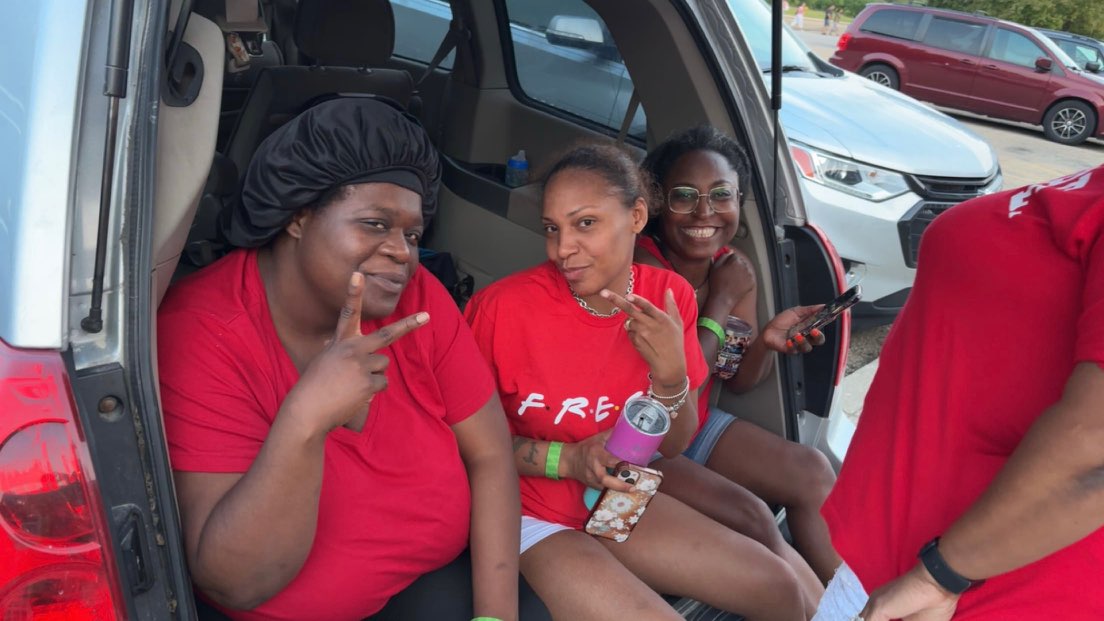
Cousin Laura, Pam, and Me sitting in the back of this truck like some thugs, lol

The closest I came to that sense of gathering was at Chicago block parties. We’d shut down the street, our banquet hall, line the sidewalks with tables and sizzling grills, and open the fire hydrant so the water arched into the air like a silver ribbon. Kids ran barefoot through a cracked-open hydrant, laughing because this time, no one called the police.

Music pulsed from speakers, and for one day, neighbors felt like cousins, and the whole block became family.

But it wasn’t our family.

Six years ago, this ended with our generation.

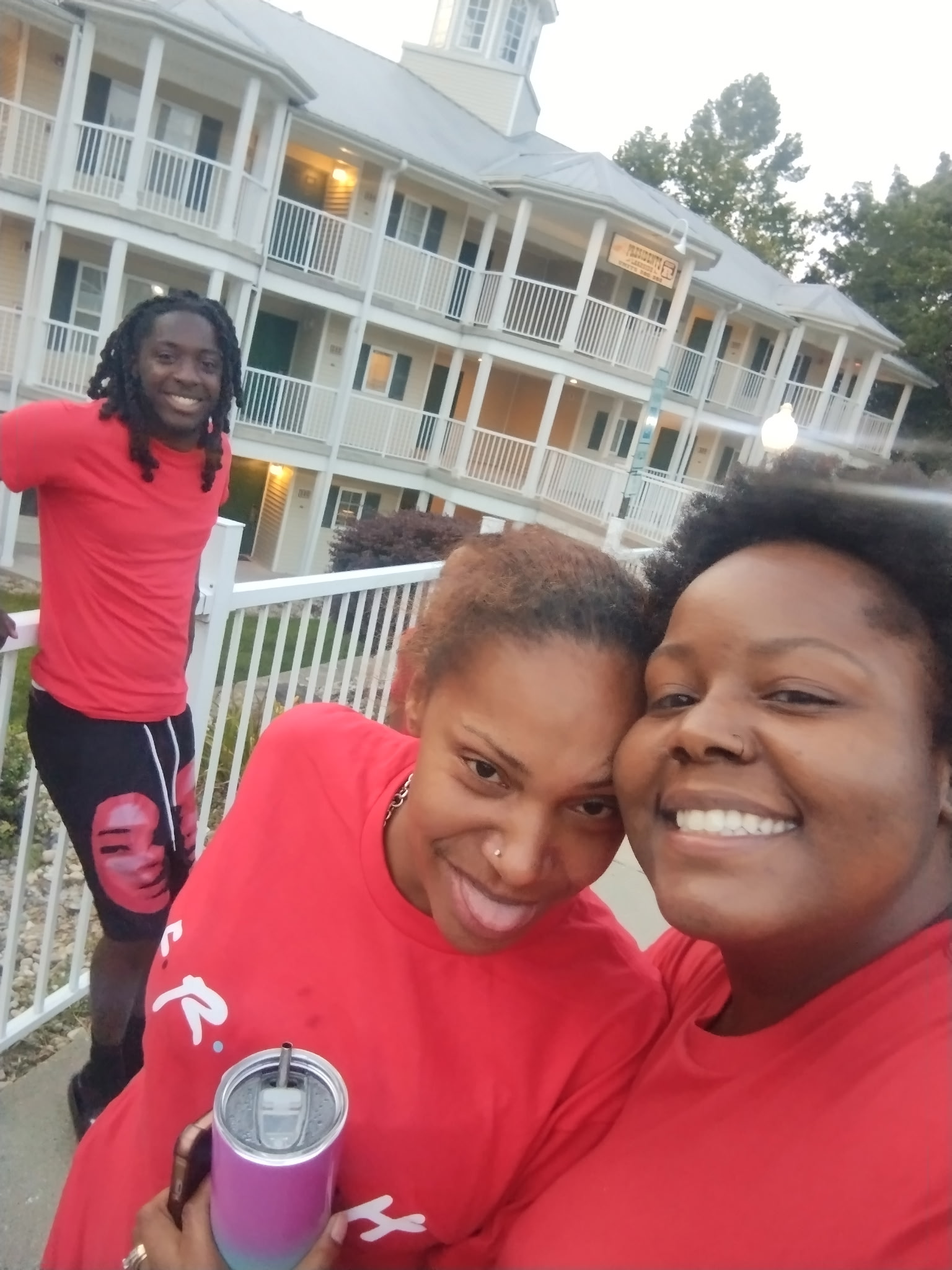
Jeremiah in the background (Nephew), Big Sissy Pamela, and Lil Cuzzo Angela

What began as a simple backyard barbecue has grown, year after year, into something bigger that we can finally call by its true name: a Family Reunion.

It’s a strange and humbling thing to realize we’re the aunts and unks now—the ones setting the tone, carrying the stories, and shaping the memories for our children.

We’ve rewritten the narrative we inherited.

Many of us are building marriages we’re proud of, raising children under our own roofs, and pursuing careers that light us up. We are not lost to the streets, not numbed by addiction, not absent from the lives we brought into this world.

Aunt Barbara, Lil Reg, and his daughters, Gigi and Brooklyn

Instead, we have passports now. We take our children to see oceans they’ve never touched, mountains they’ve never climbed, cities that speak in languages they’ve never heard. We give them richer experiences, not just with our words but with our lives.

Sometimes, breaking from tradition can be a good thing!

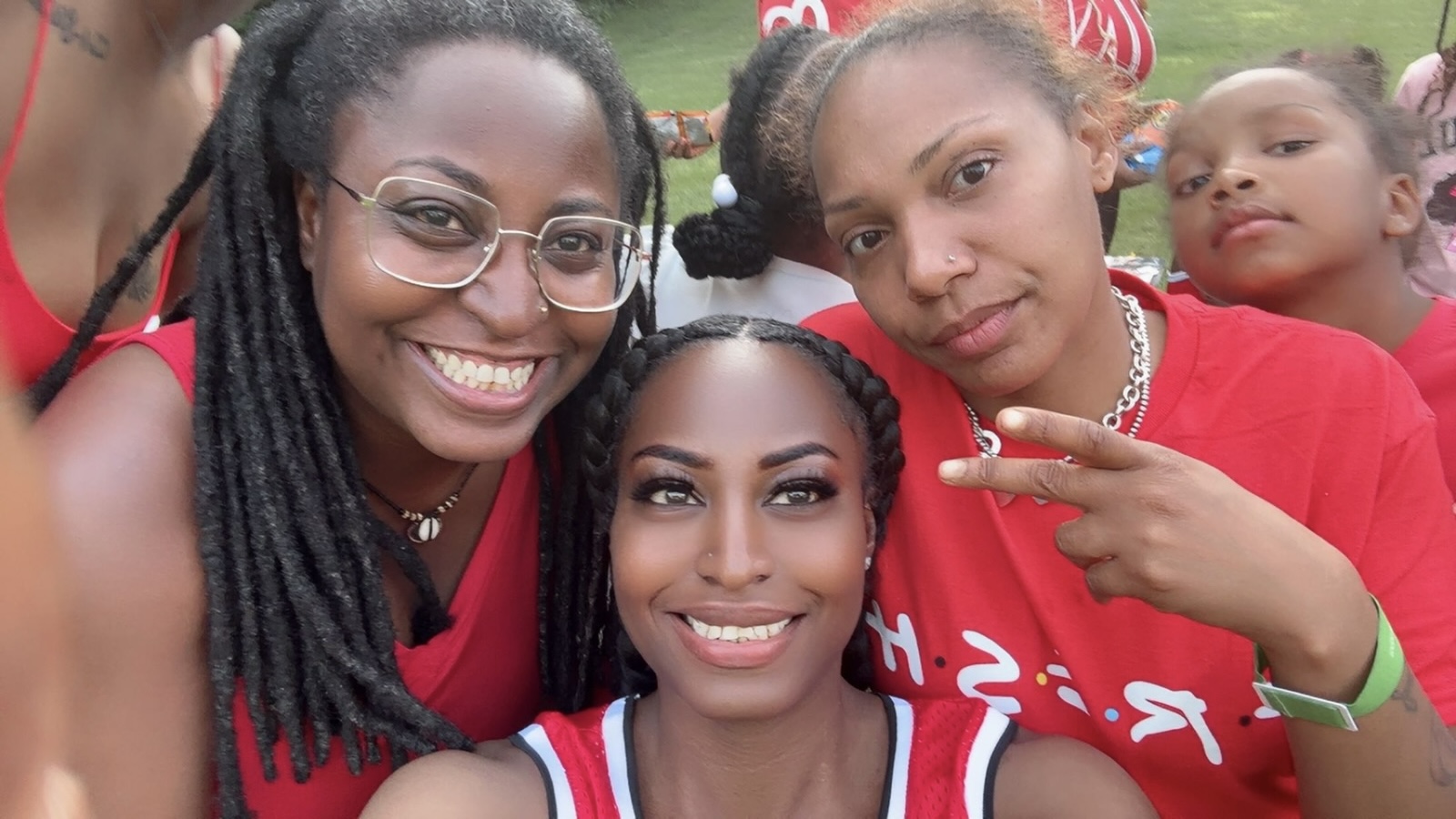
My crazy sisters and me: Yecheilyah, Tracey, Pam, and photo bombed by her daughter, Jamie.

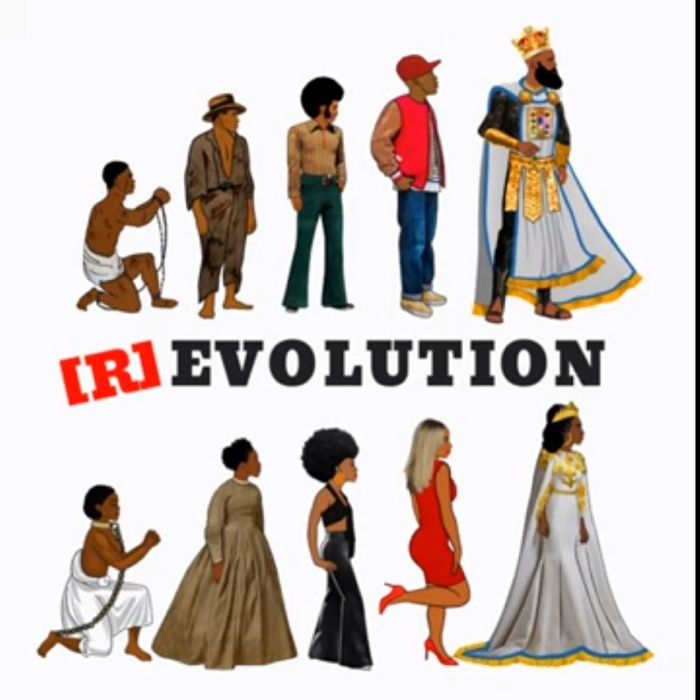
I Want My Stuff

I want my truth
before slavery.
I want customs and traditions
without being conditioned
I want unconditioned
hair.
I want my stuff.
I want my Kings and Queens
my silver and my gold
I want my laws and commandments and my stories
retold.
I want do-overs
for how we’ve been done over
I want my children re-educated
Give me raised fists
and two-parent households.
I want functioning Black family units,
Afros, Black power, curly hair
and I want my cocoa butter skin.

I want credit for all my skills.
I want my midwives
I want my tribes
I want my inventions before you re-invented them.
I want Lewis Howard Latimer
not Thomas Edison.
I want my covenants renewed
I want my 40 acres and a mule.
I want my land rich as I left it
I want my spirituality accepted
I want my names changed back
I want my Proverbs and freedom songs
and I want my Moses Black.
I want what you stole from me
I want King Solomon Black and comely.
I want it all back.

I want my stuff.

Yecheilyah’s Book Reviews – Crossroads: Women Coming of Age in Today’s Uganda Edited by Christopher Conte

Title: Crossroads: Women Coming of Age in Today’s Uganda

Editor: Christopher Conte

Print Length: 180 pages

Page Numbers Source ISBN: 1507680228

Publication Date: August 30, 2015

ASIN: B014QBPALM

Crossroads is a fascinating anthology comprising autobiographical essays by several Ugandan women. I loved the opportunity to learn more about the Ugandan culture, the upbringing of African women, and how it is different (and in many ways similar) to the upbringing of Black women here in America. Rarely do we hear of what these women endure so it was refreshing to read about it. All of the stories have a common coming-of-age theme where the women discuss their experiences coming into womanhood among the customs and traditions of their country. We learn about their childhoods, sex, marriage, career, and livelihood.

All of the stories were compelling, but a few really stuck out for me more than the others. I enjoyed the opening story, for instance, about the meaning of names and the cashier mistreating the woman because of her name. I can relate to having a unique name myself and I am often asked the same questions that Nakisanze Segawa was asked.

Two stories had the biggest impact on me above all the others. The young women taken from their University without a word, abused and forcibly imprisoned was heartbreaking. I also found the customs surrounding the Ssengas both fascinating and odd.

By custom Ssenga’s are paternal aunts who assume special responsibilities and help to guide the women, their “nieces” in the ways of society. They teach the women how to behave, submit to a man, how to display class and grace, they monitor their manners and their ways around the house.

Ssengas teach young women about their bodies, hygiene, and sex, preparing them to be good wives. I love the concept of having someone there to mentor young women and to ensure they grow to be respectable wives and mothers. The fact that the Ssengas take over this role and not the mother is interesting to me. I found myself wondering if it would help for young women in the States, especially young Black women without mothers, to have this kind of guidance and support instead of having to figure things out on their own or in the street.

I enjoyed least the extent to which the teachings of the Ssengas went. It’s one thing to teach young women about their bodies and how to be wives, but the extent to which these women are obligated to serve their husbands is, in my opinion, oppressive. Some of the behaviors were utterly offensive and unwarranted. I support the idea of submitting. I think that men are the spiritually appointed head of the home and that wives should submit to their husbands as the Bible commands.

However, I dislike how submission is abused, manipulated, and twisted to support abusive behavior. Not only do women in America have an inaccurate concept of submission but so do women in other countries. Submission is not slavery; a man’s authority over his wife does not exempt him from certain duties and responsibilities or allow him to be abusive. Men are to love their wives as their own bodies, and a wife supports and respects her husband.

If done properly, submission and authority can work well but if not done correctly, can easily become oppressive for both parties.

Some great qualities are promoted in Uganda that many women across the globe can benefit from, but there are some things that we may find strange if we didn’t grow up that way.

This book sparks great conversation about the lives of women and is relevant considering the social and political climate of our time.

In what way does earning degrees and having an education balance with being good wives? Do the women defy tradition or follow it?

Movement / Strength: 5/5

Entertainment Factor: 5 /5

Authenticity / Believable: 5/5

Thought Provoking: 5/5

Overall: 5/5

Crossroads: Women Coming of Age in Today’s Uganda is available now on Amazon


About the Editor

Christopher Conte is an American journalist who spent fifteen years as a reporter and editor for the Wall Street Journal before beginning a freelance career. He has traveled extensively throughout Africa, eastern Europe, and Asia, as a consultant for the World Bank’s International Finance Group. Conte has also worked as a trainer and mentor to journalists in Uganda, and other locations throughout Africa and Asia.

Biblical Quotes that are actually not in the Bible

“Adam & Eve ate an apple”

Adam-Eve-2014
It actually doesn’t name the forbidden fruit, just says fruit– Gen. 3:1-6

“The 3 Wise Men”

The Three Wise Men

The bible does not give a number; it just says wise men-Matt. 2:1

“The Lion shall lay down with the Lamb”

lionandthelamb

The bible says that the lion and the wolf shall lay down together, not the lamb

– Isa 11:6, 65:25

“Money is the root of all evil”

index

Scripture says the love of money is the root of all evil, because it will become your God, you will do anything for it, and you will put it above the almighty.

– 1 Tim 6:10

“Spare the rod, spoil the child”

article-1251426-08505019000005DC-791_468x308

I know I know…this is definitely in the bible…right!?
No. The bible says that if you spare the rod you hate the child, not spoil him. The spoil part came from a 17th century poem and has been quoted as a biblical verse ever since.

“The 7 Deadly Sins”

the7deadlysins

Loosely based on Prov. 6:16-19, there is no such thing as the seven deadly sins. You will not find this in the bible.

“God has many names”

The Names of God_part1_final

Everyone like to quote this in defense of their religion, but its not in the bible that “God has many names”. It does however say that there’s only one name under the heavens given among men by which we may be saved- Acts 4:12

“The messiah was born on December 25th”

brand-black-jesus-small-30008

Yea, sorry to cancel Christmas but it’s true. It’s no where in the bible that the messiah was born on December 25th. He was actually at least 2 years old when the Magi visited and King Herod ordered his execution and his parents were commanded to hide him in Egypt.

– Matt. 2:11-13

“Cleanliness is next to Godliness”

MR.-CLEAN

There is always a reason to be clean, but this quote is not in the bible. It’s always about a man’s heart first, not his outer appearance.

These are just a few of the many biblical quotes we can be heard repeating on an everyday basis that are actually not in the bible.