Tag: books
Beyond The Colored Line – Part 2 of Book 2
Disclaimer: The following post is excerpted from a book written by Yecheilyah Ysrayl and is property of Yecheilyah Ysrayl. No part of this publication may be reproduced, or stolen. Permission is only given to re-blog, social media sharing for promotional purposes and the case of brief quotations embodied in the critical articles and reviews and pages where permission is specifically granted by Yecheilyah Ysrayl. (For permission write to: ahouseofpoetry@gmail.com) Copyright © 2015, All Rights Reserved.
*************************************
Part 2
_________________________________________________
1928
5 Years Later
Age 12
*******************************
Daddy run off to who knows where on account of his life. Some racist whites had seen him and Mama together and threatened to lynch him if found. So he run off to nobody knows where. The community gossip is that his brothers know, but they won’t say. We weren’t alone though, Mama and me. Seems like Mama filled the hole where Papa should have been with our whole family. The house always stayed filled with guests: my people, and peoples of my people. My granddaddy was a colored man, and so owned this land. My name sake, his mama Stella, was a slave and was given this house by her owner. As the story goes, after Grandma died, I was born. Since Mama was the closest, she named me after her. We got stories going all the way back to her girlhood, and stories of Grandpa Solomon too. I heard the stories mostly on Sundays, since all the family come down. My aunts would gather around the table with my mom and they laugh and cry most of the night about they girlhood. I don’t have any uncles except from my daddy side, but they don’t come around much cause of my aunties. Uncle Roy say Mama acts different around her sisters and that they too uppity, especially Aunt Sara. She’s the youngest of my aunties and the most spoiled. She’s the one who convinced Mama to send me to a private school to escape all the worry, and boy were my uncles hot! They said we were breaking the law – that a Negro had no business in a white school. But Aunt Sara said I had all the right in the world since I was technically half white after all.
“But does the school know she colored?” one of my uncles would ask.
“That’s none of the school’s business now is it?” Aunt Sara would say and they’d just go back and forth until Mama break it up.
That’s the story of my life: Was I white? Was I Negro? Race wars always concerned these two groups of people, and there ain’t seemed to be much place for a mulatto. Speaking of race, not all talks were good talks. Not all round table discussions were filled with laughter and jolly drinking. I used to sit up until my eyes were red with fatigue to hear Mama and my uncles talk about all the killings that were taking place around the country, and especially in the south.
“That’s what I say,” said the voice of Uncle Keith. “Up there in Minnesota.”
“That close?” Mama gasped. I could just picture her now with her hand over her chest. Mama had a thing for the dramatics.
“Yea that close. What, woman you living under a rock? They just had one on over in DeKalb last month,” said Uncle Roy.
“It’s a crying out loud shame,” continued Keith. “Say they dragged the boys from the cell and a whole mob of ‘em lynched ‘em. Say it was bout least a thousand of ‘em.”
“My my,” said Aunt Rebecca.
“Well you know what I say, if you can’t beat ‘em, join ‘em,” said Sara.
“Where did you come from?” said Deborah, annoyed.
“From betwee–,“ began Sara.
“Please, spare us,” said Mama.
“I didn’t ask the question,” said Aunt Sara, smacking her lips.
But there were times, of course, I witnessed for myself evidence of the events rocking the country. One day, Mama and I went to visit Cousin Mary in Texas, and drove the truck up to a general store. We walked in, and being only about five at the time, I picked up a post card hanging on one of the shelves. It was of a man hanging on a tree that supported an iron chain that lifted him above fire. The man didn’t seem to have much of a body left. His fingers were cut off, his ears and his body burned to a crisp. On the back of the postcard read:
“This is the barbeque we had last night. My picture is to the left with a cross over it. Your son, Joe.”
I learned later the picture was of a 17-year old mentally ill boy named Johnny, who had agreed to having raped a white woman. And everybody at home still talked of the Cairo circus of 1909, the public lynching that took place here in Illinois. I asked Mama once if we could go to a circus like that, and she told me to never ask her of such things again. I couldn’t understand what had Mama so upset till I found out what kind of circus it was. It was events such as this that caused my aunts not to want much to do with the land or the house. They say it’s too close to slavery. So when Granddaddy died, Mama took on the burden of keeping it, and keeping it full too. I got kinfolk I see every weekend, and some I never met before. And some I don’t think are kinfolk at all; they just come for a hot meal and a bed. But that was alright with Mama. She didn’t care none about being taken advantage of. She just wanted to be around people she could feed and clothe. Her heart was just full of love like that. Sometimes they spend the night, but other times they just come and go. Sundays were the biggest days. Mama cook a feast of a dinner: fried chicken, yams, macaroni and cheese, fried brim and crappy, greens, pies, cakes. You name it, it was on our table. Everything except pork. Mama say Granddaddy was always talking about his Hebrew Heritage and teaching them about it too. Said he didn’t like being called Negro and African, and they weren’t allowed to call him that either, or themselves for that matter. Granddaddy say with his face all proud, “There are two things in the world I would never be: Christian and a Hog Head.”
Then he’ll light his pipe and go on rocking in his favorite chair, like the conversation was supposed to be over, even though folk mouths hung open. That’s another reason my uncles say we uppity:
“Everybody due for a lil fat back every now and again. Everybody Negro that is,” Uncle Roy would say, cutting his eyes over at Mama.
“Good thing we ain’t Negro then huh?” Deborah would shoot back.
Deborah, named after my great great great grandmother, fit right into her biblical name and was the most like Daddy, taking her Israelite Heritage seriously and practicing the laws of the Old and New Testament. Most of the family thought she was crazy. That didn’t stop her from speaking her mind though. But good eating and conversation was just the half of it. There was music, dancing, drinking, smoking, and gambling too. Cousin Walter would bring over some of his hooch and the grown-ups forget all about the children, which was just the way we liked it. I had a lot of cousins and friends, but no one was as close to me as Thomas. Tommy’s mom died off when he was just a baby, and his dad come across the road looking for direction one day when me and Mama come walking along. Come to find out they didn’t really need direction so much as a bed to sleep in. Mama let them stay with us for a while until Luther, Tommy’s dad, got off his feet. But that didn’t stop them from coming around. Luther and Mama became good friends and Tommy was over every weekend. My aunties used to think there was something going on between Mama and Luther till she shut up the gossip with news of Luther’s lady friend, who also became friends with Mama. So naturally Tommy and I were good friends, but we were also enemies and partners in crime. Tommy was dark as charcoal with big lips, nappy hair, and a wide nose. And I envied him for being so obviously Negro. It’s the same reason I liked him too.
“How you get so dark?”
“I don’t know,” said Tommy. “Just lucky I guess.”
“Lucky? What you got to be so proud for? Ain’t no girls liking no skin that dark.”
“Shut up white girl,” said Tommy.
“Shut up big head,” I say.
That’s usually when he punches me in the arm and I’d have to hunt the rest of him throughout the house.
We weren’t much of a church going family; party going is more like it. Except when Mama wanted to show off a new dress or hat, when somebody died or needed saving, and on Holidays and such. Folk would come from all over southern Illinois to hang out with “Cousin Judy”, as Mama was often called. Sunday’s sure were fun, my second favorite day of the week.
Saturdays was my favorite day of the week. It was the day for shopping and that only meant one thing: Chicago. First, Mama would wake me to the smell of biscuits or pancakes. This was to keep me full enough throughout the day so she didn’t have to worry none about food buying. Then, I was commanded to bathe down real good, paint my arms and legs with oil, untie my curls from the night previous, and we’d both put on our Sunday’s best and be two of the most beautiful women you’d ever seen. I was a young lady now and shopping was the best thing to a young lady next to boys (but you couldn’t like them in public). You could like shopping though. I loved going from store to store in search of the finest. Skipping along while Mama scanned the insides of magazines for stuff she only saw on TV. We would squeeze our way through crowds of people, just bumping into each other. They weren’t dressed as professional today. Instead, they wore their weekend wear, bought ice cream for their children and went inside movie theatres, and so did Mama and I. We could buy candy or jewelry, or perhaps a new hat or two with the money Mama made from the laundry. We drank from water fountains without label, and spent money without prejudice. Everything was so easy on Saturdays, life itself was better. We had us a good time on Saturdays because on Saturday, no one knew we were colored.
– Stella M.
**********************************************
What did you think about the second part? I hope it held your interest and you’re ready for chapter three. I am leaving you with a surprise part from Book 1 below. For the prologue to Book #1, see last week’s post. If you like this story so far, would you do me the favor of sharing this post with your friends who might enjoy reading it also? Re-blog or share on your social networks. Thanks a lot! And I’ll see you next week for Part 3.
Why Memoirs are Special
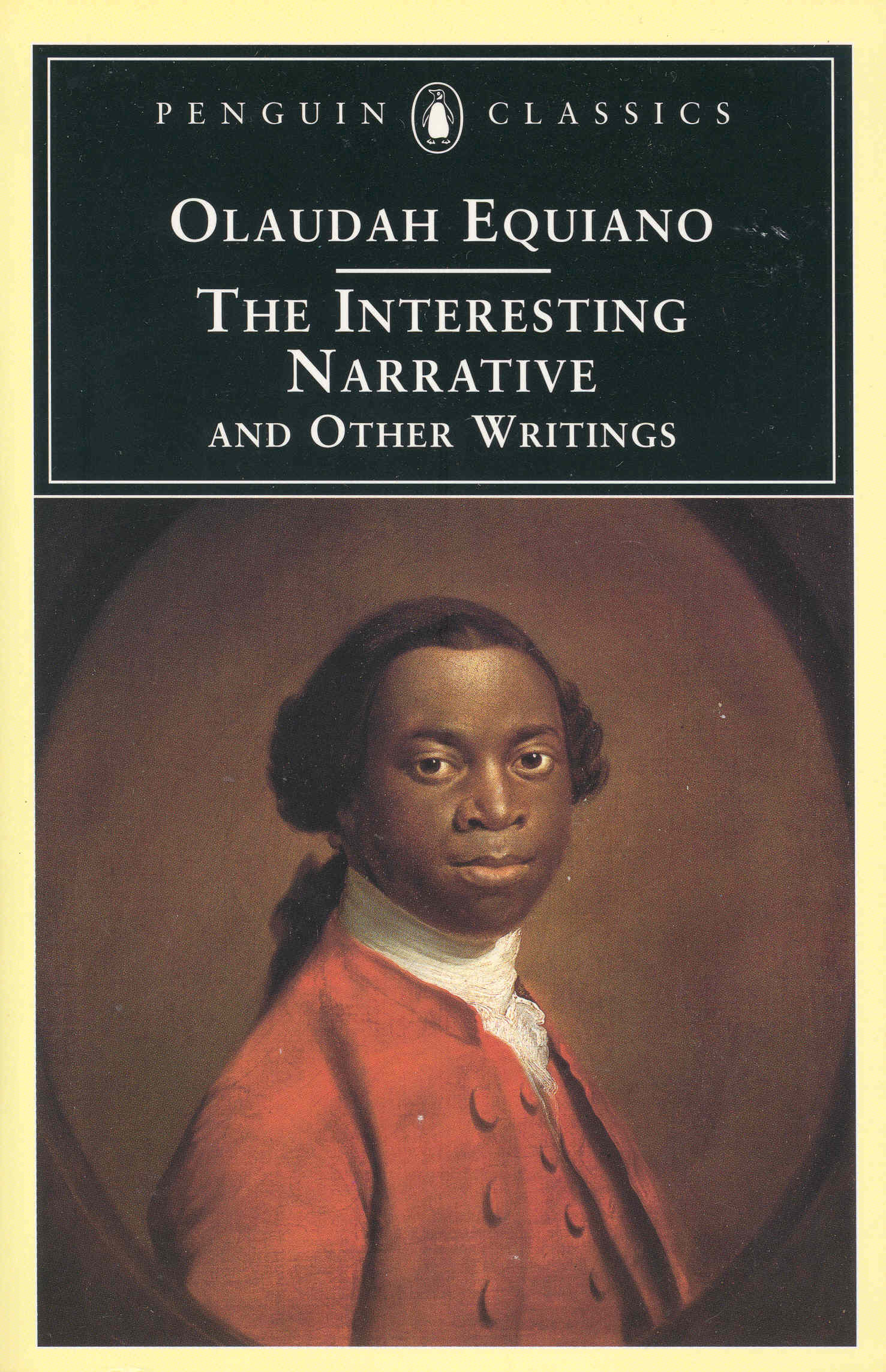
“…it is difficult for those who publish their own memoirs to escape the imputation of vanity. Nor is this the only disadvantage under which they labor: it is also their misfortune, that whatever is uncommon is rarely, if ever, believed, and from what is obvious we are apt to turn away in disgust, and to charge the writer of it with impertinence.” – Gustavus Vass (Olaudah Equiano)
So, why do I want to tell my story? Why has the itch to spill the beans of my background always been with me? Some may call it a dream, but I call it a challenge. Of all the books I’ve written, writing my life story is one of my greatest challenges and I hope to conquer it real soon. I feel like I have not completely exhausted my writing endeavors until I have written a story of my life. I’ve danced with the idea off and on since childhood. Funny thing is before I was even finished living I knew I wanted to share my testimony. I’ve even gone as far as writing chapters and chapters, only to rip it up and start all over again. Truth is I am still learning all that goes into writing a memoir. I love the way
Maya Angelou for example, fictionalized herself in “I Know Why The Caged Bird Sings”. Not in the sense of creating a false image, but by fictionalized I mean she was able to present a real-life story that reads like fiction. To recreate real-life experiences that jump from the page with all of the excitement that comes from reading a good novel. Here, Angelou lends us her eyes and we are able to see her world in the most real, yet entertaining way possible. While there are various ways to which individuals have gone to write their stories, I imagine there is still an art to it; an art I am still learning to master and I hope to begin this journey real soon. (I’ll be 28 this year, maybe I should wait till I’m like 30 …yea, that’s a nice medium number….lol j/k, I know the next day’s not promised, let alone the next two years, even though it may just take that long, but I digress)
Primarily, I want to share my story because I am a person of a deep passion for helping people in the spirit of teaching. Not teaching in the organized setting of things, teaching the basic principle of acquiring and passing on information. Teaching in the sense of taking what I’ve learned and passing it on. I love sharing information and I believe information exists to be shared. And if it’s the right kind of information, it can be a positive influence in someone else’s life. Have you ever been in a room of darkness and found that after searching for some time someone turned on the light? And then you laugh at yourself for seeing the switch was right there? That’s how it is when someone has taught me something. I love advice because I love to learn. And I love to learn because I love discipline. If ever I’m hard on you, know it’s because I expect double from myself. As I tell my students, “Mediocrity is not an option. If you’re going to do something, do it well or don’t do it at all.”
In addition, I want to share my story because we live in a world that teaches us to fear our past transgressions, mistakes, experiences, trials, etc. The world tells us to keep our “skeletons in the closet” and to wear the impenetrable mask of pretentiousness. Not only have I never had the ability to not show my true feelings, but being transparent in my opinion is what helps build strong relationships, which is what the writing process is all about. There are ups and downs but the struggle itself is what helps to build character. It helps us to create a bridge of commonality between those who are still lost in whatever capacity and those who have found the strength to endure.
While we can write post after post about inspiration, nothing is more inspiring than truth. To see that someone is going through, or has gone through, what you yourself are going through and to witness their strength is more powerful than any quote I could ever give you. Our past, our burdens, and our moments of pain are not weaknesses. They are instead a showcase of humility; like a collection of light in a cistern of water that illuminates. It illustrates that the fruit of sorrow is unmistakably esteem and deliverance. And this is what I wish to share with my readers. Eventually.
Self-Publishing: Do Your Research!
When a writer sits down to write, he does not fully understand the capacity of that in which he seeks to embark. When he runs his fingers across the keyboard, or scribbles his heart into ink, he does not fully realize the power of his actions. Who would have thought a single chapter could change the world? The life of a Self-Publisher does not fully evolve until after the book is done. He does not see the many hats that must be worn in order
that the world may feel his voice, or sniff out his vision. What Self-Publishers are doing today is very powerful. Just by writing one book we are becoming professionals in fields that people have gone years studying in schools. People have invested in years of schooling in that they may understand how to properly market, promote, and format documents and here you understand this thing just by publishing a book alone. If that is not power, I do not know what is.
The first book I published was a collection of essays that none of you would probably read. It started as an assignment from my English Professor in College “Does Racism in America Still Exist?” I wrote so much I could not stop writing. I wrote and read, and wrote and read, until the paper became a book, a 3 part book to be exact. Then I had a brilliant idea: “I’m going to publish it!” When this thought entered my mental space it wasn’t occupied with much else. I didn’t even see it as Self-Publishing in particular. I did not say to myself, “Self, we’re going to Self-Publish a book.” For me it was simply, “I’m going to publish these papers.” And that was the extent of my brilliant idea. I had no intention of sharing it and no other ambition beyond that. In the end, I gave copies to some family members and college buddies but that was it. I was not interested at the time in Self-Publishing nor did I even know what it was. I always wanted to be a published author, but Self-Publishing in particular was not part of the plan. It would be years later before I actually took the concept seriously and before I understood what it was in it’s full capacity.
When I first started out, The Self-Publishing Industry was not like it is today. In fact, it wasn’t really an industry at all. Of course, in 2007 Self-Publishing existed, but there was not the same amount of information available to Self-Publishers that there is now. We are in the age of information and in just a few short years Self-Publishing ballooned into a plethora of opportunity for authors. Self-Publishing blogs are going viral and men and women alike are making thousands, some millions, of dollars from the expertise they are able to provide on the topic. Regular, ordinary people are making something of themselves by being a part of what they were told only those with Master Degrees and PhD’s could do. But, to aspiring writers who wish to Self-Publish, I beg of you, please, do your research!
I know we do not live in a fair world, but nothing is more unfair to me than a teenager who decides he or she will write a book and publish it and yet have no idea what is necessary to do this. There is nothing more aggravating than for me to hear a young person say that they are publishing a book, and when I ask them what POD company they are going to choose, or if they are going to purchase their own ISBN number, or their marketing plan, they have no idea what I am asking of them. All of this work, and someone’s kid is just going to write a book because its fun. How can you write a book and not understand the basics of print book formatting? Do you even know what that is? Do you even know what POD stands for? Most importantly, do you know there are tons of resources available to help you to find the answers to these questions? I am not talking about places that require hundreds of dollars of investment; I am talking about places that require only pennies. And if you do not have the penny, there are tons of free resources as well. In fact, you need to make sure that Self-Publishing is even a route you want to take. Self-Publishing is hated enough as is because big publishing houses are not making as much money. People are not forced to Self-Publish, people are choosing to Self-Publish. The problem however, is that people are not researching this industry and making sure they understand what it means to be a part of it. Mediocrity in Self-Published books is not just because of poor editing, book cover design, etc. No, mediocrity is rooted in writers who do not research their field. This is how poor cover design and poor editing is even born.
But times are changing and the industry is not like it was in 2007. No longer can Self-Publishing be stigmatized as a field of nonprofessionals. With the amount of information out today, a nonprofessional product can only be the fault of the author and the author alone, not the industry in general. Being a Self-Publisher alone does not automatically degrade the quality of work, but the lazy work of the Self-Publisher can. I am not saying I have it all together but please research what you want to be apart of. Today, there is a host of information available to help us to get started or to sharpen our skills. So to those who are currently writing books and are seeking to be a part of the Self-Publishing field for the first time, stay encouraged. And please, I cannot stress this enough, do your research. You’ll be thankful for it in the end. You can start off with something as simple as a Google Search. And because blogs are doing so well these days, a lot of the information you’re looking for can be found right here in the blogosphere. One blogger who is always on her game with research for Self-Publishing is my good friend Colleen Chesebro. Colleen is writing her first book and is always on point with her research. She is a great example of what to do as you are writing. You don’t wait until you are about to publish a book to find out how to do it. Ttake some time out of your day and walk around the neighborhood. You’ll be amazed at what you’ll find.
Book Review Shipments: April 30th – May 4th
Good Evening Everyone,
This blog is usually inactive on the weekend, but this is a special notice for Book Review Recipients:
In a couple of weeks my husband and I will be doing some traveling. As a result, this blog will be inactive, closed, for the following dates:
Thursday, April 30th – Monday, May 4th
Part 3 of the Stella series will be the last post published on Thursday morning (12am) April 30th for that weekend.
If you have undergone the questionnaire for Book Reviews and are planning to ship your book between these dates, please note:
The time frame for books sent in for Book Reviews that arrive right before or during my travels does not officially begin until after May 4, 2015, when I come home and have received your book in the mail. Please email me for any questions, comments, or concerns during or before this time per Book Reviews, current or new inquires. I am always locked into my email so I will still be able to address your concerns. Thank you for your patience.
– EC
email: ahouseofpoetry@gmail.com
Guest Feature – Top Five Reasons You Should Be Reading Poetry
by Nickole Brown
(Found this on BookPage, excellent piece on Poetry)
5. Because it’s unnecessary.
Yes, unnecessary, absolutely so, but only in the way that beauty and truth are unnecessary. Like an elegant armful of cut tulips brought home dripping from the store among all your pragmatic sundries, like my grandmother’s false lashes glued on every morning to her come-sit-your-handsome-ass-down-here wink, like that baked-bread smell of a newborn’s crown.
Poetry may bear witness, but it is rarely the hardy mule carrying news or facts. No, its burden is unquantifiable, and similar to a penny tossed into a fountain, its worth is in the wishing. As William Carlos William wrote, “It is difficult / to get the news from poems / yet men die miserably every day / for lack / of what is found there.” Put another way, C.S. Lewis said, “Friendship is unnecessary, like philosophy, like art. . . . It has no survival value; rather it is one of those things which give value to survival.”
4. Because it’s a throat full of word music.
For the poet Patricia Smith, the word was anemone. She was nine years old when her fourth-grade teacher asked her to pronounce it. She writes that she “took a stab and caught it, and / and that one word was uncanny butter on my new tongue.” For the poet Laure-Anne Bosselaar, she loves it when plethora, indolence, damask, or lasciviousness work, in her words, “to stain my tongue, / thicken my saliva.” For me, some days, it’s the word fricative. Other days, it’s ardor, aubade, hydrangea; I’ve held each of those words like a private little bubble of air popping around inside my mouth. Donald Hall calls this “milktongue” and names it as the “deep and primitive pleasure of vowels in the mouth, of assonance and of holds on adjacent long vowels; of consonance, mmmm, and alliteration.”
3. Because it fosters community.
Robert Pinsky knew this when he started the Favorite Poem Project when he was U.S. Poet Laureate—people love to share poems that speak to them. And not just poets, either, but postal workers and dental technicians and racecar enthusiasts, too. Almost everyone carries a poem with them, even if only a scratch of a line or two deep in memory, and reading poetry can place you squarely in the chorus of people hungry to share those lines. Consider, for example, a casual late-night post I made on Facebook last February, making a request of the Internet for poems of joy and happiness. Within hours, over sixty comments magically arrived in my feed, recommending poem after poem. . . poems by Naomi Shihab Nye and William Loran Smith and Robert Hass, among many others. I read them all, and suddenly, I was much less alone; my dreary winter was flooded bright.
2. Because it welcomes what’s inexpressible.
I’ll confess: it was fiction I studied in graduate school. But when I finished my program, I found the cohesiveness required of a novel to be false and hardly conducive to the fragmented, often discontinuous memories I carried. When I wrote my first book, Sister, I needed the white space between poems to hold the silence between the remaining shards of my childhood. With Fanny Says, I needed a form that would allow me to mosaic together a portrait of my grandmother with only the miscellaneous bits of truth I had without having to fudge the connective tissue between them. You see, poetry doesn’t demand explanations. In fact, most poems avoid them, often reaching for questions over answers. Now, this doesn’t mean poetry is necessarily difficult to understand, no. It means that it simply makes room for things that are difficult to understand. John Keats called this negative capability, as poetry is “capable of being in uncertainties, mysteries, doubts, without any irritable reaching after fact and reason.” To me, this acceptance of what cannot be explained is one of the best reasons to read poetry.
1. Because it calls for a life of awareness.
People often assume poetry exists in the realm of thought, lost in philosophical inquiry and romantic meanderings. And most early attempts at writing poetry fail because of this, or worse, because beginning writers travel those easy, hard-wired paths in the brain geared towards survival, which are inundated with years of advertisements, televised plots, and habitual speech. But poetry demands awareness, a raw, muscular devotion to paying attention. You have to live in your body, you have to listen hard to the quiet ticking of both your life and those around you. Like an anthropologist, you have to take down good notes. Poems require a writer to write from all the senses. As Eudora Welty said, “Children, like animals, use all their senses to discover the world. Then artists come along and discover it the same way, all over again.” To me, poetry can make even the most quotidian of things—a tomato on the counter, a housefly batting against the window, your bent reflection in a steel mixing bowl—something extraordinary. Poetry notices things. It scrubs your life free of clichés and easy answers, and the best poems make everyday life strange and new. Poetry requires you to be awake to write it, and reading effective poetry is a second kind of awakening.
The Stella Trilogy – An update
As many of you know, I have a few projects that I am putting out this year. One of them is The Stella Trilogy. It began years ago when I was helping a student with a creative writing assignment. I am not sure what it was exactly, but it had to do with descriptive writing. To make a very long story short, I wrote the first scene to Book #1 which was at the time not a book at all. It wasn’t until years later, after the paper had collected enough dust on my computer, that I realized how much I adored the layout of the scene and how I wanted to make it better. I wanted to expand it and to add to it. But what I enjoyed most about it was how short it was. I noticed then how writing the short had made me so content. It was basic, sweet, and engaging. I decided then that I would try my hand at writing short stories, and The Stella Trilogy was born.
As I prepare to send Book #2 in for editing, I would like to share some of it (unedited) with you. Because of the length of this series, it is broken down into Parts instead of Chapters. And I intend to release the first 4 Parts to Book #2 right here on The PBS blog. As I do so, I would love your feedback. 🙂
About Stella:
The Book:
Stella is a work of Historical fiction, and is distinctive in its focus on one woman’s road to self-discovery against the backdrop of the African American fight for justice, racial equality, and freedom. The 3-Part series focuses on the history of one family in their struggle for racial identity. Discover in this Trilogy how 3 individuals living in separate time periods strive to overcome the same struggle, carefully knit together by one blood. Book #1 is Available Now in Print and E-Book.
The Character:
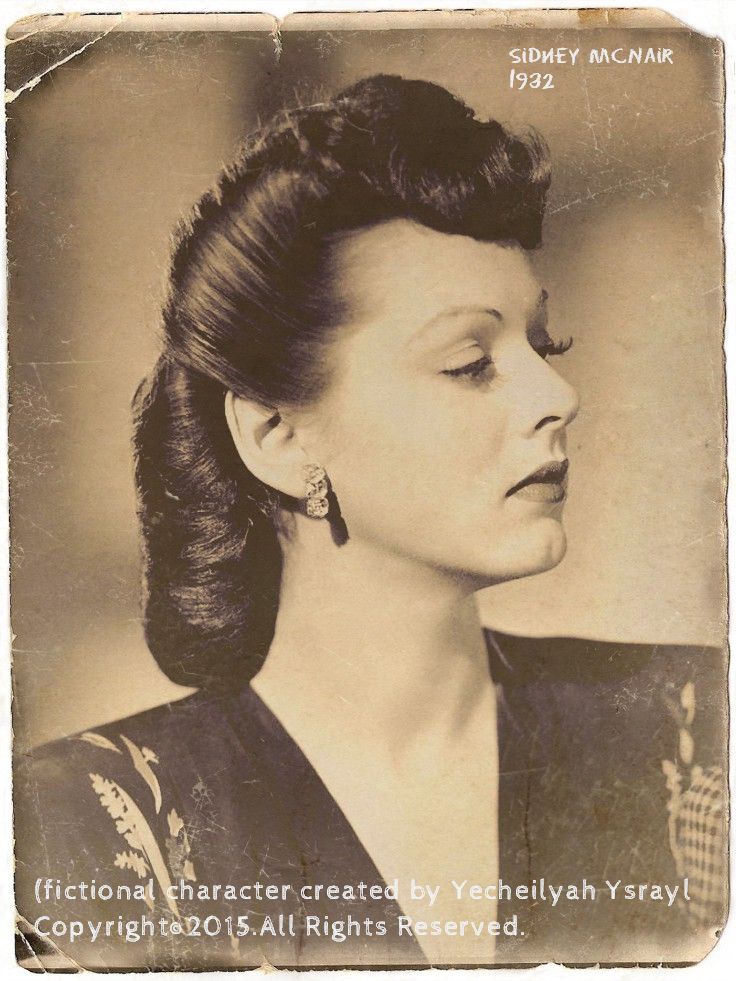
Just barely two generations from slavery, Stella is the daughter of Judith May. Mother and daughter share the blood of a black woman and her white slave owner. Unable to cope with the teasing and bullying from both the white and black kids, Stella struggles with identity and a place to belong. She does not feel she can find her rightful place among the blacks and neither among the whites. That is except on Saturdays. Stella loves Saturdays! Where her and mother take occasional walks on the town and enjoy all of the privileges that come with a light skin tone. Eventually, after a discussion with her Aunt persuades her to pass, Stella decides to live her life as Sidney McNair, a white woman. But living Saturdays isn’t as easy as visiting them.
I’m giving these parts away for free because one of the things I enjoy about blogging is the direct feedback at our fingertips. So before I publish this second part, I would like to broaden my platform and make it easier to connect with my readers. I am scheduling the post now and the first Part to Book #2 will post next Thursday, April 16, 2015. I will then proceed with the following Parts over the next 3 weeks:
Beyond The Colored Line:
Part #1: 4/16/2015
Part #2: 4/23/2015
Part #3: 4/30/2015
Part #4: 5/7/2015
“That’s the story of my life: Was I white? Was I Negro? Race wars always concerned these two groups of people, and there ain’t seemed to be much place for a mulatto” – Stella May