Curiouser Editors 20 Fresh Social Media Tips for Authors

Check Out Curiouser Editors Excellent Social Media Tips! I just used one for my IG bio. Emojis does make it look way cooler lol.

  1. Pin posts to Twitter, your Facebook page, and your Facebook group (you do have your own Facebook group, right? Because I’ve only been preaching about this for a million years, give or take). Ensure the pinned post has some type of opt-in for a freebie so they’ll subscribe to your emails. If you’re pinning a post, then it should tell them to do something that somehow benefits you and them.

  2. Add emojis to your Instagram bio to catch attention. I like to use the pointing finger right above my freebie opt-in so that it’s the first thing they’re directed to. Use emojis in your posts too!

  3. Update your LinkedIn title with stronger keywords. Your title shouldn’t say, “Jane Doe, Author.” It should say, “Jane Doe, Romance Author of [Title], Part-Time Nurse, Full-Time Mother, Oil Painter.” For example, mine says, “President of Curiouser Editing, Author of the Pre-Publishing Checklist, Editor, Writer, and Coach.” If you need more help with LinkedIn, I highly recommend The Ultimate Guide to LinkedIn for Business.

  4. Like as many Instagram photos as you can under relevant hashtags (#bookstagram, #bookish, #indieauthor, #writercommunity, #writerlife, #bibliophile, #amwriting, #amreading) to gain more followers. I like to time myself for ten minutes so that I’m not spending a ton of time on it, but I’m still seeing results.

  5. Use the WordSwag app to create visually appealing photos with text for Instagram (or Twitter/Facebook). Foundr Magazine swears by this in their freebie PDF, How to Get Your First 10,000 Instagram Followers.

  6. Buy the Followers + for Instagram app to keep track of your stats as well as discover who’s unfollowing you. This is very helpful if you suddenly lose an influx of followers—why did they unfollow you? Too many posts? Ugly photos? Irrelevant photos? If you’re an author who writes paranormal novels, then posting about politics 24/7 might turn them off.

  7. Add a Hello Bar to your website. You can use this for email subscription, to announce your book’s release, or to advertise a course.  

  8. Add your blog subscription opt-in to your Facebook page. You’d be surprised how many people forget to do this.

  9. Ask questions on Facebook and Instagram for better engagement. Every time I ask a question, I get a couple dozen comments on Instagram, sometimes a few dozen. Make sure that it pertains to writing or publishing in some way.

  10. Try live streaming on Facebook to interact with your readers.

  11. Add images to your tweets to get more retweets.

  12. Try using Facebook’s carousel option to promote your book.

  13. Repost, repost, repost. Not everyone will see that you posted your book’s 99¢ sale.

  14. Tag people you talk about in your post. Tweeting a Medium article from Positive Writer about free Createspace books? That’s three tags right there: @Medium, @ADDerWorld, @Createspace. Posting an Instagram photo of three books you’re reading? Tag the authors. Posting the link to your blog on your Facebook page where you mention different writerly websites? Tag them.

  15. Add a location to Instagram posts. For example, if you’re at Barnes & Noble in Dallas, add that as a location.

  16. Add a cover photo to your Twitter account that shows off your book specifically. I’m a huge fan of The Thatchery’s cover photos, so consider hiring someone to make you one that you can use on Twitter, LinkedIn, and Facebook. Check them out here.

  17. Reply to every single person who follows you and thank them for the follow. I’ve found that this works better than sending them a direct message, as it comes off kind of spammy. Also, in your tweet, don’t be afraid to tell them about your book and engage them in conversation.

  18. Connect with authors in your field by using the Advanced Search option on LinkedIn. For example, if author Damien Taylor wanted to find more fantasy authors, all he has to do is type in “fantasy author” in his keyword advanced search to connect with them.

  19. Post at the right times, please. All it takes is a little bit of research. According to Buzzsumo’s article on Facebook engagement, posts published between 10:00 p.m. and midnight get the most engagement. I’ve also noticed that 2:00 p.m. is a great time to post on Facebook and Instagram, while author Damien Taylor has seen some serious engagement at 3:00 a.m. Wow!

  20. Directly embed videos to your Facebook page rather than posting your YouTube link. It gets better engagement. < I have also down this one in the past. She’s right, and it looks better too.



Throwback Thursday Jam – For You, Kenny Latimore

“Music was my refuge. I could crawl into the space between the notes and curl my back to loneliness.” – Maya Angelou

Music is powerful energy. I cannot remember growing up without holding on to some kind of tune. Lyrically swinging from one place to the next, music always moves me. When I’m music I am ocean. I am sea. I am one racing body of water. I am tucked between the words and feeling every psalm with my soul.

Enjoy this throwback by Kenny Latimore, “For You”.

What Langston Hughes Taught Me About Writing

Langston Hughes
Langston Hughes, Google Images

What known historically famous writers, like Langston Hughes and Zora Neale Hurston, have taught me is that writing (far as fiction, / non-fiction, poetry, novelist type writing), is not about making money. Before you throw your stones at the computer screens listen carefully: You can surely make money, but writing is not about making money, if you can understand that. Though I write for a “living” I can honestly say, with my integrity intact, that I have written not one book and not one poem with the intent to make money. I don’t think any writer sits back and says, “Self, lets’ get this best seller on out the way shall we?” Personally, I write because I love doing it and I publish because I love sharing it. But, how did Langston Hughes help me to understand this?

For those of you who are not already familiar, Langston Hughes and Zora Neale Hurston are two of the biggest names in literary history. Just mention The Harlem Renaissance and their names are the first to come to mind. When you look into the lives that they lived however, you see two interesting facts: a). Both were very famous b). Both were very broke.

You wouldn’t know it from the looks of it. Not the way their names are plastered into history books. Not their quotes and faces and the people they’ve known. In fact, to the untrained eye one may come to think these people were rich. Yes, just like any “successful” Traditional or Self-Publisher always before the face of the people. The truth is that Langston Hughes had many side jobs throughout his career that made him money. This included many speaking engagements, teaching, traveling the world, and even working as a bus boy at the Wardman Park Hotel in Washington. Hughes attended Lincoln University but that was because he couldn’t raise the scholarship money to attend Howard. In addition, both Hughes and Zora worked closely under Charlotte Manson, their rich white patron (she was also a big racist but that’s another story) who paid them for the work they published (she also dictated the works they could / could not publish). They also worked closely, most especially Hughes, with Carl Van Vechten (infamous for his book “Nigger Heaven”) who got him lots of work.

I do not say this to discourage anyone from being an author. I say this to say that there is a passion and a drive to writing a book that has nothing to do with royalties and books sales. This is what the promotion and hard work is all about, or at least mine is.  Writing and promoting books that people want to read. There were times where Langston Hughes could barely pay his rent and yet he still managed to know pretty much everyone there was to know during the Harlem Renaissance and the era to which he lived in general. This is a man who was surrounded by millionaires and billionaires on a regular, not because he necessarily  made the same kind of money but because of the way that his work changed people who were drawn to his message. This is what it’s all about: Changing lives. This is also why the Traditional-Indie argument is so stupid right now. It doesn’t matter how you publish the book and whether or not you’re “making it rain”. What matters is whether or not your book has a voice. If it does, then the people will gather to hear you sing.

Black American History: Why It Matters

It is no secret. Racial tension in the United States has not dwindled. In fact, not only does racism, discrimination, and police brutality continue today but it does so with just as much vigor as if it had been torn from the pages of the 1940s, 50s, and 60s. It is today’s current events that will add to the history our children will one day read about. However, to understand one’s future one must first understand the past.

I spend a lot of time speaking about ancient black history but the truth is that many of us do not even know our current American history. The past is filled to the brim with African American contributions but our understanding of these endeavors is either unknown or utterly flawed. Uncle Tom was not a sell out, Christianity was not beat into black people, Rosa Parks is not the first person to refuse to give up her seat on a bus, Negro spirituals was not made up babble, and black people did not die for the right to vote (we died for Freedom). These are just a few of the common misconceptions that are not only regurgitated as truth, but even taught in our schools. And it is the inspiration behind why I write black.

Not only is slavery being taken out of school textbooks, but many people have no idea concerning what these times were truly like. Nor can many people name more than a handful of individuals in relation to black history itself. Many African Americans in particular have no idea of their rich and glorious past which started long before slavery. I write these books because we cannot guarantee that our present will preserve the rich legacy concerning the true birth of a nation. Today Martin Luther King Jr. and Rosa Parks are the only names many people know and it is a disservice to the many other influential individuals in the black community. Even so, what happens ten years from now? Will Martin King and Rosa Parks names ring foreign? What would have happened if someone long ago did not write about them? Would we have known? Can we depend on modern society to teach history? What happens ten years from now? Will we understand what slavery was really about? Sharecropping? Tenant Farming? Does the black man and woman know who they were before slavery?

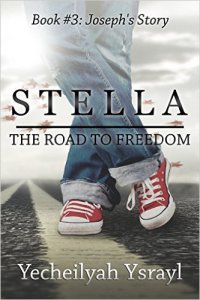
The Stella Trilogy is a series of short stories about one family and their search for identity amidst the African American fight for freedom. These books are my attempt to remind all people of our  forgotten legacy so we never forget what freedom looks like.

Stella: The Road to Freedom – Joseph’s Story (Book 3)
Stella: Beyond The Colored Line (Book 2)
Stella: Between Slavery and Freedom (Book 1)

51PZaD59VsL._SX331_BO1,204,203,200_Featured Image -- 4819

Give Me Some Space

I’m afraid this blog is transforming into something I do not want it to be. That there’s a cloud here that visits every time I publish a book. It lingers over the tops of our heads like an annoying conversation that will not end. How did we get here? I don’t want to write about writing today. Don’t want to hear explanations of grammatical correctness, and book cover design. I don’t want to hear anything about Self-Publishing and ISBN Numbers. And yet, here I am, talking about writing! Why does this cloud of a niche insist on trying to find its way to this blog? I’ve always enjoyed the variety of subject matter here and Dear Writing, I love you, but I cannot let you sneak up on us like this. We need some space. Yes, you are starting to get on my nerves. I don’t want to hear about books and why I should be reading them. I want to hear about life and why I should be living it. I want to talk more about what’s going on inside these walls called the four corners of the Earth. Want to talk about how well my husband’s surgery went and how much I’m enjoying his break from the job. Want to whisper sweet poetic somethings into this post just because I feel like it. No prompts. No tips. Just poetic somethings. Want to sit back and tell you why Lean on Me is the best movie ever and I challenge anyone to tell me I’m wrong. Want to explain why I’m probably wrong. Dear Writing, let me laugh my way into this post without thoughts of you. Time for us to take a break. Give me some space.

Book Trailers

I love book trailers, though lots of people don’t. They do not feel that they add value to the marketing of the book and that it is a waste of time. I do not agree. While Book Trailers may not appear to contribute a whole lot to the process, they do provide visual stimulation for potential readers in understanding what your book is about. Making them is also a lot of fun! Which is primarily why I make them because I enjoy doing so. A Book Trailer is, in short,  a visual representation of a book. In a world dominated by technology, more and more people learn best by way of media: moving pictures and music for instance. The same way people read more e-books than paperback, in the same way more and more people are drawn in by movies and TV shows.

Low Quality

It is not just the Book Trailer itself that makes people skeptical of Book Trailers, it is the quality. The reason Book Trailers are not very popular is because the production of most of these videos is not very good: cheap graphics, still frames, simple fonts, and cheesy music. And this is the part where I tell you not to buy book trailers. I just told you they are fun to watch and good to have so why not pay* for them? Because you don’t have to. If you’re going to pay for a collection of still frames behind cheesy music you may as well learn to make your own.

*The only time Book Trailers should be bought is if the quality is on point. I’ve seen some of what people have claimed as some of the best Book Trailers and so far I’m not impressed.

Using Your Skills

One thing I’ve noticed immediately about the Self-Publishing business is how to invest in my own talents and skills first before seeking assistance that’s going to cost me lots of money. Don’t get me wrong, you’ll always need professional help somewhere, but you are a professional at something yourself too. You may not know it yet but there is something that you do very well and yet you pay someone else to do it for you.

One thing I am passionate about aside from writing is photography and video production. Now, I don’t know much about photography, but I developed an interest in taking pictures in High School when I was on the yearbook team. It was my job to go around the school snapping pictures of assemblies, basketball games, meetings, and interviews. Because I was the only person on the team, I received valuable one on one instruction from my English teacher who ran the program. She taught me how to transfer these pictures to a computer where they will be organized on the template that will become the yearbook. As I look back, I was in the infancy stages of understanding how to put a book together and also how to produce a video.

I am not very knowledgeable concerning the technicalities of photography, but video production is another topic. I’ve worked with a number of video software programs to include: Video Explosion, Pinnacle, I Movie, Power Director, and I am in the process of learning Final Cut Pro. What I like about each program is that they basically have the exact same foundation. The concept of how to build a video from the ground up, even if you’re just using Windows Movie Maker, is the same. Hollywood movies even use the same basic format! There is more they can do of course and the technicalities require more brain power, but the basic make-up of how to put clips together, add background music and text is essentially the same. It is fascinating to watch movies and see the text come across the screen because I know exactly how they did it. On a much lower level of course, but I have a basic understanding of how it is done.

Book Trailers can be done in so many creative ways. Here is one that is very simple but that caught and kept my attention:

What this trailer achieved is making me want to read the book which is what the Trailer is all about. While this isn’t my style of production, the voice and constant moving of text keeps us captivated to the end.

I started experimenting with video production seven years ago and for this reason I’ve never paid for a Book Trailer. Instead, I’ve done my own research and utilized my own skills to produce the best quality videos possible.

My style of production is the Movie Trailer. I produce Book Trailers that are as close to that movie trailer feel as is possible without going too far. Did I say too far? Yes, you can go too far. If it’s produced to look too much like a movie with actors and all, as is some book trailers produced by Hollywood directors, it can draw away from the audience desire to read the book. Take this trailer here for instance. It’s OK, but I think it’s too much. I don’t want to read a book; I want to see the movie:

I’m not sure if there is a movie for this book but the point is this trailer is to promote the book. We must keep in mind that Book Trailers are designed to draw attention to the book, not the possible movie to the book which is why this fall I will be launching a video series to help you to learn to make your own Book Trailers. You will learn how to acquire royalty free photos, instrumentals people actually want to listen to, and even video footage that does not transgress copyright laws for your next bestseller.

8554819-120875522_3-v1

These videos will not be available on this blog so please make sure you are Subscribed to My Newsletter to receive this valuable private instruction free of cost and to also receive notice of when this series will begin.

In the meantime, below is a video I put together for my Stella Trilogy Presentation in Atlanta this past February. You’ll be amazed at how easily you can put this together.