Black History Fun Fact Friday – Anna M. Mangin

Born in October of 1854 in Louisiana, Anna invented a kitchen tool she called a pastry fork.

The system of patents for inventions was not easy for African Americans at the time. Enslaved people were not considered people, they were not US citizens, and the rights of the US constitution did not apply to them. Consider the Dred Scott Decision where enslaved Scott unsuccessfully sued for him and his family’s freedom (they were eventually freed on May 26, 1857). This made it difficult for even free blacks to secure patents on their inventions, making it easy for their work to be stolen or attributed to someone else.

Of all the inventions by African Americans, we can just about imagine how much more this contribution would be if full credit had been given to those who were not considered worthy to receive it. Consider the following inventions:

  • The Clock (Benjamin Banneker)
  • The Traffic Signal (Garret Morgan
  • The Ironing Board (Sarah Boone)
  • The Mailbox (Phillip Downing)
  • The Sanitary Belt/Maxi Pad Precursor (Beatrice Davidson Kenner)
  • The Artificial Heart Pacemaker Control Unit (Otis Boykin )
  • The Closed Circuit Television Security (leading to the home security system) Marie Van Brittan Brown
  • The Modern Home-Video Gaming Console (Gerald A. Lawson)

We can go on and on.

Anna’s story is special because she was one of few blacks to receive a patent for her invention of the pastry fork.*

The Pastry Fork was an older version of the wisp and other electronic mixers today as it automatically mixed without manual effort. This tool had many uses, including beating eggs, thickening foods, making butter, mashing potatoes, making salad dressings, and most pastry dough, which was difficult on the hands and wrists.

Anna filed an application for a patent of her Pastry Fork in July of 1891 and was awarded the patent on March 1, 1892.

*Martha Jones was the first black woman to obtain a US Patent.


Learn more black history by reading more articles on the Black History Fun Fact Friday page here. Have a black history fun fact of your own? Submit your article for a blog feature by emailing it in a Word Doc attachment to yecheilyah@yecheilyahysrayl.com. Read the submission guidelines here.

Black History Fun Fact Friday: Guest Writers Wanted

Updated: 4/27/2020

On January 17, 2015, I started a new Blog Series in honor of Black History Month called Black History Fun Fact Friday. I planned for the series to run from January 2015 through the end of February 2015, but two badges and 70 weeks later we are still going strong.

Black History Fun Fact Friday is not just a Black History Month segment anymore. It has carved out its own space on this blog. I want to get back to publishing Black History articles every Friday and would love to have some help.

I am reaching out for help from individuals who are interested in helping to contribute to this series.

Requirements:


  • Must be at least 18+ to write for The PBS Blog.


  • Must be original work. Do not copy and paste the article from other blogs unless that blog is your own. If you have a Black History article to share that you published to your site, I welcome you to submit it for Black History Fun Facts. I have no problem with that as long as it is your work. You can also link back to it so readers can follow your blog.


  • Because of the nature of this series, interested writers must be Black/African American.


  • Topics must be relatable to the history of Blacks/African Americans, African diaspora, e.g.


  • Articles must be emailed to me for approval at least one week before publishing. If you email your article on 4/28 for example, I will publish it on 5/1 if there are no needed changes.


  • Please send articles as an attachment in a Word Document, 12p Font, Times New Roman text.


  • Please do your best to self-edit your work for basic typos/spelling/grammatical errors before submission. Grammarly and ProWritingAid are good free self-edit software programs to use.


  • Please include at least one image with the post. Canva is a good program to use to make your own images.


  • This is Black History Fun Fact Friday not Black History Opinions so do your best to submit articles covering accurate historical information. I will vet the submissions to make sure they do. If you have links to sources, please include them. If you quote someone else, please cite your source. Articles that plagiarize will not be featured on this blog. (Note: Writers, as a heads up, if you are quoting people in your Social Media graphics without giving proper credit, this is plagiarism. Putting quotation marks around the quote does not make it yours. Don’t leave off the name of the person who said it first!)


  • Please include a photo of yourself, social media handles, website, or links to books you’ve written on the topic. This will be added to the end of the post.

Benefits of Guest Blogging:


  • Increase traffic to your own website/blog
  • Build Relationships/Online Influence
  • Build Domain and Search Engine Authority
  • Capture Wider Audience (go hand-in-hand with the 1st point)
  • Develop Your Authority on a topic
  • Improve Your Writing
  • Opens the doors for paid business opportunities

Email articles to yecheilyah@yecheilyahysrayl.com.

Black History Fun Fact Friday – The Short Family

This is a real-life case of living beyond the colored line. It starts when a black man named O’Day Short and his family moved to a racist area of Fontana, California, in 1945. Here’s a bit of history behind Fontana:

  • The Ku Klux Klan established its headquarters in Fontana.
  • KKK Grand Wizard George Pepper and White Aryan Resistance (WAR) leader Tom Metzger claimed Fontana and the Inland Empire as their California Eastern Territory for White Supremacy.
  • Hells Angels Biker Gang originated in Fontana
  • Hells Angels and Nazi Low Riders (NLR), flourished in the city of Fontana, with no consequences from the Fontana P.D.
  • Many incidents of discrimination and hate crimes were unsolved and poorly investigated

Fontana has a long history of racism and discriminatory policies, so it is no surprise that blacks were not allowed south of the area. The saying went: “Base Line is the Race Line.” Southern Fontana can be best described as a “Sun-down town,” towns blacks were not allowed after dark. When the sun went down, any black person found in a “Sundown Town,” risked lynching. Read more about Sundown Towns in an older post here.

Carol Ann and Barry Short, along with their parents Helen and O’Day Short, died in a suspicious fire on Dec. 16, 1945, after crossing the color line in Fontana. | Inland Valley Daily Bulletin

When O’Day Short, his wife, and two children moved onto land in an all-white area, neighbors threatened them to leave that neighborhood and occupy one of the ghetto neighborhoods where the town allowed blacks to live.

One interesting thing about the Short family is that they were fair-skinned and many believe this is how they got to purchase the property in the first place. O’Day moved his family into the half-finished home. It is said the man who sold him the land where the house was being built did not know he was black.

When people complained, O’Day got a visit from the sheriff to leave the property. The Sheriff offered to buy the house back, but O’Day refused. The sheriff warned that the “vigilante committee,” will not be pleased. They recorded the visit by the Sheriff in the Sheriff’s office in San Bernardino. According to the report, Short described the threats to the Federal Bureau of Investigation (F.B.I). On December 6, 1945, Short also reported the threats to the Los Angeles Sentinel, an African American Newspaper.

On, December 16, 1945, not even a full month after the Short’s moved in and ten days after the reports, the Short home exploded in fire, the family inside.

Helen Short, 35, and her daughters Barry, 9, and Carol Ann, 7 died.

O’Day, 40, lived long enough to be taken to the hospital. A month later, on January 22, 1946, he also died.

They have linked the cause of the fire to an oil lamp O’Day was lighting when the tragedy occurred. The interesting thing about these reports is they didn’t mention that the Shorts were black, not in 1946 or later when the story resurfaced.

The NAACP hired an arson investigator later to investigate the story. The investigator reported that the kerosene lamp was found and almost intact, determining the fire was set, from the exterior.

I decided the Short Family would be the subject of this week’s fun fact because of the limited information that can be found on them. It was many years later before the NAACP launched their investigation and people even knew their story.


Read more Black History Fun Facts here.

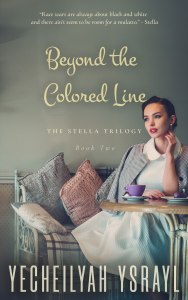
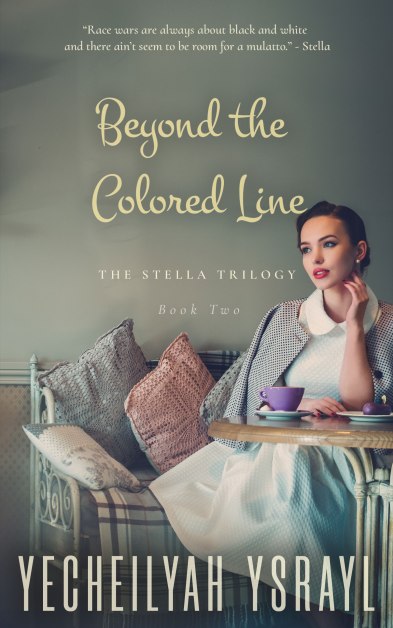
Read  Stella: Beyond the Colored Line, my historical fiction account of what life was like for blacks beyond the colored line here.

Stella: Beyond the Colored Line is Live (The Stella Trilogy Book 2)

Beyond the Colored Line is LIVE
“This story retells the history of many African-American families alive today. It is a heritage rich with strife and suffering but also filled with a hope and a desire to finally grasp the freedom that has been so elusive and out of reach for so many. At times, I was forced to accept some uncomfortable truths about our American past. There is nothing wrong with that. This story makes you think about freedom and what it really means to you as a person, and as an American. I loved this story because it is through the learning of other’s journeys that we begin to learn much about ourselves. Their pain becomes our pain and we begin to see through their eyes. Stella will touch your soul with such a sweet simplicity you won’t even know it.”

– Colleen Chesebro, on Stella: Beyond the Colored Line, First Edition

About.

In book two, we dig deeper into the McNair family’s legacy. Named after her great-grandmother, Stella has a very light complexion which causes her to be the tease of her classmates. Unable to find solace among her African American contemporaries, Stella finds it challenging to adjust to a world where she is too light to be “black.” After The Great Depression of the 1930s forces Stella’s family to move to Chicago, a conversation with Aunt Sara provokes Stella to do something that will dramatically affect not just her life but the life of her children and grandchildren.


Excerpt.

1928

Daddy runs off to no one knows where on account of his life. Some racist whites had seen him and Mama together and threatened to lynch him if found, so he runs off. The community gossip is that his brothers know, but they won’t say. We weren’t alone, though, Mama and me. It seems like Mama filled the hole where Papa should have been with our whole family. The house always stayed filled with guests, my people, and peoples of my people. My granddaddy was a colored man and owned this land. My namesake, his Mama Stella, was a slave and was given this house by her owner. As the story goes, after Grandma died, I was born. Since Mama was the closest, she named me after her.

My aunts would gather around the table with my mama, and they laugh and cry most of the night about their girlhood. They would talk about what it was like being four mixed girls in Illinois. I don’t have uncles on my mother’s side, but Daddy got six brothers.

Due to the controversy around my parent’s relationship, Daddy being a Negro, and Mama being half-white, they only visit on special occasions. Uncle Roy, Daddy’s younger brother, says Mama acts differently around her sisters and that we too uppity, especially Aunt Sara. She’s the youngest of my aunties and the most spoiled. She’s the one who convinced Mama to send me to a white school in the first place, and boy was my uncles hot! They said we were breaking the law–that a Negro had no business in a white school. But Aunt Sara said I had all the right in the world since I was half white. For her, not only could I do this, I had a right to do it.

“But does the school know she a Negro?” Uncle Roy would ask.

“That’s none of the school’s business, now is it?” Aunt Sara would say, and they’d go back and forth until Mama break it up.

Not all talks were good talks. I used to sit until my eyes were red with fatigue to hear Mama and my uncles talk about all the killings that were taking place around the country, and especially in the South. I felt like I lived in two worlds, one black and one white, but none mixed. And what did that mean, mixed?

My aunties wanted to talk about education, family, career, and navigating the world as a mixed-race person, whereas Daddy’s side liked to talk about the black condition, what was going on in the black community, and what it meant to be black in America. They talked less about blacks navigating a world that they felt didn’t include them, and more about blacks redefining themselves and creating their own worlds. The conversations were intriguing and fascinating on both sides, but it left me feeling like my very body was a contradiction. Was I white? Was I black? Race wars always involved these two groups of people, and there ain’t seemed to be room for a mulatto.

“That’s what I say,” said the voice of Uncle Keith, Daddy’s second oldest brother.

“Up there in Minnesota.”

“That close?” Mama gasped.

“Yeah, that close. What woman, you living under a rock? They just had one over in DeKalb last month,” said Uncle Roy.

“It’s a crying-out-loud shame,” continued Keith. “Say they dragged the boys from the cell and a whole mob of ‘em lynched ‘em. Say it was ‘bout a thousand of ‘em.”

“My my,” said Aunt Rebecca.

There were times even I witnessed evidence of the events rocking the country. One day, Mama and I went to visit Cousin Mary in Texas and drove the truck up to a general store. We walked in, and I picked up a postcard from a rack. It was of a man hanging on a tree that supported an iron chain that lifted him above a fire. The man didn’t seem to have much of a body left. They cut his fingers off, his ears and his body was burned to a crisp. On the back of the postcard read: “This is the barbecue we had last night. My picture is to the left with a cross over it. Your son, Dan.”

I learned later the picture was of a seventeen-year-old mentally ill boy named, Johnny, who had agreed to have raped a white woman. And everybody at home still talked of the Cairo Circus of 1909, the public lynching that took place here in Illinois. I couldn’t understand why Mama was so upset about a circus until I found out what kind of spectacle it was. My aunts didn’t want anything to do with the land or the house because of events like these. They say it’s too close to slavery. No one wanted to inherit the home or the property, but Mama, and this is how I spent several years of my life living in the same house where my great-grandmother had been a slave. Mama kept the house full of guests by renting out rooms to help with her washerwoman salary.

We weren’t much of a churchgoing family, party going is more like it, unless Mama wanted to show off a new dress or hat when somebody died or needed saving and on holidays and such. Folk would come from all over southern Illinois to hang out with “Cousin Judy.” Sundays sure were fun, my second favorite day of the week. Saturdays were my favorite day of the week. It was the day for shopping, and that only meant one thing, Chicago.

First, Mama would wake me to the smell of biscuits or pancakes. This massive breakfast was to keep me full enough throughout the day, so she didn’t have to worry any about food buying. Then, she commanded me to bathe real good, paint my arms and legs with coconut oil, untie my curls, and we’d both put on our Sunday’s best and be two of the most beautiful women you’d ever seen. I was a young lady now, and shopping was the best thing for a young lady, next to boys, but you couldn’t like them in public.

You could like shopping, though, and I loved going from store to store in search of the finest. I skipped along while Mama scanned the insides of magazines for stuff she heard about from the white women whose laundry she cleaned. We would squeeze our way through crowds of people, just bumping into each other. Everyone dressed in their weekend wear and bought ice cream for their children. Some went to see the picture show, and so did Mama and me. We could buy candy or jewelry, or perhaps a new hat or two. We could drink from water fountains without a label and spend money without prejudice.

We had a good time on Saturdays because on Saturday, no one knew we were colored.
Click here for a signed paperback
of Beyond the Colored Line

*Click Here to get it on Kindle

Haven’t read book one? Get it for 99cents on Kindle here or in paperback here.
*Paperbacks ordered today will ship next week.

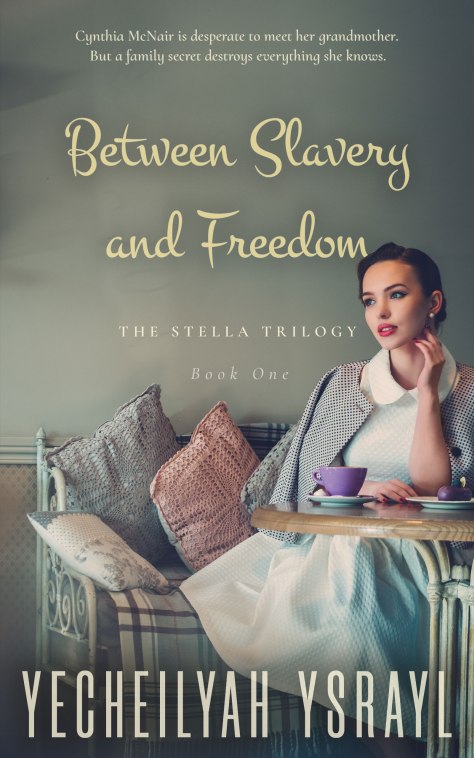
Stella: Between Slavery and Freedom (Book One)

Book one in The Stella Trilogy is officially back on Amazon and my website and book two is on its way!

Stella is a work of Historical Fiction and is distinctive in its focus on one woman’s road to self-discovery, against the backdrop of the African American fight for justice, racial equality, and freedom. The three-part novella series focuses on the history of one family in their struggle for racial identity. We discover in this trilogy how three individuals living in separate periods strive to overcome the same struggle, carefully knit together by one blood.

In book one, Cynthia McNair and her boyfriend, Alex, express some racists’ feelings toward blacks. They visit Cynthia’s Grandmother Sidney McNair, who recounts the story of her ancestor, a slave named Stella Mae. Cynthia has no idea of her African ancestry or how deep this rabbit hole goes.

“Yecheilyah Ysrayl takes us on a colorful and thought-provoking journey through the eyes of a mulatto slave woman Stella. Generations later, Stella’s descendant Cynthia McNair has no idea of Stella’s life as a slave, nor the true identity of their bloodline. Since Cynthia is a racist she is in for a rude awakening. Stella is reminiscent of a wonderfully written slave narrative, a story of history and pain, it is a brilliant opener of the Stella series.” 

– Kathryn Reed

Order the Kindle Ebook for 99cents

Order a Signed Paperback from my Website 

Mark as Want to Read on Goodreads

(Already read Stella? Mark as read and leave a review)

The Stella Trilogy: The Research (Book One)

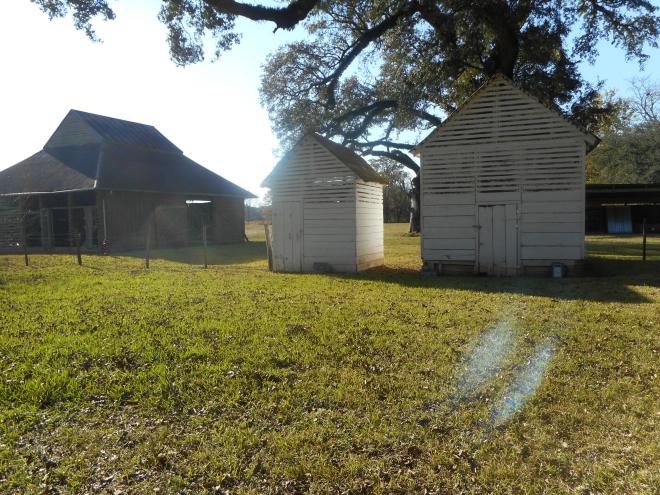
Cane River Creole National Park – Oakland Plantation, Natchitoches, Louisiana, November, 2016.

Since the meat of book one focuses on what life was like for a little girl, and then a young woman, growing up in slavery, the bulk of my research had to do with reading slave narratives and studying enslavement through the eyes of women and children.

Between Slavery and Freedom centers on Stella’s enslavement on The Saddler Plantation in Louisiana. As I introduce us to the first Stella, she is a six-year-old girl enslaved with her mother, Deborah. At this age, she is not aware that she is living property, which was typical for some enslaved children in their early years. She plays with the other children, including the slave owners’ daughter, but she does not yet understand the value of her flesh, that she could be bought, sold, traded, transferred, deeded, and gifted. Stella describes the plantation as a “big family.” She loves running through the dirt and the way it feels on her toes. She talks of childish things like eating sweet cakes, playing with Miss Carla, and trying to convince Mama, she touched the sun.

“One time, I made it where I touched the sun. It wasn’t even hot either. It didn’t feel like nothing but air. I told Mama the sun was tricking us. 

“And how it do that?”

“Cause Mama. I touched it, and it ain’t burn my finger none. It feels hot, but it ain’t really.”

– Stella, Between Slavery and Freedom

Historically, enslaved children who had a “childhood” in this way realized their status gradually. Their awakened consciousness may have been signified by seeing a family member sold for the first time or being sold themselves. The research points to ten as the age where the enslaved child knew and understood that he or she was property, except in the circumstances, as I have mentioned. As soon as they were old enough, the enslaved child’s life changed, and they realized that their lives as enslaved differed greatly from the lives of the white children they once played with as small children.

Slave-owners raised southern white youth as enslavers in training. Sometimes slave-owners gifted their children an enslaved person as a pet (sometimes it was the same child they played with). Literature also played a role in the training of southern youth to not only accept slavery as a regular part of society but to prepare them to own slaves of their own. Examples of such books is The Child’s Book on Slavery; or Slavery Made Plain. In a chapter called The Duty of Learning about Slavery, it states:

“if slavery is good, we ought to help it forward…”

In a chapter called Does Color Make Slavery, it states:

“Moses and all his people, I have said, were slaves in Egypt, but they were not colored people.” 

This explanation was to try to explain to the children that slavery wasn’t based on skin color, and it is a lie. Egypt is in Africa. Moses and his people were “people of color.”

In a chapter called What is a Slave, the author compares the enslaved to a horse, saying:

“Perhaps your father has a horse. That is his property. He has a right to make the horse work, only he should treat him kindly and give him good food. If the horse is his, nobody has a right to tell him he must not use the horse so. And then, if he thinks it best, he has a right to sell the horse to somebody else. Nobody has a right to forbid him. He need not go and ask even the horse, if he may have him plow the garden, or draw the wagon, for the horse would not understand him, and could not speak to him, and will never grow so old or so wise, that he can understand our words, and talk himself.”

Source: https://archive.org/details/ASPC0001969600/page/n5/mode/2up

Speaking of literature, another part of writing book one was reading many slave narratives, including Frederick Douglass An American Slave, and Up from Slavery. Other books included When I Was a Slave: Memoirs from the Slave Narrative CollectionBullwhip Days: The Slaves Remember, and Remembering Slavery: African Americans Talk About Their Personal Experiences of Slavery and Emancipation.

Cane River Creole National Historical Park

Cane River Creole National Park – Oakland Plantation, Natchitoches, Louisiana, November, 2016.

“Some people have to take the cotton and pick out the seeds, and others have to spin and weave. They don’t do nothing but spins and weaves. Some people even had to turn the weaves into threads.”

– Stella, Between Slavery and Freedom

More profound than this is my visit to a former slave plantation at The Cane River Creole National Historical Park in Natchitoches, Louisiana.

You might ask yourself why anyone would want to visit such a place. I was writing about people living on a slave plantation and what better way to get inside their heads than to visit one.

Originally called Bermuda, the founder of Oakland was Jean Pierre Emmanuel Prud’ Homme, who began farming the land in 1785 and received a Spanish land grant in 1789. The land’s first cash crops were tobacco, indigo, and cotton. The Prud’ Hommes were the first family west of the Mississippi River to farm cotton on a large scale.

Cane River Creole National Park – Oakland Plantation, Natchitoches, Louisiana, November, 2016. Slave Quarter turned home of Sharecroppers

“Down in the quarters, every family had a one- or two-room log cabin. Mostly one room though. We had mattresses filled with corn shucks. Sometimes the men build chairs at night. We didn’t know much about having anything, though. There were a lot of cabins for the slaves, but they weren’t fitting for nobody to live in. We just had to put up with them.”

– Stella, Between Slavery and Freedom

After the Civil War, sharecropper and tenant farmers continued to live on the land until the 1970s, and slave quarters became homes to sharecroppers later. The people worked twelve hours a day, six days a week. Seeing this with my own eyes put it into perspective how the south had reconstructed slavery by returning land to former slave owners and putting former slaves back into the fields under another name. Slave codes designed to control the enslaved became black codes intended to control freedmen, and cotton pickers became sharecroppers.

Martha Ann, an enslaved Laundress, worked in this wash house in the 1850s. In the 1940s, her descendant, Martha Helaire, earned $4 an hour working here as a Laundress. All we have to do is walk a few steps to the washer and dryer.

I blogged about this visit years ago. Get the full picture and see more pics by revisiting that post here.

Living on 40 Acres of Land

Finally, part of my preparation for book one also included where I was living at the time I started writing these books.

At the time I released the first book in this trilogy, my husband and I lived in an old house owned by our elderly cousin on 40-acres of land. Over the years, we planted a garden on the property, built a chicken coop and raised chickens, owned several dogs, goats, and even a horse. My grandmother-in-law also recounted stories of when she and some cousins picked cotton on this land.

The elderly cousin and her father built the house we rented many years ago. It was an old house and an old land. It was easy for my overactive imagination to envision what it would be like if we were not renting this house from our cousin; if we were not free to live life on our own terms; if this was not the 2000s, but the 1800s, and if we were not free but enslaved. I walked the property, breathed the air, and looked up at the trees. I had dreams of black people hanging from those trees and visions of people trying to escape.

We lived on that land for five years, eventually moving away in 2015, and I had a completed manuscript.


Preorder the ebook here for just 99cents

Preorder a Signed Paperback Here

Mark as Want to Read on Goodreads

(If you read Stella the first time around I would most appreciate you marking it as read on Goodreads!)

Revising The Stella Trilogy: Cast of Characters

I am always thinking about why Stella is so set-apart. Why are these books so effortless for me? The first time I released the series, things went smoothly, and the same is happening now. I can sit down, open Stella, and flow (or as I told a room of students, I sit down and bleed, to quote Hemingway).

A good fiction book, to me, has great character development. The characters are realistic in dialogue, how they talk to each other, what their lives are like, the decisions they make, and so on. When I am writing novels, I typically write Historical Fiction, so setting and dialogue are paramount. The setting is a significant element because the environment affects the plot and the characters. A story set in the 1800s must have language authentic to that time, and the characters must speak and interact like they are in the 1800s, not 2020.

My books tend to include a wide selection of people, some minor characters, some major characters. This is risky, but I’ve been told it’s one of my strengths. Somehow, I am capable of keeping up with everyone and letting them interact authentically.

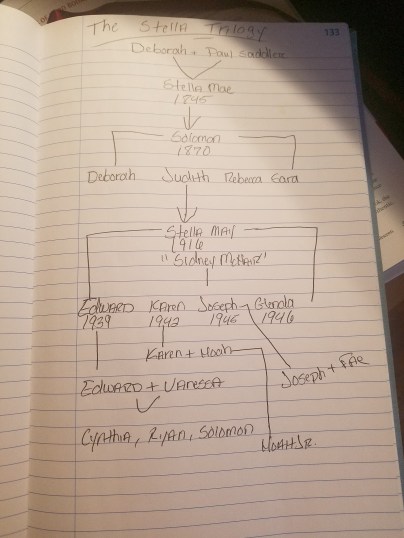
Family Tree

I’ve never fleshed out a family tree with any other series as I have with Stella, and I think it has helped with the writing. It doesn’t mean everyone in the tree are part of the central cast of characters or that I should include every detail, but it does make it easier for me when I am writing to remember who belongs to who. Stella is a short series (each book only about 100-115 pages). As Nathaniel, Hawthorne says, “Easy reading is damn hard writing.” Some may think a short book is quick and easy to write, but this is not so. It’s an easy read but requires just as much work as a full-length novel.

Let’s meet the family!

Paul Saddler and Deborah – Saddler is the owner of slaves on The Paul Saddler Plantation, including a young woman named Deborah. In 1845, Paul and Deborah had a little girl named Stella.

Stella and Solomon – Stella later gives birth to a little boy named Solomon. He is very light-skinned with jet black hair and green eyes like his father, John. Stella met John through her sister Clara, but you’d have to read book one to learn more about this awkward relationship.

Solomon – Solomon marries a white woman, and together, they have four girls: Deborah (named after Stella’s mother), Rebecca, Judith, and Sara.

Judith – It is in book two, we see that Sidney’s mother is Judith. Judith dates a black man and gives birth to a little girl she names Stella, in honor of her grandmother. But this Stella changes her name later in life (you have to read the book to find out why) to Sidney. Sidney marries a white man named Clarence McNair. Sidney and Clarence have four children: Edward, Karen, Joseph, and Glenda.

Edward – Edward marries a white woman named Vanessa, and together they have three children, Cynthia, Ryan, and Solomon. Ryan and Solomon aren’t major characters, but Cynthia is.

Karen – Karen dates a Black Panther in the 60s named Noah, and together they have a son, Noah Jr.

Joseph – Joseph marries a black woman, Fae, and together they have a boy and girl, Tanya and Micheal. It is in book three we learn what happened to Joseph after he left his mother’s house after the fight with Edward in book two, how he met Fae, and how he got mixed up in The Freedom Rides and Civil Rights Movement. His children are minor characters but add to the family tree and help to establish the depth of Jo and Fae’s relationship.

Glenda – Glenda is a single mom raising triplets, all boys.

In book one, we meet everyone here, including additional characters like Paul’s wife Elizabeth and their daughter Clara, Stella # 1’s friend Lola, Aunt Cecily, and others on the plantation.

What does writing out a family lineage as this do? 

It helps me to create vivid characters. Everyone didn’t come to me at once. I started with the first Stella and her mother, Deborah. The first time we go back to Stella’s time in book one, that first chapter is what started the series, with Stella and her mom at the store and Stella trying to tell mom she has to use the bathroom. I then went back to write what became the first chapter, with Cynthia and Alex later.

Even though the book is called The Stella Trilogy, I wanted to focus in on Cynthia in book one to explore how not passing down history can affect our children. In book two, Cynthia is two years old, and the year is 1979. In book one, we opened in 1996, and Cynthia is a young woman. The decision her dad made in ’79 causes her to grow up and not know who she is. We recount Stella’s story in book one because it is the glue that ties everything together. We then go backwards with books two and three to see just how things unfolded.

Why does Cynthia express racists thoughts toward blacks even though she has black blood? Why did Edward leave his daughter in the dark about the true nature of her race? What happened in 1979? What is Mama Sidney’s big secret? How did the history of this family get so lost? Will Stella’s legacy bring her family back together again?

One inspiration for this family tree was Roots. I love the “six degrees of separation” this groundbreaking series has to it. To learn more about the motivation of Alex Haley’s Roots, click here.


Coming March 24, 2020

About Book One:

Cynthia McNair and her boyfriend, Alex, express some racist feelings toward blacks. The visit Cynthia’s grandmother Sidney McNair, who recounts the story of her ancestor, an enslaved woman named Stella Mae. Cynthia has no idea of her African ancestry or how deep this rabbit hole goes. Will she accept the truth about herself?