
Check out Colleens post of my coming attraction! Coming Soooon.
Tag: african american
Williams Wells Brown – Novelist
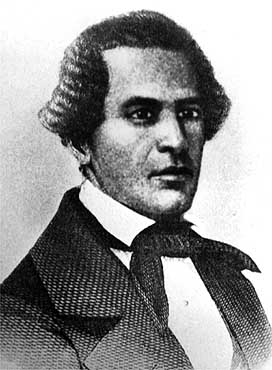
We have talked about some of the first black poets. Now, Williams Wells Brown is considered the first African American to publish a novel (recorded). Brown was born into slavery to a black mother and a white slave owner. Wells served various masters before escaping slavery in 1834. He then took on the name of a Quaker who helped him in his escape, Wells Brown, and in 1847 published a slave narrative, A Fugitive Slave. Brown’s only novel, Clotel was published in 1853 and tells the story of the daughters and granddaughters of President Thomas Jefferson and his slave woman. Wells also wrote a play “The Escape; or, A Leap for Freedom” in 1858, along with other historical writings.
Black History Fun Fact Friday – Negro Spirituals
Welcome Back to Black History Fun Fact Friday. Today we’re talking about Negro Spirituals.

“Go down Moses
Way down in Egypt’s land
Tell ole
Pharaoh
To let my people go!”
 When you take someone and make them a slave, the first thing you must do is take away their identity. Starting with the removal of the name, you take away all traces of their former selves. You do not just remove a people from their environment, but you remove those things that influence that environment. The slave must have no connection to his former self least he realize he is a slave. If the slave realizes he is a slave, you will have a hard time keeping him in a perpetual state of captivity.
 During slavery in the United States, there were systematic efforts to strip the identity of the captive. As such slaves were forbidden from speaking their native tongue and generally converted to Christianity. When the so-called African was taken from the West coast of Africa, it was not a simple transition of country, to ship, to land, but he had to undergo an entire initiation process before stepping foot on the plantations of America. His name, being the most important, was taken from him, his way of life stripped from him, and his history book taken from him. In turn he was given the religion of his slave masters, and his new name reflected the name of their gods. He was made into a Negro.
Being unlawful for the Negro to read and to write, the Negro Spiritual becomes an intriguing study of its own. How did a people who were not allowed to read the bible sing songs with such deep spiritual concepts?
 The words of the earliest known Negro spirituals are taken directly from biblical scripture, are very much poetic, and can be considered in the truest form the literal Spoken Word. The passion in which these songs were sung most certainly adds to the rhythm, texture, melody, tempo, variation, and emotional depth of words. So much so that we must understand that the power in which these songs were sung did not come from a people who made stuff up along the cotton filled aisles of Mississippi and Alabama. These songs were sung with such power because of a people who lived them.
Wade in the Water
Wade in the Water children
Wade in the Water…
See that band all dressed in white….
The leader looks like that Israelite…
See the band all dressed in red…
Looks like the band that Moses led…
 If one was to study the Physical Appearance of the ancient Israelites one will see that they were a dark skinned people. Moses, Abraham, The Prophets and even the Messiah, would have looked like your typical Negro had they walked the earth today. Wade in the Water is a very revealing song, and for this reason it has been revised over and over again. But the original song is a very revealing one. It even compares the captivity of the Israelites to the Captivity of the African who has been brought to a new Egypt, only this time in ships.
 But the Negro Spiritual did more than reveal factual information that talked about the Old Testament; it was also a way of communication for the slaves who could not otherwise communicate under normal circumstances. Wade in the water was one of those songs that gave hint to the runaway to go into the water when he is being chased. He goes into the water because the dogs will lose track of his scent. Therefore, if he is being hunted down he is being told to “Wade in the Water”.
The same is true for “Swing Low Sweet Chariot”, which was also a song of dual meaning:
“I looked over Jordan,
And what did I see,
Comin for to carry me home
A band of angels comin after me
Coming for to carry me home
Swing low, sweet chariot,
Comin forth to carry me home;
Swing low, sweet chariot,
Comin forth to carry me home“
Swing Low Sweet Chariot is a very powerful song. It is not a song about dying and going neither to heaven, but this song could only be sung by people who knew what they were talking about, and who had great biblical understanding. In brief, we see that it echoes the lyric of Revelations which talks about the New Jerusalem coming down like a bride adorned for her husband (‘looked over Jordan’ what’s over Jordan? Israel is over Jordan) and about the messiah coming down with his bands of angels in a chariot.
On the other hand, Swing Low was also a song about The Underground Railroad. Swing low, Sweet Chariot also refers to Ripley, a “station” of the underground railroad where fugitive slaves were welcomed. But this town was on a hill by Ohio River, which is not easy to cross. So, to teach this place, fugitives had to wait for help coming from the hill. “Swing low, sweet chariot.”
“Halleluyah I’m a travelin
Halleluyah ain’t it fine?
Halleluyah I’m a travelin
down freedom’s main line”
– 1961 Freedom Song
Negro Spirituals did not stop at slavery, but for every movement of African American people, each was followed by a certain cultural theme. The times did not change without a change in tune, in clothing, in hair style, and in thought. From the plantations of chattel slavery to Jim Crow and Civil Rights, to Black Power and Revolution, every movement we have been or are a part of, has had its own unique sound that taught you something about the state of Black people during that time, about the movement and even how to move. Our music is therefore in a sense always an extension of The Negro Spiritual.
Thank you for stopping by for this week’s episode of Black History Fun Fact Friday. Here is last week’s episode in case you missed it:
Lucy Terry Prince

Aside from the renowned Phillis Wheatly, Lucy Terry is another black poet recognized as one of the first African American poets. Born in Africa, her village was raided when she was a girl and the institution of slavery brought her to America. She was sold to Ebenezer Wells of Deerfield, Massachusetts. Her one and only poem, “Bars Fight” is about the traumatic raid on her village by both white and Native Americans before her enslavement. As is one of her lines: “Eunice Allen see the Indians comeing….And hoped to save herself by running.”
Harriet Ann Jacobs – Our Self-Published Ancestor

By now many people are familiar with Harriet Jacobs, the African American writer who escaped slavery in 1842 after hiding in an attic above her grandmothers home for seven years. Harriet’s testimony was one of the many inspirations for the first book in my Stella Trilogy. Stella, like Harriet, was born a slave but did not know it as a young girl–not until after her mother died. But that’s not all Harriet and Stella have in common. Harriet’s biography “Incidents in the Life of a Slave Girl” was also a Self-Published book back in 1861, under the pseudonym Linda Brent.
Olaudah Equiano
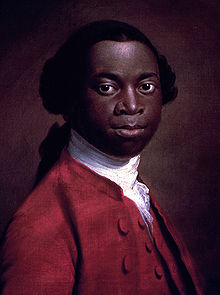
At the age of forty-four Olaudah Equiano wrote and published his autobiography, The Interesting Narrative of the Life of Olaudah Equiano, Or Gustavus Vassa. Written by himself, he registered this writing at Stationer’s Hall, London, in 1789. More than two centuries later, his work was recognized not only as one of the first works written in English by a former slave, but in his narrative, Equiano recalls his childhood in Essaka (an Igbo village formerly in northeast Nigeria), where they practiced Israelite customs and traditions before both he and his sister were kidnapped and sold into slavery.
Francis Johnson Webb
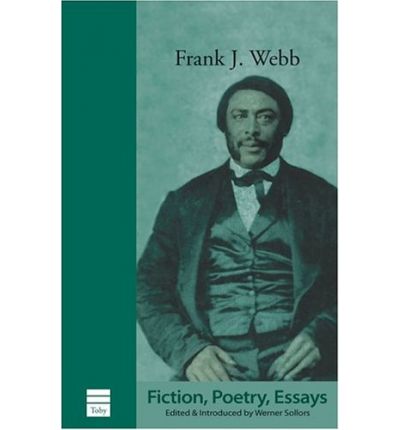
Francis Johnson Webb, newspaper editor, is the second published African American novelist. He was born free on March 21, 1828, in Philadelphia to Louisa Burr and Francis Webb. His father, Francis Webb, served as founding member of the Philadelphia distribution agent for Freedom’s Journal*, the first black newspaper in the nation.
Freedom’s Journal was the first African-American owned and operated newspaper published in the United States. Founded by Rev. Peter Williams, Jr. and other free black men in New York City, it was published weekly starting with the March 16 1827 issue.

 The PBS Blog