You may post your review there now if you’ve reviewed an early copy.
If you want a free ecopy to read in exchange for an honest review, I have a few I am willing to give away! The only requirement is to leave a review on Amazon.
You can preorder the paperback, hard copy, eBook, or bundle now at blkhistorybook.com.
About.
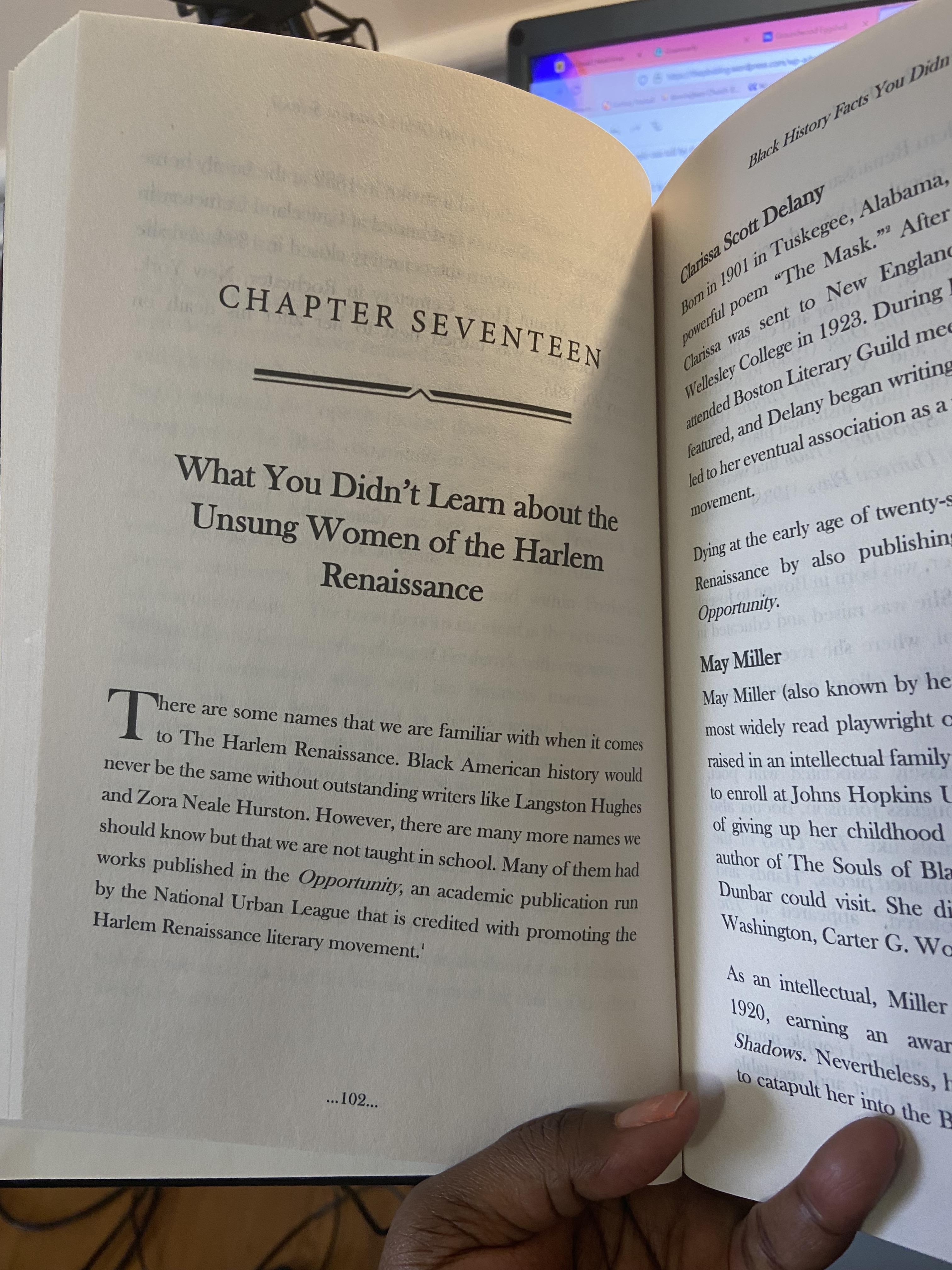
Black History Facts You Didn’t Learn in School is a historical guide on Black Americans’ accomplishments, contributions, and struggles. It includes the experiences of Black individuals who have often been marginalized, overlooked, or omitted from mainstream historical accounts.From the resilience of women like Anna Douglass, first wife of Frederick Douglass, to the many Black communities that prospered, recognizing and celebrating Black history helps to ensure that these stories are acknowledged and that the achievements and resilience of Black people are valued and appreciated.
When I first decided to put my book up for preorder in September (2023), I wondered if I had made the right decision. I had never run a preorder campaign that far in advance of the release date. And I was wondering if I could keep the momentum up. In my experience, people forget after a while, and the excitement fades.
Still, I took the leap of faith and put it up anyway.
The result is a book that has been selling every month since September and is currently a #1 New Release on Amazon for the ebook edition. The book doesn’t officially come out until the end of next month (Feb.).
“What if I fail?”
“Oh, but what if you fly?”
There is a common belief that if you give too much of your book away, people won’t be interested.
While I don’t think you should reveal everything, I do believe that talking about topics related to your book never gets old and, in that sense, you can never give away too much information. You can never know too much about your topic. You can never over study. The more you know, the more you can give.
And the more you give, the more interested people become.
This is my first nonfiction book about Black history. My other books cover these topics, but they are fictional. The nonfiction authors I admire and respect and who have done well with their launches all have something in common. They all educate their audience on their topic.
Whether in the form of a story and lesson learned or just putting fun facts out on social media, they have garnered interest in their books by talking about them.
My biggest worry is not knowing enough, which (from a not-so-positive end) sometimes causes me to shrink. However, from a positive end, it keeps me searching, reading, and studying to show myself approved. It keeps me humble and hungry.
So, I thank you for supporting this work and I hope it inspires you to take the leap on whatever that might be. You might discover that you can fly!
In our Poetry Business Network community, we are challenging ourselves to create and post a writing prompt to engage our audience. Yesterday’s challenge was an MLK writing prompt, but I missed it so I am posting it today!
Writing Prompt / Challenge
Photo by Aukid phumsirichat
Yesterday, people worldwide paid homage to the life of Dr. Martin Luther King Jr, the only non-president whose birthday is a national holiday.
Today, write your own “I Have a Dream” speech as a poem!
If you were to leave something behind for the next generation to learn from and to be inspired by, what would you say? What is the most important thing the world needs right now in 2024 America?
It doesn’t have to be a speech about race. It can be anything you think is important for this generation.
What words would you want immortalized as part of your legacy?
You may share a snippet in the comments, on your own blog, or scribble it in your own personal journal.
If you post it to Instagram, tag me so I’ll know!
I am going to do the challenge as well. I hope you’ll join me!
Self-publishers who use Print-On-Demand may find themselves in a situation where, though they’ve done all they could to produce a superior product, the lack of resources to truly make it shine will still leave the book with that this must have been self-published glow.
That is why the paper you choose for your book is important as it could set the tone for how professional (or cheap) your book looks on the inside.
So let’s talk about it.
White, Cream, or Groundwood Eggshell?
If you have yet to reach the stage where you’ve published your book, bookmark this for later!
In short, you will get to choose your paper when uploading your files to KDP, Ingram, or whichever platform you choose and setting everything up for publishing. This is the paper used to print your book. Your choices will be white, cream, or, if you are using Ingram Spark, Groundwood Eggshell.
I do not recommend white paper except in cases of books with color images. Otherwise, you want to choose cream paper when publishing your book.
It is easier on the eyes than white and makes your book look more professional on the inside.
I always say there is a lot self-publishers can learn from traditionally published books. If you go to your bookshelf and crack open a traditionally published book, the paper is a creamy, off-white. For self-publishers, cream paper is the closest you’ll get to that.
Well, it was the closest.
Enter, my new favorite, Groundwood Eggshell…
I love how this paper makes my book look like it was printed by a publishing house.
It’s not always the case that a Self-Published book looks self-published because of poor editing or cover art.
It can also be because Print-on-Demand does not offer the same industry-level finish to the physical product as traditionally published books by larger publishers.
Some people can tell by the glossy finish and white paper the book has been self-published.
Annd it doesn’t help that Amazon puts a Not for Resale strip on their proof copies. (This was not always the case). At first, I thought it was a nice touch, but now it’s like a big red flag that screams: “I published this book on Amazon!”
That’s why I like Ingram Spark’s quality, specifically their hardcovers and Groundwood Eggshell paper option better than Amazon. The grade of the physical book is excellent and sets the book apart to where it looks like it was printed by a publishing house.
For the record, I am not saying a self-published book is not good unless it is like a traditionally published book.
I am saying that self-publishers do not always have access to the resources to produce a book that can compete with books published by companies with bigger budgets and better materials.
Imagine if Black schools could have received better resources, school houses, books, everything they needed, but remained all-black.
In the same way, imagine if self-publishers and indie authors everywhere had the same access to tools similar to traditional publishing houses but remained independent in the process.
When choosing your paper, I do not recommend you ever choose white except in the special case we discussed. Always go with the cream, and if you are using Ingram, try that Groundwood Eggshell.
If your book is properly edited and formatted, this paper should make your interior pop out.
In 2020, I thought TikTok was an app for children doing dances to go viral. That is until I went mini-viral myself.
Only I wasn’t dancing, singing, or participating in trends.
I was talking about books, poetry, and Black history.
The impact of people tuning in for these topics in a world where people read comments and captions on social media more than they read full-length books is not lost on me and quite humbling.
I posted a video at the end of 2023 showing the books I read that year, and it currently has over 9K views, over 800 likes, and 453 saves…
…and I’m only showing books!
No words. No explanations. Just a showcase of about six books I enjoyed this year and a dope song to go with it.
Photo by Kishan Rahul Jose
If you are a creative in any field and want to advance this year in a certain area, I hope this inspires you to tap into the power of your authentic self.
You don’t have to be on TikTok, Facebook, Instagram, or YouTube if you do not feel drawn to those platforms. The one calling out to you won’t feel forced, and you will never have to act out of character to succeed.
You can discern this is not just about TikTok and social media platforms.
When we open ourselves up to being the most authentic versions of ourselves, no matter where we are, doors open that we don’t even have to knock on. We won’t have to chase opportunities; they come to us.
Here I am, getting viral-like numbers for discussing topics the average young person would typically find boring in a traditional classroom.
And I’m not even posting every day.
It’s spiritual, how things align when we show up as who we are.
Social media is not a marketing plan but can be part of a larger strategy because it is a connection tool. It helps you to find, connect with, and nurture your audience.
It is through these connections that you build the like and trust factor. People believe in you and trust you.
When people believe in you, they buy from you.
Here are Some Ways to Use Social Media as Part of Your Larger Strategy:
Share your journey and inspiration.
Why are you writing this book? Who are some of your favorite authors and their books? What inspired you to write in the first place? What’s the story behind your title? What’s your story?
Follow accounts related to your topic.
Who follows you on social media is less important than who YOU follow. These accounts influence you personally and train the algorithm to show you more of the same.
Engaging with accounts that are relatable to your topic, beliefs, morals, values, and passions will do two things.
First, it will make you aware of trending topics in the news related to your area of expertise, which will help you create relatable content.
Discussing current events related to your book’s genre can be a great way to generate interest and attention while using social media to share your thoughts and insights. This helps build your author platform, authority, and attract more readers to your work.
Secondly, following like-minded accounts and engaging with them will introduce you to more people who might enjoy reading your kind of book.
Center Content Around the Topics/Themes of Your Book
Focus your messaging on connections and themes related to your book. Consider how the post might be educational, inspirational/motivational, informative, or entertaining. Even when I post something silly to TikTok, I make sure it aligns with what I am known for.
My rule of thumb is that the post must have something to do with black history/history in general, poetry, or books in some way. As a result of only focusing on these things, I’ve grown my TikTok account from 3K to 26.1K followers, highest view at 1.5 million, and increased subscriptions to my email list.
Leverage Relationships
Collaborate with other writers, authors, and business people who write books similar to yours or offer a service you can benefit from. Can they get you on their podcast? Review your book? Promote it on their pages? Can they repost/share your book cover? Do they know of anyone who can offer a service related to what you do? As the old saying goes, “closed mouths don’t get fed.” A lot of opportunities to gain exposure comes from simply asking.
Social Proof
We live in a world where most people only believe what they see. Share screenshots of book reviews, excerpts, quotes, and recommendations from others to provide social proof that can help boost interest in your book. This proof can also showcase your writing through blog posts, articles, videos, graphics, and more. Give people a taste of what they can expect from the whole meal. People self-publish books every day so show what sets you apart.
I hope this helps get your 2024 book marketing efforts off to a good start!
Have you ever sat back to consider that the lives your parents, grandparents, aunts, and uncles lived is a form of history?
The world they grew up in is a different world than the one we are living in today. Even as recent as the 70s and 80s. That world no longer exists. I am fascinated by this. How did the world operate before I came to be? What were things like before I existed?
How often do we sit down to talk to our elders to glean wisdom from their lives?
Sitting at their feet and listening is the most accessible research we can do on our own personal history.
We learn more about the storyteller and ourselves as our lives are wrapped up in theirs.
Coursing through your DNA is the experiences and the trauma of your ancestors. Wouldn’t it make sense to learn more about their story and, as a result, learn more about yourself?
I was not a fan of history in school. It didn’t intrigue me at all, and I found it boring. Passing was easy. All you had to do was read material that was never explained and memorize dates with no meaning.
I was in the second grade when I first learned about Emmett Till. His story stuck with me because it was the only form of Black history I had learned in school until High School, and even then, it all started with the Civil Rights Movement and Dr. King. It was as if our people didn’t exist before sit-ins.
It felt like we were still being enslaved, in a way, dehumanized through omission. A people forgotten, our legacies erased.
I only became curious when I learned more about my people. Black history intrigued me. The things we’ve invented, the struggles we’ve overcome, the way we just keep bouncing back.
When people can see themselves, something amazing happens. I didn’t care about history until I could see myself. My forefathers’ life piqued my interest, and out of that curiosity, I read.
The rest is, well, history.
You can still stream my interview episode on iDefineTV on Roku! Also, don’t forget to preorder your copy of Black History Facts You Didn’t Learn in School before January 24th to be part of the first shipment!










 The PBS Blog