Get Out There

tellez-photo-1

I’m glad I didn’t know much about publishing when I published my first book or my second for that matter. Though I surely paid in quality, I’m still glad I was green. Before you judge, hear me out.

There’s a lot of information out there. Everyone has an opinion on how a book should be published. And while it is wise to listen to advice, it is not wise to listen to every single piece of advice (take heed how you hear). That said, with the wealth of information at our fingertips, it can be a blessing and a curse, a double-edged sword (been using this term a lot lately, hmm). It’s a double-edged sword because it’s easy to look at the Industry and decide you’ll never be ready. And who can blame you? At every turn there’s information on how not to do something that you probably already did.

This revelation came while flipping through my first novel The Aftermath, a Sci-Fi Thriller that I rarely talk about. It’s probably because I made every mistake that probably exists! Every piece of advice you’ve read and everything you’ve researched on what not to do I am willing to bet you can pretty much find in this book. But I love it still and I smile every time I run my fingers across it on the book shelf. Reminding myself that I did invest in a new cover last year and after its edited (No, I didn’t get it edited the first time. Told ya’ll I made every mistake you can think of!), I will be adding it back to my electronic shelves.

The funny thing is that despite my mistakes the book received more support than I thought it would even though it was only my second book. (It was my third book technically, my first novel but my third book. My first published work was a 3-part essay and my first official book was a collection of poetry but I’ll talk about my Self- Pub. history another time. You know me by The Stella Trilogy, but I’ve been grinding since 2007.)

After looking at the first edition today I am reminded that I learn more about book publishing with each book that I publish (I mean that literally. I literally learn something new every time I publish a book. Amazing right?). For this, it’s easy to look down on the other books. To give up on them. But the truth is that had it not been for those books I would not be where I am and that’s my message to you.

If you’re trying not to make a mistake you’re wasting your time. It’s inevitable in this field. You’re going to find something wrong (you or someone else). That’s not a bad thing necessarily. If you never make a mistake, how can you learn?

Okay, yes. I will be real with you. There’s a lot to learn but if you don’t get out there you’ll be learning the rest of your life instead of doing. Yes, the student must study but the idea is not for him to be forever learning at the foot of the teacher. The idea is for him to apply the lessons learned and step out on his own. If I had not published my first book, I would not be in the position to publish my ninth (or tenth depending on how you look at it). I would also not have anything to share so far as what I did wrong that I can pass onto others so they won’t make the same mistakes I did.
bitmoji635787237

If you’re looking for someone to push you then you got it. Get on out there! I’m rooting for you.


Yecheilyah Ysrayl is the YA, Historical Fiction author of The Stella Trilogy. She is currently working on her next book series “The Nora White Story” about a young black woman who dreams of taking part in The Harlem Renaissance movement and her parents struggle to accept their traumatic past in the Jim Crow south. “Renaissance: The Nora White Story (Book One)” is due for release summer, 2017. For updates on this project, sneak peek of chapters and the pending book cover release (coming soon) for this project, be sure to follow this blog and to subscribe to Yecheilyah’s email list HERE.

The Hard Truth About Publishing—What Writers & Readers NEED to Know

OK, last reblog of the day lol. Most informative post. Quote: “But these days reviews are more important than ever. I am not going to put in a one or two star and tank the author’s overall ranking because fiction is subjective. That author just cannot please everyone.”

Author Kristen Lamb's avatarKristen Lamb's Blog

screen-shot-2016-12-19-at-7-48-43-am

As we careen toward the New Year, many emerging writers have a goal to finally publish that novel and I hope you do! But the arts are kind of strange. We often get fixated on the creative side, without really understanding the business side of our business.

The publishing world is still in massive upheaval and it is a Digital Wild West. Old rules are falling away and new ones are emerging, but still? Knowledge is power.

In my book Rise of the Machines—Human Authors in a Digital World, I go into a LOT more detail and I highly recommend you get a copy if you don’t have one. I spend the first chapters of the book explaining how the various forms of publishing work so you can make an educated decision as you are building your brand.

All types of publishing have corresponding strengths and weaknesses and this is…

View original post 3,403 more words

Book Release Day: “When We Go Missing”

Congratulations Kristen! Welcome to Indie Publishing. I look forward to reading your book. Stay tuned folks for my review of “When We Go Missing!”

Kristen Twardowski's avatarKristen Twardowski

kristentwardowskiwhenwegomissingfullcover

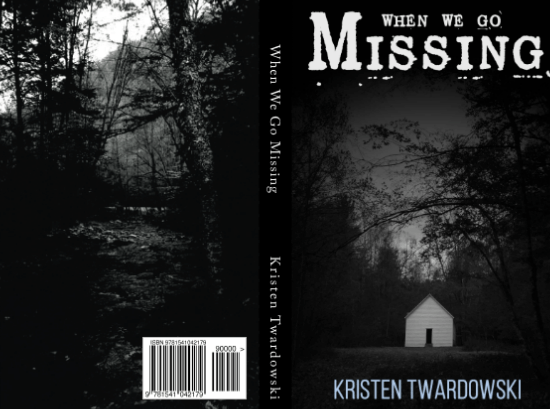
Today is the day that I can officially say that I published a book. When We GoMissing, my debut novel, is live and available for purchase in print and e-book form on Amazon. (The e-book version is also in Kindle Unlimited, so if you are a member, you can grab it for free!) When We Go Missing is a psychological thriller that explores women who vanish and what society does with those disappearances. If you are traveling in the next few weeks or simply want a fast-paced read, you should check it out.

Thank you all for following along on this journey. I have very much appreciated your support as I have written, edited, and rewritten (and rewritten, and rewritten, and rewritten) this novel.

If any of you end up reading When We Go Missing, feel free to write an honest review on Amazon, Goodreads

View original post 237 more words

Realistic Character Changes

bai-kiem-tra-huong-nghiep

With the exception of books I read for review, during my regular reading times I have this bad habit of reading more than one book at a time. I’ll start reading a book and then stop and mark it off so I can go think about it. My intention is to come back after thinking about it for a while but I just end up reading something else. I do come back to it, it’s just. I have a problem.

Anyway, so I’m reading a few books, one of which happens to be C.S. Lakin’s Writing the Heart of Your Story (part of The Writer’s Toolbox Series) and for these kinds of books I am never really finished with them because to me they are part of my study material. So, it is while sitting in the bed, pillow prompted up behind me (while trying to sit as straight as possible because my computer cord has a short in it) that I decided to put my kindle down a moment (see? SMH. Get it together EC) and share my thoughts. I am especially excited because my husband is watching the football game while I’m drafting this which means he doesn’t particularly want me in his face. So, I thought I’d write until I feel like bothering him again.

In Chapter 15, Character Arcs (she dislikes that term by the way), Lakin explains how change for characters come in stages. This caught my attention because I come across this a lot. That is, the characters in the story aren’t given enough time to decide or come upon an epiphany that makes sense. What I mean by making sense is that they are too easily convinced, swayed, or compliant at times where they should be pushing back against the grain.

If the character hates ice cream, it’s unrealistic for him to be convinced to eat an ice cream bar after one conversation with his brother (who loves ice cream) taunting him about it. That’s not realistic. In real life, he would not be so compliant, in fact, he will probably get upset that his brother would even offer him such a treat. There will likely be resistance. Lakin explains it so much better than I do:

“Remember, you have to change characters in stages, starting with their opinions and attitudes and eventually changing their core beliefs.”

– Opinions
– Attitudes
– Core Beliefs
– Self-Image
She goes on to say:

“You can’t have a character talking to someone about the death penalty (which he is all for) and just through that one conversation have his belief changed (fully against) right at the heart of his core belief.”

When I read this I had to share it with you all because it’s such valuable advice that I will definitely be heeding.

At the end of the day, everything about our characters has to reflect that of real people. If in real life it will take someone a while to warm up to change, our characters have to resemble the same. We have to get out of the way of the story and let the characters do their thing.

Speaking of getting out of the way I have one more tidbit. There’s something else I’m seeing more and more and that is this: the author who is so passionate about their cause that the tone of the book sounds as if we’re talking to that author more so than the characters in the story. The author’s purpose or mission is so prominent that we can’t separate the author from the characters in the story.

Let me be clear: The author will, inevitably, come through his or her work in one way or the other. That’s not what I’m talking about. I’m talking about deliberately, or inadvertently, creating characters who are just a replica of yourself.

Be sure that when you’re sending a message through books, that you aren’t inadvertently forcing your beliefs on readers. As a reviewer, the author’s personal belief is something I actually do not count toward my rating because  my job is to focus on the story, not the author’s personal life (I’m working on a separate article about my biggest challenges as a reviewer soon) but it is becoming such a problem that I may find myself taking it into consideration while rating if it gets in the way of the story too much. How do you know if you are forcing (or may appear to be forcing) your own beliefs on the reader?  If your manuscript resembles too much of the following:

  • Posting scriptures directly in text
  • Using more than one paragraph for your character to preach or pray in (this will most likely be skipped. No offense, js)
  • Characters who are too young to realistically understand the meaning of certain scriptures
  • Anything that sounds too much like overt religious or political speech

I believe anything can work just as long as it’s done right. The reason I speak so much about symbolism in writing is first because I just think it’s the best way to reach people in writing, but also because I think it’s a great way to write for those who want to send a message specifically but don’t want to be preachy. Fiction is all about the story. People want to be entertained or informed but most of all they want to disappear from this world a moment and get lost in another one: your book.

This means you want to make it their worthwhile. If you’re giving readers sermons and lessons then you’re not (technically) casting down your nets and may do more harm than good. Readers will likely be turned off, your story will fall flat, and you would have reached no one.

Also, by sermons, I don’t just mean religious in nature but any belief system that may seem forced on the reader. It can even be an age difference. Because I write Young Adult, Historical Fiction, I have to take care not to put my own adult voice inside the head of my characters (I know, we don’t like to say characters but work with me here) but to make sure that their dialogue, emotions, and actions are fitting for their age.

To do this, I try to fall back on my years of experience working with children for a reminder of what it was like to be a kid or a young person in general (or OK, a younger person).

What you can do instead is drip feed (introduce drop by drop, here a little, there a little) the message throughout the story, make it a part of the story. Maybe your character was anti that belief but in the end comes upon a revelation. Something like that but don’t make it blatantly obvious.

Remember that fiction writing is, at its core, about entertainment. Even when we do have messages (who doesn’t?), we must still educate through entertainment.

Now, pardon me while I check on Nora.


Yecheilyah Ysrayl is the YA, Historical Fiction author of eight books, most notably, The Stella Trilogy. She is currently working on her next book series “The Nora White Story” about a young black woman who dreams of taking part in The Harlem Renaissance movement and her parents struggle to accept their traumatic past in the Jim Crow south. “Renaissance: The Nora White Story (Book One)” is due for release spring, 2017. For updates on this project, sneak peek of chapters and the pending book cover release for this project, be sure to follow this blog and to subscribe to Yecheilyah’s email list HERE.
The Trouble with Series – Guest Post…

Excellent post. Post Quote: “One more tip: write at least two books in your series before you publish the first. Really, it’s worth it.”

Chris The Story Reading Ape's avatarChris The Story Reading Ape's Blog

image

One of the best things to do as an indie author is to write a series. People like reading them, and it makes your author page look much better when you have more than one title to your name.

For most of us, writing our first book is a Big Thing. Finishing it, whether after six months or six years, does not immediately change your mindset into ‘published author’. It’s often only much later that you read the advice about series and start to think of the sequel.

Even the most successful authors fall foul of this. I was at a Crime Writing event last year (Noirwich), where the well-loved British writer Elly Griffiths confessed that she had never expected her first book, The Crossing Places, to lead to the long run that is the Ruth Galloway series. If she had, she wouldn’t have packed so much into…

View original post 539 more words