These are the lessons I am learning thus far on my journey to give myself more grace.
Take the Pressure Off
Story A.
I was never under any pressure to share the same stuff on all of my social media channels. I have never automated my posts to ensure that what I write to one also appears on the other, for this reason. Early on, I recognized that each medium had a slightly different audience. And I rarely received the same reaction when I attempted to post the same thing. At times, it works, but it’s not something I do often. Each platform, to me, is its own. Therefore, what I post to TikTok won’t necessarily make it to Instagram, and what I post to Instagram won’t necessarily make it to Facebook. (Hardly anything makes it to Facebook. It is my least favorite platform.)
Story B.
This weekend, I am excited to attend my family’s annual BBQ. That’s right. My Chi-town homies are coming down for us to meet in Augusta, GA, for some family time.
We were all to stay at the same hotel until my cousin called and said a group of them would stay at an Airbnb.
“Okay cool. Imma cancel our room then and find a cheaper hotel.”
I’m not staying at an overpriced hotel that everyone else is suddenly not staying at. (Cause how ya’ll just gonna leave.)
Nope. Imma find something else. (And I did at a little over $100 cheaper with the same quality.)
What’s my point of these two stories?
Take the pressure off yourself to do what everyone else is doing, appear polished and put together, or post eighty-six times a day.
Take the pressure off yourself to show up in spaces you are not comfortable with to make other people comfortable. This includes spending money you don’t want to spend.
Take the pressure off yourself to respond immediately to emails, text messages, and comments.
Take the pressure off yourself to agree with everything, overextend yourself, or do more work than is necessary.
Take the pressure off yourself to always go the extra mile, even when no one is going the extra mile for you.
Give yourself more grace by taking the pressure off.
A 48-year-old might say, “Sheesh. I am almost 50.”
Rarely do we appreciate where we are without becoming anxious about where we are going.
I wonder why this is and if it keeps us from being grateful for where we are. Sometimes I wonder if I fully appreciated my twenties when I was in it.
I guess that’s why they say hindsight is 20/20.
My twin sister and me talk about this often because we don’t like to rush our age. When we turned 36 this year, we didn’t say, “We are almost 40.” We said: “Yay, we are 36!”
This doesn’t mean we haven’t thought about approaching 40 (cause like, do it hurt?), but we don’t like to rush our age time.
I am not 37 until I am 37 and not forty until I am 40.
I hope to keep this outlook on life as I age into my 40s, 50s, 60s, or however long I have left.
Instead of saying how much older we are getting, perhaps we can enjoy every minute of where we are now.
I wouldn’t say going viral is fun. I find it overwhelming. However, it could be less stressful if you are prepared. Here’s what I am learning.
Proper Preparation
When I first joined TikTok, I made my account a business account. I didn’t wait until a bunch of people followed or anything like that because I knew I wanted to use it to increase awareness about my poetry and black history book. I added my website link, which I customized for TikTok like I did on IG.
This made it easier for people to sign up to my email list and visit my website to order books once my videos took off. Without this seemingly small act, I would have been stressed about where to direct all these people. Thankfully, I had somewhere for them to go if they wanted to learn more about me.
Don’t Worry About the Numbers, Just Post Your Content
I immediately noticed that once a video goes viral, people binge the rest of your content. This means that even if your posts aren’t doing well (regarding numbers), you should continue to post! This way, you are not frantic about what to post next after your viral moment.
I had tons of other black history videos, and poetry content people could watch while I worked on creating more videos.
Every post on my page averaged over a thousand views after that one viral video. I followed this up with a welcome video, directing people to my email list, and then I posted again today (7/19) a whole week later.
The viral video is on its way to a million views, and I have reached 15K followers, up from the 3K I had when I first posted.
SN. I have never used ads or paid anything to boost my videos on TikTok. All my growth is organic.
Changes to My Account
After 5K follows, you can no longer see who views your posts. I don’t like this change because I enjoyed being nosy. (lol) I like to see who is just watching versus who is taking action.
You now have the option to create a playlist to organize your posts. I like this because I can now separate my poetry videos from the Black history ones. Even though the black history is more popular, I still do poetry and I don’t want my audience confused. You will get black history but you gonna get these poems too.
You can now have people subscribe to your page instead of just following it, apply to TikTok’s creator fund to start making money and sign up for the TikTok shop.
That’s it so far!
Authors, Are You on TikTok? Do You like it or Nah?
Once upon a time in Alabama, there was a racist white man named Charles Agustus Lamar who was angry with Northern states and their desire to end slavery. He devised a plan to send a ship to Africa to buy Africans for $100 and sell them for $1,500. His ship, called the “Wanderer,” made national news in 1858 that it had successfully imported 370 people from Africa who would be enslaved.
However, the slave trade had been outlawed, and Lamar was arrested for illegal slaving.
That’s when another racist white man, steamboat captain Timothy Meaher, made a bet that he could do the same thing but not get caught.
Photo: Yecheilyah
On July 8, 1860, the ship (called the Clotilde / Clotilda) sailed into waters near Mobile Bay carrying 110 men, women, and children stolen from Africa under the cover of night.
They were bought from the Dahomey tribe at $100 each.
After dropping the people off, they burned the ship to hide the evidence, and it was thought to be gone forever.
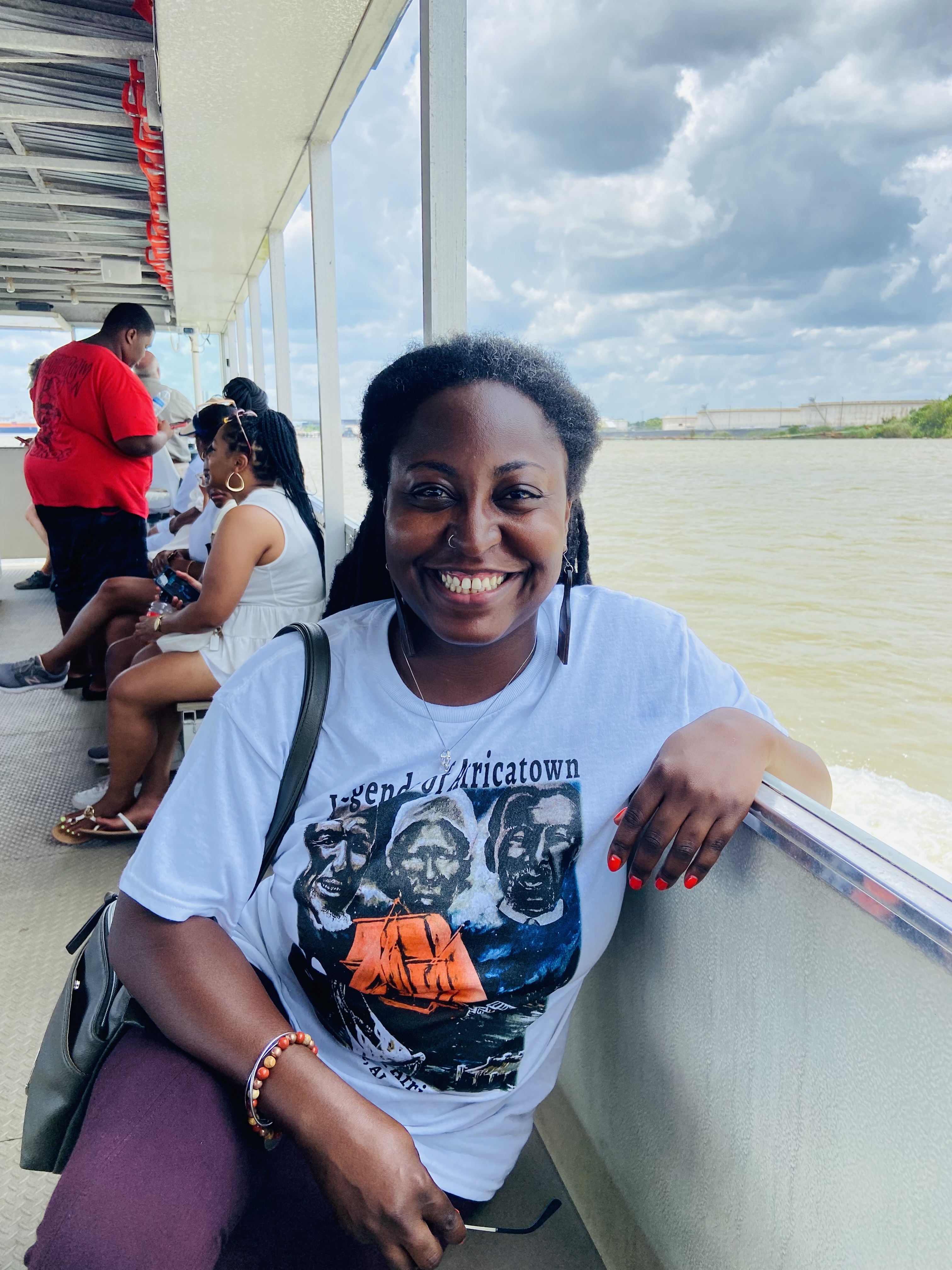
On Saturday, July 8, 2023, I and a group of others had the opportunity of a lifetime on the 163rd anniversary of Clotilda bringing our people into this land.
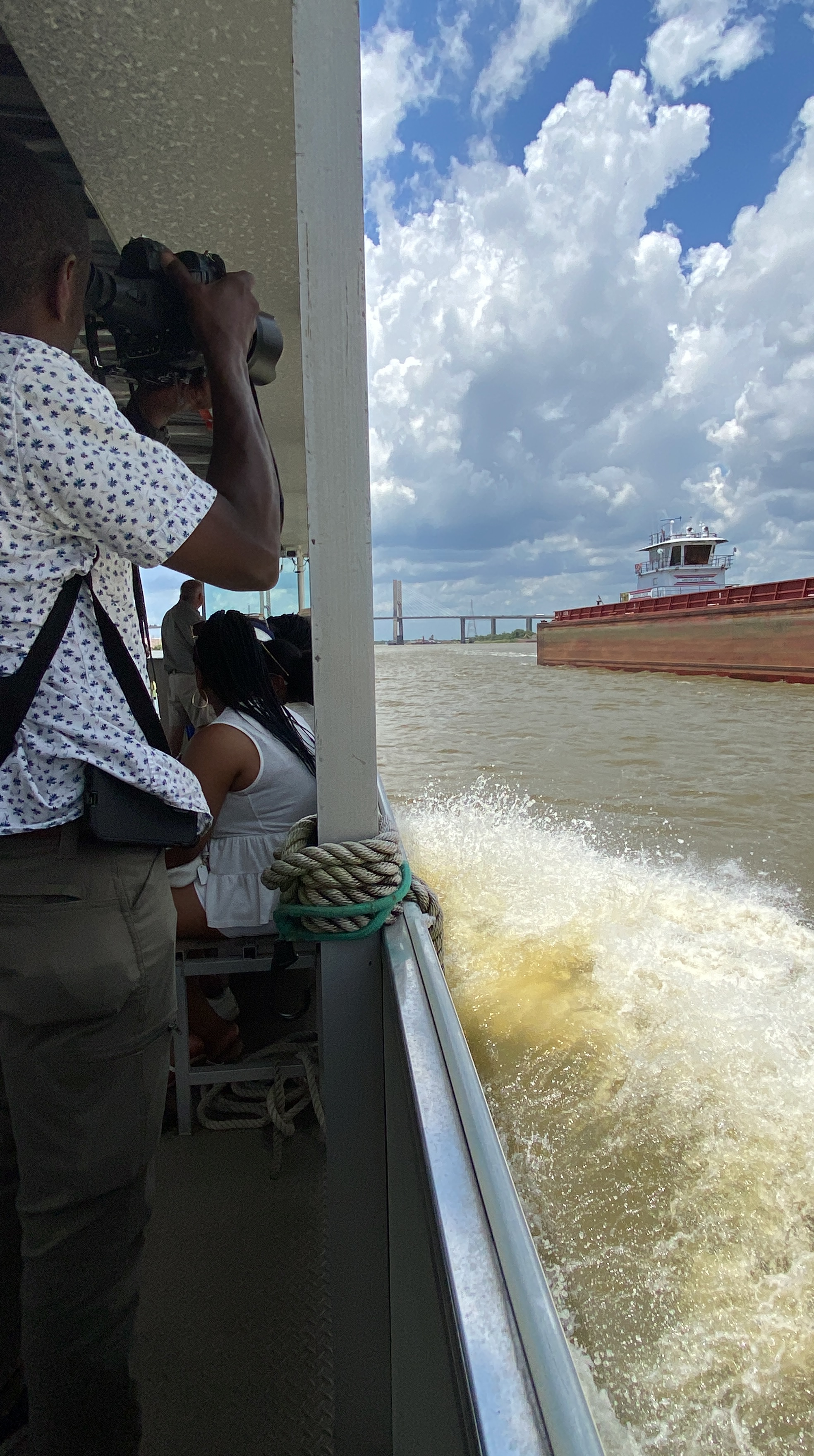
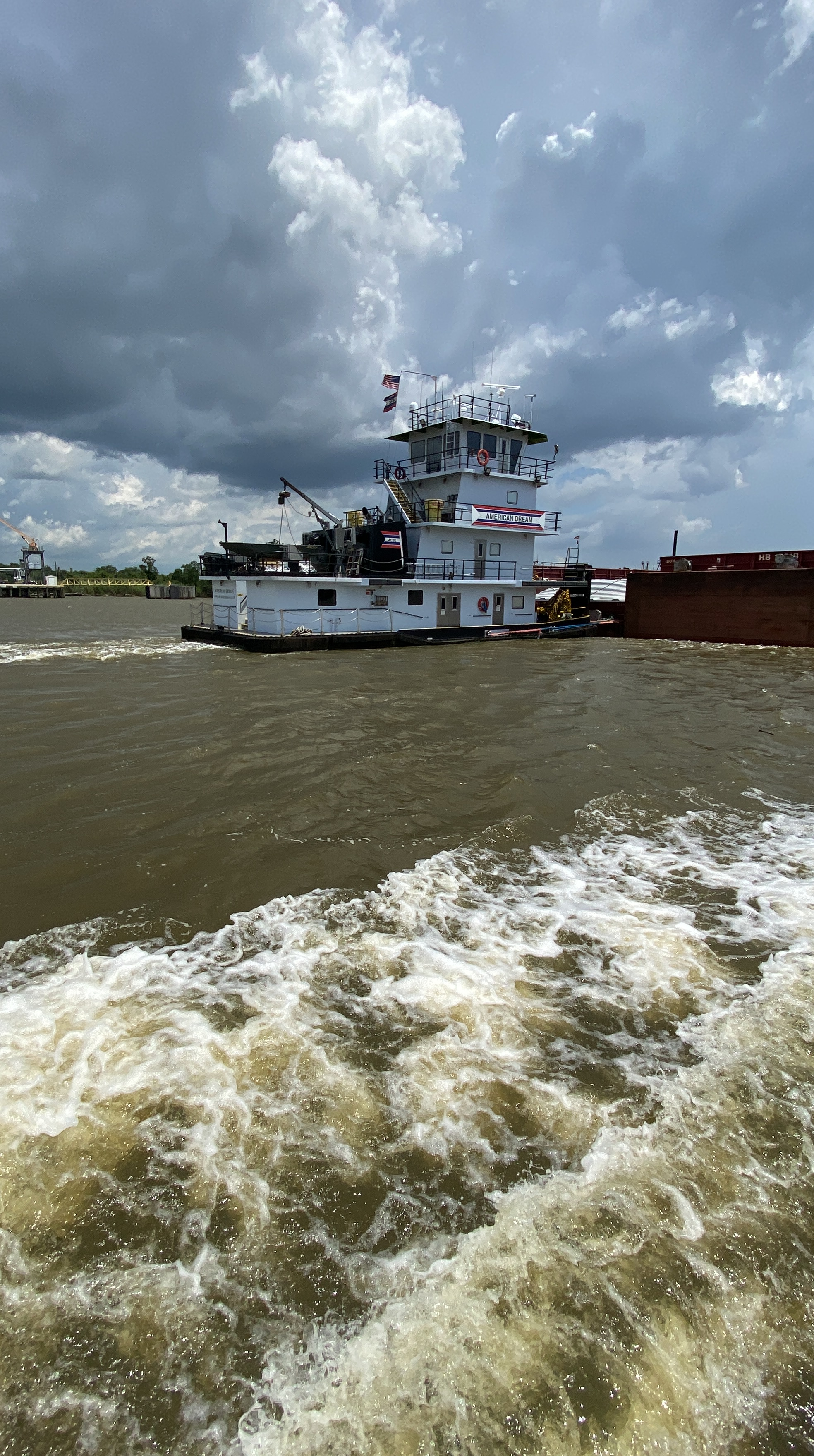
We met and talked with Raines about his journey and findings and sailed to the location of the wreckage, still buried underwater.
It was a humbling experience that filled my heart with much gratitude.
We saw the swamps our people had to walk through once they were let off the steamboat, and it made me truly not want to complain about anything ever again.
A festival was also taking place to celebrate the opening of the Africatown Heritage House.
It felt like 150 degrees out there and ya girl put this scarf on me. Imma let it slide cause she from Kenya, lol.
Once our people were freed, they built their own community and called it Africa Town, which was the original name because the founders ruled it according to the laws and customs of their African homeland. By the early 1900s, Africa Town (later spelled Africatown) was the fourth largest community in the nation governed by African Americans, attracting the attention of Booker T. Washington and Zora Neale Hurston.
Today, Africatown is on the brink of disappearing, though it is a huge part of why this story has been preserved, as the Clotilda prisoners passed it down to their descendants.
More on Africatown and the Clotilda will be covered in the book!
What’s Next?
On our way back from the site, we discussed hopes that there is more focus on preserving the community of Africatown and providing it with the resources needed to thrive. With the money pouring in from the Heritage House, the fear is people might want to come in and gentrify the area. The hope is there is money going into the community to help the people too.
We also hope they do not remove the Clotilda wreckage from the water. Not only will it cost millions of dollars just to remove it, but it might also decrease the value of the wreck and the area.
We propose that instead, a replica of the ship can be made. Again, this will bring resources to the community as everyone wants to see the actual ship. There could be tours conducted to view the replica, the Heritage House, and finally, a boat tour through the location (the same as the one we took this weekend). It can be an exciting three-day or full-day adventure with resources going toward rebuilding the Africatown community.
Photo: Yecheilyah
Africatown is the only known Black community that still exists today that was founded by Black people who had come straight from Africa.
High achieving authors (Indie, Trad, or otherwise) tend to fall into a few categories:
They publish high-quality books (well-edited, dope cover art, and well-formatted, to name a few).
They collaborate with other authors and business people.
They use their book to create additional income streams through businesses and services.
Today, I want to focus on that last one, although all these are important.
No matter the route, book publishing is hard work, and most of the work happens after the book is written and published. Most of us find ourselves saying, “Dang, now what?”
Depending on what your book is about, there are so many creative things you can do to leverage your self-publishing career.
Here are a few things I do based on the kinds of books I write:
From writing black historical fiction, I lecture at schools.
and so on…
Some authors even have high-ticket courses based on the chapters in their books. Podcasts and workshops based on the book are also ways people leverage their books.
The key point is to look at the book not as the end but as the beginning. Let it (the book) stretch you to new heights!
First, you want to determine how much the event host will charge you to be a vendor and what that fee entails. My requirement to vend at any event is that the fee includes a table and two chairs. Some businesses demand that you supply your own table and chairs. That feels like renting space with no space to me, but everyone’s different.
Whatever you decide, ensure the cost is reasonable and within your budget. So, if you have to bring a table (which you’ll probably have to buy), the vending fee should not cost an arm and a leg.
There is an exception to high ticket vending costs based on the influence of the event. See bullet point #3.
2. Travel / Lodging
This is a must if you decide to vend at a location outside the city/state where you live. This means the cost of vending takes on a more significant role because now you will have to consider: the cost of vending + travel + hotel.
This is where you should keep in mind that you are a business, not just an author, and that choosing to sell your goods at events is a business decision. Take into account the event’s quality if you must travel and do other things.
3. Consider the Influence of the Event Host / Audience
We talked about this last time, but I want to discuss it from a different angle.
Events that offer a chance for people to become vendors come in all shapes and sizes. Some events are hosted by first-time event hosts, and some by larger influencers and celebrities. Both are wonderful growth opportunities.
When deciding where to put your money, consider whether there will be a sizable enough crowd for you to conduct business outside of the vendors. The one con to vending at an event that can only produce a crowd within the vendors is that it will be difficult to conduct any commerce because we are all there for the same reason.
Vending is also about connecting with powerful influencers who could help propel you to the next level. In this case, the cost to vend might be pricey, but the event’s influence makes up for it because of the people and powerful connections you can make. (Think Essence Fest and Invest Fest)
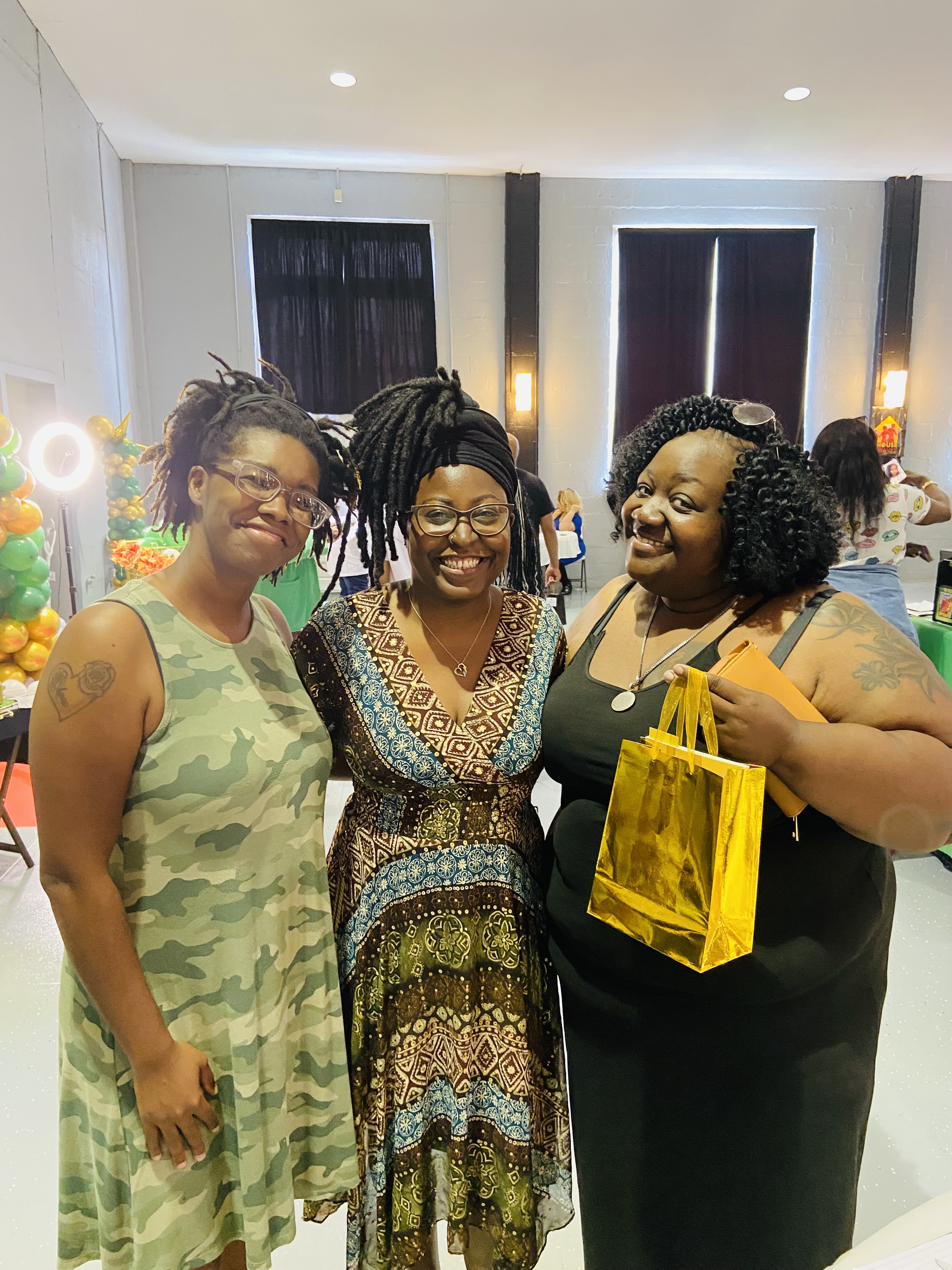
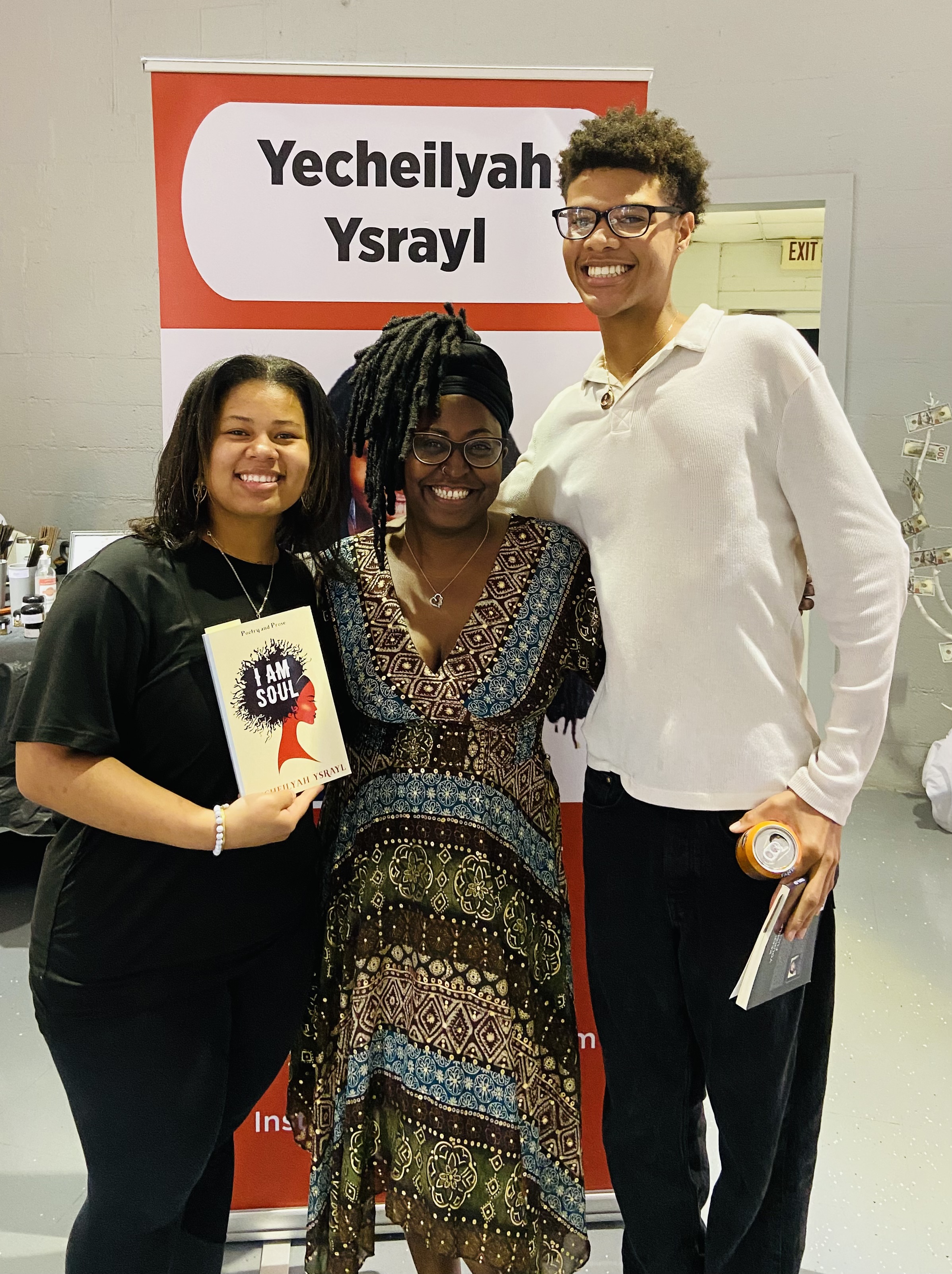
Excited supporter!
While vending at Black Writer’s Weekend last year was a bit costly, here are some things that made me decide to give it a try:
BWW and its founder Tamika Newhouse are pretty well-known in Atlanta. I knew the event would bring out a large enough crowd for me to engage people beyond the vendors, and it did. I made my vending fee back.
Included my mandatory table and chairs.
I did not need to travel far since I am in the Atlanta area, so no funds were needed for hotel or travel.
4. Engagement and ROI
If you are just going to sit behind your table looking mean, scrolling through your phone, and waiting for people to talk to you, vending might not be for you. If you intend to make a return on your investment, you will have to engage with people.
Here are some things that have been helpful for me.
Stand up and stay off the phone during high-traffic moments.
Bring a helper/assistant (hence the two chairs I always require when I vend) so you can leave your table now and again to talk to the other vendors and guests, take bathroom breaks, etc. My helper is my husband, who is fully trained (lol) on how to talk about my books in my absence. However, I am never too far away from my table.
Try not to look bored and mad (even if you are). Smile and speak. I always give people an excited “Good Morning!” or “Good Afternoon!” You’d be surprised by the people who will stop at your table just from you being friendly and pleasant. I also take note of certain non-verbal clues that people might be interested. Staring at my station but not speaking, walking away but turning for another look, studying my banner (because, how do you pronounce this name?) are all signs I use to engage people further.
I sold these two books from calling them over when I saw them do a double take!
5. Inventory
Last but certainly not least is your inventory!
Do you have enough books to go?
Business cards and bookmarks?
Marketing materials?
Give yourself enough time to get all your tools together before the event and include that in the cost! Remember, as Indie Authors, we have to buy author copies.
Bonus: New Lessons
In part one, I joked that authors should vend at events focusing on books to avoid competing with the lady selling shea butter.
Well, I did meet a lady selling Shea Butter!
And her table was right next to mine, she also has locs, and wears glasses.
I learned a new lesson:
Of everyone at the pop-up, I was the only one with books. This set me apart and made people feel like I was the bookstore part of the event. And I did pretty well!
Even if it’s not an event focusing on books, you can do well as the only person with books or one of a few.
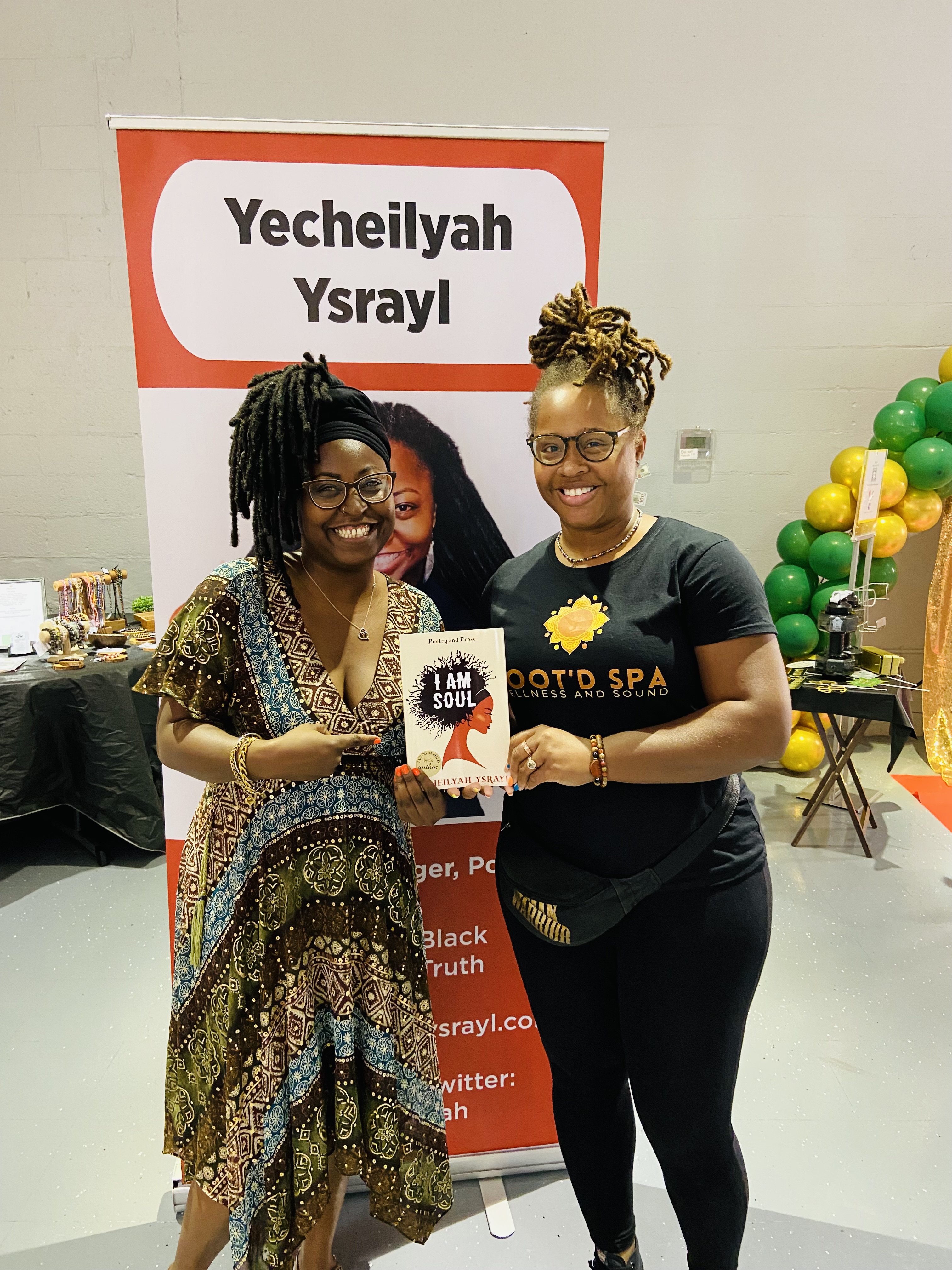
The Shea Butter woman’s name is Jenesis, and she runs an alternative and holistic health service business called Root’d Spa with various wellness products.
She bought a copy of my book, and I bought a bracelet from her! We are now following each other on social media.
Shea Butter Lady Jenesis!
Recap:
Consider not just the fee but also: vending fee + travel + lodging + inventory
Be ready to work
Bring a helper/assistant
Speak up and be kind
Consider the event influence for high-ticket vending opportunities
Always be on the lookout for new lessons and perspectives. You might just find your next business partner!








 The PBS Blog