Why Self-Published Authors Should Own Their ISBN

The basic answer is that owning the ISBN to your book makes you the publisher, which is the purpose of self-publishing for most authors who pursue the route.

Let’s look deeper into the ISBN and why I strongly suggest self-published authors own theirs. I’ve written on this before, but this time I am including advice from Sue Collier, the coauthor of The Complete Guide to Self-Publishing, 5th Edition. She has been working with authors and small presses for nearly two decades, providing writing, editing, production, and promotions work for hundreds of book projects. 

This how serious I want you paying attention to this right now, lol. | Photo by cottonbro studio.

The ISBN is the set of numbers at the back of your book on the bar code that captures information regarding the book’s publisher, title, language, edition, and version. It is necessary for anyone publishing a book they want to sell.

The number is issued to the publisher, so in traditional publishing, the author does not worry about this, as their publisher will be the book’s publisher of record.

In self-publishing, you can choose a free ISBN assigned by your print-on-demand company, such as Amazon, Lulu, or Ingram Spark. In this case, the company will appear as the publisher of record. For instance, a free Amazon ISBN means Amazon is the publisher, and so on.

Buying an ISBN or getting the freebie is totally up to the author. In fact, a freebie might be ideal for beginning authors on budgets who just want to see their books in print.

Still, the ISBN holds much more weight than these print-on-demand services have let on.

“The POD publisher services companies will try to tell you that it doesn’t matter whether you use their assigned ISBN or obtain your own. But it does because using their ISBN will ensure they are listed as the publisher of record in BIP (Books in Print) as well as with any distributor. Consequently, all orders and inquiries will go to them.”

– Sue Collier

A free ISBN is fine if you only want to publish a book and maybe sell a few copies here and there. However, if you see yourself one day selling your book in bulk to corporations, bookstores, and libraries as the publisher of record, you want to purchase an ISBN so that it belongs to you. Collier explains why:

“Let’s take a few hypothetical situations: Suppose a corporation is interested in purchasing one thousand copies of your book, contacts the Internet publisher (whoever you published through), but you never hear about it. What if a distributor wants to take it on but finds the economics aren’t feasible? Tough luck.”

Sue Collier
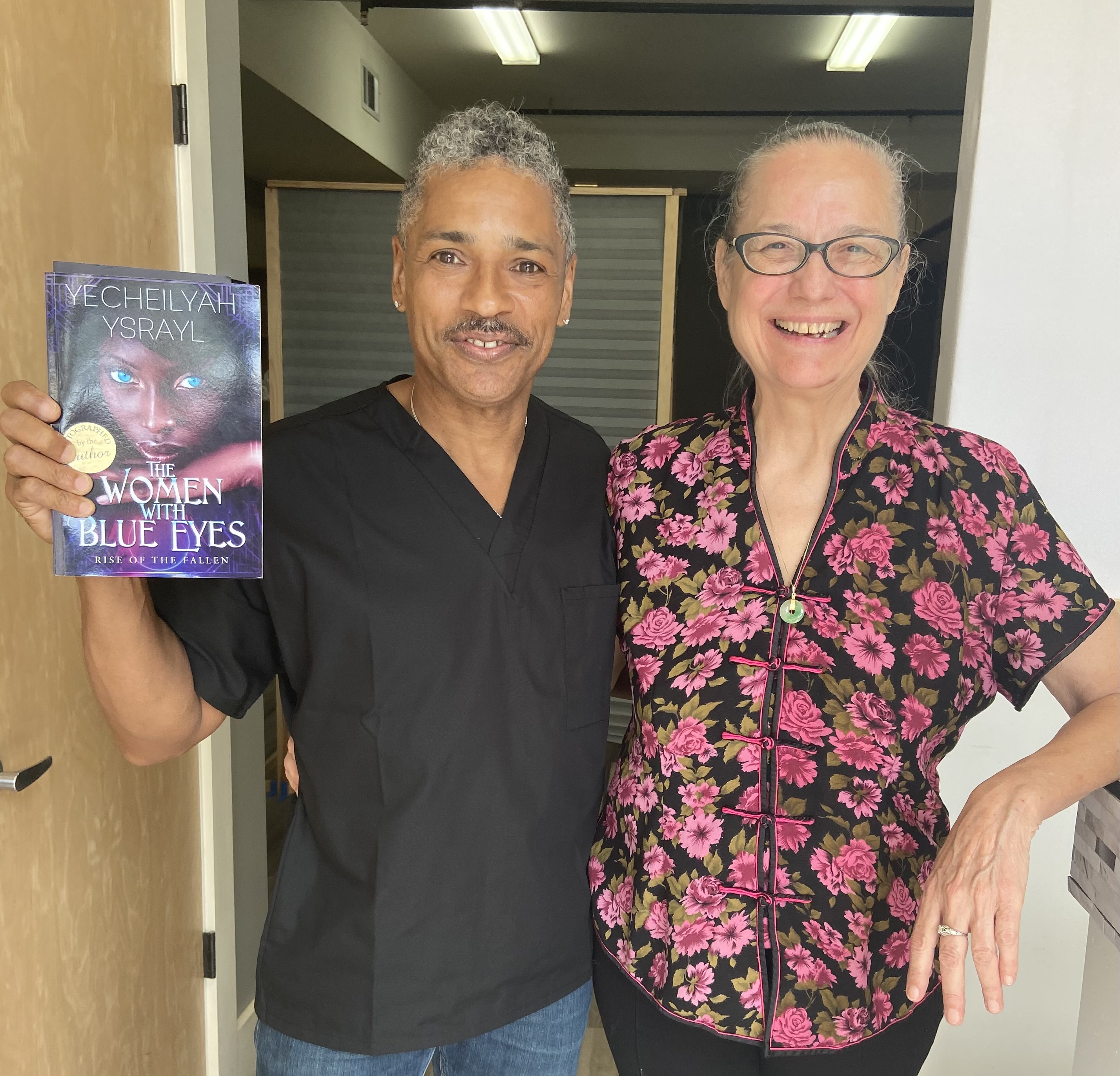
Owners of Upscale Foot Spa in Atlanta

Corporations do business with businesses, not individuals. Owning your ISBN with your own imprint positions you as a serious business. If Lulu is your publisher, Lulu is who corporations will contact for the kind of transaction in Collier’s example.

Why?

Because any organization with specific orders or inquiries regarding your book will approach the publisher of record. If you own your ISBN, that would be you/your company. If you do not own your ISBN, that would be whoever you published with.

“In addition, if a POD publishing services company is listed on your book as the publisher, your book may immediately be disregarded by bookstores and potential reviewers as a poorly done vanity press project.”

Sue Collier

Amazon does not vet the manuscripts uploaded to its publishing platform. Consequently, it is flooded with mediocrely written books with poorly designed covers, poor editing, and even worse formatting. When corporations see a book published by Amazon, they automatically throw it into this slush pile.

“Does it really matter? Yes, it does. Here’s the bottom line: If you don’t purchase your own ISBN under your own publishing company name, then you are not the publisher. If you use a publishing services company and let them assign your book an ISBN, they are the publisher, not you.”

Sue Collier

Grabbing the free ISBN from Amazon or whoever you publish with is not a sin. It’s okay. You will still be able to sell your books and do well.

It is, however, very limiting for self-published authors who want to sell their books beyond Amazon’s virtual shelves, have their own imprints, or be the publisher of record for their work so they can sell in bulk and process large orders through businesses and corporations.

Check out more Indie Author Basics articles here.

American History X

In High School, my history teacher made us watch American History X.

For those who’ve seen it, you know how graphic the movie is. And yet, we sat there, fifteen and sixteen years old, consuming this content with no explanation or breakdown of what we were looking at.

As an adult, I can watch it with new eyes and understand the powerful messages embedded within. But, as a teen, I found the movie disturbing, particularly the part where Derek made that Black man put his mouth on the concrete. It took years for me to get that image out of my head. Even now, if I watch it, I fast-forward past that part. It still disturbs me.

I had never seen anything like that before and was surprised that my white male teacher had allowed us to watch it. Nothing was censored. We saw everything, from the racist violence to the rape in the jail scene. And I had questions no one could answer.

It’s a powerful film with tons of messages about race, racism, and life choices, and it changed me.

I just wish my teacher had given a lesson to accompany it rather than allow us to be babysat by the TV.

This is one of many examples of why I am so adamant about how we present history and teach it. My biggest prayer, and hope, is for the young people coming after me to have a deeper understanding of history in ways I didn’t.

I hope Black History Facts is a start.

blkhistorybook.com

Thank you to all who have been on this journey with me since I first announced I was writing a history book three years ago.

Thank you to those who trusted me enough to preorder it so early and for all the love you’ve shown to the history videos on Instagram and TikTok.

Now that the book is out, we can move forward to doing more to help restore black historical truth for the freedom of all people.

This is only the beginning, and I am so humbled to have you with me.

My new book, Black History Facts You Didn’t Learn in School, is available now on Amazon and everywhere online books are sold!

Is Your Book Marketable?

As I learn more about self-publishing and strive to develop and sell better books, I realize how important it is to write a marketable book. As I speak with other writers who want to self-publish, I realize how important this stage is to the process.

Traditionally, publishers will turn down a book if it’s not marketable. In self-publishing, there are no gatekeepers to make that decision, as the author has more creative control.

The disadvantage to this, however, is that the self-published book that doesn’t have a market also doesn’t sell well, and the author learns the hard way why publishers tend to be so selective.

“No matter how you decide to publish, your book, ultimately, ends up a product in the marketplace—a product for sale. Yes, your creativity, authenticity and even inspiration make it stand out from the pack. However, often, more than these things, a bestseller is created by your ability to:

write a book that is unique in a category

write a book that is necessary in a market and category

write a book that targets a large potential audience

successfully target and promote to a market.”

Nina Amir, How to Write Marketable Books that Feed the Soul

Publishing is challenging, period. It doesn’t matter if you are self-publishing or publishing traditionally; it’s hard work.

But it’s even harder to push a book that has no market.

One way to discover this is to ask yourself questions.

Are there other books similar to the one I am writing that have been successful?

Years ago, I spoke with an author who said they wanted to write a cookbook that is also a self-help book and a memoir.

It would be difficult to market this kind of book because it has no clear focus, and there is no evidence of someone combining so many different genres in one book and doing it successfully. It is confusing, and there is no audience for it.

We frequently want to produce the most innovative and unique story ever written, which causes us to overthink. The concept that we have a completely original idea that has yet to be realized is a fantasy. It is not real. Each story idea has been tried before. What distinguishes a book is our unique perspective.

It’s YOUR voice that makes it different. It’s YOUR voice that makes it stand out.

Photo by Oladimeji Ajegbile

What’s the competition like?

What are the top five to ten books in your categories that are doing well? This is not to compare yourself to them and feel bad about it. This allows you to determine whether there is a need that you can supply. In what ways is your narrative set-apart? Are there any gaps in the market you can fill? The lack of this type of market analysis is why self-published books fail to sell. There is a lot of inventiveness, but more business principle implementation is needed.

When I chose to publish Black History Facts, I knew I wanted it to be both instructive and straightforward. I didn’t want it to be so nerdy or long that the average individual became bored and stopped reading. I based this on other nonfiction history books that are comparable to mine but that I get bored with over time.

I also considered young readers early in their black history journey. Is there something a young person could read on their way to the longer, more advanced reads? I wouldn’t recommend Black AF History to my thirteen-year-old niece. It is an excellent education, but I know she’s not going to read 432 pages. I took all of this into consideration.

What are people’s reactions when I talk about my book? Do they gasp? Do they want to know more? Do they ask follow-up questions? Are they checking in to see if I’ve finished it yet?

If people keep asking about your book, that’s a clue that it is marketable because of its demand. If your logline or first few sentences intrigue them, you might have yourself a winner.

Another thing you could do is to use your blog as a test platform. Share a few chapters of a story and see what kind of engagement and feedback you get. I’ve written a few books from this blog by doing that, including Black History Facts.

“Publishing is a business, and the business owner needs to be as certain as they can be that the products or services they offer for sale will sell and make money for them. It is no different from a boutique owner deciding to stock one dress style and not another – or a building contractor using the same sub-contractors because they have demonstrated a superior service in the past.”

Nina Amir, How to Write Marketable Books that Feed the Soul

While editing, cover art, and formatting are must-haves for any book, writing a book that people want to read, one that is marketable, is the first step to self-publishing a book that sells.


Check out more Indie Author Basics articles here.

Things I’m Tired of Hearing During Black History Month

There are a few things I am tired of hearing every February, but let’s call this part one.

I am tired of hearing “Black history is everyday,” or some variation of this every time Black History Month comes around.

Bruh. We KNOW.

While I agree with the sentiment, it is frequently expressed by folks who, for 11 months of the year, never discuss Black history or any campaign they are advocating to educate the masses.

Black History Month wouldn’t have to exist if, instead of regarding it as a footnote, the true history of African Americans was widely taught and not as an elective.

And, perhaps, Black History Month wouldn’t have to exist if we could name other leaders and activists outside of MLK.

Maybe, if we knew about Irene Morgan and the Journey of Reconciliation, we’d better understand Rosa Parks, the Bus Boycott, and the Freedom Riders.

Perhaps, if we understood Nat Turner’s rebellion, we would know why it became unlawful for Blacks to read and write during slavery and use it as a catalyst to promote reading in the African American community.

It is wise for scholars, researchers, and historians dedicated to teaching year-round to use this moment to impress this knowledge on young people who are only thinking about their heritage in February.

As unfortunate as it is (with all of its 28/29 days), most people’s hearts are more open to learning during February than any other month, so let’s use it to our advantage. Perhaps we can spark inspiration where there was none, and people will begin to study Black history outside of this month.

Until then, consider it a doorway by which we can shine some light with almost certainty that people will pay attention, even for a moment.

Imagine you were enslaved on a plantation, and someone approached you with an opportunity to be free. Wouldn’t you take it?

Imagine you were the person to free someone else, but you only have a short window to do it. Wouldn’t you take it?

Just a thought.

Need a resource? Make sure you preorder your copy of Black History Facts coming to you on the 24th!

Add “Black History Facts” on Goodreads!

We are a month away from release!

If you are on Goodreads, please be sure to add my new book, Black History Facts You Didn’t Learn in School, to your Want to Read list!

You may post your review there now if you’ve reviewed an early copy.

If you want a free ecopy to read in exchange for an honest review, I have a few I am willing to give away! The only requirement is to leave a review on Amazon.

You can preorder the paperback, hard copy, eBook, or bundle now at blkhistorybook.com.

About.

Black History Facts You Didn’t Learn in School is a historical guide on Black Americans’ accomplishments, contributions, and struggles. It includes the experiences of Black individuals who have often been marginalized, overlooked, or omitted from mainstream historical accounts.From the resilience of women like Anna Douglass, first wife of Frederick Douglass, to the many Black communities that prospered, recognizing and celebrating Black history helps to ensure that these stories are acknowledged and that the achievements and resilience of Black people are valued and appreciated.


Order Your Copy Here

http://www.blkhistorybook.com | 2.24.24

Take the Leap

When I first decided to put my book up for preorder in September (2023), I wondered if I had made the right decision. I had never run a preorder campaign that far in advance of the release date. And I was wondering if I could keep the momentum up. In my experience, people forget after a while, and the excitement fades.

Still, I took the leap of faith and put it up anyway.

The result is a book that has been selling every month since September and is currently a #1 New Release on Amazon for the ebook edition. The book doesn’t officially come out until the end of next month (Feb.).

“What if I fail?”

“Oh, but what if you fly?”

There is a common belief that if you give too much of your book away, people won’t be interested.

While I don’t think you should reveal everything, I do believe that talking about topics related to your book never gets old and, in that sense, you can never give away too much information. You can never know too much about your topic. You can never over study. The more you know, the more you can give.

And the more you give, the more interested people become.

This is my first nonfiction book about Black history. My other books cover these topics, but they are fictional. The nonfiction authors I admire and respect and who have done well with their launches all have something in common. They all educate their audience on their topic.

Whether in the form of a story and lesson learned or just putting fun facts out on social media, they have garnered interest in their books by talking about them. 

My biggest worry is not knowing enough, which (from a not-so-positive end) sometimes causes me to shrink. However, from a positive end, it keeps me searching, reading, and studying to show myself approved. It keeps me humble and hungry.

So, I thank you for supporting this work and I hope it inspires you to take the leap on whatever that might be. You might discover that you can fly!

I’d also like to remind you that we are ONE week away from closing preorders! If you haven’t yet, you can grab your paperback, hardcopy, or bundle at the link here. You can also find the link to the ebook on the site and more information about the book.

We are one week away from closing preorders for Black History Facts!

Order Your Copy Here

http://www.blkhistorybook.com | 2.24.24

MLK Writing Prompt / Challenge

In our Poetry Business Network community, we are challenging ourselves to create and post a writing prompt to engage our audience. Yesterday’s challenge was an MLK writing prompt, but I missed it so I am posting it today!

Writing Prompt / Challenge

Photo by Aukid phumsirichat

Yesterday, people worldwide paid homage to the life of Dr. Martin Luther King Jr, the only non-president whose birthday is a national holiday.

Today, write your own “I Have a Dream” speech as a poem!

If you were to leave something behind for the next generation to learn from and to be inspired by, what would you say? What is the most important thing the world needs right now in 2024 America?

It doesn’t have to be a speech about race. It can be anything you think is important for this generation.

What words would you want immortalized as part of your legacy?

You may share a snippet in the comments, on your own blog, or scribble it in your own personal journal.

If you post it to Instagram, tag me so I’ll know!

I am going to do the challenge as well. I hope you’ll join me!