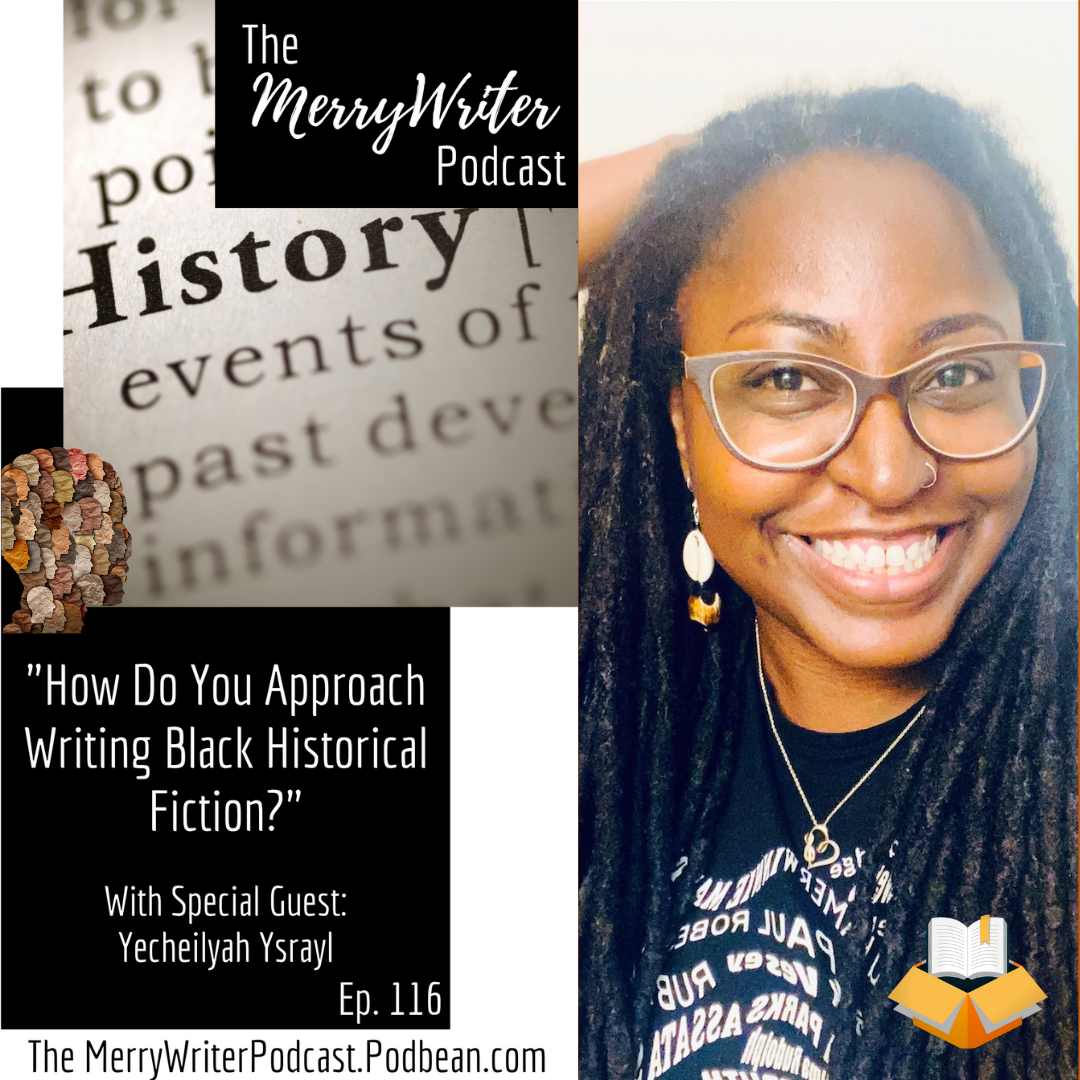
I got to sit with Ari Meghlen and Rachel Poli of The Merry Writer Podcast on writing Black Historical Fiction. Check it out at one of the links below.
EPISODE SHOW NOTES
Have you ever tried writing diverse characters and didn’t know where to start? Or maybe you want to dive deeper into historical fiction? This week, author Yecheilyah Ysrayl joins Rachel in discussing how to approach writing black historical fiction with plenty of tips, advice, and fun conversation. As always, thanks for listening, and let us know your thoughts in the comments below!
I realize I’ve been a bit MIA lately. Not just on this blog but on social media in general. I have a lot that requires my full attention, which is professional work and personal work. I am in that transition place where I am learning to be patient with understanding what’s next for me, between that place of gratitude for what is but seeking continual growth.
In any event, I am still here, and I do want to try harder to check in with your blogs. I’ve fallen off in the blog world, and I really need to get back to it.
But I am still here. I am well, and I hope you are well too and continue to be so.
To catch up with me, please check out my latest interview in Shoutout Atlanta.
They reached out to me last month, and I enjoyed working with them for the second time.
Click on the link below to read in full, and be sure to share if you feel so inclined!
Due to the COVID-19 Pandemic, ebook subscriptions rose, with ebook usage up 26% in 2021. If you don’t have a digital version of your book available in this digital world, you are leaving money on the table. If you publish through a small press or an Indie or Vanity Press and they can’t make sure your book will have a Kindle or ebook companion, they are doing you a disservice.
2. You don’t have a physical copy of your book.
According to the Alliance of Independent Authors, physical books still outsell ebooks. US print book sales rose 18.5% in the first half of 2021 and outsell ebooks 4 to 1. This means that if you don’t have a physical copy of your book to sell through your own website and at events, you are leaving money on the table. Many financially successful authors are not Amazon Best Sellers, but they still make bank selling through their websites. “Though ebooks and audiobooks are increasingly popular, print books continue to trump in the researched book market, with 66% of readers across the globe saying print offers ‘a more fulfilling and unique reading experience.'”
Physical copies also make it possible to sell your books wherever you are. If you like speaking at events and talking with people face to face, you can (should) always have copies of your books on hand. Sell them to libraries, schools, bookstores, or wherever. Heck, sell those bad boys in bulk if you want.
3. Not doing events and speaking engagements.
Speaking engagements and events can generate significant income through paid meetings and on-site book sales. Live events can also help you connect with readers directly, create word-of-mouth from the people who will tell their friends they met you, and don’t cost anything.* If you are not looking into doing events and speaking, you leave money on the table. Again, this is why having physical books is a good thing. See number two.
*Note: I have heard of people paying to do book signings. I never pay to do a book signing unless I pay for a space for vending at a larger event. If you ask to do a signing and the facility says you have to pay, see why and what’s included or look into hosting the signing somewhere else.
4. You are not turning your books into audiobooks.
Speaking of paid speaking engagements, audiobooks can be a way for authors to attract speaking gigs. According to Audio Publishers Association’s annual survey, a six-year trend of double-digit growth in sales continues in the audiobook space. Add to this the increase of smartphone usage (especially with the pandemic), and people who listen to their books at home or in the car on the way to work. This means that if you are not looking at ways to turn your books into audiobooks, you are leaving money on the table. Audiobooks have the potential to reach a wide range of people, from those busybodies who struggle with time to read to people experiencing visual challenges.
We must think outside the realm of just uploading books to Amazon and letting them rot. You worked hard on your book baby. Discover other ways of getting it out there.
Like I always say, it doesn’t matter how long ago it has been since you’ve published; your book will always be new to the people who have never read it. Our books only die if we let them.
leave a fresh caesar salad a bear hug a tall glass of Merlot the truth a 90s R&B CD four normal periods prayers and a handwritten poem by my bedside by the next new moon.
PS: Breaking the Silence part two is up tomorrow. Be sure you have read part one for the backstory.
PPS. I am back on YouTube. Subscribe here. Also, be sure to follow me on Tik Tok to hear more poems. My name there is the same, yecheilyah.
Even though I didn’t know much when I published my first book, I am glad I took the leap. Without that first, there would not be a fourteenth. My first book was:
From the Depths of a Woman’s Heart was a poetry book I published in 2010. It was the first book I ever sold, a collection of poems I had written going back to High School and coming up to the present. Although I had missed the mark in many areas, people still bought it.
I am not saying to publish an unedited book and slap on a generic cover. That would go against everything I’ve ever written in this series. Ya’ll know I don’t play that. I have since retired that book and a few other books and even republished some books because when you know better, you do better.
I am saying that you just have to write the book at some point, even if you don’t know all the answers. From the Depths laid the foundation for me to get used to the Self-Publishing process, analyze what I did wrong, and improve the next time. My first several books were kind of like a practice run for me to learn and grow.
Nine times out of ten, aspiring authors who express interest in Self-Publishing have not written a book yet. And sadly, many of them spend a lot of time figuring out if Self-Publishing is for them. While there is nothing wrong with this, it can get in the way of writing a book to publish.
After having written the book, you might even decide that Self-Publishing is not for you, and that’s okay.
It’s easy to get sucked up in the never-ending sinkhole that is Self-Publishing advice. Everyone has an opinion about how it should be done, and everybody and they mama is an expert.
No wonder writers are confused and overwhelmed with the process.
Let me simplify it for you:
Start by writing the book.
Before you pull your hair out over how to get your story into the hands of readers, make sure you actually have a story for them to read.
Once you have a completed manuscript, you will better understand the information you need. You can ignore what does not apply and focus on what does.
Having something written helps you be selective in who you listen to and intentional about the direction you want to go.
Don’t be so busy researching how to start that you forget that the biggest lessons come from action.
As an Indie Author, I understand the pressure of writing and publishing books. Here are some tips to help you stay calm during the storm. I planned on giving several tips at a time. However, our first took up most of the space, so I have to break this down into two parts.
Get Out of Your Immediate Environment
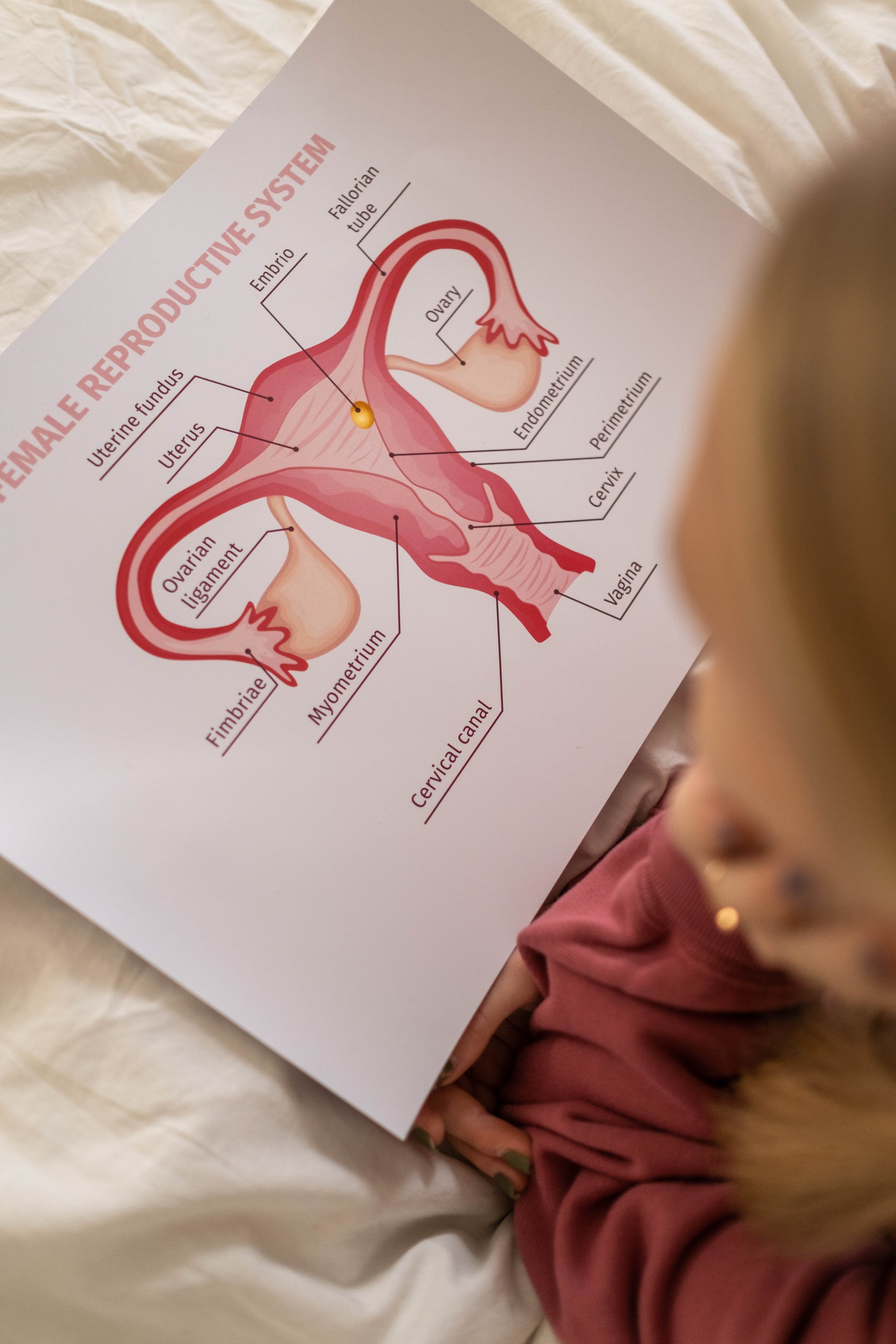
This past weekend was my first time out of the house in a long time. Part of this cabin fever was that I could not go out due to doctor’s orders. I have not publicly spoken about the details yet, but I had an emergency surgery to treat an ectopic pregnancy in February. I won’t go into detail because I have an entire blog series coming about it. I will say that the physical recovery was long, and I found myself getting depressed.
Even after my stitches healed, I knew I was still a mess emotionally. I told my husband I needed to get out of the house. I didn’t care where we went, and it didn’t have to be anywhere far, but I needed to go. And if he didn’t want to go, I was going by myself.
I was being dramatic, but I was also serious.
This was totally my idea. I saw some kids doing it and thought, why not? Lol
We decided to visit Florida (the parts that aren’t too far away from us, like Jackson and St. Augustine). We just packed up and left, and I feel highly refreshed having taken that trip. We took a boat cruise, inhaled the fresh air, walked up 219 stairs of the Lighthouse, went out to dinner, drank wine, and acted like two High School kids with no curfew. This unplanned trip turned into one of our best romantic getaways.
But you do not have to visit another city.
Getting out of your environment can also mean changing where you write. I am notorious for going to the library and Barnes and Noble on a whim. When I get tired of my home office, I go somewhere else to work. I will even go sit at the kitchen table. Even something as simple as that can spark creativity.
Changing where you write is a healthy way of boosting your creative morale when you feel low, and this is not just my opinion.
“A walk in the fresh air and sunshine will release those beautiful endorphins, which boost happiness, and studies have shown that moving your body can even alleviate symptoms of depression. What’s more, physical activity outdoors and “exposure to nature” are known to have positive effects on your mental health.”
Ernest Hemingway drew inspiration for much of his work from his time in Spain and France.
Aldous Huxley, the author of Brave New World, moved from the U.K. to the U.S. in his 40s to branch out into screenwriting.
Mark Twain, who sailed around the coast of the Mediterranean in 1869, wrote in his travelogue Innocents Abroad that travel is “fatal to prejudice, bigotry, and narrow-mindedness.”
And Alex Haley’s research for Roots took him across the Atlantic. (The book took twelve years to write, but that’s part of tip #2. We’ll dive into not stressing out about the time it’s taking you to finish your book.)
If you are in a creative funk, consider changing your environment. Traveling is an excellent way to do that. Although I didn’t bring my laptop (or a pen and pad), I still wrote on my phone’s notepad. I now have two new poems and a funny short about a conversation between my stomach, brain, and heart I wrote in my hotel room. It starts with my stomach asking why I ate cold pizza and my brain and heart arguing over whether I was drunk or not.
It is as hilarious as it sounds.
I am already planning my next trip out of the country this time. I am excited at all the creative revelations I’ll gain from it.
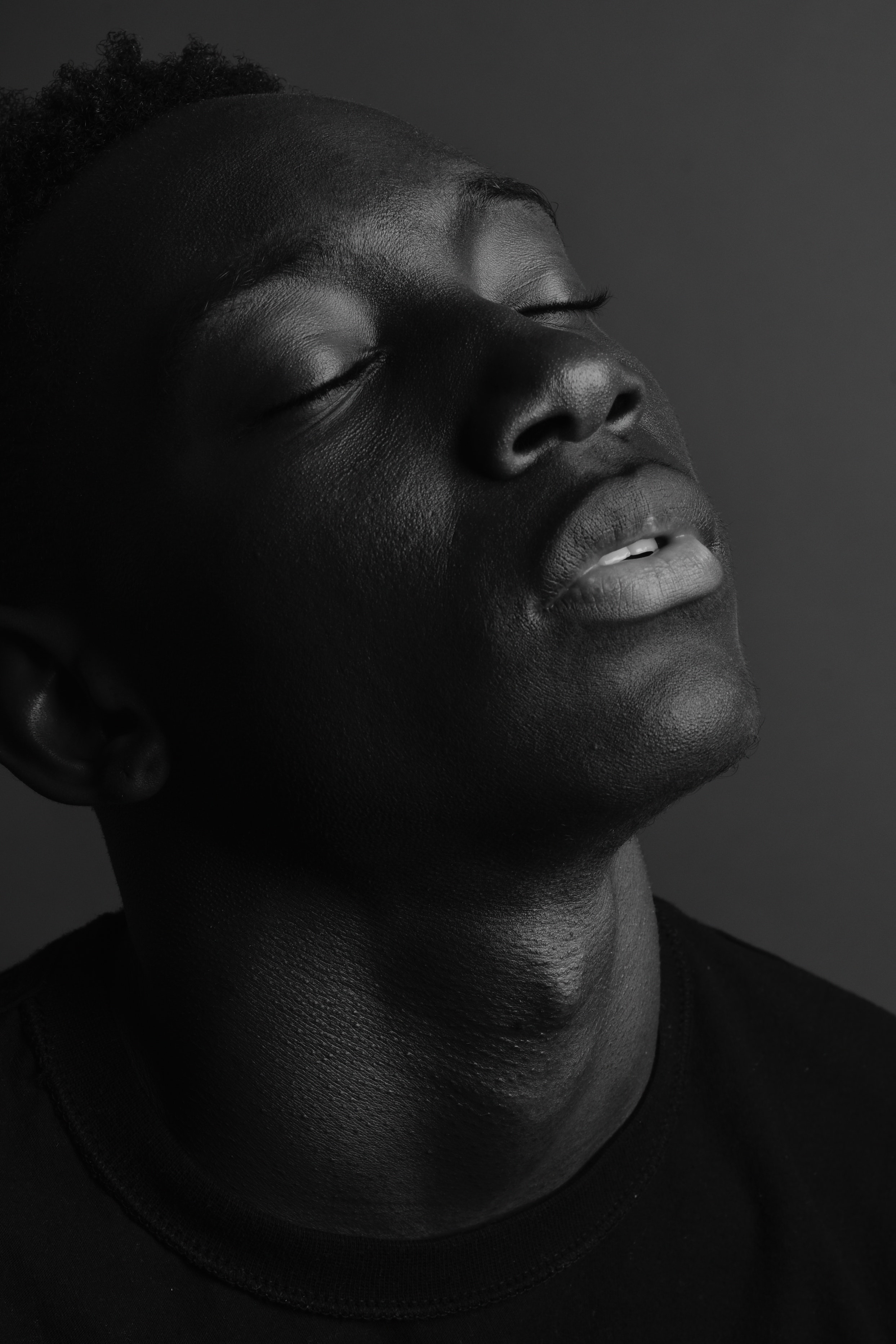
He looked like a lifetime supply of confidence black-gold wrapped in a Hershey’s kiss like his soul had stretched up to the sun this melanin-plated skin When he shined, we were all shade Sweat looked like honey dripping from his brow forming sweet golden pools Look too closely, and he starts to look like a lightening his eyes two backpacks full of moon and we scatter like children looking for jars big enough to capture the illumination of his essence made up not of blood and bone but stars He looked like a lifetime supply of monuments a dark sun-kissed body full to the brim with uncompromising confidence.
The inspiration for this poem is from a poetry prompt I saw on IG on the topic of “He Looked Like a Lifetime Supply.”






 The PBS Blog