Ain’t No Red Carpet for the Prophet

Revolution sounds pretty.

This polished word

makes a giddy sound,

like raising your first

or rubbing your feet together.


We quote Martin with a rhythm that swells the chest.

Malcolm’s words hum like power.

Assata’s taste like survival.

Garvey’s tickles the ear.

Lumumba’s boom like djembe drums.

Angela’s convinces the tongue that it is brave.

But no one applauds

the silence that follows a truth

told too clearly

in a world where lies

are the laws of the land.


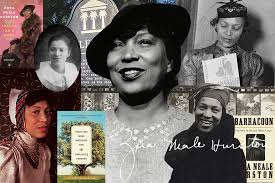
We forget that Zora died counting coins,

her name folded small in her own purse.

Lowered into the earth without a stone to speak for her

in a segregated garden of silence

while her words, once blazing,

lay out of print like abandoned children.


We forget that revolution is only another word for change,

and change is rarely applauded in its own lifetime.

The ones who bend the arc of the world

often do it alone,

unclapped.


Revolution sounds sweet in the mouth

like a hymn rising,

like the lift of a firstborn into waiting arms,

like the soft hush of skin against skin.

But ain’t no red carpet

for the prophet.

Just dust. Truth.

And the long walk home.


This poem was inspired by an amazing podcast episode of “Our Ancestors Were Messy” about the friendship between Zora Neale Hurston and Langston Hughes (which I’ve hinted at in my novel Renaissance), their fall-out, and what culminated in the tragic ending of a folklorist, documentarian, author, and anthropologist.

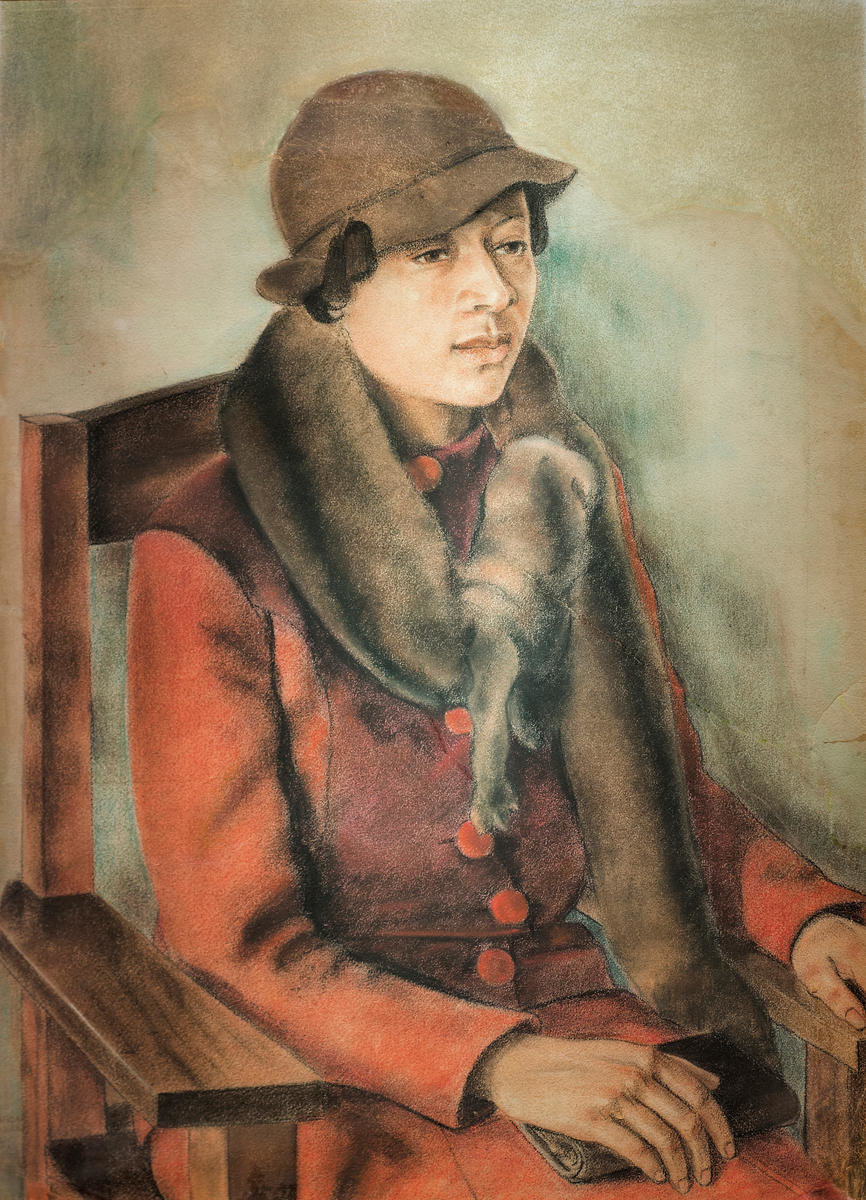
Once one of the most successful writers of the Harlem Renaissance, Zora Neale Hurston would die in poverty in the segregated wing of a welfare home. Her body would be buried in an unmarked grave. The woman who preserved Black life faded into obscurity until she was rediscovered by Alice Walker in 1973.

Walker would resurrect Hurston’s writings and place a marker on her grave that read, “Zora Neale Hurston: A Genius of the South.”

Yecheilyah’s Book Reviews -Cancer Courts My Mother by LindaAnn LoSchiavo

Title: Cancer Courts My Mother

Author: LindaAnn LoSchiavo

PublisherProlific Pulse Press LLC

Genre: Contemporary Poetry, Death, Grief, and Loss Poetry

Published: November 7, 2025

Pages: 40 pages


We live in a society with a rule we’re never taught, but somehow already know: you do not speak ill of your mother. Mothers are indeed sacred, but in this language, the rule is that mothers are beyond critique, beyond blame, untouchable. It means you are never to speak badly of them. Ever. Not in public. Not even to yourself. It’s not carved in stone or written on any wall, yet it hovers among us silent, expectant, immovable. Cancer Courts My Mother defies that silence.

These poems and stories peel back the polite mask to reveal the complicated, aching truth of loving a mother who has not always loved you well—and then being asked to care for the very person who once caused the hurt. It is bravery set to verse, honesty without apology, and the painful dance between resentment and devotion when illness becomes the final judge.

“Bad memories are cadavers that refuse burial. Instead of an archive of velveteen nostalgia, her name leaves gravel in my mouth.”

The title suggests that cancer is courting the mother, but more deeply, the illness is also courting the daughter who tells this story. In this piece, LoSchiavo is not only the narrator; she is the wounded child. As she tends to a woman who once sharpened every word into a blade, she is confronted with a new version of her mother: frail, softened by illness, gentled by morphine.

“Cancer helped adorn my mother with patience, her acidic breath pausing to accept the spoon that brought breakfast.”

The disease becomes an unwanted chaperone, pulling the daughter into an intimate dance between what was and what is—between the sting of old wounds and the strange tenderness of caring for the very person who caused them.

In the piece “Flash,” the author reveals how her breached birth changed everything.

“To hear my mother tell it, a respectful infant should politely slide from the womb.”

I felt sympathy for the daughter because one cannot control how they enter the world, and she articulates this with a raw truth in the lines, “eventually, I became a vegetarian, refusing to eat anything that had a mother.”

These kinds of powerful lines are all throughout the book, and you’ll want to sit wth them. While the book is a short, quick read, you wouldn’t want to rush through it. The words deserve to be savored for their deeper meaning.

While holding space for the daughter, I also felt empathy for the mother. I know from the testimony of family and friends that motherhood is no fairytale. I understand how a mother can lose herself to the point of resentment. I enjoyed balancing these two thoughts, and I love that the author gave me this opportunity.

As the Grim Reaper inches closer to claiming his prize, we can see how, despite the daughter’s feelings toward her mom, it is not without deep love, proving society wrong: We can tell the truth about mothers while loving them.

As KE Garland writes: “There are kind ways to characterize those we love, without denigrating them.”

The way this book is written conveyed the truth without judgment.

“When my mother died, she took home along with her.”

As someone who has also lost her mom to multiple illnesses, I sympathize with that powerful line, and it reminds me of a line from Nayyirah Waheed, who says, “My mother was my first country. the first place i ever lived.”

(The non-capitalization in Waheed’s lines is intentional.)

My only wish is to see this as a whole book, maybe a memoir, so we can have the entire experience. The poetry and the prose, the haikus, are all excellent, but it’s such a good story that I wanted to read some of it raw and without poetic decoration.

Ratings

  • Structure and Form: 4/5
  • Originality/Authentic Voice: 4/5
  • Creativity/Lyrical Content: 5/5
  • Thought Provoking: 5/5

Overall: 4.5/5

Cancer Courts My Mother is Available Now on Amazon!


The Review Registry is Closed for 2025.

To Be Added to the Waitlist for 2026, please email the first chapter of your book to the email listed in our review policy with “Book Review Waitlist” in the subject line. While this does not guarantee a review, it places your book at the top of the list for consideration in the new year.

To apply for 2026, click here

Up Next: Chains of Gold by Ken Robb: Based on a True Story of Slavery During the California Gold Rush
IMG_8994

Yecheilyah’s Book Reviews is a reputable review service that features writers from around the world, including both traditionally and self-published authors. We are listed on Kindlepreneur as a top-tier book review blog and on Reedsy as one of their vetted active book blogs that provide insightful, excellent book reviews.

*Books are read in the order they are booked.

Why Self-Publishing Poetry is Different From Other Books

Publishing a poetry collection differs from publishing a novel or nonfiction book. One main reason is the editing; poets must pay special attention to this.

When looking for an editor for our poetry collections, we must ensure they know how poems work. Some poems, for example, are not intended to be grammatically correct. They might include lowercase letters where they would not normally be and play with conventions of spelling, layout, and typography.

An editor of poetry must be a critical reader and familiar with current trends in poetry publication. They must work closely with the poet to understand what is deliberate and what is not. A good editor will point out grammatical errors and ask if they are intentional—frequently, they will be, but it is a good editor’s job to ask.

Poetry editors must be willing to respect the intention of the poet. They must exercise restraint in those areas where they think a piece should be corrected when the poet did not intend it to be. It is also helpful to know whether the poem respects the conventions of the form or deviates deliberately. For instance, if there is a misstep in the rhyme scheme, it should be flagged in case the poet wants to adjust it.

In short, authors who self-publish poetry must find editors who are knowledgeable about how poems work. It would be even better if the editor were also a poet.

If you enjoyed this post, check out our archive on Indie Author Basics, designed to guide you to self-publish your books with excellence.

Stay Warm, Good People!

Why Not Joy?

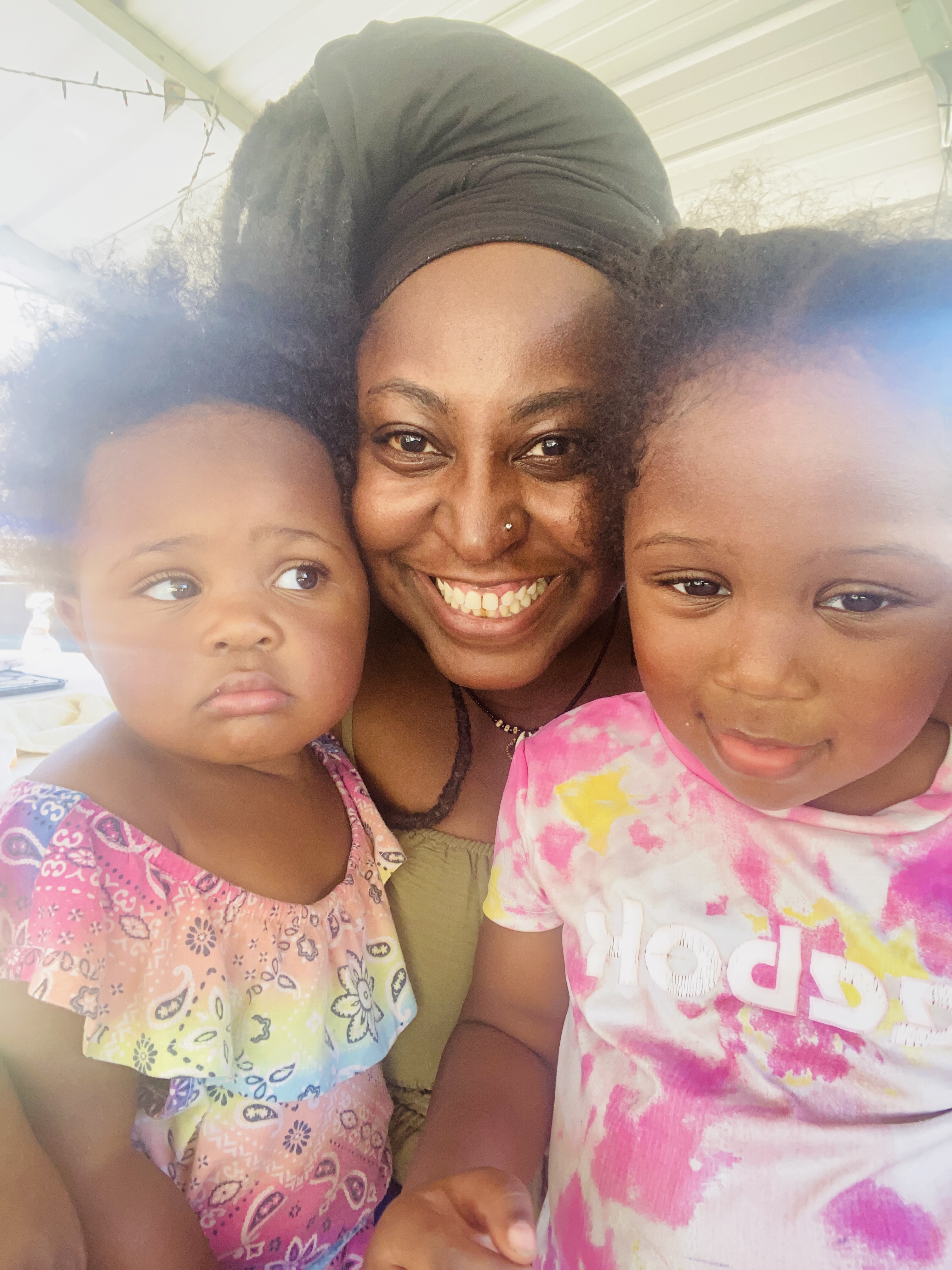
Spent time with these cuties this weekend!


Why write poems about joy in such a time as this?

This has been a constant question in the back of my mind. It is not something anyone has asked of me personally, but something that the subconscious, always overthinking part of my brain asks when it wishes to second-guess itself. And, in the rebuke of these thoughts, I answer:

“Why not joy?”

I do not mean always being happy when discussing cultivating a spirit of joy. No one is always joyful in the basic sense of the word. I do not mean toxic positivity or whatever that’s supposed to mean.

In the same way that we embrace anger, grief, and frustration (which are normal and have their place), we can also embrace more joy and gratitude. If sadness and depression suck our bones dry and drain our life force, then joy and gratitude can be a powerful life-saving nourishment.

As I’ve said in Black Joy: “Nobody talks about society’s addiction to Black trauma / how much more profitable it is to talk about pain than poems/depression than joy.”

This constant cycle of death and war is draining to the soul and rotten to the bones. Where do we find or hold onto our sanity without joy? Have we forgotten that it has always been here with us? If enslaved people found joy, why not us? Or do we believe we are that special of a generation that we can survive without it?

In “The Role of Joy and Imagination in a Revolution,” author Marii Herlinger writes: “White supremacy culture values objectivity, overworking, and neglecting self-care — joy interrupts that. White supremacy culture teaches us to be individualistic, self-serving, and distrustful of each other — love interrupts that. Therefore, joy, imagination and love are revolutionary tools which actively defy capitalism and white supremacy.”

Sounds like a page out of Tricia Hersey’s book!

Speaking of Hersey, in the same way that resting more does not make one lazy, nor is it the same thing as being idle (you can be well-rested and still do the work), more joy does not make one blind to the atrocities of the world. On the contrary, it can help one to see things more clearly by stepping outside of the chaos. As Jaiya John puts it, “It can be a revolutionary act of love for yourself and others to not let yourself be sped up by the pace of a toxic, anxious, frantic, desperate, traumatized culture. Stay slow, my friend. Everything beautiful in you is gestating.”

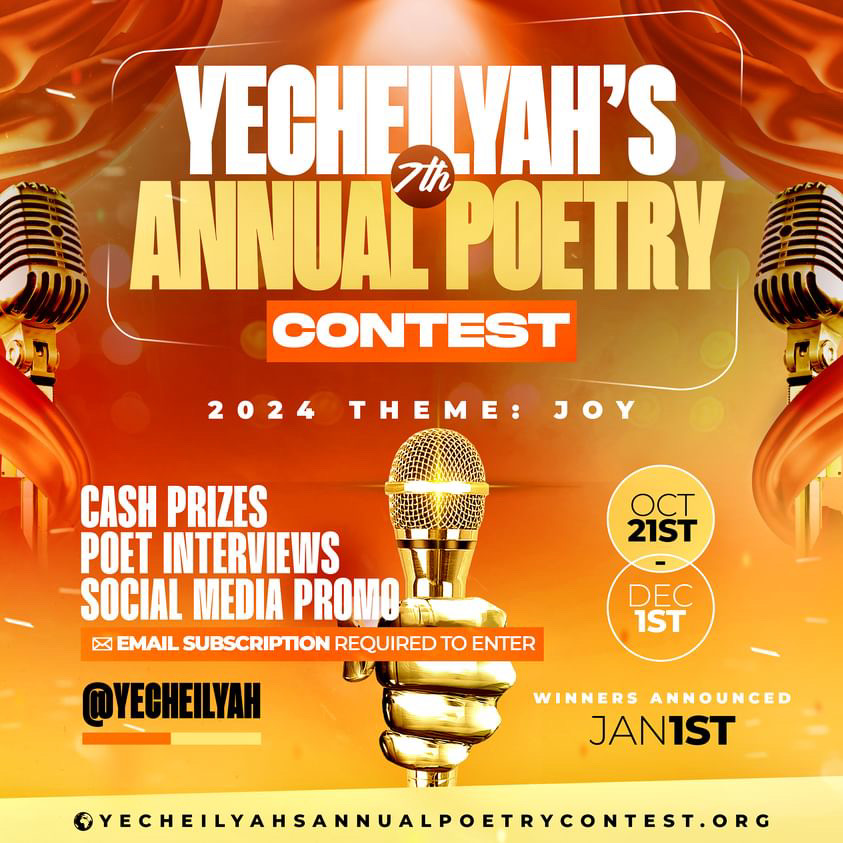
This year, our poetry contest theme is joy, so I want to give you more to consider as you pen your entry!

The Latin word for Joy is gaudium, meaning to rejoice. Think of a time when you found joy in the unexpected. How did that make you feel? In what ways did you rejoice?

I cannot wait to read/hear your masterpiece!

We accept entries from October 21st through December 1st!

PS. I just found out this blog has been listed among Feedspot’s 30 Best Self-Help Book Blogs and Websites of 2024! Thank ya’ll for rocking with me!

More

Photo by Neon Joi

We have enough people who are beautiful.
We need more who are brave.
We have enough people who are popular.
We need more who are passionate and purposeful.
We have enough people who are wild.
We need more who are wise.
We have enough people who are famous.
We need more who are faithful.
We have enough people who require rewards.
We need more who require respect.
We have enough people who are too afraid to fail.
We need more who are courageous enough to fly.


You can listen to this poem on TikTok, and be sure to subscribe on YouTube!

Black Joy

Nobody talks about society’s addiction
to black trauma.
How much more profitable
it is to talk about pain
than poems,
depression
than joy.

Like we don’t have feelings
just bad experiences
turned into songs
of sorrows
and spirituals
of reaching heaven
cause there can’t be no freedom
here on Earth for Black people.

Maybe this world still doesn’t consider us
human enough
to be happy
someone hand society a roadmap
for getting to know black people.

Tell them they can find us laughing
even when life is lifeing
cracking jokes and turning sadness into praise.
Tell them we are not just guns and gangs.

Our hope does not hang on by string
on some cracked-out corner
or trap house
Tell them how we dream.
Big Mama musta had mustard seeds
underneath the mattress
cause she moved mountains.
Food and faith ain’t never been hard to find.
We gone eat.

Talk about our love
our sense of community
our building
our builders
our beauty.

We’ve had a wild ride here
in this country
But it was not all bad.

Together, we forged a world of our own
found solace in the cracks
made meals from scraps
and carved out our own sense of enjoyment and purpose.

Tell them about how the cells of a black woman
saved the world
and the genius of a Black man lit it up.
Talk about how we bless everything we touch.

Tell the whole truth
that we are not made up only of pain.

Joy lives here, too.


You can listen to this poem on TikTok and YouTube! I’m @yecheilyah on both.

Black History Facts is back! If you’ve been waiting for a signed copy, this is your chance to get your hands on it. We are back in stock. Go now to: https://www.blkhistorybook.com/.