

Tag: #LinkYourLife
You Are the One
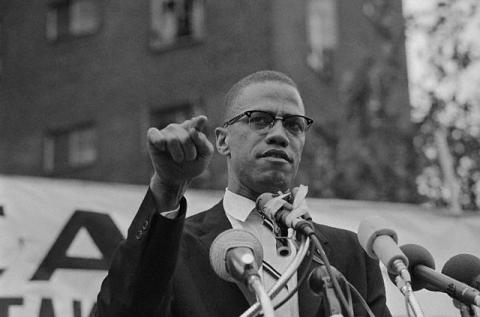
“The picture of the dry bones in the Valley, is talking about you. You are Lazarus. You are the dry bones. You are the prodigal son. You are the lost sheep. You are the people about whom the bible is speaking. Who will stand up in the last days when the trumpet is sounded. Black people are waking up. Black people are standing up. Black people are rising up.” – Malcolm X
My Advice for New Writers by John W. Howell
Great advice for both new and established writers. Post Quote: “Reality 1. Readers have no idea who you are. You need to market yourself and your books. You need to understand social media, marketing, selling, and general good business practices.”


I was at a book signing the other day, and a person asked me a question that caused me to have to think a little before blurting out an answer. The question was, “What should every new writer know?” My answer at the time seemed to satisfy the person asking but after giving it a little more thought I decided that my reply was at best adequate and at worst incomplete. Now thanks to the Mystery Thriller Week I have been given another opportunity to adequately express what I have no come to call My Advice for New Writers that Every New Writer Should Know Before Deciding to Become a Writer. I think you can tell from my title that the thought process has grown from my initial response at the book signing. Also, if you have decided to become a writer no matter what anyone tells you, I would…
View original post 1,314 more words
Yecheilyah’s Book Reviews – Beautiful Boy and Beautiful Girl by Jenita Hunt
Title: Beautiful Boy, Beautiful Girl
Author: Jenita Hunt
Print Length: 22 pages
Publisher: J L Hunt; 1 edition (March 23, 2016)
Publication Date: March 23, 2016
Language: English
ASIN: B01DDYU91E
Beautiful Boy and Beautiful Girl are two concise picture books for children. Simple, fun, and rhythmic, these books are great as goodnight stories or quick reads for your little ones. Incorporating everything a child enjoys, colors, pictures, and rhyme, will encourage them to look at their world in a positive light.
The Author, Jenita, has always had a heart for children and writing. She has worked several years caring for children as a Professional Nanny and has been honing her writing craft over the years.
After around four years of teaching creative writing as a part of Louisiana’s In-Home School program, I helped operate a research and fellowship center in Shreveport for another five years while also working with children and teaching. Having spent time around children and working with them, I appreciated taking a break from reading novels to focus on something straightforward. I found these books to be a breath of fresh air. I realized I was grinning as I read each of them. In the future, I’d like to see more work by J.L. Hunt.
Ratings:
Entertainment Factor: 5/5
Authenticity / Believable: 5/5
Thought Provoking: 4/5
Overall Rating: 5 / 5
Beautiful Boy and Beautiful Girl are both available on Amazon in both eBook and Paperback.

As a reminder, I am closed to Book Review Submissions at this time for a chance to catch up on my TBR pile. I will let everyone know when I am open again.
Stay tuned for my next awesome author!

Owning Your Writing Craft
Like I always say, take some time to enjoy the journey. Post quote: “Look at where you started and where you are now. Be proud of the distance you’ve traveled and how much you’ve accomplished, so far.”


by Tonya R. Moore
There’s all this hubbub floating around out there lately, conflicting theories of all the DOs and DON’Ts of what it takes to be or become a successful author.
Some time ago, I saw some Perpetual Writing Advice Giver actually tweet that if you’re a writer promoting your work and you don’t have this many (double digit) thousand followers on Twitter, you’re simply not trying hard enough. To add insult to offense, said party didn’t even have a half of that “strongly suggested” following.
View original post 342 more words
Black History Fun Fact Friday – The Soto Brothers
Two kids had already been killed down the street from the apartment complex that would one day be the center of media attention when Black Panther Chairman Fred Hampton would be murdered in his bed this same year. Teens from the Henry Horner projects had been protesting for months, a little over a year to be exact, for a traffic signal at the corner of local schools and health clinics where two teens had already been killed. The city refused. In addition, earlier this year, police kicked down the doors of a Panther office, brutally beating and injuring six people and one bystander on Madison Street.
As you can see, the climate of 1969 Chicago was already heated surrounding citizens and the city. Police brutality in Chicago is far from anything new and this year they were on a roll.

John Soto was an active member of the protest campaigns to get a traffic light installed at the corner, a few blocks from Fred’s Apartment. Sadly, John only lived to seventeen, were killed just one day (Oct 5th) after a police raid on a Panther office. According to the reports, John fought with the police before being “accidentally” shot by them. The already agitated community grew furious and John’s brother, Michael Soto, returned home from the army to attend his brother’s funeral. Five days later, on October 10, 1969, Michael Soto too was shot and killed. The black community did not believe in coincidences.

It was said that Michael was killed because, after being stopped by police, he pulled out a gun, contrary to the account given by witnesses.
The community became even more outraged and according to the NAACP’s Commission of Inquiry, “The commission discovered that a substantial segment of the community believed that, contrary to all police reports, John and Michael Soto had been murdered by the police because of their participation in the traffic light protests.”

According to Jeffrey Haas, Panther Lawyer of The People’s Law Office and author of “The Assassination of Fred Hampton: How the FBI and the Chicago Police Murdered a Black Panther”, (one of the books I’m reading), the coroner’s inquests in the Soto case were delayed; meanwhile, the internal police investigation found John’s death to be “accidental homicide” and Michael’s death “justifiable homicide”.
I decided to dedicate this week’s Black History Fun Fact to these brothers because of two things:
- Google’s limited amount of information on them
- Their minimum mention in black history
Though their lives were sadly ended, I wanted to highlight what happened to them for those who may not have been familiar. They existed and are among the many so-called Black and Hispanic men and women who died at the hands of law enforcement.
Update: Interestingly enough, I found this article and thought I’d update this post to include the link:
Chicago police use excessive force, DOJ finds
“Chicago police officers’ use of excessive force, she said, stemmed in large part from what the Justice Department found were severely insufficient training and accountability procedures — including failing to train officers to de-escalate situations.”
http://www.cnn.com/2017/01/13/us/chicago-police-federal-investigation/index.html
Black History Fun Fact Friday – 5 Harlem Renaissance Women You Probably Don’t Know
If you’re anything like me, you get tired of the same repeated history. Martin Luther King Jr., Rosa Parks, Frederick Douglass, Harriet Tubman, Langston Hughes, and Zora Neale Hurston. These are names to which we are exceptionally familiar. They were great but we know them. Let’s talk about something else.
Admittedly, I didn’t have a lot of time on my hands this week so I decided to compile a list of women who took part in The Harlem Renaissance to which we aren’t too familiar for this week’s fun fact. Enjoy.
Dorothy West
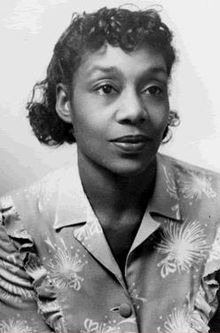
The daughter of a freed slave, the only child of Isaac and Rachel West, Dorothy West’s father built a fruit and vegetable business that provided the family a more affluent life among Boston’s middle class. Nicknamed “The Kid” by Langston Hughes and sharing an apartment with Zora Neale Hurston, Dorothy West was a young member of the Harlem Renaissance. Not yet 20 in 1926 when her short story ”The Typewriter” won a prize from the Urban League’s Opportunity magazine, Dorothy moved to Harlem and joined the poets, novelists, musicians and other artists.
Alice Moore Dunbar-Nelson

When I first came across Alice I kept trying to figure out what was so familiar about her name. It wasn’t until I researched her that it became apparent. She was once married to Paul Lawrence Dunbar before they separated in 1902. Alice Moore Dunbar-Nelson was born in New Orleans, Louisiana, to mixed-race parents. Documented as African American, Anglo, Native American, and Creole, her works cover the complex subjects of race, ethnicity, and oppression. Her first book, Violets and Other Tales (1895), was published when she was just 20. A writer of short stories, essays, and poems, Dunbar-Nelson was one of the few black female diarists of the early 20th century.
Clarissa Scott Delany
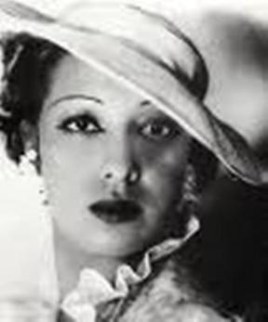
Clarissa looks as if she was fly back in the day lol.
Born in 1901 in Tuskegee, Alabama Delany is most known for her powerful poem “The Mask”. Dying at an early age (26) she did not contribute many works but still contributed by publishing poetry and journal articles into the newspaper Opportunity. After her young years in Alabama, she was sent to New England where she graduated from Wellesley College in 1923. During Delany’s years at Wellesley, she attended meetings of the Boston Literary Guild. Speakers were featured each week. Delany started writing and gained the attention and became associated with the Harlem Renaissance.
May Miller
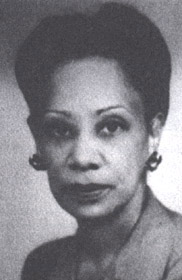
“To read across May Miller’s life is to read across the history of 20th century America.”
– Myra Sklarew
It begins with May’s father, Kelly Miller. Born a year before Emancipation he was the first African American to attend John Hopkins University and among the first blacks to learn to read in public schools. He studied mathematics, physics, and astronomy. His daughter, May Miller was the most widely published playwright of The Harlem Renaissance. Myra writes how May often told about having to give up her childhood room for visits by W.E.B. Du Bois, author of The Souls of Black Folk, and the poet Paul Laurence Dunbar. She spoke of visits by Booker T. Washington, Carter G. Woodson, and Alain Locke.
Maria Bonner

One of four children, Marita Bonner was born in Boston to Joseph Andrew and Mary Anne Bonner. She was raised and educated in Boston, attending Brookline School, where she received musical training and in 1918 she entered Radcliffe College, concentrating in English and comparative literature. In Washington Bonner became closely associated with poet, playwright, and composer Georgia Douglass Johnson, whose “S” Street salon was an important gathering place for many of the writers and artists associated with the New Negro Renaissance of the 1920s better known as The Harlem Renaissance: Langston Hughes, Countee Cullen, Jessie Fauset, May Miller, Alain Locke, Jean Toomer, Willis Richardson, and others. She also began to publish her writing in journals like The Crisis of the NAACP and Opportunity, the official journal of the Urban League. Her first published pieces, “Hands” and “On Being Young-a Woman-and Colored,” appeared in The Crisis in 1925.
Yecheilyah Ysrayl is the YA, Historical Fiction author of eight books most notably, The Stella Trilogy, Blogger, and Poet. She is currently working on her next book series “The Nora White Story” about a young black woman writer who dreams of taking part in The Harlem Renaissance movement and her parents struggle to accept their traumatic past in the Jim Crow south. “Renaissance: The Nora White Story (Book One)” is due for release July 15-16, 2017. For updates on this project, sneak peeks of other projects, nuggets and tidbits, video tutorials, writing inspiration, and more, be sure to follow this blog and to subscribe to Yecheilyah’s email list HERE.
 The PBS Blog