Curiouser Editors 20 Fresh Social Media Tips for Authors

Check Out Curiouser Editors Excellent Social Media Tips! I just used one for my IG bio. Emojis does make it look way cooler lol.

  1. Pin posts to Twitter, your Facebook page, and your Facebook group (you do have your own Facebook group, right? Because I’ve only been preaching about this for a million years, give or take). Ensure the pinned post has some type of opt-in for a freebie so they’ll subscribe to your emails. If you’re pinning a post, then it should tell them to do something that somehow benefits you and them.

  2. Add emojis to your Instagram bio to catch attention. I like to use the pointing finger right above my freebie opt-in so that it’s the first thing they’re directed to. Use emojis in your posts too!

  3. Update your LinkedIn title with stronger keywords. Your title shouldn’t say, “Jane Doe, Author.” It should say, “Jane Doe, Romance Author of [Title], Part-Time Nurse, Full-Time Mother, Oil Painter.” For example, mine says, “President of Curiouser Editing, Author of the Pre-Publishing Checklist, Editor, Writer, and Coach.” If you need more help with LinkedIn, I highly recommend The Ultimate Guide to LinkedIn for Business.

  4. Like as many Instagram photos as you can under relevant hashtags (#bookstagram, #bookish, #indieauthor, #writercommunity, #writerlife, #bibliophile, #amwriting, #amreading) to gain more followers. I like to time myself for ten minutes so that I’m not spending a ton of time on it, but I’m still seeing results.

  5. Use the WordSwag app to create visually appealing photos with text for Instagram (or Twitter/Facebook). Foundr Magazine swears by this in their freebie PDF, How to Get Your First 10,000 Instagram Followers.

  6. Buy the Followers + for Instagram app to keep track of your stats as well as discover who’s unfollowing you. This is very helpful if you suddenly lose an influx of followers—why did they unfollow you? Too many posts? Ugly photos? Irrelevant photos? If you’re an author who writes paranormal novels, then posting about politics 24/7 might turn them off.

  7. Add a Hello Bar to your website. You can use this for email subscription, to announce your book’s release, or to advertise a course.  

  8. Add your blog subscription opt-in to your Facebook page. You’d be surprised how many people forget to do this.

  9. Ask questions on Facebook and Instagram for better engagement. Every time I ask a question, I get a couple dozen comments on Instagram, sometimes a few dozen. Make sure that it pertains to writing or publishing in some way.

  10. Try live streaming on Facebook to interact with your readers.

  11. Add images to your tweets to get more retweets.

  12. Try using Facebook’s carousel option to promote your book.

  13. Repost, repost, repost. Not everyone will see that you posted your book’s 99¢ sale.

  14. Tag people you talk about in your post. Tweeting a Medium article from Positive Writer about free Createspace books? That’s three tags right there: @Medium, @ADDerWorld, @Createspace. Posting an Instagram photo of three books you’re reading? Tag the authors. Posting the link to your blog on your Facebook page where you mention different writerly websites? Tag them.

  15. Add a location to Instagram posts. For example, if you’re at Barnes & Noble in Dallas, add that as a location.

  16. Add a cover photo to your Twitter account that shows off your book specifically. I’m a huge fan of The Thatchery’s cover photos, so consider hiring someone to make you one that you can use on Twitter, LinkedIn, and Facebook. Check them out here.

  17. Reply to every single person who follows you and thank them for the follow. I’ve found that this works better than sending them a direct message, as it comes off kind of spammy. Also, in your tweet, don’t be afraid to tell them about your book and engage them in conversation.

  18. Connect with authors in your field by using the Advanced Search option on LinkedIn. For example, if author Damien Taylor wanted to find more fantasy authors, all he has to do is type in “fantasy author” in his keyword advanced search to connect with them.

  19. Post at the right times, please. All it takes is a little bit of research. According to Buzzsumo’s article on Facebook engagement, posts published between 10:00 p.m. and midnight get the most engagement. I’ve also noticed that 2:00 p.m. is a great time to post on Facebook and Instagram, while author Damien Taylor has seen some serious engagement at 3:00 a.m. Wow!

  20. Directly embed videos to your Facebook page rather than posting your YouTube link. It gets better engagement. < I have also down this one in the past. She’s right, and it looks better too.


Social Media Intelligence: Why Your Boss is Reading Your Blog

boss-reading-emails

I was reading my scriptures when I decided to check my phone (a habit I’m trying to kick.) As I did so, I saw a post that struck my attention. Colleen, as she always does, posted a link to another great author resource, and I could not wait to get the juicy details of why Authors should watch out for this one dangerous trait from literary agents. As I scanned the article, nodding my head and wondering how long it would take my pizza to finish baking and how the beef sausage I sliced on top was going to be the bomb, I was struck by the following statement:

“In and beyond the writing and publishing industry, the way someone uses social media is often a window into that person’s work attitude and style, and a signpost as to how a potential working relationship will evolve.” – Aine Greaney

I stopped thinking of pizza and thought, “Wow, that is so true!”

This got me thinking about blogs, Facebook and Twitter. I started to think about how we use them all so loosely. I also began to think about businesses or upcoming businesses. As an author, I thought of how being a published author is likened to a business in many ways. Furthermore, this made me think more deeply about the social media world.

The Boss. Who is he? This doesn’t have to be your actual boss but it is someone out there with the potential to take you to that next level. Facebook and Twitter may seem like harmless entities but the fact that professionals are trolling through pages and timelines is no conspiracy theory. For those of us online for fun, have at it. But for those of you seeking to become authors or to use your blogs for anything slightly professional, you may want to consider that the blog posts that go viral are usually the ones we least expect to do so. Personality is key of course. It is always good to let your personality shine through and to let us all know that you’re a real breathing person with passions and concerns and joys just like the rest of us. That personal touch brings people together and builds a bridge of commonality that helps us to get to know one another better, which in turn works well with building professional relationships.

And now we’ve come all the way back around. How you present yourself online should be a representation of who you are, but it should the best part of who you are. Cursing people out on Facebook and engaging in arguments and being nasty to people may be fun now but one day you will grow up. And when that happens you’ll want to explore new things and maybe you’ll even want to put some of those talents to good use. The problem is that the past image of you is still saved in social media files and although you have industry knowledge, Mrs. Smith, your future boss, just can’t get over how vulgar your language is. Mrs. Smith can’t see someone fitting into her communications department who can’t control something as close to them as their own tongues.

article-0-066CB0D00000044D-447_634x431

I’ve actually experienced this myself. A long time friend of mine (who I am not in communication with but who I have known a while) was launching a new business and sought out support. For the sake of identity I’ll just call this person a she. She promoted across all of her social media accounts and the business itself looked really promising and got some good reviews. As for my friend, having known her for about nine years now, I know her to be very intelligent and knowledgeable about that particular field. In fact, I always knew she would be a business person some day. However, as I scrolled through her Twitter timeline, the one with the beautiful website layout and crowdfunding campaign and call to action, the more I scrolled the worse it got. Eventually, I had gone back a couple years and there was everything there from the use of profanity to sexual language. If I was a professional looking to hire someone with her skill set for my company, I would have been instantly turned off. Even as myself I was turned off. It was as if none of the prior things I saw attractive mattered anymore. My advice to my friend is to create a business account specifically for the business itself without linking it to her private account. Sadly, I’m not sure if that will even work this far in the game. The lesson is a brutal one.

In the end, we all enjoy what we do and I don’t want to leave without stating this fact. Whenever I talk professionalism I get feedback that suggest that in the end blogging should be fun. Of course it should be, but I wouldn’t take it lightly. Nothing on the internet can be. Employers and agents search social media accounts, such as blogs and Facebook, because social media is the largest data collection service to date for collecting and gathering intelligence and people tend to be themselves on these platforms more than they actually are in person. Social Media therefore becomes a valuable platform for employers to seek out potential clients in their natural state.

It’s not about being phony and fake, its about being mindful of your behavior. It’s OK to be yourself on social media. In fact, I would hope that you are yourself. Showcase pictures of your family, display the music you like, or speak about something that is passionate to you. However, keep in mind that thousands of people are potentially reading your blogs everyday and one of them, just one of them, may turn out to be your boss.

Note: This is an older post and is in need of much editing! A revision will be applied soon. Thank you for your time!

Social Media Automation – Why I Don’t Use It

file(6)

It probably would make life much easier if I posted to one account and it automatically posted to all of my other social media accounts. There is a way this can be done by enabling social media automation and I am sure the busier I get the more I would be willing. But for right now there are some key reasons I am just not attracted to this strategy.

They Are Different Platforms

I’m probably the only person in the world who does not want to link her social media accounts (including this blog). Those of you who follow me on IG, FB, and Twitter have probably already noticed that I use them as separate entities. I’m not into linking them at this moment. That would be slightly annoying to me actually. This is because for me, Facebook, Twitter, and Instagram may be the top 3 Social Media sites active right now, but they are three totally different platforms. This means they require similar but slightly different navigation techniques. Let’s start with Instagram.

Instagram

file(5)

Instagram is all about the image. This, in my opinion, gives it advantages over Facebook and Twitter in the promotional area when it comes to pictures. When you scroll through Instagram, each picture is shown one by one according to your followers most recent uploads. As you scroll through, you cannot help but see them even if you skip through the ones that are not interesting to you. This means there is less distraction here than on the other platforms. Instagram is a go-getter for attention because there is not enough space to browse through anything else outside of that timeline. People can also upload videos, another major attention keeping strategy. While Instagram allows room for wording and descriptions of the pictures, the most important thing is the photo itself. Bold and bright colors that capture and keep people’s attention is a must for IG which makes Book Cover designs and promotional flyers very attractive for authors and they garner lots of attention. Quotes and Meme’s have also become a favorite. Authors can upload pictures of books they are reading, screenshot Amazon reviews, or post quotes from the authors they love. Lots of wording in the form of an Image is not something I would want to upload to IG. Instead, I would much rather use images with wording that stand out. Far as IG is concerned, the most important thing to remember for me is the strategic use of the image.

Twitter

file(4)

Twitter’s restriction on word count is a plus for me. In fact, it is what attracted me to this platform in the first place. It is a fun way to post constant updates and does not take up a lot of time. Twitter is the hub for short promotional shout outs and gives me the opportunity to be creative with words. People’s attention spans are short so its not necessary to be long winded. Instead, authors can boost the visibility of posts using the #hashtag, a social discovery mechanism that is actually taken from the tagging strategy of using keywords that others are also using and networking through those words. Twitter gives you the opportunity to upload photos as well, but it is not the platform for pictures in my opinion. When I scroll through my IG timeline I can instantly see the pictures. When I scroll through my Twitter timeline however, I will either see half of the picture or (via automation) I’ll see a link to the picture file that is uploaded. This is not very attractive or important to me in the moment I am browsing the Twitter timeline. I’d much rather read a short quote or click on a link to an article. Articles, this is another major plus with Twitter. It is so much easier to click on news articles and blog posts from Twitter. In fact, Twitter is the biggest hub for sharing news and taking advantage of real time information. Is there a crisis happening? You are sure to get real time updates through your Twitter feed. Re-tweets also make it easy to share and promote the work of others.

Facebook

8043979-120875522_3-122095019_13-v1

Facebook is the place to be for a combination of all of these things: pictures, family, friends, quotes, news articles, etc. Facebook also does not have a word count limit which gives posts the opportunity to have a longer shelf life, meaning more people are likely to see your post last week on your Facebook profile than your Twitter timeline. Twitter is “What’s Happening Now?” and Facebook is just “What’s Happening?” For authors, Facebook is the place for storytelling, poetry, etc. Because you can write longer posts, you can really go in on showcasing your writing skills because FB is really great when it comes to longer conversations (You can give everyone a taste of your skills 🙂 ). When you publish a popular post (lots of likes, commentary, views) it will stay at the top of the timeline more which will give it lots of attention. In addition, old posts that have new comments will make their way back to the top which means new people will get to see it. Facebook’s major negative is that it is too crowded, or at least to me. There is a lot going on. People are chatting, playing games, watching videos, looking at pictures, and even listening to music through Facebook. Facebook is a large platform by which to expand a network and garner attention for a product but it can also be a show off. Because its such a large platform, people are sometimes less genuine than they should be. Everyone wants to prove that their lives are the best thing since sliced bread even if its not really this way in reality. People also tend to confide in Facebook more than they should, venting thoughts, actions, and family issues that should never be put on display for the world to see. For this reason, I find myself neglecting Facebook a lot unless I really have something important to share. However, I will not completely neglect it as a social media marketing strategy because together, with the use of Twitter, and Instagram, it can create one strong marketing dynamic if used correctly. Facebook is also great for connecting with family and friends whereas Twitter and Instagram opens the door for networking more with professionals and strangers. You are more likely to connect with a family member or someone you know by way of Facebook than the other platforms.

socialab-infographic

Social Media Automation combines these accounts into one, making everything you post on one automatically post to the others and this is cool (for well established businesses it may just be very cool) but right now its just not for me. It may save me time, but it doesn’t give the impression that a real person is behind the computer if every post is automatically generated. It can also get boring at times (at least to me). Right now I would like to continue to use my social media platforms separately. Why? Because they are separate platforms.

Social Media: Balancing Off / Online Book Promo.

Close up of a social media results report with pen and calculator

Social Media is a different world from offline. As such, I think interaction on and offline must apply to book promotion and be fitting for each. I’m learning, and trying to better implement, a well-balanced combination of both off and online tools because each is so different, yet similar too. Now the following are just my personal thoughts and opinions and are by no means that of an expert. These thoughts are not supported by any advanced data or statistic aside from my own experience; they are just my thoughts because, well, I was thinking about some stuff.

IMG_20140725_140547 IMG_20140725_134307
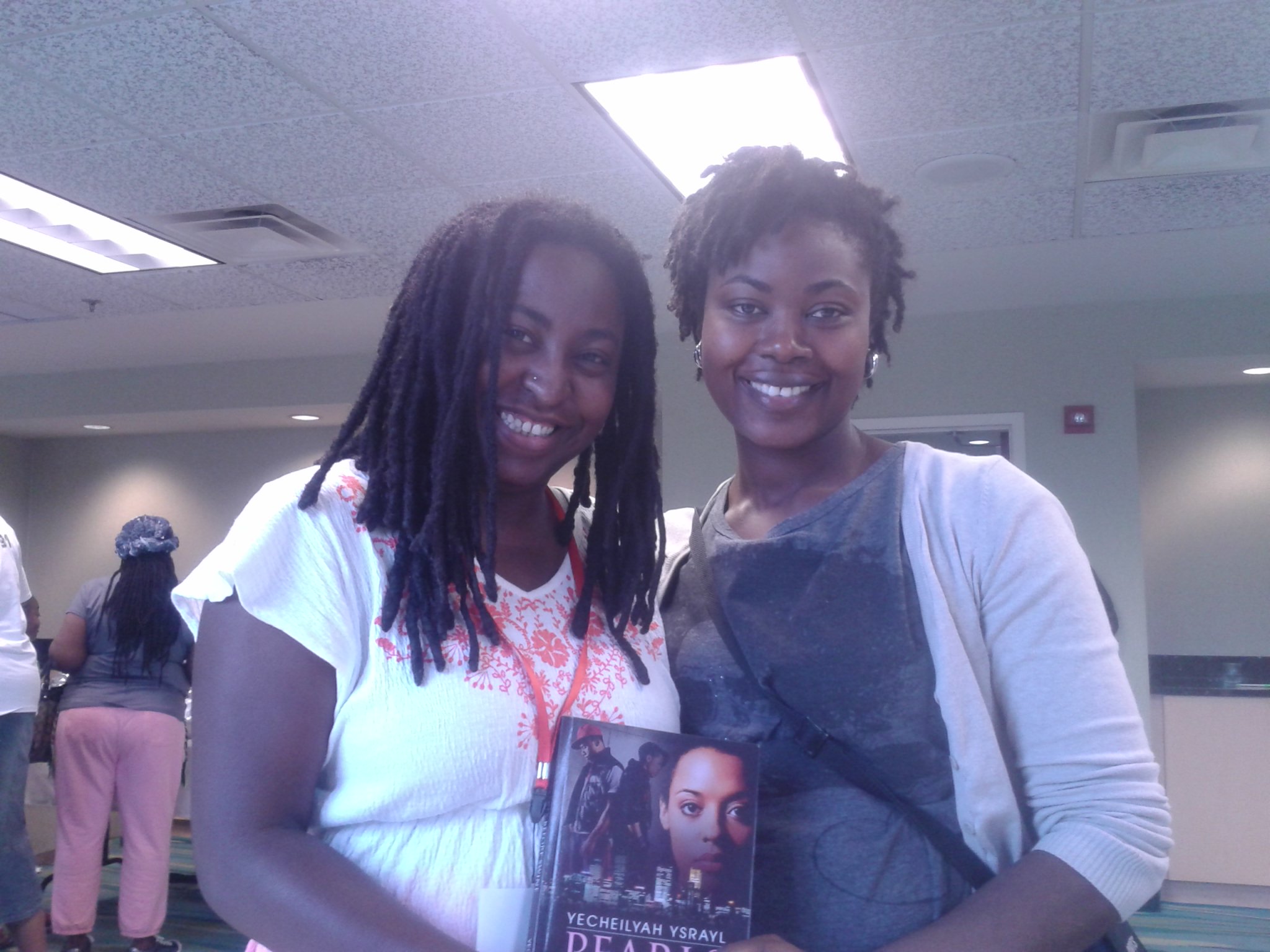
Me and Offline supporters from Canada and Philadelphia at The Pearls Before Swine release, The Double Tree Hilton Hotel, Chicago IL 2014

In my opinion, offline offers opportunities not always present online and online offer its benefits as well that are not always present offline. There are things I would do online as to appeal to this community that may not be required offline. Or that may not attract as much attention to offline supporters. For instance, I think offline activities are great to share with your online friends in the form of pictures. It’s always exciting to see photos of book signings, public speaking engagements, and varying social engagements with offline supporters. I think these, pictures, are far more engaging to your online supporters than ads and constant promos concerning updates of what is done offline because it gets boring after a while.

Online communities want to engage online whereas offline communities who are not as into “internet-ting” want to engage offline. Offline supporters and readers want to hear your voice and see your face. They can care less about how many Facebook Likes you have. As such, I believe balance of both on and offline activity is good but that there also need to be a limit to merging the two. Its OK for them to be separate. I believe, for instance, that a social media presence should rightly fit the online community.

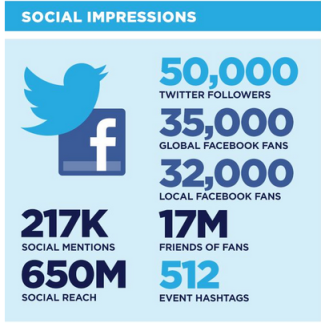
social-media-week-impressionsI know this looks good, but Social Media is very deceiving. While numbers such as is in this photo is exciting it can mean absolutely nothing or it can mean everything. You will probably never know for sure. This is where offline activities come into play. Offline book promotion handles much of the foot work. It is the physical act of pushing the book.

Social Media on the other hand, in my opinion, is not necessarily about selling books as much as it is about building; though through building come sales, social media is best utilized to help generate buzz about a book without blatantly asking people to buy it. Its purpose is to serve as a networking platform that helps connect writers to other writers, readers to writers, digital marketers and professional experts, editors, book groups and workshops, reviewers, beta readers, and gives authors room to connect with readers who enjoy the genre in which the writer writes by way of a platform. What I hope to accomplish as an author in general but especially online, is to show my support for the books content itself. I aim to raise awareness concerning the social or political message behind the writing. Why is this topic relevant today? How does it help people to grow? What value does my subject hold and can it start conversations that lead to greater understanding? By striving to answer these questions, it will help garner offline attention and lead to radio interviews and social engagements. In short,  I try to forget for a moment literally selling the book, and to instead focus on why my book is different from the next and thus why it is even worth your time in the first place.

9249053_l-550x358

Social media is about connections and should be used to reach the people you can’t reach offline (because they will become offline supporters). It should be, not merely an advertisement of the book, but a presentation of the books message and an introduction of the author on a personal level. By focusing on the content of the book and getting to know the author, I believe readers become interested in the book itself because of their passion for the topic and their trust of the author. In this way, I think we Indies have the potential to reach lots of readers and to be more productive in our service to the online literary community.


What’s Your Poison?

social_media_3D_capsules_social_media_addiction

OK people, just for fun, which are you in this techno world?

a). Facebook Junkie
b). Twitter Bug
c). InstaCraZe
d). Wallflower

Blogging is not included because we are all obviously addicted to blogging. OK well, some of us. I’ll choose B for 200 Alex. Before I got involved with any social media, including blogging, I was on twitter. What attracted me is the limitation. I love having to say just a few words to get the point across, re-tweeting articles and quotes. Facebook is OK but I can really do without it. To me it’s kind of noisy and crowded whereas Twitter is a lot more laid back. Then again that could be due to the awesome people who follow me. I do think without cell phones people wouldn’t be so addicted to social media but that’s another post.

Enough about me, which are you? Don’t forget to follow this Twitter Bug by the way @ahouseofpoetry. It’s the best way to keep up with me, since I do like to fly and all. (No, seriously, I have wings)

iStock_000019666790XSmall