
Excellent bullet points. I especially like the point about how many books go out in each email. Lots of promo sites promise promoting to a large email list. Sounds good to have your book pushed to 55,000, but depending on the number of authors whose books are promoted in that same list, your book may not even be seen! I am still seeking to grow mine, but I also enjoy my small list. I know that the books I review and promote (I highly promote the books that I review) are actually being seen and not drowned out. Sometimes, less is more.
Tag: indie authors
Why Authors Need To Know About Book Sales Cycles

Very insightful article. I’ll also add:
Release your books strategically. Launch those books during high reading cycles (Around Holidays, Black History Month if you’re a Black Lit / Historical Author, Weekends, and Summer).
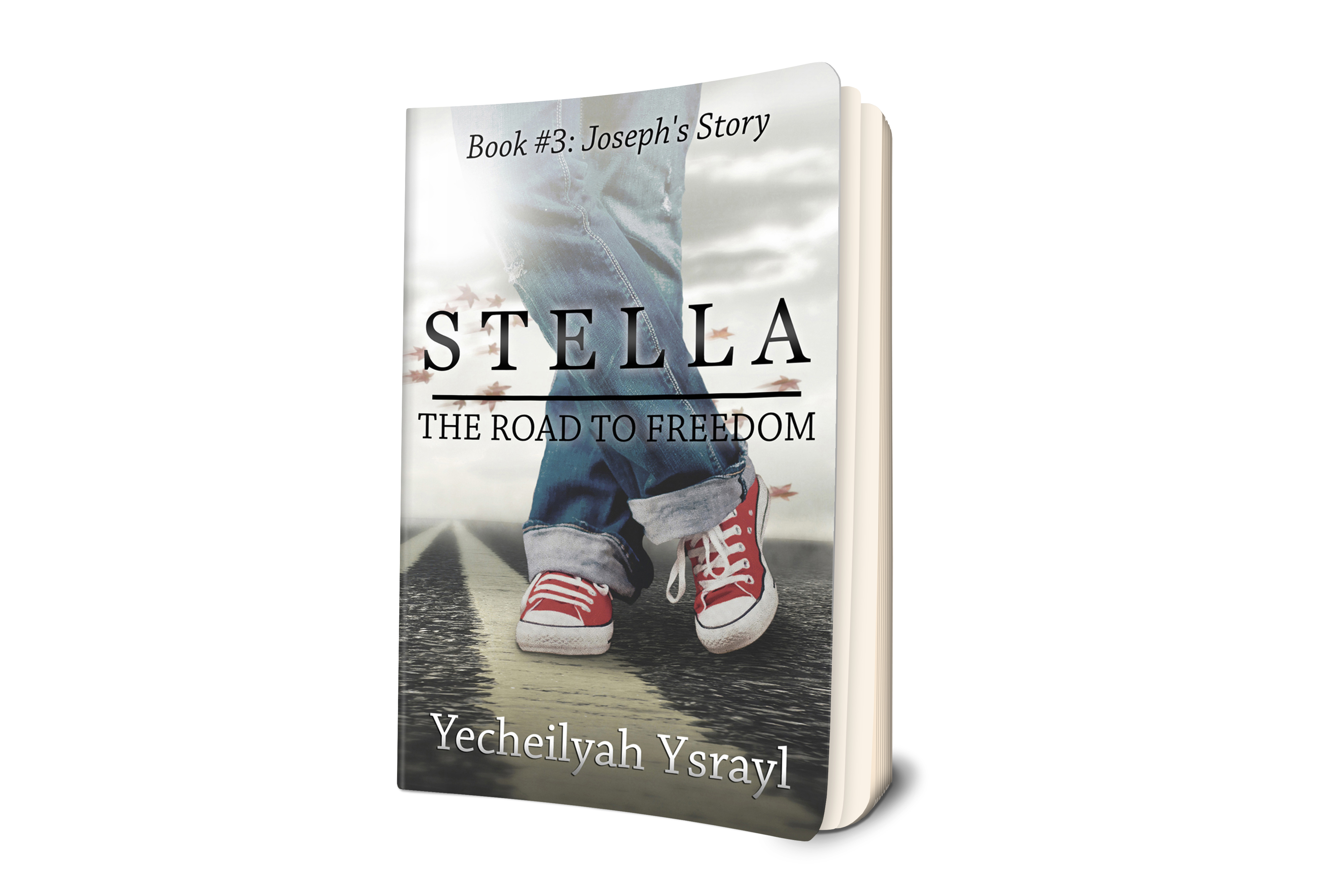
Real Life Example: I released The Road to Freedom in February for two reasons:
Black History Month – My book is a work of Historical Fiction, Black History, and deals with identity and nationality.
Target Audience – My Target Audience were going to be in Atlanta for a Black History Stage Play. That’s when I decided to release it at The Metropolitan Library in ATL.
*Steps off soapbox*
Now to the expert lol:
Article Excerpt:
“A book is a product. Just like with most products there is a sales cycle on a year-to-year basis. Readers are still buying books in the same cycle as they always have. Just on a different medium.”
Keep Reading:
My 7 Step Writing Process

It really does not take me long to write a book once I’ve settled on an idea I think will work. Below is my 7 step process. If I follow this, it takes me about 6 months to finish writing a first draft.
Caution: What you’re about to read is weird and does not necessarily take place in this order. Sorry.
Step 1: Research, First Draft, Announcement
When a story idea hits me I tend to stare out in space a lot and just do a lot of talking to myself. In the event my husband feels like hearing me ramble, I talk to him about it. He is SO helpful because some of my ideas (OK OK, a lot of my ideas) don’t make sense and he gives it to me straight, no chaser. “EC, what?” OK, maybe not like that but basically, he tells me how it is. Once I’ve discovered a story idea that is worthy, I’m like a drug addict in need of a hit. First, my blood starts to rush, my hands get sweaty, and I start to live off of coffee and books for most of my days (I’ve been known to skip a meal or two to write just one more sentence….paragraph…page…chapter) and I just can’t stop thinking about the story. I need to get my hands on anything that will give me further insight into this idea.
I must clarify that I research and write simultaneously. In a week of writing you can be sure that I have read books, took notes, and added more to the story at the same time. I don’t believe in spending months researching alone. By then I may forget the story. Another weird thing I do is that I often stop in the middle of writing to make sure that awesome idea I wrote made sense, that is, that it is appropriate for the era in which I am writing (since most of my work is Historical Fiction). Of course, I’ll go back over everything later on in the process but I try not to rely on my memory. If I have to stop while I’m thinking about it, that’s what I’ll do. This means that I can stop writing to read an entire novel or do hours of research. Then, a few weeks later, I’ll return to the manuscript and write some more. Keep in mind that this is just the first draft. I believe that with the first draft its important to just get things down. Just write. Don’t try to worry too much about anything else at this point. It’s just the beginning. Just the first step.
Faith is taking the first step, even when you can’t see the whole staircase. So go ahead, step!
So I read, write, and repeat in this stage. This is also the time where I announce that yes, I am going to publish another book. I do this because I believe it is important to announce my next book as early in the process as possible and I tend to know right away if I’m going through with it or not. If I’ve begun massive writing, I’m pretty much in. If I decide not to publish it later then nothing is lost. However, if I decide to go on with it I have the advantage of everyone already being familiar with it. In short, I announce my next project by talking about it as soon as is possible, aka, word of mouth.
Step 2: Feedback
After I’ve actually finished the first draft I need to go back over it, obviously, but tend to not know where to start! This is where I need feedback from others. Of course, I know the script needs to be edited (though I’ve always loved to write, English not so much), but I think its important to get feedback first, rewrite it, then get it edited. So, I belong to a few writing groups. The first group is my husband. Don’t laugh, I’m serious. Here’s why:
I’m a woman but I do write about male characters occasionally (my last book was the first book where a male was the main character. No, I am not a feminist or anything like that its just, well, I’m a woman! It’s easier for me to have central women characters because, being a woman, I naturally know women). When I do write in men characters, as deep as my imagination is, I am not a man. I can be as talented as is possible but I am not a man. I recruit the assistance of my man to make my men characters more authentic. I need to know, “Does this sound like something a man would say?” Sure, I have brothers and Uncles and male cousins. I’ve been around men my whole life and I know them to an extent. Research is also good but there’s nothing like getting it from the horses mouth sorta speak. Not that my husband’s a horse, you get the point.
However, I also belong to a couple other writers groups. In one of them, there’s a day where we uploaded a chapter and the members gave us feedback on what we should change! Another option is to seek the help of Freelance Beta Readers, or people who will read your book and offer their input. This is just a few ways I seek feedback: Family, Writing Groups (I must also mention that I am not deeply involved with critique groups. I can’t focus on finishing the first draft if everyone is telling me what I need to change every step of the way. Yes, it’s annoying. Let me finish the first draft first, then we can talk changes. So, when I say writers groups, I really mean after the first draft. Otherwise, you’ll probably get a good chapter out of me and that’s it), and Chapter Excerpts.
Step 3: Chapter Excerpts
This serves a dual purpose: I like to share chapter excerpts to give me the opportunity to receive even more feedback BEFORE I hire an editor. When I’m at this stage its usually after the first draft finish (which is where I’m at now, also known as The Beta Reader Stage). As I am uploading sample chapters, I am also simultaneously submitting the script to those Beta Readers. In this way, I can compare the feedback (Feedback does not necessarily mean I’m going to change what others say that I should if I’m not feeling it. Yes, I’m a very picky writer. It’s a MUST that the central vision of the story does NOT change). The other purpose this serves is: Promotion! By uploading chapters of my upcoming book, I am giving readers an opportunity to sample it. If they love it, I have already secured potential readers. Its not grandiose, but it is a form of promotion within itself. I did this with book two in The Stella Trilogy and it was a success. People who read the excerpts could not wait to purchase the complete story when it was done and some did follow through on their word and bought the book. Don’t get me wrong, this is not why I do this. I post excerpts because I think its fun. Its just that, as a perk, I am also promoting the story.
What to Sample?
There’s a general understanding that the first five chapters of a book should hook the reader so I pretty much go with this. If the first five chapters of a book can’t hook readers, there are major changes that need to take place! So, I start by uploading excerpts by chapter. If the chapter is too long however, I only use a greater portion of the chapter because I don’t want the post or excerpt to be too long (our attention spans are really not that long people. In fact, I hope you’ve read this far into this post!). When I start to submit excerpts for Nora’s story on this blog, I’ll pretty much start with Chapter 1.
Step 4: Revisions
Like I said, these steps are not necessarily in order. This can take place both before and after the feedback. Lots of frowns are likely to occur here, more stares out in space, and repeated questions that probably will never be answered like, “But why?”
In my re-writing stage, I focus on a few primary points:
- Hypocrisies and Plot Holes
- Showed or Told? (“Could I show this more instead of telling? Did I tell or did I show?”)
- Spelling / Grammatical Errors
I don’t really believe I am capable of truly editing my own work being so close to it, but I do what I can during the revision process before seeking an editor and I am extremely paranoid about this. My manuscript is likely to go through many revisions before it hits the editor’s desk. Are you ready for the weird part? I have to read it out loud! Not the entire script straight through, just the part I’m revising at the moment. I start revising by getting ready for the grand rehearsal. All characters in place? In 5,4,3,2,1…Chapter 1.
Step 5: Edit
After rewriting the script to my satisfaction (and getting feedback) it is time for the big edit. This is where I hire an editor. I have an excellent editor friend I tend to start with and then go on from there (as there are different levels of the edit). This time around, as to make the advanced editing easier, I’ll likely have my editor go over it first so it’s not that many grammatical errors when the in depth editing takes place. Proofreading is also part of this process although the proofread is usually after the edit as a final polish.
Step 6: Book Cover Design
No, I don’t wait. As the editor is doing his or her thing, I am getting the Book Cover Design done (or at least thinking about it). My vision is to always release the Book Cover Design for the book before it is set to release. Again, this is more promotion as people are highly visual. When my favorite Traditional Published authors announce a book release, its usually backed up by a hot book cover of the coming book. I’ve never heard Terry McMillan say, “Hey look, my editor is editing a book I plan to come out with next year!” No, the hard work is done on the back end and there is usually a grand announcement made by the author, followed by a Book Cover of the pending book for readers.
No? Oh. Well, at least that’s how it happens in my head.
So, for this reason, I consider the official (if I’ve made it this far I’m pretty much coming out with the book. Period.) announcement of the book with the grand book cover release. This gets people (including me!) even more excited and interested. I see the book cover design as the official official stamp of approval. By now I am definitely publishing this book!
Step 7: Marketing / Promo.
This is not the last step. I am actually marketing and promoting my next book around the same time that I am making the official announcement. Nope, I don’t wait. Like I said, if I decide not to publish the book, nothing is lost. I’m just not doing it at the moment and everyone understands. However, if I do decide to publish it, I like to give myself a head-start.
My first form of marketing and promotion is just sharing the story! This is why I like to talk about it in the beginning instead of waiting until the book is almost finished. If I share the story early on, everyone is involved. I can speak about my writing process, my struggles, my doubts, my successes. It’s like a pregnant woman. She let’s you feel on her belly and tells you about all the updates. She boasts of the ultrasound and reveals if it’s a girl or boy. In short, you are on this journey with her. By the time the baby comes you are just as excited about it as she is. It’s the same with books I suppose. I like to start the pre-promotion process by helping potential readers to feel as involved as I am comfortable with. In this way, you feel just as connected to the work when it releases. Tell me and I forget. Teach me and I remember. But involve me, and I learn.
I am still learning about the whole promotional thing myself so take this with a grain of salt (lbs), but I think getting into promo mode takes a good year in advance (my novel doesn’t come out until 2017. Will I wait until 2017 to say something about it? No!). I say a year to include before the book releases. You want to push the book before it’s published, and also at least 3-6months afterward. How a book performs in its first 6 months usually helps to determine where it’s at with readers (at least for me). Not that you will ever stop pushing the book.
With Self-Publishing you can always keep pushing your older works and try different promotional techniques (that’s the perk). This is often my biggest challenge: Not to forget about all of my books! As I start a new project I just get so excited that it is easy to forget that I can continue promoting my other works. I also seek Advanced Readers or Advanced Reviews after the book is edited, though I am not sure I’ll do the Advanced Read thing this round (didn’t work out well for me the first time). I will like to garner earlier reviews this time around though. Instead of waiting until the book releases, I hope to secure some reviews at least 3 months prior to launch day and I’ll recommend the same for you. That’s another reason you want to promote the book in advance.
It is also wise, I think, to start to work on new work as you’re promoting your current ones if you have the time. More books tend to drive more sales as readers have variety. It also tends to take more than one book to start to see some action as a Self-Publisher. Don’t ask me why because I don’t know. Sure, many of you are awesome and can churn out those first time hits, but I know that for me it took several books before I started to become noticed outside of my circle in the Indie community. So, as I am coming up on 6 months since the publishing of The Road to Freedom, I am also starting to get more and more into the production of my next book.
***
Enjoyed reading about my process? Be sure to follow this blog for a chance to read Chapter Excerpts from my YA, Historical Fiction 2017 Novel Project:
Renaissance: The Nora White Story.

8 Simple Ways To Go From Author to Authorpreneur

I’m all about simplicity. To me writing should be fun and all of the talk about business this and business that can be overwhelming and also suck the fun out of your writing life. So today I thought it’d be fun to discuss some not so technical things that you can do easily and go from Author to Authorpreneur.
From the EC Mental Dictionary
“An Authorpreneur (play on Entrepreneur) is a Self-Published author who has turned their work as a writer into a full blown business.
Authorpreneur is a term that is being used more and more everyday. With the explosion of the Independent Publishing Industry, authors are claiming the title to represent their work as serious business people. Below are 8 ways you can join them:
Legalize Your Name
I know that sounds weird, your name is already legal! Right, but here I’m speaking of your business name. Decide on a name for your business. If you write under a pen name, register it as a business. You can file the paperwork easily through Legal-zoom under an LLC, Sole Proprietorship, or S-Corporation (please Google these terms for further understanding of what they are). Or, you can just get a DBA. A DBA is a doing business as name that gives you the opportunity to legally write and conduct business under your pen author name. You’ll be able to set up a bank account to separate your author royalties from your regular income, use a debit card under this name, and even set up a PO Box.
Register Your ISBNS
This means you have to first invest in purchasing a block of your own ISBN numbers. You can get them from Bowker or Publisher Services for your books and register your ISBN with your company name as publisher. This will look more professional as your business name and ISBNS are now connected and will show up on Amazon or whichever platform you use, as publisher instead of Independent Publisher.
PO BOX
Obviously, you probably don’t have a brick and mortar unless you’re a bookstore owner already, but you can set up a PO Box in your new business name. This will make it easier (and safer) to send and receive packages without having to give away your home address. It also looks more professional on your business cards.
Business Cards
Go to Vistaprint or hire a professional print company and print some business cards. On them, use your new business name and PO Box.
Company Email
Set up a company email address. Gmail is the best email service provider but you can surely use others. If you have a website, your provider probably offers you a unique business email. yoursuper awesomebusinessname at gmail dot com. If possible, use a business email connected to your website such as yoursuperawesomebusinessname at yoursuperawesomewebsite dot com.
Website
I keep saying this and maybe it’s because I’m weird but in my humble but also professional opinion, a blog is not the same thing as an author website. A blog is a blog. Your website is the yourdomainname.com place without the constant stream of posts. It’s a place that showcases your work without any other distractions as a place people can go to purchase your books. It may be wise to incorporate your blog into your site. Setting up a website means you’ll have to register a domain name. The most common sense thing is to register a domain name matching your business name.
Set Up An Inventory System
Using a Microsoft Excel Spreadsheet, keep track of your inventory of books. This can also work as a basic accounting system. You can use it as a very simple way to track and record your business finances and products. When you are ready to publish your books, calculate the cost of publishing said book and record this data to go back to. How much is editing? Cover design? Formatting? Print and distribution? Landing page or website? You can use this to save the money you will need to cover everything. Publishing doesn’t have to be expensive but it’s also not free. You will have to invest some money to get this book published even if it’s just a small amount.
Email List
Last but not least, set up an email list where you can add the contacts of those who are interested in the business of you. Most people recommend sending emails once a month. I do not think you have to follow this advice. Times have changed and sending an email once a month doesn’t work for everyone. It’s okay to send emails every two-three weeks if that’s what works for you. It also helps to build a relationship with your readers when you are in touch with them on a more consistent basis. A lot happens in a month. Send your emails whenever you have something important to say but monitor them to see if your strategy works.
Yecheilyah is an Independent Author, Blogger, and Poet. She writes Black Historical Fiction, poetry, and books that inspire. Learn more at www.yecheilyahysrayl.com.
Book Promotion Services – How They Actually Work
I stopped by OMs place today. See what I had to say about book promo. Remember: Book Promotion sites only work if the author does. To get the most out of any promo site you choose to use is to contribute to that process.
How Your Books Are Presented Matters Too – Tools You Can Use
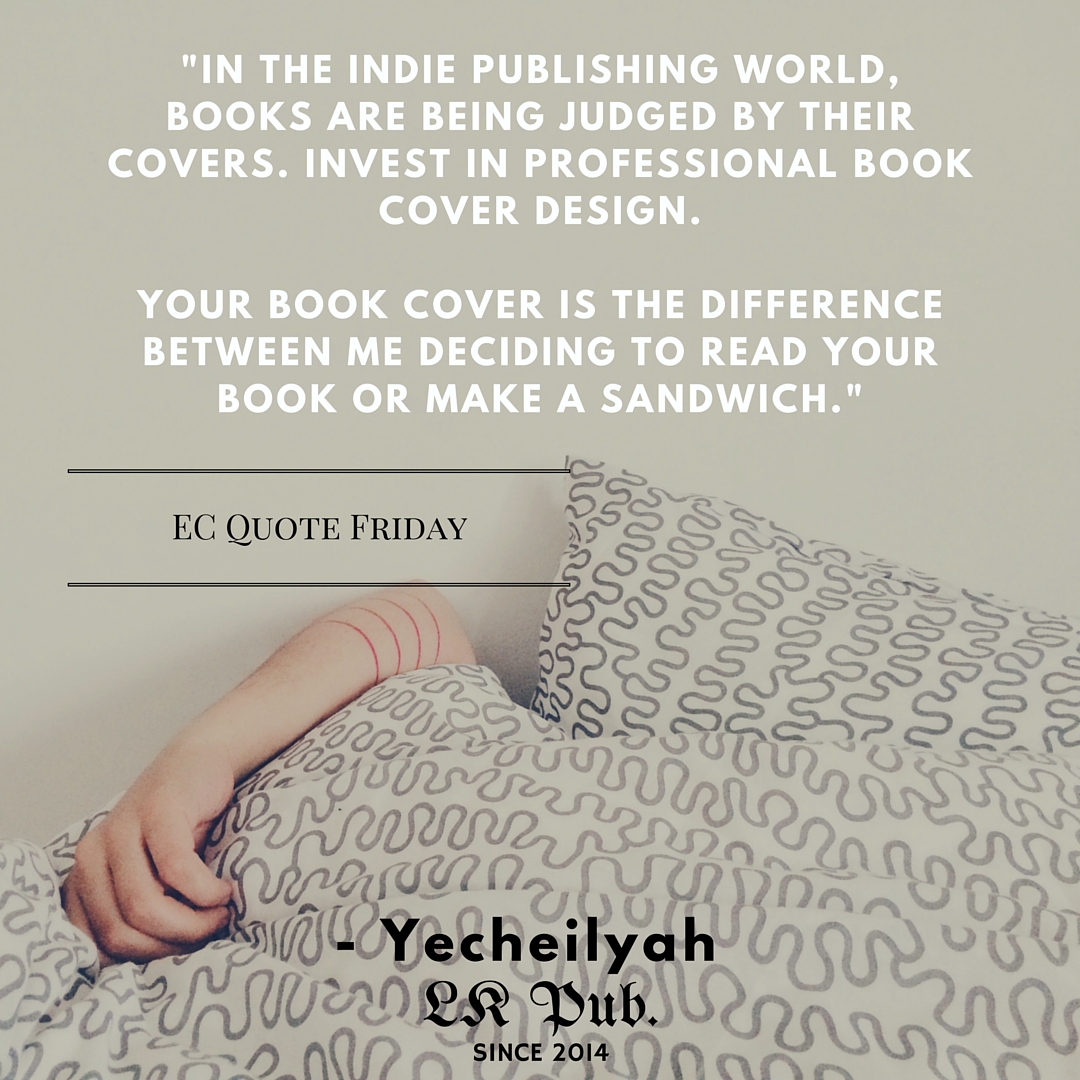
After posting my EC Quote Friday a thought struck me: “It’s not just book cover design, but even how your books are presented makes a big difference.” Here’s what I mean:
You’ve poured everything but the breath of life into your work. You’ve gotten it edited, formatted, converted, typesetting is tight, book cover is banging, everything. But what about presenting your book to the world? What about posting it online, presenting quotes, sample chapters, and all of that good stuff? Because I’m a person who strives for excellence, it can take me hours to produce just the right photo to post online. It can take me days to produce just the right image to parade up and down your social walls and timelines. Everything about writing to me, from penciling my soul into a blank piece of paper, to showing off my book cover requires the very best that I can give even if it doesn’t produce the result I want. At least then I can say that not only did I try, but I did and I did to the very best of my ability. Sometimes our books are not attractive to potential readers because we don’t take the time to put in the work that is necessary to produce our absolute best. Even sample chapters and excerpts should be presented a certain way. If you understand people, you know that we are, for the most part, lazy. A picture of a whole bunch of words on a screen is not exciting (Remember, less is always more). No, I’m not going to read your IG chapter post of 100 words screenshot from your smart phone. Boring. Below are some exclusive tips on how to increase your books online visibility by making sure the book looks as good as the writing:
-
Book Cover Design
So the most obvious thing here is to ensure you really do have an attractive book cover. If there is nothing else that you pay for in the publishing process, make sure it’s editing and book cover design. These are probably the two most important investments you’ll make. Not the only, but the most important. Plus, book cover reveals are fun!
-
Photoshop
Go to YouTube and learn how to use Photoshop to add special effects to those photos. No, seriously. I learned how to use Photoshop watching How To videos on YouTube. If I can learn, so can you. Then, go online and purchase Photoshop. This is probably your 3rd most important investment. OK well, maybe your fourth but you get the point. You don’t have to get the fancy versions either. I pay $10 a month to produce most of the images you see me posting, including the ones on this blog. Not bad for lunch money.
-
Subscribe
Subscribe to free mock-ups sites! What I love about technology is that you don’t have to be a professional photographer anymore. I do not, at this time, have a fancy camera. I want one but wants and needs are two different things. I’ll get one eventually. Until then, Book Mock-Ups are my best friends, especially when I find those people who are giving away free Book Mock-Ups. One person I absolutely love is Mark from Covervault. His book mock-ups are free and he always has freebies for those subscribed to his list. He also offers paid book mock-ups that are also off the chain. Because he does such excellent work, I would recommend supporting his paid mock-ups as well because he gives away so much for free. I would caution that in the editing phase, edit the mock-ups so that they’re original and uniquely you. One thing about Book Cover Designs and Mock-Ups is that, if they’re free it means lots of people are using them. To avoid having book twins, edit the mock-ups so they have your special signature. They’re editable so you don’t have to use the exact same format. However, Book Cover Mock-Ups is just a fraction of it. Subscribe to all kinds of mock-ups! Coffee, Computer, go crazy with it.
Photo Editing Websites
Don’t stop at Photoshop! Also look into photo editing websites. I like to combine more than one element to produce the best unique quality. Some you can explore are:
-
Free Version of Photoshop (Adobe offers a free, online version of Photoshop with scaled down features that include those needed for basic photo editing).
-
Phoneix From Aviary (part of the Photoshop Family)
-
Canva (How I make my EC Quote Posts)
Remember, everything about your book, from the writing, to the editing, to the book cover design all the way down to how your baby is presented online, it all matters and shows readers the level of effort you are willing (or not willing) to put into your work.

EC Quote Friday
 The PBS Blog