The PBS Blog in Review

Top Commenters:

  • Don Massenzio
  • Roger from Woebegone but Hopeful
  • Danny from DreamBigdreamoften
  • Felicia Denise
  • OIKOS-Redaktion
  • Mr. Militant Negro

2 Most Popular Posts of the Year:

Most Active Day: August 7, 2017

Books Published this Year:

I surpassed my total number of reviews for Renaissance. I am still trying to break into the 20+ range but I am close! (To review for this book email me for a copy)

I am Soul made it to #7 on the Amazon Best Sellers List for African Literature > New Releases. Currently, we are holding strong at number 12 and patiently awaiting our first review 🙂 lol.

Book Reviews

2017 saw a great increase in book reviews published to this blog, which I am proud of because I am always most excited at what I can do for others.(P.S. I have not forgotten about the Book Review Awards! Updates coming once everything has been organized.)

Here are the top 5 book reviews of this year (most shares, views, likes)

Black History Fun Facts

We were on a roll this year and managed to publish 19 articles as part of our Black History Fun Fact Friday series (which returns next year.) Here are some of our most popular posts of the year:

Week 35: A Brief History of Rae Riots in America

Week 22: The Attica Massacre

Week 30: Sundown Towns

Week 20: The Origins of Black History Month

Week 23: Mostafa Hefny

Week 32: Capturing the Good in Harlem

Week 33: Nora Holt

Collaborations

I must give credit where credit is due. This year, I collaborated with two amazing bloggers. Their support has greatly influenced the growth of this blog. Chris from The Story Reading Ape Blog and Danny from DreamBigDreamOften.

Follow Chris Here.

Follow Danny Here.

Guest Articles

I published a lot of guest articles this year and it has been my pleasure to be featured on so many awesome blogs. My 2 most popular posts were:

Top Countries that Supported this Blog:

  • United States
  • United Kingdom
  • India
  • Canada
  • Australia
  • Nigeria
  • Finland
  • Germany
  • South Africa
  • Italy

That’s all folks. See ya next year!


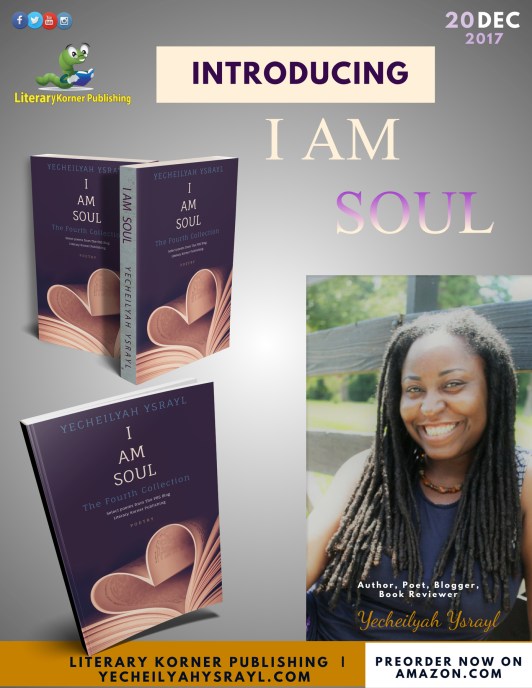
I am Soul, my short poetry collection of some of your favorite poems from this blog, is now available. CLICK HERE.

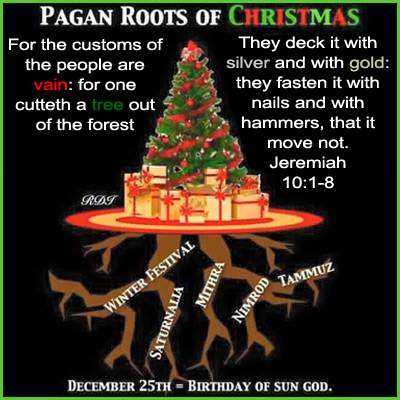
The Ancient Origins of Modern Holidays

christmas-pagan-updated

I don’t celebrate Holidays but rarely do I go into why. I thought this would be a good time to do that.

To put it simply, I believe in putting no gods or deities before the one Almighty Creator, Yah. Holidays are a contradiction to this as they each go back to the worship of a god/goddess. 

For clarity, I do celebrate my birthday. I do not consider it a holiday in the same way as these holidays. 


New Year’s Day – The Babylonian God Akitu, Roman Goddess Janus

In Egypt, the year coincided with the rising of the star Sirius, the Phoenicians and Persians began their new year with the spring equinox, and the Greeks celebrated it on the winter solstice. For the Babylonians of ancient Mesopotamia, the first new moon following the vernal equinox—the day in late March with an equal amount of sunlight and darkness—signaled the start of a new year and represented the rebirth of the natural world.

They marked the occasion with a massive religious festival called Akitu, derived from the Sumerian word for barley, which they cut in the spring. This practice involved a different ritual on each of its 11 days. During the Akitu, statues of the gods were paraded through the city streets, and rites were enacted to symbolize their victory over the forces of chaos. Through these rituals, the Babylonians believed the world was symbolically cleansed and recreated by the gods in preparation for the New Year and the return of spring.

Later, Julius Caesar instituted January 1st as the first day of the year, partly to honor the month’s namesake Janus, the Roman god of change and beginnings. His two faces allowed him to look back into the past and forward into the future. This idea became tied to the concept of transition from one year to the next.

Valentine’s Day –Lupercalia, Februata, God of Fertility

Originally celebrated on February 15, Valentine’s Day comes from Lupercalia, the “festival of sexual license,” and was held by the ancient Romans in honor of Lupercus, god of fertility. Clothed in loincloths made from sacrificed goats and smeared in their blood, the Luperci would run about Rome, striking women with februa, thongs made from skins of the sacrificed goats. The Luperci believed that the floggings purified women and guaranteed their fertility and ease of childbirth. February derives from februa or “means of purification.”

February was also sacred to Juno Februata, the goddess of “fever of love” and women and marriage to the Romans. On February 14, small pieces of paper, each of which had the name of a teenage girl written on it, were put into a container. Teenage boys would then choose one piece of paper at random. The boy and the girl whose name was drawn would become a “couple,” joining in erotic games at feasts and parties celebrated throughout Rome. After the festival, they would remain sexual partners for the rest of the year. This custom was observed in the Roman Empire for centuries.

Easter- Ishtar, Aphrodite, Venus, Goddess of War and Sexual Love

Rabbits and eggs have nothing to do with the resurrection of “Christ” but have long been part of spring celebrations as symbols of new life and fertility. The wreath-circles are symbols of the womb, for example.

The Sumerian goddess Inanna is known by her Babylonian name, “Ishtar.” In ancient Canaan, Ishtar was known as Astarte. Her counterparts in the Greek and Roman pantheons are known as Aphrodite and Venus. She is the goddess of war and sexual love. Her cult practiced sacred prostitution or temple prostitution, where women waited at a temple to have sex with the gods. The word Easter does not appear to be derived from Ishtar. This is a common misunderstanding. Easter is from the German Eostre, the goddess of the dawn—a bringer of light. Ishtar and Easter seem to be homophones: they may be pronounced similarly but have different meanings.

Easter is the celebration of Ishtar, the Assyrian and Babylonian goddess of fertility and sex. Her symbols (like the egg and bunny) were and still are fertility and sex symbols today.

Halloween – Samhain (pronounced /ˈsɑːwɪn/ SAH-win, sounds like Halloween), Lord of Darkness

Halloween kicks off the start of some of the world’s major Holidays, and it is the time of the year where heavy witchcraft takes place. In fact, from October 31st through November 1st, this is known as the Witches New Year in some pagan circles. The Celts believed the dead could walk among the living during this time and that during Samhain, the living could visit with the dead. This is why people dress up in costumes. They are representing the dead who, on this night, walk the Earth and visit the living. You could see a modern example of this in the last season of American Horror Story, where the dead people in the house are free to walk the Earth on Halloween.

According to the book “Halloween—An American Holiday, An American History,” some of the Celts wore ghoulish costumes so that wandering spirits would mistake them for one of their own and leave them alone. Others offered sweets to the spirits to appease them. In medieval Europe, the Catholic clergy adopted local pagan customs. They had their adherents go from house to house wearing costumes and requesting small gifts.

Though some would say that Samhain and Halloween are two separate Holidays, they are not. Today, the only difference is that one is ancient paganism (the maintaining of old pagan practices and traditions). The other is Neo (new) paganism, incorporating a more “happy” appearance to seem nice. However, it is the honoring of the same deity.

Thanksgiving – Ceres, Goddess of Harvest, Grain, Crops

We are taught that the first Thanksgiving was celebrated by the Pilgrims after their first harvest in the New World in October 1621. We are also taught that the real Thanksgiving involved the slaughter of the Natives and the stealing of their land. Both of these accounts are not entirely true.

Yes, the Natives were slaughtered, and their conquerors hosted a feast to celebrate their demise. And yes, I would agree that celebrating Thanksgiving could be seen as disrespecting the Natives whose land was stolen and families killed.

At the same time, the celebration of what we now call Thanksgiving took place many centuries before Christopher Columbus.

Like the other Holidays, what we call Thanksgiving goes back to worshiping the gods and goddesses. Specifically, this Holiday marks the worship of Ceres, Goddess of Harvest though she has many names. (Ceres is where we get the word Cereal.) When the pagans had a good season, they thanked their gods/goddesses for their bountiful Harvest.

Ceres was a goddess of agriculture, grain crops, fertility, and motherly relationships in ancient Rome. Initially, she was the central deity in Rome’s plebeian or Aventine Triad, then was paired with her daughter Proserpina in what Romans described as “the Greek rites of Ceres.” Her seven-day April festival of Cerealia included the popular Ceres games.

“The Egyptian’s fall festival was centered around the worship of Min. The Babylonian’s fall festival was centered around the worship of Marduk. The Persian’s fall festival was centered around the worship of Mithras. The Chinese’s fall festival was centered around the worship of Chung Ch’ui. The Greek’s fall festival was centered around the worship of Demeter. And the Roman’s fall festival was centered around the worship of Ceres.” (

“The turkey was associated with abundance and being thankful.  Some tribes viewed the bird as a sacred symbol of abundance and fertility, one which would serve as the sacrificial guest of honor in various ceremonies.”

https://www.thegypsythread.org/thanksgiving-pagan-roots-secret-symbols/

Christmas – Saturn, the Sun God and The Winter Solstice

Christmas, too is an ancient pagan practice and has nothing to do with the biblical Messiah. According to the book The Bible as History, December 25th is referred to in documents as Christmas Day in A.D. 324 for the first time. Under the Roman emperor Justinian, it was recognized as an official holiday. An old Roman festival played a significant part in the choice of this particular day. December 25th in ancient Rome was the ‘Dies Natali Invictus,’ ‘the birthday of the unconquered,’ (Sun), the day of the winter solstice, and at the same time, in Rome, the last day of the Saturnalia.

In a book by historian Jack Finegan, Myth & Mystery: An Introduction to the Pagan Religions of the Biblical World, “the worship of the sun-god continued widely throughout the empire, and under Aurelian (A.D. 270-275), the cult was restored to its former high estate. In the year 274, Aurelian declared the god – now called Deus Sol Invictus – the official deity of the Roman Empire. He built a temple of the sun in Rome and set the sun’s birthday celebration (naturalis solis invicti) on December 25TH, the date then accepted for the winter solstice (also in his solar character, the birthday of Mithras.)

“In the time of Constantine, the cult of Deus Sol Invictus was still at its height, and the portrait of the sun-god was on the coins of Constantine….Likewise, it must have been in this time and with the intent to transform the significance of an existing sacred date that the birthday of Jesus, which had been celebrated in the East on January 6… was placed in Rome on December 25, the date of the birthday celebration of Sol Invictus. This date appears in a list of dates probably compiled in A.D. 336 and published in the Roman city calendar, edited by Filocalus, for the year 354 (Finegan, p. 211-212)”.

Christmas is the celebration of the sun, not the son. It commemorates the Winter Solstice (the shortest period of daylight and the longest night of the year), which begins December 21st, honoring the Sun God Saturn. The festival of Saturnalia was the festival held to exchange gifts, party, and worship. Finegan mentions January 6th, but this is also a pagan Holiday. It is called Epiphany. The truth is no one knows precisely when Yahoshua was born.

When Constantine became Emperor of Rome, he fused ancient pagan practices with the Bible to unite the pagan world. As a Pagan High Priest himself, he sought to reconcile and blend pagan practices with Christian beliefs to merge paganism with the Roman church. This included sometimes killing off pagans in the process who refused to accept the Christianizing of their gods/goddesses.

Sources:

The Bible as History

http://www1.cbn.com/the-pagan-roots-of-halloween

The Pagan & Genocidal Roots Of “Thanksgiving”

https://www.huffingtonpost.com/richard-schiffman/the-thanksgiving-truth_b_1105181.html

Myth & Mystery: An Introduction to the Pagan Religions of the Biblical World

https://en.wikipedia.org/wiki/Thanksgiving_(United_States)

https://list25.com/25-popular-holidays-with-surprisingly-pagan-origins/

https://en.wikipedia.org/wiki/Winter_solstice

http://www.history.com/topics/valentines-day/history-of-valentines-day

Halloween—An American Holiday, An American History

https://rcg.org/articles/ttbsvd.html


PREORDER I AM SOUL

This is just a heads up that my short poetry collection I AM SOUL is now available for preorder on Amazon. CLICK HERE or on the image below to preorder now for 99cents.

(To ARC for this book, email me.)

Visit my website to access more I AM SOUL products. CLICK HERE.

Slavery in Libya

Deu 28:68 “And YAH shall bring you back to Egypt in ships, by a way of which I said to you, ‘You are never to see it again.’ And there you shall be sold to your enemies as male and female slaves, but no one to buy.

“The United Nations (UN) revealed on Wednesday that hundreds of migrants from Nigeria and other West African countries passing through Libya enroute Europe are being bought and sold in what it described as modern-day slave markets before being held for ransom, forced labour or sexual exploitation.”

I haven’t had the chance to sit down and share my thoughts on the slavery taking place in Libya. I usually take my time with such things. I don’t want to echo what everyone else is saying or jump on bandwagons. I want to be logical, spiritual, and develop my own thoughts about it so I’ll just keep this short until then.

If you are new to what’s going on, The Slave Trade has basically reopened and Israelites, so-called Blacks / Africans, are being taken back into captivity throughout Libya. You can catch up on what’s going on HERE   and HERE.

Since I started this blog I’ve spoken about Slavery, the Enslaved and the horrors of this time. I talk a lot about The Civil Rights Movement, Jim Crow, Police Brutality, and the overall mistreatment of Blacks in America and the mistreatment of Blacks period. For three years now I’ve tried to give as much historical information as I am able to inform you of these things and in return, I get people who are tired of hearing about slavery. Tired of seeing movies and TV shows and reading books where slavery is present. We believe it is an eyesore that must be covered up and hidden underneath our beds. We want to forget about this time and sugar-coat the details. And when good men seek to help those who need it they are called dictators and thus removed from power.

Few people know that Khadafi tried to help Blacks in Libya before his death. He wanted to protect them and for this, he was called a dictator and killed while American’s cheered their ignorance in front of TV screens that told them lies. (Wag the Dog is a good movie on how TV often controls our perception of reality.)

If there is one thing we should know about slavery is this: At least we knew we were slaves and fought collectively for freedom. Today, we think we are free so we don’t fight anymore. It usually takes us to experience something as traumatic and tragic as this for us to understand and realize where we stand not just in America but all over the world.

While what’s going on in Libya is heartbreaking, I hope that finally, we can see why these stories are worth telling and why these reminders are still necessary. I keep saying there’s nothing new under the sun, that what has been done is what will be done, and that we should not be shocked but to pay close attention to what’s going on in the world. Our eyes may very well witness more tragedy and our hearts more pain.

(FYI: Black History Fun Fact Friday continues next week….been busy but I haven’t forgotten.)

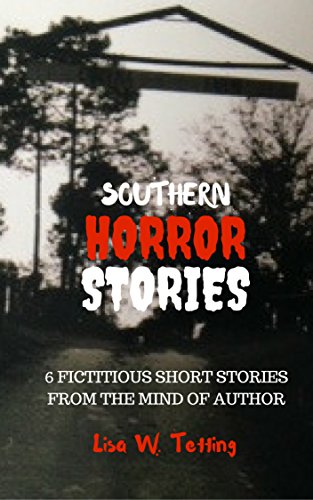
Yecheilyah’s Book Reviews – Southern Horror Stories by Lisa W. Tetting

Title: Southern Horror Stories

Author: Lisa W. Tetting

Print Length: 68 pages

Publication Date: October 26, 2017

ASIN: B076WW49KN

Almost 400 years ago, the first enslaved Blacks arrived in the Virginia colony at Point Comfort on the James River. Spanish records suggest that the enslaved were captured in the Portuguese colony of Angola. At first, the number of enslaved taken was small. In about 1650, however, with the development of plantations on the newly colonized Caribbean Islands and American mainland, the trade grew.

But what if things had turned out differently? What if the enslaved could exact immediate vengeance on their oppressors and gain their freedom with help from their ancestors? That is essentially the theme connecting six short stories in Lisa W. Tetting’s short story collection, Southern Horror Stories.

Each story begins with a tragedy familiar to that of chattel slavery. In Barren Plantation, Pansy witnesses the death of her baby girl immediately after giving birth. Afterward, the woman bathes in the child’s blood, soaking up the energy, and begins to hear chanting in a foreign language. She becomes possessed and starts chanting along with the voices until an entity arrives to give her word on her next move. She is to save the other children on the plantation in a most chilling way.

In “Caleb’s Stitches,” children of the enslaved go missing. In “Mind of Hope,” a girl witnesses her mother’s beating death and her father’s shooting. Her ancestors instruct her on how to get revenge for her parents. And in Underground Hell Road, the slaves have overtaken the plantation in an intelligent plan to create a portal to freedom. All the stories involve the enslaved receiving guidance from their ancestors on how to strike back at those who hurt them.

I loved most the connection between the stories. Linking Barren Plantation and Caleb’s Stitches was brilliant and so was the connection between Slave Island and Pirates of Slavery. I would also love to see Underground Hell Road fleshed out into a full-length novel with elements of the other stories possibly weaved in. I love the idea of the plantation being a way for the slaves to transition their way to freedom and would love to read a full novel on the concept.

Southern Horror Stories is an easy and entertaining read that is not recommended for children (though with the author’s talent, I can easily see a PG version of the stories to help youth understand about the horrors of slavery). Lisa’s writing style is lovely and easy to understand.

Plot Movement / Strength: 4/5

Entertainment Factor: 5/5

Characterization: 4/5

Authenticity / Believable: 4/5

Thought Provoking: 5/5

Overall: 4/5

Southern Horror Stories is Available Now on Amazon

Connect with Lisa Online!

Blog

Website

Twitter

IG

Goodreads

Smorgasbord Posts from Your Archives – Unfamiliar Faces – Lost to History by Yecheilyah Ysrayl

Hey guys. I have not been reblogging these because they can already be found on the site but as a reminder, be sure to visit some of my posts as featured on Sally’s amazing blog feature Smorgasbord Post from Your Archives. To read an updated version of this post just type it into the search widget of this blog (pbs), and as always, thanks Sally.

Comments disabled here. Please meet me on Sally’s blog.

Responsibility

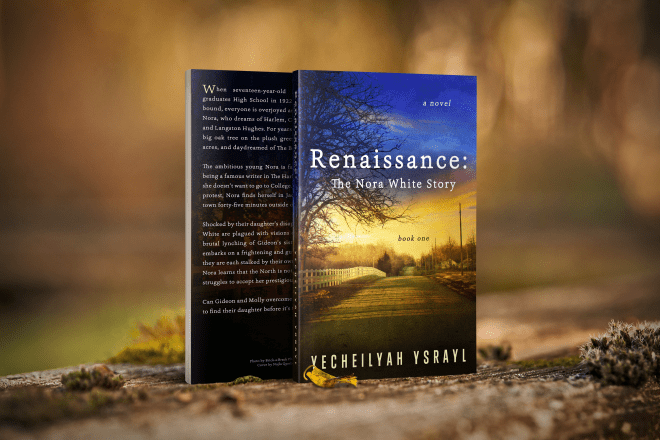
Renaissance Mock-Up
Renaissance: The Nora White Story (Book One) is available now on Amazon

The so-called Black man, woman, and child have been mis-educated on several levels. We’ve been mis-educated mentally, physically, and spiritually. We have lost knowledge not just of who we are (the children of Israel) but who our creator is (Yah) and what our duty is as a people (a nation of priests). My job is to do my part to resurrect truths that have been hidden and glossed over and whitewashed for too long. Not only is this my job, but it is also my responsibility. We are responsible for what we know. If I sugarcoat or water down the facts, I am responsible for the miseducation of the so-called Black/African American in much the same way as a History teacher is responsible.

One reason I am an Independent Artist is because of the freedom to speak the truth as it is, not as people want it to be, and I cannot deviate from this. I am not here to tickle ears or to make people comfortable. That’s not what Yah has called me to do. I am a writer and that carries with it exceptional weight. For it is the writers of history who wrote the textbooks that purposely left out vital information regarding the so-called African American people. It is the writers of the world who left out information pertinent to the true identity of the so-called African American and have instead scribbled falsehood with the stroke of the pen.
It is not for me to force people to believe the truth. My job is not to judge or to condemn. My job is simple. My job is to state the facts as they are without regard to who it may offend. Otherwise, I would help to perpetuate lies.


It is up to us, the writers of the world, to write today exactly as it is so that our children can see history exactly as it was and are not, therefore, subjected to the same regurgitated ignorance that we were subjected to. It is up to us, the writers of the world, to hold ourselves to a higher standard because we are responsible for how the next generation will look back on today.


Yecheilyah (e-see-lee-yah) is an Author, Blogger, and Poet of nine published works. Learn more by exploring Yecheilyah’s writing on this blog and her website at yecheilyahysrayl.com. Renaissance: The Nora White Story (Book One) is available now on Amazon.com.